
Bring your British Shorthair kitten home to a quiet starter room with food, water, a low-sided litter box, safe hiding spots, and a carrier. Keep the breeder’s diet, offering three or four measured meals daily, and change foods gradually. Schedule short supervised play sessions, gentle handling, and calm introductions. Book a veterinary exam within the first week, continue vaccines and parasite care, and keep litter and grooming routines consistent. The steps below cover the first month in more detail.
Disclosure: This post may contain Amazon affiliate links, at no extra cost to you. Content on Pawtangle is created with research support from AI tools and carefully reviewed, edited, and fact-checked by the lead author, Dr.Fahri Pat , to ensure accuracy and reliability. Learn more
Key Takeaways
- Prepare a quiet, kitten-proof starter room with bedding, water, a low-sided litter box, hiding spots, toys, and an accessible carrier.
- Feed three to four measured meals daily using the breeder’s foods, changing diets gradually over five to seven days.
- Provide supervised short play sessions, scratching surfaces, safe chew toys, and plenty of sleep; never encourage biting hands or feet.
- Let your kitten approach, reward gentle handling, and introduce people, sounds, and other pets gradually after settling.
- Book a veterinary examination within the first week and discuss vaccinations, deworming, parasite prevention, grooming, and litter habits.
Prepare a Safe Starter Space

Before your British Shorthair kitten arrives, prepare a quiet, low-traffic starter room, such as a small bedroom, bathroom, or laundry room.
Keep a bed, water bowl, low-sided litter box with unscented pine pellets, simple toys, and secure hiding spots within reach.
Use this Kitten proofing checklist: remove lilies and other toxic plants, lock away cleaners and medicines, secure cords, strings, breakables, and small objects.
Place the litter box privately, away from water, and practice quiet cornering by leaving open paths instead of trapping your kitten.
For a hazard free arrival, keep the carrier accessible, add cozy hiding, and maintain calm, predictable surroundings for 48 hours.
Build a Feeding Routine
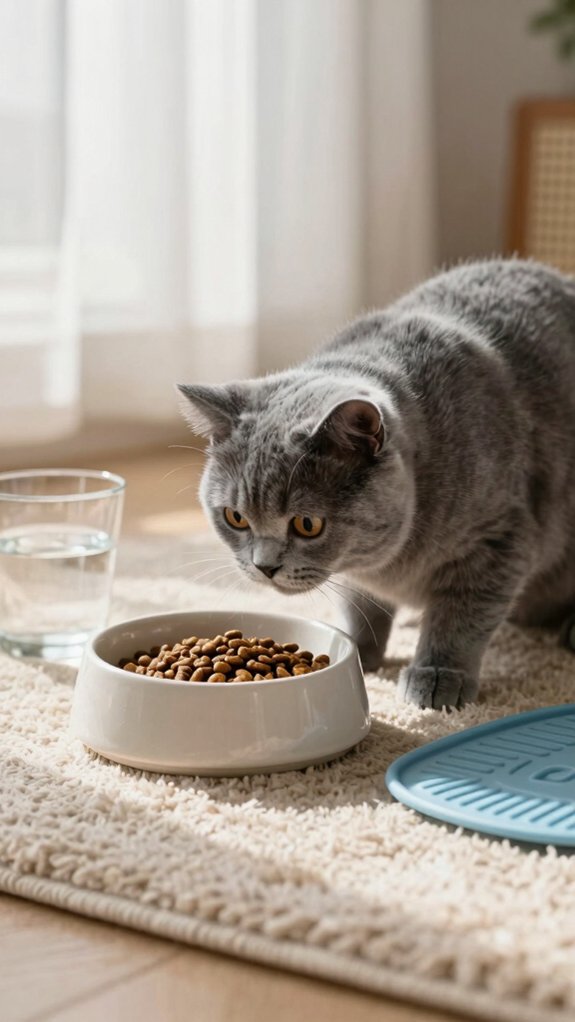
Start with 3–4 small meals a day, using the same wet and dry foods your breeder provided. This familiar plan supports calm meal scheduling and helps prevent stomach upset during your kitten’s first days with you.
- Offer wet food with dry food when possible, and follow these hydration tips: keep fresh water available constantly.
- Measure each portion instead of free-feeding.
- For a diet transformation, mix new food with old over 5–7 days, slowing down if stools soften.
- Follow treat limits: treats should stay near 10% of daily calories.
Keep offering food if appetite dips. Contact your vet urgently after 24 hours without eating, or for ongoing vomiting or diarrhea.
Encourage Healthy Play
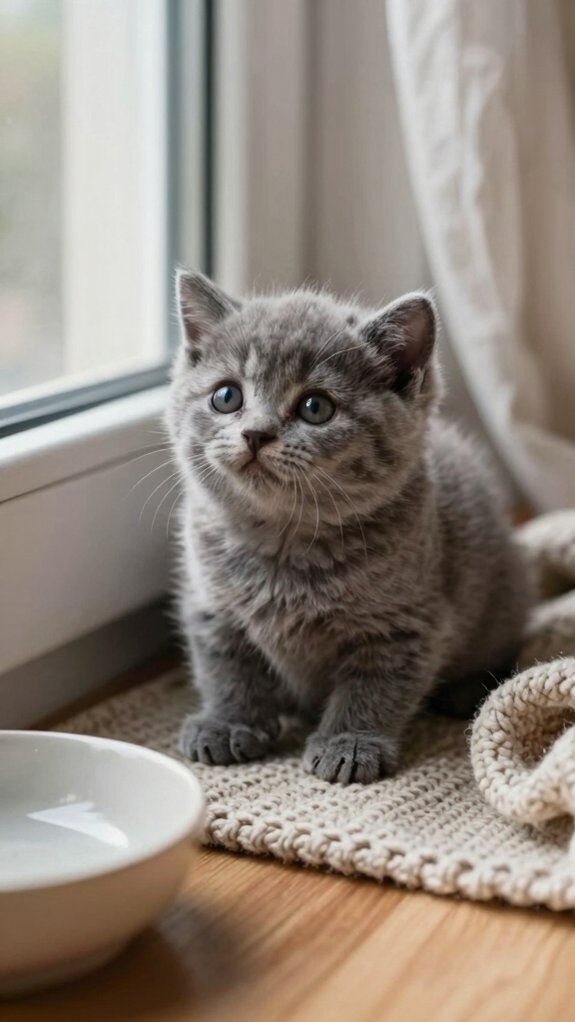
Plan 3–5 short play sessions each day, keeping them to about 5–10 minutes with age-appropriate wand toys or soft balls.
This steady routine supports growth and helps prevent boredom without tiring your kitten.
Use an engaging toy rotation, switching wand toys, soft balls, and puzzle feeders with tiny portions when appropriate.
Place a sturdy post or cardboard scratcher nearby, then redirect furniture scratching with a toy or treat.
Offer gentle teething support with durable chew toys when teething begins around three to four months, and keep hands and feet out of play.
Supervise every session, add brief window time, and let your kitten rest afterward.
Expect sixteen to twenty hours of sleep daily.
Support Early Socialization
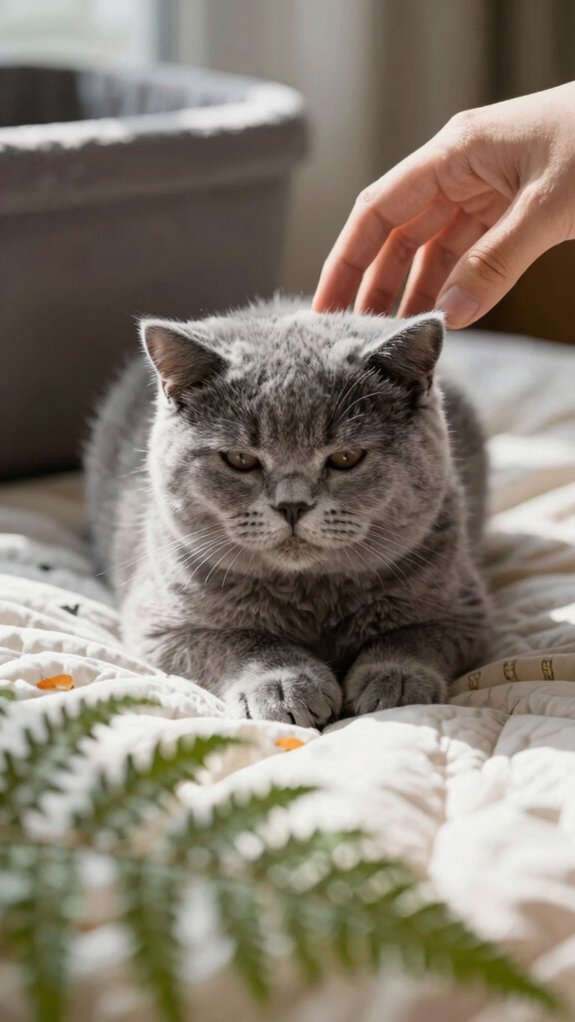
During the first week home, use calm, predictable handling to help your British Shorthair kitten feel safe with you. Let your kitten approach, then gently touch paws, ears, and tail during quiet moments, never forcing cuddles. Use calm handling and reward touch with a tiny treat or praise.
- Play for 2–5 minutes daily with a wand toy.
- Introduce sounds and objects slowly, including distant vacuum noise.
- Keep boxes and uncovered hiding places as safe escape routes.
- Welcome people or pets gradually after eating and litter use feel settled.
Reward relaxed curiosity, and pause when your kitten seems overwhelmed. This steady welcome helps your kitten feel part of your household.
Schedule Veterinary Care

Within your kitten’s first week home, book a veterinary exam to establish a health baseline and keep care on track. Your vet can check weight, heart and lungs, eyes, ears, and development, helping your new family member start well.
Ask about the vaccination timeline. FVRCP usually begins around eight weeks, with boosters every three to four weeks until about 16 weeks. Your vet will set rabies timing according to local rules.
Continue the breeder’s deworming plan, and request parasite screening when appropriate. Discuss kitten-safe flea and tick prevention too, since adult products may be too strong or unsafe for small kittens.
Create Good Litter Habits
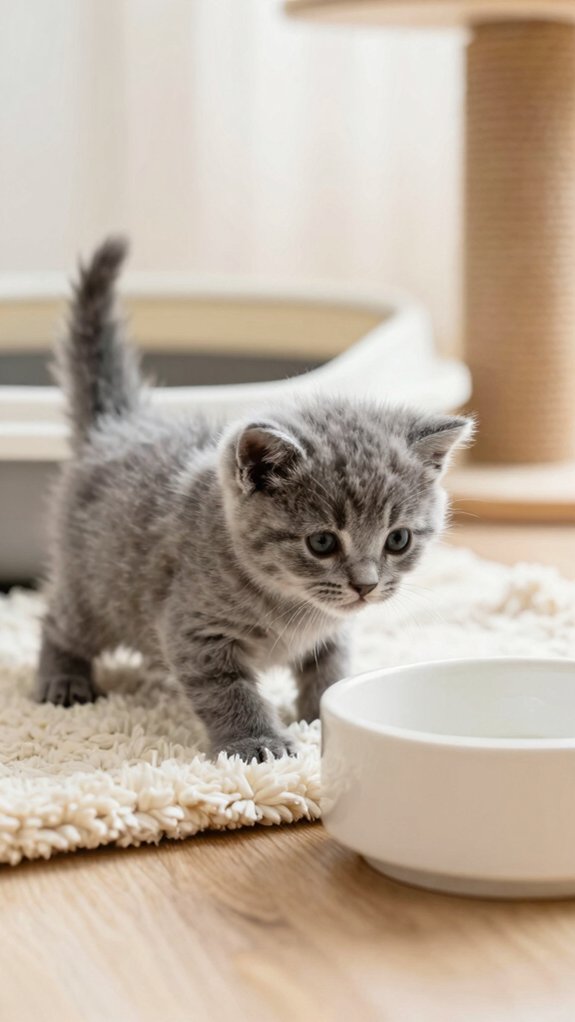
Set up an unscented pine-pellet litter box in a quiet, consistent spot away from food and water. Choose a low-sided box, keep it available 24/7, and introduce litter training gently.
Let your kitten use one small area first, then expand space after reliable use.
Enforce consistent scooping daily, and change litter regularly.
Clean accidents with an enzymatic remover, not ammonia, to prevent box avoidance.
Track elimination patterns, noting eating and litter use within 12–24 hours.
Guide your kitten back calmly after accidents. If your kitten refuses the box or stops eliminating, contact your vet immediately. You’re building familiar, comfortable habits together.
Make Grooming Stress-Free
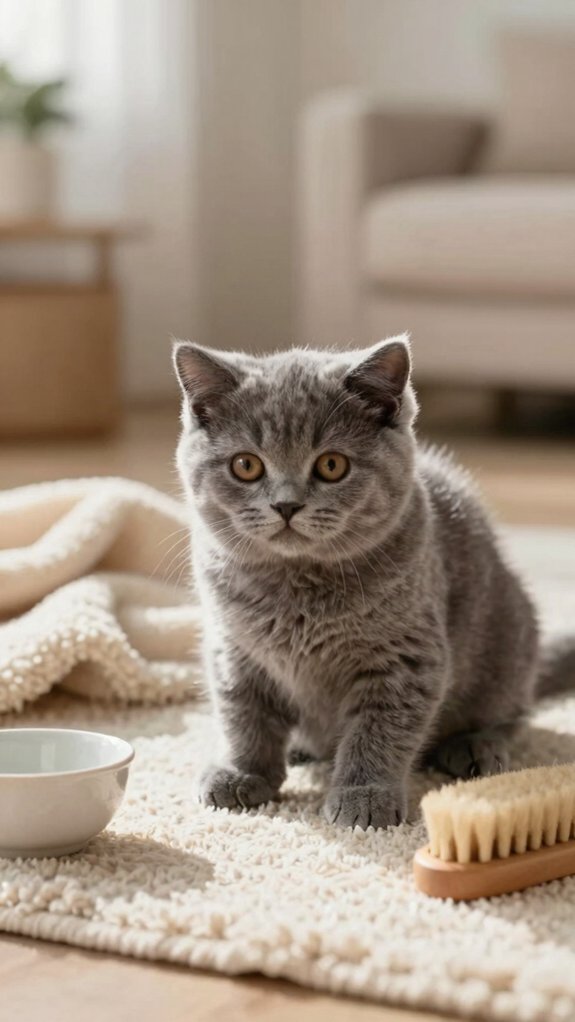
Once your kitten is settling into the litter box, start making grooming part of the daily routine with brief, calm sessions. Start slow with short sessions lasting one or two minutes, then offer calm rewards.
| Step | What you do | Reward |
|---|---|---|
| Brush | Use a slicker brush and gentle strokes | Treat |
| Paws | Touch paws during play or feeding | Praise |
| Nails | Clip only tips every 1–2 weeks | Treat |
Brush Shorthairs once or twice weekly, and Longhairs daily. Stop while your kitten stays relaxed, not after swatting. Avoid routine baths, and introduce water gradually only when needed. Each small success builds a positive association and helps your kitten feel safely included in your care routine.
Kitten Checklist
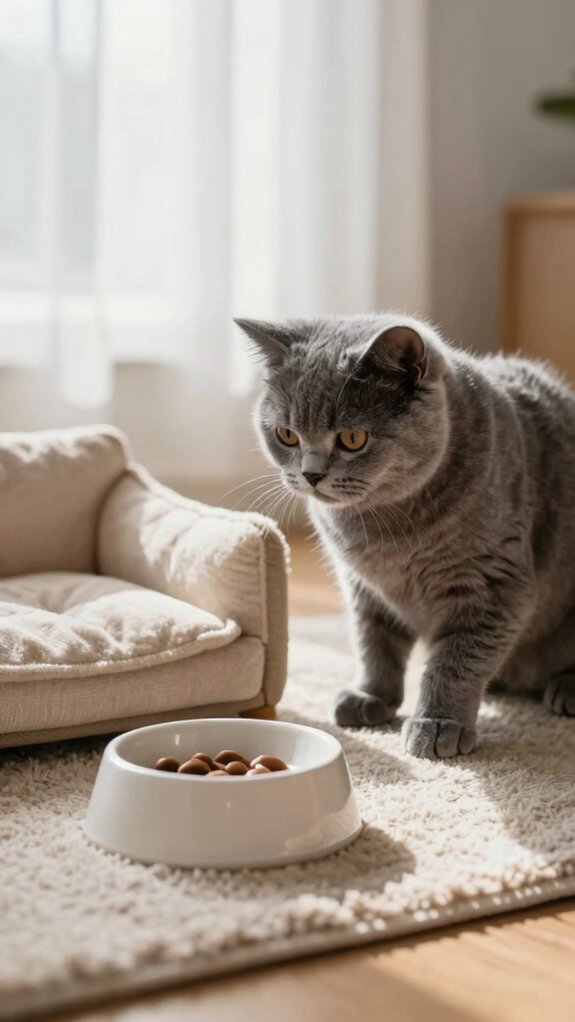
A simple checklist helps your British Shorthair kitten settle in safely and keeps the first week manageable. Prepare a quiet starter room with a soft bed, food and water, hiding spots, and simple toys.
- Use a low-sided litter box with unscented pine pellets, away from meals.
- Feed the breeder’s food in 3–4 small meals, and provide fresh water.
- Book a vet visit within one week to discuss vaccines and deworming.
- Secure cords, remove toxic plants, trim nails, brush gently, and practice gentle handling.
Keep settling routines calm and consistent, so your kitten learns that this new home is a safe place to belong.
First Month at Home

During the first month at home, keep your British Shorthair kitten’s routine calm and predictable while gradually giving it more space to venture.
Start in a quiet room with unscented pine-pellet litter, shallow bowls, and a cozy hiding spot.
Offer three or four small meals daily, and mix new food with the old over five to seven days.
For Litter training troubleshooting, check access, cleanliness, and stress.
Gentle nap routines, such as quiet handling and a regular rest area, help your kitten settle.
Book a vet visit within a week.
Watch for illness, brush weekly, trim nails every one to two weeks, and practice touching paws and ears.