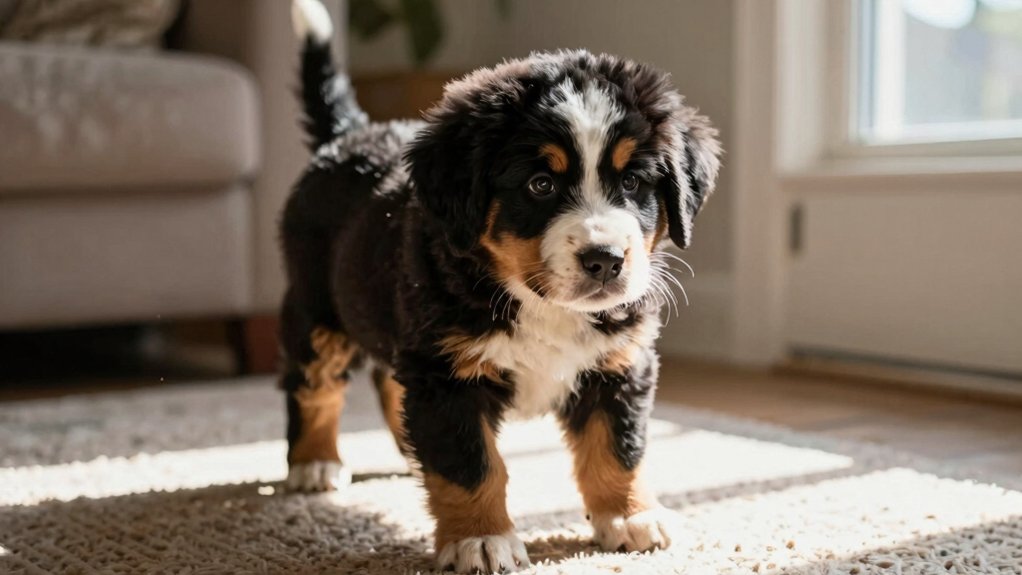
Start training your Bernese Mountain Dog puppy at 8 weeks with a calm, steady routine. Take your puppy outside about every two hours, after waking, playing, eating, and before bed, then praise success immediately. Introduce the crate with treats, meals, soft bedding, and short sessions. Begin gentle leash practice and reward calm behavior. Provide safe socialization with people, sounds, surfaces, and vaccinated dogs, never forcing contact. Keep lessons brief, protect nap time, and build skills gradually as your puppy grows. The steps ahead outline weekly goals and common mistakes.
Disclosure: This post may contain Amazon affiliate links, at no extra cost to you. Content on Pawtangle is created with research support from AI tools and carefully reviewed, edited, and fact-checked by the lead author, Dr.Fahri Pat , to ensure accuracy and reliability. Learn more
Key Takeaways
- Establish a predictable routine with potty breaks every two hours, especially after waking, playing, eating, and before bedtime.
- Begin crate training positively with short, relaxed sessions, open-door access, meals nearby, and safe chew toys.
- Socialize your puppy gradually from 8 weeks using calm exposure to people, sounds, surfaces, and safe environments.
- Teach leash skills with rewards for staying nearby; stop when pulling occurs and never yank or jerk the leash.
- Keep training sessions brief and positive, using immediate rewards for potty success, calm behavior, focus, and voluntary interactions.
Daily Routine
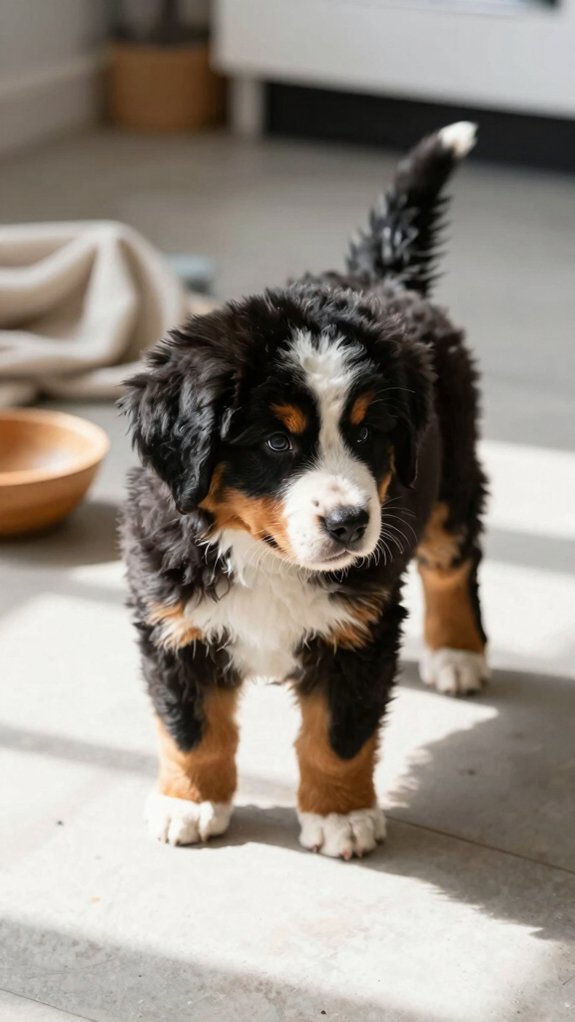
At 8 weeks old, your Bernese Mountain Dog puppy needs a steady daily routine with potty breaks about every two hours, timed around waking, play, and naps. Keep this potty schedule predictable, and take your puppy on leash to the potty area before exercise or exploration.
Plan two short focus sessions daily, lasting five to ten minutes, then provide supervised naps. Your puppy needs plenty of sleep to grow and learn well.
During busy periods, offer a simple food puzzle, such as a stuffed Kong Genius or treat ball.
As your puppy grows, extend intervals gradually, about one hour per month, while keeping days calm and consistent.
House Training
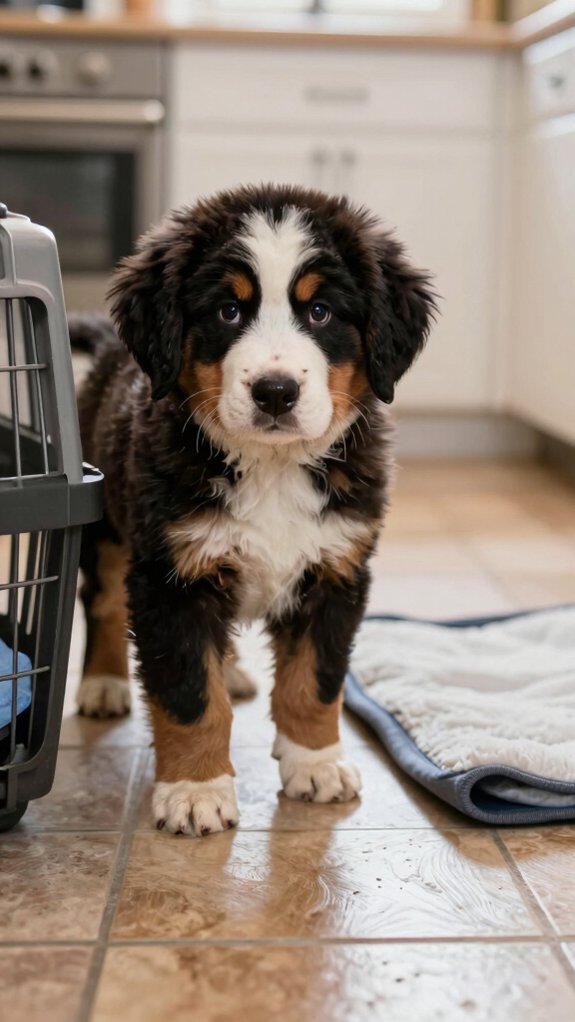
Once your Bernese Mountain Dog puppy has a steady daily routine, house training becomes easier to manage. Take them outside about every two hours, including after waking and before bed, then extend trips to every four hours by five or six months.
Use the same spot, say “go potty,” and practice calm leash manners.
Praise and treat immediately after success, because reward timing matters.
- Watch for sniffing or circling, and head out right away.
- A bell by the door can help your puppy communicate.
- Clean accidents thoroughly, and never scold.
These steps build indoors manners, while bite inhibition training can continue separately, helping your puppy become a welcome family member.
Crate Training
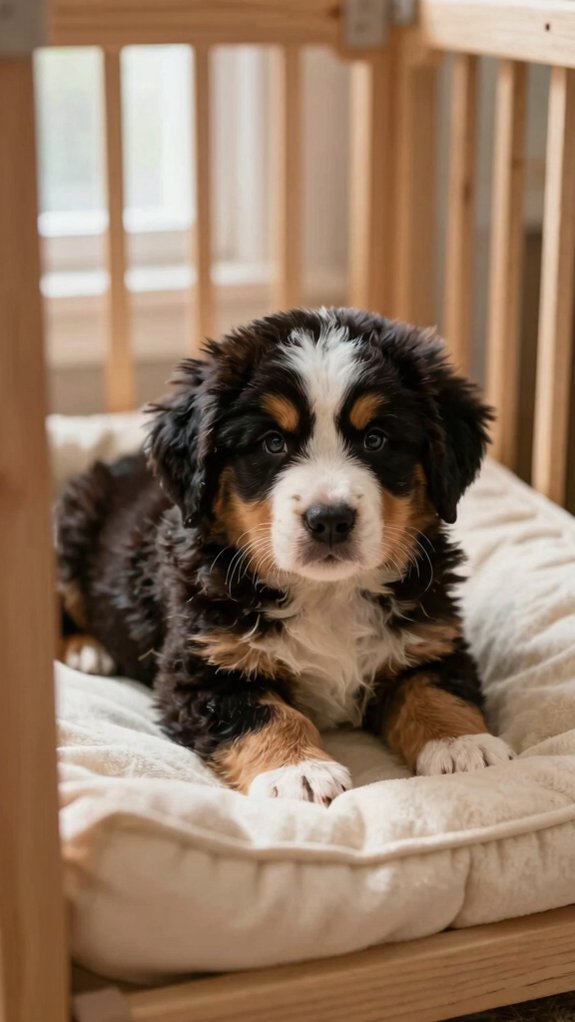
Start crate training at eight weeks by making the crate feel calm, safe, and inviting, with soft bedding and the door open during early practice.
Let your puppy explore, then offer meals inside or beside it.
Begin with a few minutes, rewarding quiet behavior, and slowly extend crate time as your puppy stays relaxed.
Use calm cue setting, such as saying “settle” softly before closing the door.
Pair the crate with scheduled naps, since Bernese puppies need plenty of rest.
For chewing management, provide safe toys and remove anything unsafe.
After each session, take your puppy promptly to the potty area to prevent accidents.
Socialization
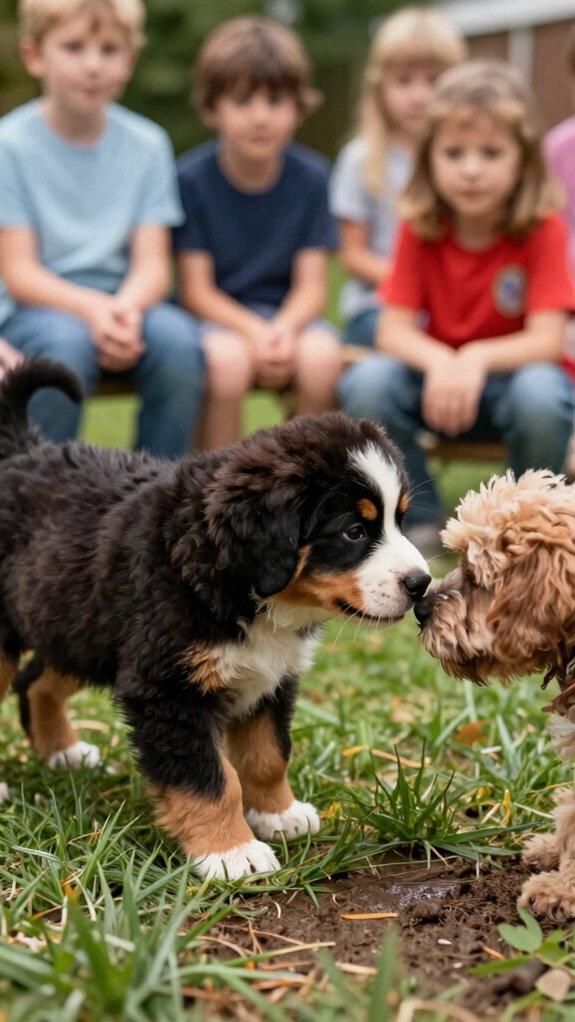
Socialization during your Bernese Mountain Dog puppy’s 3–12 week window helps build confidence around people, animals, sounds, surfaces, and new places.
After vaccination guidance, offer calm, positive experiences, avoiding unfamiliar dogs until fully vaccinated.
Give your puppy a week or two to bond, then continue controlled introductions.
- Practice Calm Handling with gentle touches and treats.
- Use Stranger Safety by letting your puppy watch, then approach voluntarily.
- Visit quiet indoor gatherings, classes, and varied surfaces.
If your puppy hangs back or presses against you, increase distance and never force contact.
Reward calm curiosity, gradually moving closer as comfort grows.
Predictable settings help prevent lockdown and make your puppy feel included.
Leash Skills
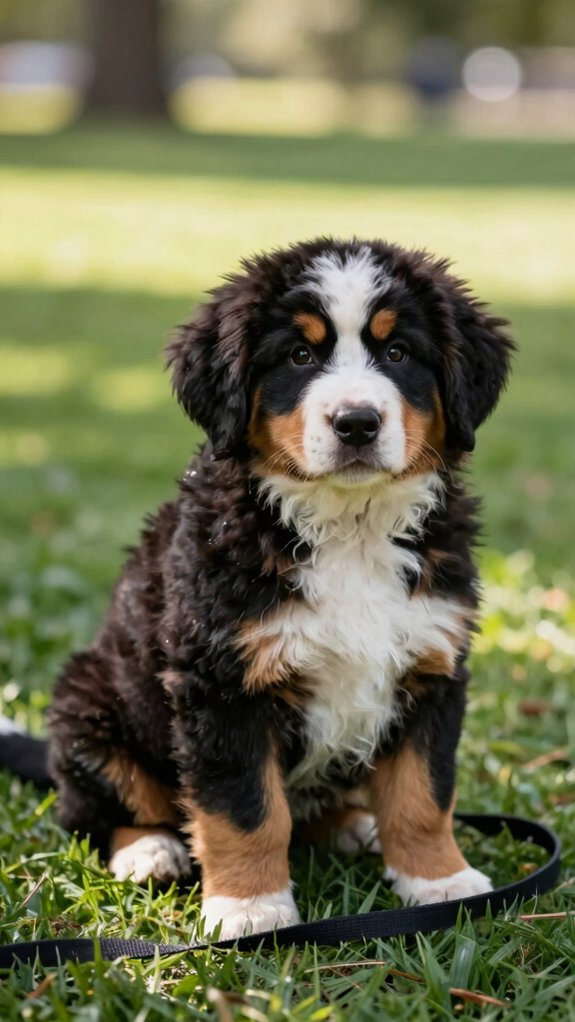
From day one, teach your Bernese Mountain Dog puppy that walking beside you brings good things. In a quiet area, reward your puppy for staying near your leg and moving calmly, using clear reward timing and gentle clicker cues.
Keep sessions to a few minutes, ending after several successes. A front-clip tackling can reduce pulling and give you better control without harsh handling.
If your puppy forges ahead, stop and wait for slack before moving again, so pulling doesn’t earn forward motion. Never yank or jerk the leash, because unpleasant corrections may cause anxiety or refusal. Practice regularly, then slowly add distractions as your shared routine grows.
Confidence Building
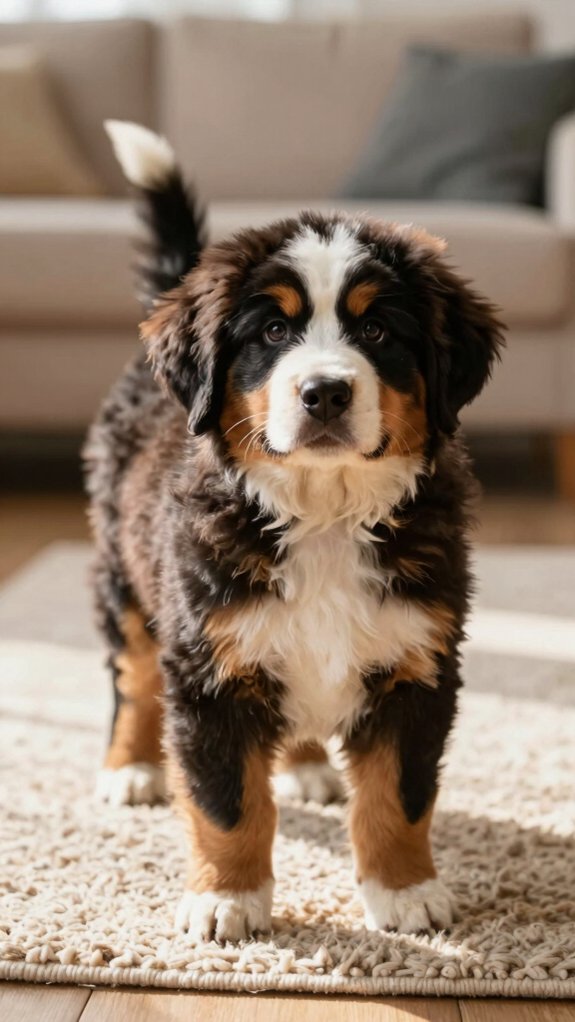
A confident Bernese Mountain Dog puppy learns through calm, gradual experiences rather than forced greetings. Begin at a distance where your Berner can watch people, animals, or new places without fear. Practice gradual greetings over days or weeks, moving closer only when your puppy stays relaxed.
Keep sessions to 5–10 minutes, once or twice daily, and introduce one new skill each week. Pair unfamiliar moments with calm rewards, then offer a quiet break.
- Visit peaceful places and follow familiar routines.
- Invite visitors to ignore your puppy at first.
- Let your puppy retreat instead of forcing contact.
With patient practice, your Berner can grow into belonging.
Positive Reinforcement
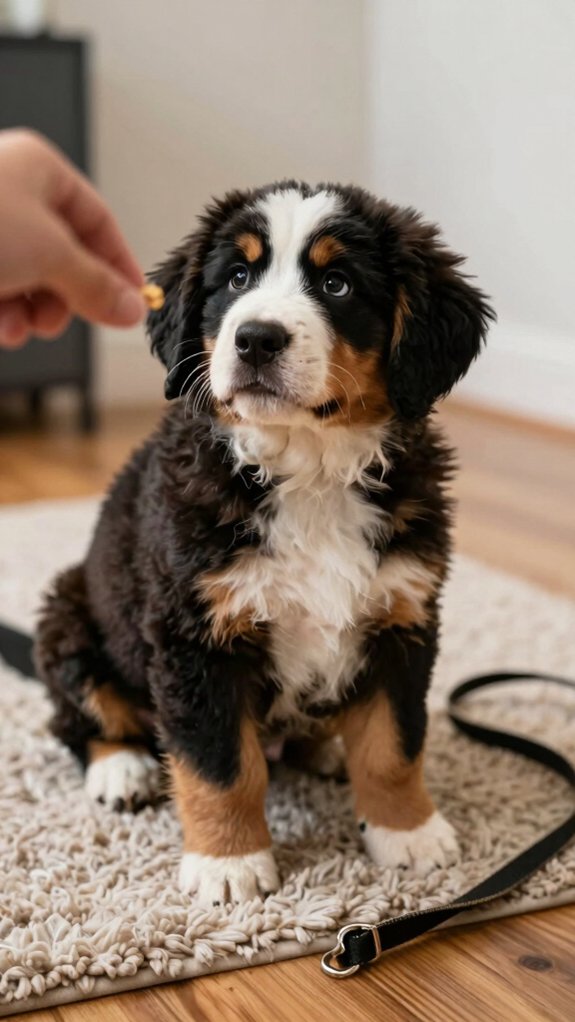
Reward-based training helps your Bernese Mountain Dog puppy understand which behaviors you want to see again. When your puppy potties in the designated area, reward immediately with a click and treat, or just a treat. Good treat timing connects the reward to the exact action.
For clicker loading, make 10–15 rapid click-and-treat repetitions, so your puppy learns that the click predicts something good. Keep sessions to 5–10 minutes, twice daily, and practice one cue at a time.
Reward calm behavior during safe social exposures, and never force contact. For leash practice, treat your puppy for walking beside you, then stop when pulling begins, without harsh corrections.
Weekly Training Goals
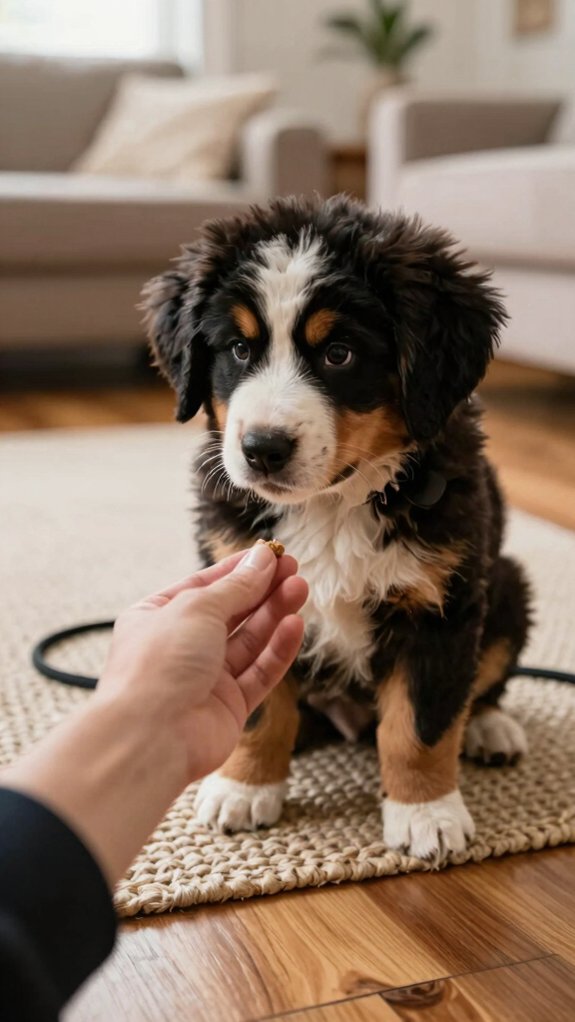
Each week, focus on one simple new cue so your Bernese Mountain Dog puppy can learn without feeling overloaded.
Start with “sit,” then introduce “down” the following week.
Keep each session 5–10 minutes, with two brief sessions daily.
- Load your clicker with 10–15 click-and-treat repetitions before marking behavior.
- Practice in calm, predictable places, rewarding relaxed choices and gentle confidence.
- Pair “go potty” with outdoor trips, then reward success immediately.
Add age appropriate play and bonding games to keep learning social and enjoyable.
Celebrate steady progress with your puppy, and your family’s training team will grow together.
Mistakes to Avoid
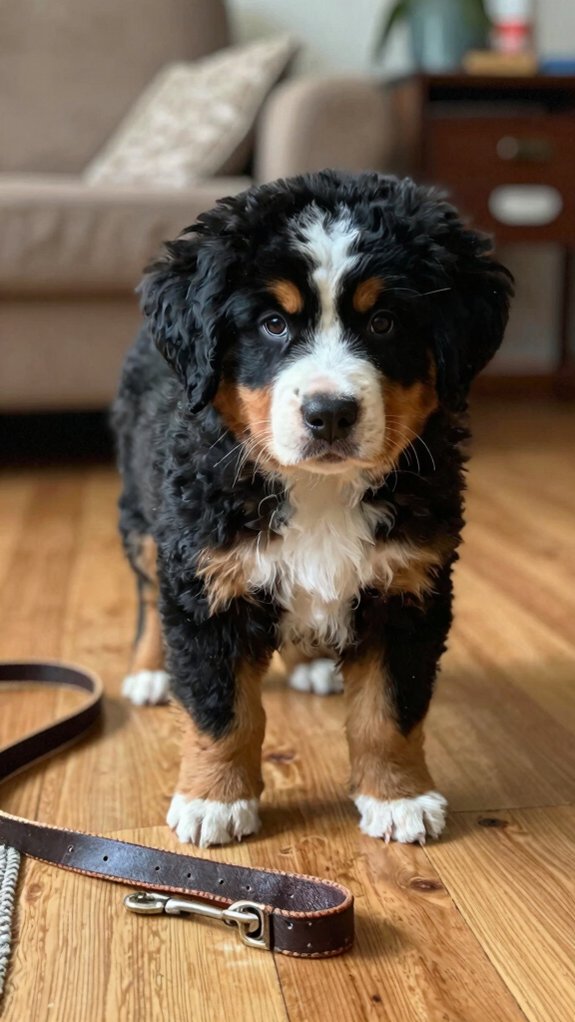
Common mistakes can slow your Bernese Mountain Dog puppy’s progress, but they’re easy to prevent with calm, consistent choices. Don’t scold accidents.
Clean them quietly, then offer potty breaks about every two hours at eight weeks.
Keep play gentle and brief, since growing joints need protection and puppies need plenty of sleep.
Use short sessions, about five to ten minutes, once or twice daily, and teach only one new cue each week to prevent confusion.
Never force greetings.
Start at a comfortable distance, reward calm curiosity, and gradually move closer to manage fear.
Avoid harsh leash corrections; choose a front-clip strap and reward loose-leash walking.