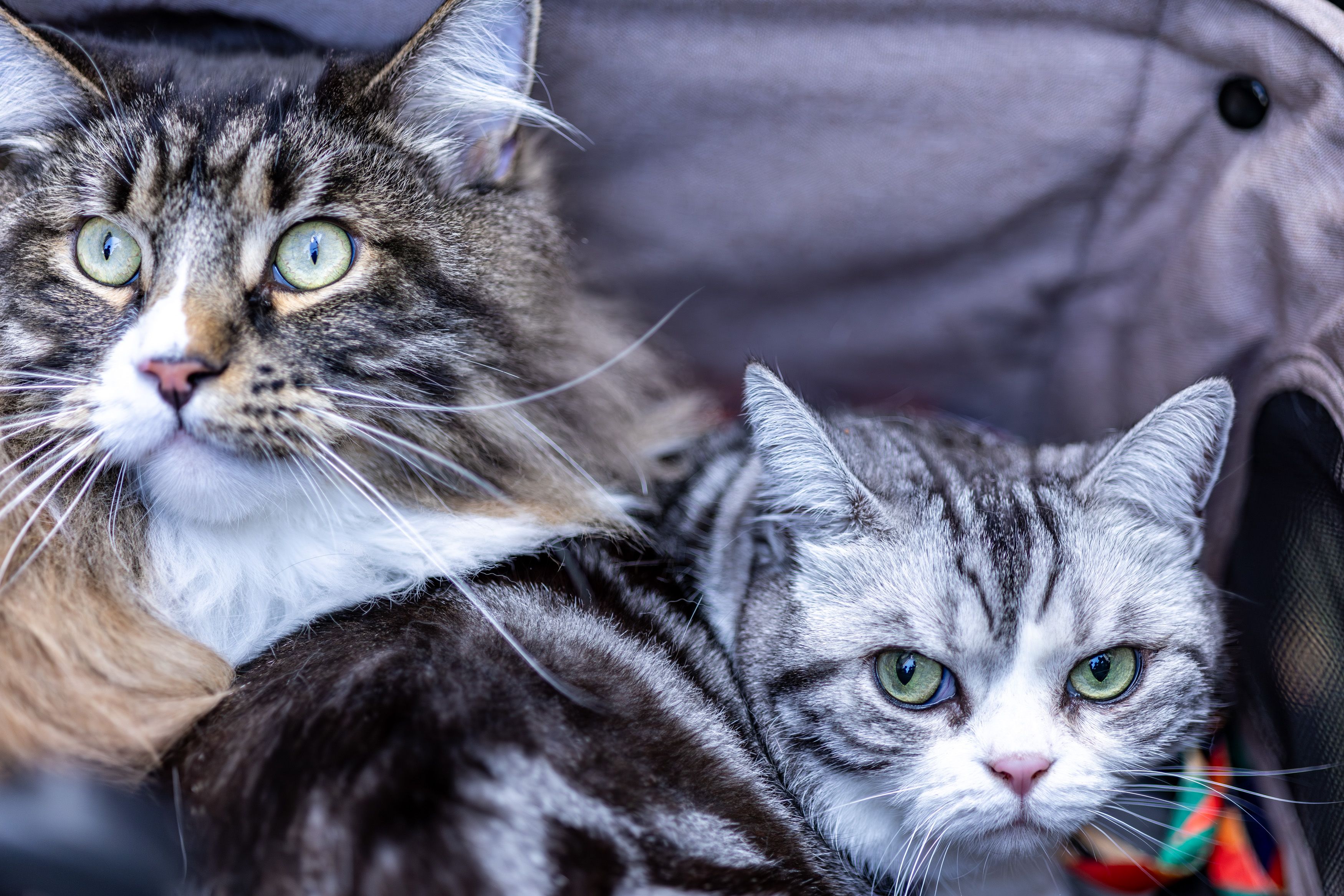
Choose a British Shorthair if you want a calm, independent companion for an apartment or smaller home, with weekly brushing and gentle daily play. Choose a Maine Coon if you have more space, time for climbing, engaging games, and brushing several times a week. Maine Coons also eat more and may need extra health screening, while both breeds can develop inherited conditions. Your schedule, budget, and activity level matter most, and the comparisons below can help you decide.
Disclosure: This post may contain Amazon affiliate links, at no extra cost to you. Content on Pawtangle is created with research support from AI tools and carefully reviewed, edited, and fact-checked by the lead author, Dr.Fahri Pat , to ensure accuracy and reliability. Learn more
Key Takeaways
- Choose a British Shorthair for a calm, independent companion that enjoys staying nearby without demanding constant attention.
- Choose a Maine Coon if you want an outgoing, interactive cat that follows you, communicates, climbs, and enjoys games.
- British Shorthairs generally need weekly brushing, while Maine Coons require several grooming sessions weekly to prevent mats.
- British Shorthairs suit apartments and compact homes; Maine Coons need more floor space, sturdy climbing structures, and daily enrichment.
- British Shorthairs are usually easier for beginners, while Maine Coons require higher food, grooming, enrichment, and health-screening commitments.
Personality Differences
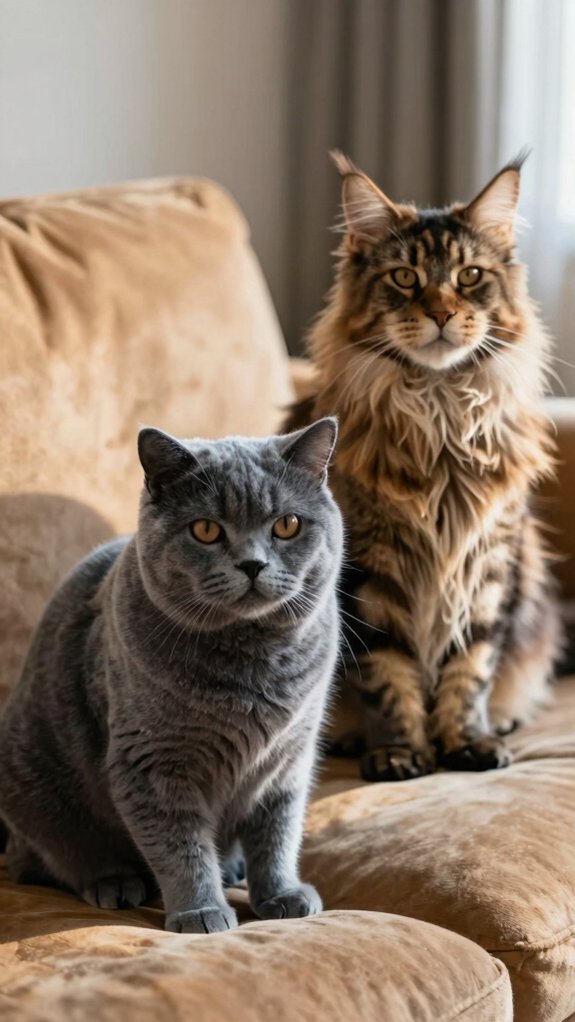
When it comes to personality, the British Shorthair is usually calm, predictable, and dignified, while the Maine Coon tends to be more outgoing and involved. These temperament patterns can help you find the right match for your home.
A British Shorthair often enjoys staying nearby without demanding constant attention. They suit quieter households and may handle regular alone time well. Expect gentle play and a calmer adult personality by about three to five years.
A Maine Coon usually wants to join your activities, follow you around, and communicate more often. Their interaction styles fit families seeking an involved companion, but long periods alone may cause stress or destructive behavior.
Grooming Requirements
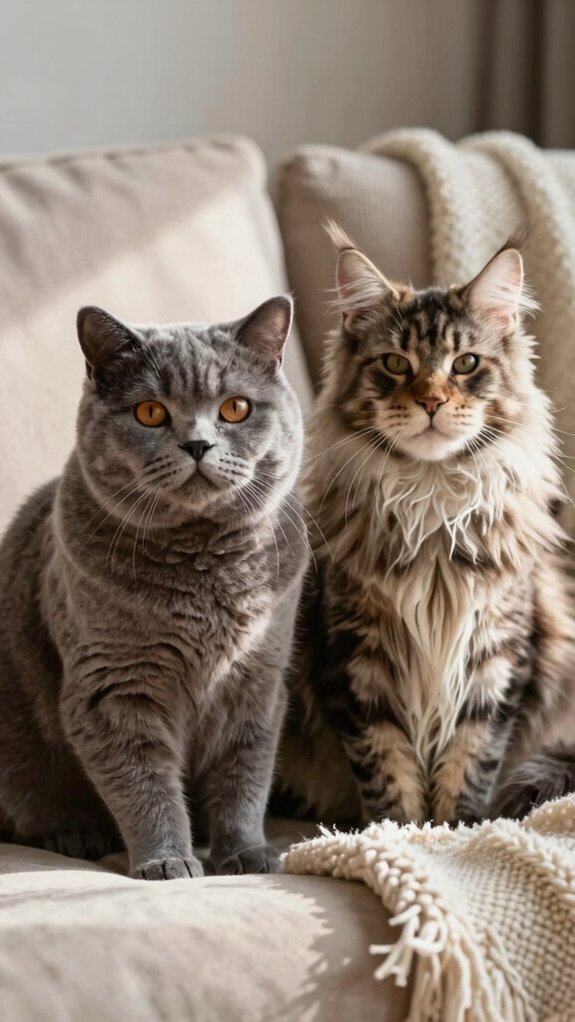
Grooming is fairly simple for a British Shorthair but takes more time with a Maine Coon. Your British Shorthair needs weekly brushing, then seasonal brushing two or three times weekly in spring and fall. Its dense coat sheds shorter hairs steadily.
Your Maine Coon needs several sessions each week, since long hair can mat behind ears, under legs, and on the belly. Regular coat maintenance keeps shared care calm and comfortable.
| Cat | Routine | Main concern |
|---|---|---|
| British Shorthair | Weekly | Dense undercoat |
| Maine Coon | Several times weekly | Mats and long hairs |
Choose the routine that fits your household, and you’ll help your cat feel cared for.
Energy Levels
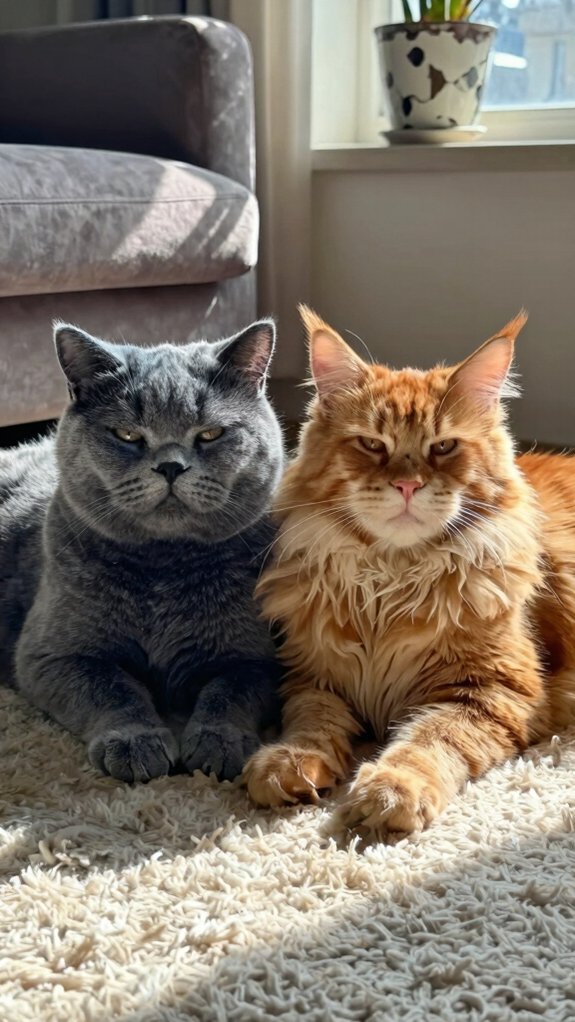
Maine Coons usually stay more energetic throughout adulthood, following you around, climbing, and enjoying engaging games such as fetch.
You’ll need regular engagement playtime, enrichment, and attention to help them feel content, especially if you’re away for long stretches.
Their energy management works best with a predictable daily routine.
British Shorthairs suit you if you prefer a calmer companion.
They often mature into a laid-back pace by three to five years, with two short bursts of gentle play each day.
Offer low-impact toys and let your cat rest between sessions.
Both breeds can join your household happily when their activity needs match your lifestyle.
Space Requirements
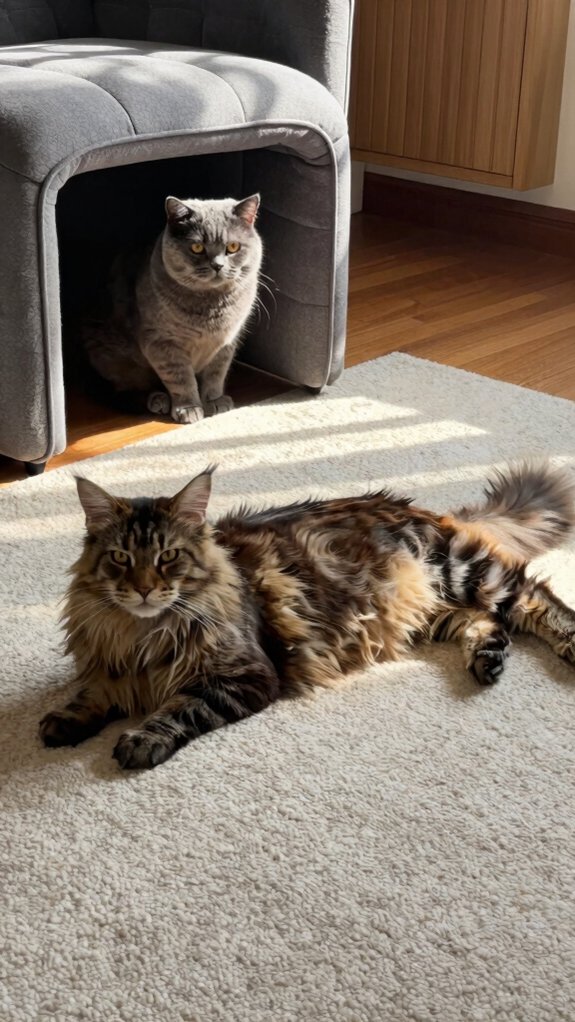
Your available space can make one breed a better fit than the other, especially after considering their different activity levels. A British Shorthair suits a small home, apartment, or compact room because its sturdy body and calmer routine don’t demand much territory.
A Maine Coon needs more planning. Its larger frame and lifelong playfulness call for open floor space, climbing areas, and daily stimulation. Add vertical enrichment with a strong cat tree or secure shelves.
- Choose a British Shorthair for space-light living.
- Choose a Maine Coon if you have room to roam.
- Measure furniture, paths, and climbing zones before welcoming.
Either way, thoughtful setup helps your cat feel at home.
Family Compatibility
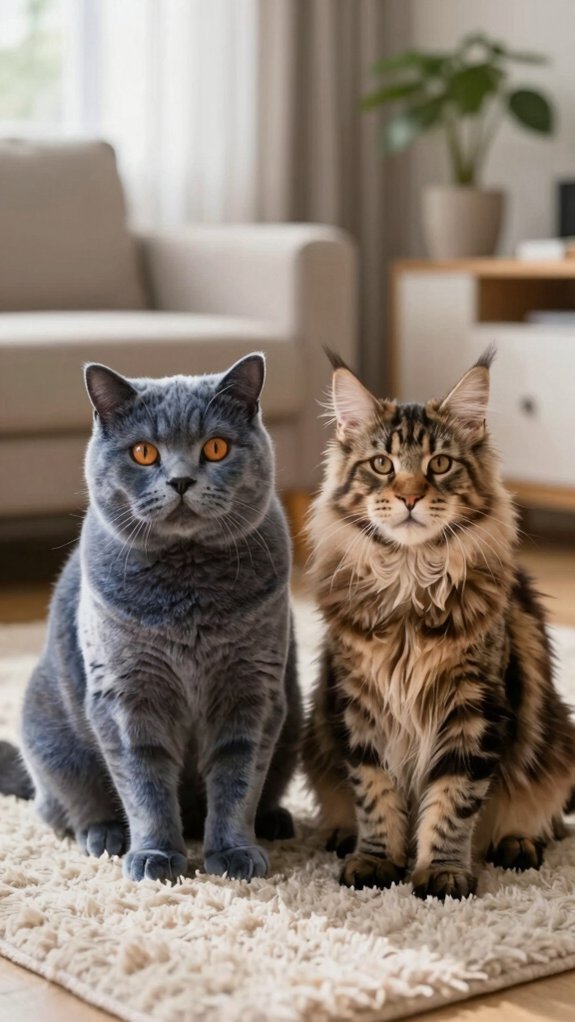
When choosing a cat for your household, consider how each breed fits your family’s daily rhythm.
Both breeds show kid friendly behavior and can become trusted companions, but they express affection differently.
Maine Coons are sociable, playful gentle giants that may follow you from room to room.
They suit active families and children who enjoy engaging play.
British Shorthairs offer calm, dignified companionship and don’t need constant attention, making them a good match for quieter or busier homes.
Consider multi cat interactions, too.
Maine Coons often enjoy lively animal companions, while British Shorthairs usually prefer peaceful interactions.
Short daily play sessions can support either breed.
Cost of Ownership
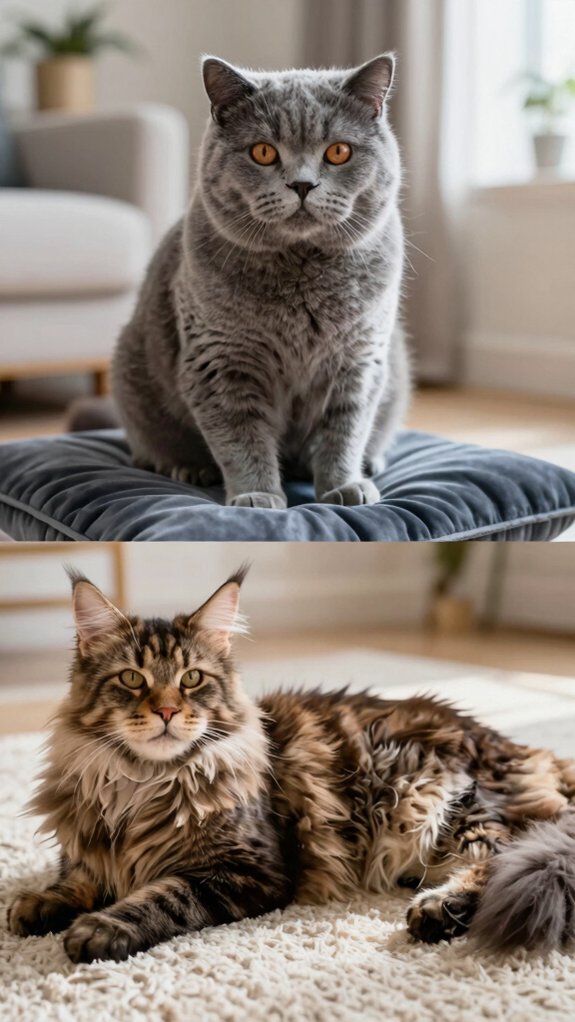
Budgeting matters just as much as temperament, especially with cats that may share your home for 12 years or more. Your Budget planning should include the purchase price, supplies, food, grooming, and vet expenses.
- Maine Coons often cost $2,500–$6,000+, while British Shorthairs run $3,000–$6,500+, with golden or silver coats sometimes costing more.
- Maine Coons usually eat more because they’re larger, so monthly food bills may rise.
- Their long coats can require more grooming than a British Shorthair’s dense, weekly-brushed coat.
Responsible breeders may charge more for testing, but screening can help your household avoid surprise costs and plan confidently together.
Health Considerations
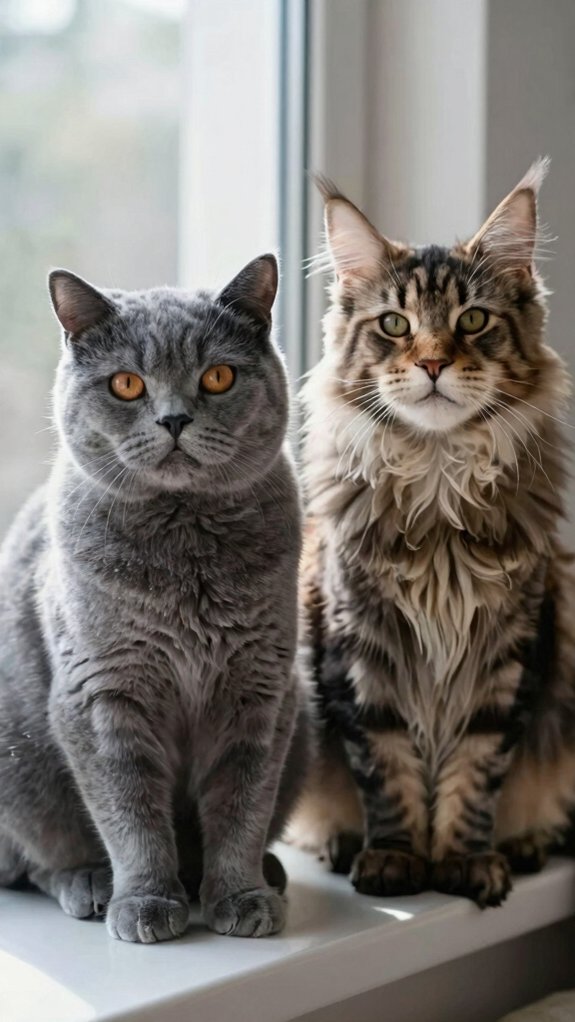
Good health planning starts with knowing the risks linked to each breed, not just choosing the cat with the cutest face. Maine Coons face higher risks of HCM, hip dysplasia, and rare, testable SMA. British Shorthairs can develop HCM too, plus obesity, dental issues, and occasional PKD.
Before you join a breeder’s family, ask for HCM screening, genetic testing, and Maine Coon hip or SMA evaluations. For British Shorthairs, ask about PKD records and dental health.
Keep vaccination schedules current, provide regular dental care, and practice weight management.
Help your Maine Coon stay mobile with measured meals, gentle play, and supportive surfaces.
Lifespan Comparison
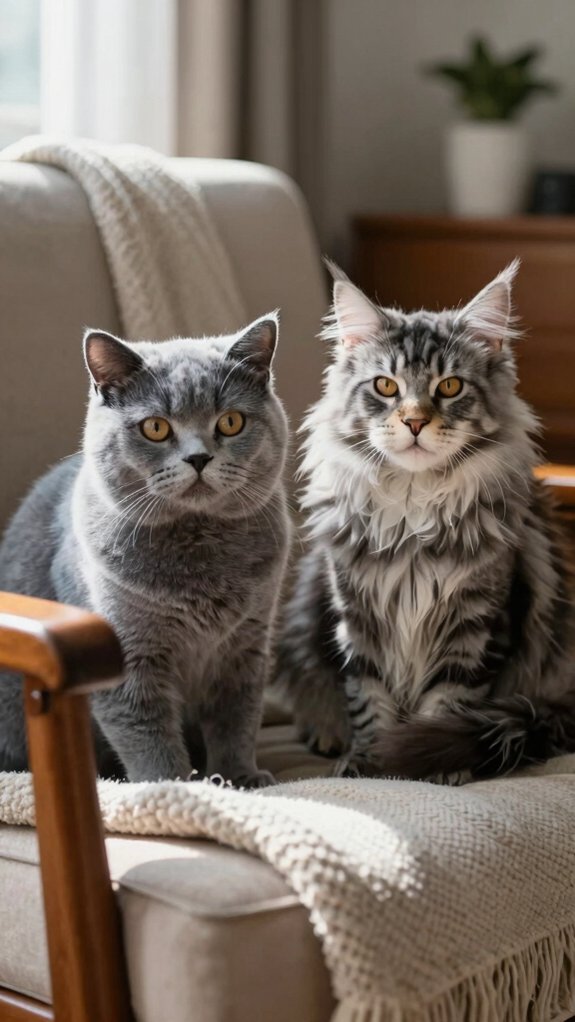
Both breeds can share your home for many years, with Maine Coons often living 12–15 or more years and British Shorthairs commonly reaching 12–18 years.
British Shorthairs usually edge ahead, though individual genetics and care matter more than a promise.
You can support a longer, healthier life by focusing on:
- Weight management: Keep portions measured and activity steady, especially for large Maine Coons.
- Senior care: Watch for stiffness, appetite changes, or slower movement as your cat ages.
- Routine checks: Ask your vet about heart screening, including HCM, and regular wellness exams.
With thoughtful care, you’ll enjoy more years together.
Which Breed Is Easier for Beginners?
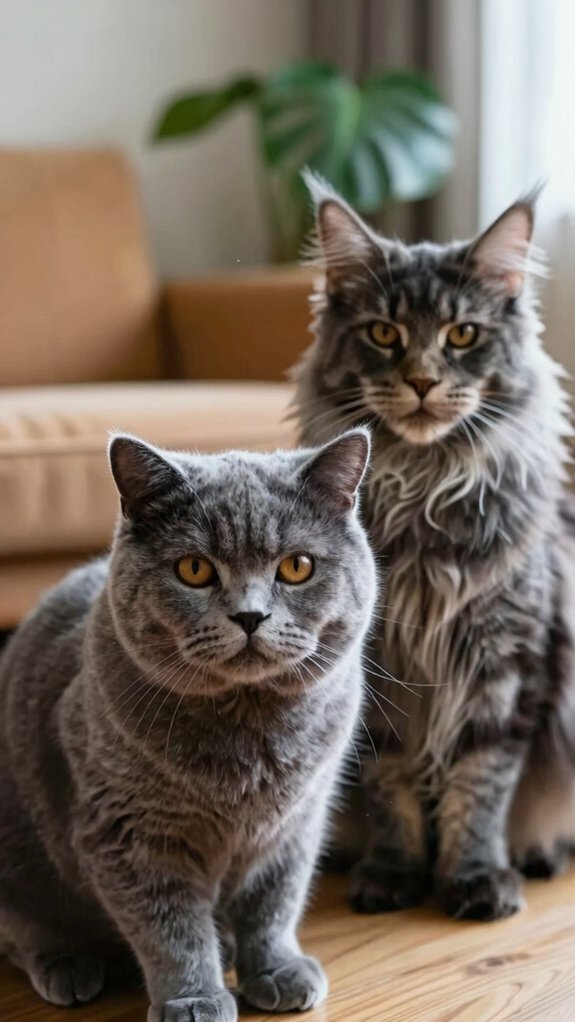
If you’re choosing your first cat, a British Shorthair is usually the easier fit because it’s calm, independent, and fairly low-maintenance. You’ll usually manage with two short play sessions daily, plus weekly brushing for its dense coat.
Its steady temperament supports simple Temperament training, and it often handles Routine acclimation without demanding constant attention. That makes it a comfortable companion for a new owner.
A Maine Coon can also suit you, especially if you want an outgoing, engaging cat, but you’ll need more daily enrichment and brushing several times weekly. Its larger size and HCM risks also require extra health planning and screening.