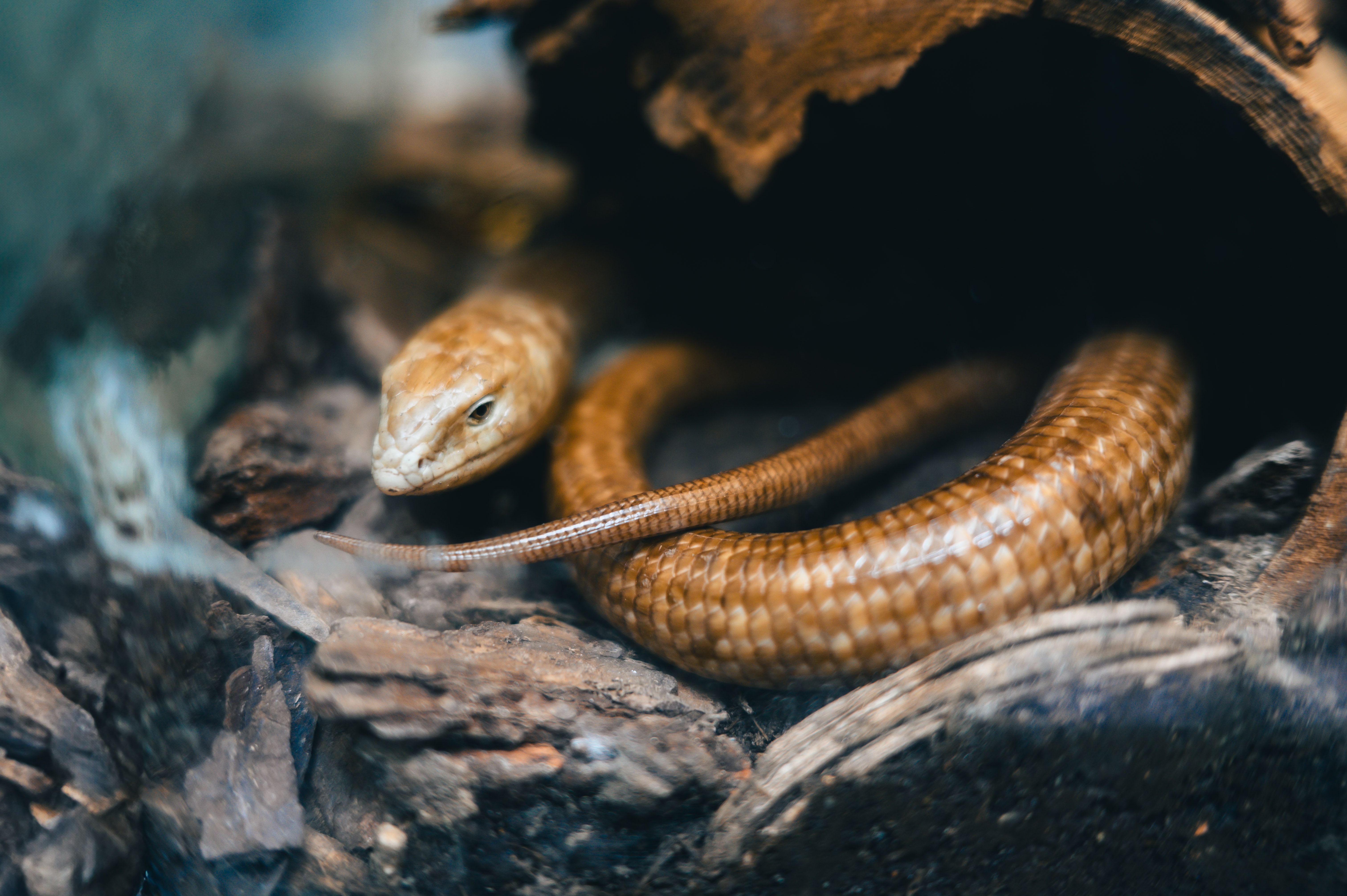
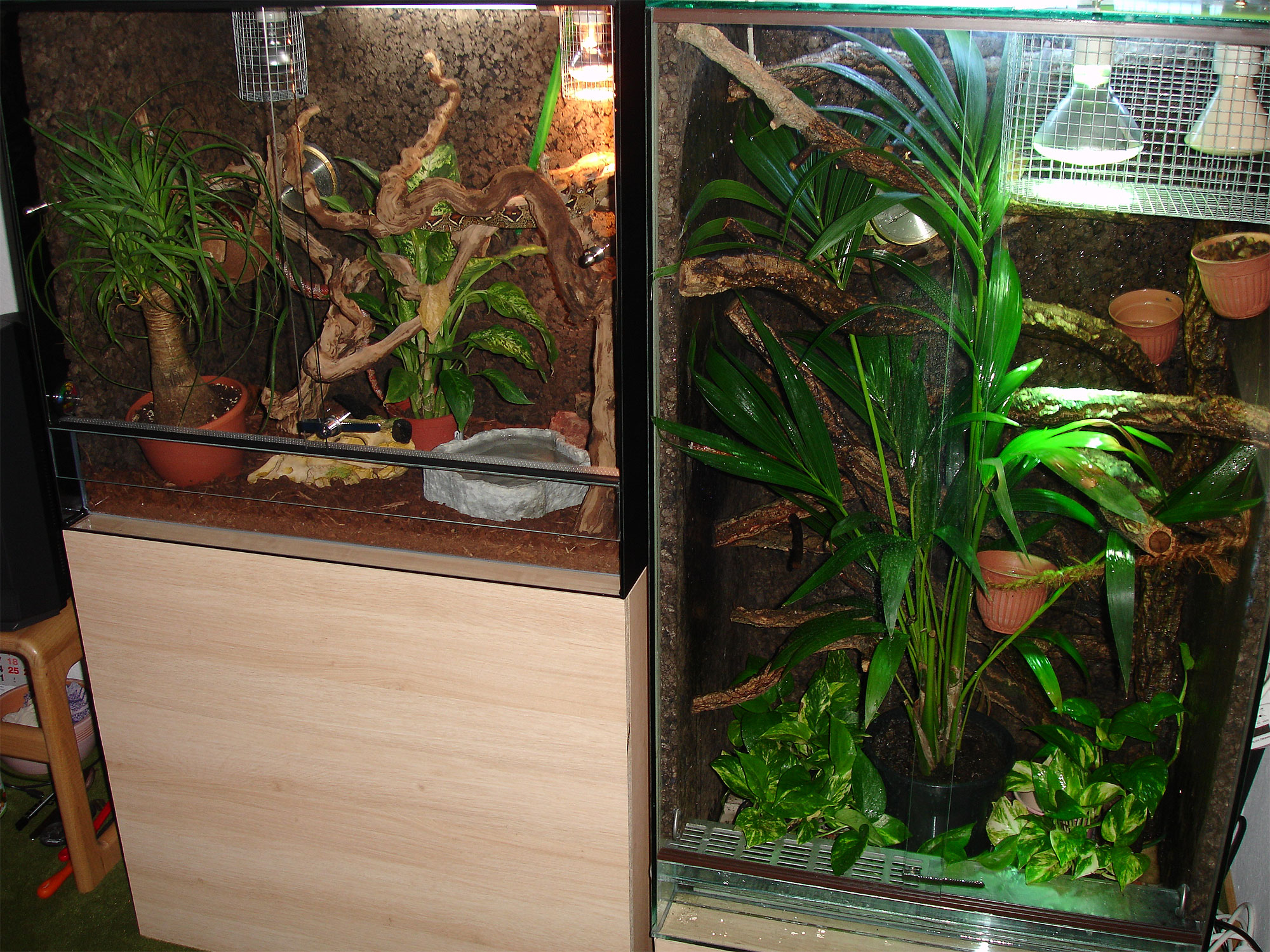
A properly set up enclosure will provide your snake with space to move around, places to hide and the correct environment to live a healthy life. Whilst an attractive enclosure may seem like the ideal choice, it should provide your specific species of snake with a feeling of security, regulate their body temperatures, allow them to explore and exhibit natural behaviours.
Disclosure: This post may contain Amazon affiliate links, at no extra cost to you. Content on Pawtangle is created with research support from AI tools and carefully reviewed, edited, and fact-checked by the lead author, Dr.Fahri Pat , to ensure accuracy and reliability. Learn more
Know what species you have. It is important to know what size they will grow to as an adult. This will ensure that you can provide the correct temperatures, humidity levels and habitat. Different species such as corn snakes, kingsnakes and ball pythons will have different setups. You should research what the correct care is for your specific species.
Choose an Enclosure That Fits Your Snake
Your snake should have ample space to stretch out, travel between areas of the environment, and explore. This can be both horizontally and vertically. Floor dwelling species will likely benefit from more horizontal space however climbing species will need safe branches and vertical space.
Use a housing made from an easy to clean material that will allow you to keep the right environmental conditions. Ensure good ventilation but avoid any escape routes. Be very careful with the doors, lid, cable entry points and ventilation areas as snakes can escape through very small gaps.
- Research the adult enclosure requirements for your exact species.
- Choose a secure, escape-resistant enclosure with suitable ventilation.
- Make sure doors and lids lock or fasten securely.
- Position the enclosure away from direct sunlight, radiators, and drafts.
- Plan the layout before adding heavy decorations or heating equipment.
The RSPCA recommend that your corn snake will need a large enclosure to fully extend itself and maintain a good thermal gradient. Your enclosure should be safe and enriching. Different species will have different space and habitat requirements so make sure to look up your specific care guide.
Create a Warm Side and a Cool Side
Snakes are ectothermic meaning they need outside heat sources to control their body temperature. A good enclosure should have a temperature gradient with one side warm and one side cool so that your snake can choose where to rest.
Add a suitable heat source at the end of the enclosure. Use thermostats to control your heating appliances and also, if using heat lamps add a guard to protect against burns and injury. Check the temperatures at the height your snake will be moving about at.
- Use reliable digital thermometers to check the warm and cool areas.
- Use a thermostat with every heat source that requires temperature regulation.
- Check the basking area separately if your species needs one.
- Follow species-specific guidance for daytime and nighttime temperatures.
- Recheck the setup after changing lamps, substrate depth, or decorations.
The correct temperature for your pet snake will depend on the type of snake you have. For example, the RSPCA recommend a hot spot of 28-30c with a cool spot of 20-24c for corn snakes. This should not be used as a guide for other snake types though.
Provide Secure Hiding Places
Providing hiding spots will help your snake feel secure. Provide at least one hide that is the correct size for the warm area and another for the cool area so your snake can choose what temperature it wants to be.
A good hide should be solid, easy to clean and large enough for the snake to curl up inside. Many snakes like a tight hide so that they are touching the sides of the hide with their bodies. The hide should not contain any sharp items or anything that may cause instability. There should also not be any areas that could get the animal stuck.
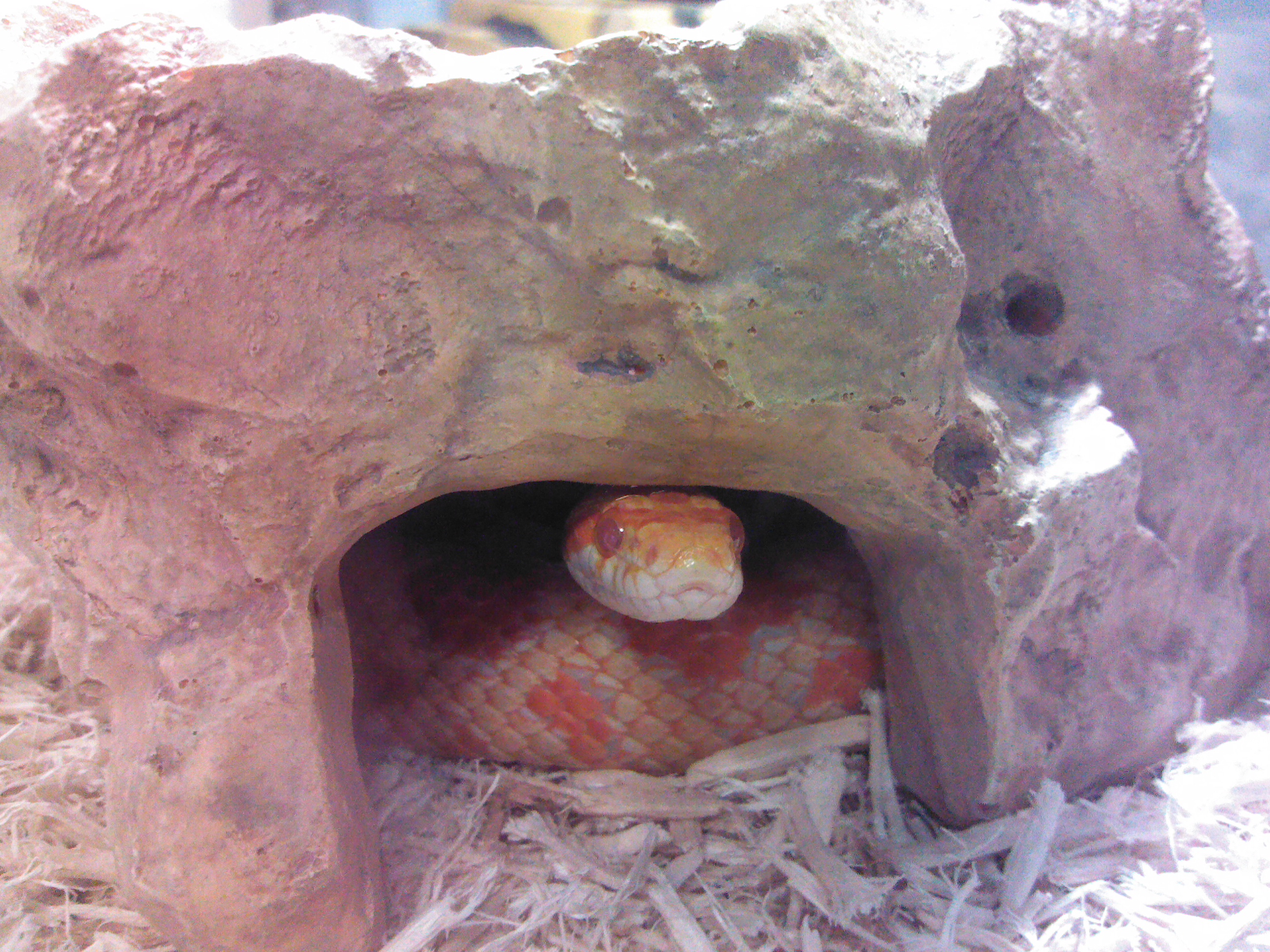
- Provide hides in both the warm and cool zones.
- Add extra cover if the enclosure has large exposed areas.
- Consider a humid hide if it suits your species and its shedding needs.
- Make sure hides cannot tip over or collapse when the snake moves.
More hiding places can be useful when they create meaningful choices without blocking movement or making the enclosure difficult to clean. For detailed guidance, consult the RSPCA corn snake care guide or the relevant guide for your own species.
Choose Substrate for the Species
The type of substrate you use underneath your enclosure will depend on what type of behaviour your snake would naturally perform, what humidity they require and their general health. Substrates can offer your snake somewhere to burrow, the correct level of humidity and create a more interesting environment.
Depending on the species, good options may include a reptile friendly soil mix, aspen, bark based and paper based substrates. It is best to avoid using any scented items, there isn’t an ideal substrate for all snakes. Avoid any items that contain potentially harmful additives.
- Choose a substrate recommended for your particular species.
- Provide enough depth for burrowing when the species benefits from it.
- Remove waste and contaminated material promptly.
- Prevent persistent dampness and mold.
- Ask a reptile-experienced veterinarian for advice if skin or respiratory problems occur.
The RSPCA recommend providing your corn snake / kingsnake with appropriate soil based substrates. Kingsnakes should not be placed on pure sand substrates as this can cause irritation to their skin. Always refer to species specific advice to ensure you are using the correct substrate. If you feel the need to provide a mixed substrate ensure you do your research.
Monitor Humidity and Support Healthy Shedding
The humidity affects your snakes skin, breathing and shedding. You should use a hygrometer to measure the actual humidity inside the enclosure. This will vary depending on the snake species but can also depend on the ventilation and type of substrate used in the enclosure.
Humidity can be managed using appropriate substrates, water sources, ventilations and by providing your snake with the correct amount of humidity. Some snakes will benefit from having a humid hide, however it shouldn’t get too dirty.
- Measure humidity with a reliable hygrometer.
- Follow guidance for the exact species rather than using a universal target.
- Keep the enclosure clean and adequately ventilated.
- Watch for repeated incomplete sheds or unusual skin changes.
If shedding problems are recurring, or there is evidence of retained eye caps, wheezing or skin lesions, this could be a sign of a husbandry issue or illness. Do not just increase humidity but instead contact a vet who has experience with reptiles. If symptoms continue or appear serious.
Add Branches, Foliage, and Enrichment
Naturalistic snake tank ideas can really make a difference by using appropriate decor. Using items such as branches, cork bark and plants will provide hiding spots and prevent your snake seeing too much of the tank. This encourages them to explore the space. Providing climbing areas will be especially beneficial to species which are natural climbers.
Arrange your enclosure so that your snake has to move between sheltered areas and does not have to travel across open areas. Fix any branches or heavy items so they cannot fall, move or cause your snake to get stuck underneath.
- Use sturdy branches appropriate for the species and snake’s size.
- Add foliage or cork cover to create several routes through the habitat.
- Check decorations for sharp edges, loose pieces, and unstable supports.
- Use natural materials only when their source and preparation are safe.
- Inspect plants and artificial foliage for exposed wires or potentially harmful materials.
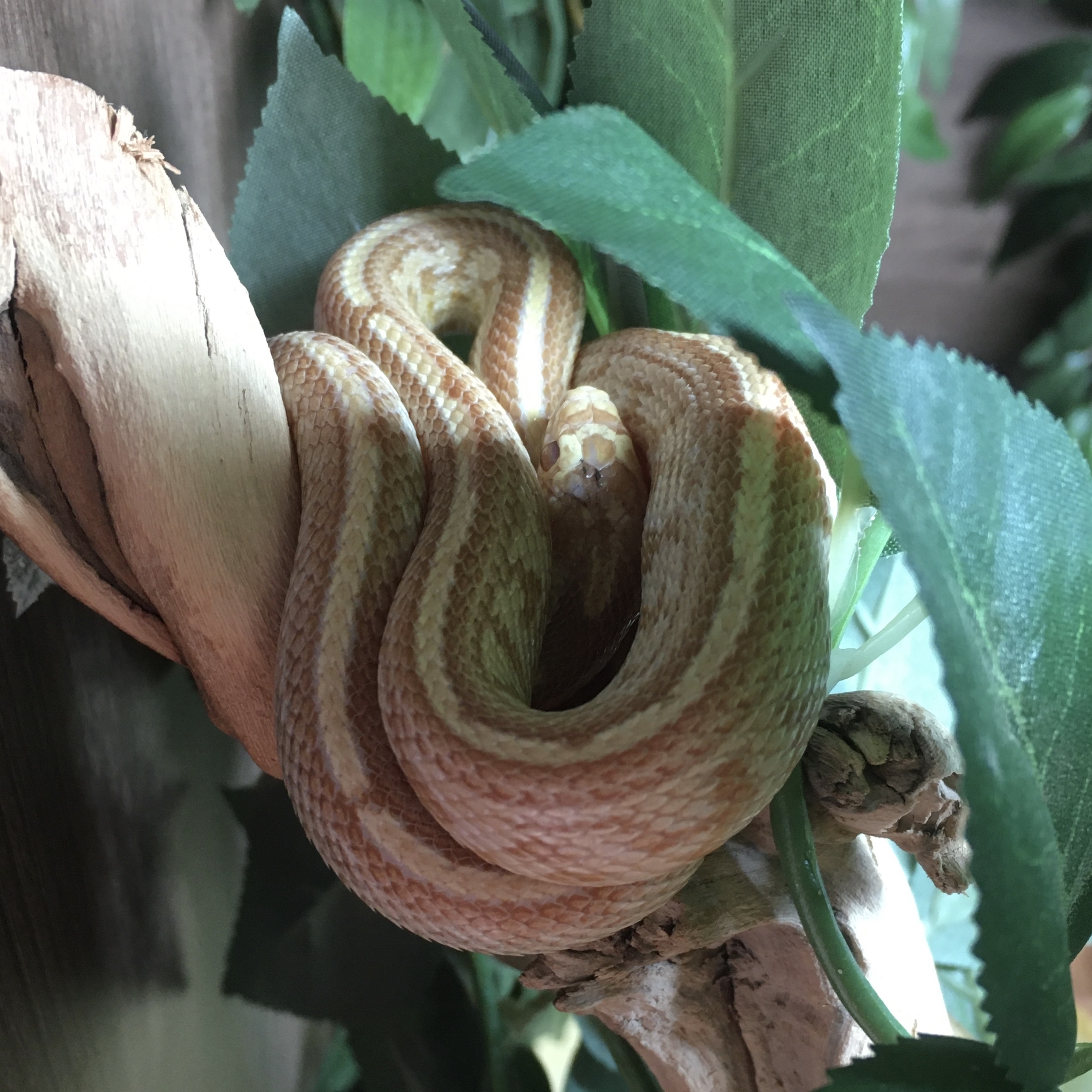
Branches can help corn snakes to climb and enrichment will help to ensure your snakes exhibit natural behaviours. This can be used to inspire how you set up their enclosure, however it is important to tailor this to the species you are keeping.
Choose Lighting With Care
Having a fixed light/dark cycle will help provide structure to your snake’s day. The amount of lighting required will depend upon the species, set up and how much shade is available. Many snakes will benefit from being housed under the right UVB lighting. However it is important to follow species specific guidelines when choosing what type of bulb to use, the strength of the bulb, how far away it should be and for how long.
Ensure there are areas of shade where your snake can escape from bright lights. Fit bulbs in accordance with the manufacturers guidelines. Replace bulbs regularly. Don’t have bright lights on all night.
- Use a regular day and night schedule.
- Provide shaded areas and secure hides.
- Position heat and lighting equipment safely.
- Follow the manufacturer’s recommended lamp distance and replacement interval.
Provide Clean Water and Maintain Hygiene
Provide a secure bowl of clean, fresh drinking water. The bowl should be large enough for the snake to drink from comfortably and, if suitable for the species, to soak in. Do not place in an area where the bowl may easily be knocked over or contaminated by loose substrates.
Daily check the water and change if it gets dirty. Remove any mess quickly and clean the enclosure and accessories regularly using a reptile friendly cleaner. Follow the instructions on the product. Rinse surfaces as necessary.
Reptiles can be carriers of the bacteria Salmonella. Wash your hands before and after handling your snake or cleaning items for the snake. Store reptile items away from food.
Test the Setup Before Bringing Your Snake Home
Before putting a snake into the enclosure, make sure it is set up and everything is working. Check that there are appropriate heat gradients, humidity levels, light cycles, good ventilation and security. It is recommended by the RSPCA to run your corn snake’s vivarium for a week before putting them in so that you can adjust the heating and lighting.
- Confirm that the enclosure is secure and escape-resistant.
- Record temperatures in both warm and cool areas.
- Check humidity and ventilation.
- Make sure hides and branches are stable.
- Confirm that the water bowl is accessible and secure.
- Review the setup against a trusted guide for your exact species.
After the snake arrives, give it time to settle in. Avoid unnecessary handling during the initial adjustment period, and monitor its appetite, activity, shedding, and general condition.
Common Snake Enclosure Mistakes to Avoid
- Choosing looks over welfare. Decorations should never replace secure hides, adequate space, or suitable environmental conditions.
- Using the same temperature everywhere. A suitable temperature gradient gives the snake meaningful choice.
- Guessing humidity. Measure it and follow species-specific recommendations.
- Using unstable decorations. Branches and heavy objects must not fall or trap the animal.
- Ignoring adult size. Plan for the snake’s long-term space requirements.
- Skipping equipment checks. Inspect heat sources, thermostats, lamps, doors, and decorations regularly.
Frequently Asked Questions
What should a pet snake enclosure include?
An appropriate enclosure will provide enough space, safe doors, good ventilation, a correct thermal gradient, appropriate substrate, places to hide, clean water and enrichment. The lighting and humidity should be correct for your snake.
How many hides does a snake need?
Provide at least one appropriately sized hide in the warm zone and one in the cool zone. Additional cover or a humid hide may be useful depending on the species and its needs.
Can I use a glass aquarium for a pet snake?
Whilst some enclosures can be made aquaria-like for certain snake species, a regular aquaria may not be safe, with good ventilation and correct access. It is best to use an enclosure specifically designed or made safe for your species of snake. Prevention of escape should be a priority.
Do all pet snakes need the same temperature and humidity?
No. Requirements differ between species and can depend on life stage and individual circumstances. Use a reliable species-specific care guide and consult a reptile-experienced veterinarian if you are unsure.