You can keep kibble fresher, pests away, and feeding simple with airtight, BPA-free containers, stackable bins, or a pull-out food drawer for easy access. Use labeled, clear tubs to track types and open dates, rotate stock FIFO, and stash opened wet food in sealed refrigerated containers. Try eco-friendly options like bamboo or recycled plastics, and portable, leakproof containers for travel. Use a cabinet with adjustable shelves and a tidy feeding station to optimize routines — more practical tips follow.
Disclosure: This post may contain Amazon affiliate links, at no extra cost to you. Content on Pawtangle is created with research support from AI tools and carefully reviewed, edited, and fact-checked by the lead author, Dr.Fahri Pat , to ensure accuracy and reliability. Learn more
Key Takeaways
- Use airtight, BPA-free containers or stainless steel bins to keep kibble fresh, pest-free, and odor-controlled.
- Stackable, clear storage bins maximize space and let you monitor food levels at a glance.
- Label containers with food type and opening/expiration dates, using color-coding for multiple pets or diets.
- Store opened wet food in sealed containers in the fridge and follow FIFO rotation for all pet food.
- Pack travel-friendly options—collapsible bowls and divided, leakproof containers—for safe feeding on the go.
Airtight Pet Food Containers
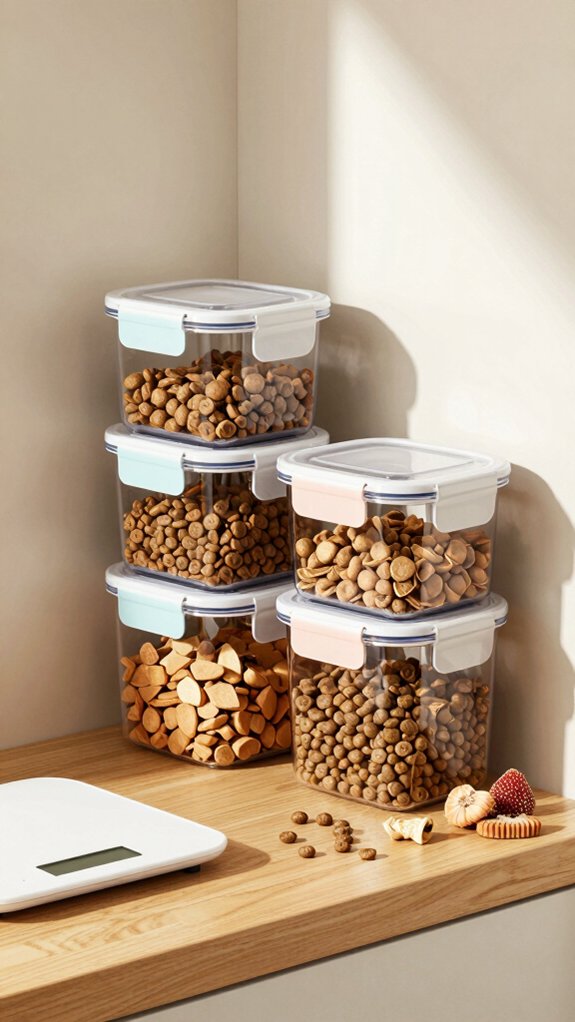
Because air and moisture speed spoilage, an airtight pet food container is one of the simplest ways you can keep kibble fresh and pests away. You’ll want containers made from the best materials—BPA-free plastic or stainless steel—to guarantee safety and durability. Look for wide openings for easy scooping with measuring cups and transparent bodies so you can monitor food levels at a glance. Consider size options that match your pet’s consumption and storage space to avoid waste. Choosing thoughtfully keeps feeding routines reliable, reduces stress, and helps you feel part of a community that cares for pets responsibly.
Stackable Pet Food Storage Bins
If airtight containers keep kibble fresh at ground level, stackable pet food storage bins help you make the most of limited space without sacrificing those same benefits. You’ll appreciate the stackable benefits and vertical organization when pantry space is tight: clear bodies let you monitor levels at a glance, and varied sizes fit different food quantities neatly. Choose bins with airtight seals to preserve nutrition and deter pests, and interlocking lids to prevent toppling around active pets. These practical, evidence-based choices keep feeding simple and communal—you’ll feel confident and supported by a tidy, reliable system.
Pull-Out Pet Food Drawer
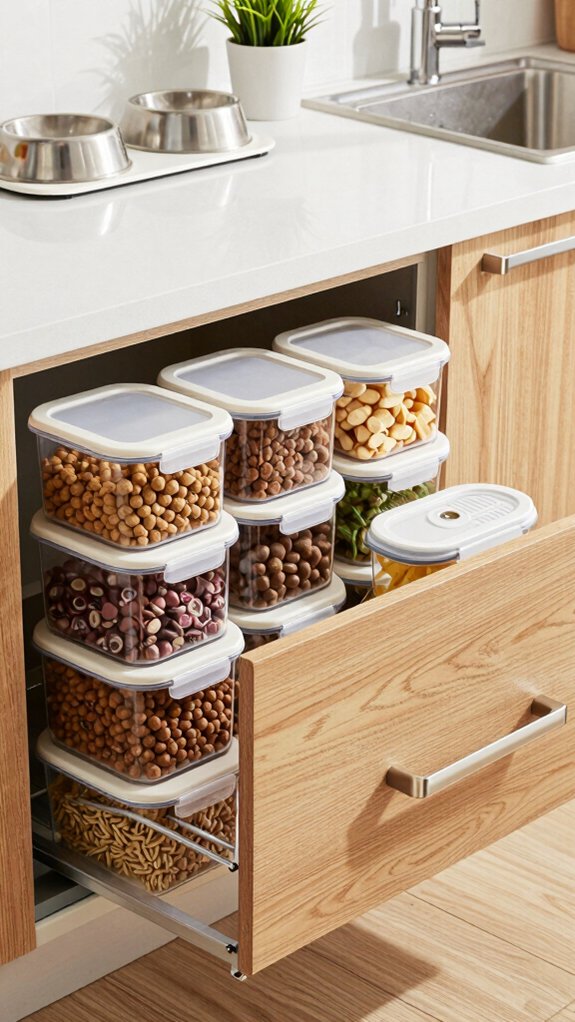
A pull-out pet food drawer gives you quick, tidy access to kibble and treats while hiding them from view, making it a smart choice for kitchens where counter and pantry space is limited. You’ll enhance space optimization by installing the drawer in underused cabinet gaps, using vertical storage efficiently. Drawer customization lets you create compartments for multiple diets, treats, and scoops, so feeding stays simple and inclusive for every pet in your home. The pull-out design reduces spills because containers stay secure and reachable. Clean and maintain the drawer regularly to keep food fresh and protect your pet’s health.
Pet Food Storage Cabinet
One well-designed pet food storage cabinet will keep kibble, treats, scoops, and bowls organized, accessible, and protected from humidity and pests. You can choose custom cabinet features like pull-out drawers, adjustable shelves, and door-mounted organizers to optimize vertical space and fit different container sizes. Incorporate weather-resistant materials to shield food from moisture and temperature swings, preserving freshness and safety. Add a fold-down feeding station to maintain a tidy kitchen aesthetic while centralizing pet meal prep. These choices improve pet food accessibility, simplify your routine, reduce clutter, and help you feel confident that your home and pet care belong together.
Pantry Pet Food Organization
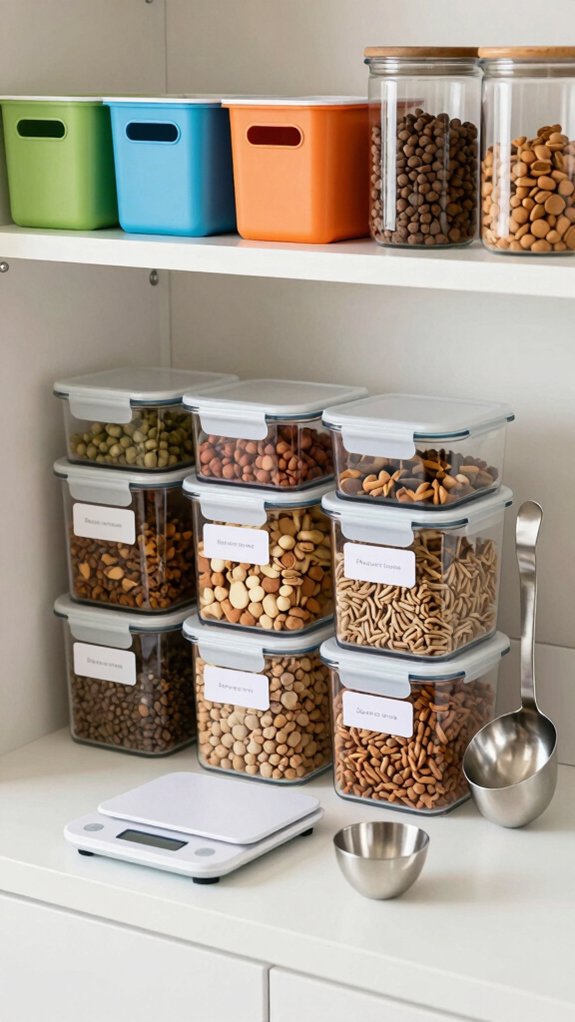
When you organize pet food in the pantry with wall-mounted shelves, labeled bins, and stackable containers, you’ll free up counters and keep everything visible and easy to reach. You’ll create a pet pantry layout that supports tidy routines and community-style sharing of chores. Use these practical steps:
- Install wall shelves and under-shelf baskets for treats and toys.
- Choose stackable, airtight containers for different food types.
- Label bins with dates and rotate using first-in, first-out food supply rotation.
- Set a designated feeding station with bowls and measuring tools for easy cleanup.
Regular checks keep food fresh and everyone confident.
Under-Counter Pet Food Storage
If you want to free up pantry and counter space, under-counter pet food storage turns overlooked areas into efficient, hidden stashes for kibble, treats, and supplies. You can install pull-out drawers or cabinets to improve under counter organization and boost pet food accessibility, keeping containers out of sight but within reach. Add door-mounted organizers for treats and leashes, and use stackable bins to separate diets, wet versus dry, or feeding stages. Choose adjustable shelving or customizable inserts so the system evolves as pets’ needs change. This practical setup saves space, reduces clutter, and helps you care for pets with confidence.
Wall-Mounted Pet Food Dispensers
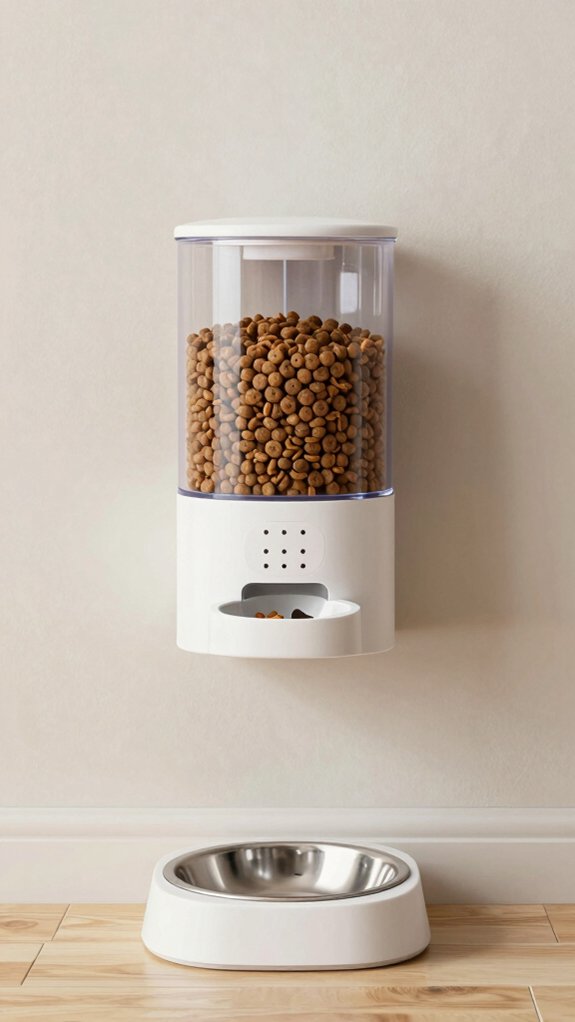
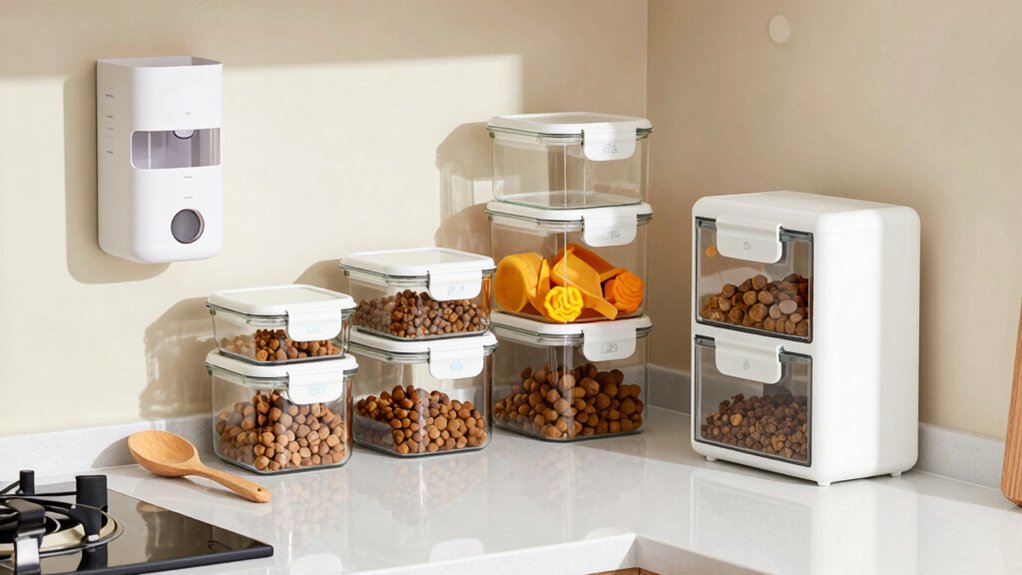
Wall-mounted pet food dispensers save floor space and give you a tidy, efficient way to store and portion food right where you feed your pet. You’ll benefit from gravity fed systems that automatically dispense kibble, support portion control, and help manage weight. Clear containers or windows let you monitor levels at a glance, so you know when to refill. These units suit mudrooms or laundry rooms and match decor for stylish organization, reinforcing a shared household routine.
- Saves floor space
- Automates portioning
- Shows food levels
- Matches room decor
Pet Food Storage with Measuring Scoop
Because accurate portions matter for your pet’s weight and health, using a storage container with a built-in measuring scoop makes feeding faster and more reliable. You’ll appreciate measuring scoop benefits: airtight containers keep food fresh, scoops fit neatly inside, and sizes (½–1 cup) match recommended servings. Use labeled scoops and portion control techniques to maintain consistent meals and track inventory, reducing waste and overfeeding. The convenience builds confidence and community—share tips with fellow owners to support each other’s routines.
| Benefit | Tip |
|---|---|
| Freshness | Airtight seals |
| Accuracy | Labeled scoop |
| Consistency | Routine feeding schedule |
Pet Food Storage for Small Spaces
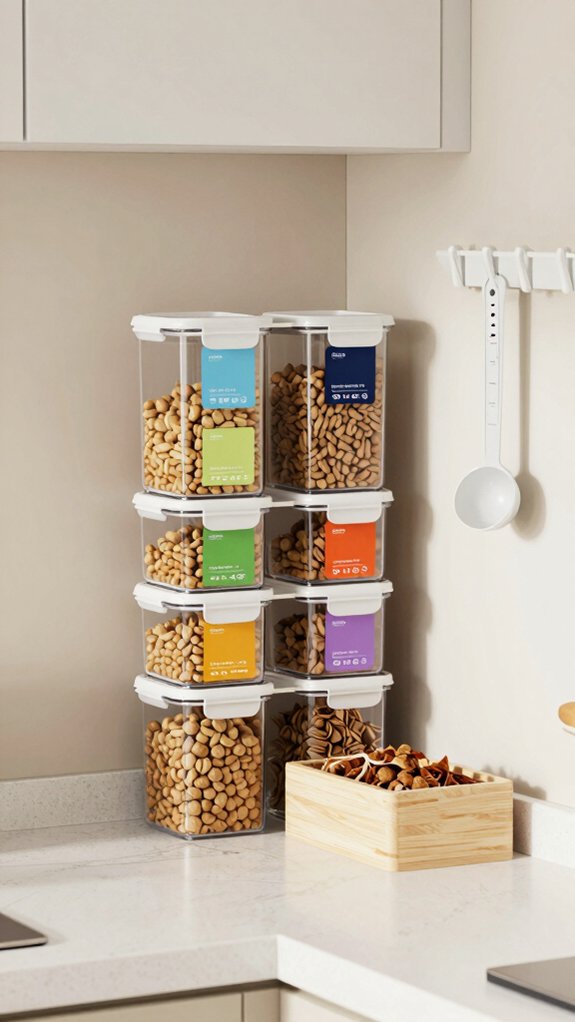
When space is tight, use vertical and hidden storage to keep bulk food accessible without clutter: stackable container sets let you store different formulas in a small footprint, under‑bed drawers or under‑stairs bins keep supplies out of sight, and a compact multi‑compartment unit organizes multiple pets’ diets in one spot. You’ll want practical, evidence‑based choices that support pet food organization and compact storage while fitting into your home. Consider these options to make feeding easier and feel like you belong to a community of thoughtful pet owners:
- Stackable containers
- Wall‑mounted gravity dispensers
- Under‑bed/under‑stairs bins
- Mobile rolling cart
Multi-Pet Food Storage System
If you’ve been using stackable bins or under‑bed drawers for a small space, consider a multi‑compartment storage system to keep multiple pets’ diets organized in one spot. You’ll store each pet’s food in separate compartments to support multi pet nutrition and prevent cross‑contamination. Modular units let you customize capacity and placement so everything’s accessible and fits your home. Use clear containers inside the system to monitor inventory and avoid surprises. With labeled sections and visible supply levels, you’ll streamline feeding schedules, reduce mixups, and create a shared, dependable routine that makes caring for multiple pets easier.
Travel-Friendly Pet Food Containers
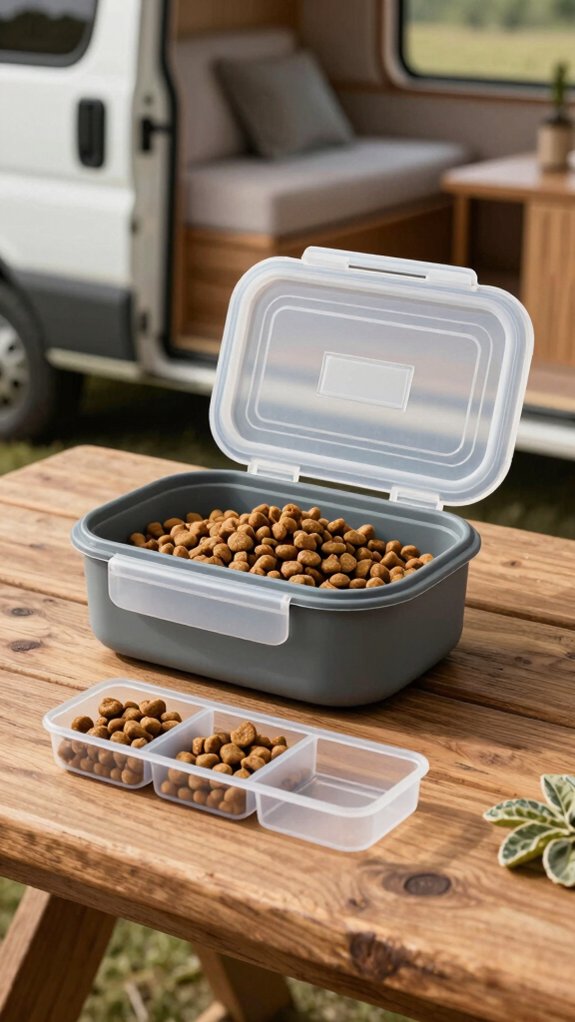
One good travel-friendly pet food container will make trips simpler by keeping food secure, portioned, and easy to carry. You’ll appreciate collapsible silicone bowls that pack flat, save space, and clean easily. Choose divided containers with secure lids to prevent spills and keep kibble and wet food separate. Waterproof bags act as lightweight backups and can double as emergency bowls. Prioritize durable, leakproof designs for camping or visits so your pet eats on schedule and you feel prepared.
- Collapsible silicone for compact storage
- Divided sections for portion control
- Secure lids to prevent accidents
- Waterproof bags for versatility
Pet Treat Storage Solutions
Because treats can lose flavor and spoil quickly, store them in clear, airtight containers so you can see what’s inside and keep moisture and odors out. You’ll label bins or jars by type to manage portion control and track dates, helping maintain treat freshness and reduce waste. Place containers in a cool, dry spot away from sunlight; decorative baskets can blend with your home while staying practical. Check regularly for spoilage signs like odd odors or discoloration and discard anything questionable. These simple, evidence-based steps help you keep treats organized, safe, and ready when you want to reward your pet.
Pet Food Storage with Label System
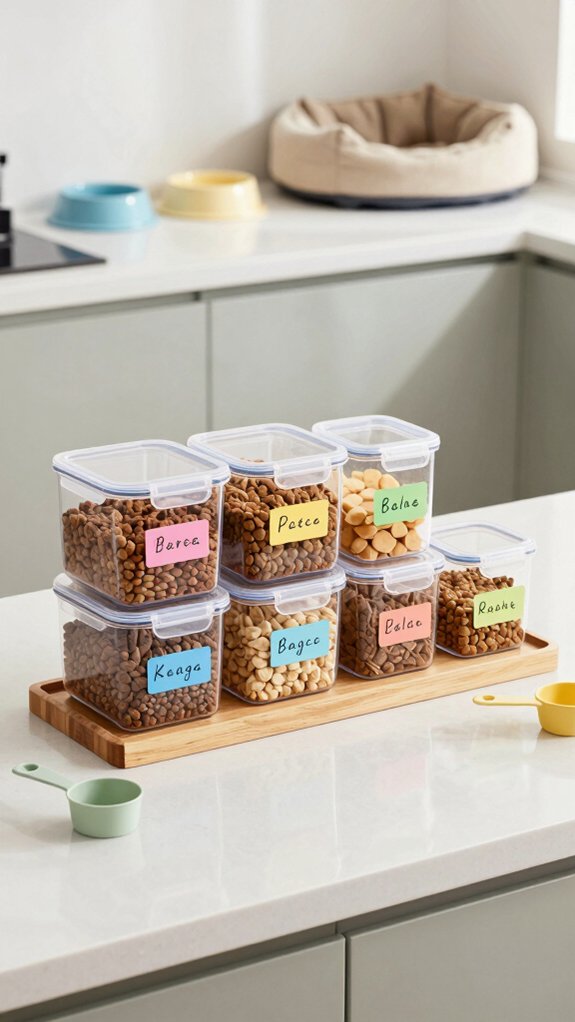
When you pair airtight containers with a simple label system, feeding becomes faster, safer, and less stressful—especially if you manage multiple pets or special diets. You’ll enjoy labeling benefits like clear ID, portion control, and tracked expiration dates. Use waterproof, removable labels and color-code by type to keep everything tidy and inclusive for household members.
- List food type (dry, wet, treats)
- Add expiration and portion notes
- Color-code for quick reference
- Replace labels as diets change
These organization strategies optimize inventory, reduce waste, prevent mix-ups, and help everyone feel confident during feeding time.
Eco-Friendly Pet Food Containers
Labels make feeding simpler, but you can go additionally by choosing eco-friendly pet food containers that cut waste and protect food quality. You’ll find options built from sustainable materials like bamboo or recycled plastics and biodegradable options that shrink landfill impact. Choose airtight, BPA-free models (brands such as OXO Good Grips or Simplehuman show this) to keep food fresh and limit chemical leaching. Look for easy-clean, reusable designs or compostable parts for end-of-life disposal. Stackable bins enhance space and keep food organized, so you and your pet feel part of a tidy, responsible household committed to practical sustainability.
Pet Food Storage for Dry and Wet Food
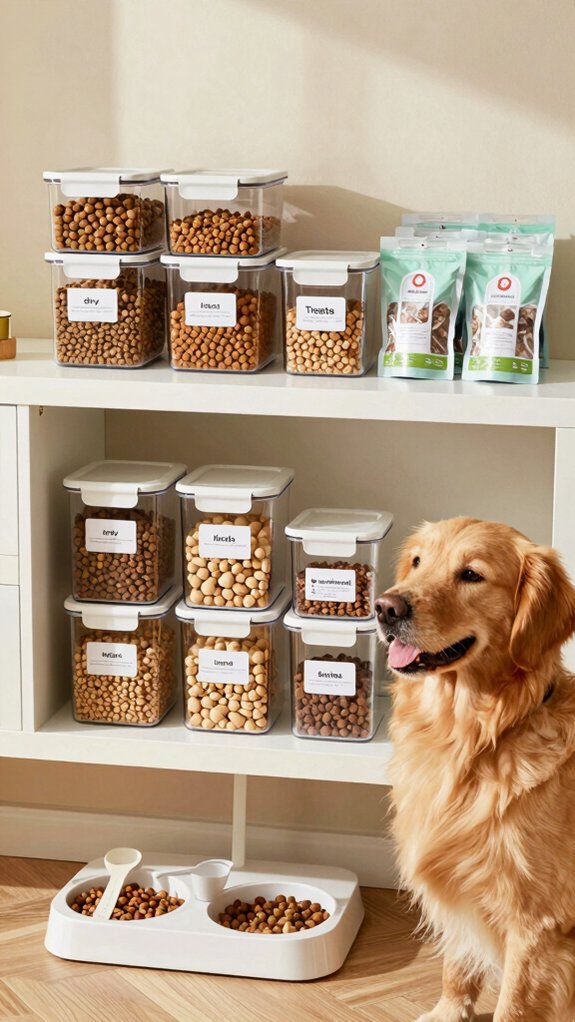
To keep both dry and wet pet food safe and fresh, store dry kibble in airtight, BPA-free containers kept in a cool, dry spot away from sunlight and heat, and move opened wet food into sealed containers in the refrigerator, labeling them with the opening date. You’ll prevent pests, spoilage, and cross-contamination by keeping dry and wet food separate and using clear bins to monitor levels. Practice expiration management and FIFO rotation so older bags get used first. Tips for reliable pet food safety:
- Use airtight, clear containers.
- Label opened wet food (date).
- Store in cool, dry area.
- Check expirations weekly.
Frequently Asked Questions
How Often Should I Rotate My Pet’s Food Stock?
About 6–12 months: studies show roughly 20% of pet food loses freshness after a year, so you should rotate stock every 6–12 months, coordinate with food shelf life, and match rotation to your feeding schedule.
Can Pests Chew Through Plastic Containers?
Yes — small pests can chew some plastic, so you’ll want pest prevention focused on container materials; choose thick, food-grade, airtight plastics or metal bins, inspect seals regularly, and share tips within your pet-care community.
Are Oxygen Absorbers Safe Around Pets?
Yes — you shouldn’t let pets access oxygen absorbers; they’re safe when sealed in pet food storage but can harm if chewed or ingested. You’ll protect your pets by storing absorbers securely and checking packaging integrity.
How Long Can Opened Wet Food Sit Refrigerated?
You can keep opened wet food refrigerated for about 3–5 days; that wet food shelf life depends on proper food storage, airtight containers, and consistent fridge temperature. You’ll protect your pet and feel confident feeding safely.
Can I Store Supplements With Regular Food?
Yes—you can often store supplements with regular food, but investigate supplement compatibility first because moisture, odors, and humidity can degrade potency; use sealed containers, separate compartments, and clear labels so everyone feels confident and included.