

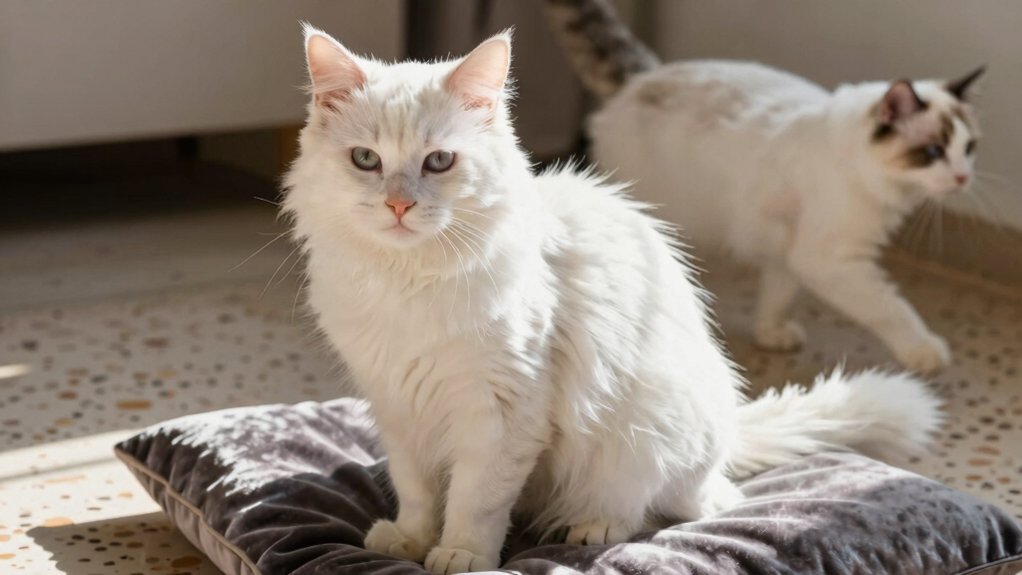
Turkish Angora cats bring elegance and energy to your home with silky coats, almond-shaped eyes, and affectionate, lively personalities. You’ll need regular play, climbing spaces, puzzle toys, and gentle, consistent boundaries to keep them involved. Brush younger cats a few times monthly, and groom older cats more often during shedding. If your white Angora has blue or mismatched eyes, schedule a hearing check. They thrive with attention, indoor enrichment, and calm family routines, as you’ll soon learn.
Disclosure: This post may contain Amazon affiliate links, at no extra cost to you. Content on Pawtangle is created with research support from AI tools and carefully reviewed, edited, and fact-checked by the lead author, Dr.Fahri Pat , to ensure accuracy and reliability. Learn more
Key Takeaways
- Turkish Angoras combine elegant, silky coats with affectionate, energetic personalities suited to engaged households.
- Their ancient Turkish origins and conservation history highlight a distinctive breed valued for beauty and heritage.
- Regular play, climbing spaces, and interactive toys help satisfy their intelligence and prevent boredom-related mischief.
- Light brushing usually maintains their sleek coat, though older cats may require more frequent grooming.
- Bright blue, amber, copper, or mismatched eyes create striking appearances; blue-eyed white cats may need hearing checks.
Breed History
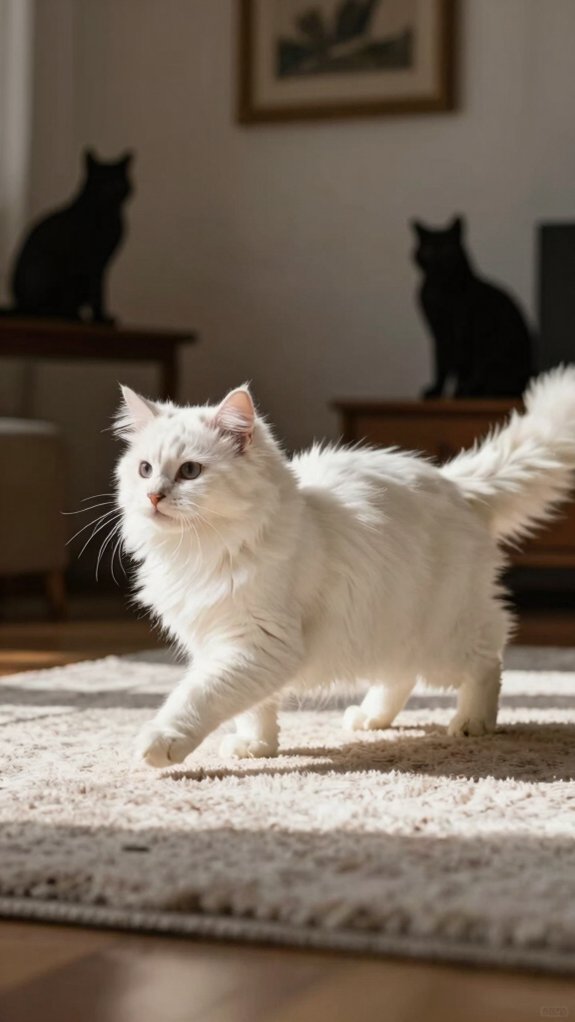
Although Turkish Angoras are known for their graceful looks, their story begins with survival in Turkey’s mountainous regions. Natural mutations and limited interbreeding helped preserve this ancient longhair breed.
You can trace their migration to Europe in the 1600s, when people welcomed them in France, where legend linked them to Marie Antoinette.
In England, close breeding with Persians nearly erased them.
Turkey began Serious conservation efforts in the 1930s through Ankara Zoo, protecting especially pure white Angoras.
In the United States, modern recognition started in 1954, first accepting only white cats, then adding many colors while excluding chocolate, lilac, and pointed patterns.
Personality
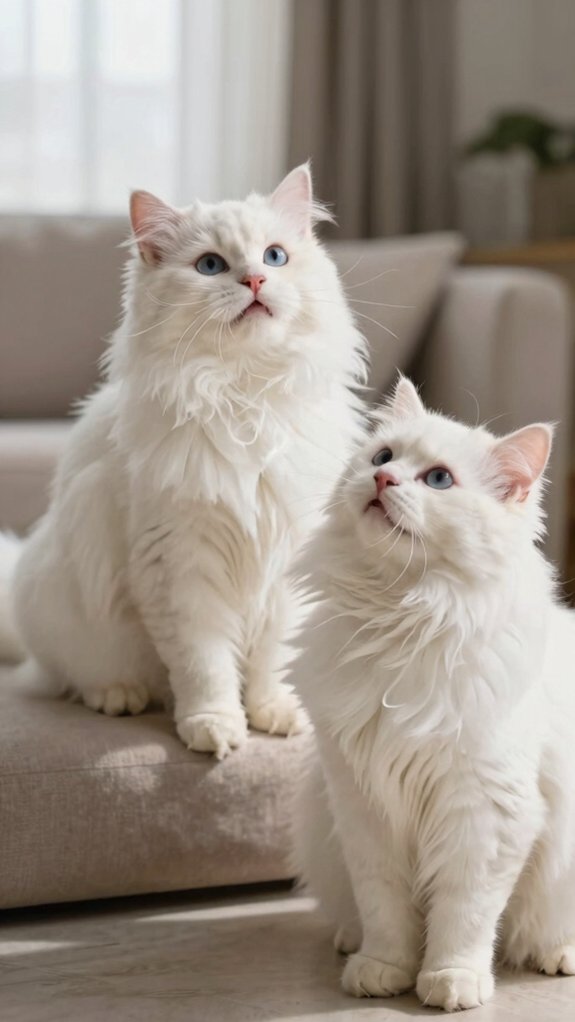
Turkish Angoras are affectionate, energetic companions that like to stay involved in your daily routines. Their Playful Temperament may lead them to greet you at the door, follow you around, or chase a laser across high spaces.
Expect a Strong Will, so offer engaging games and gentle, consistent boundaries. Their Social Habits usually help them welcome guests and enjoy calm introductions to children.
You’ll build Affectionate Bonding by including your cat in safe household activities and giving regular attention. Some act like little Einsteins, while others seem forgetful, but most enjoy solving games. With patience, you’ll gain a lively companion who feels at home with you.
Coat Care
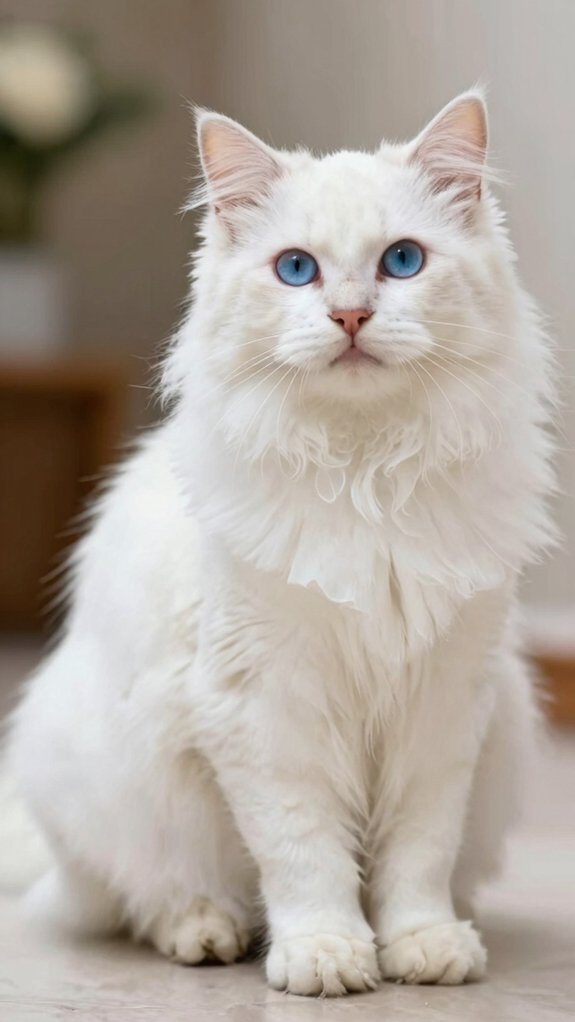
A Turkish Angora’s silky coat usually stays sleek with light upkeep, so brush younger cats about two or three times a month. Use gentle grooming tools, such as a soft brush or wide-toothed comb, and run your fingers through the coat to check its texture.
As your cat grows older, expect heavier shedding and comb more often to remove loose fur before it gathers.
Watch shedding patterns closely, especially if your cat has a white coat, so you can keep routine care on track.
Bathe your Angora only when necessary. Because many tolerate water well, bathing may feel easier, helping you keep grooming calm and comfortable.
Eye Colors
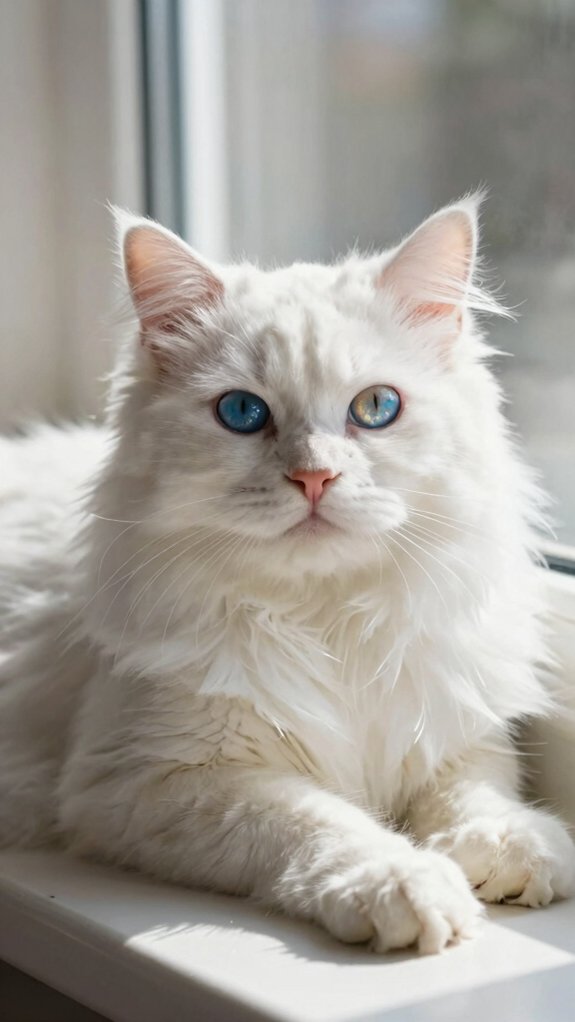
Bright blue, deep amber, and copper-amber eyes give the Turkish Angora its signature elegant look. Their almond shape complements white, blue, cream, or black coats, helping your cat stand out while fitting beautifully into your home.
You may also notice blue eyed traits or heterochromia rarity, where each eye shows a different color. Many families value this unusual combination, but beauty should come with thoughtful care.
If you choose a white Angora with blue or one blue eye, ask your veterinarian about hearing checks, since deafness occurs more often in these cats. Colored Angoras mostly avoid this specific risk, so discuss the whole picture before getting your cat.
Activity Level
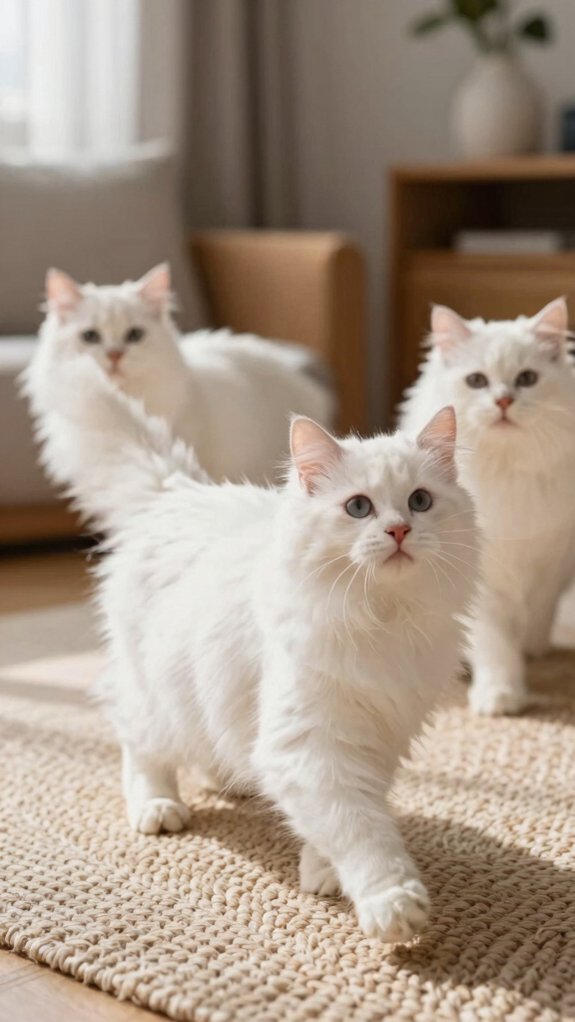
Beyond their striking eyes, these cats bring plenty of energy to daily life. Your Turkish Angora will likely follow household activity, greet you at the door, and seek active interaction rather than spending all day as a lap cat.
Plan Everday enrichment with climbing options, wand toys, and safe spaces to explore. A consistent play schedule helps your cat stay occupied, especially when you’re away for part of the day.
Set aside play sessions each day, including laser games that encourage vertical chasing. Your involvement gives this people-oriented companion purpose and can reduce boredom-related mischief, loneliness, and obesity risk, helping everyone feel connected at home.
Intelligence
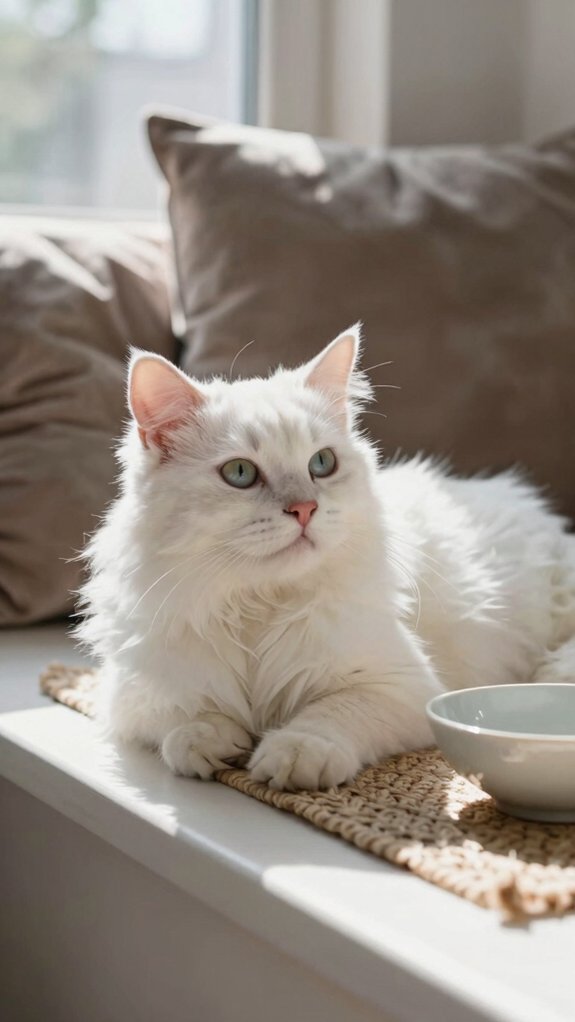
Turkish Angoras often show their intelligence through curious, people-focused behavior, quickly learning games, routines, and ways to reach new places. Your cat may solve a treat puzzle one day, then seem distracted the next, since ability varies widely.
Use short, rewarding sessions to build trust and focus. Try Puzzle Training with food toys, clicker cues, or a simple “find it” game. Environmental Enrichment, such as climbing spaces and rotating toys, gives that alert mind healthy outlets.
| Sign | Try | Benefit |
|---|---|---|
| Fast learner | Teach cues | Mental focus |
| Curious explorer | Add perches | Safe discovery |
Consistent interaction helps your Angora stay involved, not mischievous.
Family Compatibility
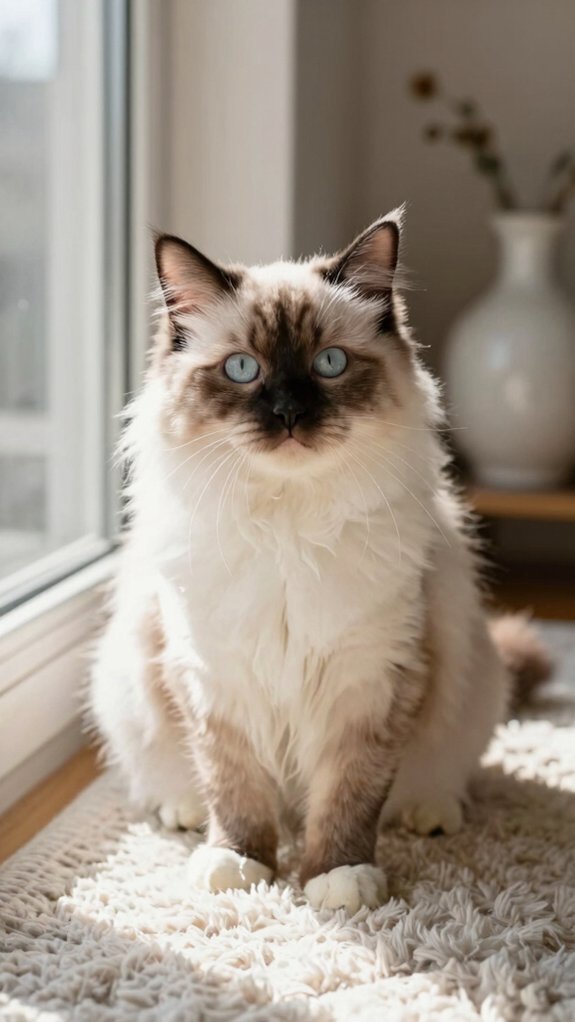
When your household enjoys regular interaction, a Turkish Angora can become an affectionate, active companion who follows family routines and welcomes people at the door. You’ll often find this cat nearby, ready to join playtime or observe daily activities.
Turkish Angoras can do well with children when everyone uses calm, respectful handling. Their Golden retriever energy brings playful curiosity, while gentle guest greetings can make visitors feel included.
To help your cat settle in, introduce new people slowly and provide toys, cat trees, or shelves for enrichment. This breed fits best when someone’s home much of the day, since long periods alone may leave it lonely.
Health Considerations
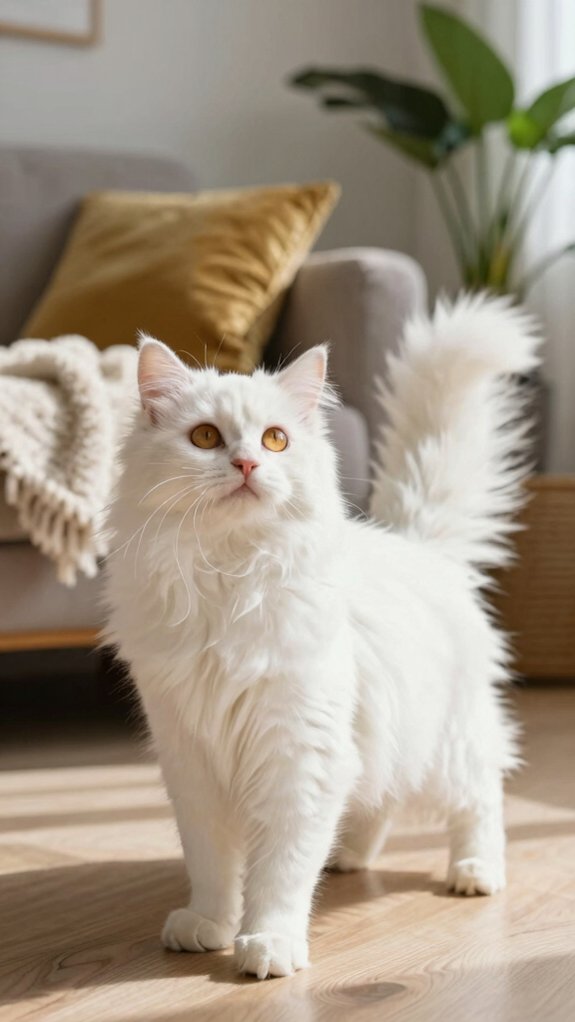
Regular health checks help your cat stay active, comfortable, and ready to enjoy family life. Ask your veterinarian about periodic heart screening for hypertrophic cardiomyopathy, a hereditary condition. Watch kittens for balance or coordination problems linked to ataxia.
If your white Angora has blue eyes, or one blue eye, discuss deafness risk and home safety with your vet. Tailor monitoring to your cat’s coat, eye pattern, and early development.
Daily engaging play supports mobility and helps prevent obesity.
Include Dental health planning in routine care, and practice allergy risk awareness for people and pets sharing your home. Your thoughtful care helps everyone belong.
Nutrition
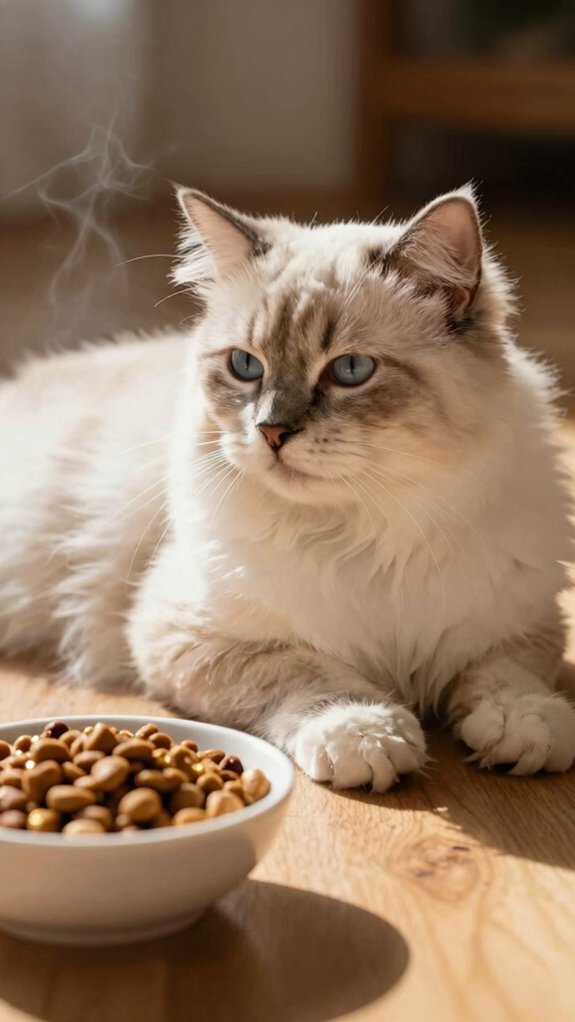
A complete, age-appropriate diet helps your Turkish Angora maintain steady energy, a healthy coat, and strong body condition. Choose complete food made for kittens, adults, or seniors, and ask your veterinarian about portions.
Set a consistent Feeding routine with measured meals, since portion control supports weight management when play decreases. Your cat may enjoy calories earned through engaging playtime, which encourages movement and keeps daily life engaging.
Offer enrichment foods thoughtfully, such as puzzle feeders or small portions of approved treats, and count them within daily calories. Nutrition should serve health needs, not coat color, including for white or blue-eyed Angoras.
Indoor Living
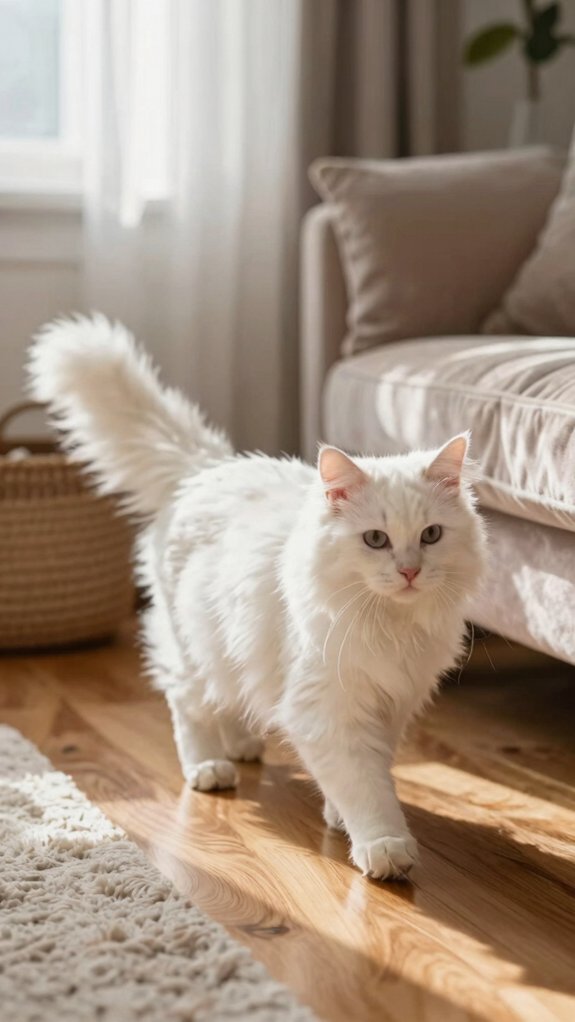
Indoor life suits Turkish Angoras well, especially when you provide daily interaction, play, and interesting places to uncover. Your cat may greet you at the door and follow household activity, so include them in your routine.
Build Enrichment routines with wand toys, wall-safe laser play, cat trees, and shelves for vertical chasing. Schedule active play often, offer measured meals, and watch body condition to help prevent obesity.
Indoor safety planning keeps exploration secure. Screen windows, hide cords, remove unsafe plants, and block risky gaps. Comb younger cats two or three times monthly, then groom more often as shedding increases. This shared care helps your home feel welcoming.