Brush your long-haired Dachshund daily, dividing the coat into sections and checking behind the ears, chest, armpits, tail, and legs. Use a slicker brush, then a comb or soft bristle brush. Wipe outer ears gently, trim paw fringes carefully, and keep nails maintained. Bathe every three to four weeks when dirty, using dog shampoo, then dry thoroughly. Brush more often during shedding season to prevent mats, and keep detangling tools handy. The sections below explain each step and tool.
Disclosure: This post may contain Amazon affiliate links, at no extra cost to you. Content on Pawtangle is created with research support from AI tools and carefully reviewed, edited, and fact-checked by the lead author, Dr.Fahri Pat , to ensure accuracy and reliability. Learn more
Key Takeaways
- Brush your long-haired Dachshund daily, sectioning the coat and focusing on ears, chest, armpits, tail, and legs.
- Use a slicker brush, detangling comb, bristle brush, and seasonal de-shedding rake to prevent mats.
- Clean outer ears regularly, keep ear fringes tangle-free, and contact your veterinarian for odor, redness, discharge, or excessive scratching.
- Trim paw fringes carefully, maintain nails monthly, and have severe mats handled by a professional groomer.
- Bathe every three to four weeks when needed with dog-safe shampoo, then dry thoroughly and brush again.
Daily Brushing
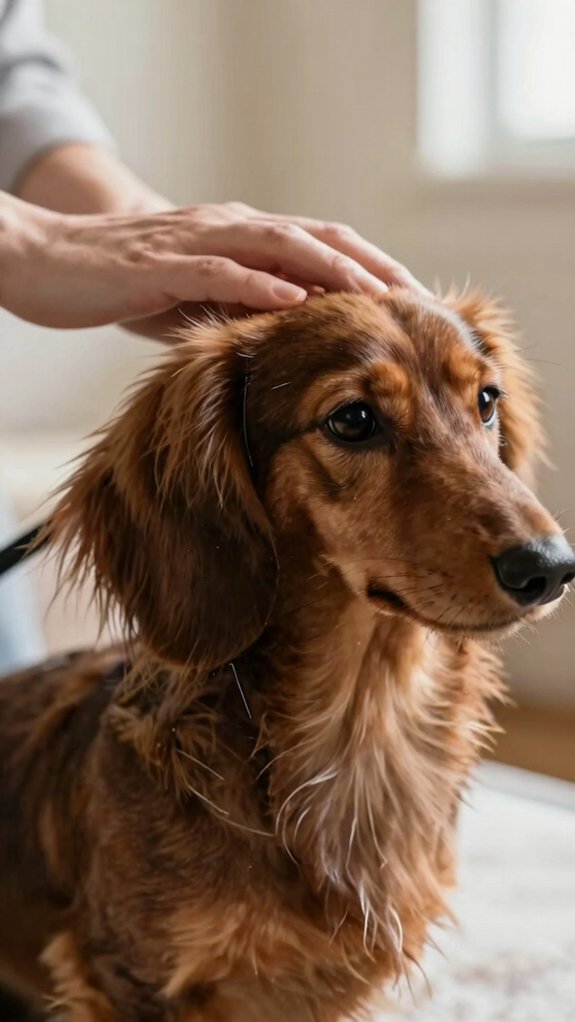
Brush your long-haired Dachshund every day, or as often as possible, to stop tangles from becoming painful mats. This routine helps you care for your dog and strengthens your shared bond.
Use sectioning clips to divide the coat, then comb each area before brushing it in the direction hair grows. Start with a slicker brush to lift debris and surface tangles, then finish with a bristle brush.
Check behind the ears, around the neck, under the arms, chest, tail, and back legs. Hold fur near the skin around stubborn knots.
Consider bathing frequency and coat moisture, since damp fur can tangle more easily.
Ear Care
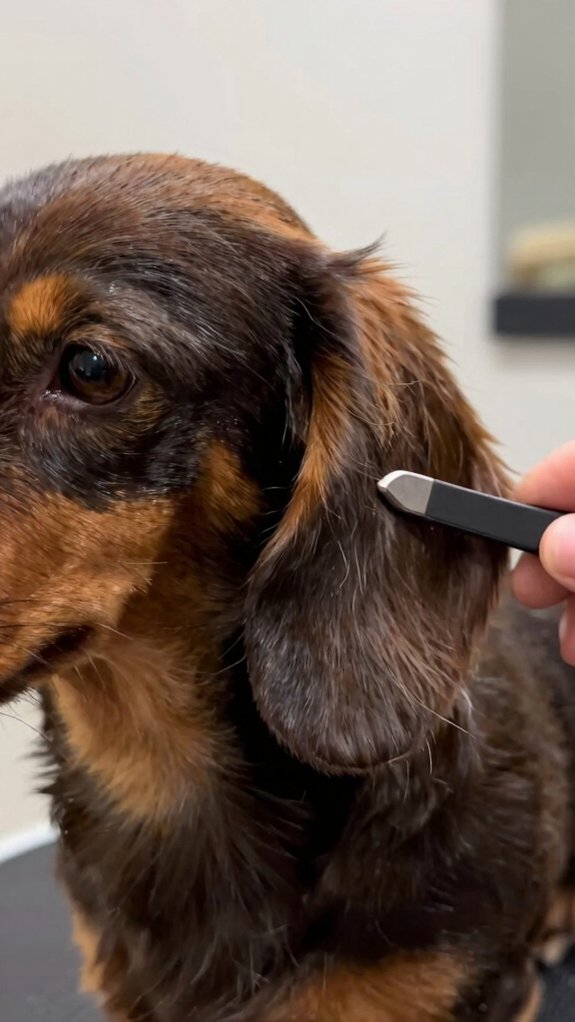
Check your long-haired Dachshund’s ears during every grooming session, since their floppy shape can trap moisture and increase the risk of infection. Gently wipe the outer ear with a soft washcloth and a little dog-safe cleaner or ear-cleaning gel.
Keep the long ear fringes free of tangles and debris, because mats can create moisture traps.
Ignore common ear hygiene myths, and never push cotton swabs or tools into the canal. Instead, watch for redness, bad odor, excessive scratching, or dark discharge.
If you notice these signs, contact your veterinarian immediately.
With this simple routine, you’ll help your Dachshund stay comfortable and healthy.
Paw Trimming
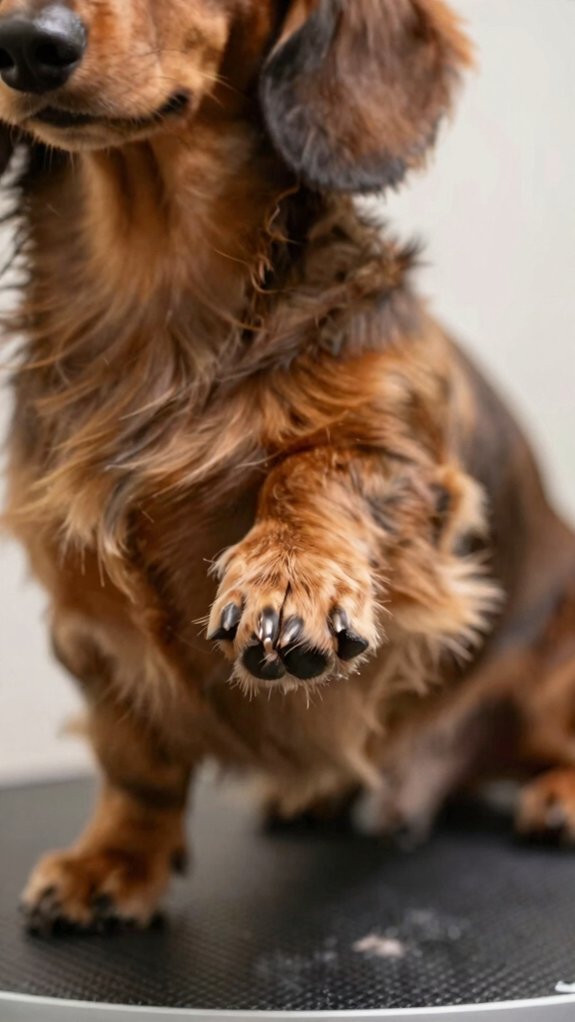
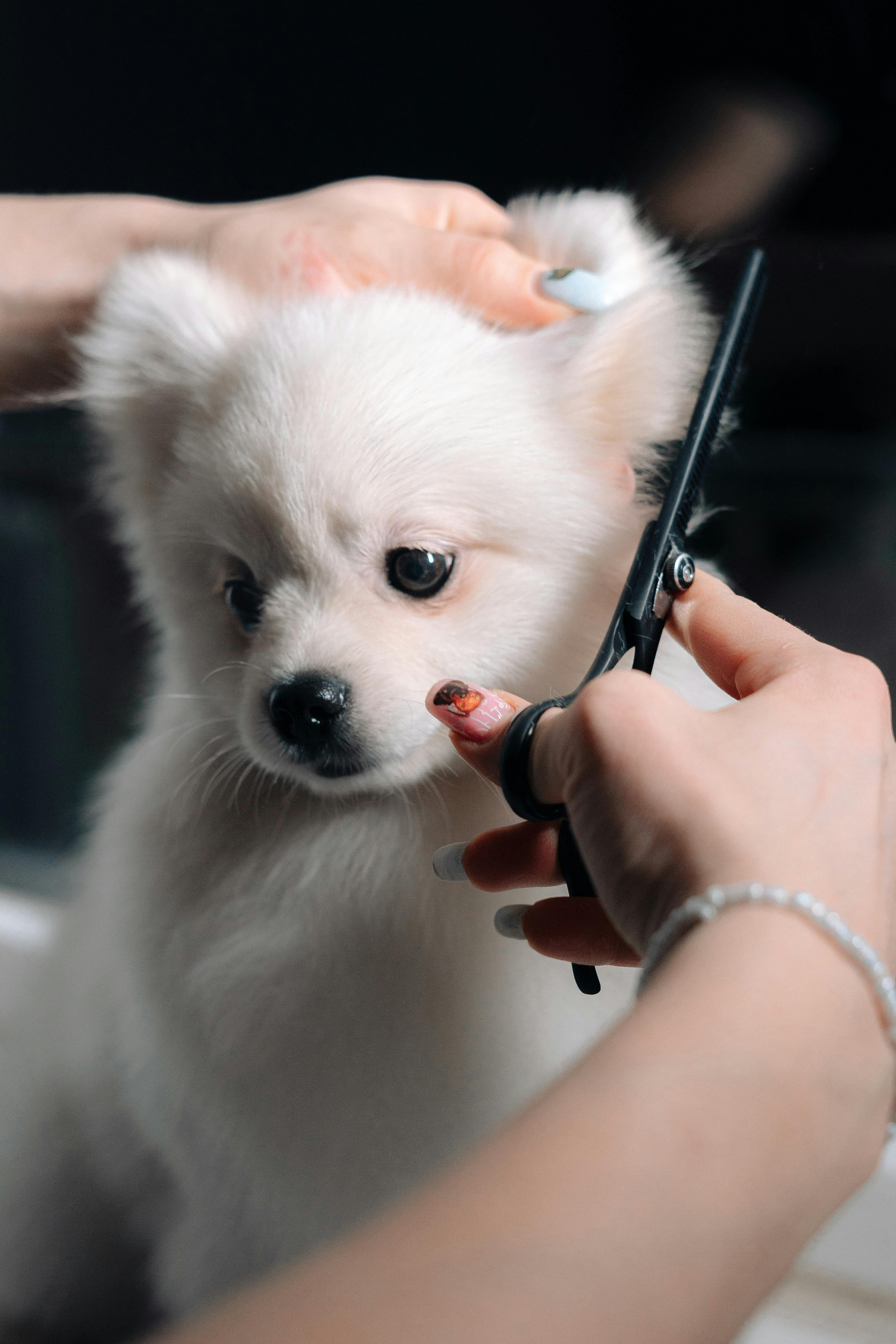
Keeping the fur around your long-haired Dachshund’s paws trimmed helps reduce dirt, tangles, and clumps that can make walking uncomfortable. After brushing, use small grooming scissors to neaten the fringes around each foot and between the pads. Work slowly so you don’t catch skin or tug tangles.
For paw pad trimming, gently tease matted hair apart at its base before cutting. Leave severe mats to a professional groomer, who can remove them without irritating skin.
Keep nails maintained about monthly, and include nail comfort checks in your routine. Overgrown nails can change foot placement and cause discomfort. After towel-drying, make sure paw fur is fully dry, then brush it lightly.
Bathing Routine
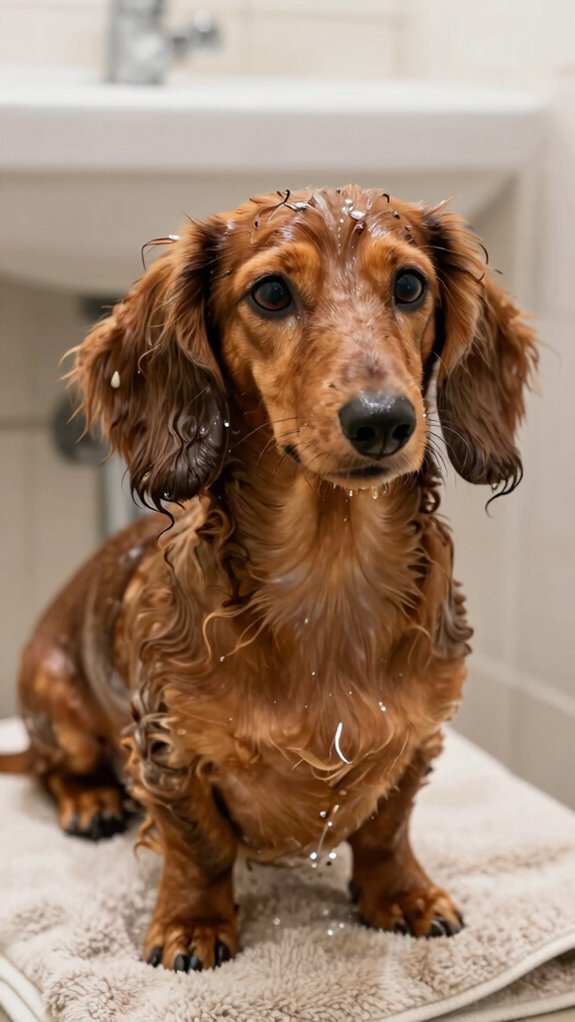
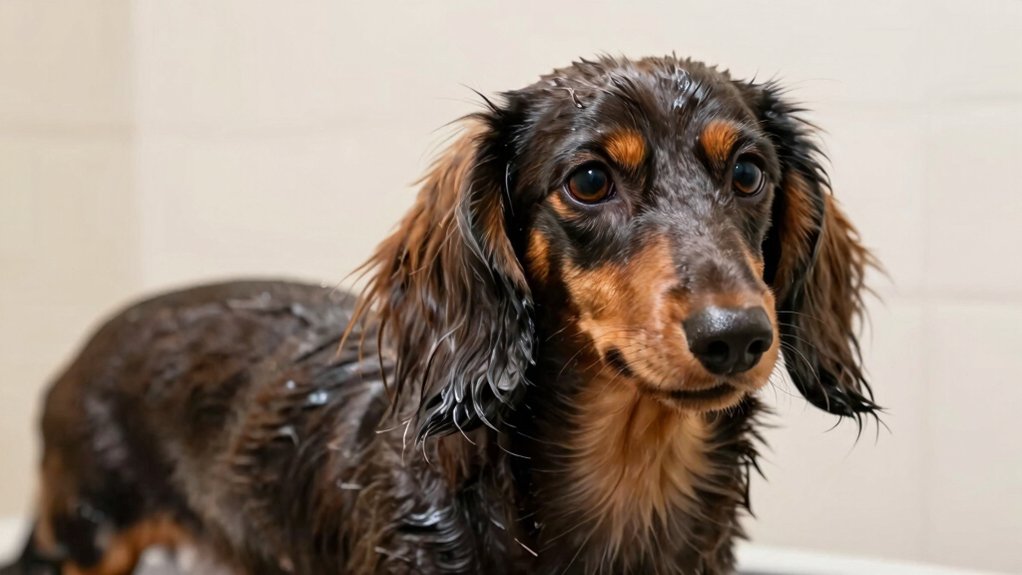
When your long-haired Dachshund’s coat gets dirty or develops a doggy odor, it’s time for a bath. Bathe your dog every 3–4 weeks when needed, or less often if they stay clean. Over-bathing can remove natural oils.
Use warm, not hot, water and a dog-formulated shampoo for long coats. Choose fragrance-free products for sensitive skin. Massage the body gently, avoid the face, and rinse thoroughly.
| Step | What to do |
|---|---|
| Face and ears | Wipe gently with a soft, lightly soapy cloth. |
| Drying techniques | Towel first, then use a comfortable, dog-safe dryer. |
A calm routine helps you both feel like a team.
Seasonal Shedding
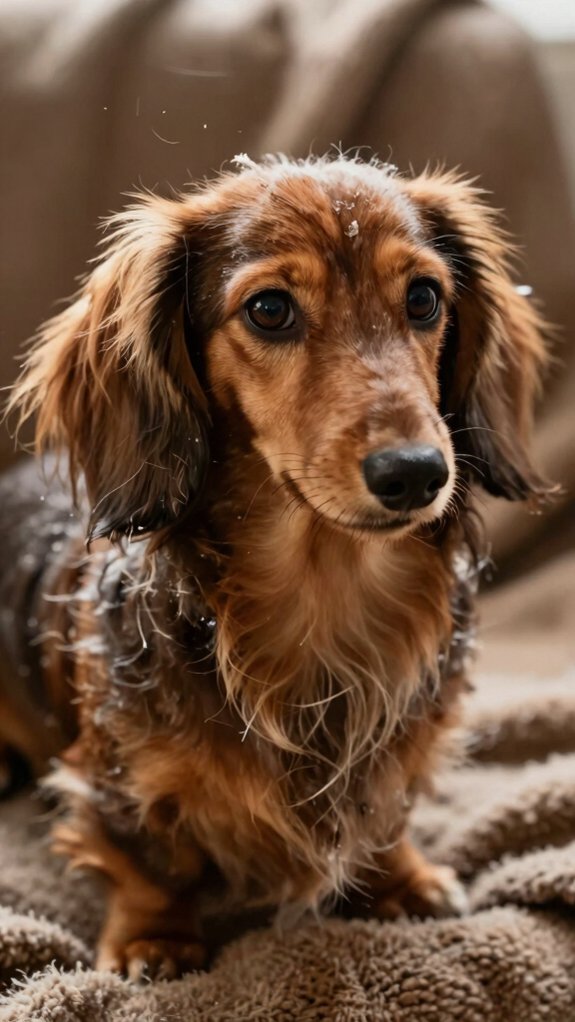
Seasonal shedding brings extra loose fur, especially during warmer months, so plan to brush your long-haired Dachshund more often.
During spring coat changes, aim for daily brushing when you can, using a double-tooth rake or de-shedder to lift trapped undercoat without cutting longer guard hairs.
Pay special attention to behind the ears, the chest, the tail, and under the arms, where loose fur gathers first.
A conditioning spray or hydrating conditioner can help the brush glide smoothly, so you’re not pulling.
For summer fur control, don’t shave your Dachshund; the coat still protects against sun.
With steady care, you’ll keep your shared routine comfortable.
Preventing Mats
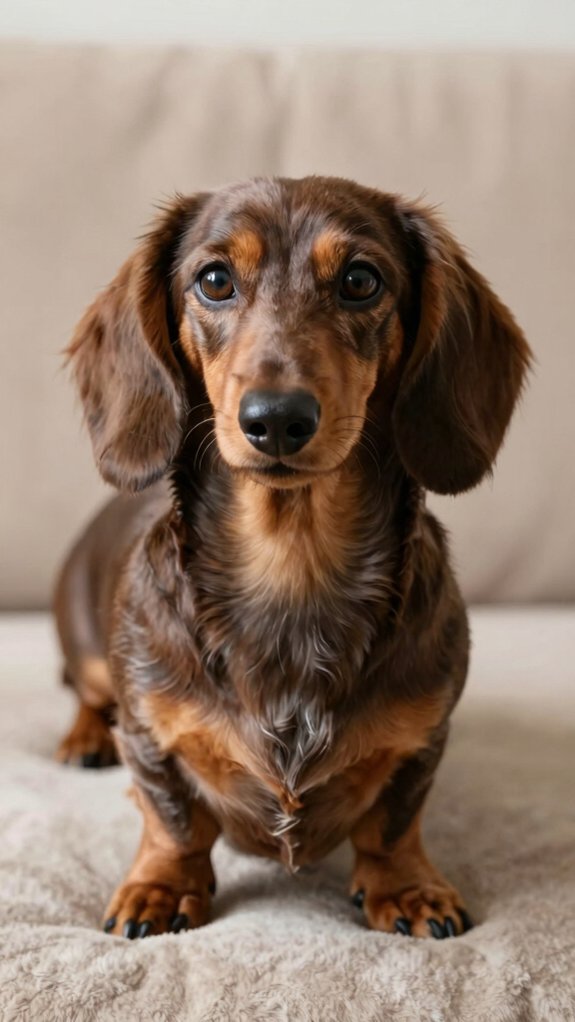
Tangles can turn into painful mats quickly, so brush your long-haired Dachshund at least once a day, or at minimum two to three times a week. Focus on ears, chest, tail, armpits, and under the legs to minimize tangles.
Use gentle sectioning, combing each area first, then brushing in the direction the hair grows. Check coat debris, including twigs or stickers, because small bits can start mats.
If you find a mat, hold the fur near its base and gently tease it apart with your fingers or a detangling comb. After baths, dry thoroughly and brush again to maintain coat condition. Severe mats may require professional help.
Recommended Grooming Tools
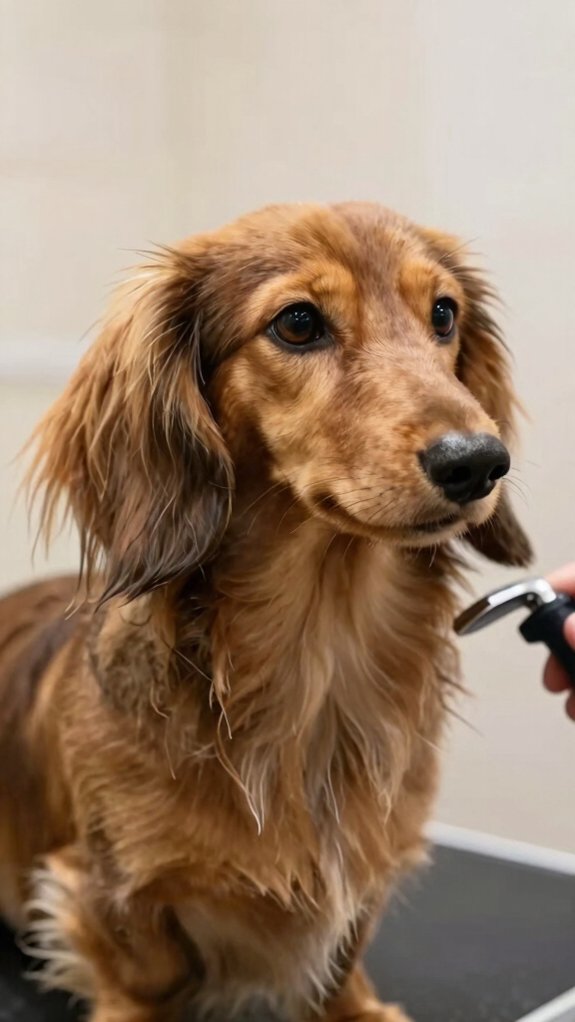
Start with a basic set of grooming tools: a slicker brush to loosen debris and undercoat hair, followed by a soft bristle brush for delicate areas such as the ears, armpits, and abdomen. Keep a detangling comb nearby for knots behind the ears and around the tail and legs.
Choose a pin-and-comb set for section-by-section grooming and a smooth, shiny finish. A de-shedding rake or rubber mitt removes loose hair and undercoat without cutting needed cover hairs. Add nail clippers to protect paws on hard pavement.
Skip sharp blade trimmers, and use shedding frequency planning to keep your shared routine comfortable and consistent.