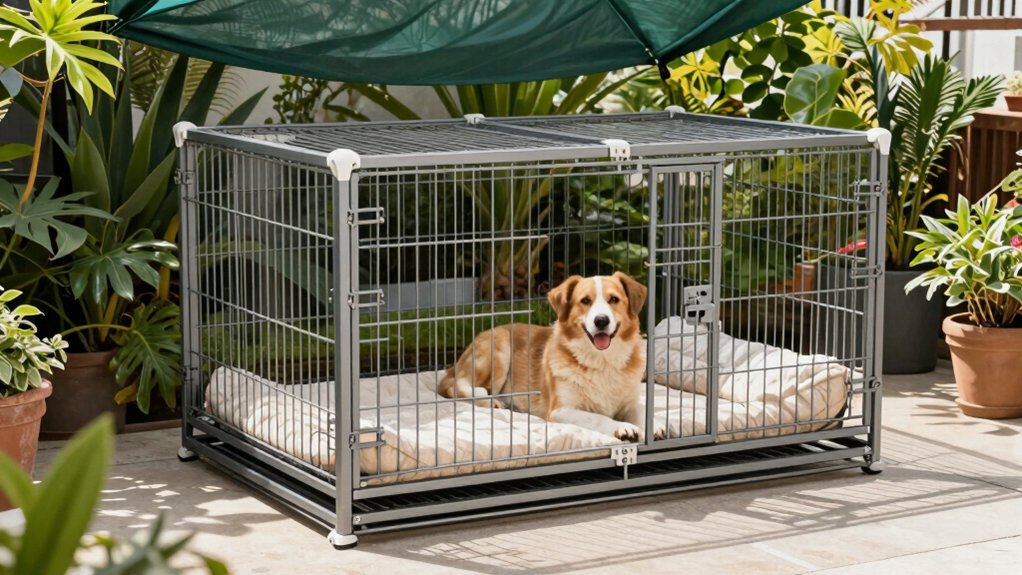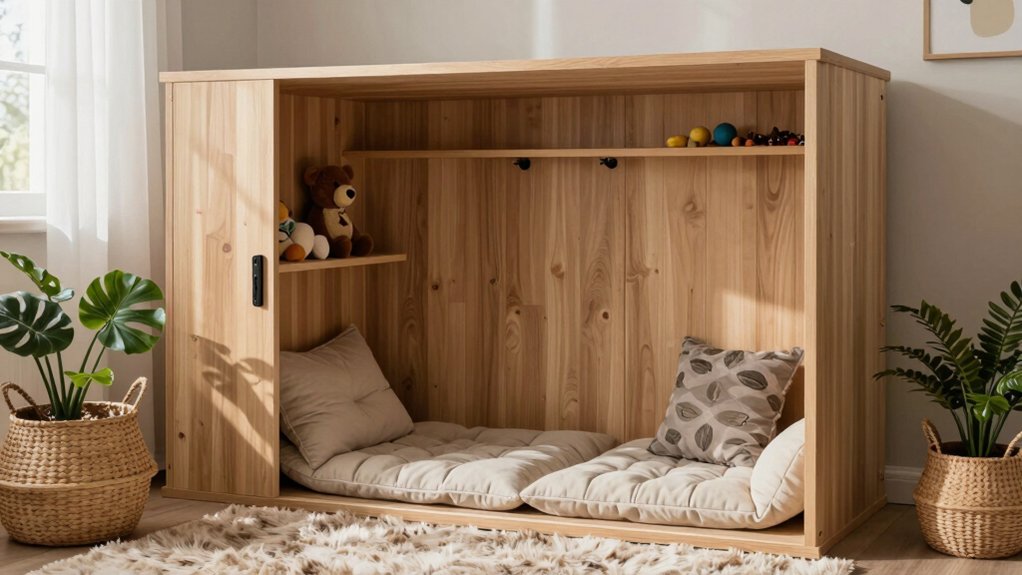

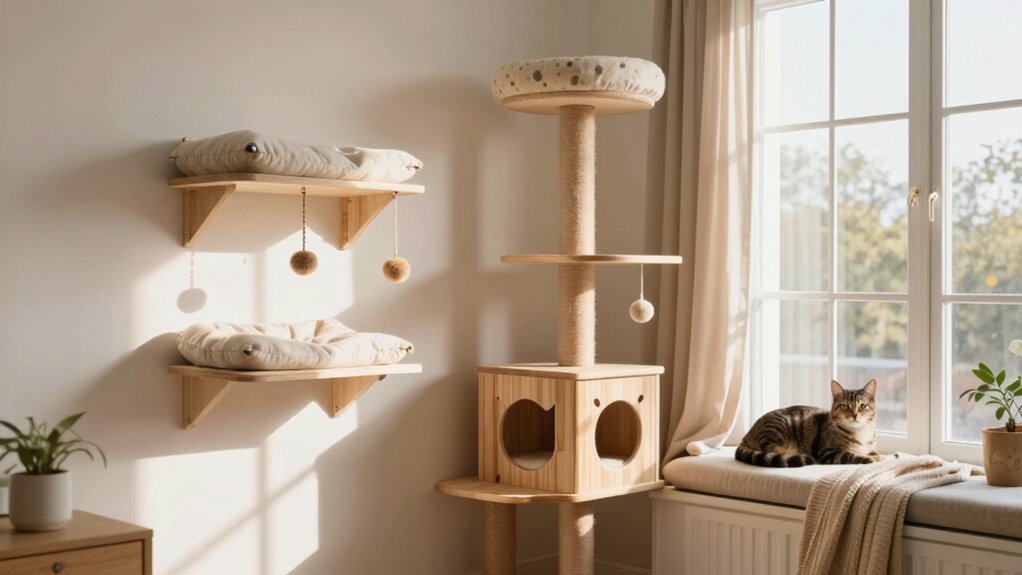
You can create smart, cozy cat spaces that boost activity and cut stress without overhauling your home. Mix window perches and sunlit hammocks for watchful naps, wall shelves and floating walkways for climbing exercise, and a corner cat tree with hammocks and hideaways for cozy retreats. Add a sisal scratching wall, puzzle-feeding station, hidden litter alcove, tunnels, and under-bed nooks to protect furniture and spark play. Keep things safe and adjustable, and if you keep going you’ll find setup tips and placement ideas.
Disclosure: This post may contain Amazon affiliate links, at no extra cost to you. Content on Pawtangle is created with research support from AI tools and carefully reviewed, edited, and fact-checked by the lead author, Dr.Fahri Pat , to ensure accuracy and reliability. Learn more
Key Takeaways
- Provide varied vertical spaces (shelves, tall trees, window perches) to encourage climbing, exercise, and territory surveying.
- Create cozy, private retreats (nooks, under-bed hideaways, built-in cubbies) for security and stress relief.
- Include dedicated scratching areas (sisal panels, posts, wall strips) near beds and windows to protect furniture.
- Combine play and feeding (puzzle feeders, tunnels, hammocks) to boost mental stimulation and slow eating.
- Prioritize sturdy, safe installations and washable, comfortable bedding for long-term comfort and hygiene.
Window Perch Cat Space
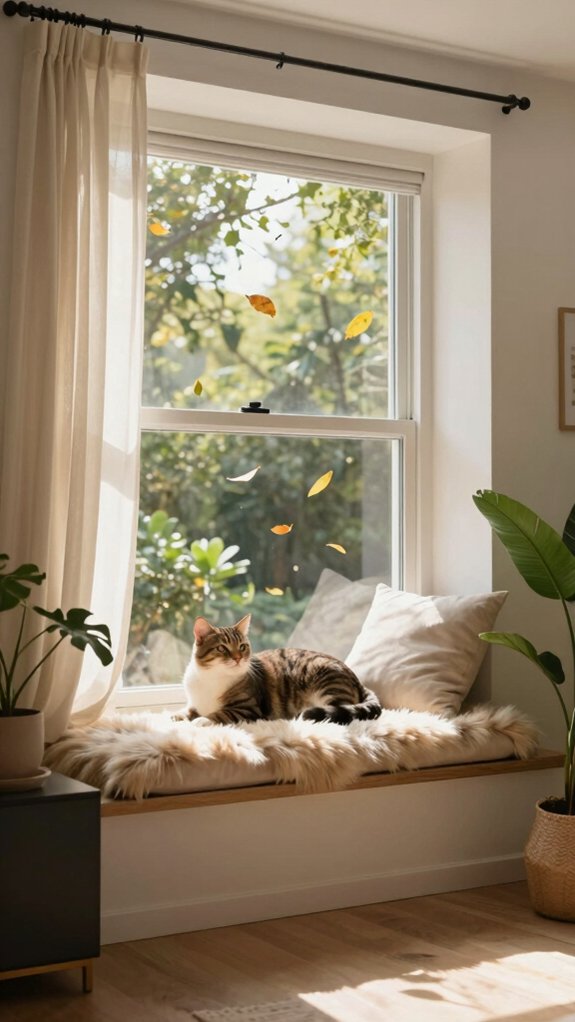
A window perch gives your indoor cat a raised, secure spot to watch birds and outdoor activity, which satisfies natural curiosity and boosts mental stimulation. You’ll notice window perch benefits quickly: increased alertness, reduced boredom, and safe viewing that taps hunting instincts. Choose models with sturdy materials and weight ratings to fit your cat’s size; secure perch installation matters for safety and longevity. Many perches mount and remove without floor clutter, offering vertical territory that complements communal living. Cushions or removable covers add comfort for sunbathing and naps. You’re giving your cat a reliable, enriching space that strengthens your shared home life.
Cat Wall Shelves
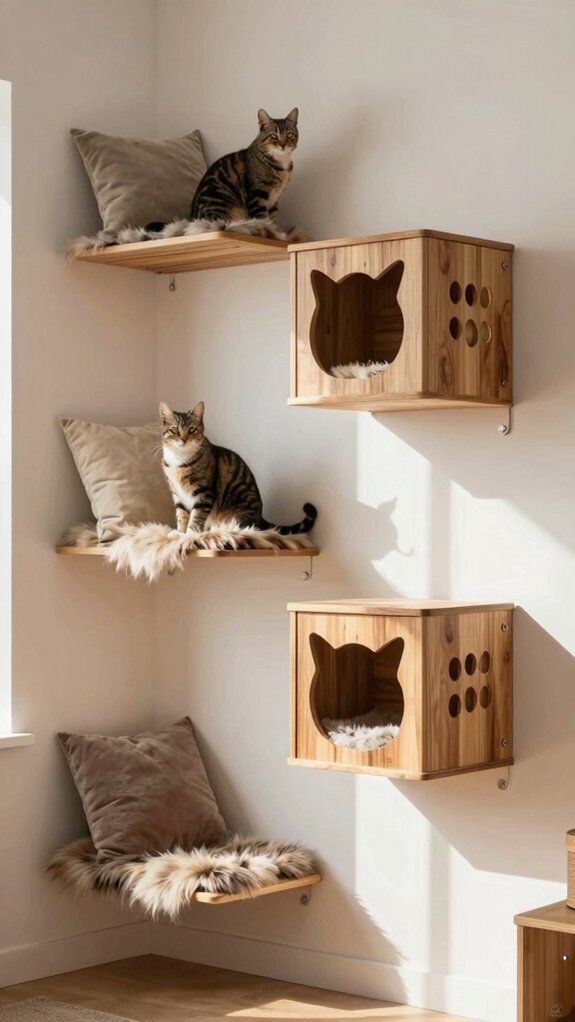
If your cat loves a sunny window perch, wall shelves let you expand that vertical territory across the room so they can hop, climb, and survey multiple vantage points. You’ll give them raised spaces that satisfy instinct and reduce stress while saving floor space in small homes. Choose durable cat shelf materials that support weight and resist scratching; mix textures to invite exploration. Install multiple shelves at varied heights to encourage exercise, mental stimulation, and choice. Follow simple installation tips—secure anchors, study wall studs, and test stability—so every perch feels safe. That thoughtful layout helps both of you feel at home.
Cat Tree Corner Setup
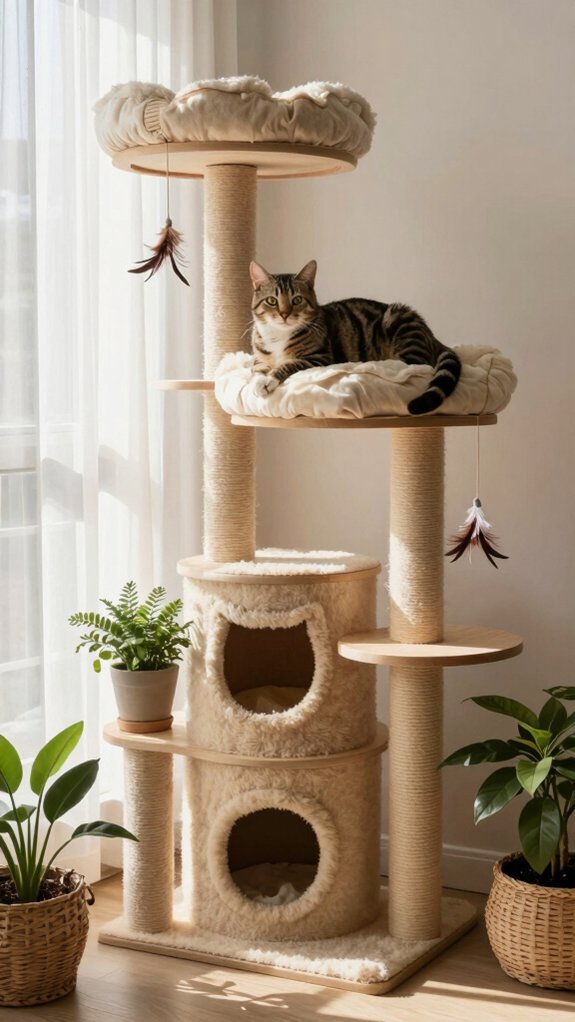
When you tuck a sturdy cat tree into an unused corner, it turns vertical space into a multi-level playground that satisfies climbing, scratching, and perching drives while keeping your floor clear. You’ll boost well-being by placing it near a window or shelves so your cat watches outside activity. Choose durable cat tree materials like sisal or rattan for long-lasting scratching surfaces. Add hammocks or hideaways for cozy nooks that promote relaxation and security. A corner tree defines a tidy, dedicated cat area that encourages play and exercise, helping both of you feel connected and at home.
| Feature | Benefit |
|---|---|
| Location | Stimulates curiosity |
| Materials | Durable scratching |
| Levels | Exercise & climb |
| Nook | Secure rest |
| Placement | Saves floor space |
Hidden Cat Litter Area
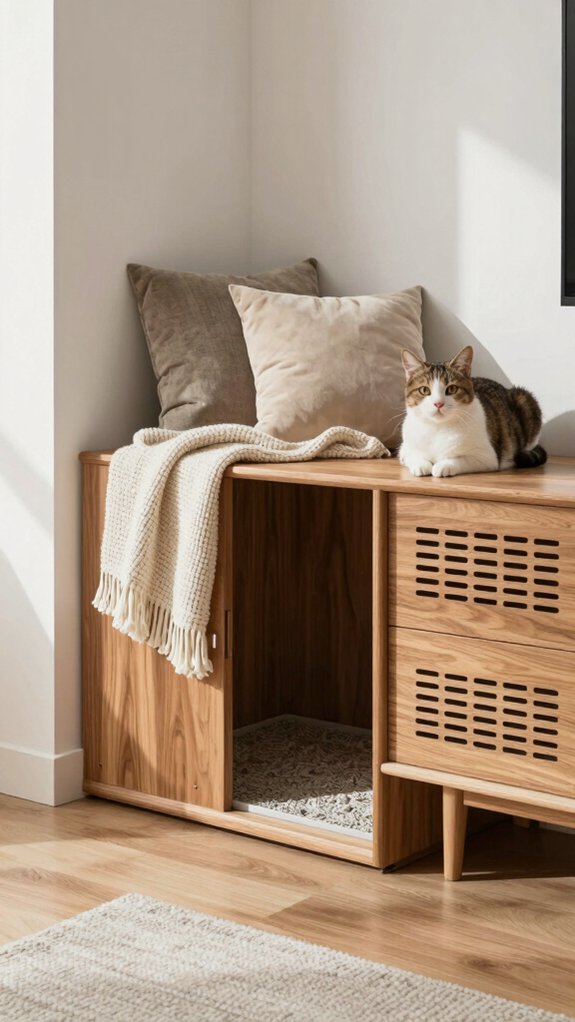
Thoughtful concealment of litter boxes keeps your home tidy while giving cats the privacy they need; you can tuck boxes into cabinets, benches, or dedicated furniture pieces to blend function with style. You’ll prioritize litter box placement in low-traffic, easily accessible spots so cats use them consistently. Furniture concealment supports odor control and a calm aesthetic while respecting your cat’s need for solitude. In multi-story homes, provide boxes on different levels to improve access. Consider reliable self-cleaning options to reduce maintenance and mess. These choices create a welcoming, clean environment where both you and your cat feel secure.
Under Bed Cat Hideaway
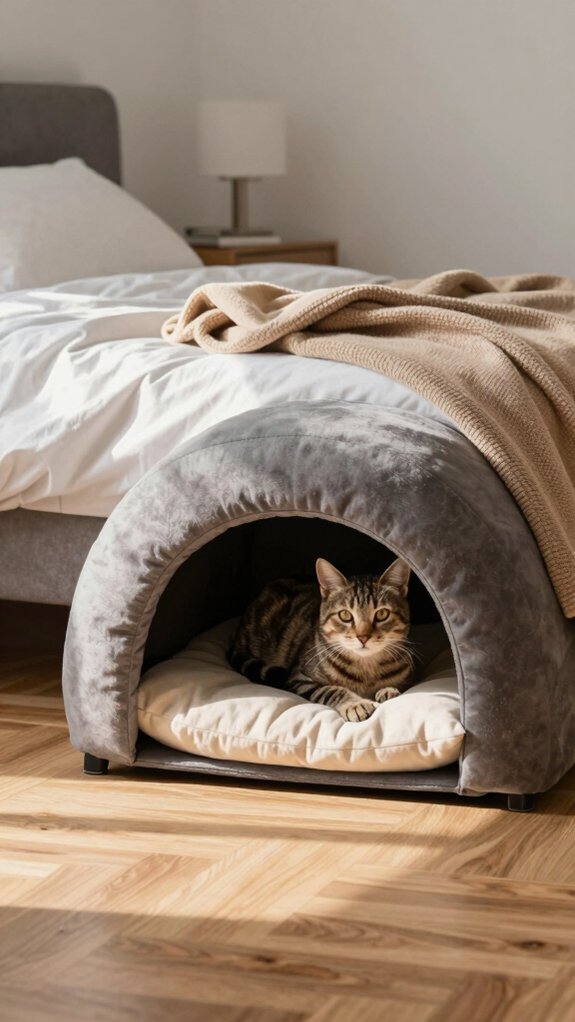
Under-bed hideaways give your cat a quiet, sheltered spot that eases stress and fits into small living spaces; they turn unused square footage into a cozy retreat that supports your cat’s instinct for enclosed security. You can enhance comfort and space optimization by choosing breathable cat hideaway materials—soft bedding, fabric-covered crates, or repurposed storage boxes—so your cat feels safe and observed. Make access easy and guarantee ventilation to encourage regular use. Commercial options provide ready-made enclosed designs, while DIY solutions offer budget-friendly personalization. Creating this tucked sanctuary helps your household feel more connected and reassures your cat.
Cat Window Hammock
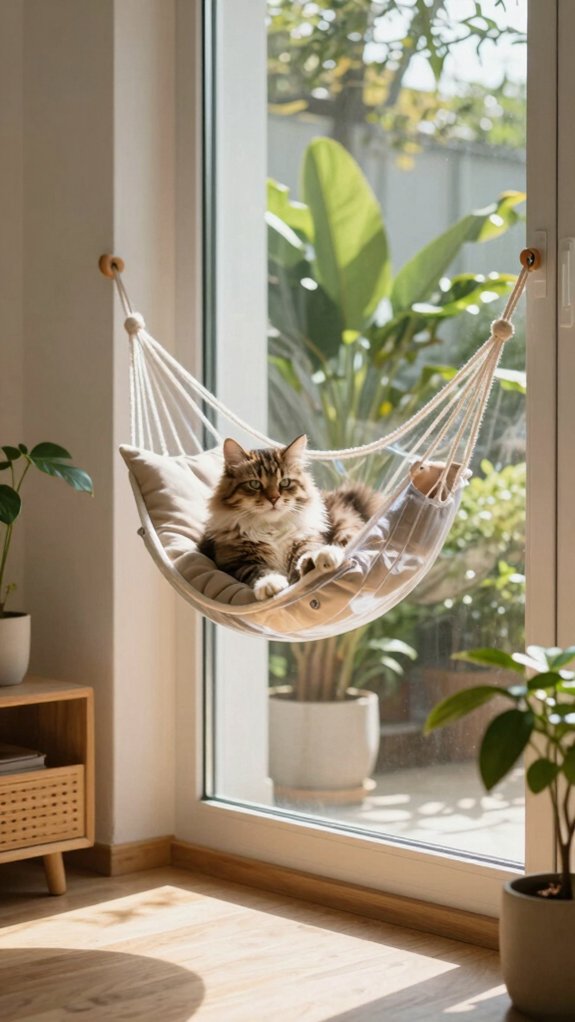
A window hammock gives your cat a sunny, raised perch where they can watch birds and bask in warmth, which taps into their natural curiosity and hunting instincts while reducing boredom. You’ll enjoy clear cat hammock benefits: mental stimulation, light exercise from climbing, and a cozy spot for naps. Most designs attach securely to sills with sturdy materials and breathable mesh, promoting airflow and durability. Installation is usually tool-free and space-saving, so it fits small homes. Check weight limits and mounting points to guarantee window perch safety. Choosing a reliable model helps both you and your cat feel confident and connected.
Built In Cat Nook
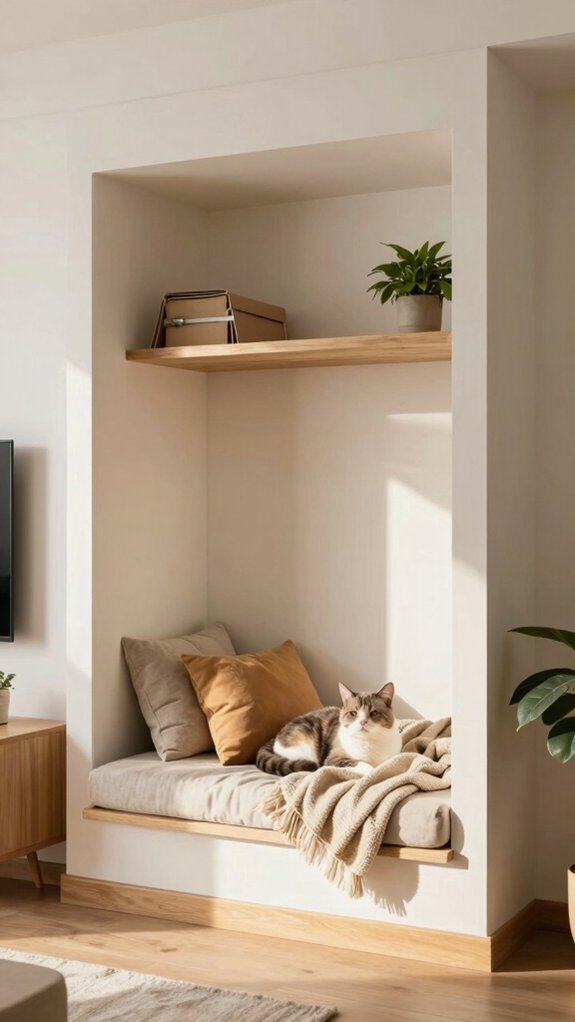
If your cat loves a sunlit perch, you can extend that comfort by carving out a built-in cat nook in existing furniture like a bookshelf or window seat, giving them a private, secure retreat without losing floor space. You’ll use creative nook designs to tuck soft bedding and plush cushions into quiet corners with gentle natural light—cozy retreat necessities that satisfy hiding instincts. Add nearby perches or shelves to promote climbing and exploration, and place toys plus a scratching post within easy reach to reduce boredom. This thoughtful, evidence-based approach helps your cat feel safe, involved, and truly at home.
Cat Tunnel Play Area
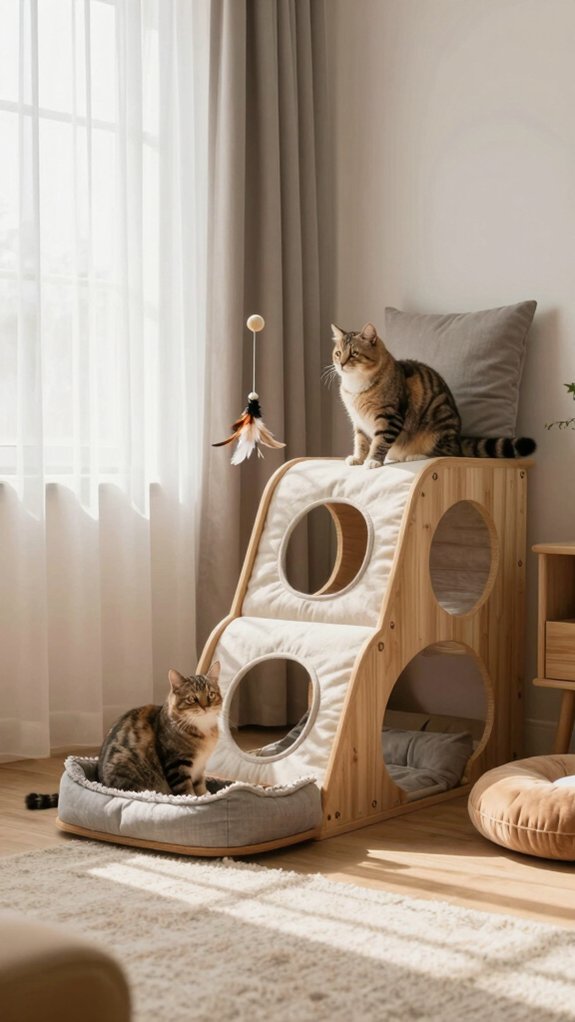
One well-placed cat tunnel can turn a quiet room into an energetic play zone that satisfies your cat’s urge to investigate, hide, and stalk. You’ll add tunnel enrichment that stimulates playful exploration, encourages sprinting and ambush play, and supports healthy weight management. Choose durable, non-toxic materials that resist scratching and collapse safely. Collapsible, portable tunnels let you vary locations, keeping novelty high and bonding opportunities frequent. Combine tunnels with scratching posts and climbing shelves to create a cohesive play circuit. You’ll enjoy watching confident, involved behavior while knowing you’ve provided safe, evidence-based enrichment for your indoor cat.
Floating Cat Walkway
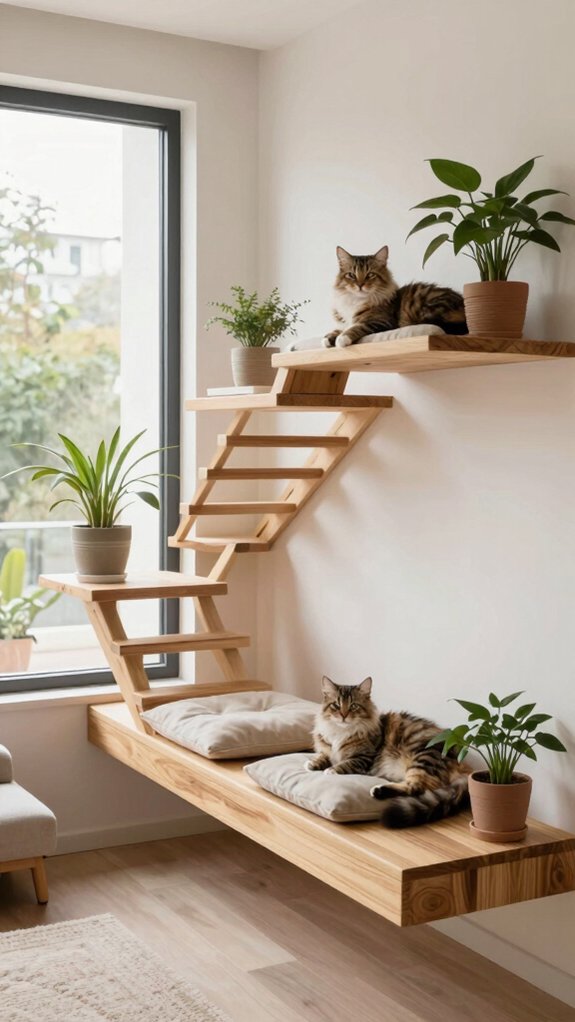
When you mount staggered, securely anchored shelves along walls, you create a floating cat walkway that gives indoor cats safe vertical routes for exploration and escape; research and behavior experts note that raised pathways reduce stress and increase activity by letting cats survey territory and avoid perceived threats. You’ll provide floating walkway benefits like exercise, mental stimulation, and private perches that fit your décor. Space shelves for comfortable jumps, use strong anchors, and test load-bearing capacity—practical installation tips that keep multiple cats safe. You’ll promote belonging by offering heightened routes where each cat can claim territory and feel secure.
Cozy Cat Bed Zone
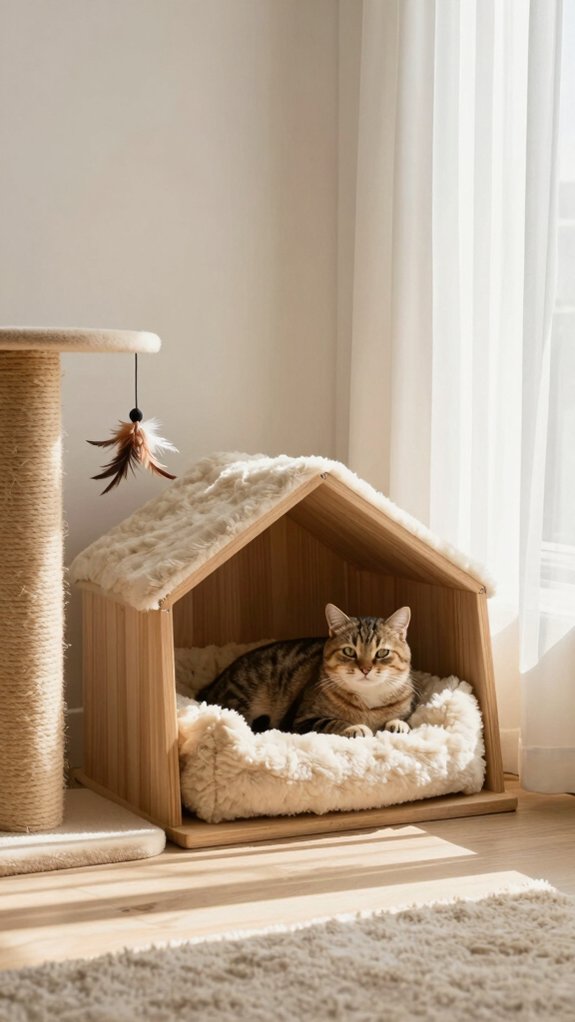
Because cats spend so much of their day resting, creating a cozy cat bed zone gives them reliable, secure places to relax and recharge. Place soft, plush bedding and cushions in quiet, low-traffic areas so your cat can escape noise and feel safe. Offer multiple cozy spots to honor territorial instincts and cat preferences, especially with more than one cat. Beds with raised sides or enclosed designs add security and reduce stress. Wash and maintain bedding regularly to control odors and allergens, supporting health and comfort. You’ll encourage belonging by meeting needs with thoughtful, evidence-based choices in cozy materials and placement.
Cat Feeding Station Area

Although mealtime might seem simple, setting up a dedicated cat feeding station in a quiet, separate area keeps food and water hygienic and reduces stress for your cat. Place bowls away from play and rest zones; thoughtful feeder placement lowers tension and contamination. Use raised stations for older or mobility‑impaired cats to ease swallowing and limit spills. Put non‑slip mats under bowls, offer fresh water in a separate dish or fountain, and include puzzle feeders to slow eating and boost mental stimulation. Choose balanced, vet‑approved food selection and maintain routine cleaning so your cat feels safe, cared for, and included.
Bookshelf Cat Climbing Space
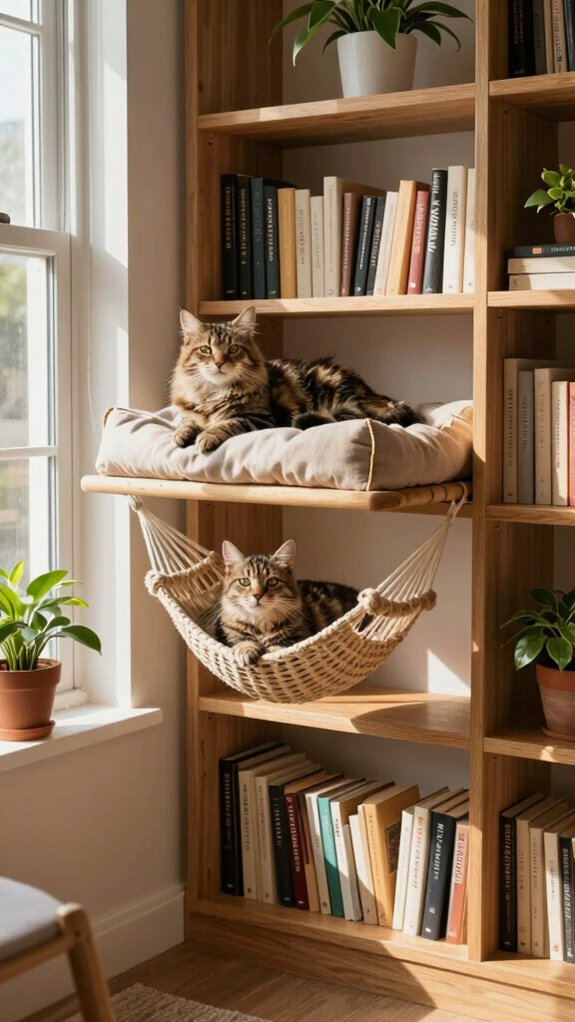
A bookshelf cat climbing space turns vertical shelving into a safe, stimulating playground that fits your home and your cat’s needs. You’ll repurpose bookshelves with sturdy cat shelves and wall-mounted platforms to create multi-level routes for climbing, perching, and resting. Evidence shows vertical play boosts exercise and mental enrichment, reducing boredom. Design around cozy nooks and secure anchors, using sturdy materials and visible safety features so you and your cat both relax. Match finishes and placement to your interior for cohesive design aesthetics while prioritizing stability. You’ll cultivate belonging by creating a welcoming, active retreat that respects both form and function.
Cat Scratching Wall
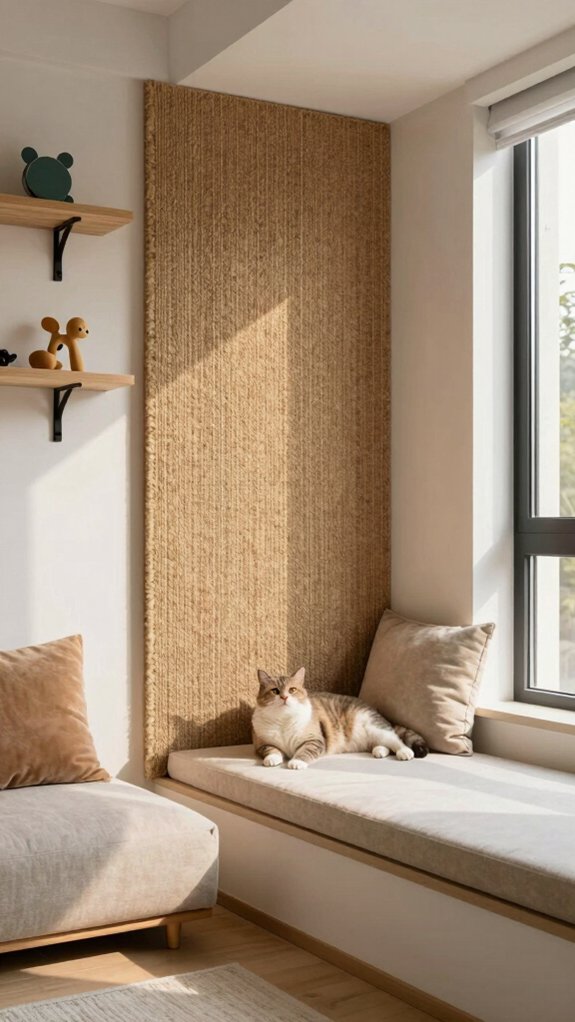
When you mount a dedicated scratching wall, you give your cat a reliable place to stretch and sharpen claws while protecting furniture and carpets. You’ll see scratching surface benefits: sisal or heavy-duty cardboard satisfy instincts and resist wear. Place it near beds or window perches since cats often scratch after waking, and choose multi-level or staggered panels for vertical scratching solutions that encourage exercise and mental stimulation. Pick colors and finishes that match your home so the installation feels like part of the family space. You’re supporting natural behavior, preserving belongings, and creating a shared, welcoming environment for everyone.
Sunlit Cat Relaxation Spot
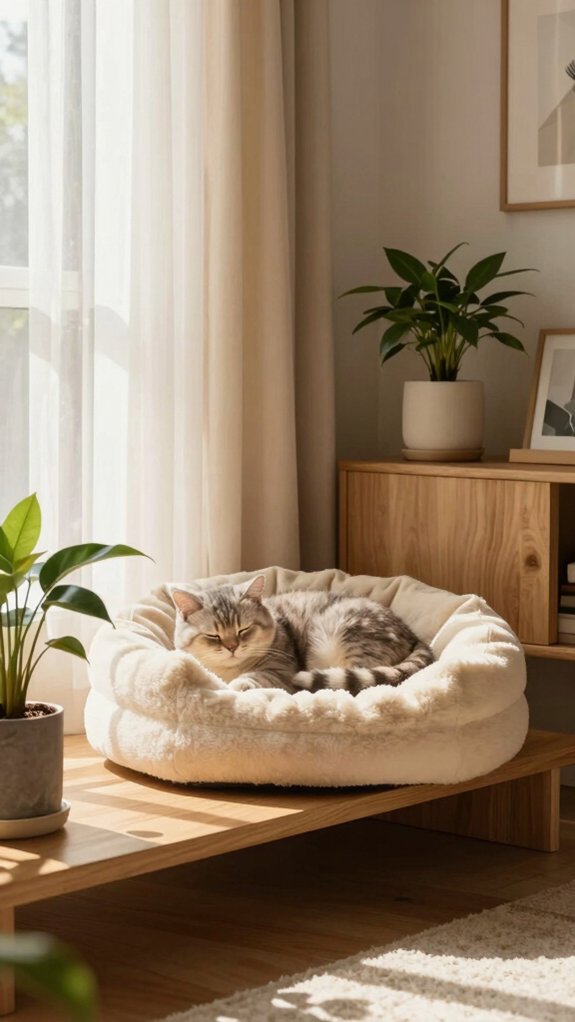
Pairing a scratching wall with a sunlit relaxation spot gives your cat both active and restful zones in the same area. Place the spot by a window so your cat can access sunlight benefits that boost mood and calm. Add a cozy bed or soft bedding, keep temperature near 68–72°F, and block drafts to enhance comfort. Include nearby shelves or a perch so they can observe while basking. Practice simple relaxation techniques—gentle petting, quiet moments, and predictable routines—to deepen trust. Clean and rotate bedding regularly to maintain hygiene and keep this shared space welcoming for both of you.
Multi Level Cat Play Space
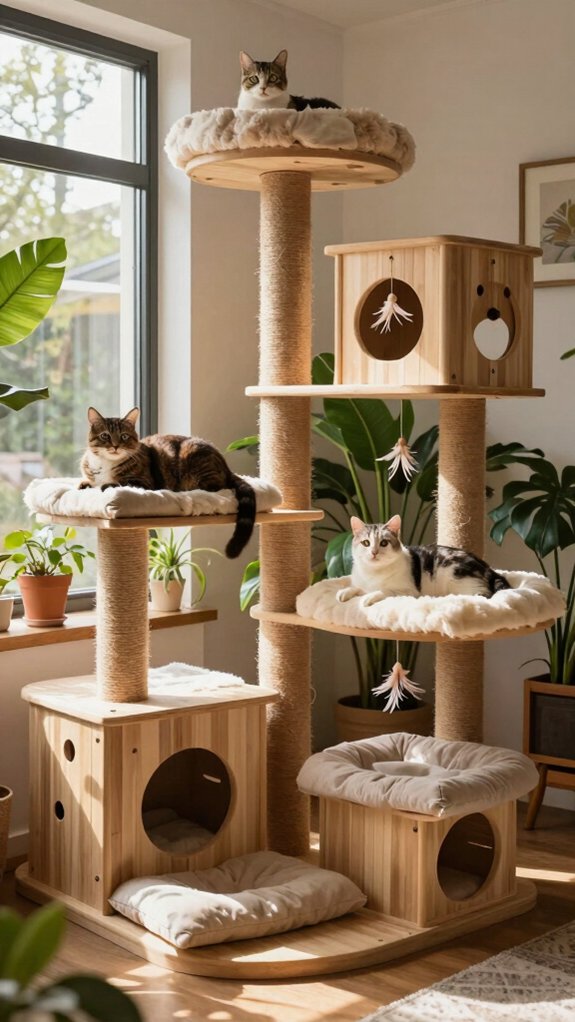
Because cats are built to climb and survey their territory, creating a multi-level play space gives them the vertical outlets they need for exercise, mental stimulation, and stress reduction. You’ll support your cat’s instincts and wellbeing by combining tall cat trees with cozy nooks and wall-mounted shelves, delivering clear vertical climbing benefits. Multi level designs let cats leap, perch, and watch without consuming floor space, turning unused walls into purposeful playgrounds. This cohesive approach keeps cats active, reduces stress, and complements your home’s look. You’ll welcome a confident, involved companion when you provide layered climbing structures and connected perches.
Frequently Asked Questions
How Do I Cat-Proof Electrical Cords Near Cat Spaces?
You protect cords by tucking them behind furniture, using cord covers and wrapping exposed connections with electrical tape, anchoring lines up walls, offering chew-safe alternatives, and staying consistent—you’re keeping your cat safe and part of the household.
Can I Use Washable Materials for All Cat Furniture Surfaces?
Yes — think of washable fabrics as armor for a beloved village: you can use them widely, but balance washable fabrics with furniture durability by reinforcing seams, using sturdy frames, and rotating pieces to maintain comfort, longevity, and shared belonging.
How Often Should I Clean a Cat Hammock or Fabric Perch?
You should wash fabric perches weekly, spot-cleaning daily and deep-cleaning monthly; this balances cat hygiene tips and cleaning frequency, so you’ll keep their space fresh, reduce allergens, and show care that strengthens your bond.
What Height Is Safe for Wall Shelves for Senior Cats?
Keep shelves low, steady, and reachable: aim for 18–24 inches off the floor for shelf height to support senior cat safety, reduce jumping strain, provide ramps or steps, and guarantee secure, non-slip surfaces for confidence.
Can I Combine Multiple Cat Spaces Into One Compact Area?
Yes — you can combine multiple cat spaces into one compact area using space efficiency and design creativity; you’ll create layered vertical zones, soft resting spots, and engaging features, supporting senior mobility needs while keeping everyone feeling included and safe.