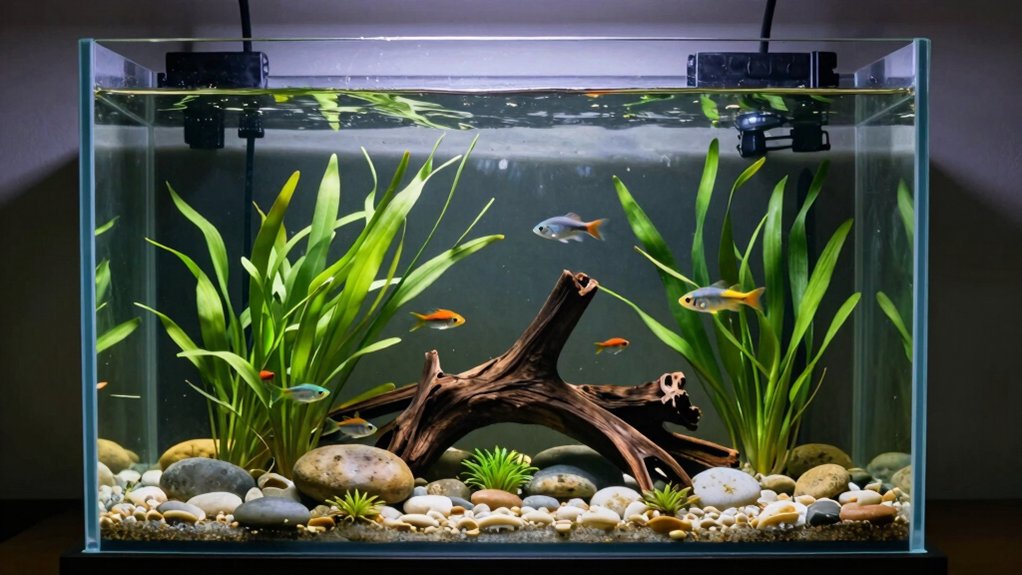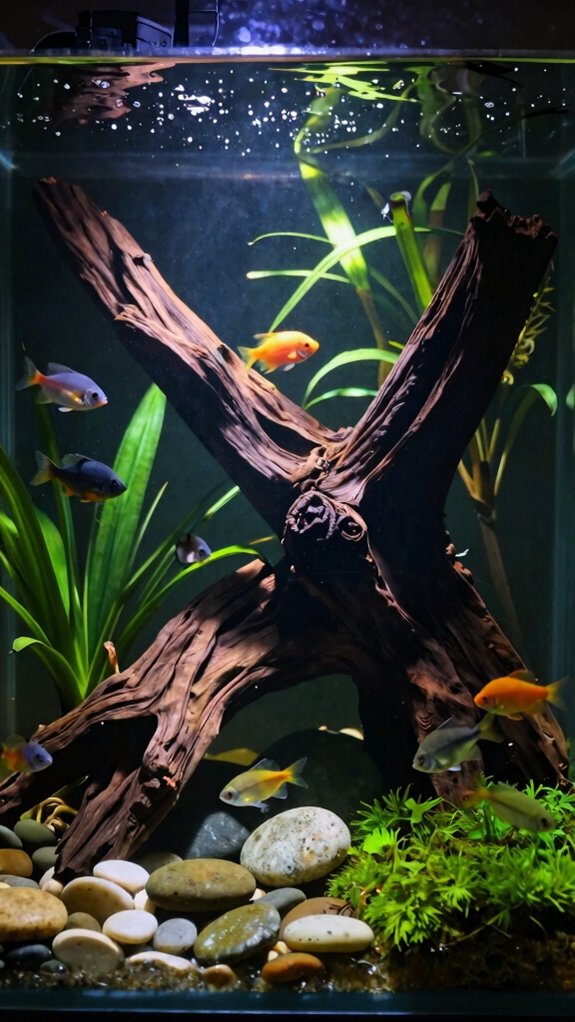
Tank mess at midnight? Dr. Fahri PAT says 13 aquascape aquarium ideas to create a stunning underwater world start with calm basics. I use nature style, Iwagumi rocks, jungle plants, Dutch beds, driftwood forests, and sand paths to guide the eye, then keep low tech tanks simple or add CO2 for faster growth. A little slope, soft light, and tidy pruning make the tank look alive, not wild—and the best trick comes next.
Disclosure: This post may contain Amazon affiliate links, at no extra cost to you. Content on Pawtangle is created with research support from AI tools and carefully reviewed, edited, and fact-checked by the lead author, Dr.Fahri Pat , to ensure accuracy and reliability. Learn more
Key Takeaways
- Use a nature style with sloped substrate, layered planting, and a few plant types for a realistic underwater landscape.
- Build an Iwagumi or mountain layout with odd-numbered stones, a strong focal rock, and plenty of negative space.
- Create a jungle or driftwood forest by stacking wood and tall plants in back, with open foreground pockets for fish.
- Try Dutch, island, nano, or blackwater themes to add structure, drama, and unique visual character.
- Match lighting, CO2, and maintenance to the style, using low-tech plants or high-tech dosing as needed.
Nature Style Aquascape
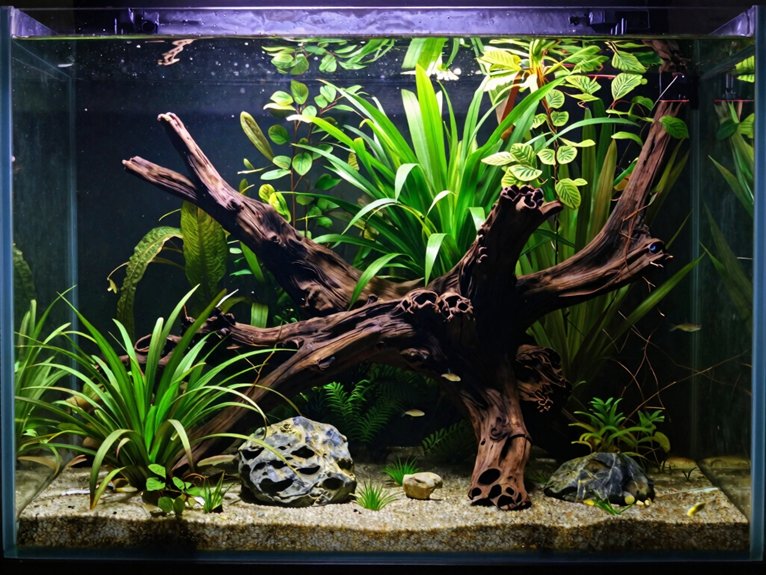
A calm tank can still feel like a tiny jungle at 2 a.m., especially when a fish darts like it heard midnight zoomies. Dr. Fahri PAT notes that nature style aquascapes help people feel at home by copying real hills, forests, and valleys underwater. Smart plant selection and a careful lighting strategy keep the scene balanced, while sloped substrate and layered planting add depth. He usually mixes only a few plant types, spaces rocks and wood naturally, and leaves open water so the eye can rest. Small tetras or rasboras fit well, and shade helps trim growth.
Iwagumi Rock Layout
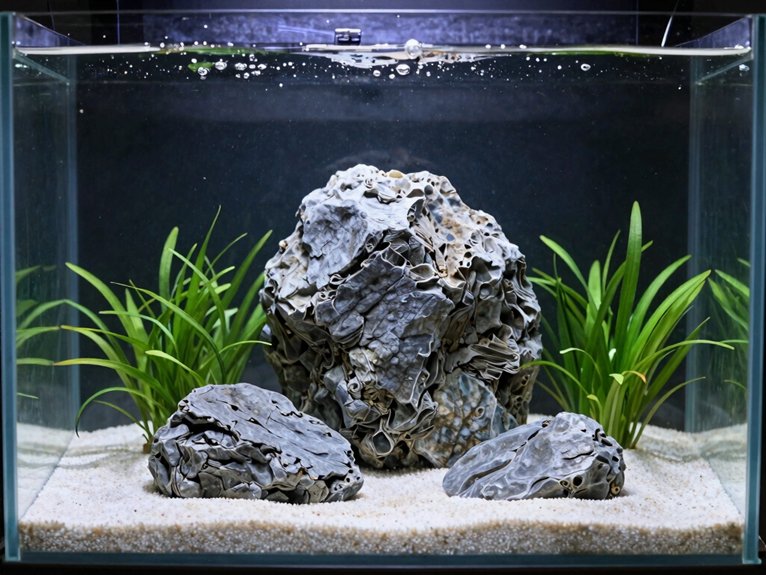
When a tank feels as busy as a cat at midnight zoomies, the Iwagumi Rock Layout brings it back to calm with just a few carefully placed stones. The focus stays on a minimal stone-focused design, where one main rock leads the scene and the smaller ones support it without stealing the show. With open space, low planting, and a clean flow, the result looks natural, simple, and surprisingly bold.
Minimal stone-focused design
That is why planning matters so much here. I am Dr. Fahri PAT, and I have seen aquariums wobble like a chewed-up toy after midnight zoomies. In minimal stone-focused Iwagumi, stone symmetry and negative space guide the eye.
- Use an odd number of stones, usually three, with the biggest Oyaishi near a rule-of-thirds point.
- Add Fukuishi and Soeishi for balance; a small Suteishi can soften tension.
- Build depth by sloping substrate back and using smaller rocks behind.
Keep plants sparse, like carpeting moss or hairgrass. Test the layout first, then set rock on glass before sand.
Jungle Style Planted Tank
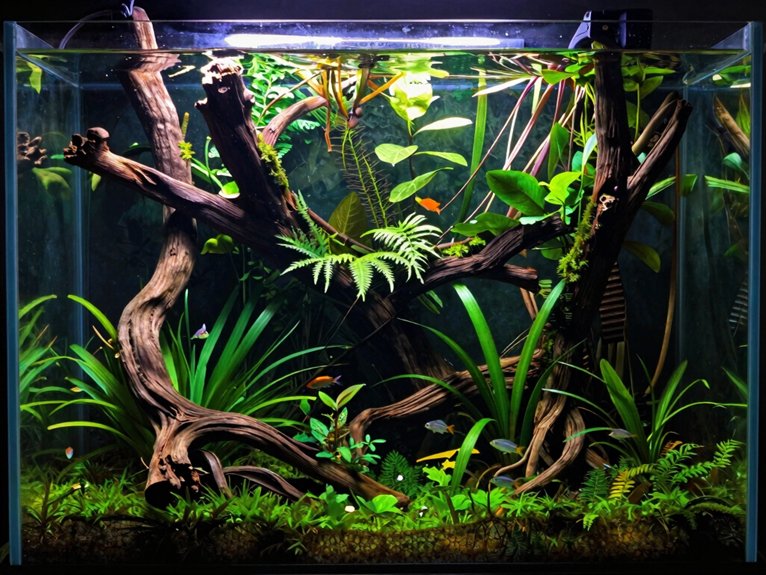
I usually tell hobbyists to think in layers: tall plants and wood in back, mid-height growth in the middle, and just a small open foreground with low plants or a carpet so fish still have little pathways to cruise through. In my view, a jungle style planted tank builds an overgrown canopy and root scape complexity with driftwood, moss, and epiphytes. Fast growers like Hygrophila, Limnophila, and Rotala create depth fast. Dr. Fahri PAT notes that peaceful rasboras and Corydoras feel secure in groups. Weekly trimming, aquasoil, and steady CO2 keep algae from turning the scene into midnight chaos.
Dutch Style Aquascape
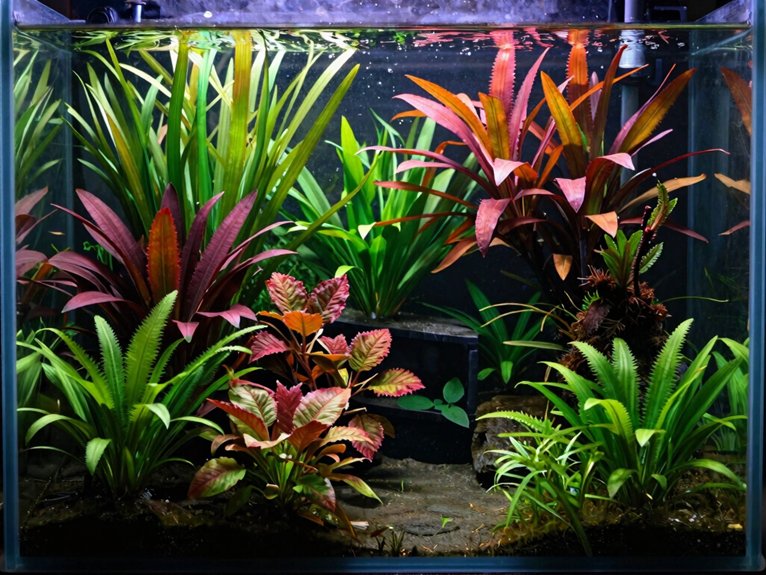
A Dutch style aquascape often starts with the same kind of chaos seen after midnight zoomies—plants everywhere, but in the right spots. It uses dense plant beds with many species packed into clear foreground, midground, and background layers, so the tank looks more like a tiny garden than a pile of random stems. The real surprise is that this lush, crowded look depends on careful spacing and repeated groupings, because too much clutter can turn beauty into a green mess fast.
Dense plant arrangement
Ever tried to calm a tank that looks as busy as a puppy after midnight zoomies? Dr. Fahri PAT says dense plant arrangement in Dutch style feels like family: tight, colorful, and alive. I start with smart plant crowding and substrate selection, then build terraces with 5–10 species.
- Use carpets, midground bushes, and tall stems.
- Repeat reds, greens, and yellows in clean streets.
- Keep light strong, CO2 steady, and trims weekly.
The result is a lush, welcoming underwater garden. One surprise: regular pruning stops the “toy pile” chaos and keeps every group sharp, safe, and stunning.
Driftwood Forest Layout
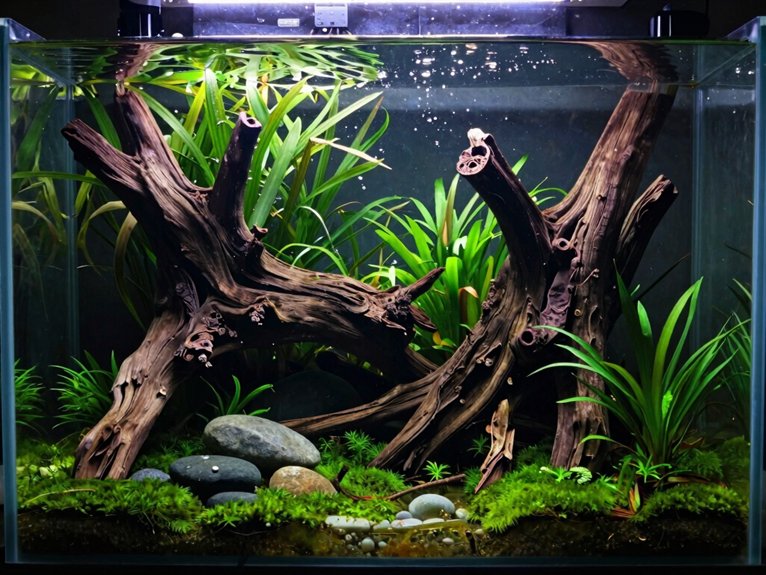
The trick is to place the taller pieces toward the back, use thicker wood in front, and keep smaller twigs farther away, while also sloping the substrate upward behind them so the eye reads more distance than there really is. In a Driftwood Forest Layout, I, Dr. Fahri PAT, would anchor spider wood or mopani tightly with epoxy or hidden rocks, so no midnight floaters appear. Then I’d add moss, with careful epiphyte placement, on branches for a lived-in look. Aim for canopy shadows over 30 percent, leaving open pockets where small fish feel safe. That balance feels wild, cozy, and believable.
Mountain Landscape Aquascape
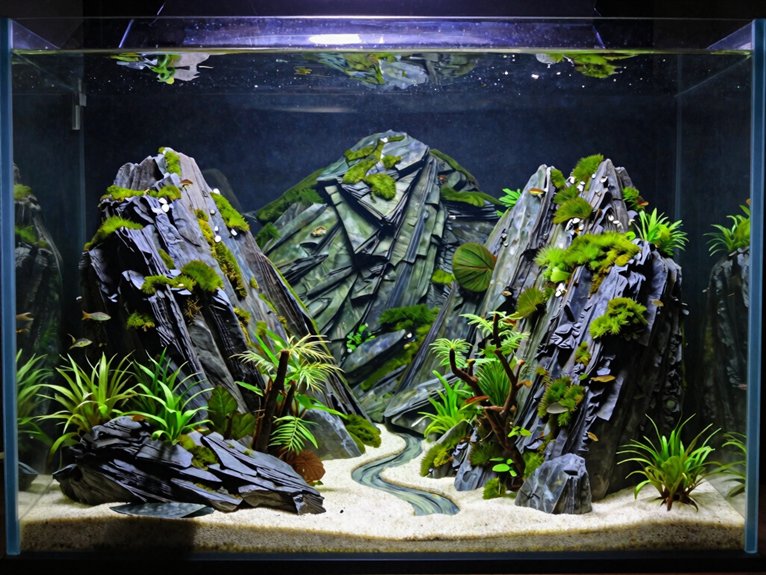
Rockwork with attitude can solve a lot of aquarium drama. I’m Dr. Fahri PAT, and this mountain terrain aquascape feels like midnight zoomies in stone form—wild, neat, and a little funny.
- Place the Oyaishi on a rule-of-thirds point.
- Stack odd-numbered Seiryu or Ohko Dragon rocks in slanted groups.
- Slope substrate high in back, low in front.
That build creates depth, shadow, and a calm alpine mossscape. Keep only 1–3 plants, like carpets and Pogostemon helferi, so the hardscape stays proud. Seasonal lighting can sharpen peaks. Anchor rocks safely on glass, trim often, and test on cardboard first.
Island Style Aquascape
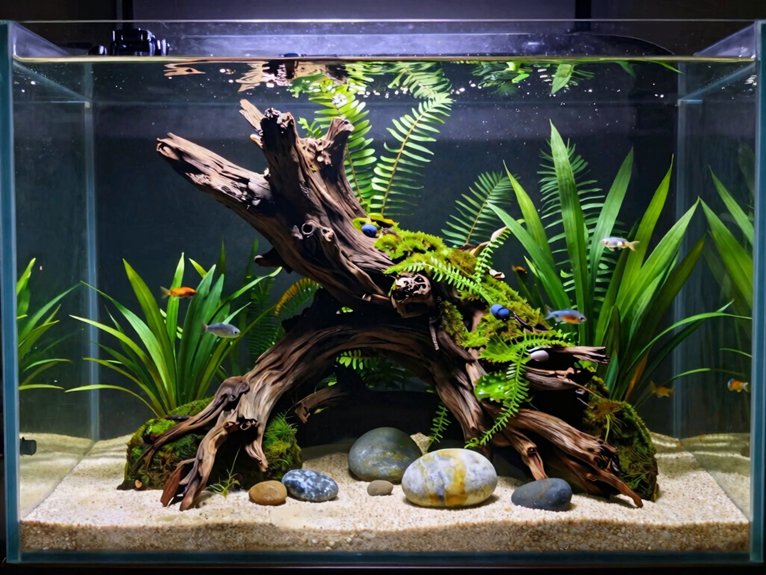
Dr. Fahri PAT notes that when pets seem to own the whole room, an Island Style Aquascape can do the same in a tank by pulling every eye to one strong center. The tallest plants and main wood or rocks sit in the middle like a tiny mountain, while lower edges and open sand help the center feel bold and clear. A little off-center placement keeps it from looking stiff, and that small shift often makes the whole aquarium feel more natural and alive.
Center focal composition
Aquascape aquarium ideas often start with one annoying problem: a tank that looks busy everywhere and special nowhere. As Dr. Fahri PAT, I have seen that feeling after midnight zoomies and one too many chewed-up toys. In a center focal composition, the island sits in the middle third, with midground elevation and a focused foreground.
- Use one main rock or wood piece.
- Add smaller stones and low carpets behind it.
- Leave a clear halo path for fish.
I keep only 2–4 plants, grouped asymmetrically. The result feels calm, social, and easy to love—like finding your people.
Blackwater Aquarium Setup
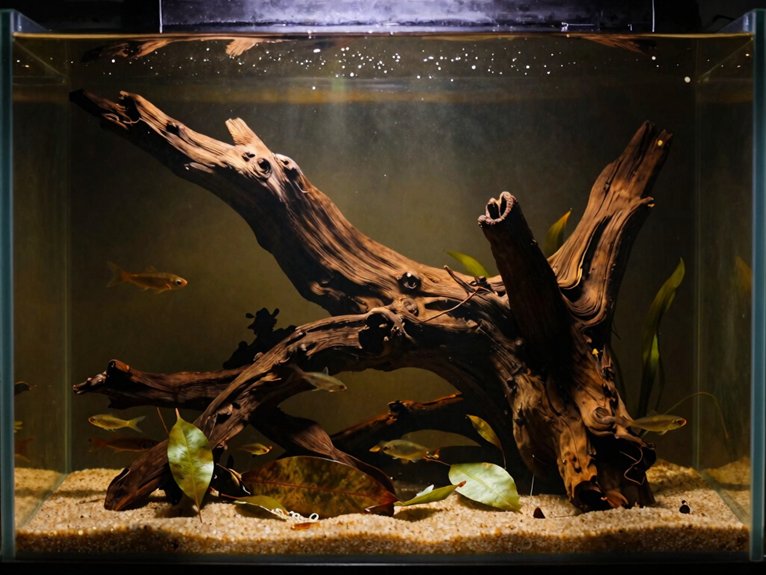
If a tank keeps looking too bright and “clean” to feel natural, a blackwater aquarium setup can be the fix Dr. Fahri PAT recommends. He uses tannin management with Indian almond leaves, alder cones, driftwood, and leaf littering to turn water tea-dark and cozy.
| Step | What to do | Result |
|---|---|---|
| Water | Use RO or peat, keep pH 5.0–6.8 | Soft, acidic stability |
| Plants | Bucephalandra, Anubias, floating salvinia | Shelter and balance |
| Fish | Tetras, apistos, rasboras | Calm, natural behavior |
He keeps light low, flow gentle, and changes partial water while preserving tannins.
Nano Aquascape Design
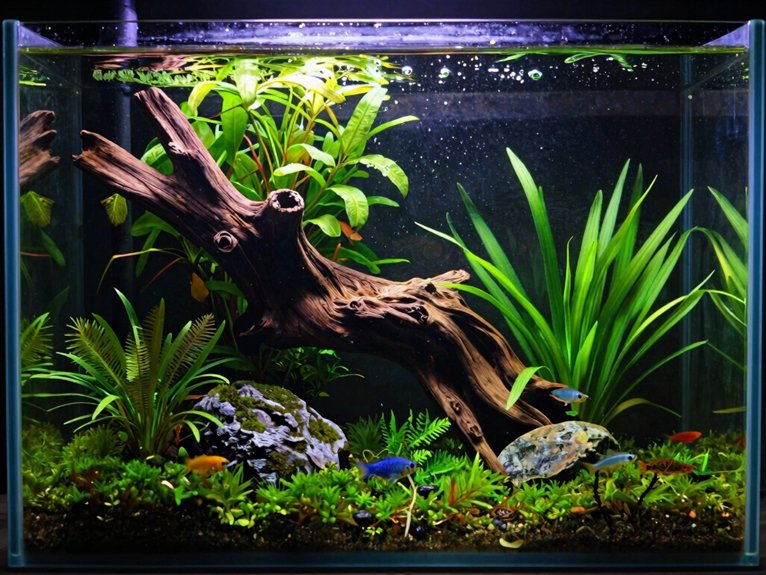
A nano aquascape can be the small-tank solution that turns a cramped little glass box into a tiny scene with a big wow factor. Dr. Fahri PAT would place just one or two stones or a neat driftwood branch, then keep a short plant list and a clear open path so the setup feels deeper instead of crowded. With a few small fish, gentle light, and weekly water changes, even a pocket-sized tank can stay lively without becoming a messy pet-room disaster.
Small tank solution
Tiny tanks can turn into tiny disasters fast—one extra fish, one heavy plant, and suddenly the whole scene looks crowded, cloudy, and a little bit like a toddler dumped a toy box into the water. I keep nano aquascapes simple so they feel calm, not crammed.
- Pick one stone or driftwood piece on a rule-of-thirds point.
- Use 1–3 plants: carpet, foreground grass, and one midground accent.
- Build slope, with vertical planting, tighter rear growth, and low bioload for micro fauna or a few nano fish.
I have seen this make small tanks feel bigger, safer, and easier to love.
Sand Path Aquascape
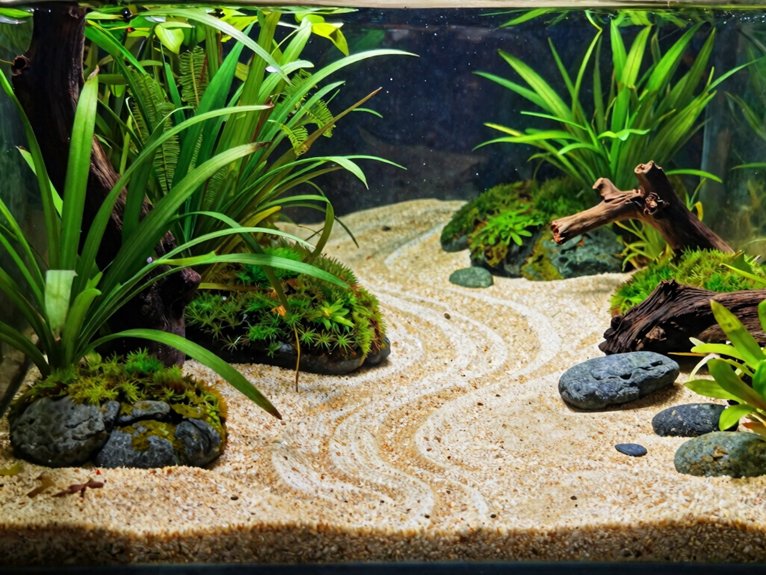
That stubborn “why does my tank look flat?” problem shows up fast, especially after a pet has already turned the living room into a chaos zone with midnight zoomies, chewed-up toys, and one unfortunate lint roller incident. A sand path aquascape fixes that with a sandy riffle cut through contrasting substrate, giving the eye a clear trail. He keeps the channel about one quarter to one third of the tank front, with higher aquasoil in back and larger rocks at the vanishing point. Small empty sand spaces help schooling fish glide, while trimming and gentle siphoning keep the path crisp.
Low Tech Planted Tank
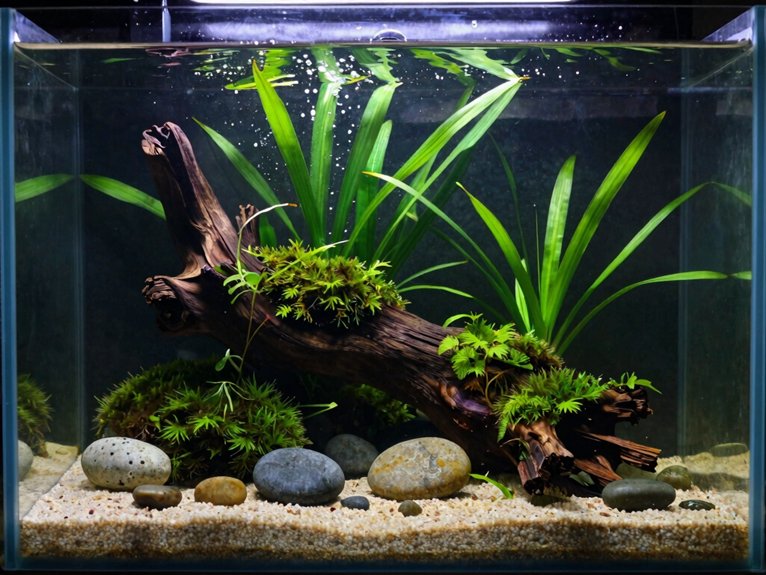
The trick is to keep the plan modest. I have seen low tech tanks win hearts because they feel calm, not crowded. For a low maintenance lighting schedule, I use 6–8 hours of gentle LED light and let Anubias, Java Fern, Java Moss, Cryptocoryne, and Vallisneria do the heavy lifting.
- Pick aquasoil or inert sand with root tabs.
- Use aquarium safe fertilizers only when growth slows.
- Stock lightly: ember tetras, rasboras, guppies, cherry shrimp, or nerite snails.
A simple rock or driftwood layout keeps trimming easy. The result is a lush, friendly tank that feels welcoming every day.
High Tech CO2 Aquascape
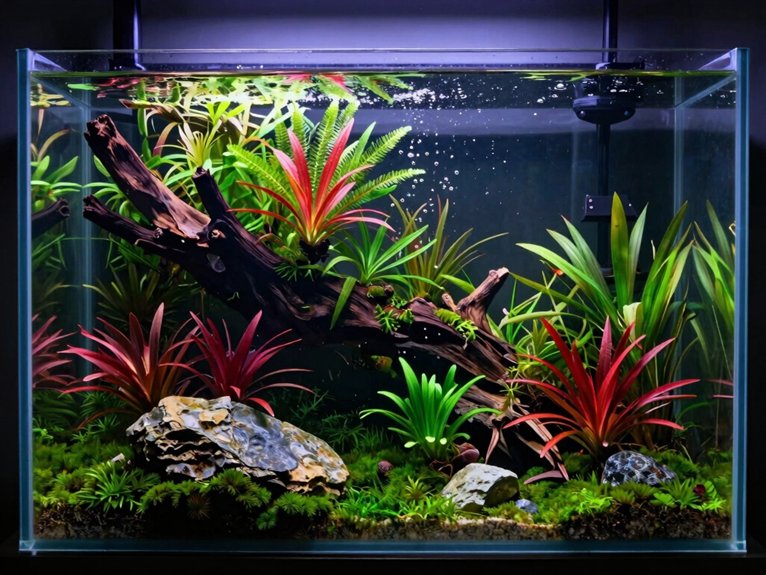
High Tech CO2 Aquascape can turn an aquarium into a fast-growing plant show, with bright leaves, thick carpets, and stems that seem to change overnight. When CO2, strong LED light, and steady nutrients are balanced well, the plants often outgrow algae and make the tank look clean and full. It still needs close watching, though, because fish stress, quick trimming, and weekly water changes can decide whether the layout stays beautiful or turns into a green mess.
Advanced plant growth
- Keep CO2 micro dosing at 25–30 ppm for steady, safe growth.
- Hold PAR at 200–400 for 6–8 hours, with no light spikes.
- Use substrate microbiome management, strong flow, and weekly trims.
EI dosing and 20–50% water changes keep nutrients balanced. The surprise win: consistency beats brute force.
Minimalist Zen Aquascape
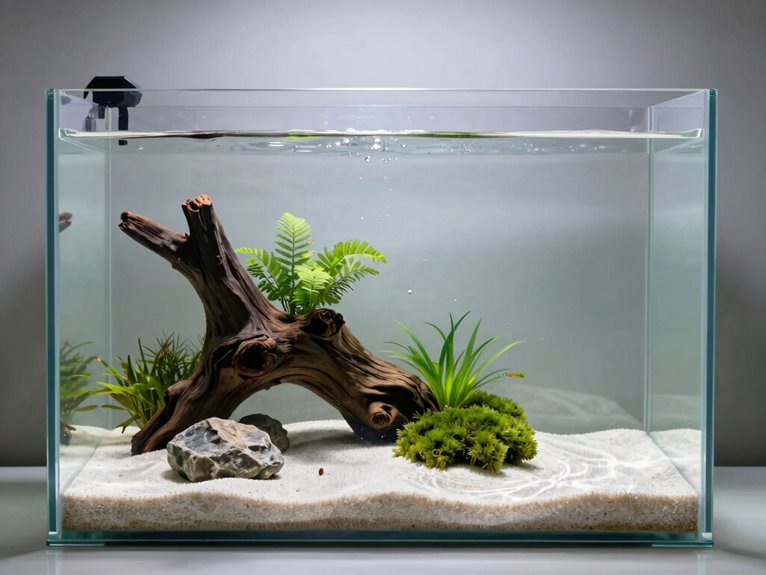
When a tank starts feeling as busy as a living room after midnight zoomies, a Minimalist Zen Aquascape can be the calm reset it needs. As Dr. Fahri PAT, I keep it simple: one Oyaishi-style focal stone on a rule-of-thirds point, one rock type, one driftwood piece, and just 1–3 plants. That leaves negative space for peace and contemplative planting. A slope in the substrate and smaller rear stones add depth. Gentle shadows, about 30–60%, feel serene. Stock lightly with ember tetras or ricefish, and the whole scene finally breathes.
Frequently Asked Questions
What Fish Species Are Best for an Aquascape Aquarium?
Small schooling fish best suit aquascapes, especially nano rasboras and dwarf corydoras, because they stay peaceful and visually unified. Their gentle movement helps create a shared, welcoming habitat where every element feels connected.
How Often Should Aquascape Lighting Be Adjusted?
Aquascape lighting should be adjusted only when needed, often gradually after observing daily cycles and plant response. Gentle seasonal adjustments keep the underwater scene balanced, like morning mist gliding over a shared, living haven.
Which Substrate Works Best for Aquascape Plants?
For aquascape plants, nutrient rich soils usually work best, especially under carpet species; gravel alternatives can suit simpler layouts. The right choice helps the aquarist feel part of a thriving, balanced underwater community.
How Do I Prevent Algae in a Planted Aquarium?
Preventing algae in a planted aquarium starts with stable light scheduling, balanced fertilization, and clean water. A theory often suggests excess nutrients cause blooms, but harmony between plants, lighting, and maintenance usually keeps tanks clear.
What Water Parameters Suit Most Aquascape Setups?
Most aquascape setups thrive in clean, stable water with ideal pH near 6.5–7.2 and stable GH around 4–8 dGH. Consistency helps plants and fish feel at home, creating a balanced community together.