Too many tank props can make a pet look like it zoomed through a toy bin at midnight. Dr. says 12 simple aquascape aquarium ideas that look clean and natural start with restraint: one rock, one branch, or a small trio, placed off-center with open sand around it. Add low plants, a gentle slope, and clean glass for calm depth. It stays safe, easy, and budget-friendly, and the best trick is hiding in plain sight just ahead.
Disclosure: This post may contain Amazon affiliate links, at no extra cost to you. Content on Pawtangle is created with research support from AI tools and carefully reviewed, edited, and fact-checked by the lead author, Dr.Fahri Pat , to ensure accuracy and reliability. Learn more
Key Takeaways
- Use one off-center focal stone or driftwood piece, keeping the design sparse and calm.
- Follow the rule of thirds with three or five stones and plenty of open negative space.
- Slope fine sand higher in back and lower in front to create depth and a wider foreground.
- Choose low-maintenance plants like Anubias, Java fern, mosses, or a small carpet of Monte Carlo.
- Keep lighting moderate, trim weekly, and change 20–30% of water each week for a clean look.
Minimal Rock Aquascape
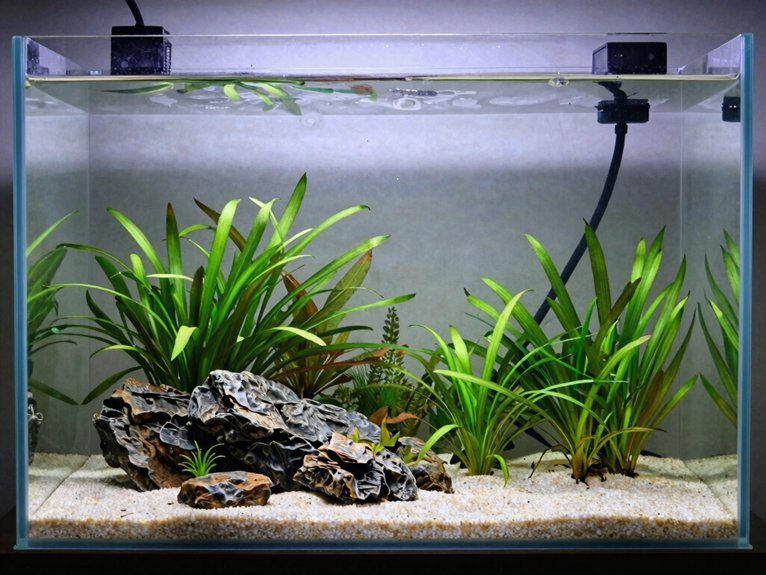
Then build depth the easy way: put the larger stones in front, the smaller ones farther back, and raise the substrate slightly in the rear. In this minimal rock aquascape, Dr. notes that stone placement works best with three or five stones, set by the rule of thirds, so the tank feels calm, not crowded. Hakkai, Seiryu, or Ohko can lean toward flow for gentle tension. Shadow planning should leave 30–60% dim space near the rocks. I keep plants to a few low carpets, then trim hard early on; the scape settles cleanly, like a pet finally leaving the chewed toy alone.
Single Driftwood Layout
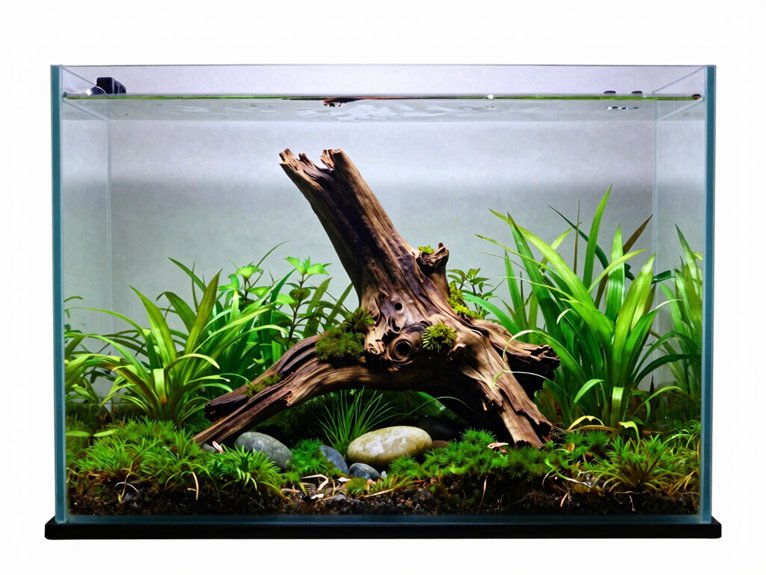
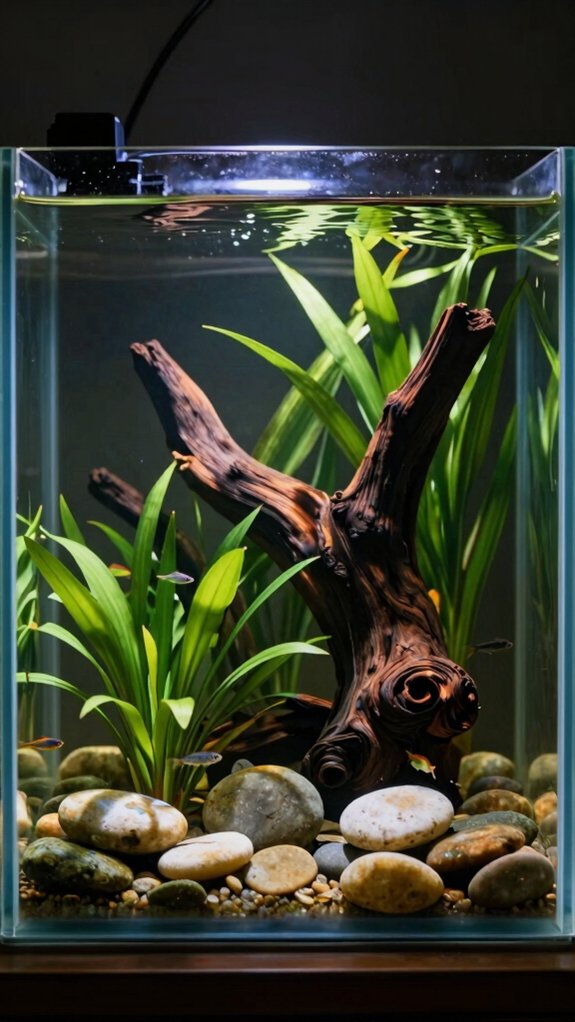
A single driftwood layout works best when one strong piece becomes the only star in the tank, much like a dog stealing the whole couch for a nap. Placed off-center and angled with the flow, it draws the eye fast, creates shade, and gives the aquascape a clear focal point without feeling crowded. With open space around it and simple plants supporting the scene, the wood can look larger, calmer, and far more natural.
One focal point
By tilting the wood slightly toward the main viewing angle, the shape feels alive instead of stiff, and the hardscape starts to guide the eye without shouting for attention. I use one branching driftwood piece off-center, so branching symmetry is broken just enough for focal contrast. Java fern, Christmas moss, and Riccardia cling to the wood, softening edges like a favorite blanket. A sloped substrate pushes the wood forward, while a low carpet and simple stems turn the back into a quiet forest. I leave open space opposite it, then trim weekly, because algae loves a lazy aquarist.
Sand and Stone Design
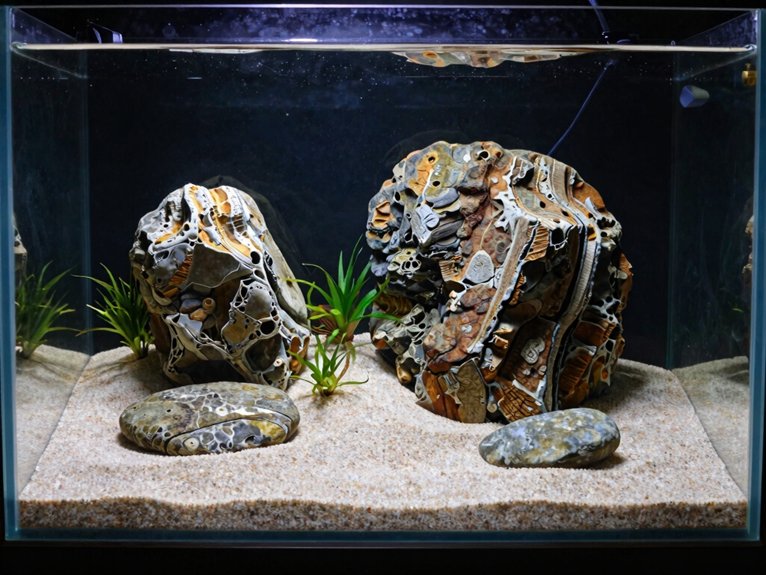
When a tank looks flat and crowded, it can feel a lot like finding a chewed-up toy in the hallway at midnight: messy, confusing, and hard to love. I, Dr. , favor grain selection with fine, light sand, 0.2–0.6 mm, so the foreground feels wider and calmer. Stone placement works best in an off-center triangle or convex island, with the largest rock set slightly right. Slope sand higher there, lower in front, and keep 30–60% shadowed space behind rocks. Thin edging of controsoil or grass softens seams, making the scene feel shared, natural, and safe.
Low Tech Planted Tank
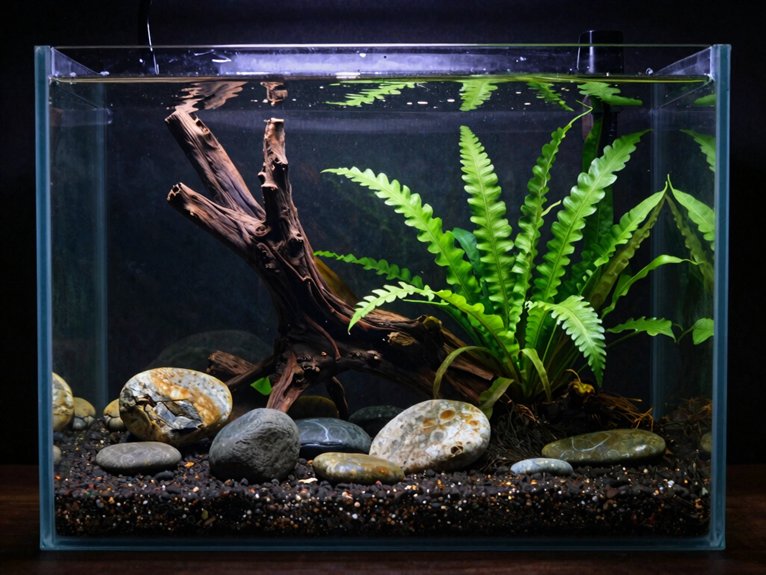
The simple setup starts with moderate light, not a spotlight. In a low tech planted tank, Dr. notes that calm wins: no pressurized CO2, just ambient CO2, rich substrate, and slow growth from Anubias, Java fern, and Cryptocoryne. A canister filter with gentle flow keeps things tidy, like a lint roller after midnight zoomies.
| Care | Result |
|---|---|
| 20–30% weekly water change | Stable water |
| Trim dead leaves | Less algae |
| Recycle filter media | Faster biology |
Expect weeks before carpets spread, so patience matters. Early diatom dust fades as plants settle, and the aquarium starts feeling like home.
Small Nano Aquascape
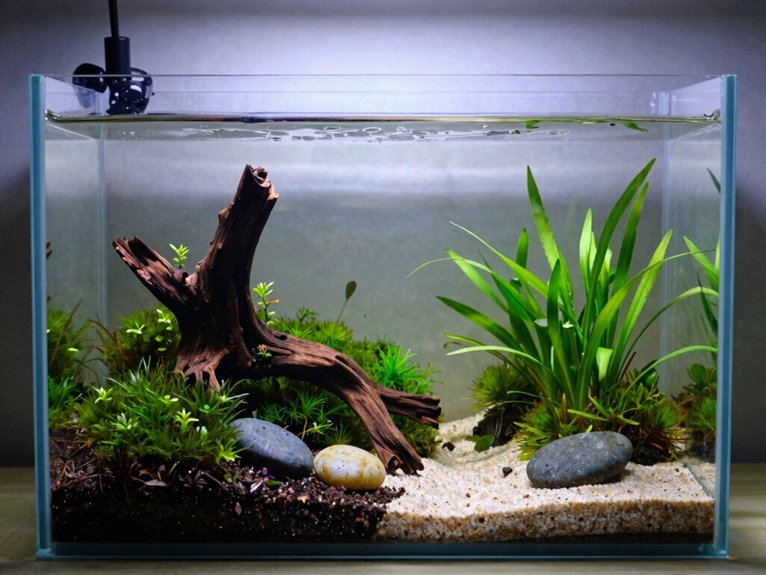
A compact setup can feel a lot like a pet’s midnight zoomies—small, fast, and surprisingly easy to overdo if the space gets crowded. In a small nano aquascape, a single stone, a bit of branching driftwood, and a few low carpet plants can create a clean focal point without making the tank look stuffed. The best results usually come from keeping the design simple, because that leaves room for the plants to grow in and the whole scene to look balanced.
Compact setup
From there, the trick is to keep it simple and tidy. Dr. here: after midnight zoomies and chewed-up toys, a compact focalpoint helps a nano tank feel calm, not crowded.
- Place one stone or driftwood slightly off-center.
- Use tight planting with dwarf hairgrass or Monte Carlo.
- Keep 1–3 low stems in back for depth.
- Run moderate light and a small filter; trim weekly.
In a 20–60 L setup, this small plan stays safe, affordable, and easy to share with fellow hobbyists. The best surprise? Less clutter usually means more “wow,” even when the cat judges silently.
Open Space Aquascape
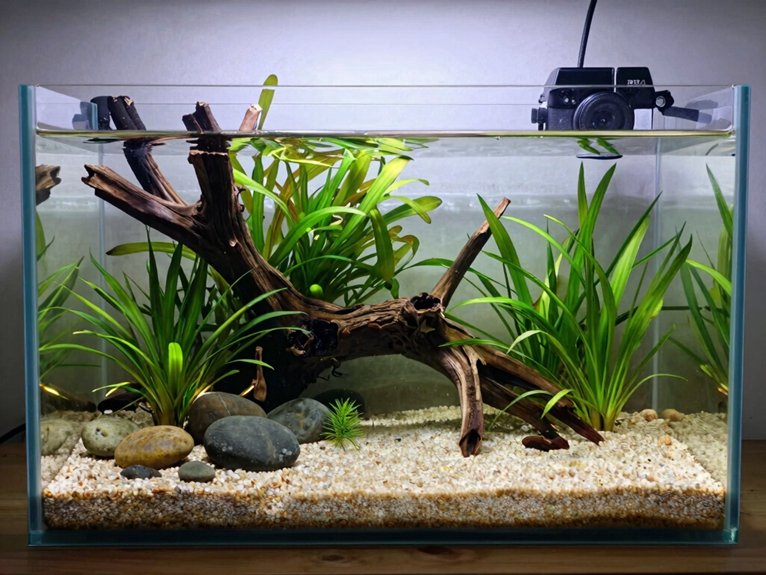
In an open space aquascape, that empty middle is not wasted at all. Dr. notices this fixes the same problem as midnight zoomies: too much chaos, nowhere to land. The design uses negative space and path focalization, with a low sand or gravel lane in front and taller plants rising behind it.
About 30–60% of the tank stays open, so rocks, driftwood, and stem groups feel more important. Tiny carpeting plants soften the edges, while hardscape sits a bit forward for a deeper forest feel. It takes trims and water changes at first, but the calm result feels worth it.
Island Style Layout
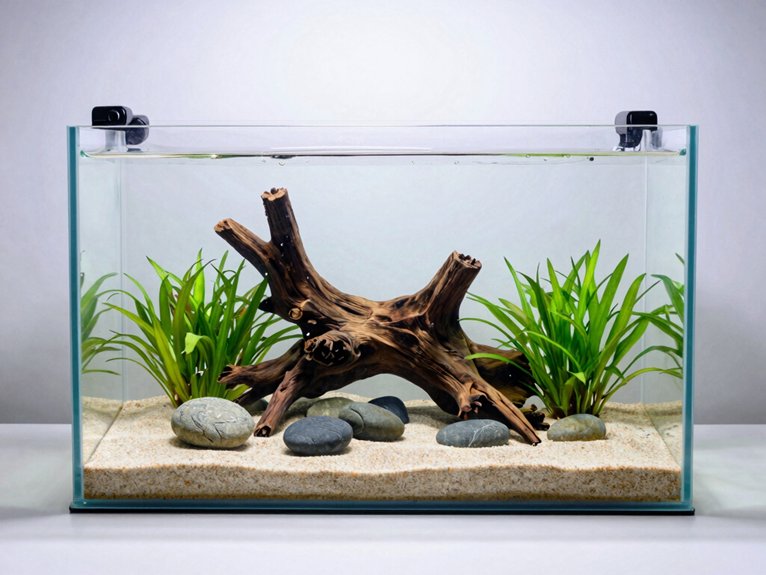
Midnight zoomies are funny until the tank looks like a cluttered hallway, and Dr. has seen plenty of aquariums that needed one clean, bold centerpiece to calm things down. An island style layout builds that calm with an uplifted centerpiece in the tank’s middle third, so the whole scene feels welcoming and steady.
- Use radial planting for a soft, round shape.
- Add taller stems inside, shorter carpets outside.
- Set rock or driftwood slightly forward for depth.
- Leave open space around the edges.
Dr. trims early, then weekly, to keep the island tidy and fish cruising freely.
Easy Moss Aquascape
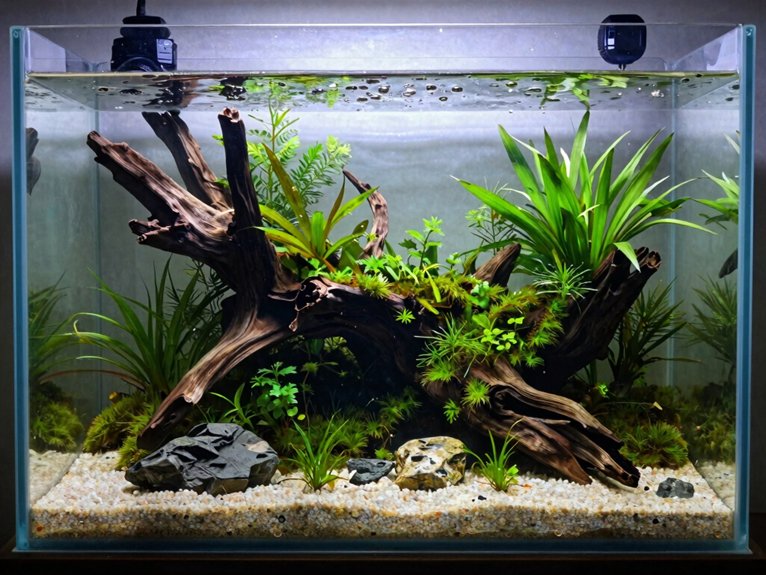
Easy moss aquascape setups are a favorite for anyone who wants low maintenance plants that still look polished, even when life gets messy and the aquarium routine has to stay simple. Dr. says moss like Java moss or Christmas moss can be tied to driftwood or rocks, then left to grow into a soft green patch that usually fills in within 4–6 weeks under moderate light. With cooler water, light trimming, and gentle nutrient dosing, it stays neat without much fuss—almost like the aquarium version of choosing the right kibble and skipping the midnight chaos.
Low maintenance plants
When a tank turns into a tiny jungle overnight, the best fix is often the one that asks for the least fuss. Dr. notes low maintenance plants like Java moss, Christmas moss, and Fissidens suit easy moss aquascapes.
- They handle low to moderate light and no CO2.
- Stable water parameters and a pruning schedule keep algae calm.
- Riccia fluitans adds lush texture, but thinning helps.
- Gentle trimming, spot-cleaning, and weak flow save time.
In practice, that means fewer surprises, cleaner driftwood, and a tank that feels welcoming, even on busy weeks.
Gravel Base with Few Plants
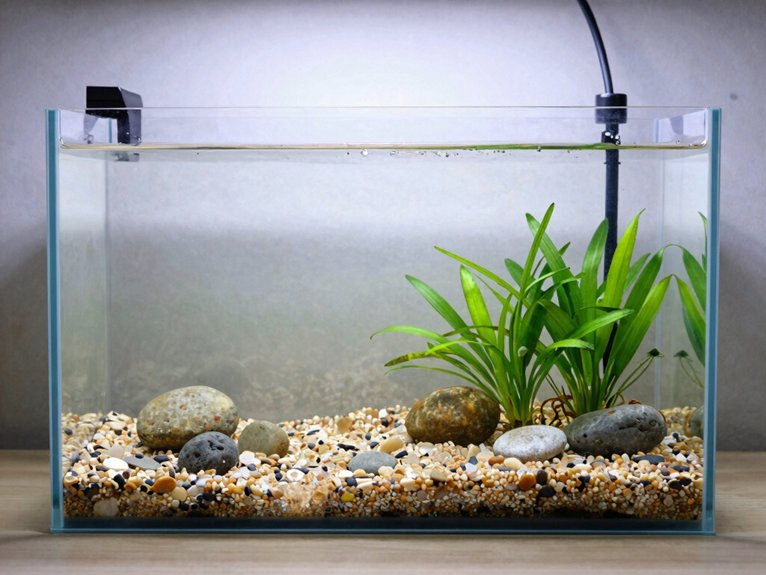
Start with neutral-colored gravel in the 2–4 mm range, spread it thin across the foreground so water can still move through it and roots can breathe.
Dr. says this setup feels like a calm pet corner after midnight zoomies. With gravel porosity and plant spacing, the scene stays open and easy to read. A few plants are enough: one carpet patch, one clump, one stem trio.
| Tip | Result |
|---|---|
| 1 stone | Depth |
| 3–6 plants | Balance |
| Shallow gravel | Flow |
| Weekly care | Less algae |
A forward stone or driftwood adds depth, while 20% water changes and a quick gravel vacuum keep the group feeling tidy.
Zen Style Aquascape
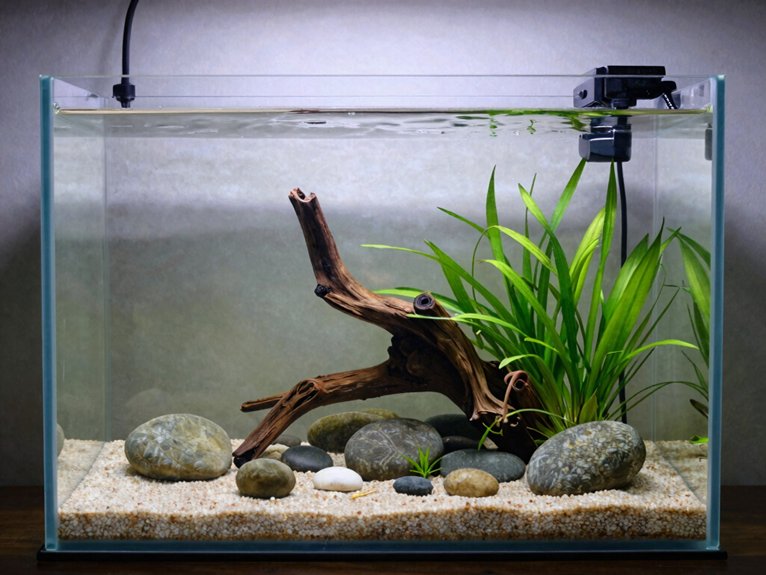
Dr. says this is the tank version of finally finding the TV remote under the couch—quiet relief, no drama.
- A single rock or driftwood piece becomes the calm focal point.
- Keep negative space open; it helps the meditative composition feel bigger and steadier.
- Use greens, neutrals, and a few stems or a soft carpet for balance.
- Add small schooling fish or shrimp, then light the tank moderately for 6–8 hours.
That quiet setup often feels like a shared deep breath, even after midnight zoomies and chewed-up toys. Many find the zen look budget-friendly, low-stress, and strangely welcoming.
Beginner Carpet Plant Setup
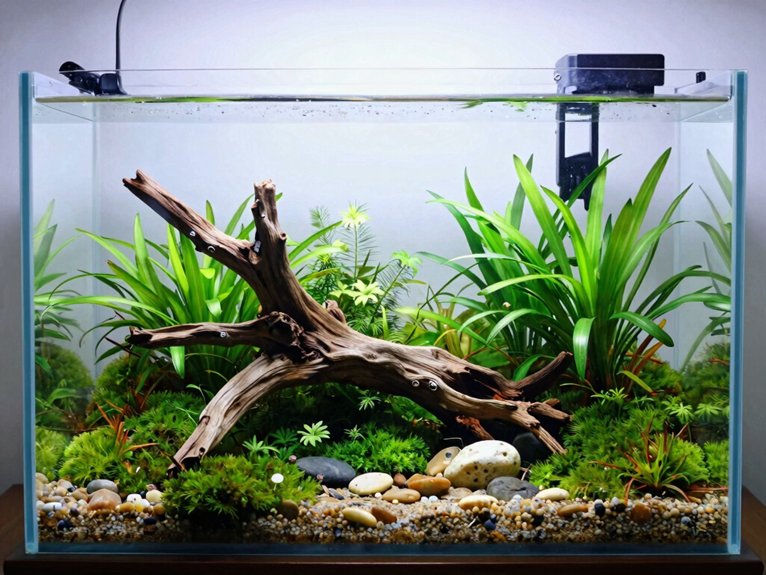
A simple foreground can save an aquascape from looking busy, much like a room after a dog’s midnight zoomies are finally cleaned up. For a beginner carpet plant setup, a hardy carpet across the front—using Dwarf Hairgrass or Monte Carlo in aquasoil with steady light—creates that clean, low-maintenance base without the fuss of delicate plants. With weekly trims and a few spot replants, the foreground stays neat, the tank looks deeper, and the whole layout feels pulled together.
Simple foreground
Even the neatest aquarium can look bare up front, and that empty foreground can feel a lot like a living room after a dog has launched a midnight zoomies attack—oddly messy, but fixable. Dr. notes that a simple foreground helps the tank feel like home.
- Choose Dwarf Hairgrass or Monte Carlo.
- Use tweezers and plug spacing of 1–2 cm.
- Expect diatoms, then steady growth.
- Trim often; replant runners, or leave sand later.
With moderate light, balanced food, and stable warmth, the carpet settles in. The result is calm, clean, and welcoming—like finding the right kibble after too many snack fails.
Clean Glass and Sparse Decor
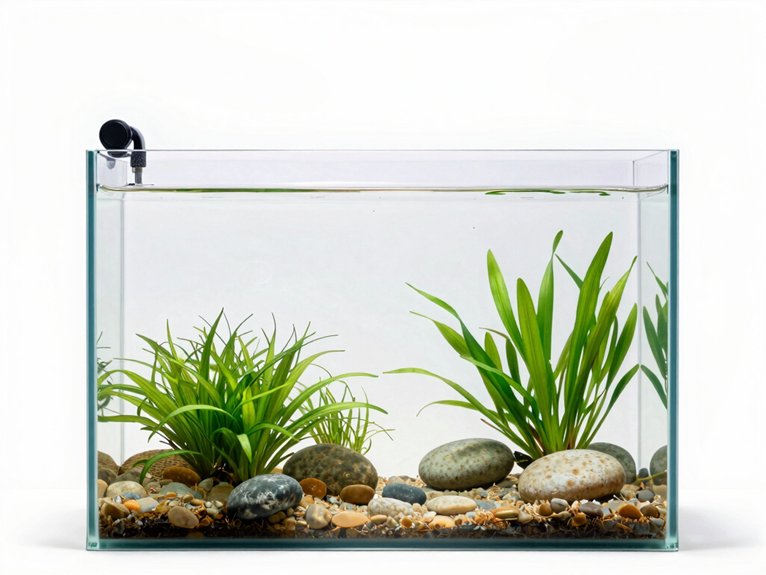
When the aquarium glass starts wearing that fuzzy biofilm like a bad pair of socks, the whole tank can lose its sparkle fast. Dr. here says steady glass maintenance keeps the view crisp: a weekly 20–30% water change and a quick wipe every time. That fits sparse styling too, because clean glass lets the eye rest on one Hakkai stone, a single driftwood branch, and a thin carpet below. He keeps epiphytes few, the filter oversized, and trims to about an hour a week. Result: open sightlines, calmer water, less algae, more belonging.
Frequently Asked Questions
How to Make a Natural Looking Aquarium?
It begins with a natural substrate, then a subtle current. He or she places hardscape off-center, adds few plants, and waits as the scene unfolds—belonging appears when rocks, wood, and moss settle together.
How to Make Aquascape Look Good?
Good plant placement and lighting balance make an aquascape feel cohesive and inviting. A few focal pieces, layered heights, and open shadowed space guide the eye, helping the tank look calm, natural, and welcoming.
What Are Common Aquascaping Mistakes?
Like a crowded stage, common mistakes include overcrowding plants, unnatural hardscape, ignored scale, and poor maintenance. The scene loses balance when species multiply, spacing vanishes, and weekly care is forgotten, leaving algae and weakened growth.