
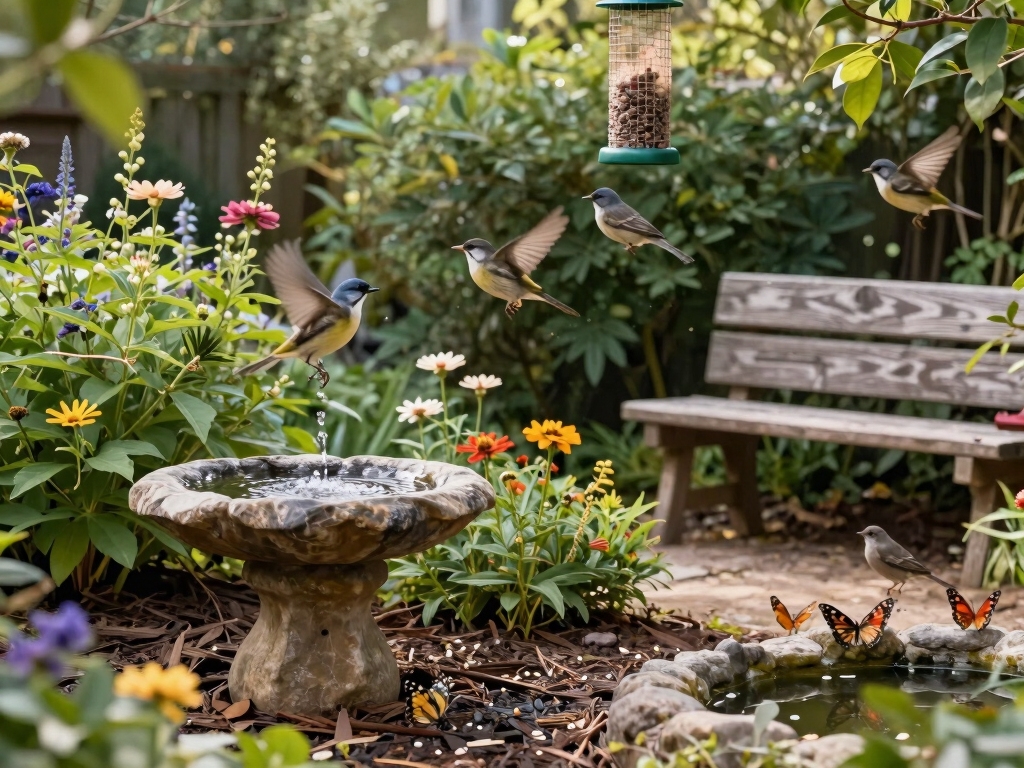
Backyard bird sanctuaries work best when they mix native plants, clean water, and safe cover. Serviceberry, winterberry, bee balm, and dense evergreens feed birds, while a shallow birdbath or dripper brings them in. Keep feeders near shrubs, add brush piles or snags, and leave seedheads for winter. Avoid pesticides, keep cats indoors, and use window markers to cut collisions. With a few changes, small yard can feel like a wildlife stop, and more tips follow.
Disclosure: This post may contain Amazon affiliate links, at no extra cost to you. Content on Pawtangle is created with research support from AI tools and carefully reviewed, edited, and fact-checked by the lead author, Dr.Fahri Pat , to ensure accuracy and reliability. Learn more
Key Takeaways
- Plant native berry shrubs, nectar flowers, and evergreens to provide food and shelter across seasons.
- Create layered habitat with canopy trees, shrubs, grasses, vines, brush piles, and log stacks for nesting and refuge.
- Add shallow moving water, like a birdbath or dripper, and place it 10–20 feet from cover.
- Offer feeders near shrubs, with seedheads and leaf litter left in place to support natural foraging.
- Protect birds by keeping cats indoors, using safe windows, and pruning lightly during nesting season.
Why Most Backyards Don’t Attract Birds
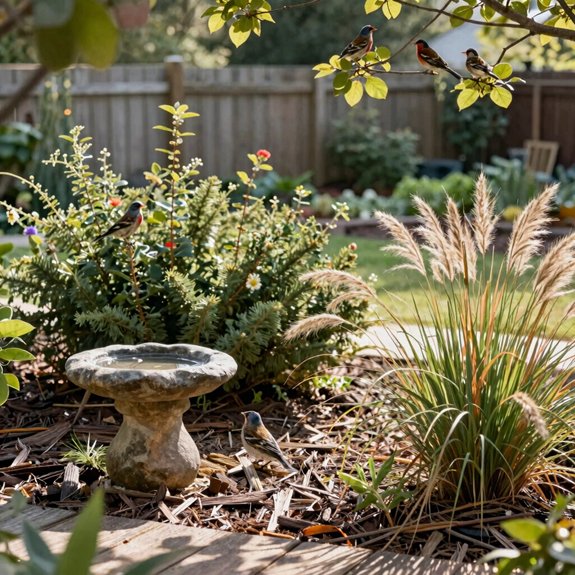
Starting with the lawn, many backyards miss the mark because they are built like tidy green carpets, not living habitat.
In lawn culture, urban sprawl leaves little room for native plants, and the result is a neat yard that feeds almost nothing.
Heavy pesticide use cuts down insects, so birds lose a key food source.
Exotic shrubs and one-note designs also limit cover and nesting spots.
Even water features can fail when cats roam nearby, turning a tempting yard into a risky stop.
Birds often pass by instead of settling in.
Small changes can make a yard feel welcoming.
Habitat Elements Birds Actually Need
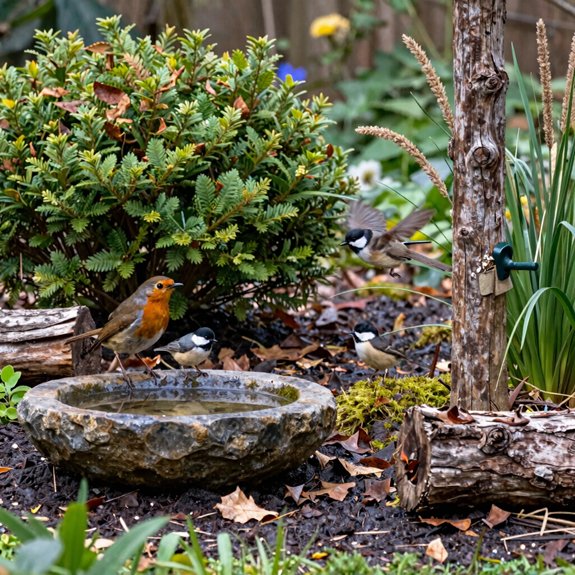
A good backyard bird sanctuary starts with clean water, like a shallow bath or dripper, because birds need a steady place to drink and wash.
It also needs safe nesting areas, such as native shrubs, evergreens, and brush piles, which give birds cover from weather and predators.
Natural food matters too, so a mix of native trees, berry shrubs, and insect-rich plants can keep birds fed through the seasons, which is a lot better than an empty buffet.
Clean water sources
For birds, clean water is as important as seed, and a shallow birdbath or basin with a gradual slope and about 1–2 inches of water gives them a safe place to drink and bathe.
A small recirculating fountain or dripper, including solar misting, draws visitors than still water, and a heated bird bath keeps access in winter. Refill and clean it every 2–3 days in warm weather, and top it with rainwater or graywater reuse only if safe. Set the feature near shrubs or low branches, about 10–20 feet away, so birds can approach easily and drink safely there.
Safe nesting areas
In spring and summer, birds need more than a feeder, they need places that feel hidden, nearby, and safe. A layered mix of native trees, shrubs, and vines gives nesting birds cover close to their usual foraging routes, so the trip home stays short, for safer, easier returns.
Old snags, dead limbs, and a well placed nest box replace lost natural holes, while dense evergreens and thorny shrubs add year round shelter. Predator deterrents, like thoughtful placement away from easy climbing spots, help too. Keeping pruning light during nesting season lets small families settle in without too many surprises.
Natural food availability
Many backyard birds do best when the yard offers food from more than one season. Native oaks, serviceberry, and dogwood support caterpillars, while berries from winterberry, chokeberry, beautyberry, and crabapple carry birds through fall and winter.
Seasonal fruiting keeps pace with insect emergence, so coneflower, sunflower, milkweed, and sedum help feed young birds with protein-rich insects, then seed heads later.
- Plant native trees and shrubs for high-fat fruit and caterpillars.
- Keep berry plants for colder months.
- Leave seed heads for goldfinches and juncos.
- Add evergreens and layered cover for shelter and stopovers.
Such a yard feels welcoming to birds.
Plant Choices That Bring Birds In
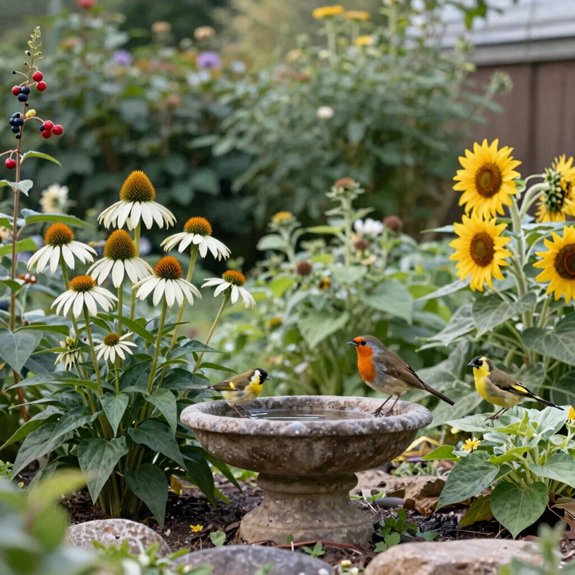
Native berry-producing shrubs such as serviceberry, winterberry, and chokecherry can bring birds in with fruit that lasts into cooler months, while native flowers like cardinal flower and salvia add nectar for hummingbirds and other hungry visitors.
Dense hedges made from evergreens or thick shrubs give birds a safe place to rest, hide, and slip through the yard without much fuss.
With the right mix of berries, blooms, and shelter, a backyard starts working like a small bird stopover, which is a pretty useful role for a patch of green.
Native berry-producing shrubs
A bird-friendly hedge can keep working long after flowers fade. Native berry shrubs, like winterberry, chokeberry, beautyberry, and serviceberry, feed migrants and residents through fall and winter, while also hosting insects for nestlings. Plant at least three with staggered berry phenology, and keep shrub spacing suited to mature size for steady fruiting. Match species to USDA zone, sun, and soil moisture for reliable harvests.
- Early serviceberry starts migration meals near home.
- Midseason chokeberry keeps fruits coming for the flock.
- Late beautyberry and winterberry stretch winter food.
- Hollies and everbearing shrubs cover lean weeks when insects are scarce, snow lingers.
Nectar-rich flowers
Berry shrubs keep feeding birds after summer, and nectar-rich flowers carry that work forward with color and fuel for hummingbirds, orioles, and other nectar seekers.
Cardinal flower and salvias give hummingbirds dependable nectar during breeding and migration, while red columbine, bee balm, penstemon, and jewelweed stretch seasonal color from spring to fall. Native trumpet honeysuckle or trumpet vine adds structure and perches, and dense patches of zinnias, salvia, and penstemons near nests, within 50 meters, help birds forage close by. Hummingbird feeders can back up blooms, but native plants keep the menu lively and local for every returning season.
Dense hedges for shelter
Thick, layered hedges give birds a safe place to rest, hide, and nest, especially when winter leaves much of the yard exposed.
Dense spruce or holly can create evergreen privacy, while mixed shrubs and vines form hedgerow corridors that feel like sheltered lanes.
Such planting keeps a bird neighborhood busy, with shelter, food, and safe nesting all within a short flight, which helps newcomers settle in without much fuss.
- Include serviceberry, winterberry, and chokeberry.
- Add Virginia creeper for vertical cover.
- Leave seedheads and berries for finches and juncos.
- Plant close rows, then let oaks or cherries support insects nearby.
Feeding Zones That Feel Safe
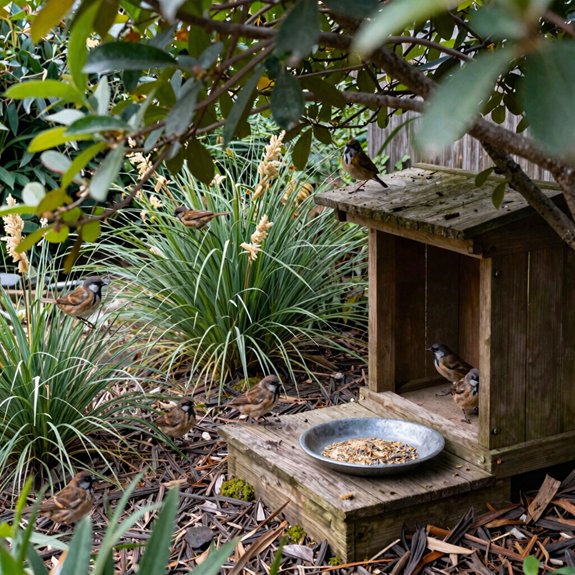
A backyard sanctuary feels safer when feeding spots are layered, with raised feeders for chickadees and finches, ground areas for seed and scraps, and a few perch points higher up for quick visits.
Birds also do better when feeders sit near cover, but not too close, so shrubs or evergreens give them a fast escape without turning the area into a cat’s shortcut.
A mix of open and sheltered feeding zones, with water nearby, helps more species relax and eat with fewer surprises.
Elevated feeder placements
Smart feeder placement can make a backyard feel safer right away, especially when feeders sit 5–10 feet above the ground and 10–15 feet away from thick cover where cats or hawks could hide.
- Metal poles with baffles help keep feeders out of reach.
- Keep a 3–4 foot buffer from branches, so predators cannot spring.
- Space stations 20–30 feet apart, giving small birds quick escape routes.
- Add predator proof perches and solar powered feeders for hummingbirds at 5–6 feet in partial shade.
The setup feels welcoming, and birds gain safer choices, calmer visits, and a better chance to settle in daily.
Ground feeding areas
Ground-feeding zones work best when they feel tucked in, so planting dense native shrubs and tall grasses within about 50 feet of nesting sites gives sparrows, towhees, and other visitors a safe place to forage for seeds and insects.
| Choice | Benefit |
|---|---|
| Sunflower chips | Easy pickings |
| Millet | Small-bird staple |
| Cracked corn | Ground-level feed |
Seed baiting techniques place millet or sunflower chips on bare soil or leaf litter, then shift spots often, so mold stays away and birds feel welcome. Leaving 6 to 12 inches of native grass and seed heads helps winter guests, and supports nocturnal foraging by visitors.
Covered feeding spots
Once the ground-feeding area is set, the next step is to give birds a place that feels sheltered, so feeders sit 10 to 50 meters from dense shrubs or tree cover and close enough for a quick dash back to safety.
- Overhanging branches or arbors soften the space.
- Thorny natives nearby offer quick refuge.
- Decorative covers and evergreen placement hide feeders year-round.
- Heated perches help in cold snaps, while clear flight paths keep escapes simple.
A feeder set near layered plants lets chickadees and songbirds join the group, feed calmly, and retreat without drama when shadows move past quickly.
Water Features That Increase Visits
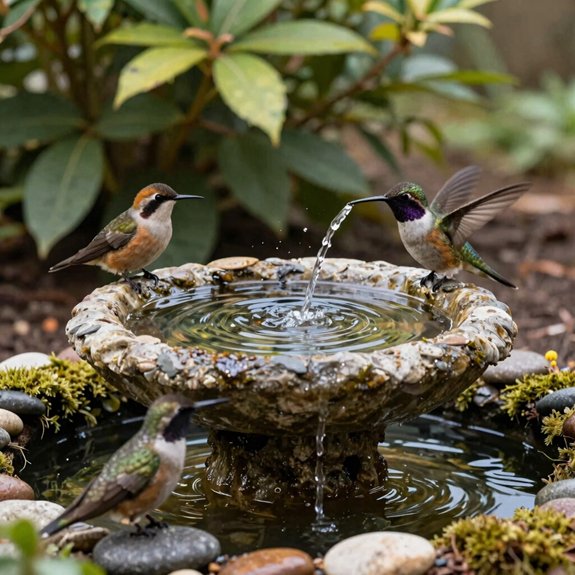
Birdbaths with gentle movement, such as a dripper, bubbler, or small fountain, often draw more birds because the sound and motion are easy to notice.
A shallow water dish with a sloped edge gives songbirds a safe place to drink and bathe, and a few inches of fresh water is usually enough.
Placing these features near shrubs or low branches helps birds feel secure, so they can visit for a quick sip without putting on a big show.
Birdbaths with movement
Rippling water tends to draw more birds than still water because the sound and motion suggest a fresh, reliable source, so a simple dripper, bubbler, or small fountain pump can turn a plain bath into a busy stop.
Birds also key on sound cues, and solar pumps can keep that signal going without fuss.
- Keep water shallow with sloped edges or stones.
- Place it near shrubs not out in the open.
- Refresh and scrub often so it stays safe.
- Add winter heat in cold areas for steady visits.
That small routine helps a yard feel welcoming and birds notice.
Small fountain setups
A small fountain can turn a quiet corner into a busier stop for birds, especially when the water stays shallow, with a 1–2 inch bathing zone and gently sloped edges that help small species like sparrows and finches feel safe.
A dripper, bubbler, or recirculating pump adds motion and sound, which birds notice quickly, while limiting mosquito larvae. Solar pumps keep the setup simple, and tabletop fountains suit patios near shrubs or other cover, where birds can perch and retreat.
Clean and refill the water twice weekly, more often in hot weather, so the welcome stays fresh for everyone.
Shallow water dishes
Set out shallow water dishes with only 1–2 inches of water and a gently sloping edge, and small songbirds can use them for both drinking and quick baths without much risk.
- Place bird friendly dishes near shrubs.
- Add drippers or bubblers for motion.
- Rinse shallow saucers every two days.
- Use a heated bath in winter.
They work best within about 50 feet of nesting cover, where birds can dash back to safety after a sip or splash. Fresh water, simple care, and a little motion turn bird friendly dishes into a steady meeting place, not a mosquito hotel for neighbors.
Natural Shelter and Protection Ideas
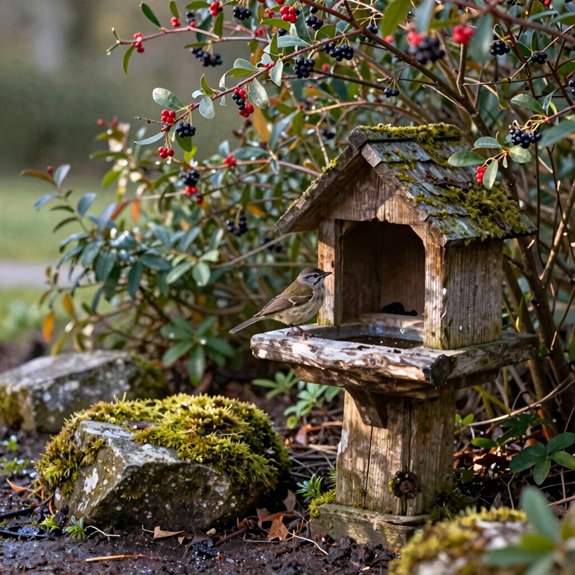
A backyard bird sanctuary feels safer when it has layered planting, with taller trees, dense shrubs, and low groundcover giving birds places to rest, hide, and move between cover.
Brush piles, log piles, and a few tucked-away snags can add extra shelter, and they also help support the insects many birds eat.
Wind-protected corners, especially near hedges or fences, make good spots for roosting and quick escapes, which is handy when a cat has other plans.
Layered planting for cover
Build layers of cover by copying a native forest, with canopy trees like oaks, midstory shrubs such as serviceberry and winterberry, then understory perennials, grasses, and groundcover within about 50 meters of nesting sites. This layered canopy interaction approach and seasonal understory strategy helps fledglings find food, cover, and calm routes close to home.
- Dense shrubs keep roosts sheltered.
- Evergreens guard winter birds.
- Overlap branches, not lonely plants.
- Vines link fences and perches.
Spacing plants in clusters, not singles, reduces gaps and makes it easier for neighbors in feathers to move, feed, and rest without feeling exposed year-round, naturally.
Brush piles and logs
Brush-pile shelters and log stacks give birds quick refuge when they are made from a mix of branches, twigs, and small logs, piled about 3–4 feet high and 6–8 feet wide.
Placed near dense shrubs or hedgerows, within about 50 meters of nesting sites, the brush pile stays useful for sparrows, wrens, towhees, chickadees, and other songbirds.
Thorny prunings add safer escape cover, while larger logs in shaded, moist spots create a log habitat for insects, fungi, woodpeckers, and nuthatches.
During nesting season, it helps to leave the stack alone, and keep seedheads and leaf litter nearby for food.
Wind-protected corners
Along the windward edge of a yard, a sheltered corner can become a small refuge when it is planted like a mini woodland, with tall trees, mid-height shrubs, and low groundcover working together to slow the wind.
A layered shelterbelt, not scattered planting, steadies the corner year-round, keeps birds close to nesting sites, and offers migrants a quick stopover with calmer air, safer roosts, and more room to belong without much fuss or wasted space.
- Dense holly and spruce stay green.
- Hawthorn gives stormproof perches and cover.
- Fences or brush piles block gusts.
- Monitor microclimate monitoring near nest sites.
Design Ideas That Look Beautiful and Wild
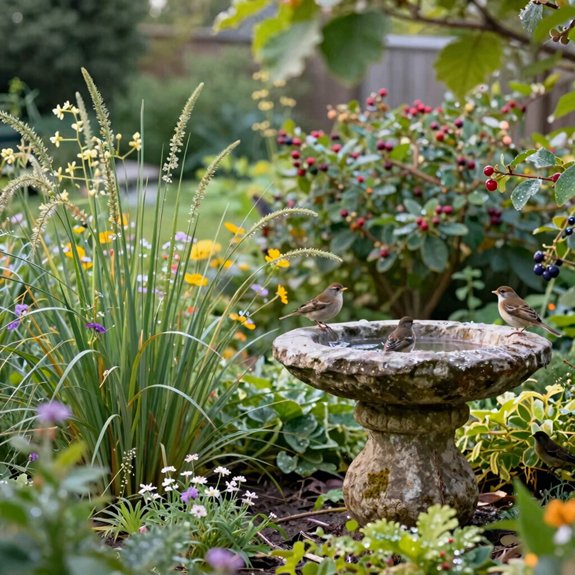
A cottage-style layout can mix layered shrubs, berry trees, and drifting flowers, so the yard feels full, lively, and a little untamed.
Minimal natural gardens keep the look simple, using native perennial islands, a few evergreen anchors, and a small water feature for birds that like a neat but natural space.
Woodland-inspired designs lean into shade, brush piles, and soft groundcover, which gives the whole yard a calm, wild feel that birds seem happy to claim.
Cottage-style backyard layouts
In a cottage-style backyard, the layout works best when plants are stacked in soft layers, with tall native trees like serviceberry or crabapple in the back, berry-producing shrubs such as blackhaw viburnum and winterberry in the middle, and flowering perennials like coneflower, salvia, bee balm, and sedum at the front.
- Native shrubs hide nests and feed birds.
- Unmown grass gives seeds and cover.
- A birdbath adds moving water nearby.
- Vines and evergreens keep winter shelter.
Seasonal plantings keep the space fresh, and the layered mix lifts curb appeal while still feeling open to neighbors who want a shared haven.
Minimal natural gardens
After the layered cottage look, a minimal natural garden keeps the bird-friendly idea but trims the palette to a few strong plant groups.
A compact bed of one native tree, three berry shrubs, and coneflower, sedum, milkweed, salvia, and bee balm feeds birds and insects alike. It builds pollinator corridors, offers nesting cover, and keeps the look open, tidy, and friendly.
Leaving seed heads through winter adds seasonal color, while an evergreen shrub, a dense vine, a dripper bath, and window markers finish the scene. That small structure gives birds shelter, food, and a place to belong all year.
Woodland-inspired spaces
Under a canopy of oak or serviceberry, a backyard can take on a woodland feel with layers that birds use in different ways.
- Add an oak, crabapple, or serviceberry for mast and caterpillars.
- Layer spicebush, viburnum, and berry shrubs to echo forest edges.
- Keep snags, brush piles, and roost boxes for safe shelter.
- Leave little bluestem and evergreen thickets as canopy connectors.
Spent flowers, native grasses, and dense hollies can stay through winter, and the mix gives finches, sparrows, woodpeckers, and nesting songbirds food and cover.
The result feels wild, but still tidy enough for neighbors to admire quietly.
Who This Works Best For
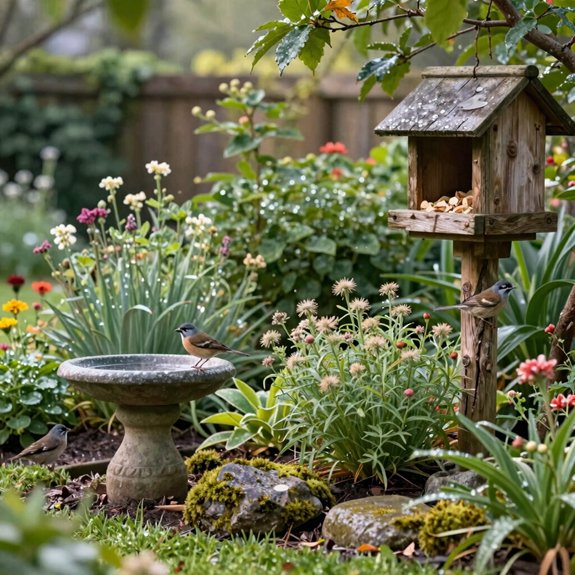
This approach works best for homeowners or renters with even a small outdoor space, since about 100 square feet can be turned into layered native plantings that provide food, water, cover, and places for birds to raise young.
| Fit | Why | Tip |
|---|---|---|
| Yards | Native | Food |
| Zones | Spruce | Milkweed |
| Gardeners | Untreated | Seedheads |
| Birdwatchers | Safety | Belonging |
Gardeners who like seasonal participation and community outreach fit through every changing season, because birds return when evergreens, berries, and nectar stay available all year long.
Renters, owners of small yards, and birdwatchers can join the quiet project, adding water, safe windows, and keeping cats indoors.
Frequently Asked Questions
How Do I Turn My Backyard Into a Wildlife Habitat?
It becomes a habitat when lawn gives way to native plants, water features, leaf litter, and snags, offering food, shelter, nesting sites, and a home for birds, pollinators, and neighbors alike throughout seasons together peacefully.
Why Should You Sprinkle Coffee Grounds Around Your Bird Feeder?
Coffee grounds can help deter ants, support moisture control, and provide gentle soil enrichment beneath feeders, making the area more welcoming for birds and gardeners alike. Used sparingly, they can nurture a shared backyard community.
Why Don’t Birds Use Birdhouses in Winter?
Because winter birdhouses can feel like thin-walled houses in a storm, birds often avoid them; insulation concerns and predator access make them risky, while snug evergreens and natural cavities offer safer, warmer places to belong.