
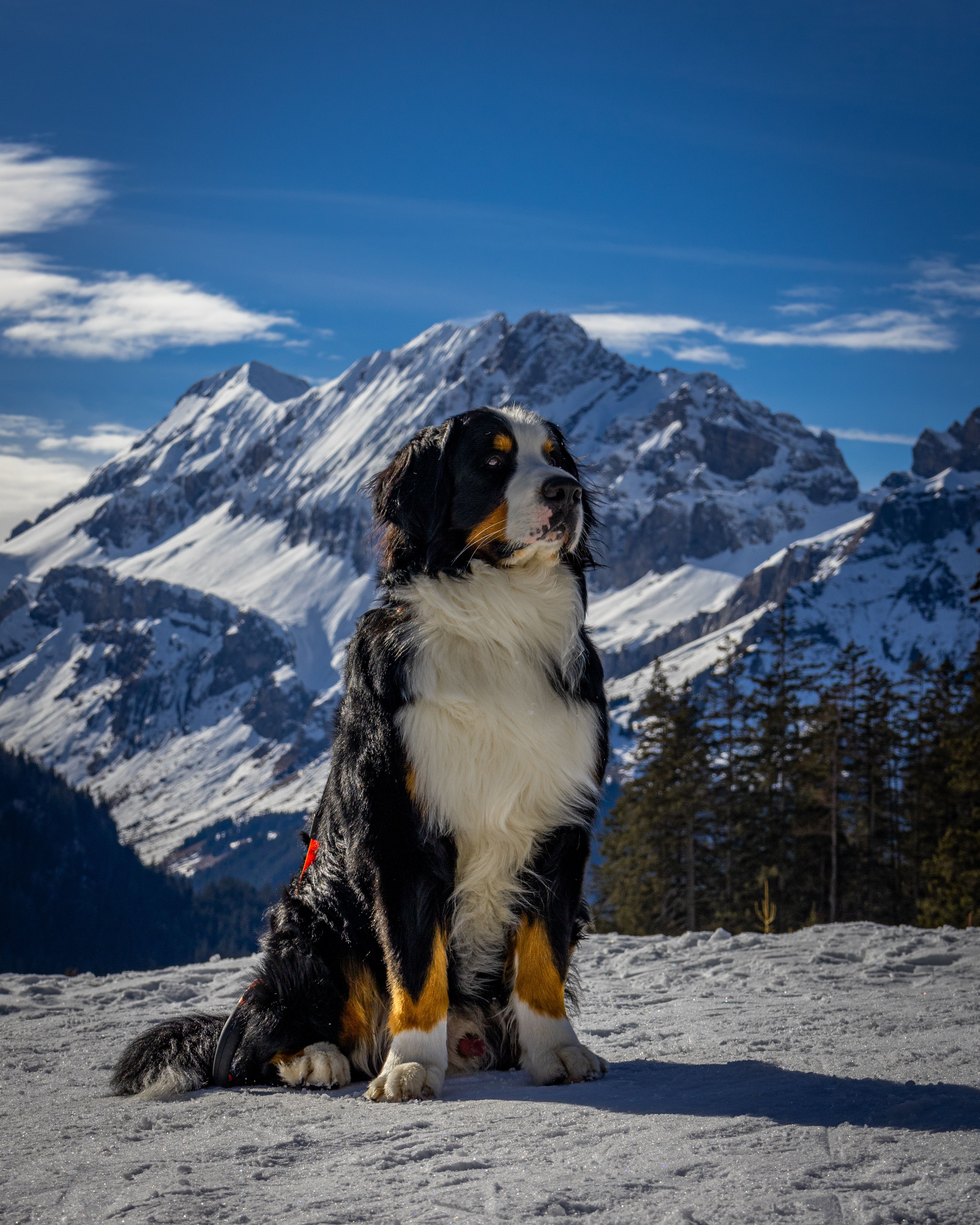
Your Bernese Mountain Dog grows quickly from 8–12 weeks, then becomes leggier at 3–5 months. By 6 months, many puppies weigh about 38 pounds, while adult males may reach 80–115 pounds and females 70–95 pounds. Track weekly weight, height, appetite, energy, waist, and rib feel instead of comparing exact numbers. Feed a balanced large-breed puppy diet, limit jumping, and follow veterinary guidance. Growth slows after 18–24 months, but muscle and body shape may develop longer. The stages below explain what to expect.
Disclosure: This post may contain Amazon affiliate links, at no extra cost to you. Content on Pawtangle is created with research support from AI tools and carefully reviewed, edited, and fact-checked by the lead author, Dr.Fahri Pat , to ensure accuracy and reliability. Learn more
Key Takeaways
- 8–12 weeks: Bernese Mountain Dog puppies grow rapidly, typically weighing about 12–24 pounds, though genetics cause significant variation.
- 3–5 months: Puppies become leggier, gain weight steadily, and develop longer bodies while their chests and muscles remain immature.
- 6–9 months: Growth continues quickly; many puppies approach adult proportions, with visible waists, easily felt ribs, and developing coats.
- 12–18 months: Most Berners near adult weight, while their chests, muscles, and overall structure continue filling out gradually.
- 18–24 months and beyond: Growth slows toward adult ranges—approximately 80–115 pounds for males and 70–95 pounds for females—while some filling continues.
8 to 12 Weeks
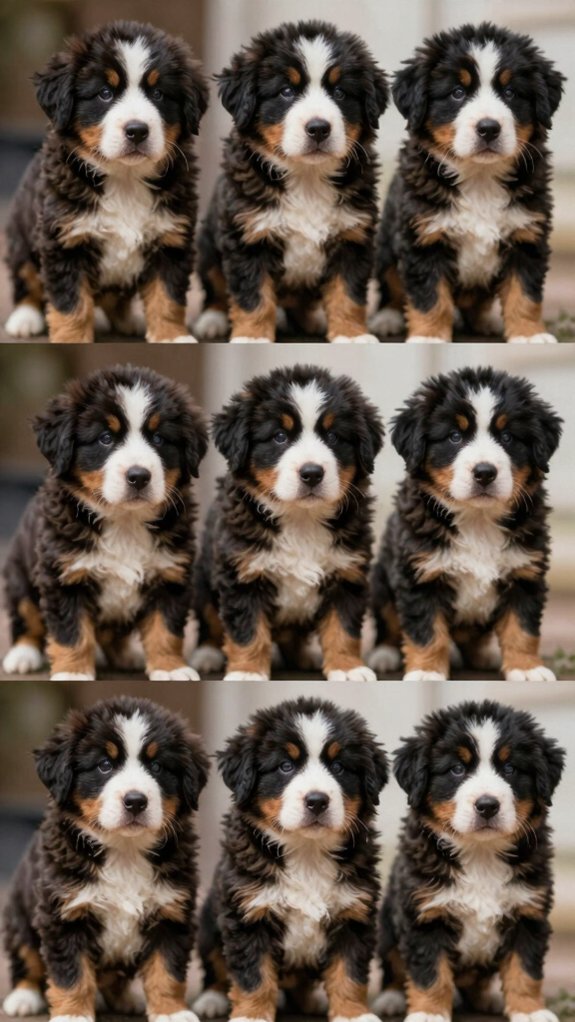
At 8 to 12 weeks, your Bernese Mountain Dog puppy is growing quickly but steadily.
Around 8 to 10 weeks, many puppies weigh 12–24 pounds, while some charts note about 7.5 pounds at 8 weeks.
By 10–16 weeks, weights may reach roughly 24–45 pounds, depending on sex and individual growth.
Track weight regularly to understand your puppy’s growth spurts timeline, but it’s important that growth chart accuracy varies.
Follow Vet feeding guidelines, and use body condition scoring to check healthy shape, not size alone.
If weight falls far outside expected ranges, contact your veterinarian.
Your careful attention helps your puppy thrive.
3 Months
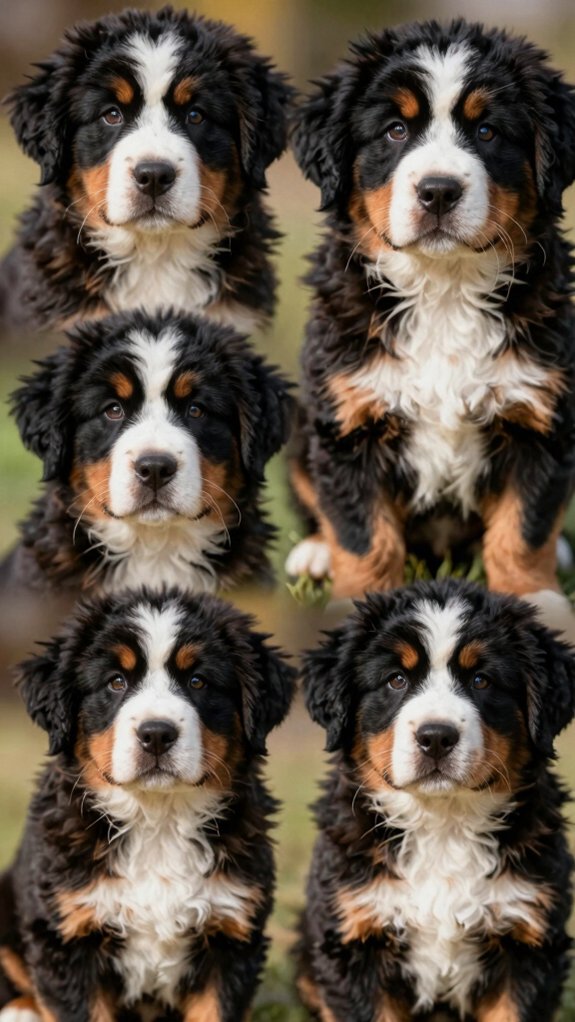
By 3 months, your Bernese Mountain Dog puppy may weigh around 18.8 pounds, or 8.5 kilograms, though genetics and individual growth can cause noticeable differences.
Many puppies measure about 18–23 inches, with males often taller, and they’re still growing quickly.
Track weekly weight trends instead of chasing one perfect number.
Ask your veterinarian about notable changes and follow your vet check schedule.
- Confirm the vaccination timeline.
- Offer safe teething relief, such as chilled chew toys.
- Practice socialization tips with calm people and friendly, vaccinated dogs.
- Use short, positive training sessions.
Your growing pup is joining the family rhythm, so keep routines steady and supportive.
4 Months
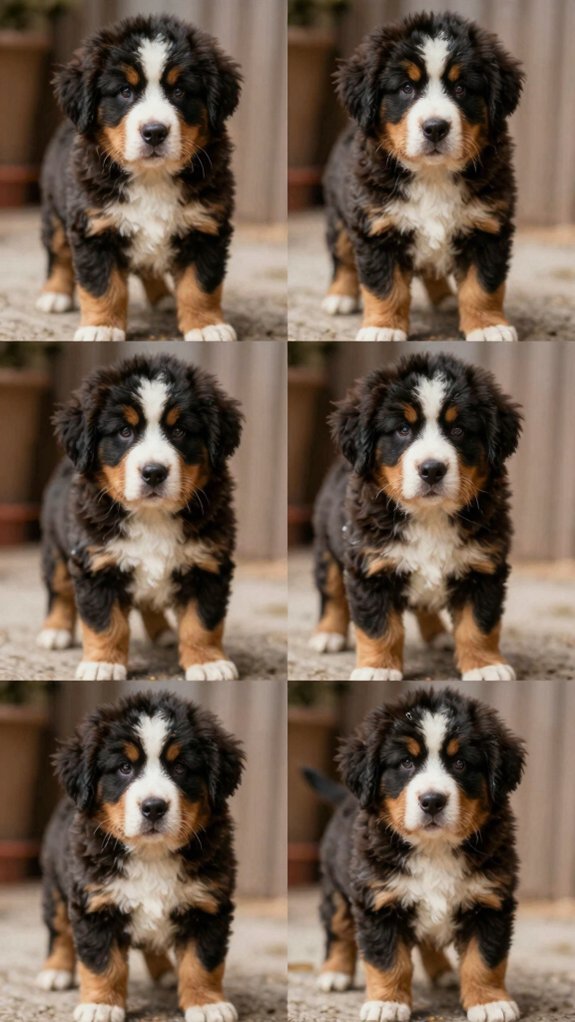
Your Bernese Mountain Dog may look noticeably leggier at 4 months, with weight often falling around 12–22 pounds (5.5–8 kilograms) and height beginning to approach 20–30.5 inches (25–40 centimeters). Their longer legs can make them seem a little awkward, but that’s normal.
You’ll usually notice gradual, steady weekly weight gain rather than sudden jumps. Their chest and body still need time to fill out, even if they already look large.
Track weight, height, appetite, and energy to follow growth milestones. Regular vet checkups can confirm progress, and your vet can help if your puppy falls far outside expected ranges for age, sex, or health.
5 Months
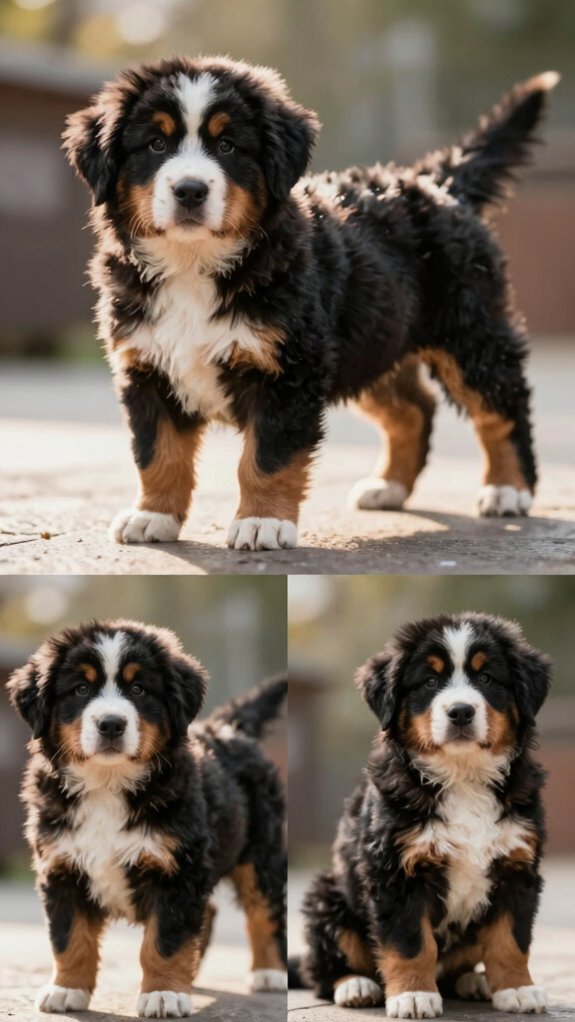
Around 5 months, your Bernese Mountain Dog may look leggier and continue gaining weight steadily as the body grows in length and the growth plates mature. You’re watching important puppy milestones unfold, so track changes without comparing your pup too closely with others.
Typical estimates include:
- Males: 12–22 pounds and 20–30.5 inches tall
- Females: 7–13 pounds and 18–28 inches tall
- Continued gains in weight and body length
- A visible waist and ribs you can feel gently
Feed balanced meals, limit strenuous jumping, and schedule regular vet checkups. If measurements seem far outside these ranges, ask your veterinarian for guidance and reassurance.
6 Months
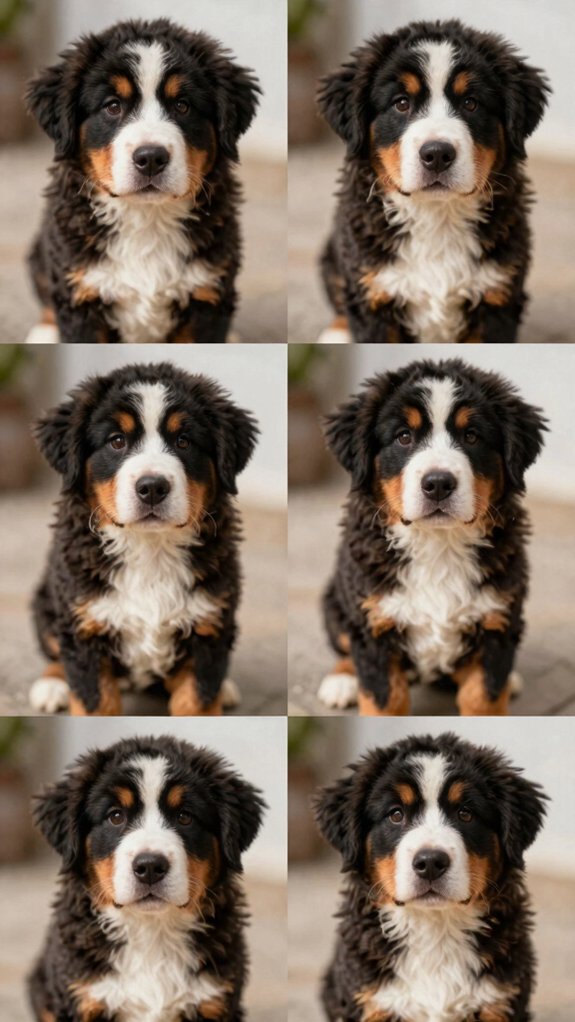
At 6 months, your Bernese Mountain Dog is still growing quickly, with many puppies weighing about 37.5 pounds and measuring roughly 19–23 inches at the shoulder. Your pup may still add muscle and bone, so steady weight gain matters more than a perfect number.
| Check | What to notice | Your action |
|---|---|---|
| Body condition | Visible waist | Adjust portions with your vet |
| Rib feel | Ribs are easy to feel | Track weekly |
| Coat development | Fuller, changing coat | Brush gently |
Males often weigh 50–70 pounds, females 45–65. Keep your family’s growth notes together, and celebrate healthy progress without comparisons.
9 Months
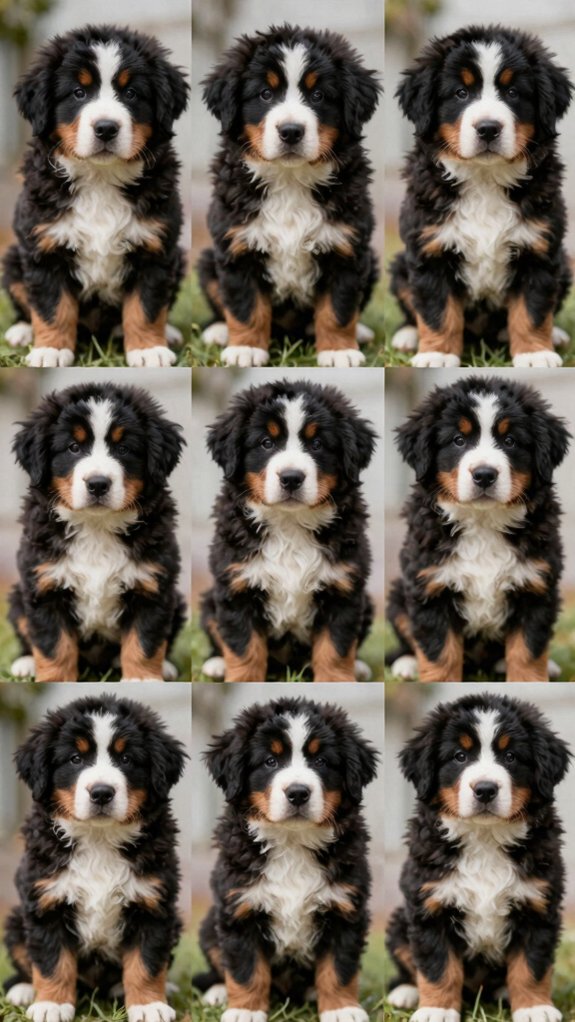
By 9 months, a Bernese Mountain Dog often weighs about 50 pounds (22.7 kg) and has nearly adult-like proportions, although the chest and muscles may still fill out. Your puppy’s growth milestones may vary with genetics, sex, and health, so compare progress with your veterinarian, not another dog.
At this stage, you may notice:
- More coordinated movement
- A steadier appetite
- Continued muscle development
- Changing size expectations
Males can range roughly from 20.3 to 30.5 inches during this period, while females may weigh about 22.9–33.0 pounds near 9–13 months. Keep meals balanced and exercise moderate, because weight and chest development can continue through 18–24 months.
12 Months
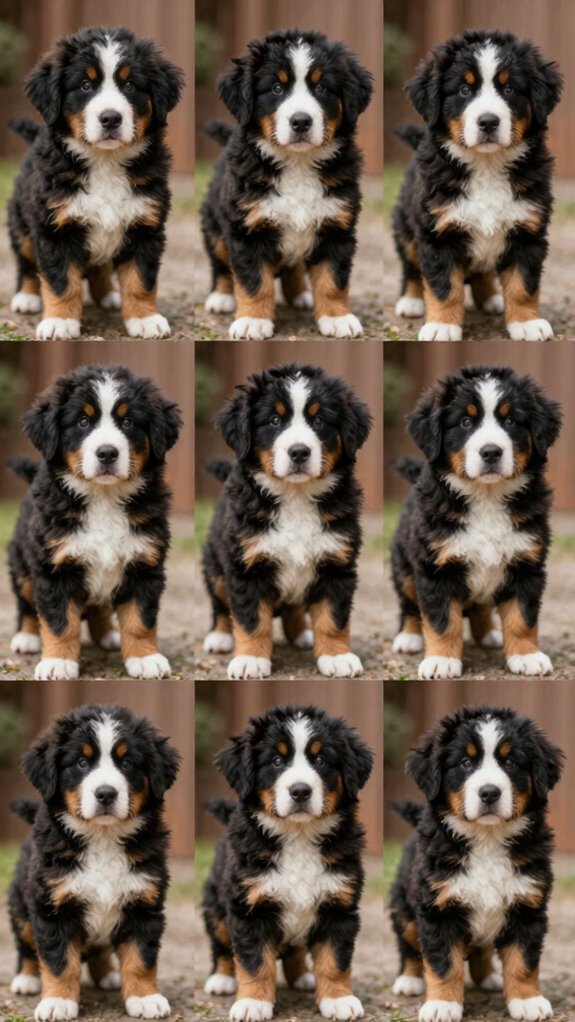
As your Bernese Mountain Dog reaches 12 months, they may weigh about 56.3 pounds, although genetics, sex, and health can shift that number. Your dog may still experience growth spurts and gradually move toward the upper half of the first-year range.
Keep weight tracking simple by recording monthly measurements and sharing changes with your veterinarian. At this age, continue a large-breed puppy formula if recommended, supporting steady growth while your dog matures.
Don’t let feeding myths push you to overfeed for faster results. Many Berners keep filling out through 18–24 months, so your family can focus on patience, routine, and healthy progress together.
Physical Development
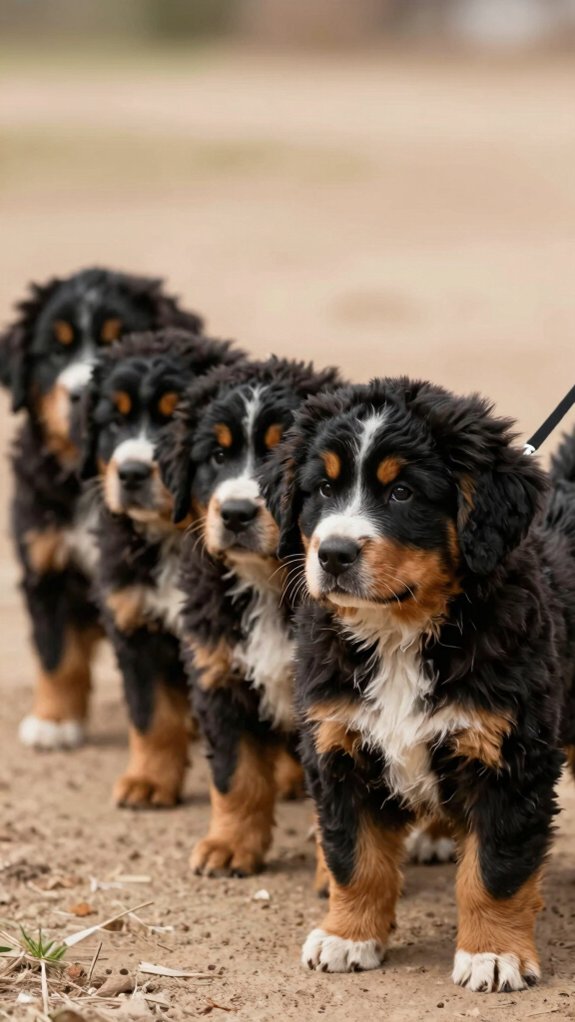
Physical development moves quickly during your Bernese Mountain Dog’s first year, with weight rising from about 7.5 pounds at 2 months to 18.8 pounds at 3 months, then roughly 37.5 pounds by 6 months.
By 9 months, your pup may reach 50 pounds, and around 12 months, 56.3 pounds.
- Body proportions may look uneven during growth spurts.
- Skeletal growth needs careful, steady exercise.
- Coat texture often changes as puppy fur matures.
- Muscle definition develops as your dog fills out.
Mental Development
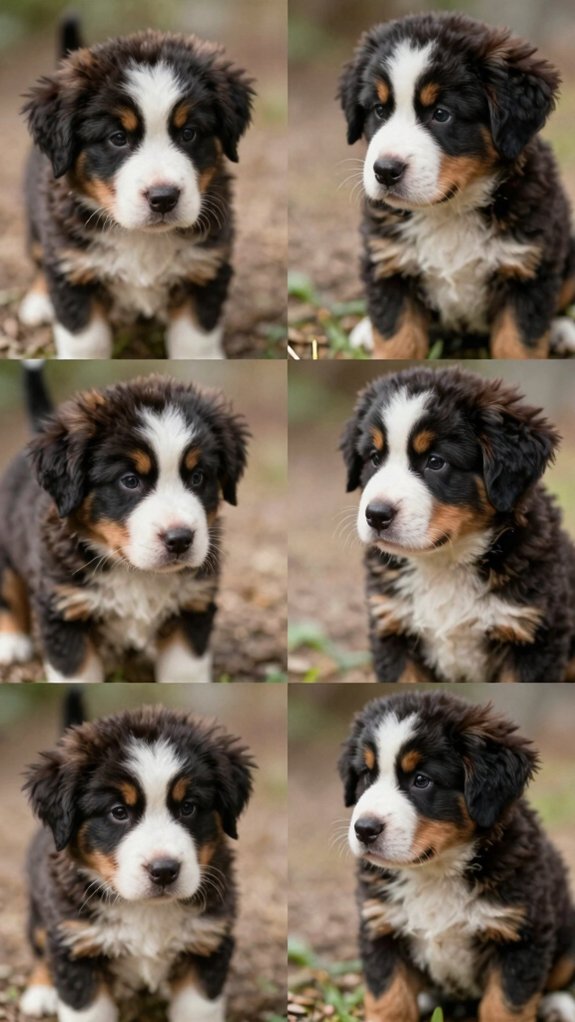
Mental development changes quickly during your Bernese Mountain Dog’s first year, starting with close attachment to people and growing into better focus, problem-solving, and self-control. From birth to two months, build trust through gentle handling and predictable contact.
Between two and four months, teach short cues during familiar routines, since attention remains brief.
At four to six months, use basic commands, puzzles, and structured play to support mindset building and prevent confusion.
From six to nine months, your adolescent may test limits, so practice polite greetings and impulse management daily.
After nine months, keep schedules steady, add gradual challenges, and celebrate progress together.
Nutrition by Age

Your Bernese Mountain Dog needs different nutrition at each growth stage, so feed for steady development rather than rapid weight gain.
At 0–2 months, offer a vet-approved puppy formula in three or four meals.
From 2–12 months, use large-breed puppy food and measure weight-based portions.
Keep calories controlled to support healthy bones and joints, then switch gradually to adult food between 12–18 months.
- Follow breed specific guidelines, not guesswork.
- When choosing puppy kibble, select a large-breed formula.
- Adjust the Treating portion only with guidance.
- Include nutrition questions in vet check scheduling.
Three meals often suit younger pups; older puppies can gradually eat less frequently.
Exercise by Growth Stage
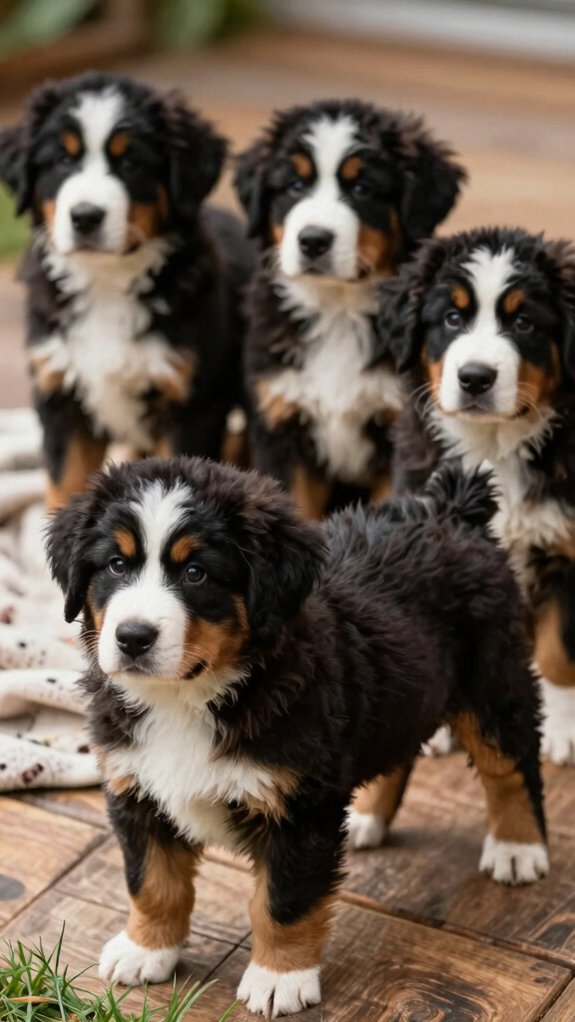
Exercise should grow with your Bernese Mountain Dog, just as its food portions do. From birth to three months, choose short walks and Gentle Playtime, plus Controlled Socialization. Your goal is to Prevent Injury while growing joints remain delicate.
From three to six months, use Gradual Conditioning through several brief sessions, not runs. Build a calm Leash Routine from six to nine months, and avoid jumping. At nine to twelve months, keep activity moderate and consistent.
Throughout these stages, practice Weight Awareness, provide Rest and Recovery, and prioritize Orthopedic Safety. After twelve months, continue low-impact exercise while your dog’s structure develops.
When They Reach Full Size
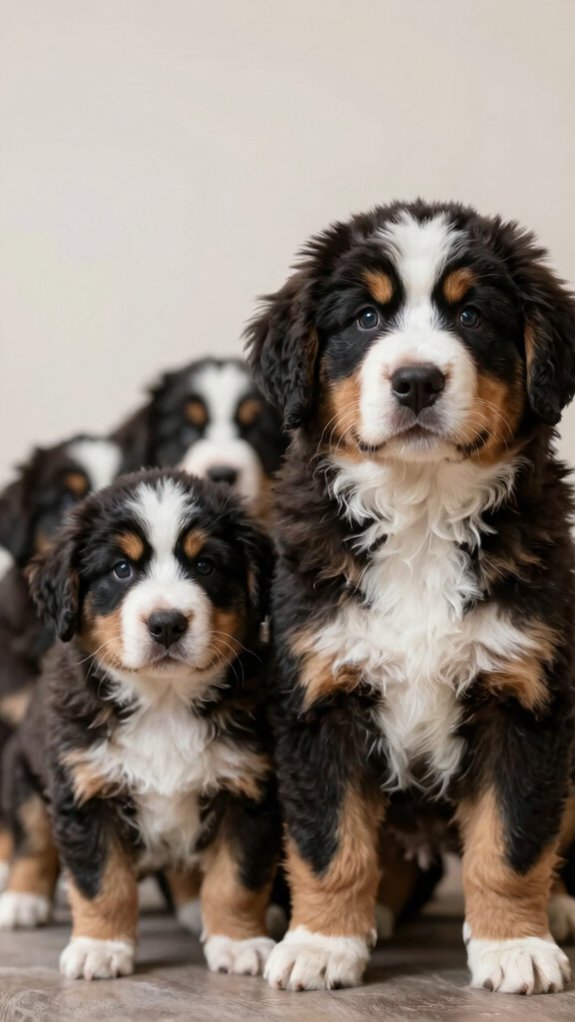
Most Bernese Mountain Dogs reach their mature height and overall adult size between 18 and 24 months, although their growth may slow rather than stop right away.
Your dog may still broaden and build muscle afterward, so don’t worry if the filling process continues toward age three.
This growth timeline can help you know what to expect:
- Males: 80–115 pounds
- Females: 70–95 pounds
- Around 12 months: near adult weight
- By 18–24 months: slower final gains
If your dog keeps gaining noticeably after two years, check body condition and ask your veterinarian for guidance.
You’re helping your Berner grow steadily, not quickly.