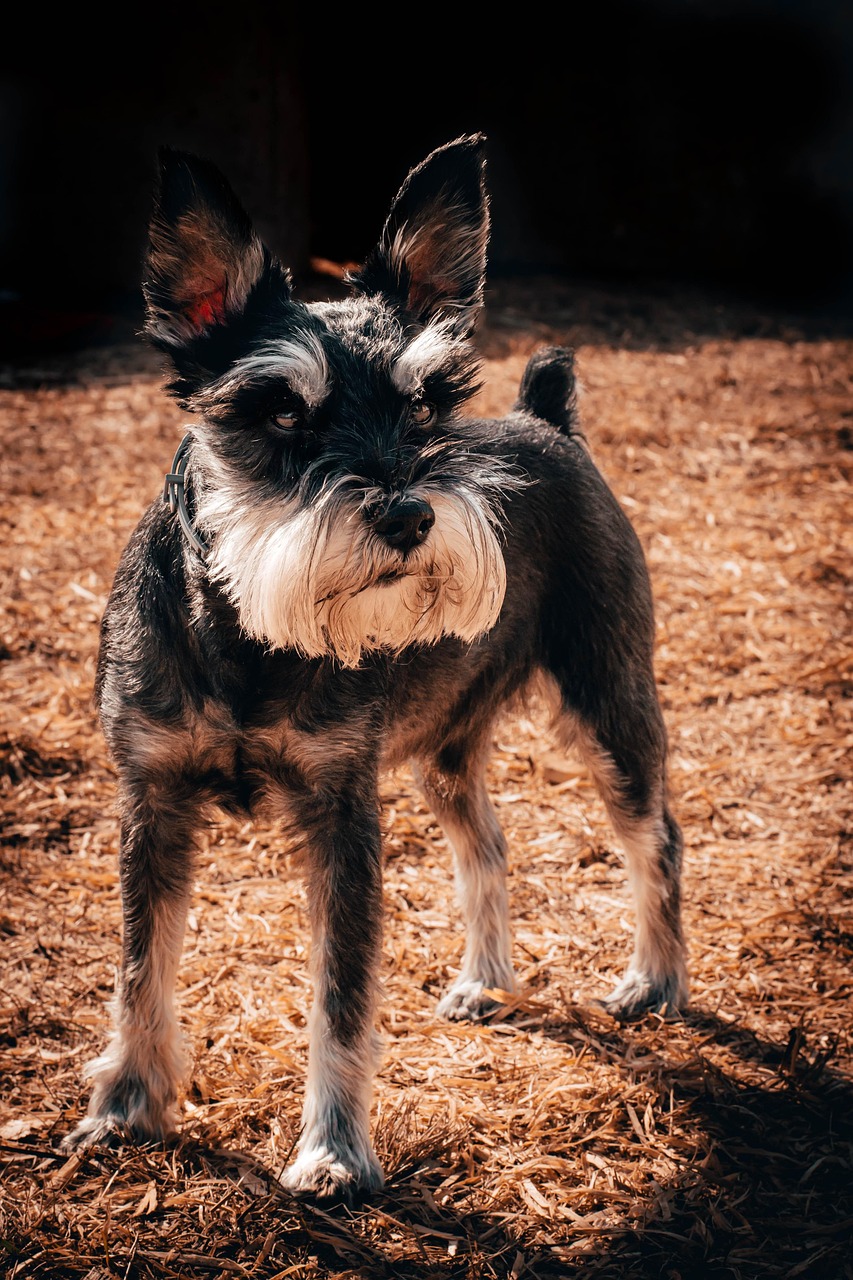
Your Mini Schnauzer will be smart, lively, loyal, and vocal, so plan daily walks, play, puzzle toys, and short reward-based training. Puppy-proof cords, cleaners, and narrow gaps, then establish meals, potty breaks, naps, and crate time. Feed measured puppy food and limit rich treats, while watching weight, urinary, eye, skin, and pancreas concerns. Start grooming, paw handling, socialization, and calm pet introductions early. Choose a health-tested breeder with contracts and support. More practical guidance follows.
Disclosure: This post may contain Amazon affiliate links, at no extra cost to you. Content on Pawtangle is created with research support from AI tools and carefully reviewed, edited, and fact-checked by the lead author, Dr.Fahri Pat , to ensure accuracy and reliability. Learn more
Key Takeaways
- Miniature Schnauzer puppies are intelligent, energetic, and people-oriented, requiring daily walks, play, and varied positive-reinforcement training.
- Feed measured portions of balanced puppy food twice daily, limit treats, and monitor body condition to support healthy growth.
- Establish potty breaks after waking, meals, naps, and play, rewarding outdoor success immediately with praise and a small treat.
- Begin calm socialization and gentle grooming practice after veterinary approval, including handling paws, beard, eyebrows, and legs.
- Secure the home, supervise interactions with pets, and watch for breed concerns including urinary stones, pancreatitis, eye problems, and skin allergies.
Meet the Miniature Schnauzer Personality

If you want a small dog with a big, engaging personality, the Miniature Schnauzer may be a good fit. You’ll find a friendly, lively companion who wants to stay involved with your family.
Your puppy may follow you from room to room, nudge your hand, or tap your leg when seeking attention.
Schnauzers also stay alert and often bark when strangers arrive or something changes.
Their intelligence helps them learn commands and tricks quickly, but boredom can bring stubbornness.
Keep training brief and varied, using praise and rewards.
Understand Their Energy Level

Miniature Schnauzer puppies have plenty of energy, so they need daily activity to stay happy and balanced. Give your puppy a mix of walks, fetch with a durable ball, playful games, and short training sessions. Variety helps prevent boredom, restlessness, and excessive barking.
Add mental stimulation with puzzle or treat-dispensing toys, then watch for tired signals. Understanding sleep needs helps you balance active time with quiet breaks. Build crate relaxation gradually, pairing calm periods with comfort and praise.
Keep training schedules short and upbeat, and follow consistent nap routines. When you plan activity and rest together, your puppy can thrive as part of your family.
Prepare Your Home for a Puppy

Before your Miniature Schnauzer puppy arrives, set up a safe, welcoming space with a fenced play area or secure leash access outdoors. Your puppy may chase small animals, so check gates and latches carefully.
Use these Puppy proofing tips: secure cords, medicines, and cleaners, block narrow gaps, and offer safe chew toys.
Start crate readiness by placing the crate in a quiet area, adding comfortable bedding, and leaving the door open for gentle exploration.
Create a steady routine with calm rest spaces, short positive training sessions, and daily mental games.
Brush the beard, eyebrows, and legs regularly, and keep dental and nail-care tools nearby.
Feeding During the First Year

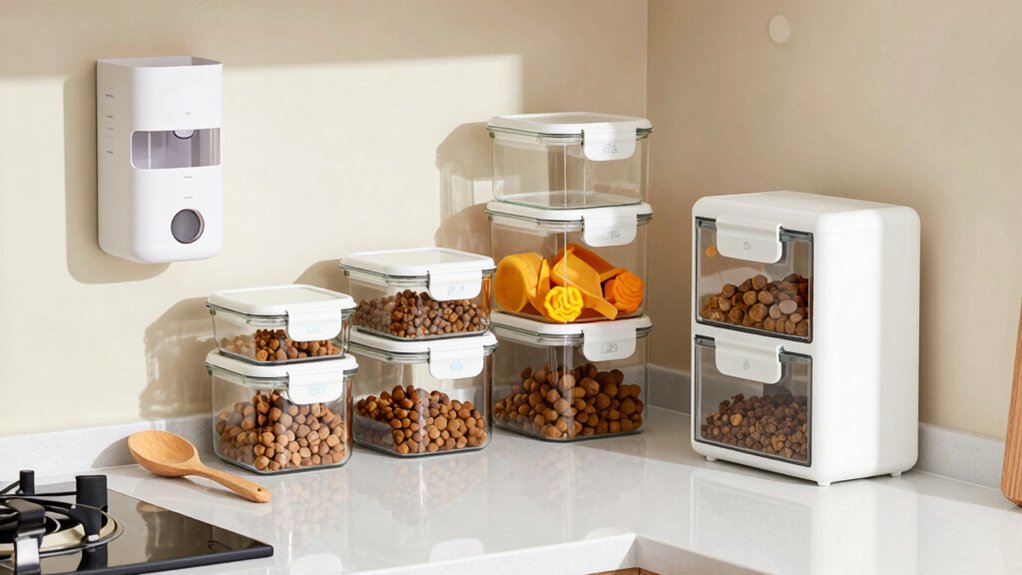
Feed your Miniature Schnauzer puppy a high-quality, balanced puppy food, and serve two measured meals each day during the first year. Follow your veterinarian’s guidance as your puppy grows.
| Focus | What to do | Why it matters |
|---|---|---|
| Portion Control | Measure meals and check ribs regularly | Supports healthy growth |
| Treat Limits | Keep extras small and low-fat | Protects against pancreatitis |
| Water | Provide fresh water always | Supports digestion |
Choose appropriate fat levels, and change foods gradually over several days. Contact your vet if weight gain, poor body condition, or lethargy appears. You’re building healthy habits together.
House Training Tips

Start house training early by following a consistent routine, with potty breaks after your puppy wakes, eats, naps, and plays. Keep meals and water predictable, using vet-guided portions, so timing stays easier to read.
Praise and offer a small, high-quality treat immediately after outdoor success. If your puppy barks or whines, take it as a potty cue.
Use gates or a pen when you can’t supervise, and practice crate training basics kindly.
Include brief leash manners and recall training during bathroom trips. Watch for separation anxiety and chew behavior, while preventing resource guarding with calm, reward-based handling.
Consistency helps your family succeed together.
Early Socialization Matters

Once your vet says it’s safe, gently introduce your Mini Schnauzer puppy to different people, places, sounds, and healthy animals.
Keep each meeting calm, brief, and supervised, offering treats, praise, or play.
These positive exposure sessions support fear reduction and confidence building, while shaping a balanced puppy temperament.
Since Schnauzers notice every sound, help your puppy experience doorbells, traffic, household noises, and visitors without feeling overwhelmed.
Try short outings, simple lessons, puzzle toys, and engaging play to keep new experiences engaging.
Gradual practice works better than one big introduction, helping your puppy feel included and comfortable in the varied world you share.
Grooming Starts Young
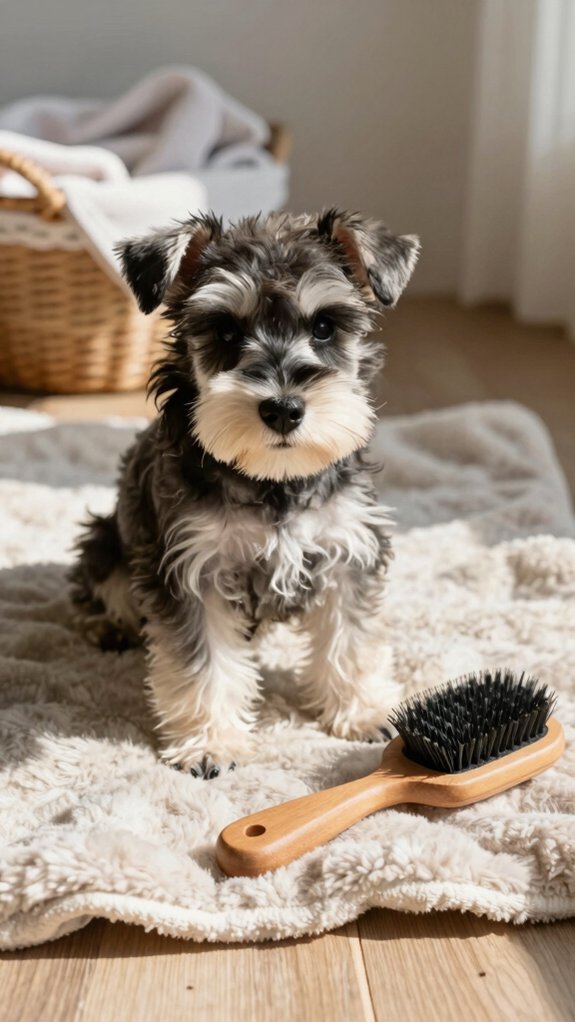
Gentle grooming practice in puppyhood helps your Mini Schnauzer feel comfortable with brushing around the beard, eyebrows, and legs. Handle paws gently, introduce Puppy nailcare, and keep coat brushing brief and regular.
| Routine | Timing | Purpose |
|---|---|---|
| Coat brushing | Several times weekly | Prevent tangles |
| Beard wiping | Daily as needed | Remove debris |
| Bathing | Every 4–6 weeks | Support skin health |
Your puppy’s double coat needs early care to avoid mats. Schedule a schnauzer-style professional trim every 4–6 weeks when your groomer says it’s safe. Keep sessions calm, consistent, and part of your shared family routine.
Training with Positive Reinforcement

Miniature Schnauzer puppies learn quickly when training feels like a game, so keep sessions short, varied, and upbeat.
Reward sit, stay, and come immediately with tiny treats, praise, or play.
Build your routine around these steps:
- Practice crate training basics with calm rewards.
- Reinforce potty behavior right after success.
- Teach “quiet” and reward calm responses to sounds.
- Introduce leash manners during brief, happy walks.
Keep your cues and household rules consistent, because mixed messages invite stubborn habits.
Help your puppy join the family by offering treats during controlled socialization, new sights, and friendly introductions.
You’ll build trust while guiding appropriate behavior.
Common Health Concerns

Your Miniature Schnauzer’s health deserves regular attention, especially because the breed can develop hyperlipidemia, urinary stones, eye problems, and skin allergies. Your veterinarian can help with a Vaccination schedule, parasite prevention, weight monitoring, and dental care.
Watch for a greasy coat, flaky skin, vomiting, or belly pain, which can signal pancreatitis.
Blood in urine or difficulty urinating needs prompt care because stones may block the urinary tract.
Schedule eye checks for cataracts and Progressive Retinal Atrophy, which can reduce vision.
Mention itching or dry skin, too.
With routine visits and quick action, you’ll help your Schnauzer stay comfortable and supported.
Exercise by Age
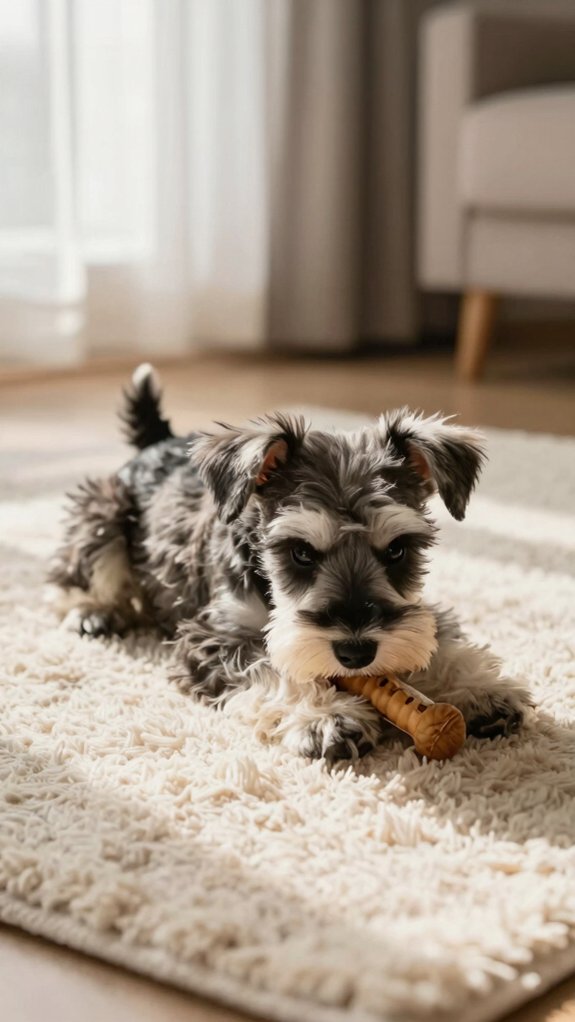
As your Miniature Schnauzer puppy grows, adjust exercise to match developing joints and changing energy levels. Your family can build a healthy routine together with patience and joint protection in mind.
- 8–12 weeks: Offer frequent indoor playtime and secure-area games, plus 5–10-minute walks.
- 3–6 months: Try 10–20-minute walks a few times daily, gentle training, and puzzle toys.
- 6–12 months: Build toward 20–30 minutes of walking daily, split into sessions, with controlled fetch.
- Any age: Stop if your puppy seems tired, limps, or resists moving, then choose low-impact enrichment and contact your veterinarian if concerns persist.
Living with Children
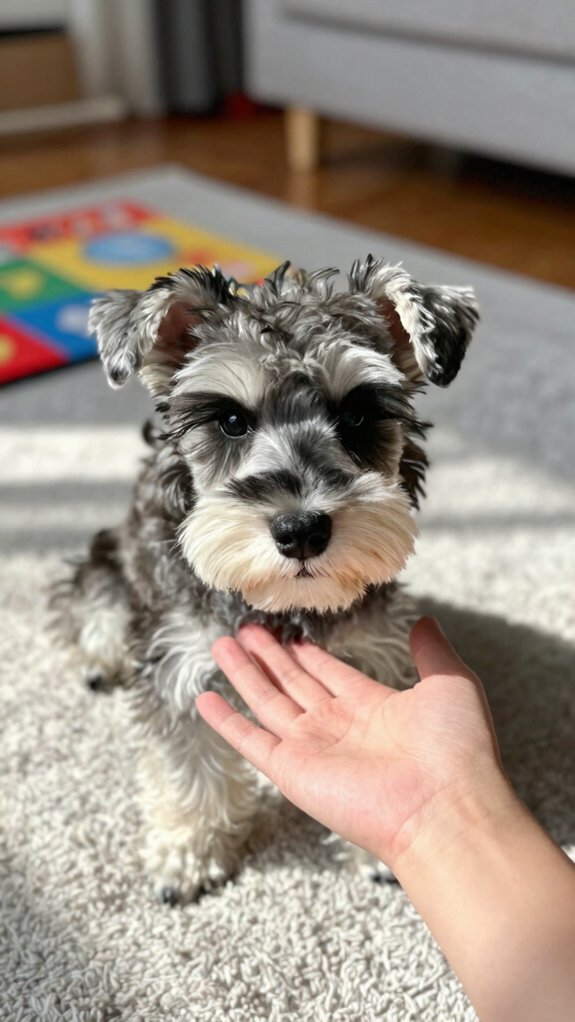
Family life can be a good fit for a Miniature Schnauzer, since these affectionate dogs often enjoy playing and relaxing with children. Early, positive socialization helps your puppy become tolerant and playful around kids.
Supervise loud games and fast movement, because your alert puppy may bark or chase. Teach “quiet” or “enough,” and set clear rules for gentle handling.
Include children in short, reward-based training, quiet cuddle time, and leash manners practice. Ask them to give treats or praise only when your puppy is calm.
Practice stranger greetings with adult guidance, and keep routines consistent so everyone feels safe, included, and connected.
Compatibility with Other Pets
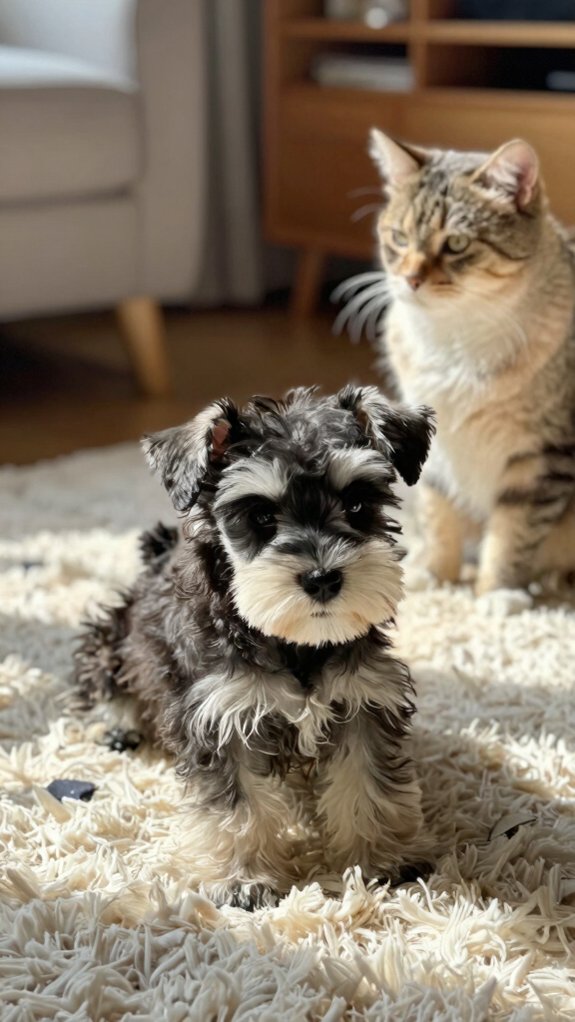
Miniature Schnauzers often live well with other pets when you introduce them early and keep each meeting calm and controlled. Your puppy can become a welcome member of a multi-pet family with patience and steady routines.
- Begin by introducing cats slowly, using gates and brief, supervised visits.
- Practice calm greetings and reward quiet behavior with treats or praise.
- Focus on managing prey instincts around rabbits, rodents, and other small pets.
- Provide secure housing and never leave early interactions unattended.
Daily exercise can reduce chasing and guarding. Watch body language, separate pets calmly when needed, and build trust gradually so everyone feels safe, included, and comfortable together.
Best Toys for Mental Stimulation
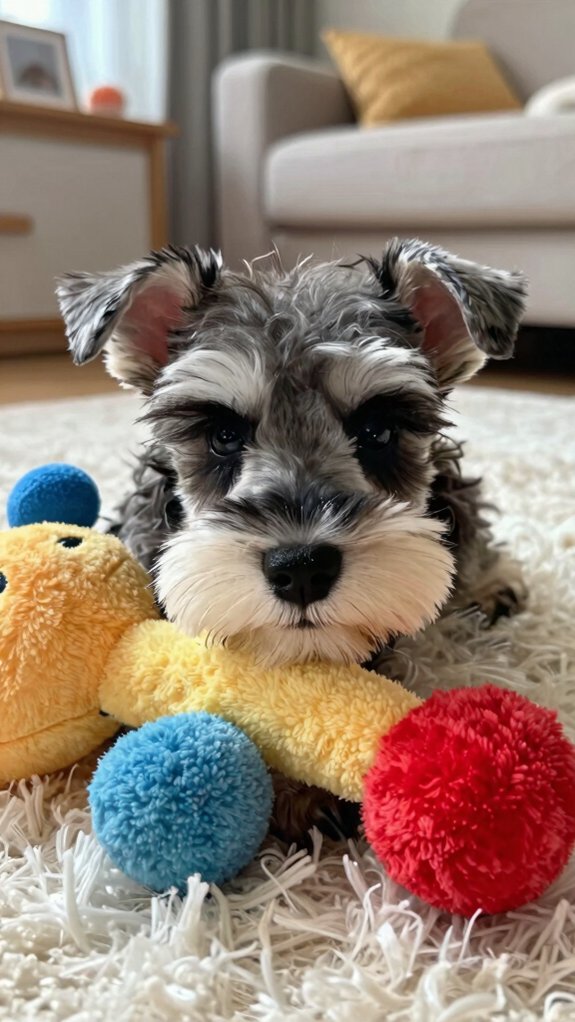
The best toys for mental stimulation give your Miniature Schnauzer a safe challenge instead of leaving them to invent destructive games. Choose a Puzzle feeder variety, including maze bowls, snuffle mats, and sliding puzzles, to keep mealtimes engaging.
Offer several treat dispensing options, such as rubber food toys and rolling balls. Use small, high-quality treats, then rotate toys so your puppy stays interested.
Keep sessions short, and praise your Schnauzer when they solve a problem. On days when outdoor time is limited, engaging play helps fill the gap.
Add a durable, fetch-friendly rubber ball for thinking, chasing, and bonding indoors or in a secure area.
Managing Their Barking
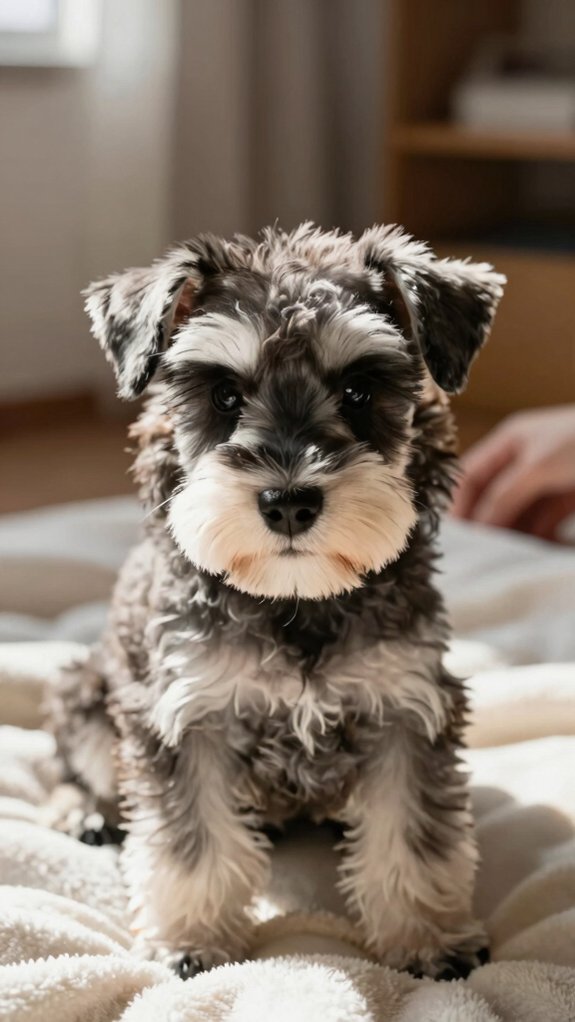
A Miniature Schnauzer may bark or shriek at unfamiliar sounds because this breed naturally acts as a vocal watchdog.
You can help your puppy settle while keeping your home calm.
- Give daily walks, indoor play, and puzzle toys to prevent boredom barking.
- Teach “quiet” or “enough,” then reward calm behavior immediately.
- Check for needs, since paw taps or nose nudges may replace barking.
- Practice Desensitizing alone time with brief absences, especially if stress appears.
For managing reactive barking, notice triggers and add distance before rewarding silence.
You’re teaching your puppy that your family has safer ways to communicate.
Monthly Growth Milestones
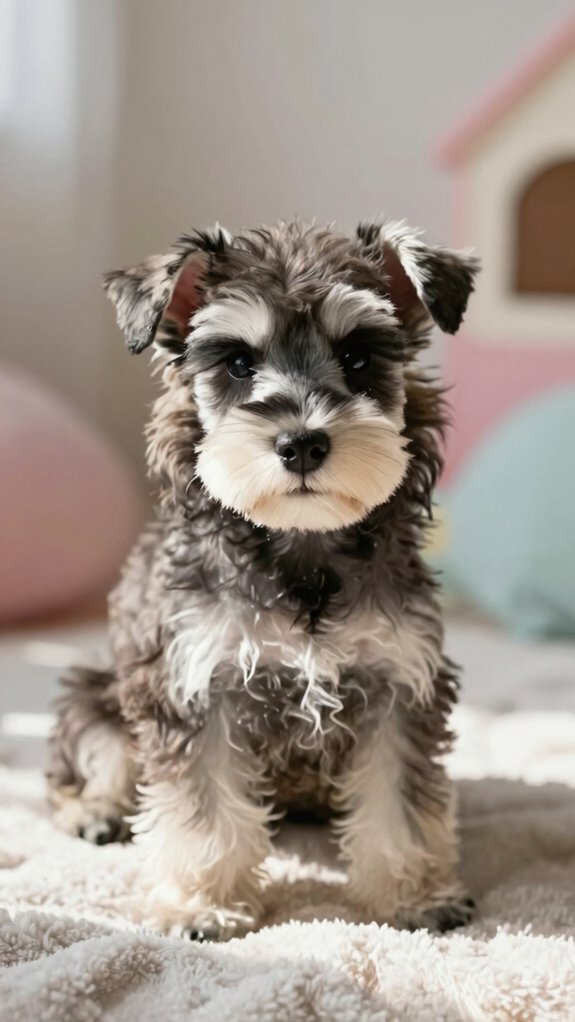
During the first year, your Mini Schnauzer puppy will move through several noticeable growth stages. At one month, feeding, coordination, weight gain, and curiosity lead the way.
At two to three months, expect faster growth, lively energy, and emerging beard and eyebrow shape. Begin noting early teething timing, offer safe chew toys, and track changes without comparing your pup too closely with others.
From four to six months, growth spurts make your puppy look more balanced, while the coat starts becoming wiry. Use potty schedule tips, especially after meals, naps, and play.
Choosing a Responsible Breeder
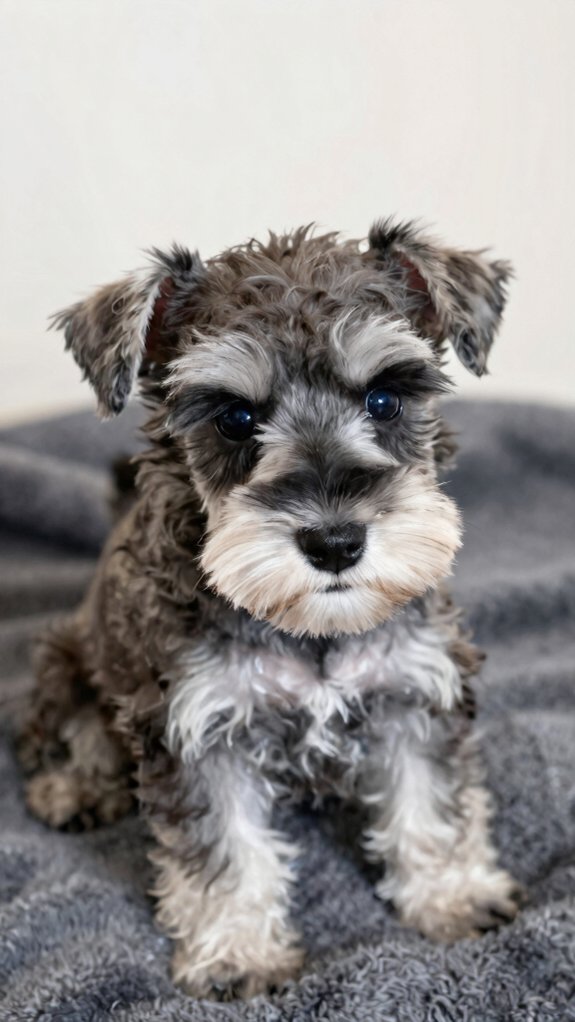
When you choose a Miniature Schnauzer breeder, look for someone who’s open about the breed’s German farm-dog roots and willing to share health-testing records. Ask about cataracts, PRA, urinary stones, grooming, and early socialization.
- Request AKC registration and a microchip ID.
- Review contract basics, including the return policy.
- Ask whether temperament guarantees cover support or replacement.
- Discuss home visit options and puppy records.
A responsible breeder explains diet, routines, exercise, enrichment, and coat care. They also describe ethical ear and tail policies, expected appearance, and professional grooming every four to six weeks. Clear answers help you join a caring, prepared puppy community.
Is a Mini Schnauzer Right for You?

If you want a smart, people-focused companion, a Miniature Schnauzer could be a good fit, but this breed needs daily attention and consistent training. You’ll need walks, fetch, training games, and plenty of human interaction to prevent boredom.
Apartment suitability can be good if you teach “quiet” early, because this alert watchdog may bark at neighbors and hallway sounds. Your lifestyle matching matters too: expect brushing two or three times weekly and professional trimming every four to six weeks.
Plan for veterinary costs, healthy nutrition, and monitoring for pancreatitis, urinary stones, and eye problems. If you can provide structure and companionship, you’ll gain a devoted family member.