
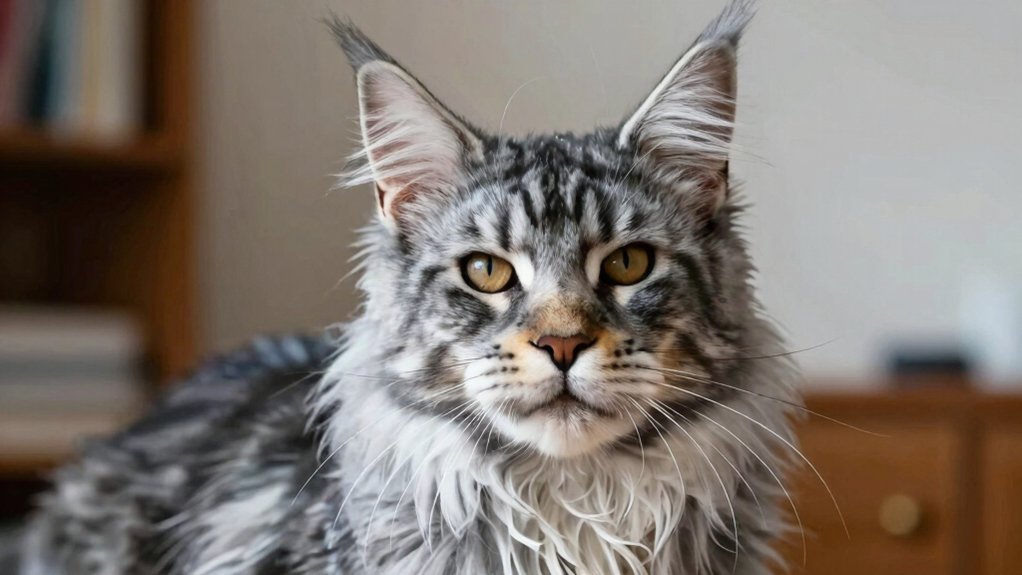
Black Maine Coon cats aren’t always jet black; their coats may show brown, charcoal, stripes, or a smoky undercoat. You’ll find a large, muscular cat with a long tail, tufted ears, varied eye colors, and growth that can continue for years. Their calm, chirping personalities often suit families and other pets, but you’ll need frequent brushing, daily play, and quality food. Check breeders for health records, HCM screening, and contracts, then dive into the other facts below.
Disclosure: This post may contain Amazon affiliate links, at no extra cost to you. Content on Pawtangle is created with research support from AI tools and carefully reviewed, edited, and fact-checked by the lead author, Dr.Fahri Pat , to ensure accuracy and reliability. Learn more
Key Takeaways
- Black Maine Coons may show brown, charcoal, tabby, mottled, or smoke-like undertones rather than appearing uniformly jet black.
- Their muscular, rectangular bodies and exceptionally furry tails contribute to a distinctive appearance, with growth sometimes continuing until age five.
- Calm, sociable, and intelligent, they often communicate through chirps or croons and enjoy fetch, climbing, and interactive play.
- Their gentle nature can suit children, cats, and dogs, but introductions should be gradual and play supervised because of their size.
- Responsible ownership requires regular grooming, appropriate nutrition, veterinary screening for HCM and hip dysplasia, and budgeting for ongoing care.
Their Coat Isn’t Always Jet Black
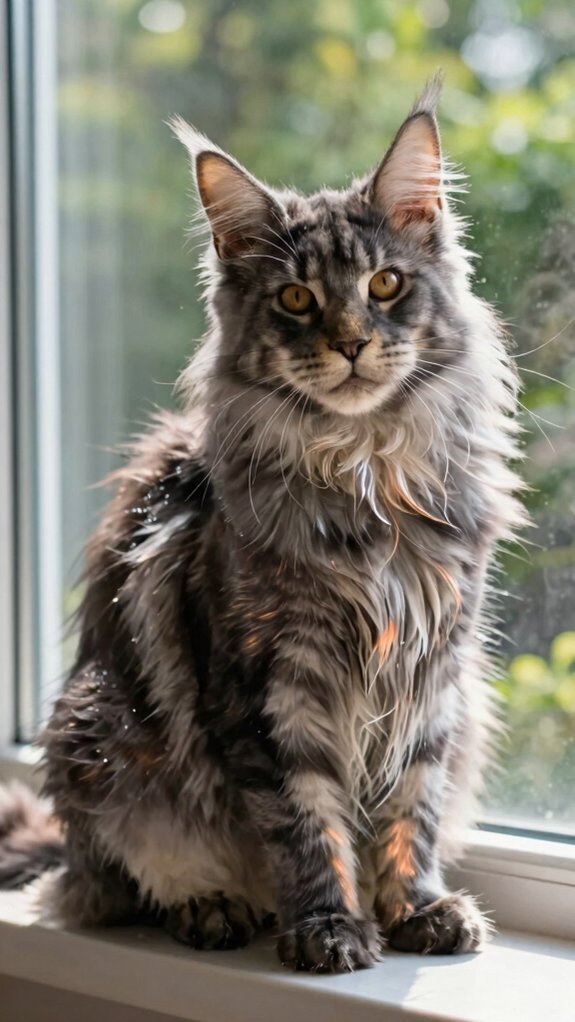
Although they’re often called “black” Maine Coons, their coats aren’t always a solid jet black. You may notice dark brown, charcoal, or lighter hairs beneath the surface, especially when sunlight reaches the fur.
This color variation can include faint stripes or mottling, because some cats have black-tabby patterns. Others show black smoke coloring, with a pale undercoat that creates a softly shaded look.
Seasonal undertones can change the appearance, too. Winter thickens the double coat, while summer makes it lighter and sometimes less intense. You might also see small white or lighter markings on the chest or legs, and that’s perfectly normal.
How Large They Really Get
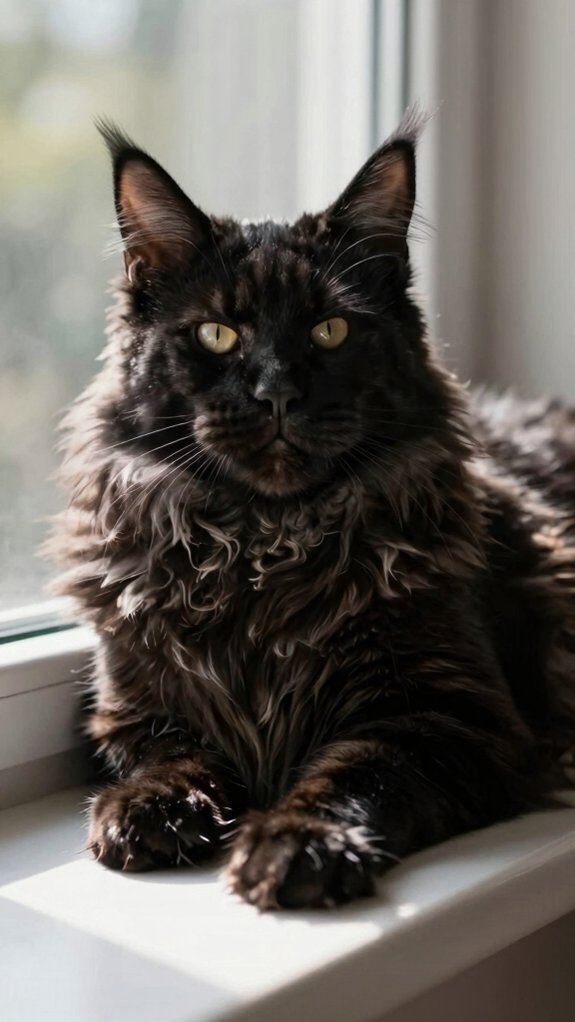
When you see a black Maine Coon stretched out beside an ordinary house cat, the size difference can be striking. Their rectangular, muscular bodies and long, heavily furred tails make them look impressive from every angle.
For adult weight ranges, males commonly reach 18–22 pounds, while females often weigh 12–15 pounds. Some fully grown cats can reach 19–30 pounds, though healthy size varies.
Their growth timeline also takes patience. Unlike many cats that reach most of their size within a year, Maine Coons may keep growing until age three to five. You’ll need space, sturdy furniture, and realistic expectations.
Personality Behind Their Wild Appearance
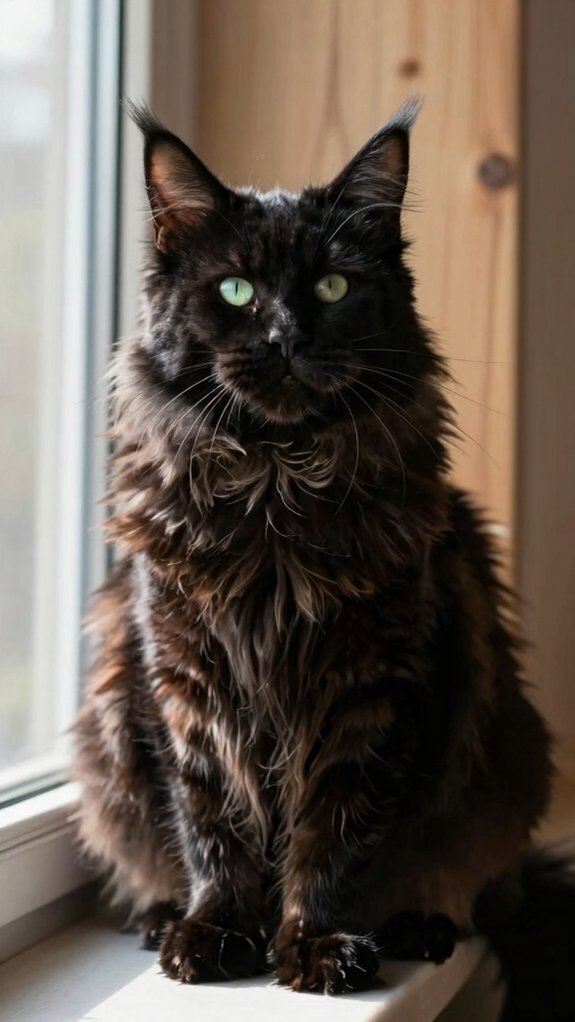
Despite their wild-looking coats and large build, black Maine Coons are usually calm, friendly companions. You’ll notice their calm temperament when they settle nearby, greet you with chirps, or follow you from room to room.
They’re people oriented without demanding constant attention, so you can invite them onto your lap while respecting their choice to relax elsewhere.
Their playful intelligence makes fetch and reward-based training enjoyable, especially when you keep sessions patient and brief.
Give your curious companion safe perches and climbing opportunities, then join their daily explorations.
You’ll gain a sociable family member who stays attentive, affectionate, and comfortably independent.
Grooming a Thick Coat
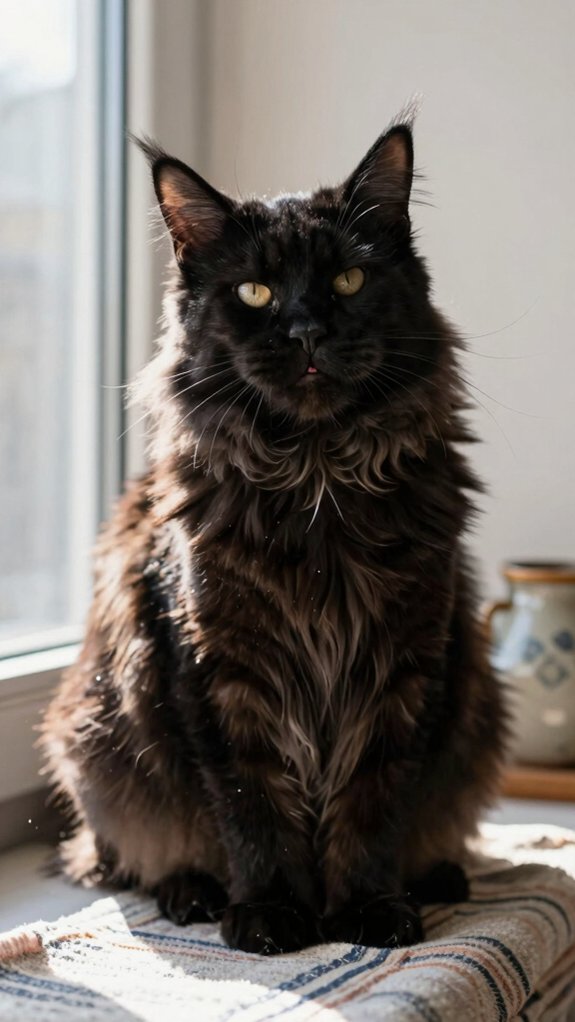
Brush your black Maine Coon regularly to keep its thick double coat clean, smooth, and easier to manage. Follow a grooming schedule of daily brushing, or at least every few days, covering the shorter head and shoulders and the longer stomach and flanks.
During Seasonal shedding, extra brushing removes loose fur and supports mat prevention. Check the bushy tail and shaggy underside after rainy or snowy play, since moisture and dirt can collect there.
Gentle brushing around the tufted ears clears lint, while a groomer or veterinarian can advise about trimming. For coat conditioning, keep brushing calm and consistent, so grooming becomes comfortable time together.
Common Eye Colors
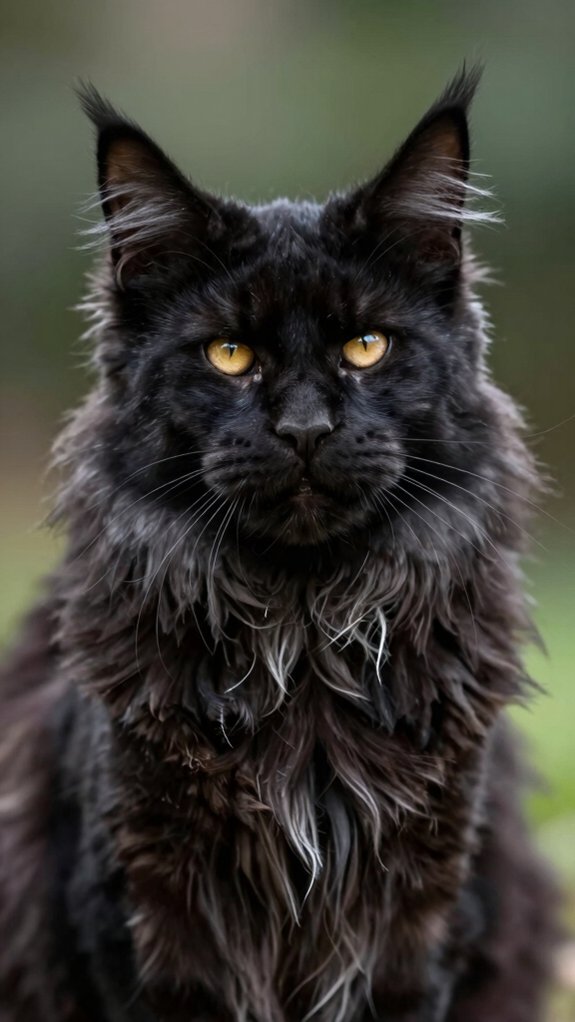
Maine Coon cats can have green, green-gold, yellow, amber, or copper eyes, so there isn’t one standard color to expect. You’ll notice eye color variation across this breed, and each shade can complement its coat in a different way.
Green and green-gold eyes often create a bright, natural look, while yellow eyes add a warm contrast. Amber copper tones can look especially striking against a black coat, making your cat’s expression stand out.
As you meet other Maine Coon families, you’ll see many beautiful combinations of eye shades, coat colors, and patterns. That variety helps make each cat feel wonderfully individual.
Health Considerations
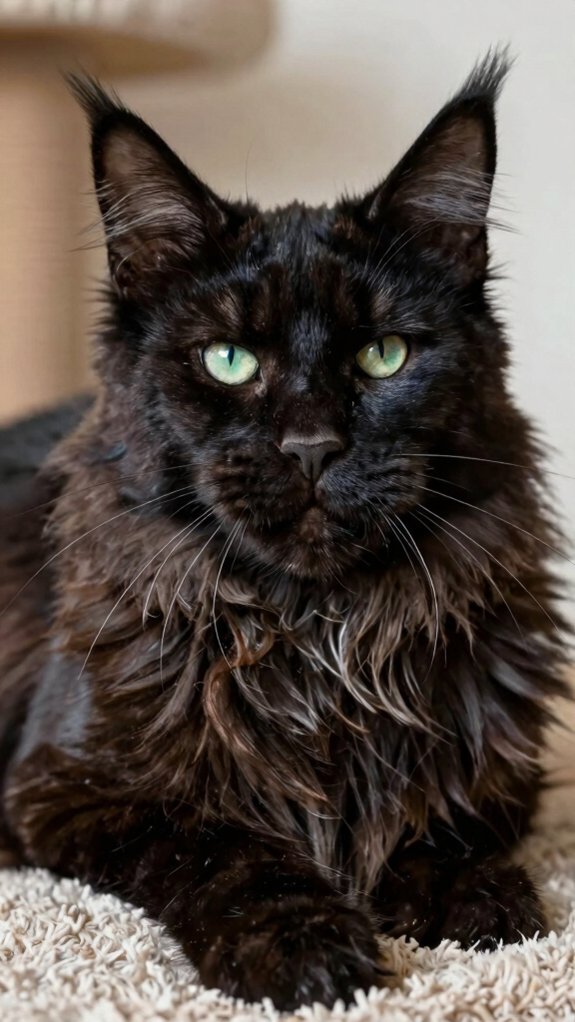
That striking coat and wide range of eye colors are only part of the picture, so it’s also worth knowing about common Maine Coon health concerns.
Your black Maine Coon may face hypertrophic cardiomyopathy, or HCM, a heart condition linked to an inherited mutation. Ask your veterinarian about screening for HCM, especially if heart disease runs in the family.
Because these cats have large frames, hip dysplasia also deserves attention. An early hip evaluation can spot problems before stiffness or pain becomes obvious.
Regular checkups can also monitor kidneys and screen for spinal muscular atrophy or pyruvate kinase deficiency, helping your companion enjoy many healthy years.
Nutrition for Large Cats
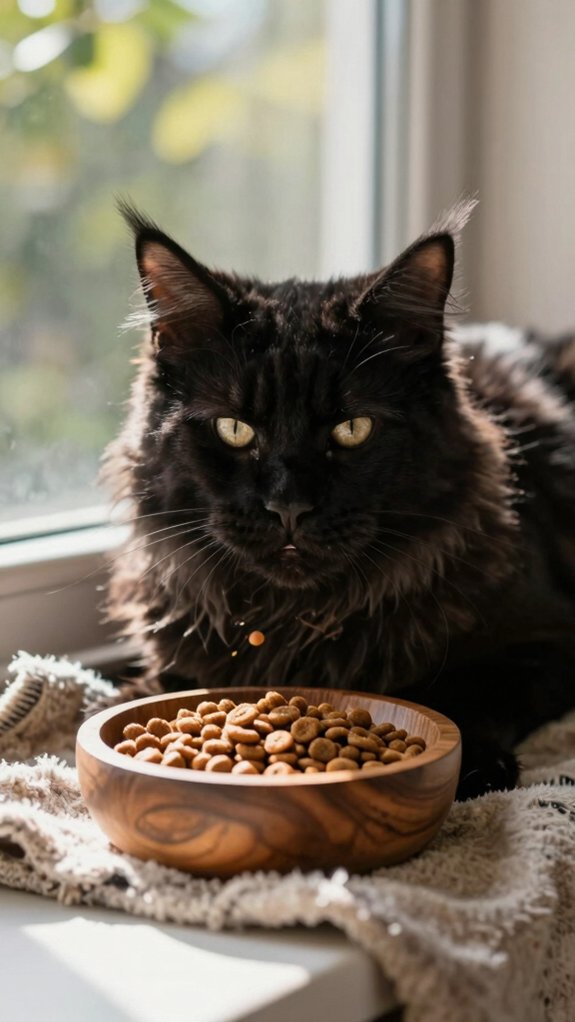
Since Maine Coons grow slowly and may not reach full size until age three to five, they need age-appropriate nutrition for longer than many other cats. Choose complete food with animal protein, taurine, and crucial amino acids, then adjust portions to protect a healthy body condition.
- Ask your veterinarian when to change life-stage formulas.
- Set Feeding frequency around your cat’s age and appetite.
- Measure meals, because large cats can gain weight easily.
- Consider wet food for hydration importance, or combine it with dry food.
- Keep recipes consistent to prevent stomach upset.
You’re part of your cat’s care team, so pair balanced meals with playful activity and regular weight checks.
Indoor vs Outdoor Living
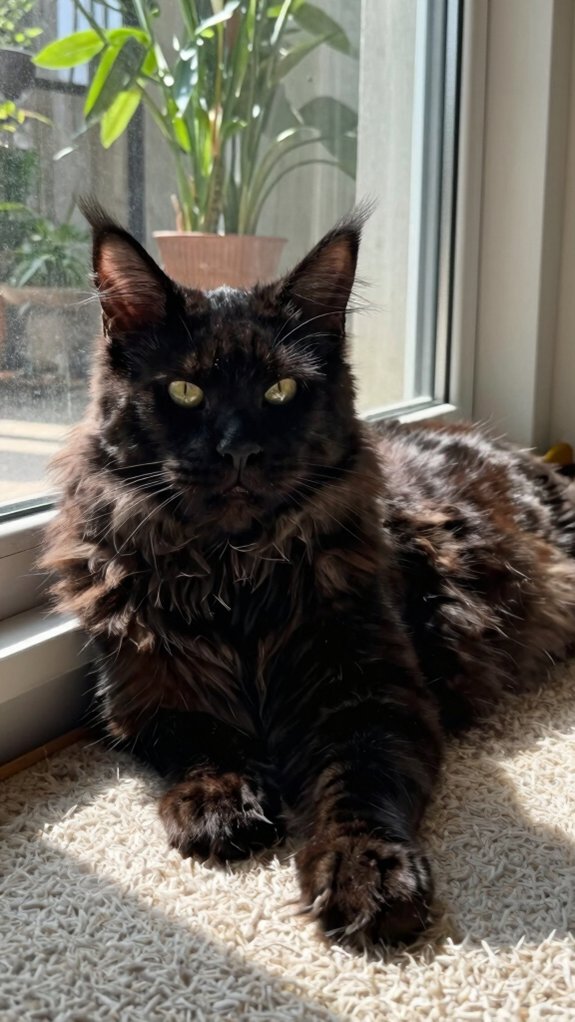
Although Maine Coons can handle cool weather, indoor living is usually the safest choice for their health and longevity. You’ll also protect your cat from traffic, parasites, and fights.
To keep indoor life satisfying, practice Enrichment planning with tall perches, climbing spaces, window views, and hunting-style toys.
Replace free-roaming opportunities with safe exploration, rather than removing them completely.
If you have room, a secure outdoor run or cat fencing can offer fresh air without the risks of wandering.
You can also try reward-based leash training, but prioritize Leash training safety, patience, and supervision.
Together, you can create a comfortable routine that feels natural.
Daily Exercise Needs
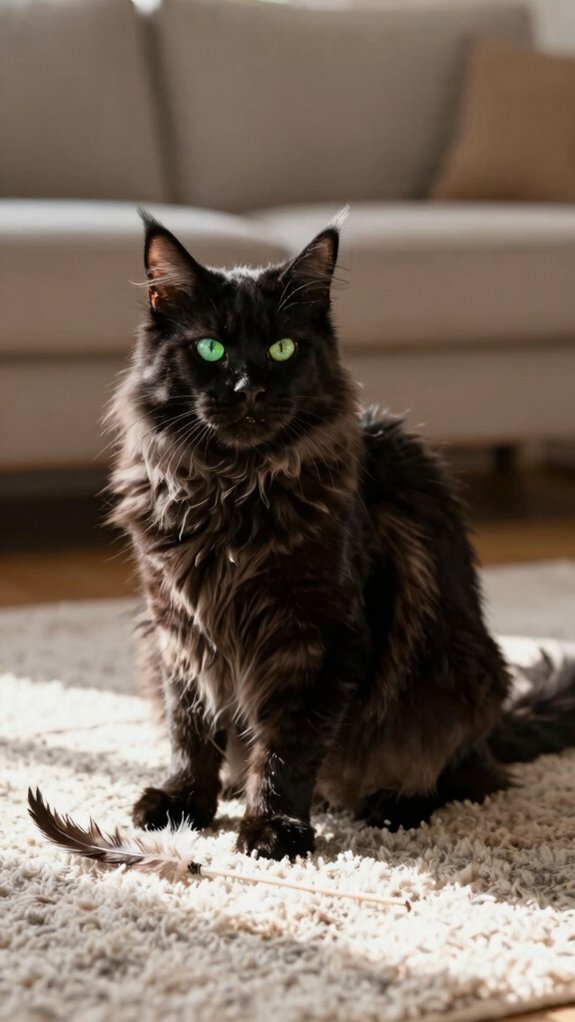
Black Maine Coons need daily exercise to stay fit, alert, and content. You can build a routine that keeps your companion involved without overwhelming them.
- Schedule several short sessions of hands-on playtime each day.
- Use wand toys, chase games, and fetch-like retrieving.
- Add climbing shelves and perches at varied heights.
- Offer a safe garden enclosure for outdoor-style exploring.
- Choose growth safe exercise suited to age and body condition.
Watch your cat’s energy and weight, then adjust activities as needed. Consistent movement helps prevent boredom and unhealthy weight gain.
When you play together, you’re creating a familiar routine that supports a happy, connected household.
Kitten Growth Stages
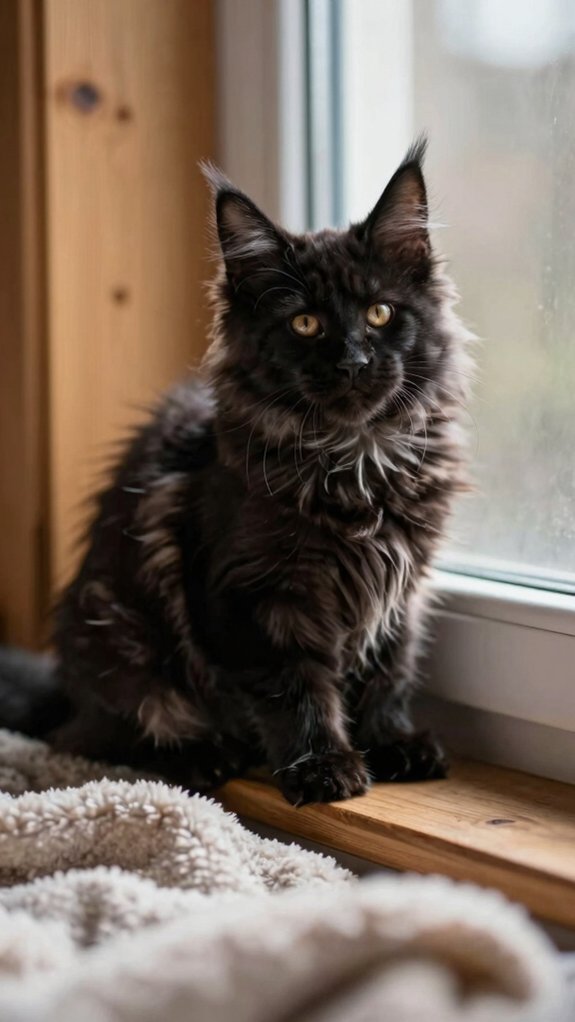
Maine Coon kittens grow at a steady, unhurried pace, and they may not reach near-adult size until around 3–5 years old.
You’ll notice Growth spurts, followed by lanky stages when your kitten looks long-limbed before gaining a broader, stronger frame.
During paw development, tufted paws gradually become more noticeable, while the large, bushy tail fills out over time.
Their double coat also grows fuller, with clearer seasonal changes between winter and summer.
Plan meals for each stage, follow your veterinarian’s guidance, and use play to support healthy weight.
You’ll enjoy watching your kitten grow with your household, one steady step at a time.
Lifespan Expectations
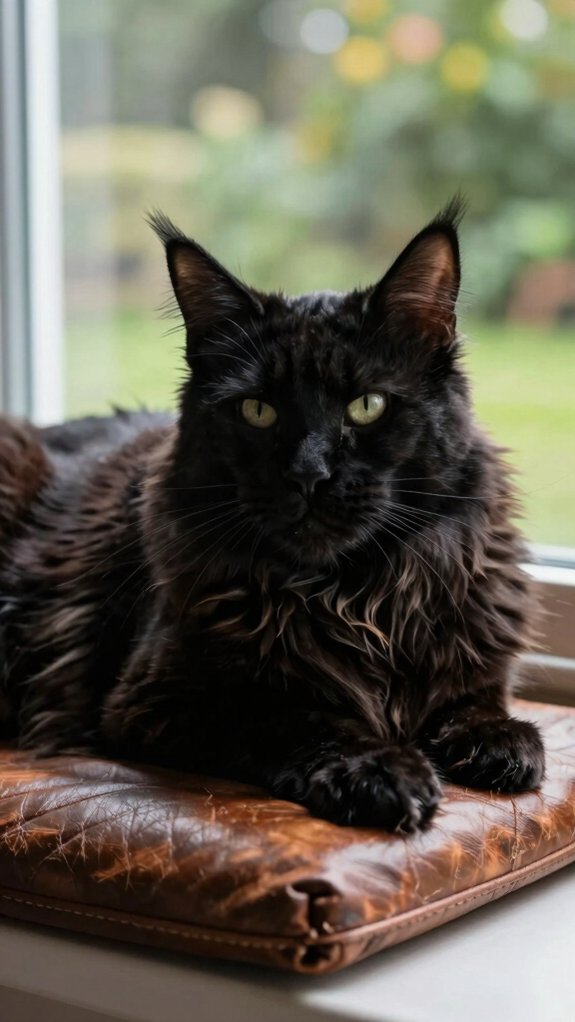
Lifespan expectations for a Black Maine Coon can vary, but many live about 10 to 13 years, and some reach their mid-teens with attentive care. You’ll help your companion thrive by supporting steady growth and watching health over time.
- How genetics affect heart health and longevity
- Schedule common vet checkups, including heart screening
- Keep your cat at a healthy weight
- Track appetite, energy, breathing, and movement
- Discuss changes early with your veterinarian
Some studies report a median lifespan near 12.5 years, while another estimates 9.71 years. Since Maine Coons mature slowly, often by three to five years, consistent monitoring can protect long-term wellbeing.
Living with Children
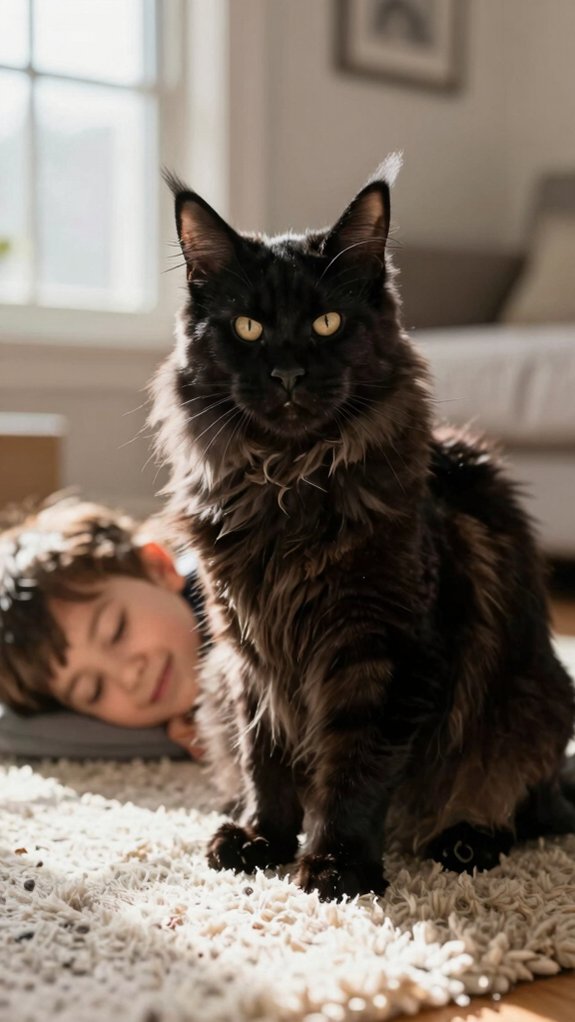
When your family includes children, a Black Maine Coon can be a patient, gentle companion who handles the activity of daily life well. Their sociable nature may lead them from room to room, keeping them close to family routines.
Teach training boundaries early, showing children to let the cat rest, eat, and leave freely. Child safe introductions help everyone feel comfortable, especially with younger children.
Plan supervised playtime with wand toys, soft balls, or reward-based games. Your cat’s sturdy build supports everyday interaction, but gentle handling still matters.
With clear rules and calm guidance, you can build a welcoming home where children and cat belong.
Compatibility with Other Pets
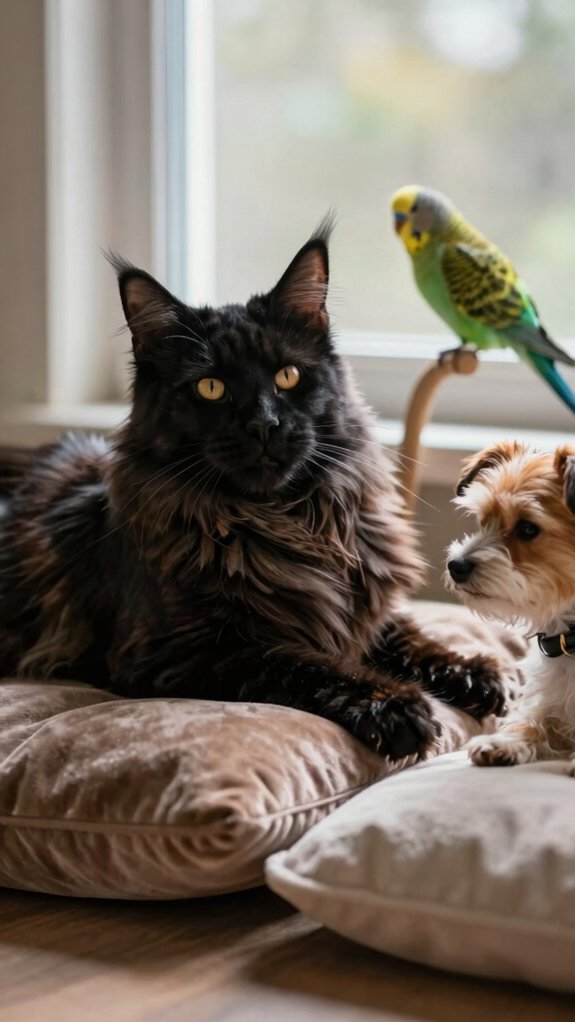
A Black Maine Coon often gets along well with other cats and many dogs because its gentle, patient nature makes shared living easier. You can build belonging through calm, gradual meetings, especially with shy pets.
- Start Multi cat introductions with separate rooms and exchanged scents.
- Use supervised bonding routines around meals, play, and quiet time.
- Let pets approach at their own pace, never forcing contact.
- Provide climbing spaces and hunting-style toys for healthy enrichment.
- Watch play closely, since your cat’s size and confidence may overwhelm smaller companions.
With steady routines, shared activities, and positive guidance, your pets can become comfortable housemates and trusted companions.
Fun Breed Facts
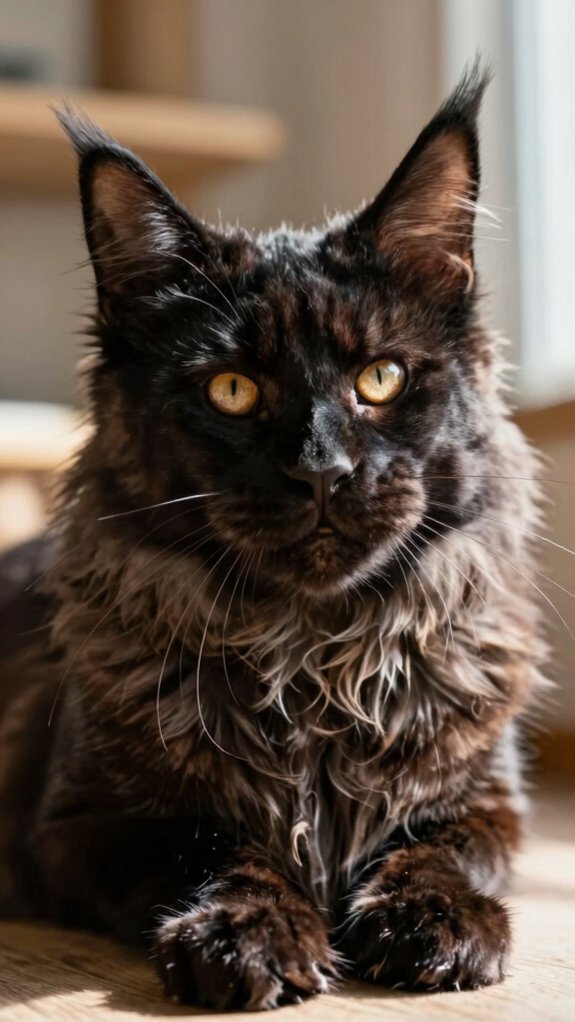
What makes a Black Maine Coon so interesting goes beyond its striking coat. You’ll find gentle giants, with males often weighing 18–22 pounds and females 12–15 pounds.
They may keep growing until three to five years old, so enjoy each stage.
Their double coat thickens for winter, while ear and toe tufts help them handle snow.
Genetic variations can influence polydactylism, giving some cats extra toes, though show rules may limit it.
Coat patterns also vary, even among black cats.
Listen for a distinctive croon or chirp instead of a usual meow.
You’re also sharing space with a breed linked to record-holder Stewie, measured at 48.5 inches long.
Finding a Responsible Breeder
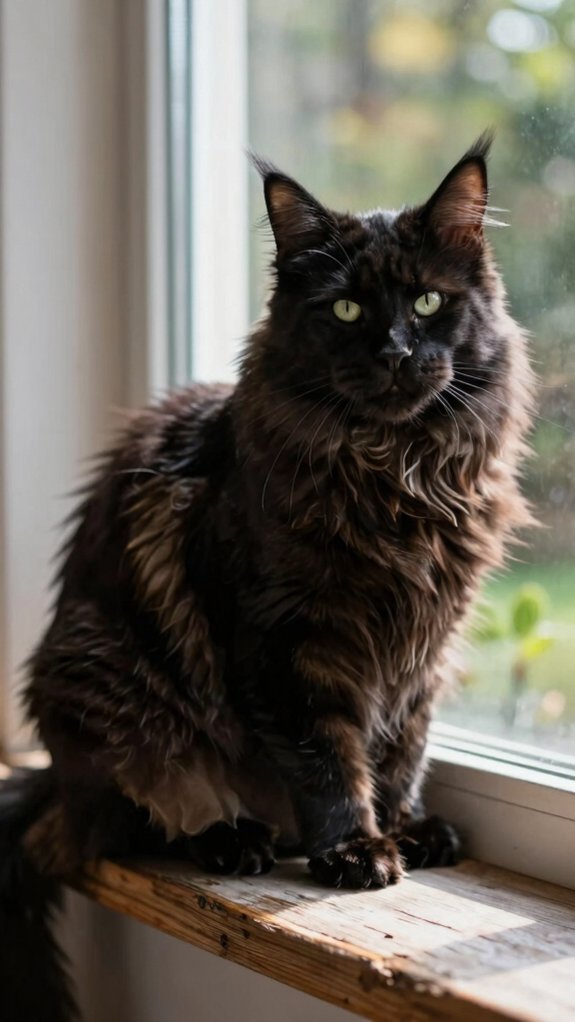
Start by checking that the breeder is registered with a respected cat organization, such as the Cat Fanciers’ Association (CFA).
Verify CFA credentials, then ask for clear records before you join the Maine Coon community.
- Ask about HCM and hip-dysplasia screening.
- Request health results, lineage, and registration papers.
- Discuss polydactylism and whether it fits your goals.
- Visit the cattery, or schedule a live video tour.
- Review written contracts covering health and returns.
Watch how kittens interact with people.
Responsible breeders socialize these slow-growing cats carefully, knowing they may reach full size at three to five years.
Choose transparency over myths about breed origins.
Cost of Ownership
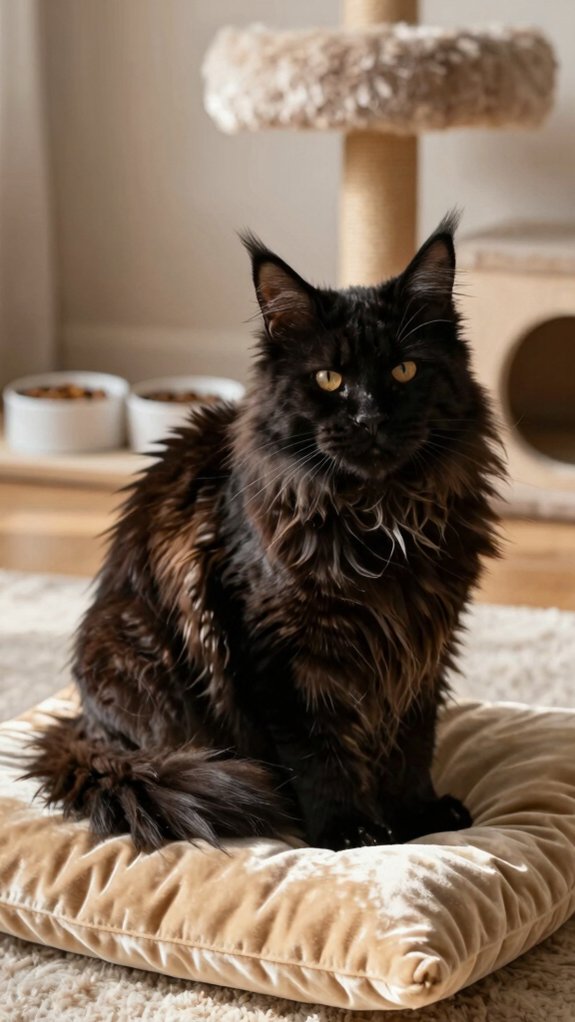
Owning a Maine Coon involves more than the purchase price, so plan for regular food, grooming, veterinary care, and enrichment costs.
Your growing companion may eat more and need toys for several years.
Set aside money for regular grooming, especially if a thick coat mats easily.
Brushes, nail trims, and occasional professional help can add up, particularly for polydactyl cats.
Ask about the insurer price, since HCM or hip dysplasia risks may affect coverage.
Vet screening, such as echocardiograms or X-rays, can also cost extra.
With long term budgeting, include wellness exams, vaccines, monitoring, and emergency savings, so your household stays prepared.
Is a Black Maine Coon Right for You?
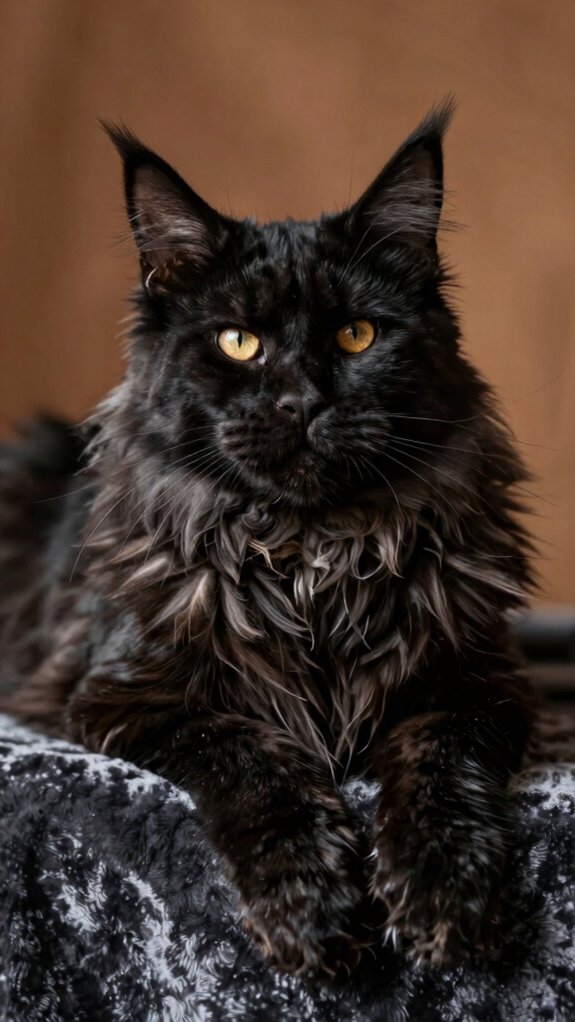
Could a black Maine Coon fit your home and routine? Consider your temperament fit and family lifestyle before choosing this gentle giant.
You’ll gain an affectionate companion who may follow you from room to room and enjoy engaging play.
- Expect a large cat that matures slowly, often by age three to five.
- Plan to brush the long coat daily or frequently.
- Provide climbing spaces, toys, and hunting-style games.
- Build a steady indoor routine for exercise and exploration.
- Schedule checkups and ask about HCM, hip dysplasia, and kidney screening.
If you can offer time, space, grooming, and care, you’ll welcome a sociable, rewarding family member.