


You’ll find British Shorthairs calm, sturdy, and affectionate on their own terms. Expect medium-to-large size, slow growth, moderate play needs, and a dense coat that needs weekly brushing, especially during spring and fall shedding. Feed measured meals, limit treats, and watch weight because obesity can raise health risks. Provide quiet hideouts, perches, toys, and clean litter areas. Budget for routine veterinary care, insurance, and preventive treatments, then choose a health-tested breeder. More practical ownership details await below.
Disclosure: This post may contain Amazon affiliate links, at no extra cost to you. Content on Pawtangle is created with research support from AI tools and carefully reviewed, edited, and fact-checked by the lead author, Dr.Fahri Pat , to ensure accuracy and reliability. Learn more
Key Takeaways
- British Shorthairs are calm, easygoing cats that build trust gradually and often prefer sitting nearby over being carried.
- They are medium-to-large cats, with females typically weighing 9–15 pounds and males 12–18 pounds.
- Their dense short coats need weekly brushing, with extra sessions during heavy spring and fall shedding.
- Portion control, moderate daily play, and weight monitoring help prevent obesity and related health problems.
- Provide quiet hideouts, vertical perches, interactive toys, and a predictable routine to support comfort and enrichment.
Understand the British Shorthair Personality
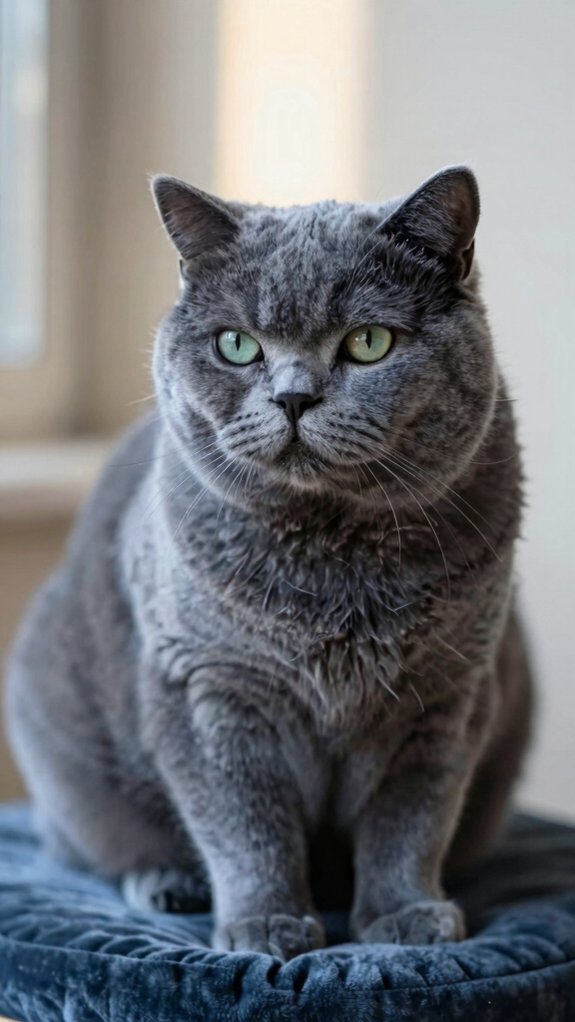
British Shorthairs are calm, easygoing cats, but they may need time to warm up to new people before their affectionate side blossoms. Give yours space, speak softly, and let trust build naturally.
Watch temperament cues, such as following you from room to room, sitting nearby, or purring during petting.
Respect affectionate boundaries, because your cat may enjoy attention but dislike being carried or held for long.
Their bonding patterns usually include the whole household, not just one favorite person. They’ll often supervise daily routines from a comfortable spot.
Keep noise sensitivity in mind. During loud activity or sudden changes, provide a quiet retreat and patience.
Explore the Most Popular Coat Colors
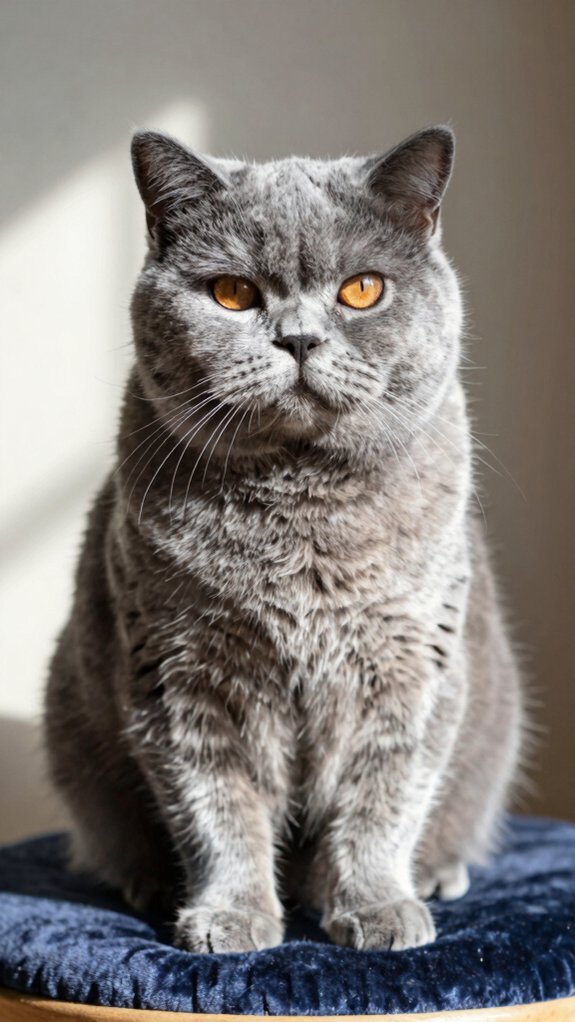
Which coat catches your eye? Each coat color gives your future British Shorthair a distinct look, and you’ll find a welcoming variety to suit your taste.
- British Blue: Blue fur commonly pairs with gold or copper eyes, while black, red, and white solids should show no stray white hairs.
- White: Deep sapphire eyes create a striking eye pairing, with matching nose leather and paw pads.
- Shaded chinchilla: Silver tipping adds a soft, glowing finish; golden versions need correct undercoats and no pale toes or chest.
- Smoke: A pale undercoat beneath deep tipping creates dramatic smoke contrast whenever your cat moves.
Ask breeders about color standards before choosing.
Learn How Big They Really Get
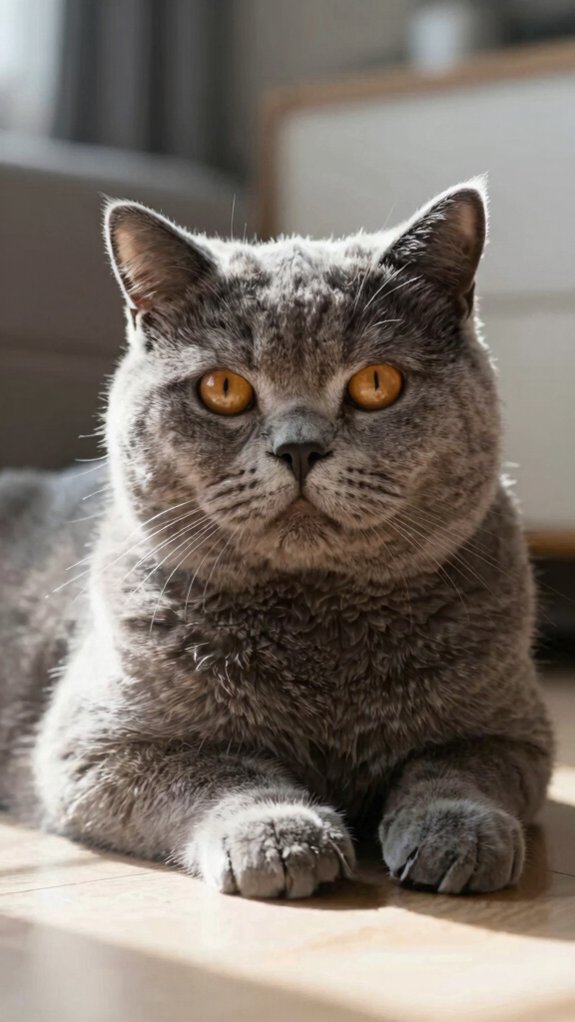
Once you’ve chosen a coat color, consider how much space your future cat will need. British Shorthairs grow into medium-to-large cats, with females usually weighing 9–15 pounds and males 12–18 pounds.
Some males may reach about 17 pounds.
Their compact, balanced bodies include broad chests and strong legs, not a long, stretched shape. Use adult size charts as a guide, but remember that each cat develops differently.
Check growth timeline milestones during kittenhood, because this breed matures slowly.
Your cat may not reach full size until around three years, and some continue developing through five.
Track weight regularly, since their laid-back nature can increase obesity risk.
Discover Their Grooming Needs
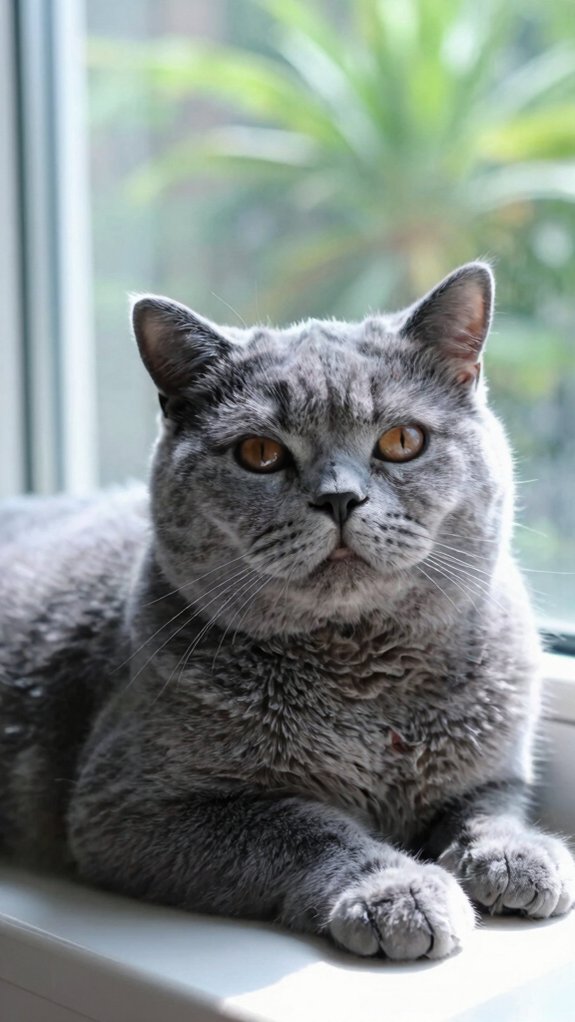
Thanks to their short, dense coat, British Shorthairs are fairly easy to groom. You’ll help your cat stay comfortable with a quick weekly brushing, which controls loose fur and keeps that plush coat neat. Your routine can become a calm part of belonging together.
Seasonal shedding in spring and fall may call for extra sessions. Keep these basics in mind:
- Brush or comb weekly, using gentle strokes.
- Trim claws when they become sharp or catch on fabric.
- Practice occasional Ear Cleaning to support healthy ears.
- Keep Bathing Frequency low, since most cats rarely need baths.
Regular grooming supports comfort, hygiene, and a healthy-looking coat.
Know What They Eat to Stay Healthy

A healthy diet helps your British Shorthair stay at a comfortable weight, especially since this calm breed may not burn many calories through play. Portion control matters, so follow the food label and serve consistent meals rather than filling the bowl endlessly.
Choose balanced, high-quality food with enough protein and nutrients. Compare wet vs dry options, or combine them, while keeping fresh water available at all times.
Always keep in mind that treats calories count too, so offer small amounts and include them in daily intake.
Practice weight monitoring by checking your cat’s body shape regularly. If your cat gains weight or plays less, adjust calories gradually and ask your veterinarian for guidance.
Understand Common Health Concerns
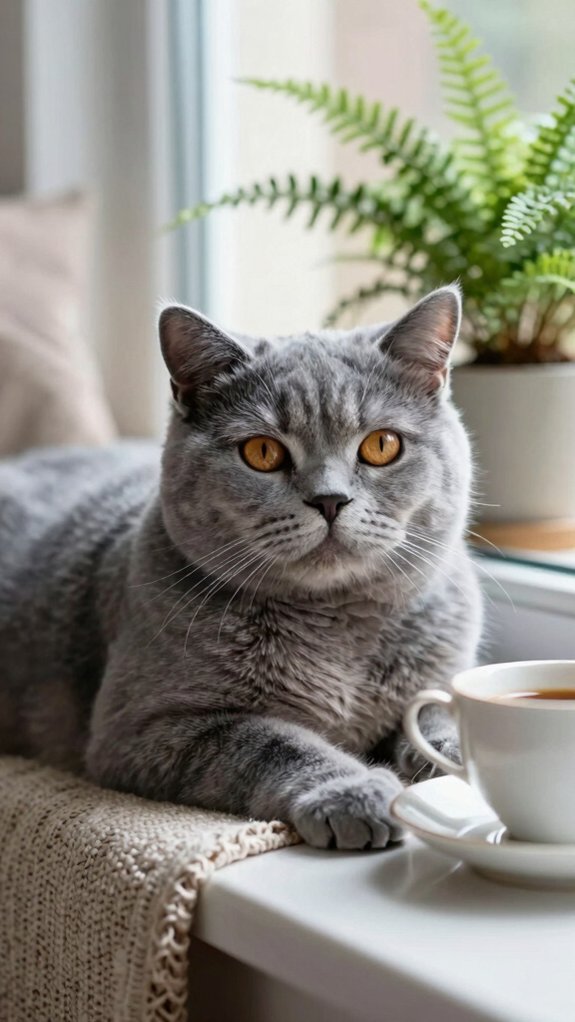
Although British Shorthairs are commonly strong and healthy, they can still develop problems such as diabetes, digestive upset, ear infections, and cancer.
Their love of food and relaxed exercise habits can also lead to obesity, diabetes, or heart disease.
You can support your cat by watching for these signs:
- Recognize digestive issues: Note vomiting, diarrhea, constipation, or appetite changes.
- Monitor ear infections: Check weekly for odor, redness, discharge, or scratching.
- Protect healthy weight: Measure meals and encourage gentle daily play.
- Plan ahead: Ask your veterinarian about checkups, screening, and pet insurance.
HCM and hemophilia B aren’t common, but regular care helps your family notice changes early.
Find Out if They’re Good with Children

British Shorthairs are usually patient, calm companions for children, especially when kids approach them gently and respect their space. Their friendly nature often includes the whole family, so your cat can enjoy several caring relationships.
Set Respectful playtime rules, including no chasing, grabbing, or forced hugs. Focus on teaching gentle handling, and use child boundary coaching to help kids notice when your cat walks away.
| Child habit | Helpful guidance |
|---|---|
| Petting | Use slow, light strokes |
| Carrying | Let adults handle it |
| Noise | Practice supervising noisy moments |
| Affection | Wait for the cat’s invitation |
With calm daily interaction, your cat can blossom into a comfortable, trusted family companion.
See How They Get Along with Other Pets
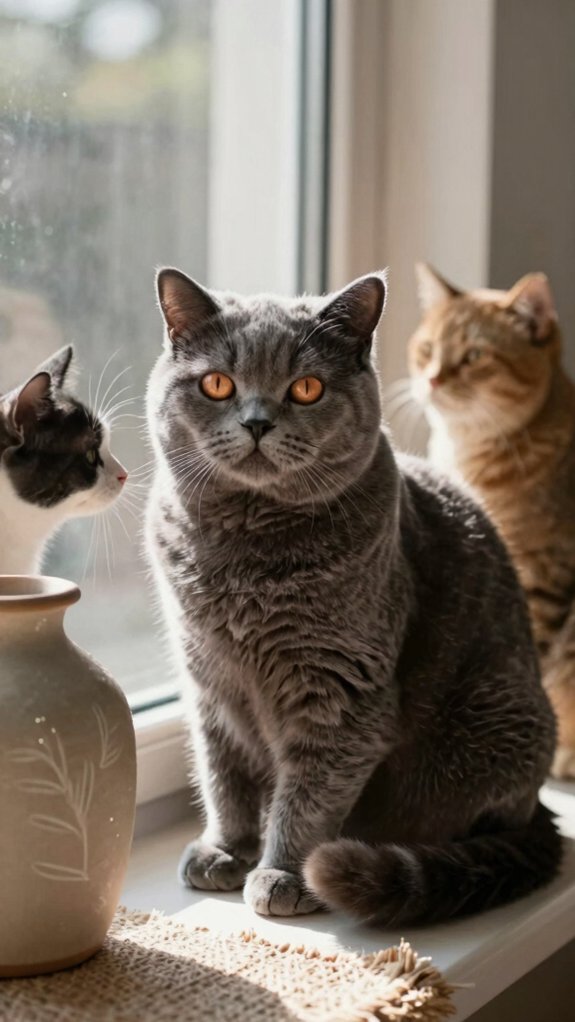
With a calm introduction, your British Shorthair will usually adjust well to dogs, cats, and other household pets. Your cat may watch from a distance first, then join the household routine when ready.
- Try scent swapping introductions with bedding before face-to-face meetings.
- Use calm gradual acclimation, keeping early visits brief and supervised.
- Practice reading body language, such as stiff posture, hiding, or a gentle paw protest.
- Set Playtime boundaries, and give every pet space when needed.
Because your British Shorthair often bonds with the whole family, you can build a peaceful, welcoming group. Don’t carry your cat into interactions; let trust grow on its terms.
Learn How Active They Really Are
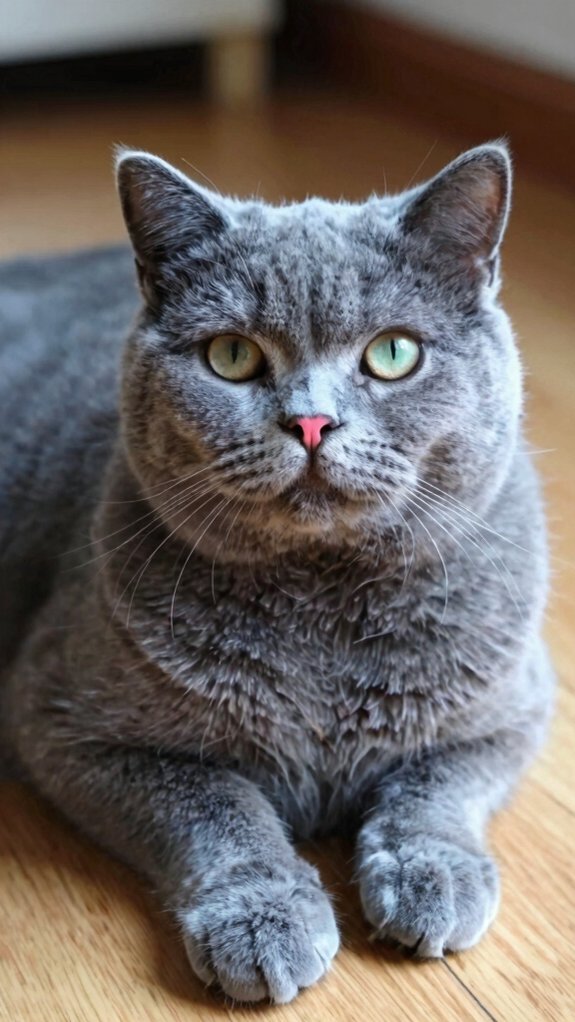
For daily activity, expect a British Shorthair to be moderately playful rather than constantly on the move. Your cat may enjoy climbing, toys, and watching the room more than racing through it.
Plan regular Indoor activity to support a healthy weight, especially because food-loving cats can become less active. Try enrichment ideas such as puzzle feeders, climbing spots, and short hunting games using catnip or toys.
Keep your playstyle focus on stalk, hunt, and pounce patterns. Several brief sessions can work better than one long workout. You’ll also notice check in bonding, as your calm companion may follow you, pause nearby, and then settle comfortably.
Understand Their Lifespan

A healthy British Shorthair can often live about 12–17 years, so you’ll share many years with this steady, affectionate companion.
With thoughtful care, your cat can remain a valued part of your family.
- Support healthy weight: Measure meals and encourage gentle daily movement, since obesity can shorten longevity.
- Schedule checkups: Regular veterinary visits can catch diabetes, digestive problems, ear infections, and cancer early.
- Expect gradual maturity: British Shorthair aging is slow, and your cat may reach full size around three years.
- Plan long term: In a lifespan comparison, this breed often offers many rewarding years of companionship.
Know What Kittens Need
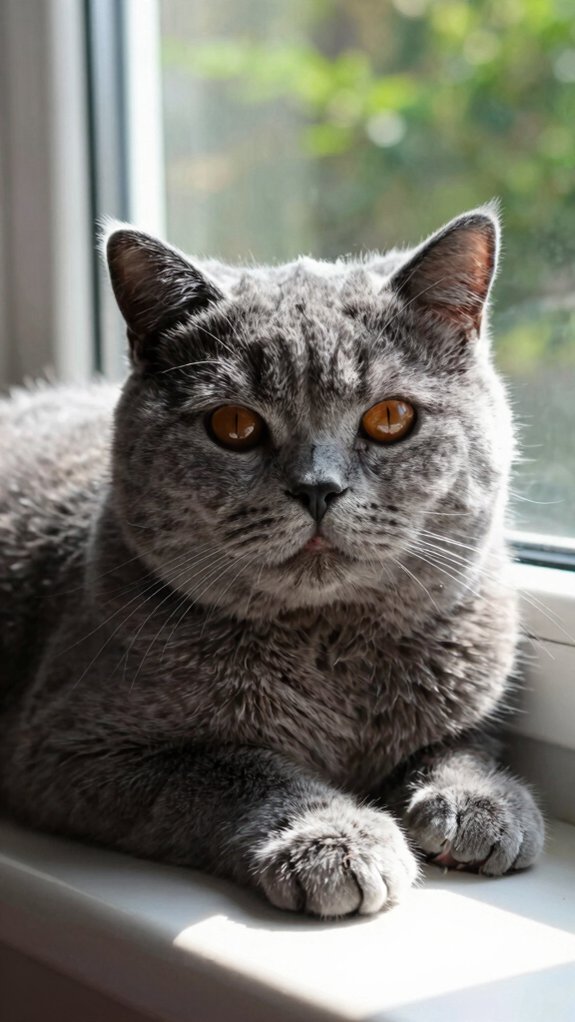
Kittens need steady routines while they grow into their sturdy adult bodies, which may take three to five years. Offer measured meals, gentle play, and simple care, including weekly ear checks, needed nail trims, and consistent litter habits.
Schedule early vet visits for vaccinations, health guidance, and Dental checkups.
Start handling briefly, then reward calm behavior, because most British Shorthairs don’t enjoy being carried for long.
Use gradual socialization, letting your kitten approach family members at their own pace. Keep stress free introductions quiet and patient, and add supervised climbing and toys.
Daily activity and portion control help prevent future weight gain.
Create an Indoor-Friendly Environment
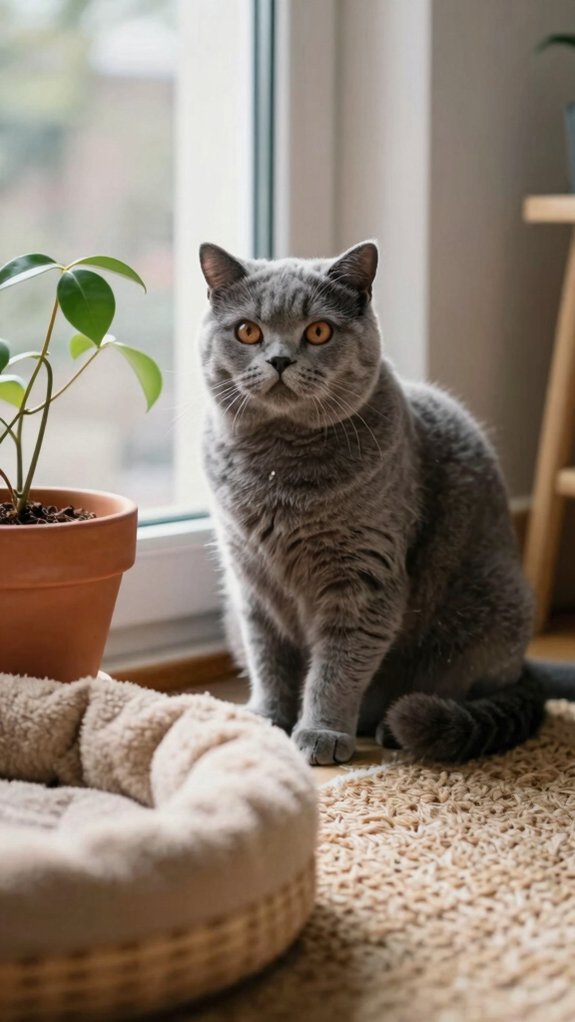
In a calm, predictable home, your British Shorthair will feel secure and settle into a steady routine. Keep meals, cleaning, and interaction times fairly consistent, so your cat knows what to expect.
Create a welcoming indoor setup with:
- Vertical perches for window watching and gentle climbing.
- Quiet hideouts where your cat can retreat undisturbed.
- A private, easy-clean litter area.
- An Enrichment rotation that encourages daily movement without chaos.
Use calming routines, and let your cat approach affection on their own terms.
Offer room-to-room pathways and nearby resting spots, helping your companion feel included while supporting healthy activity and preventing weight gain.
Choose the Right Toys
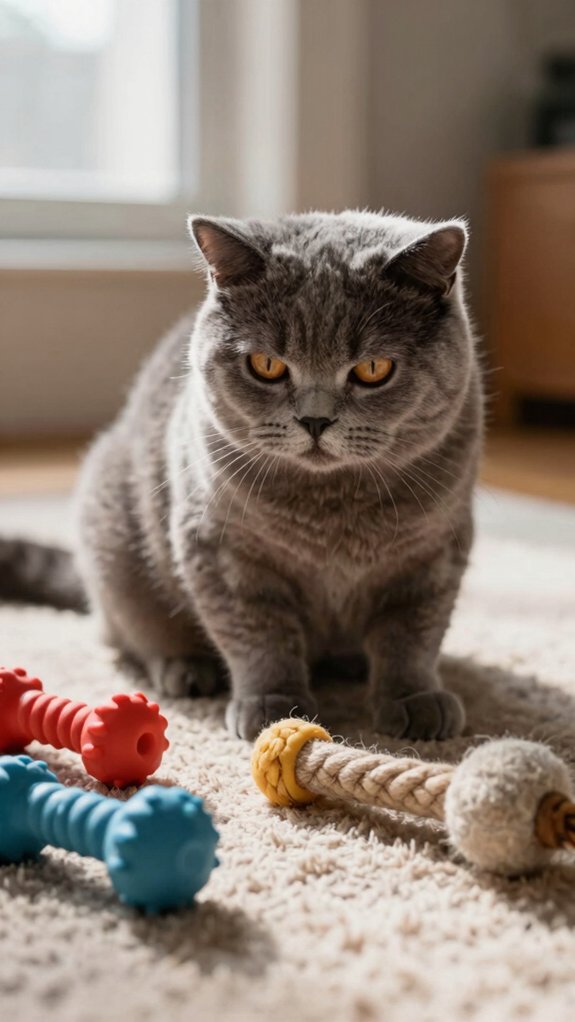
Choose toys that match your British Shorthair’s quiet hunting style and give them ways to stalk, chase, and pounce without creating chaos.
Rotate wand teasers, soft prey toys, and engaging puzzles to support their natural instincts and keep your Enrichment routine fresh.
Add sturdy climbing perches, a cat tree, or a window perch so your cat can survey the room comfortably.
These spots also encourage movement without demanding constant attention.
Offer solo playtime with toys they can use on their own terms, since many British Shorthairs dislike being carried or smothered.
If interest fades, use catnip sparingly, and join their play calmly.
Prepare for Seasonal Shedding
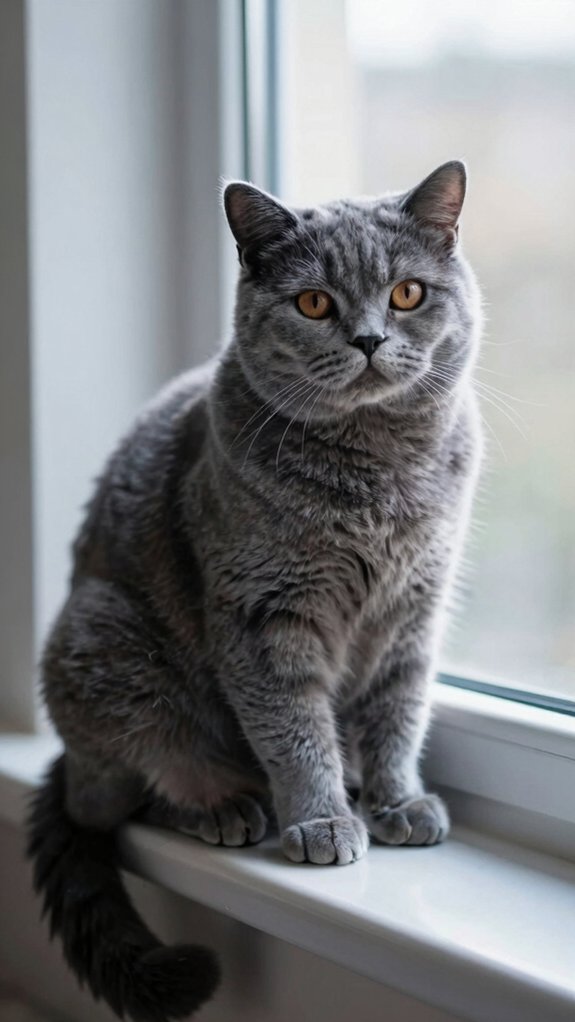
When spring or fall arrives, your British Shorthair may shed more as its dense coat changes with the season. You’re not alone, and this routine helps your household stay comfortable.
- Brush weekly, then increase sessions during peak shedding.
- Use lint roller tactics on furniture and clothing.
- Practice control shedding vacuuming on rugs and favorite resting spots.
- Schedule seasonal grooming to manage summer coat blowouts.
A regular brush or comb usually handles loose fur without a complex schedule. Trim claws and check ears occasionally, so your cat stays comfortable during grooming. With these simple habits, you’ll keep seasonal shedding manageable and join other prepared British Shorthair families.
Know the Cost of Ownership
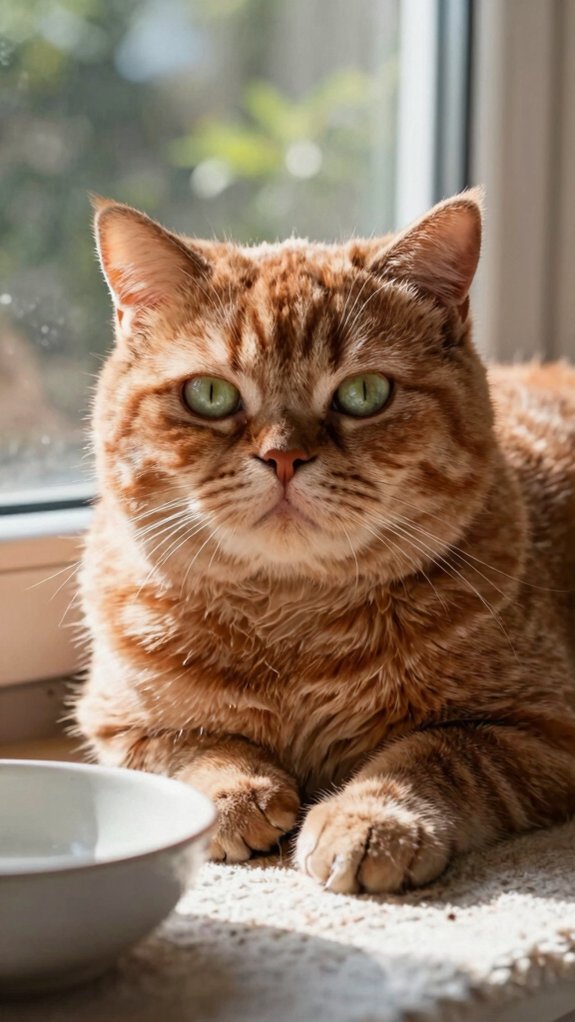
Weekly brushing can keep your British Shorthair’s grooming costs fairly low, but ownership still includes routine care and long-term health expenses. You’ll need to plan for claw trims, occasional ear cleaning, weekly teeth and ear checks, and regular flea and worm prevention.
Your budgeting should-have should include annual exams, vaccinations, quality food, and a cushion for unexpected visits. Since this breed can gain weight, you may also pay for weight-management food or monitoring. Consider vet insurance options to help with costly treatment for diabetes, digestive problems, ear infections, or cancer.
With a 12–17-year lifespan, steady planning helps you enjoy your cat’s company.
Find a Responsible Breeder
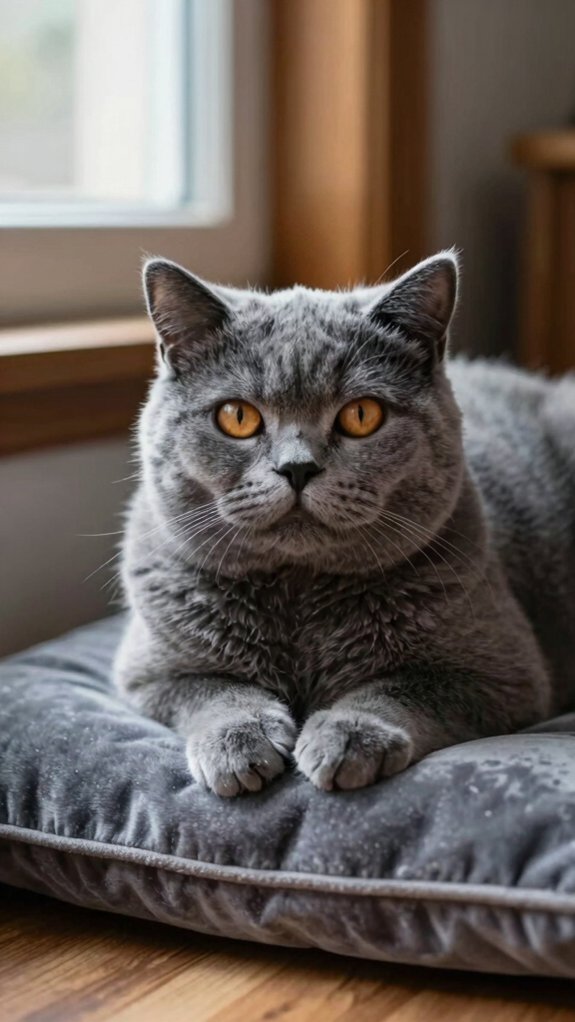
A responsible British Shorthair breeder should provide concise records of ancestry, health testing, and registration.
You should feel welcomed, informed, and confident asking questions.
- Request pedigrees showing recognized lines, including early champions, and confirm the breeder understands careful outcrossing.
- Review vet records, screening results, and honest discussions of risks such as diabetes or cancer.
- Check coat and color documentation, including “no white anywhere” rules for solid colors.
- Meet parent cats when possible, and look for calm, patient temperaments.
A trustworthy breeder explains standards, answers questions clearly, and supports you after adoption.
Transparent records help you join the British Shorthair community responsibly.
Decide If This Breed Fits Your Lifestyle
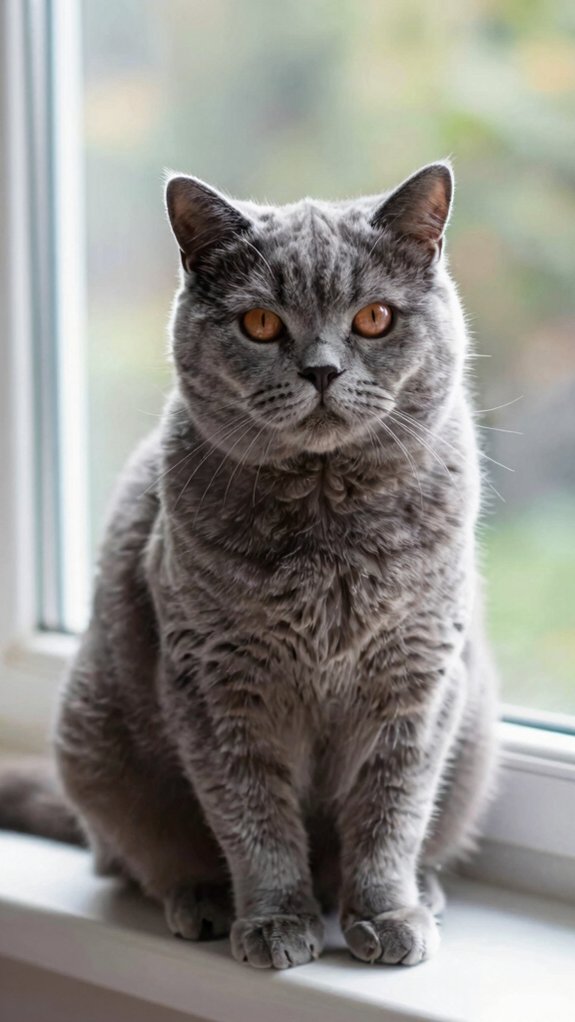
Could a British Shorthair fit your daily routine? If you want a calm companion who quietly follows family routines, this breed may belong in your home. Expect patience with children, but allow time to warm up. Use child intro planning, such as calm greetings and supervised play, to build trust.
These cats suit apartments and moderate schedules, though you’ll need daily gentle exercise to help prevent obesity. They often accept other pets, but loud activity may send them retreating.
Respect their independence with handling tolerance tips: let your cat choose contact, and avoid carrying it for long. Plan weekly brushing, seasonal extra brushing, claw trims, and routine ear and teeth checks.