

Bring your British Shorthair kitten home to a quiet, kitten-proof room with a cozy bed, food, water, toys, a scratcher, and a low-sided litter box. Serve its familiar food for several days, then switch gradually over five to seven days, offering three or four small meals. Keep routines calm, play gently, and watch for overstimulation. Schedule a vet exam within the first week to discuss vaccines, parasites, nutrition, and microchipping. More practical care tips follow.
Disclosure: This post may contain Amazon affiliate links, at no extra cost to you. Content on Pawtangle is created with research support from AI tools and carefully reviewed, edited, and fact-checked by the lead author, Dr.Fahri Pat , to ensure accuracy and reliability. Learn more
Key Takeaways
- Prepare a quiet, kitten-proof starter room with bedding, shallow food and water bowls, a low-sided litter box, toys, and a scratcher.
- Keep the breeder’s food initially, then transition gradually over 5–7 days while offering three or four small meals daily.
- Maintain consistent feeding, hydration, litter cleaning, gentle grooming, and supervised play routines to support comfort and adjustment.
- Watch for overstimulation, provide hiding spaces, and introduce handling, household sounds, toys, and family members gradually.
- Schedule a veterinary examination within the first week to discuss vaccinations, parasite prevention, deworming, rabies requirements, and microchipping.
Prepare a Safe Starter Space
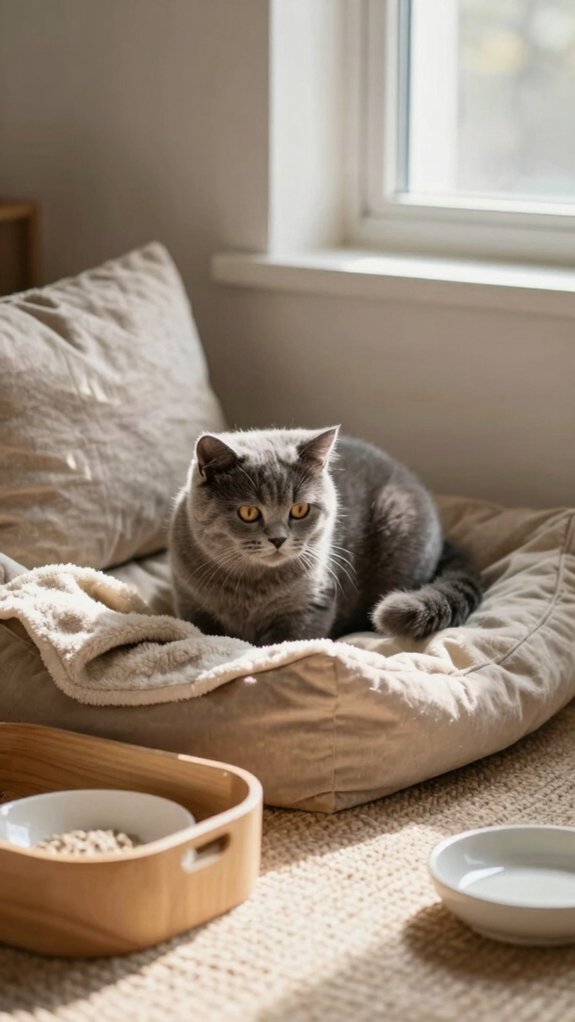
Before your British Shorthair kitten arrives, set up a quiet starter room where it can settle in without feeling overwhelmed. Choose a bathroom, laundry room, or small bedroom, and keep this calm space available for several days.
Place a cozy bed, shallow bowls, and a low-sided pine-pellet litter box within easy reach, keeping the box away from food and water.
Add a covered bed or cardboard box, a wand toy, and a sturdy scratcher.
Use your Kitten proof checklist for careful Hazard removal.
Remove toxic plants, especially lilies and aloe, secure cords, clear small objects, block unsafe nooks, and lock away cleaners and medicines.
Introduce Food Gradually

Once your British Shorthair kitten has a calm starter space, keep mealtimes familiar by serving the same food the breeder used for the first few days. This familiar choice helps your new family member settle.
For Transition timing, change foods over five to seven days. Mix a little of your preferred wet or dry kitten food into the original, then increase it slowly to help prevent soft stools.
Offer three or four small meals daily, using gentle portioning instead of large servings.
Wet food supports hydration and digestion, while dry food may be added if desired.
Keep fresh water available, and don’t force eating during the first day.
Build a Daily Routine

A steady daily routine helps your British Shorthair kitten feel secure while learning what to expect. Offer three to four small meals at consistent times, using the breeder’s food. If you change foods, *change it gradually* over five to seven days.
Keep water available, refill it daily, and practice hydration tracking, especially while your kitten adjusts. Some kittens drink quietly, particularly when eating wet food.
Place an unscented pine pellet box in one quiet location away from food and water. Clean it daily to support litter consistency.
Add weekly brushing, nail trims every one to two weeks, and plenty of sleep. Let your kitten settle into your household’s rhythm.
Encourage Healthy Play
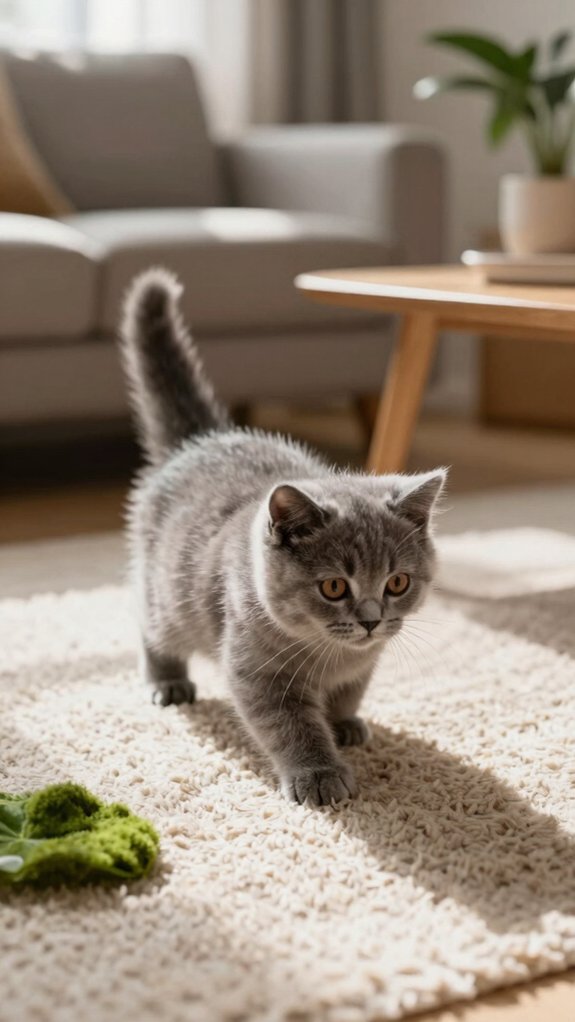
Short, gentle play sessions help your British Shorthair kitten build confidence without becoming overwhelmed. Offer 5–10 minutes several times daily with wand toys, then allow a quick rest.
Use scratchers and a cat tree, redirecting paws from furniture or curtains. Engaging toys support safe chasing and pouncing, while cardboard tunnels and puzzle feeders add enrichment.
| Goal | Try | Watch |
|---|---|---|
| Movement | Wand play | Quick rests |
| Scratching | Sturdy scratcher | Redirect calmly |
| Variety | Toy rotation | Interest levels |
Learn your kitten’s Overstimulation cues, such as flattened ears, hiding, or rough swatting. End play calmly, and give your new family member space to settle.
Schedule Early Vet Visits

Schedule your British Shorthair kitten’s first veterinary exam within the first week at home, so your vet can check their weight, heart and lungs, eyes, ears, teeth, and overall development. This visit gives your new family member a healthy starting point.
Ask about your kitten’s vaccination timeline, including FVRCP boosters every 3–4 weeks until about 16 weeks.
- Request parasite screening and confirm deworming dates, flea and tick prevention, and kitten-safe products.
- Discuss rabies timing, which depends on local law and veterinary guidance.
- Consider microchipping for permanent identification, then schedule follow-ups before leaving.
Write each date down, so everyone caring for your kitten stays prepared.
Teach Positive Habits

Start teaching positive habits from the first day by keeping your kitten’s routine calm and predictable. Keep one low-sided litter box in the same place, offer unscented pine pellets, and serve three or four small meals using the breeder’s food.
If you change foods, mix them gradually over five to seven days.
Establish grooming by gently touching paws, ears, and mouth during calm moments, then offer treats.
Regular nail trims every one to two weeks will feel familiar.
Place sturdy scratchers nearby, and reward scratching with play or praise instead of scolding.
Use wand toys to build trust, then expand access once eating and litter use stay consistent.
Create Comfortable Sleeping Areas

Once your British Shorthair kitten arrives, set up a cozy, draft-free bed or covered hide in a quiet corner of the starter room. Your Draft free bedding should feel soft and stable, helping your newcomer settle into family life.
- Offer a Cozy corner hide, and place a carrier inside with a familiar towel or blanket. Let your kitten enter and leave freely.
- Create Quiet nap zones in low-traffic spots, with clear escape paths, never trapping your kitten.
- Keep beds separate from food, water, and the litter box.
Expect 16–20 hours of sleep daily, so protect these peaceful resting places.
Support Healthy Growth
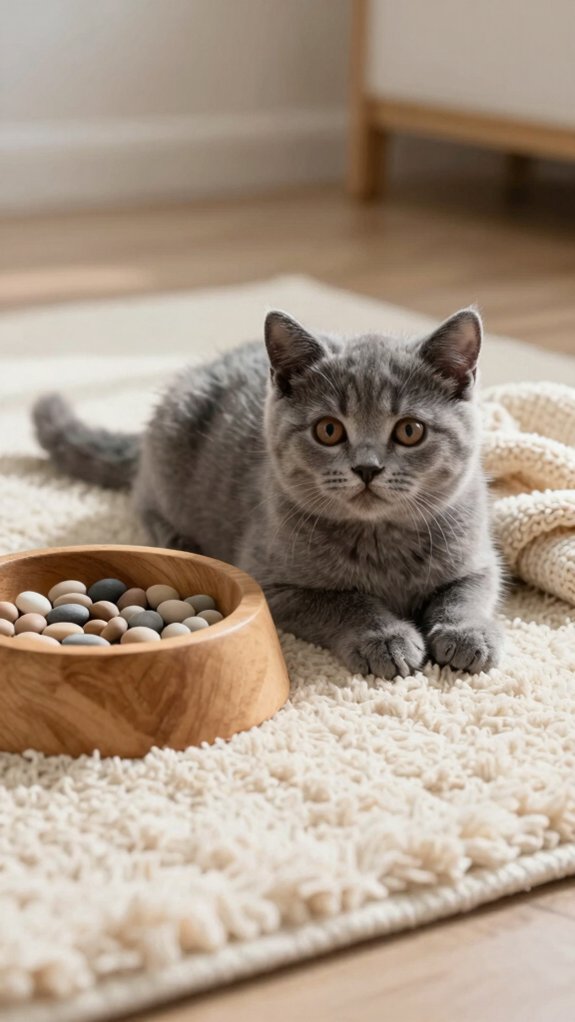
Support steady growth with regular meals, fresh water, gentle grooming, and routine veterinary care. Offer wet and dry food, provide water constantly, and change any new diet over 5–7 days to help prevent soft stools.
Watch weight monitoring trends, appetite, energy, stool consistency, and litter box use, especially during the first 12–24 hours. Arrange a veterinary check within one week to establish a baseline and confirm vaccine boosters.
Brush your kitten once or twice weekly, trim nails every one to two weeks, and handle paws gently. These calm routines help your kitten grow comfortably while you build trust together.
Feeding by Age

Your kitten’s meal schedule should match their age, size, and activity level. Young kittens usually need 3–4 small meals daily, then move toward 2–3 meals as they mature. Offer age appropriate portions, keeping the breeder’s food and serving sizes steady during the first days.
- Pair wet food with some dry food, supporting digestion, hydration, and convenience.
- Keep fresh water available, and practice hydration monitoring, especially when your kitten eats mostly wet food.
- Change foods gradually over 5–7 days by mixing old and new food.
Keep treats below 10% of daily calories, and introduce them sparingly to protect sensitive stomachs.
Socialization Milestones

As your British Shorthair kitten settles in, socialization should grow in small, positive steps that build trust without causing stress.
By the end of week one, invite calm play with a wand toy and offer treats when your kitten approaches.
During weeks two and three, let your kitten watch household activity from a safe area.
Add new sights and sounds slowly, such as a distant vacuum or one visitor at a time.
From weeks three to eight, practice fear free handling, touching paws, ears, and cheeks during relaxed moments.
Include family interaction, daily play, carrier practice, and gentle exposure to surfaces, routines, and people through weeks twelve.