
Create a safe, cozy, and fun puppy space by carving out a gated play area with durable toys and puzzle feeders, a properly sized crate with washable bedding and familiar scents, non-slip mats, and a soft playpen nook for naps. Set a quiet feeding station, a consistent potty corner, shelves for supplies, and an outdoor secure zone with shaded spots and safe plants. Follow routines and rotate enrichment to keep your pup happy—and keep going to get practical setup tips.
Disclosure: This post may contain Amazon affiliate links, at no extra cost to you. Content on Pawtangle is created with research support from AI tools and carefully reviewed, edited, and fact-checked by the lead author, Dr.Fahri Pat , to ensure accuracy and reliability. Learn more
Key Takeaways
- Create a secure play area with gates or a playpen, non-slip mats, and rotated puzzle toys to stimulate and protect your puppy.
- Use a properly sized crate with washable bedding and a familiar-scent item in a quiet spot to build routine and comfort.
- Set a designated feeding station with non-slip bowls, regular cleaning, and a consistent feeding and potty schedule for training.
- Design an outdoor safe zone with secure fencing, shaded areas, non-toxic plants, and regular checks for hazards.
- Provide cozy nap nooks, a window-view perch, and organized training tools to encourage rest, enrichment, and easy training access.
Dedicated Puppy Play Area
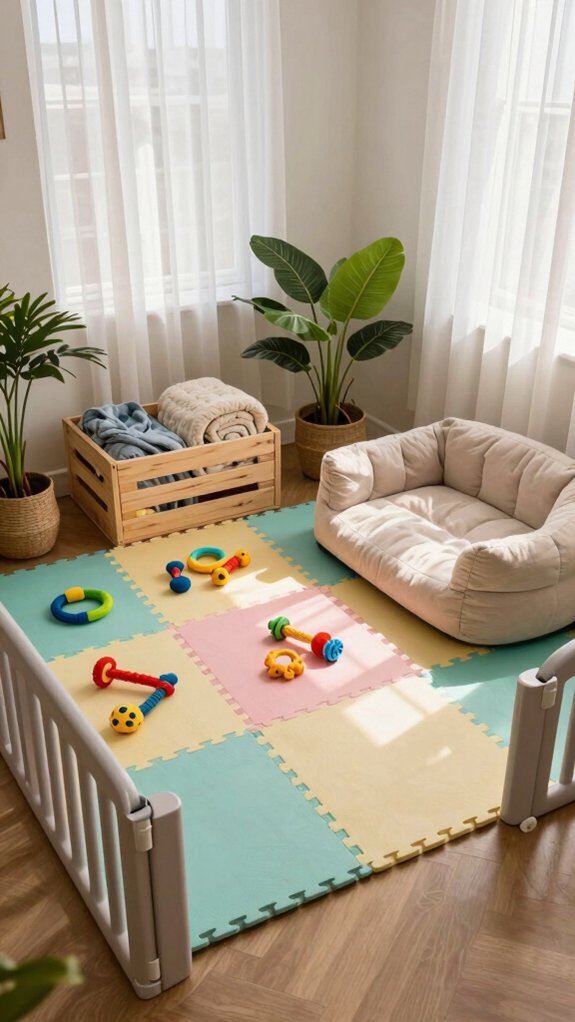
When you’re bringing a puppy home, creating a dedicated play area—whether in a guest bedroom, laundry room, or an under-stair nook—gives them a safe, cozy space to investigate and learn without constant supervision. You’ll use gates or a playpen to define the space and remove cords, small objects, and hazards for puppy safety tips. Add a comfy bed or blankets and rotate engaging puzzle toys and soft chews to encourage puppy playtime activities and mental stimulation. Calming music can soothe nervous pups. This setup helps you relax, builds your bond, and welcomes your puppy into the family.
Puppy Crate and Bedding Setup
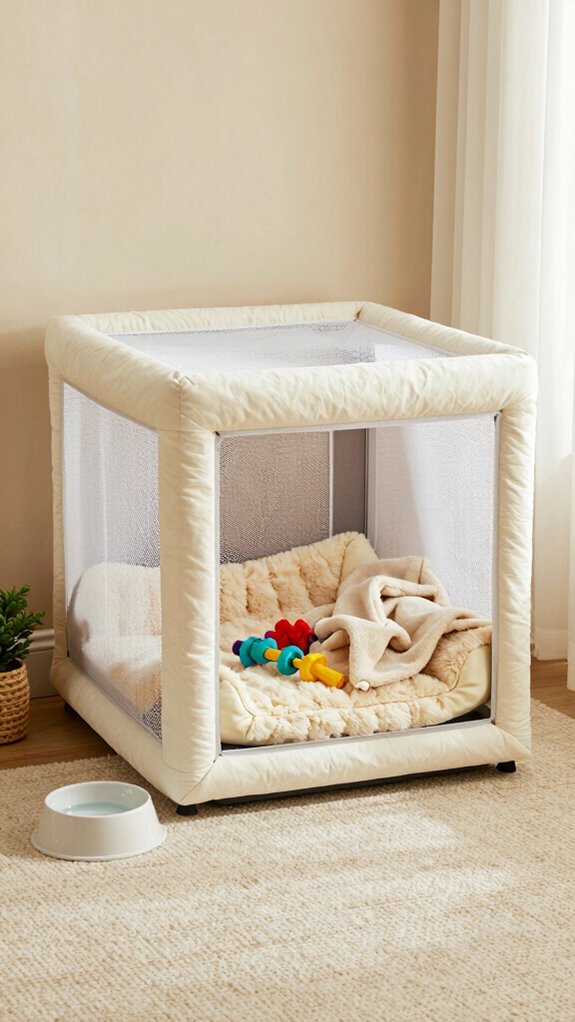
Although crate training can feel intimidating at first, setting up the right crate and bedding will help your puppy settle, sleep, and learn house rules more quickly. Choose a crate sized so your pup can stand, turn, and lie down comfortably. Line it with durable, washable bedding—look into bedding material options that resist chewing. Add comforting items with familiar scents and place the crate in a quiet, low-traffic spot. Use these crate training tips to build trust and routine:
- Measure for proper crate size.
- Pick washable, chew-resistant bedding.
- Include a snuggle item with scent.
- Position crate in a calm area.
Soft Puppy Playpen Zone
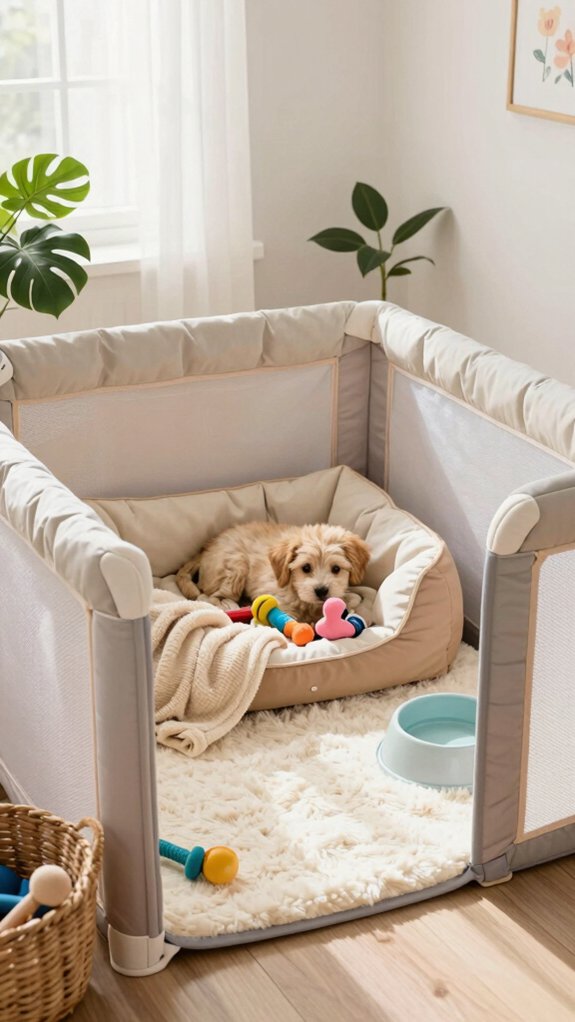
Because puppies learn and rest best in a safe, comfy space, set up a soft playpen zone that cushions their tumbles and keeps them occupied. Choose puppy playpen features like breathable mesh sides for ventilation and visibility, plus plush rugs or mats that absorb impact. Add soft toys, chewables, and engaging puzzles to spark curiosity and prevent boredom. Include a calming blanket or snuggle puppy to ease separation anxiety. Follow puppy safety tips: avoid small choking hazards, secure edges, and check materials for durability. This cozy, shared spot helps your puppy feel secure while everyone watches and bonds.
Puppy Feeding Station
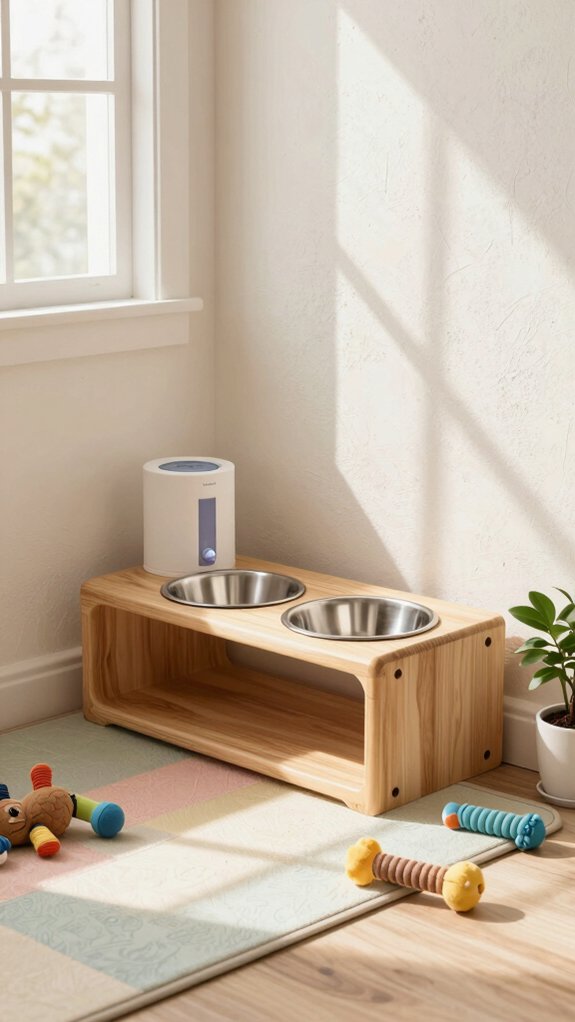
Set aside a quiet corner for your puppy’s feeding station so you can build a predictable routine and keep mealtimes calm. Choose a low-traffic spot, add a non-slip mat and separate food and water bowls—stainless steel or ceramic work well. Consider raised stations for larger breeds or mobility needs. Clean bowls after each meal to prevent bacteria.
- Designate one area
- Use non-slip mats/trays
- Select appropriate puppy bowl types
- Clean regularly after meals
You’ll support healthy puppy feeding habits, reduce mess, and create a welcoming space that helps your puppy feel secure and included.
Puppy Potty Training Corner
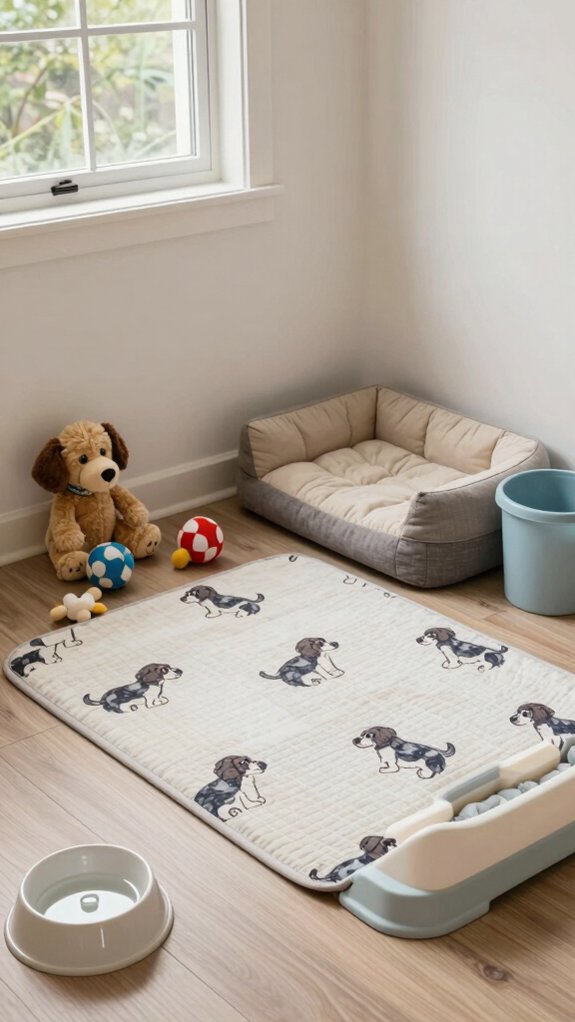
When you create a dedicated potty training corner near an entrance, you make it easier to get your puppy outside quickly and cut down on indoor accidents. Designate one spot with absorbent potty pads or a clear outdoor target and stick to it for consistent potty training tips. Supervise closely and take your pup there after meals, play, and naps to build routine and support accident prevention. Praise or offer a treat immediately when they go in the right place so they link the behavior to rewards. Keep the area clean and odor-free to avoid confusion and encourage success.
Interactive Toy Corner
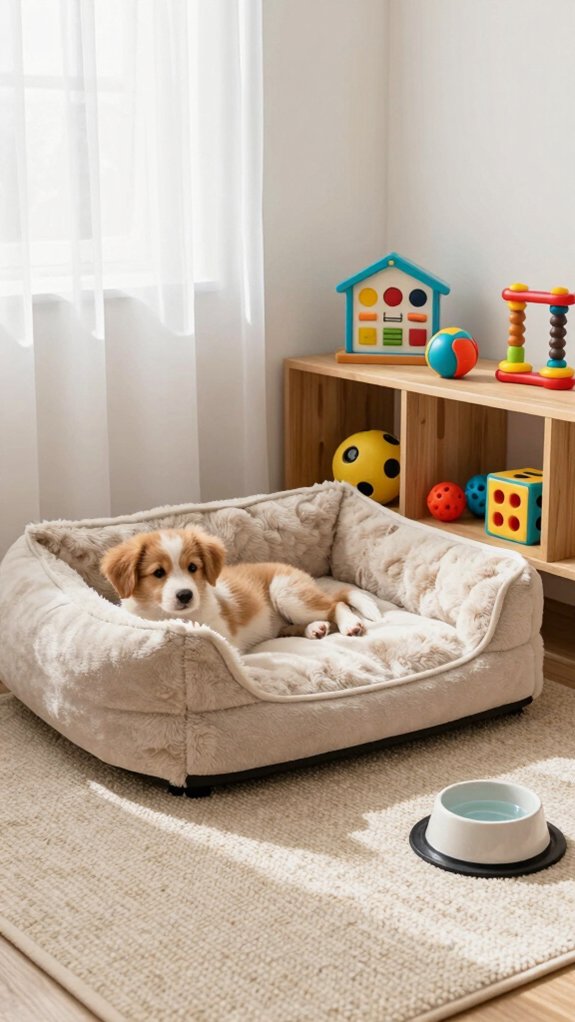
How can you keep your puppy happily occupied while protecting your home? Create an engaging toy corner that supports engaging toy selection and consistent puppy playtime routines. Choose safe, durable puzzle toys and treat-dispensing options to stimulate problem-solving and reward learning. Rotate items to keep interest high and reduce boredom-driven chewing. Avoid toys with small parts to prevent choking.
- Puzzle toys for mental stimulation
- Treat-dispensers for motivated play
- Durable chew toys for healthy chewing
- A rotation schedule to sustain novelty
You’ll cultivate confidence, reduce destructive behavior, and build a shared sense of belonging during play.
Cozy Puppy Nap Nook
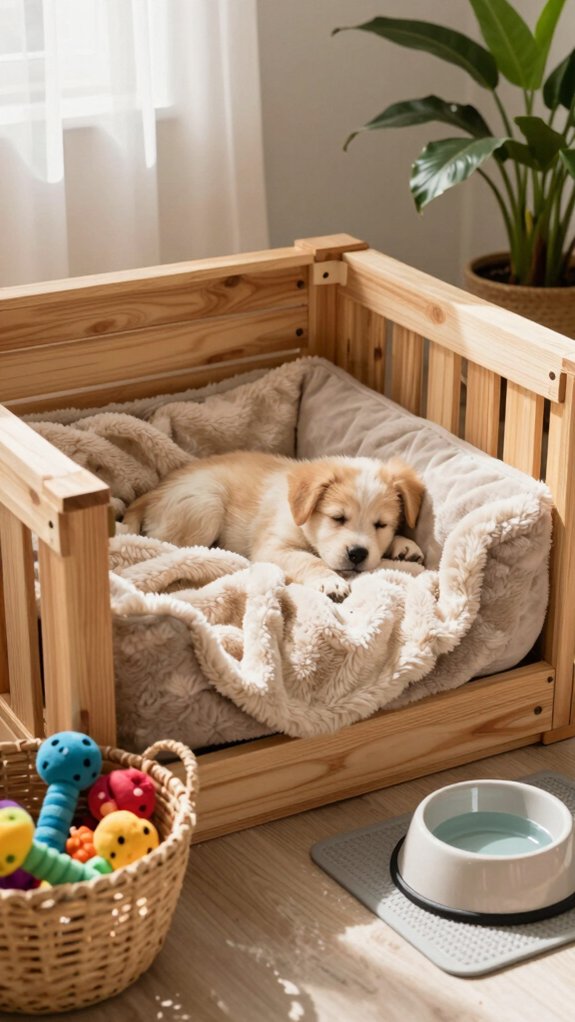
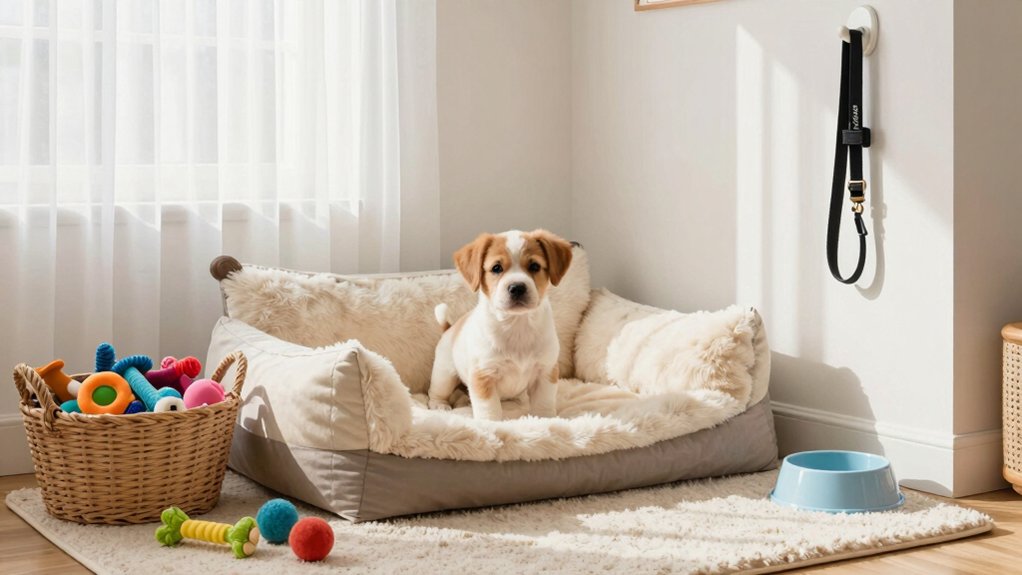
Although your home buzzes with activity, carve out a quiet corner where your puppy can retreat for undisturbed rest; pick a low-traffic spot and add a soft bed or cushy blanket that supports developing joints. You’ll create a safe, cozy nap nook by placing a small crate or pet couch to give clear boundaries and security. Keep cords and small objects out of reach, use gentle lighting and soothing music, and consider light, pet-safe calming scents to reinforce relaxation. Respect puppy sleep habits by keeping the space consistent — it becomes a trusted refuge where you both feel comforted and connected.
Puppy Wash and Grooming Spot
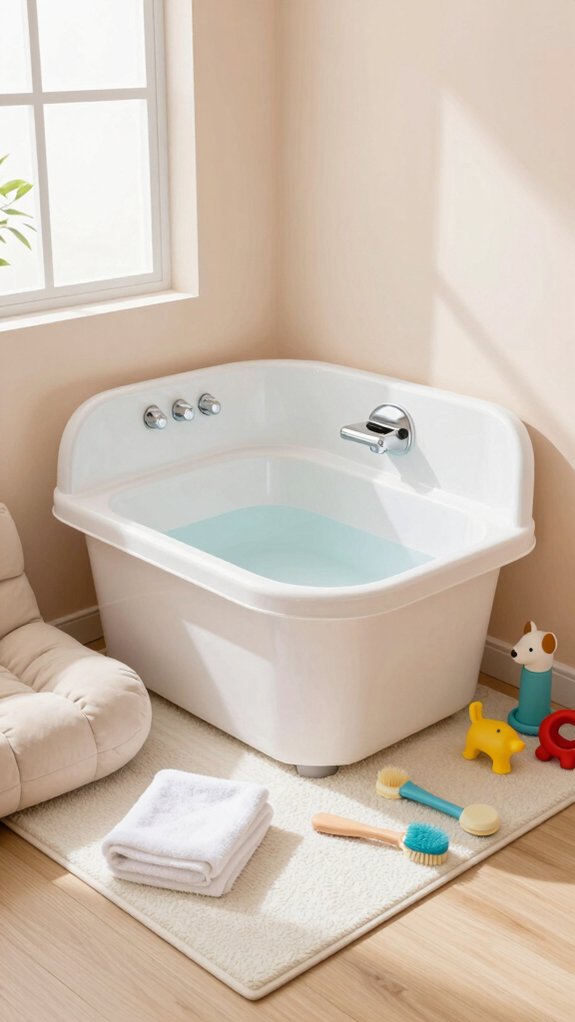
After you’ve set up a calm nap nook, pick a nearby spot for washing and grooming so you don’t have to haul supplies across the house; a location close to a water source makes baths quicker and less messy. Designate a dedicated area with a non-slip mat, portable tub or raised platform, and stocked grooming tools so your grooming routine feels familiar and kind.
- Puppy safety: non-slip surface, secure platform.
- Bath time: use puppy shampoo, warm water, gentle flow.
- Grooming frequency: set a schedule to reduce stress.
- Positive reinforcement and water play with treats and toys.
Window View Puppy Perch
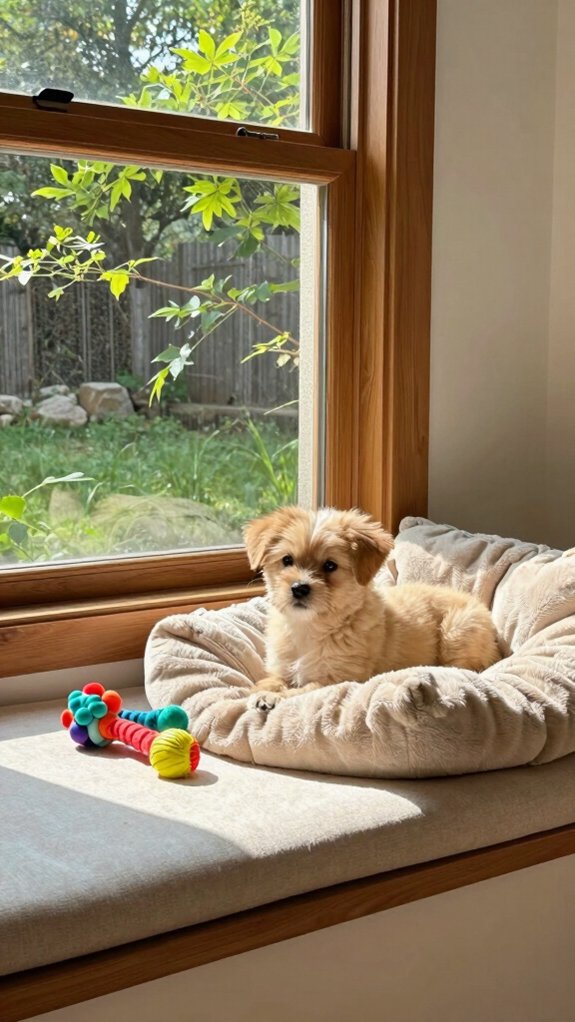
If you want to give your puppy a sunny, stimulating spot, a secure window perch is a perfect addition—you’ll boost their mental enrichment and help reduce boredom by letting them watch birds, passersby, and neighborhood activity. Install with attention to safe perch installation: secure mounts, non-slip surfaces, and stable supports to prevent falls. Add soft bedding or a cushion that fits your decor so the space feels inviting. Incorporate the perch into your puppy’s room as a cozy lookout, and supervise visits until you trust their balance. These puppy perch benefits help your pup feel involved, calm, and part of the home.
Puppy Training Tools Area
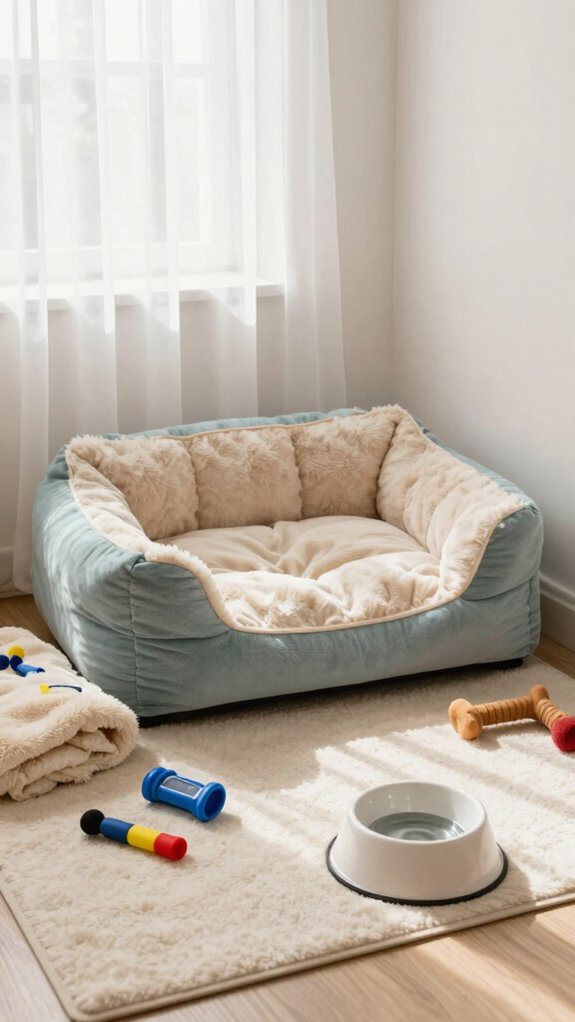
Set aside one tidy corner of your home as the puppy training tools area so you always know where leashes, collars, treats, clickers, and pads live when it’s time to work. Keep things accessible yet safe with bins or shelves, out of curious paws. Update tools as your pup grows and swap worn items quickly. Place the area near their bed or play spot to ease changes. Use these necessities to support puppy training techniques and positive reinforcement.
- Leashes, collars, restraints
- Treats and treat pouch
- Clicker and training pads
- Storage bins and labels
Puppy Puzzle and Enrichment Zone
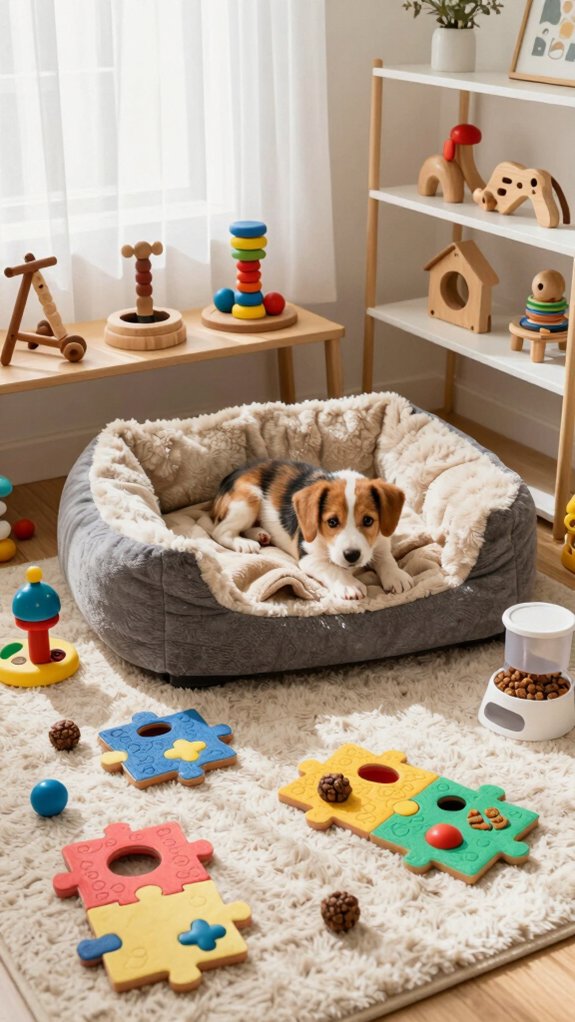
You’ve got your training tools ready, so now create a puppy puzzle and enrichment zone nearby where your pup can work their brain and burn energy safely. Choose puppy puzzle types like treat-dispensing toys, snuffle mats, and crinkle or rubber chews to mix textures and scents. Rotate items often to keep involvement high and prevent boredom. Add simple obstacle courses—tunnels, ramps—and hide treats to encourage problem-solving and movement. Include calming elements like soft music and a cozy bed so your pup feels secure while exploring. These choices boost enrichment benefits and help your pup thrive as part of your family.
Non-Slip Puppy Floor Mats
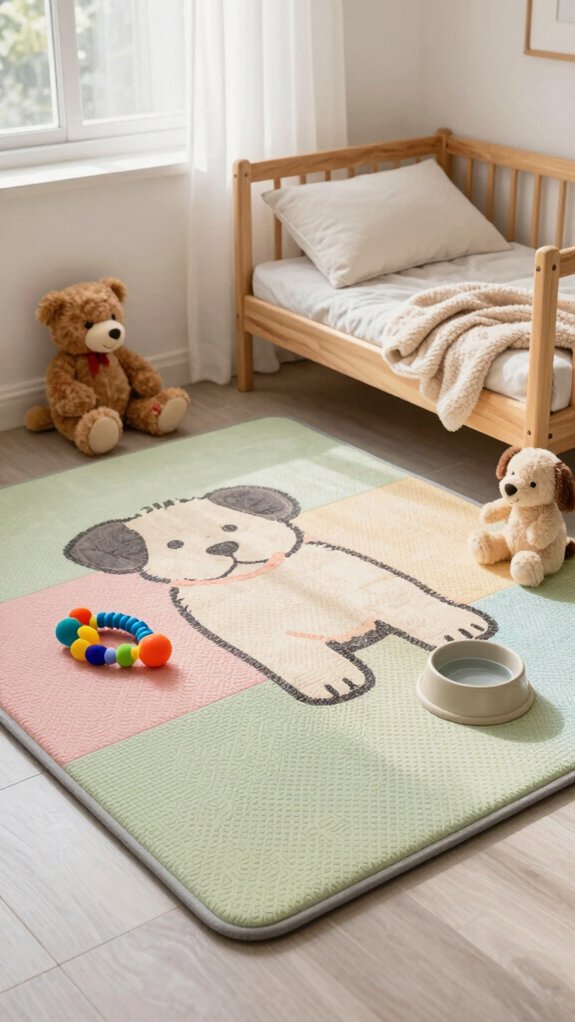
When your puppy’s still finding their footing, non-slip floor mats give them a steady surface to run, play, and learn without constant sliding or tumbles. You’ll want mats made of durable, easy-clean non slip materials with textured surfaces or rubber backing for grip and confidence. They protect floors from moisture and accidents while fitting your room’s look. Consider these choices to build a welcoming space:
- Puzzle-piece foam mats for customizable coverage.
- Waterproof vinyl mats for easy wipes.
- Low-profile rubber mats for high-traffic spots.
- Colorful interlocking mats to define play areas.
Choose sizes and colors that make you both feel at home.
Puppy Storage and Supply Shelves
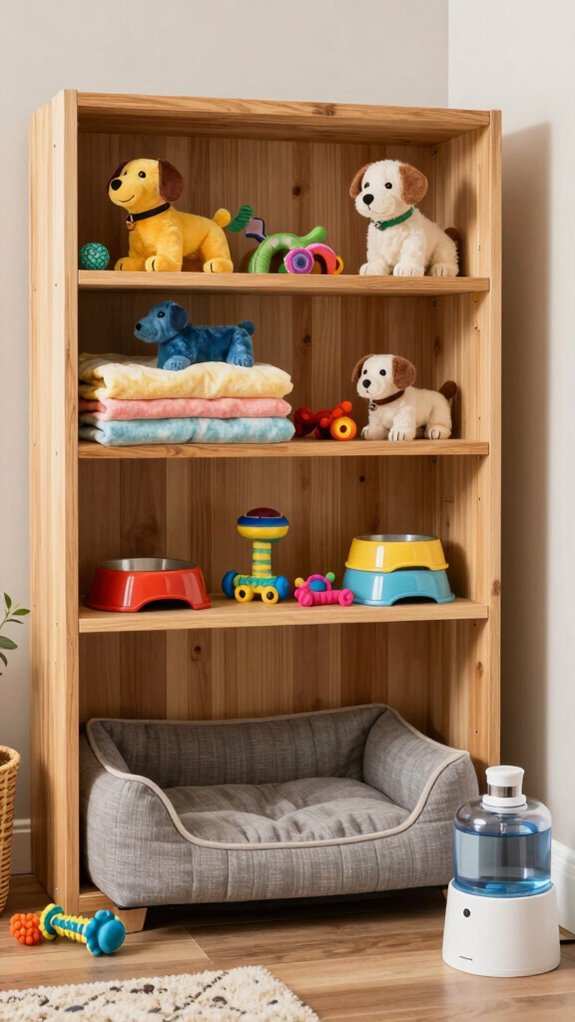
After laying down safe, non-slip flooring, think about where you’ll keep all the puppy gear so it stays handy and out of paws’ reach. Designate specific shelves for toys, treats, and grooming tools to support puppy supply organization and reduce morning chaos. Use clear bins or labeled containers so you can grab items fast and everyone in your home knows where things belong. Install shelves high enough to prevent curious noses from reaching harmful items, part of sensible puppy safety measures. Add multi-functional pieces like storage ottomans for seating plus hidden storage, and regularly rotate supplies to keep the space tidy.
Outdoor Puppy Safe Zone
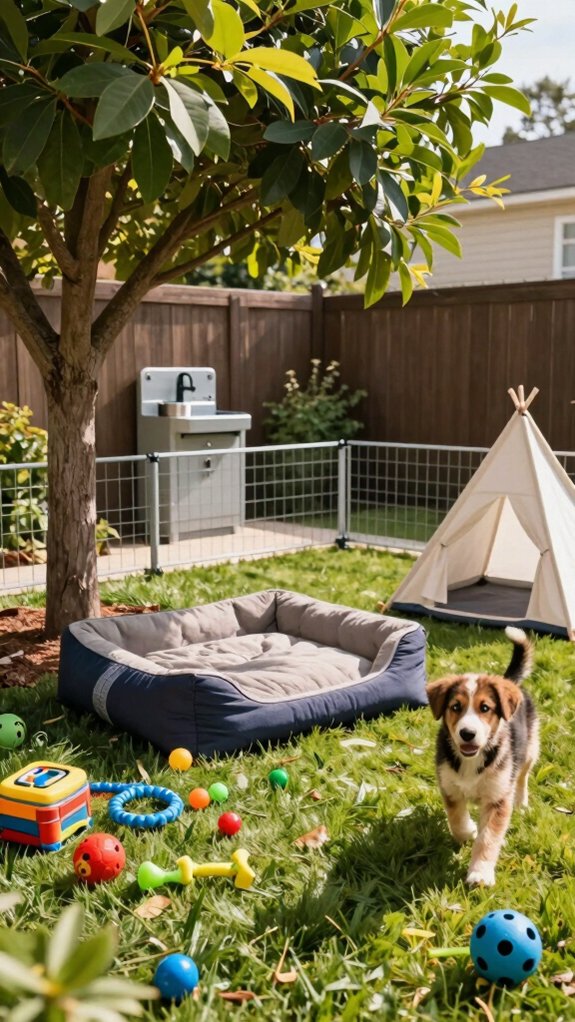
Because puppies investigate with their noses and paws, set up an outdoor safe zone with secure fencing (4–6 feet high), non-toxic plants, and shaded spots so they can play without escape or overheating. You’ll create a welcoming spot where you both feel relaxed and connected. Prioritize outdoor safety, routine inspections, and engaging puppy activities to build confidence. Consider:
- Tall, secure fencing and gate latches.
- Non-toxic landscaping and chew-safe mulch.
- Shaded areas with umbrellas or canopies.
- Safe toys (agility tunnels, chew balls) and hazard checks.
Keep it tidy, check for holes or chemicals, and enjoy bonding time together.
Frequently Asked Questions
How Do I Puppy-Proof Electrical Cords and Outlets Safely?
You’ll secure cords with cord management like tubing, clips, and cord boxes, hide loose cables, and install outlet covers on all unused sockets; you’ll supervise chewing, praise good behavior, and make the space welcoming and safe.
What Vaccinations Are Needed Before Socializing Outdoors?
You should wait until your puppy vaccinations are up-to-date—typically core vaccines (DHPP) plus rabies—before outdoor socialization; consult your vet to confirm timing, and you’ll feel safer welcoming your pup into community play.
How Do I Introduce a Second Pet to the Puppy Area?
About 70% of pets form ties within two weeks; you’ll use a pet personality assessment and gradual introduction techniques, starting neutral territory, short supervised visits, swapped scents, and rewarding calm interactions so everyone feels safe and included.
What Temperature Is Ideal for a Puppy’s Indoor Space?
Aim for about 68–72°F for puppy comfort; you’ll use gentle temperature control to keep it steady. You’ll check for drafts, provide cozy bedding, and adjust slightly for age, breed, and how your puppy seems to feel.
Can I Use Essential Oils Safely Around Puppies?
No, you shouldn’t use crucial oils around puppies without caution; crucial oil safety matters for puppy health, so avoid diffusers or apply only vet-approved, diluted choices, monitor reactions, and ask your vet to keep everyone safe and included.