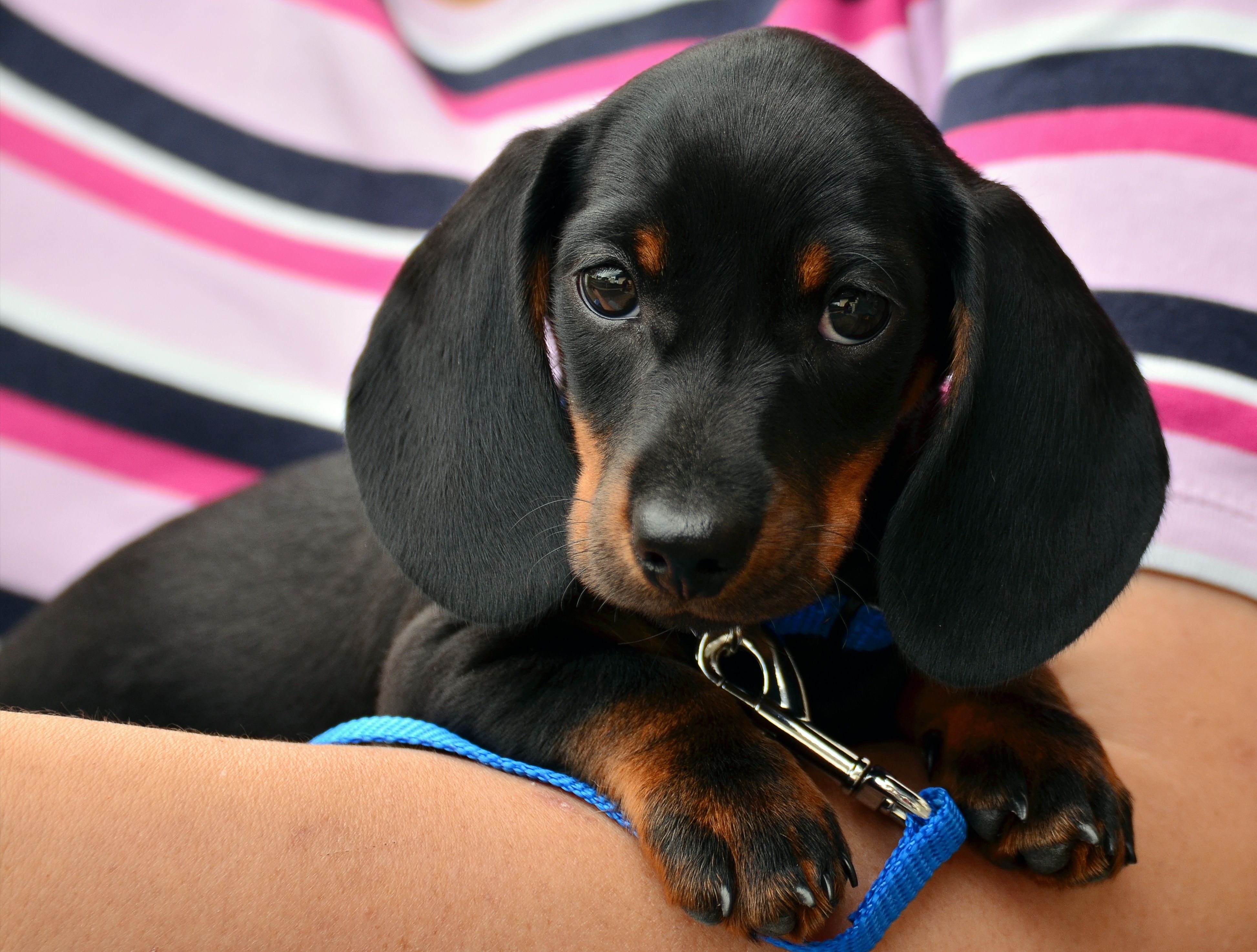
The miniature Dachshund puppy will need a regular routine. They should have small meals appropriate to their age and they will need to be toileted regularly after sleeping, eating and playing. Ensure they have somewhere to rest such as a crate or pen. Watch them closely, and take extra care of their long backs by not allowing them to go up and down the stairs. Don’t allow them to jump and support their chest and hips when lifting. Introduce ramps early on. Socialise them gently from 8 weeks old. Provide short play sessions. Follow your vets advice on vaccinations and parasites. The following sections will cover training, exercise, age guidance and common mistakes.
Disclosure: This post may contain Amazon affiliate links, at no extra cost to you. Content on Pawtangle is created with research support from AI tools and carefully reviewed, edited, and fact-checked by the lead author, Dr.Fahri Pat , to ensure accuracy and reliability. Learn more
Key Takeaways
- Establish consistent routines for feeding, naps, toilet breaks, gentle play, and veterinary appointments from the first day home.
- Feed age-appropriate puppy food in measured, regular meals, and prevent obesity by adjusting portions as your Miniature Dachshund grows.
- Protect the long spine by preventing stairs and jumping, using ramps, supporting chest and hips when lifting, and maintaining a healthy weight.
- Begin patient potty and crate training with frequent toilet trips, close supervision, immediate praise, and a comfortable, secure retreat.
- Socialise gradually between three and sixteen weeks, pairing new experiences with rewards and providing short, gentle, age-appropriate exercise.
Preparing Before Puppy Day
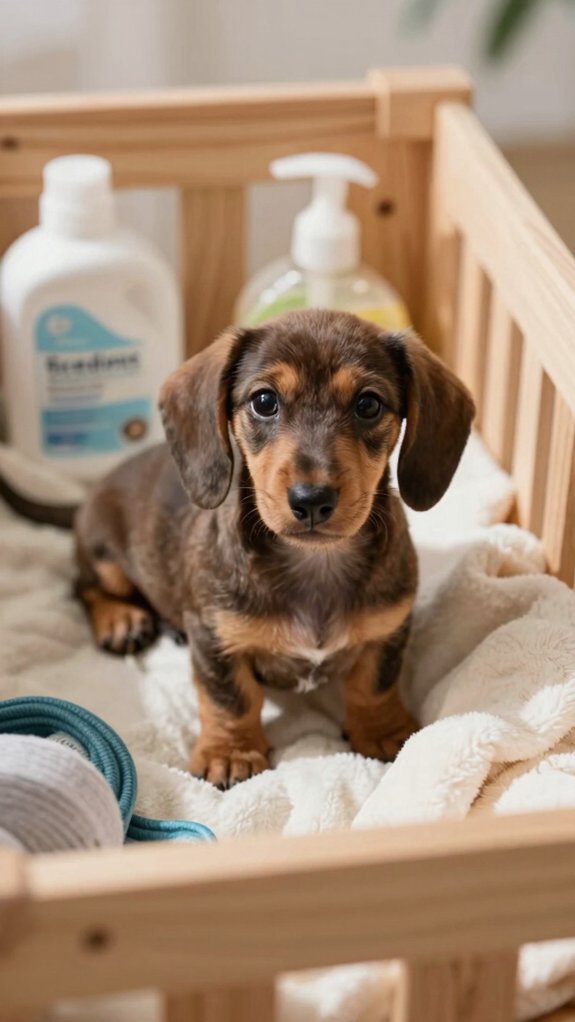
Create a simple routine for your new Miniature Dachshund puppy.
They may need several cycles during the day.
Provide a calm crate or bed with lots of napping and some settling overnight.
When puppy proofing your home make sure you are blocking off stairs, jumping and providing a ramp for your puppy to get around. This is to help protect their long backs.
Create a Vet schedule for the first few weeks.
Find out when they can go outside.
Have a soft brush, toothpaste for puppies and appropriate chew toys to help make them feel at home.
Feeding a Growing Dachshund
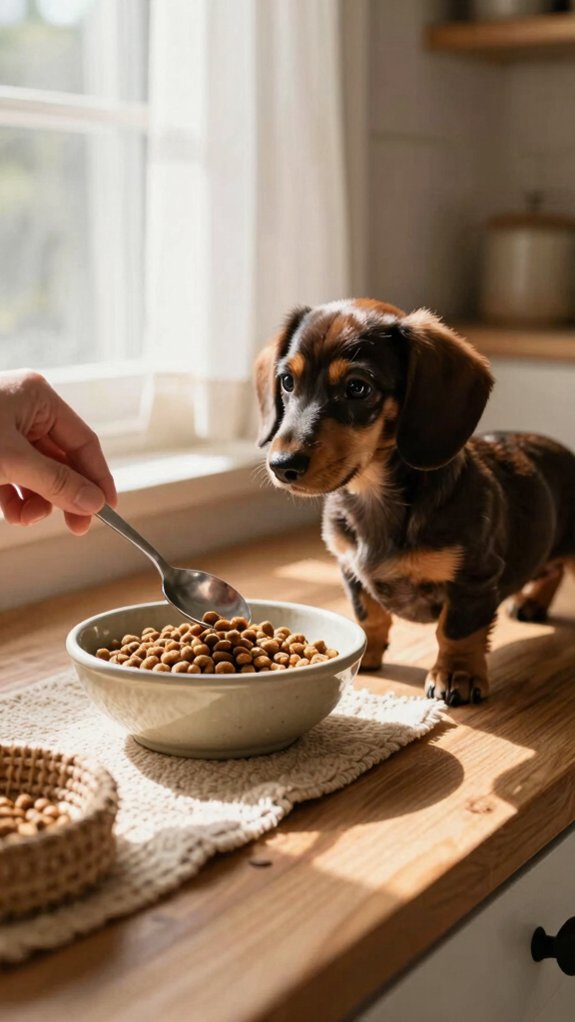
Feed your growing Miniature Dachshund puppy small meals throughout the day and ensure they go outside to toilet after each meal. As they have a small bladder this will help.
Feed them at consistent times and in set amounts during the first few weeks, this will help them learn and will reduce stomach issues. Feed them food specific to their age and ask your vet what portion sizes they should be having each day. This will depend on their size, body shape and activity levels.
They may be growing quickly so adjust the portions you give them as they put on weight. Avoid giving them any human food as treats. Start obesity prevention from day one by feeding them balanced meals and healthy portion sizes.
Protecting Their Developing Spine
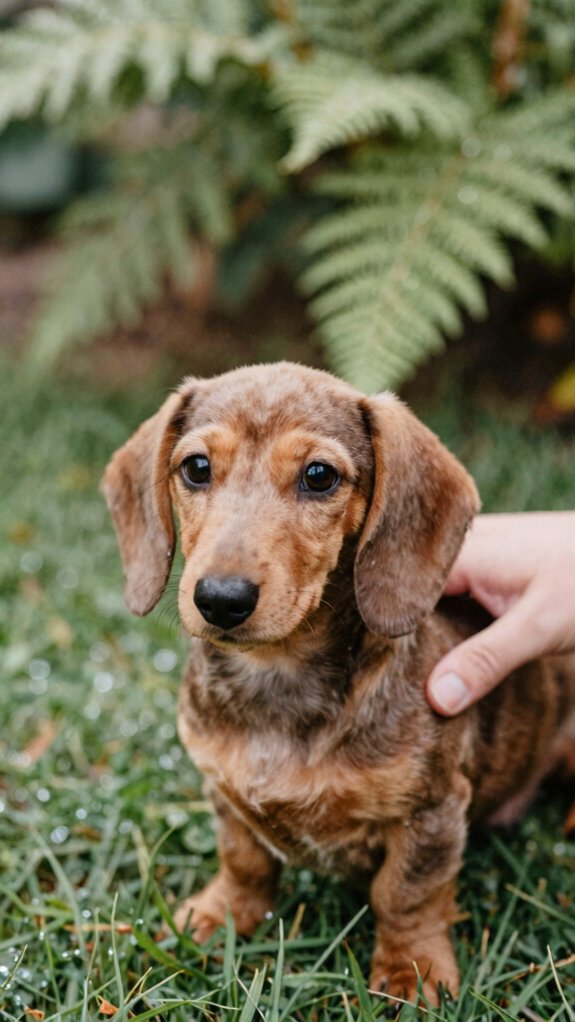
As they have long backs and are prone to IVDD, it is important to protect their spine from the start.
Use a pen or safe room to stop them going up and down stairs and jumping onto beds/sofas.
Lift them correctly by holding their chest and hips together to keep their back straight.
Start ramp training early to reward them for walking calmly up the ramp.
Have short play sessions and play on stable surfaces. Don’t play chase games which may cause them to jump.
Use a back strap for walks.
Keep them at a healthy weight to reduce strain on their growing spine.
Potty Training
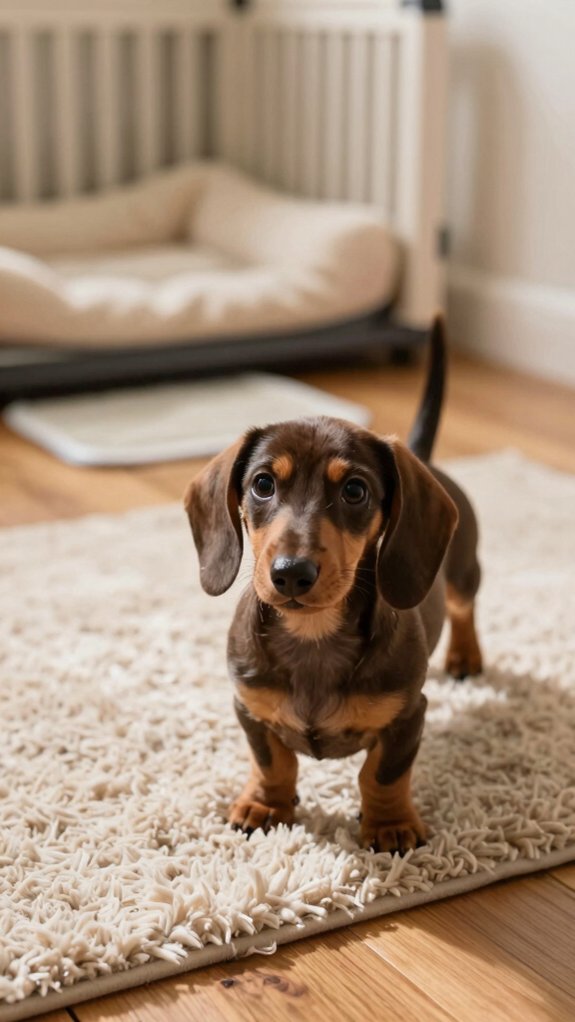
This will help your Miniature Dachshund learn quickly and keep their young spine protected. Take them to the garden or toilet area after they have slept, eaten or played. Praise them when they have success.
Keep these short and at set times. As Dachshunds can be quite independent your house training may take longer so be patient.
Watch them carefully to avoid them having an accident inside. Provide a small secure area such as the kitchen or pen. If they have an accident clean it up well.
Start with a secure garden area. Wait until they have been vaccinated before taking them outside in public areas.
Crate Training
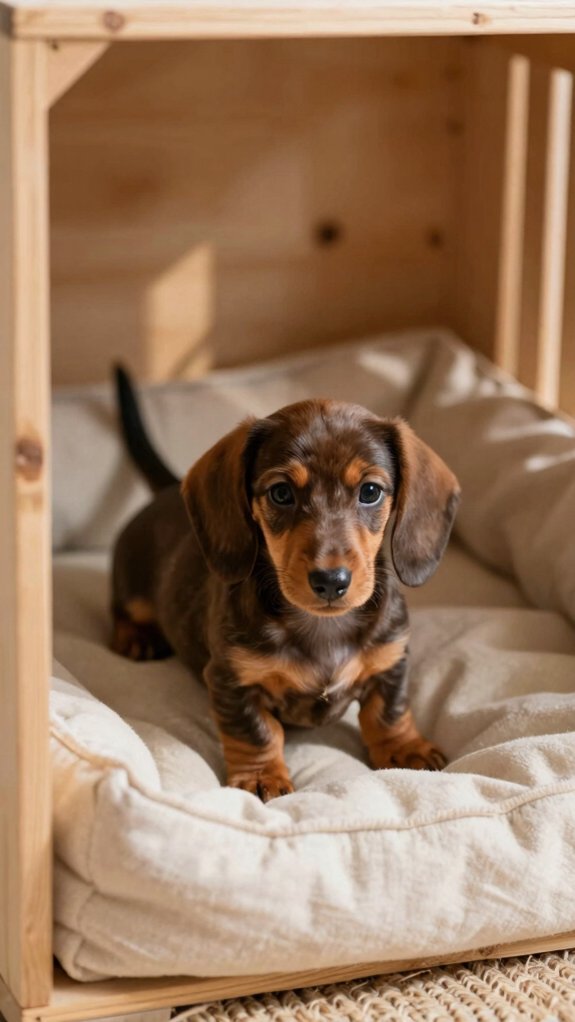
When starting crate training, you want your dog to see the crate as a safe place. Include a soft bed inside, place the crate in a quiet area and cover with a blanket to darken and create a calming environment.
Start with short positive sessions. Reward your dog for staying calm and gently separate them. Never leave your puppy in their crate for too long, especially in the first few weeks.
In the first week you will likely get some crying and your puppy will wake up several times. Remain calm and if they need to go to the toilet, allow them to do so and then put them back in their bed. Try to get into a routine with toilet and play times. After about 4 weeks many puppies will be able to stay calm at bedtime.
Early Socialization
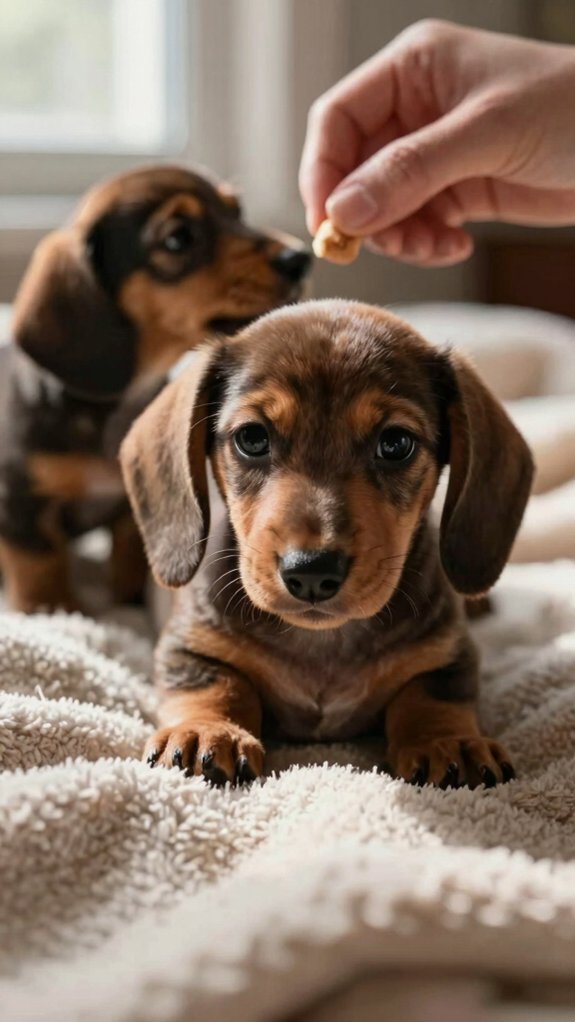
Once your puppy has a good routine for sleeping, it’s time to help them feel confident in the wider world. Introduce new people, places, textures, sounds and calm vaccinated dogs to your puppy between three and sixteen weeks.
Start by introducing new things at home. Play with your dog with low sounds inside, like door bells, traffic noises and household items. Praise and reward their curiosity.
Keep these sessions short (5-10 minutes) and stop before they get stressed. Once they have had their vaccinations (usually after their second set of vaccines at 10-12 weeks) you can start to explore more busy environments.
Until then keep using your home and garden.
Safe Daily Exercise
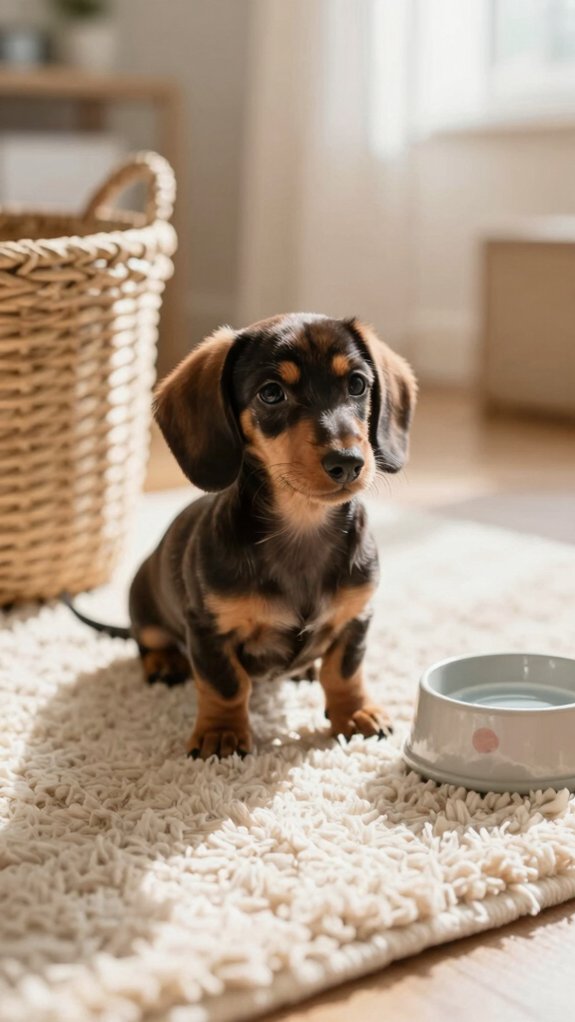
Your miniature dachshund should be doing enough exercise to feel happy but not exhausted. Try 5-10 minutes of light exercise twice a day. Gradually increase the amount of exercise as your puppy grows.
Do some Back friendly activities. These could be a game of sniffing, gentle games of fetch, puzzle toys and snuffle mats. This will help your puppy’s physical and mental well-being and will help to avoid boredom and destructive behaviour.
Do some controlled exercises without stairs. Avoid jumping up on furniture. Reduce the amount of ramps and steps. Take your puppy to the garden using carrying or lead toilet trips until they have completed their vaccinations (usually after their second set of vaccinations at around 10-12 weeks).
Allow plenty of rest. Ensure your puppy has 18-20 hours of sleep.
Development by Age
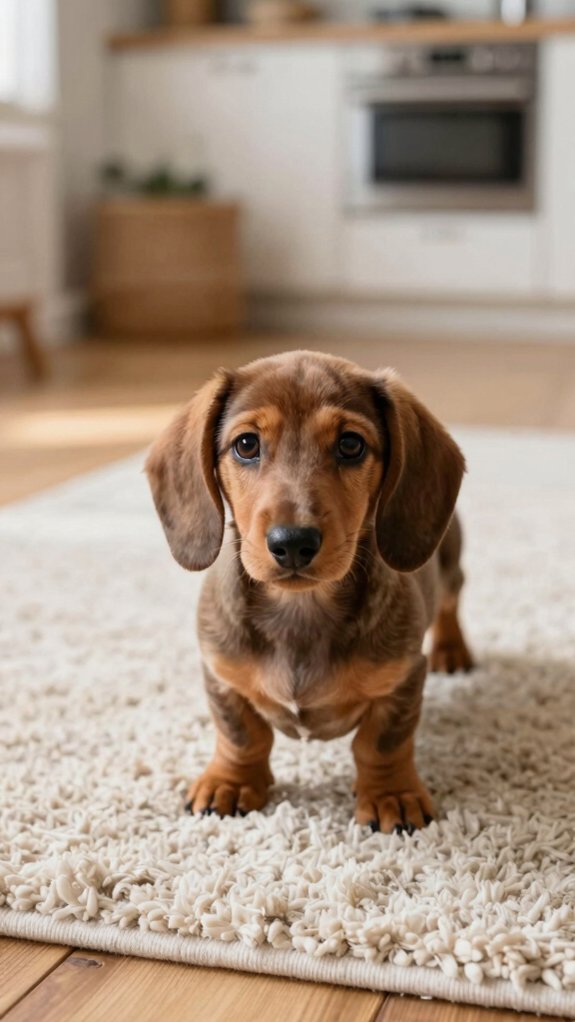
Your mini Dachshund will have growing requirements during the first six months. You will need to adapt their feeding schedule, training, exercise and sleep.
Around 8 weeks old, you can start toilet training, socialising and gentle handling to protect their long back.
They will be around 5-6lbs at this point (10-12 weeks old). They will also start teething and will have short sessions (5-10 mins).
Provide safe chew toys to help with teething. Continue with crate and toilet training.
Around 12 weeks old they will be 3-4 inches tall.
Stick to your vet’s vaccination schedule. They can start to go out more often, often after their second set of vaccinations.
Mistakes First-Time Owners Make
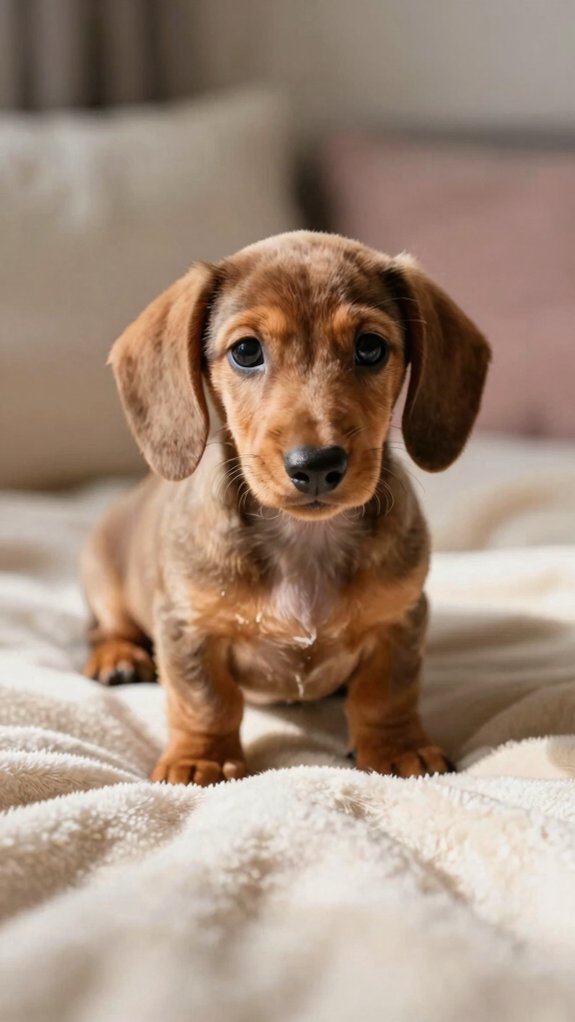
Many first-time owners underestimate how carefully a miniature dachshund puppy needs to move and learn. Limit stairs and jumping, use ramps or carry your puppy, and practice calm leash handling.
| Mistake | Better choice | Why it matters |
|---|---|---|
| Free chewing | Offer chilled toys | Protects hands and furniture |
| Delayed training | Use 5–10-minute sessions | Builds good habits |
| Unsafe outings | Follow parvovirus precautions | Reduces infection risk |
| Missed care | Follow your Veterinary schedule | Supports healthy growth |
Get them used to socialising from 3 to 16 weeks. Keep the house safe by removing any hazards and get them used to going to the toilet often. Crate training with regular visits during the night will help them to feel more at ease. You’re also joining a group of patient owners.