
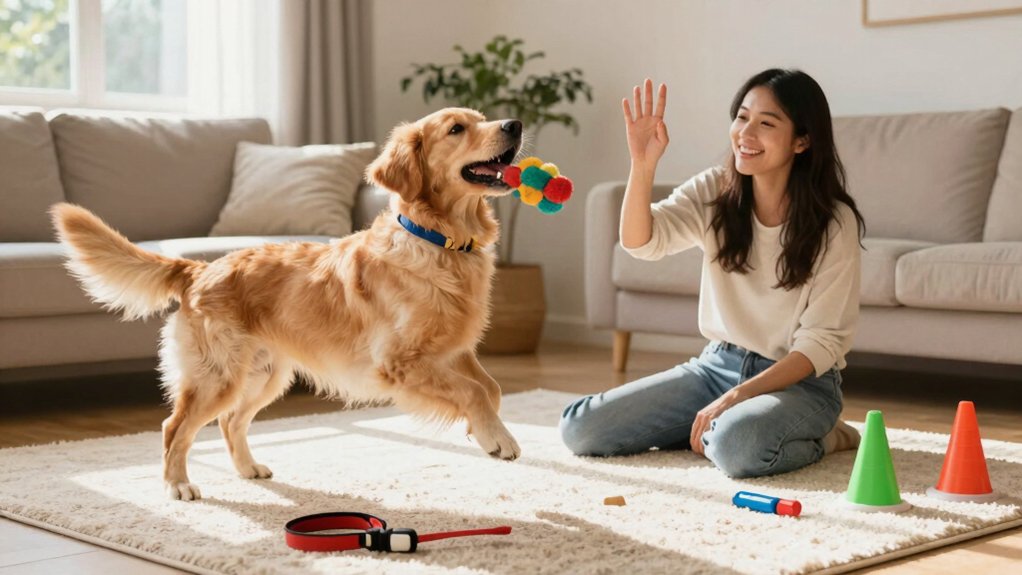
You can teach your dog 15 easy tricks at home using short, fun sessions and tasty rewards. Start with basics like sit, stay, come, and lie down, then add shake, high-five, spin, roll over, play dead, and speak on cue. Teach drop it, fetch, place on bed, give a hug, and stay focused with gradual distractions. Be consistent with cues, keep sessions brief, and reward immediately for success—keep going and you’ll pick up clear step-by-step methods.
Disclosure: This post may contain Amazon affiliate links, at no extra cost to you. Content on Pawtangle is created with research support from AI tools and carefully reviewed, edited, and fact-checked by the lead author, Dr.Fahri Pat , to ensure accuracy and reliability. Learn more
Key Takeaways
- Start with simple, high-reward tricks (sit, shake, lie down) using short, frequent sessions and tasty treats.
- Use consistent verbal cues and distinct hand signals so your dog learns to associate each command reliably.
- Keep sessions under 10 minutes, gradually increasing difficulty and adding mild distractions for generalization.
- Reward immediately for correct responses, then fade to intermittent reinforcement as the trick becomes reliable.
- Practice tricks in multiple locations and celebrate small wins to build confidence and strengthen your bond.
Sit Command
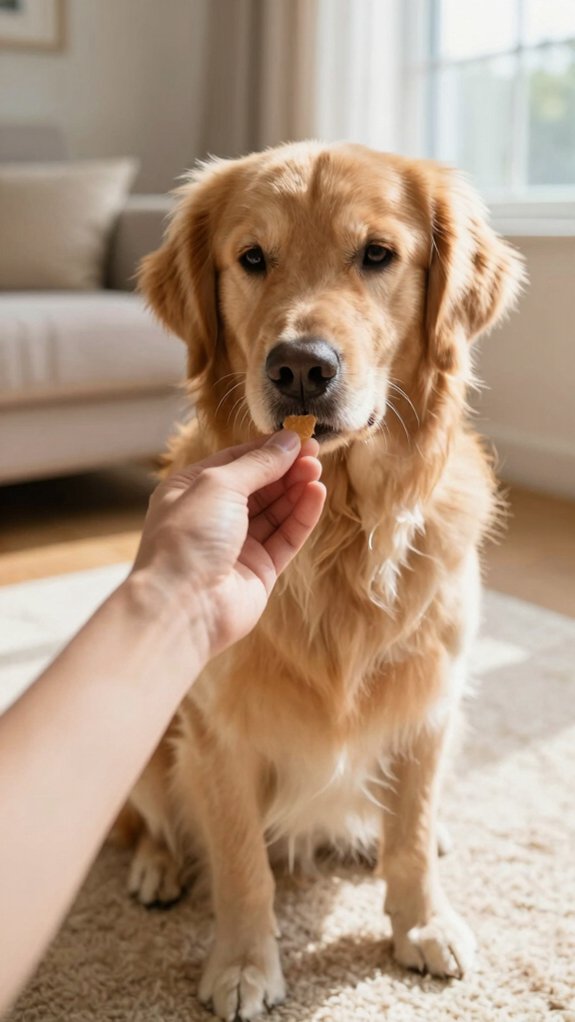
Start by holding a treat above your dog’s head and guiding their gaze upward so their rear naturally lowers to the ground; as they sit, say “sit” and immediately reward them with the treat and praise. You’ll use this simple, repeatable motion to teach a reliable Sit command. Keep your cue consistent — use the word “sit” every time — and reward success with treats and warm praise. This builds strong dog training habits and cultivates belonging between you and your dog. Stay patient and practice short sessions so your dog stays involved. Reinforce every correct response with positive reinforcement to create clear associations. Once Sit is solid, you’ll have a foundation for more advanced behaviors and shared confidence.
Stay in Place
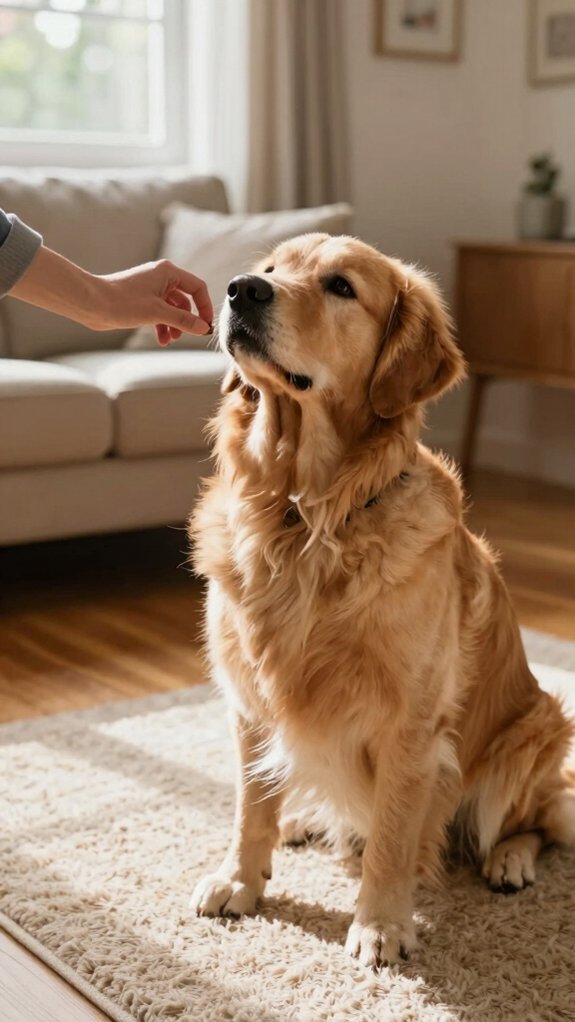
Teach your dog to “Stay” by asking them to sit, showing a clear hand signal, and stepping back just a single pace while saying “stay” in a calm, firm tone; reward instantly if they hold position. You’ll build trust and control by increasing stay duration gradually, using the same cue each time. Practice with high-value treats, praising quickly when they succeed. Vary locations to reduce stay distractions and help them generalize the command. Keep sessions short and consistent.
- Start with 1–2 second holds, reward, repeat.
- Add one or two more seconds only when reliable.
- Introduce mild distractions, then reward steady performance.
- Use identical word and gesture for consistency.
Come When Called
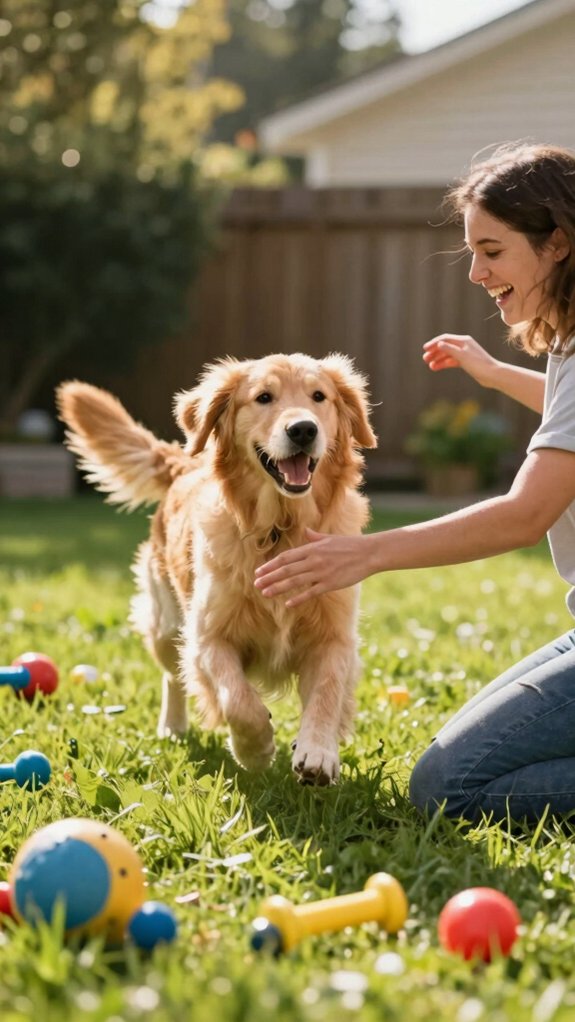
Get your dog coming reliably by making “come” a positive, high-value cue: call them with a cheerful tone, offer tasty treats and praise, and reward every successful return so they learn that coming to you pays off. Teach recall games in a distraction-free area first — short, fun sessions where you back away, call, and reward. Use a single consistent verbal cue like “come” and never punish returns; that breaks trust and undermines safety training. Gradually introduce mild distractions and increase distance as your dog succeeds. Keep rewards high-value during progression so coming stays more appealing than distractions. Practice regularly to build habit and strengthen your bond; you’ll belong to a team that trusts one another and keeps safety first.
Lie Down
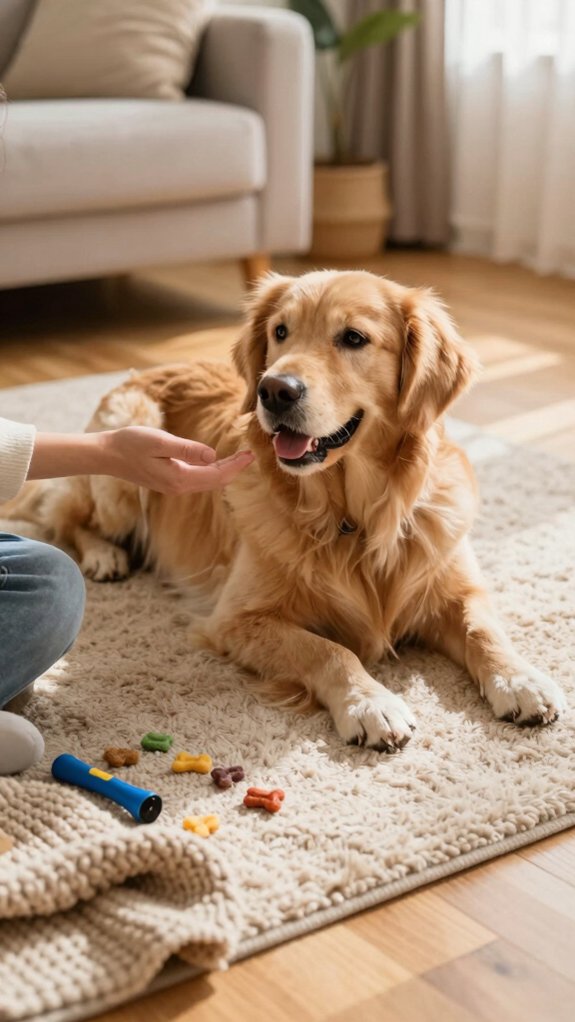
One simple cue that brings calm and control is “Lie Down,” and you’ll usually begin from a sit while guiding a treat from your dog’s nose down to the floor so they follow into position. You’ll reward the first attempts and add the verbal cue once they lower themselves reliably. This builds discipline, focus, and the calming effects you want in busy moments. Use consistent rewarding techniques and short sessions to keep progress steady and positive.
- Mark and reward the first clear down.
- Repeat in different rooms to generalize the behavior.
- Fade the lure gradually, keeping treats intermittent.
- Practice briefly every day to strengthen recall and control.
Teach with patience; you’re creating teamwork and belonging.
Shake Hands
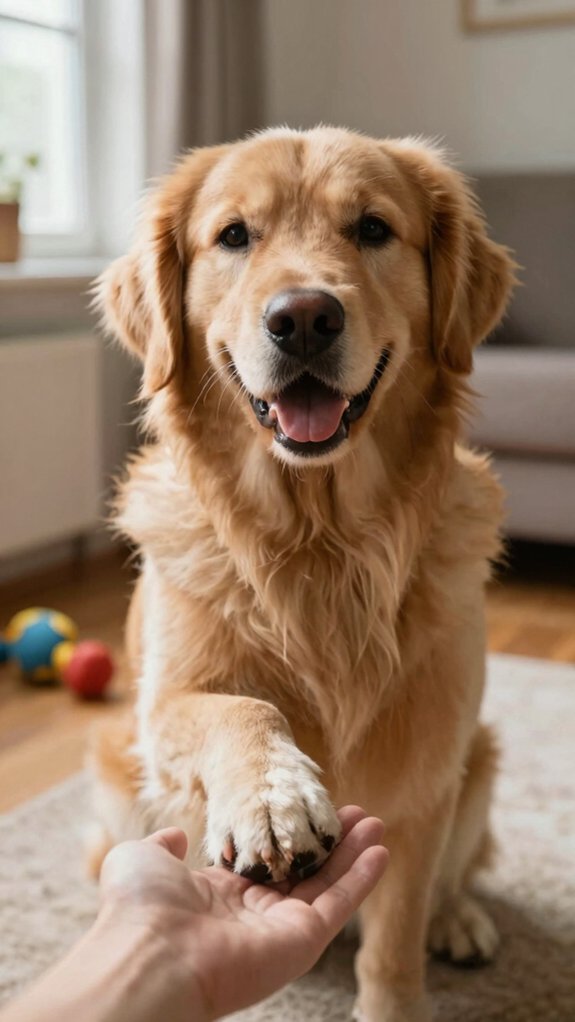
Start the paw command by gently lifting your dog’s paw, saying “shake,” and rewarding them the moment the paw comes up. Practice short, consistent sessions and phase out the lift so your dog offers the paw on cue. As they master it, raise your hand to turn the shake into a high five and reinforce friendly greetings with treats and praise.
Paw command
Teach your dog to “Shake Hands” by asking for their paw, lifting it gently while saying “shake,” and rewarding them immediately when they offer it. Use consistent paw training techniques and positive reinforcement methods so your dog learns quickly and trusts you. This simple command builds coordination, gives you a warm greeting habit, and deepens your bond through touch.
- Start short: two–three minute sessions, a few times daily.
- Reward instantly: treat, praise, or a quick scratch reinforces the behavior.
- Progress slowly: once reliable, raise your hand to evolve into a “High Five.”
- Keep it positive: stop if your dog seems stressed and try again later.
You’ll belong to a team with your dog as you practice together.
High Five
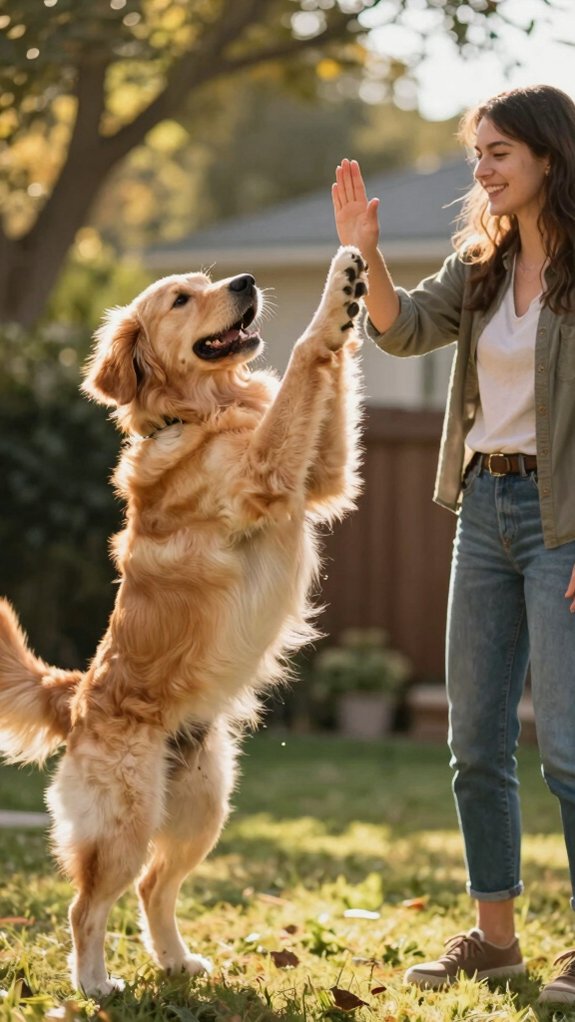
Build on the “Shake” command by holding a flat hand at your dog’s paw level, saying “High Five,” and rewarding any paw contact immediately; short, consistent 5–10 minute sessions will keep the training engaging while you gradually replace treats with praise and affection. You’ll strengthen dog bonding and use positive reinforcement to make learning feel safe and communal. Be patient, repeat the cue, and praise warmly when your dog lifts a paw to meet your hand. Gradually raise expectations—hold your hand a little higher or delay the treat—to build reliability. Keep sessions fun and stop before your dog tires. Below is a simple practice log to track progress and stay connected during training.
| Session | Goal |
|---|---|
| 1 | Cue + touch |
| 5 | Minimal treats |
| 10 | Praise only |
Roll Over
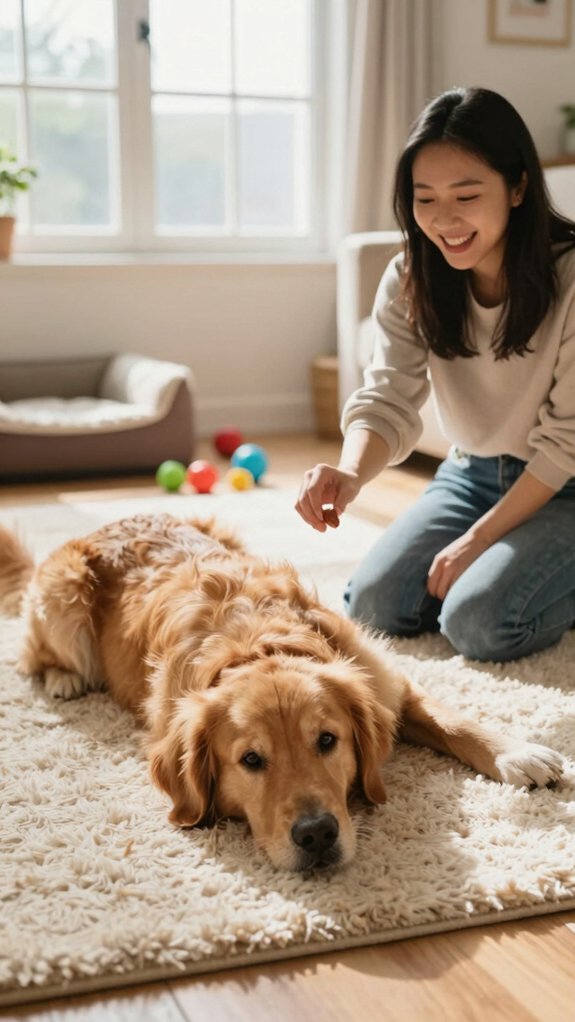
Get your dog into a relaxed “down” position, then lure a treat from their nose toward the shoulder to encourage the roll; say “roll over” as they follow the motion, reward each small step, and gradually phase treats for full rolls while keeping sessions short and consistent. You’ll build confidence with treat motivation and clear cues. Keep training consistency by practicing brief sessions daily, praising effort, and increasing rewards as the behavior improves. Be patient—some dogs need more time—and celebrate small wins so everyone feels included.
- Start with “down” and lure the head toward the shoulder.
- Say “roll over” during the motion.
- Reward incremental progress, then phase treats.
- Practice short, regular sessions for steady progress.
Spin in a Circle
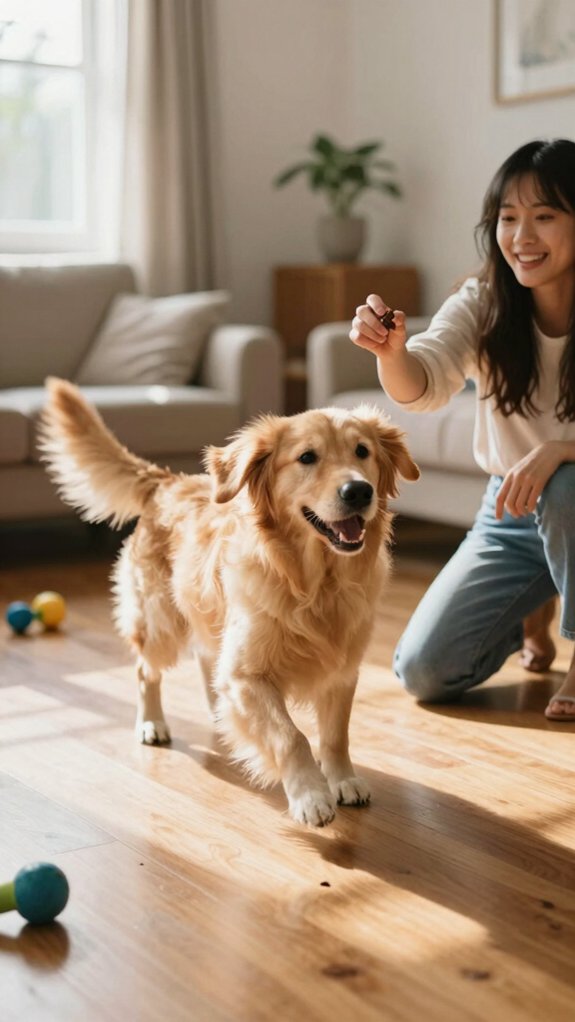
Start by holding a treat near your dog’s nose and slowly guiding it in a circle so they naturally follow; say “spin” as they begin to turn and reward them with praise and the treat as soon as they complete the rotation. Use short 5–10 minute sessions to keep training fun and prevent frustration. As your dog begins to understand, introduce the verbal cue consistently so they link the word with the action. Practice both directions by switching the lure so you develop spin variations and improve dog coordination. Keep cues clear, timing immediate, and rewards consistent. You’re part of a community teaching dogs useful tricks—practice regularly, celebrate small wins, and your dog will learn reliable spins that strengthen your bond.
Play Dead
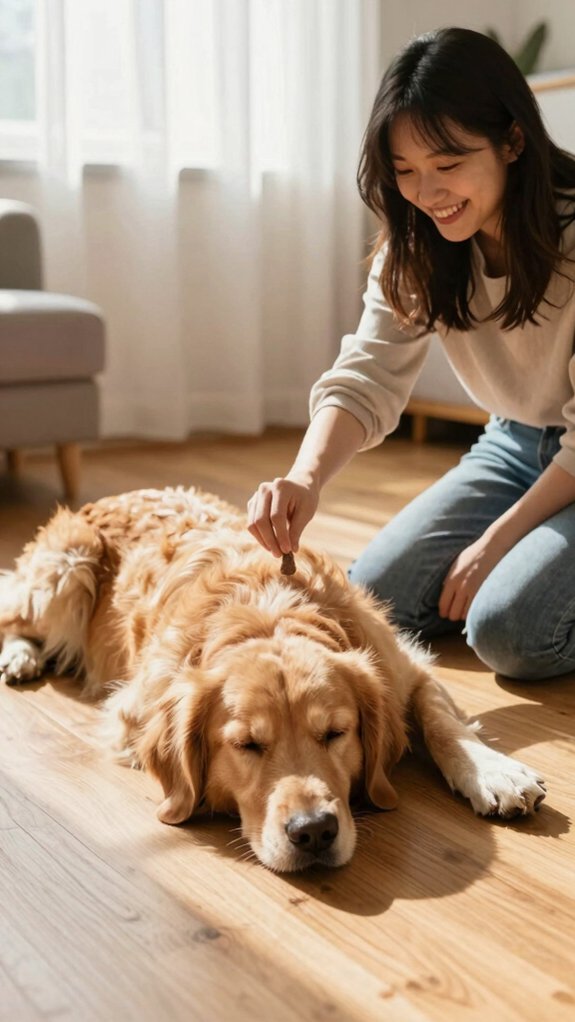
Now that your dog can spin, you can teach the fun “play dead” or “Bang” variation using the roll-over foundation. Use a finger-gun gesture and the cue “play dead” while breaking the movement into small steps, rewarding immediately when they hit the ground. Keep sessions short and patient so your dog stays motivated and learns the full trick reliably.
“Bang” trick variation
The “Bang” trick, often called Play Dead, teaches your dog to collapse onto their side and lie still on cue—usually paired with a finger-gun gesture for theatrical effect. Use simple training tips and clear trick variations so everyone in your group feels confident teaching it. Begin from a down: guide a treat from the nose toward the shoulder to encourage the roll, reward each small step, and raise your criteria gradually.
- Break it into tiny steps and reward often.
- Keep sessions short and upbeat to maintain focus.
- Add the finger-gun cue once the motion is reliable.
- Celebrate progress to build belonging and consistency.
Be patient, repeat regularly, and enjoy the bonding this playful trick creates.
Leave It
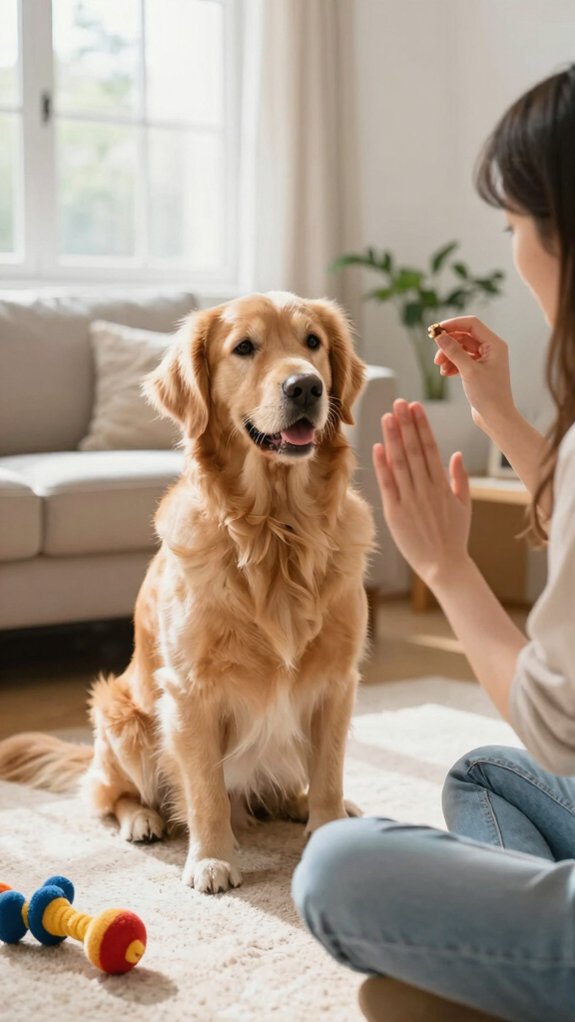
Although your dog’s curiosity can get them into danger, teaching a reliable “Leave It” stops them from grabbing harmful items and builds Impulse Control you can trust in walks and at home. Start by placing a treat on the ground, covering it with your hand, and waiting for your dog to stop trying to get it. Mark the moment they back off, reward with a different treat, and repeat until they respond to the verbal cue. Practice in increasing distractions and locations so the command generalizes. Use high-value rewards early to strengthen learning, then phase to intermittent rewards to maintain it. Consistent, brief sessions help you and your dog feel confident and connected while improving safety.
Fetch and Return
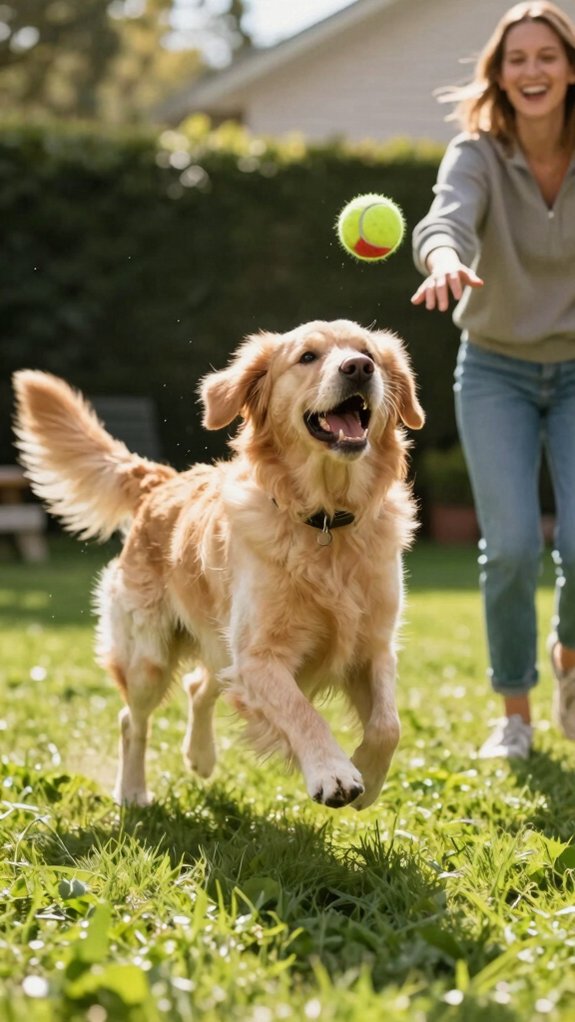
Play fetch to give your dog both physical exercise and mental stimulation while reinforcing recall and cooperation. Use clear fetch techniques and thoughtful toy selection to make sessions effective and enjoyable. Start by showing a favorite toy or ball, then toss it a short distance so your dog chases it confidently. Call them back with “bring it back” or “come,” rewarding successful returns with praise or a treat. Practice regularly, increasing distance as their skills improve. Keep sessions short and positive to maintain involvement and strengthen your bond.
- Choose durable, safe toys that match your dog’s size and interest.
- Begin close, reward consistently, repeat often.
- Use a friendly, firm call to encourage returns.
- Gradually extend distance and challenge.
Drop It
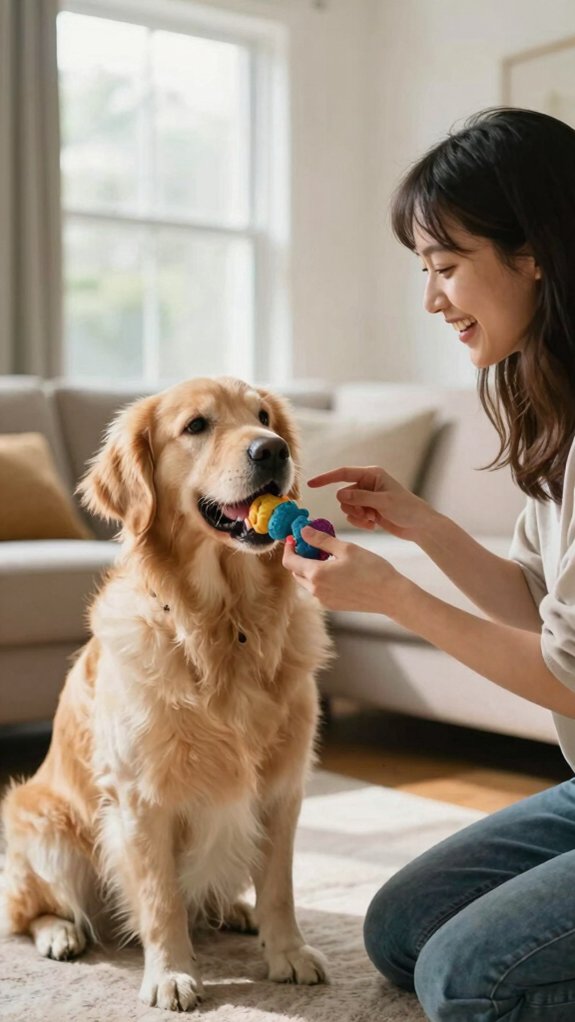
After fetch sessions, teach your dog to “Drop It” so you can safely reclaim toys or anything they shouldn’t have. Use a clear release command, holding a high-value treat or alternate toy. When they pick up the item, say “Drop It” once, present the replacement, and reward immediately when they let go. Keep sessions short and consistent; repeat several times daily. Gradually make the toy exchange harder by using more tempting items and adding mild distractions. Praise them for compliance so they link the command with positive outcomes. This builds impulse control and deepens your partnership. With steady practice and fair rewards, your dog will treat the release command as a reliable cue you both trust.
Speak on Cue
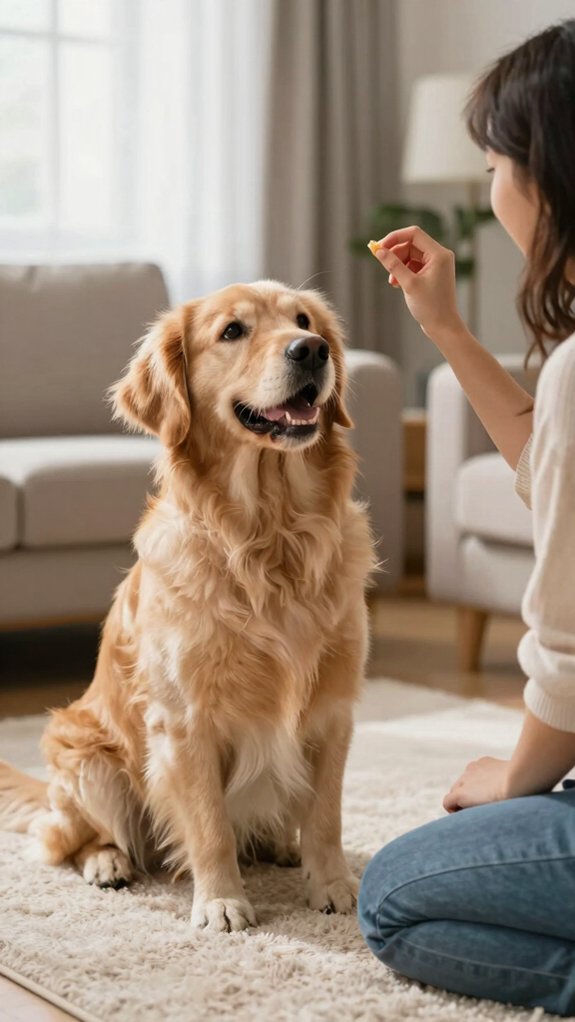
Teaching your dog to “speak” on cue gives you a controlled way to encourage barking when it’s useful and stop it when it’s not. Start by provoking a bark with a doorbell or knock while saying “speak,” then reward immediately so your dog links the vocal cue to a positive outcome. Keep sessions short—5–10 minutes—and frequent to hold interest. Pair “speak” with a clear “quiet” cue to manage barking control and teach appropriate vocal limits. Practice around distractions and new environments so the behavior generalizes.
- Ring a bell or knock, say “speak.”
- Reward instantly when they bark.
- Repeat brief sessions daily.
- Add distractions, reinforce “quiet.”
You’re building reliable vocal cues and shared trust.
Place on Bed
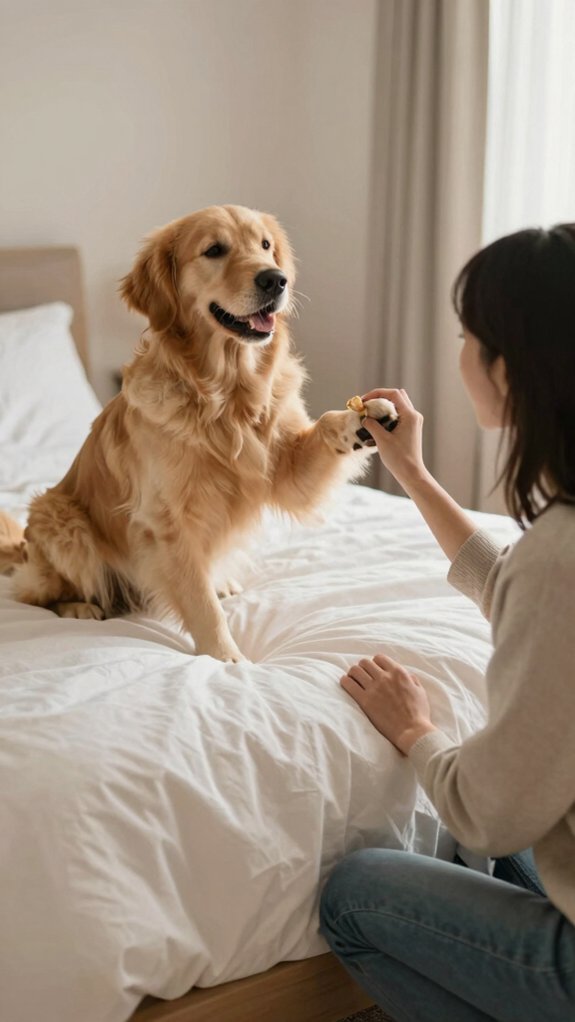
Choose a specific mat or bed and teach your dog to go to that spot on cue. Guide them onto the mat with a treat and reward them for settling into a down or relaxed position. Practice consistently in different rooms and slowly increase how long they stay before rewarding.
Go to mat
Start by guiding your dog to a designated mat or bed with a treat and reward them when they step on it and lie down—this simple routine creates a reliable place for them to relax and stay calm when guests arrive or during meal times. Use consistent mat reinforcement techniques and clear cues so your dog links the spot with calm behavior. You’ll build belonging by practicing together, praising successes and staying patient.
- Begin nearby, lure onto mat, reward lying down.
- Add the verbal cue “Go to Mat” once consistent.
- Increase distance gradually to build focus and impulse control.
- Use dog boundary training to maintain the mat as a dedicated, respected space.
Practice short, frequent sessions with positive reinforcement.
Give a Hug
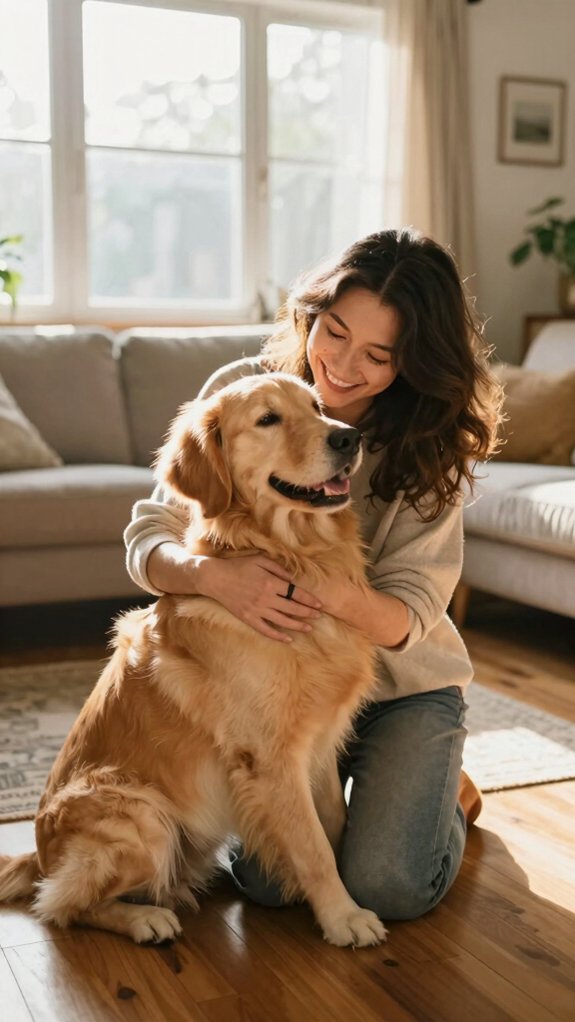
A simple way to teach your dog to give a hug is to build on basic commands that get them to lift their front legs, then guide them to rest their paws on your arms or shoulders while rewarding that position immediately with a high-value treat. Start in short sessions, use clear cues, and pair the action with a consistent command like “hug.” Use dog affection and training rewards to reinforce calm contact—praise warmly and give the treat as soon as their paws touch you. Gradually increase distance so they offer the behavior from a step away, and vary locations so it generalizes. Keep practice consistent but brief to preserve focus. With steady repetition, the hug becomes a reliable, affectionate part of your routine.
Frequently Asked Questions
What Is the Easiest Trick for a Dog to Learn?
The easiest trick is the sit command; you’ll often teach it first and succeed quickly. Once they master sit, you can add shake paws easily. You’ll feel proud, connected, and confident teaching these basics together.