

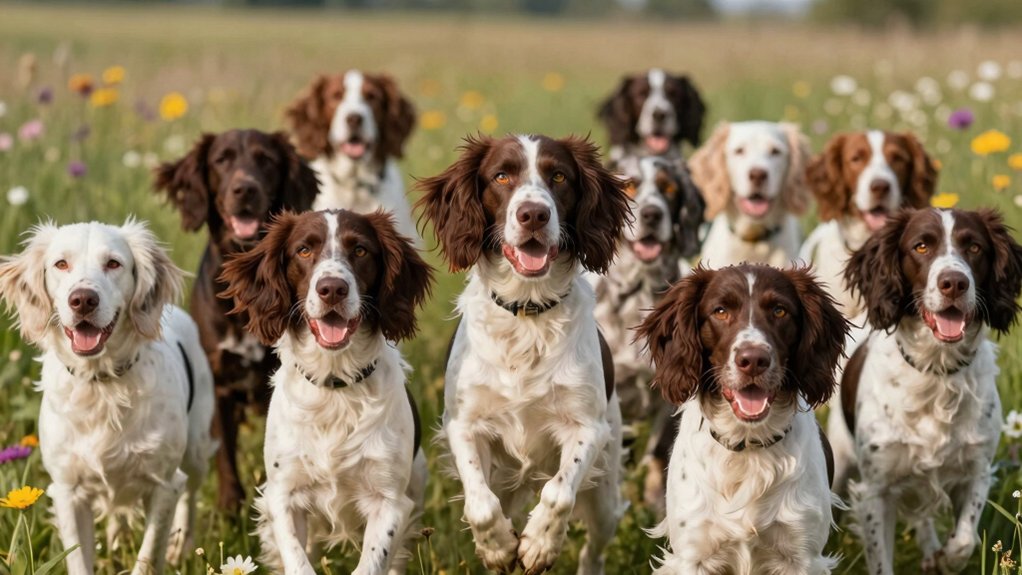
English Springer Spaniels are friendly, athletic companions that thrive when you include them in family life. You’ll need to provide about two hours of daily exercise, plus training, scent games, fetch, or agility. They learn quickly with praise, treats, and clear routines, but boredom can cause barking or chewing. Brush their feathered double coat weekly, check ears, and watch health as they age. Socialize them early around pets and children, then discover the traits that shape life with this energetic gundog.
Disclosure: This post may contain Amazon affiliate links, at no extra cost to you. Content on Pawtangle is created with research support from AI tools and carefully reviewed, edited, and fact-checked by the lead author, Dr.Fahri Pat , to ensure accuracy and reliability. Learn more
Key Takeaways
- English Springer Spaniels are affectionate, people-focused companions that thrive on family involvement and positive, consistent training.
- Their athletic, medium-sized bodies and gundog heritage require approximately two hours of daily exercise, including walks, fetch, swimming, or agility.
- Intelligent and eager to work, they benefit from scent games, obedience, puzzles, recall practice, and other regular mental challenges.
- Their feathered, medium double coat needs weekly brushing, increased seasonal grooming, and occasional trimming around the ears, feet, and head.
- With proper socialization, they usually suit active families and other dogs, but supervision is important around small pets and young children.
Friendly Personality

An English Springer Spaniel’s friendly personality often makes it a cheerful, people-focused companion. You’ll notice how eagerly your dog joins family time and welcomes approved guests.
Because this breed enjoys greeting strangers, teach calm social manners from puppyhood. Ask your dog to sit before receiving attention, and reward quiet, polite behavior.
Practice with trusted visitors so your dog learns that friendliness includes self-control.
Your Springer may seek company and feel unhappy when left out, so include them in suitable daily activities. Their playful energy can keep interactions lively, but clear routines help everyone feel comfortable, connected, and welcome at home.
Athletic Build
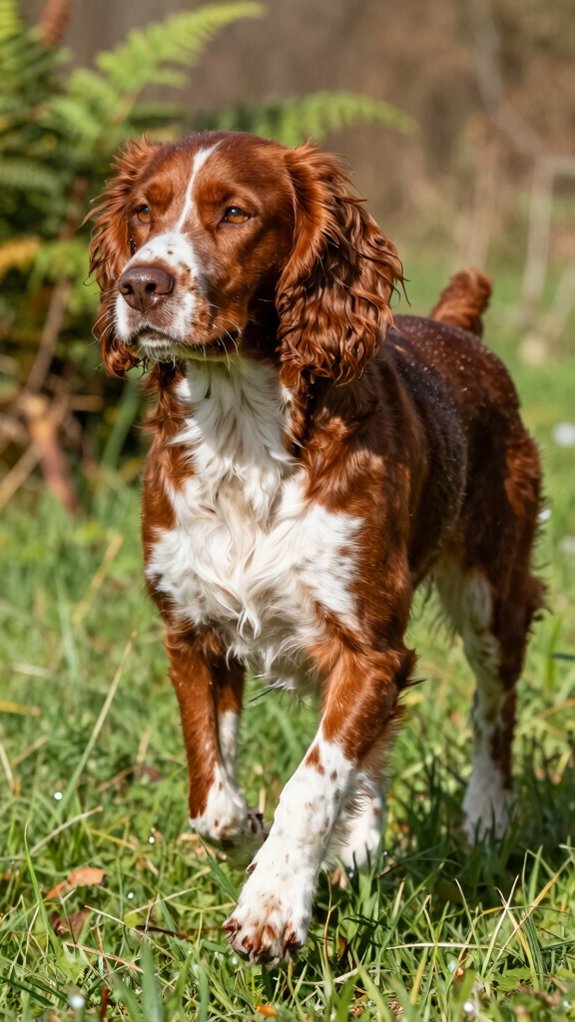
Built for active work, the English Springer Spaniel has a compact, well-proportioned frame that’s both sturdy and agile. You’ll see a compact athletic build in this medium-sized bird dog, usually 19–20 inches tall and 40–50 pounds.
That sturdy shape supports flushing and retrieving game, while its versatile field stamina helps it handle long days. You can channel that energy through walks, fetch, agility, or rally. Join your Springer with regular activity, and you’ll share a happier routine.
| Trait | Typical Feature | Best Outlet |
|---|---|---|
| Build | Sturdy, agile | Hiking |
| Stamina | Long-lasting | Fieldwork |
| Movement | Quick, coordinated | Agility |
Intelligence

English Springer Spaniels are quick learners with a strong desire to work with you, so praise, treats, and clear routines can make training rewarding. You’ll often find that your dog notices household patterns quickly and stays keen to participate.
Because this breed follows smells closely, scent work can turn natural curiosity into a focused job. Hide treats, use simple tracking games, or practice finding familiar items indoors.
Your Springer needs regular mental challenges, such as obedience, rally, agility, or puzzle tasks. Include recall training and “drop” practice, especially outdoors.
Without enough direction, their lively minds may create mischievous behavior, so give them clear tasks and celebrate progress together.
Exercise Needs
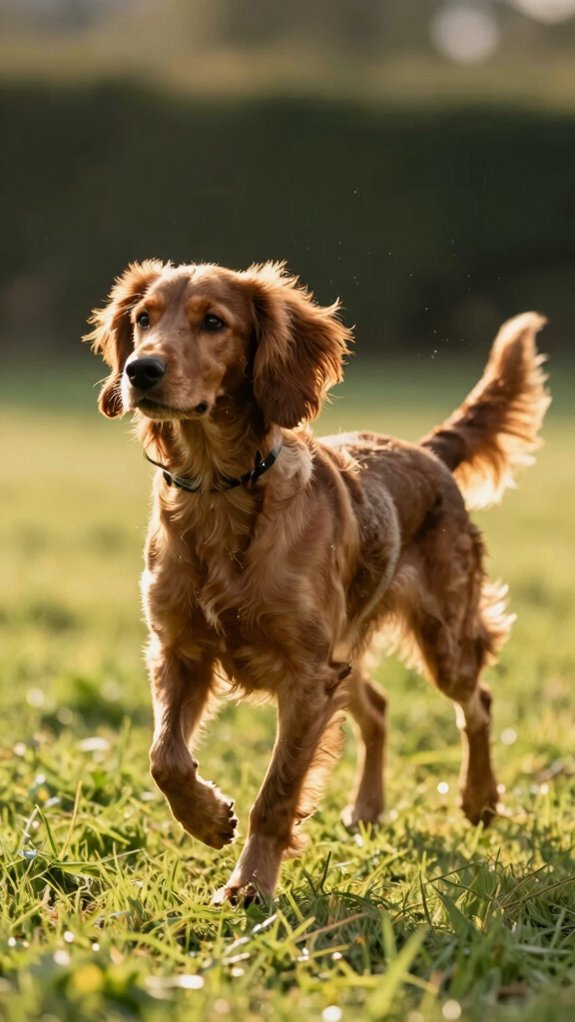
Plan on about two hours of exercise each day once your English Springer Spaniel is fully grown, combining physical activity with mental challenges. Jogging, swimming, and fetch match your dog’s athletic gundog energy.
| Activity | Benefit |
|---|---|
| Tracking hikes | Nose work |
| Agility | Focus |
| Fetch | Fitness |
Add obedience, rally, or scent games to keep your intelligent, people-focused companion engaged. Practice Leash Manners during daily walks, and use Weather Planning to adjust intensity on hot, cold, or wet days. Without enough activity, your dog may chew or bark excessively. Join other active families, and build a routine that keeps everyone moving and connected.
Grooming Routine
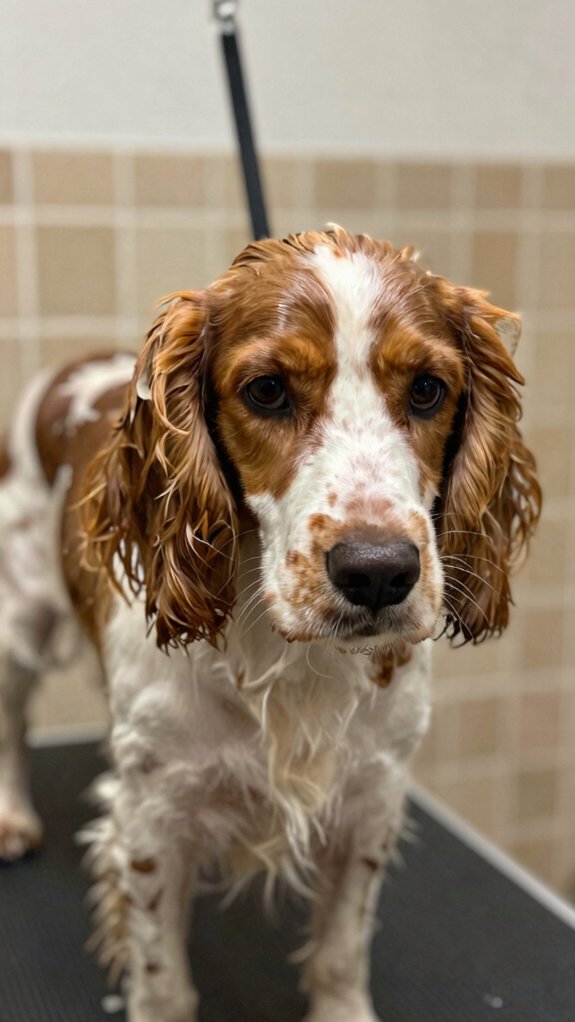
With a weekly brushing routine, you can keep your English Springer Spaniel’s medium double coat clean, comfortable, and ready for outdoor adventures. Use a slicker brush or metal comb, working through feathering on the ears, legs, chest, and belly after walks.
During Seasonal shedding, brush several times weekly to control loose hair and prevent mats. Thin dead undercoat and excess feathering for a practical finish, especially near the tail and under-tail area. Trim around the head, ears, neck, and feet.
Include regular ear checks, monthly nail trims, and gentle paw care. These habits help you stay comfortable and connected as a team.
Coat Colors
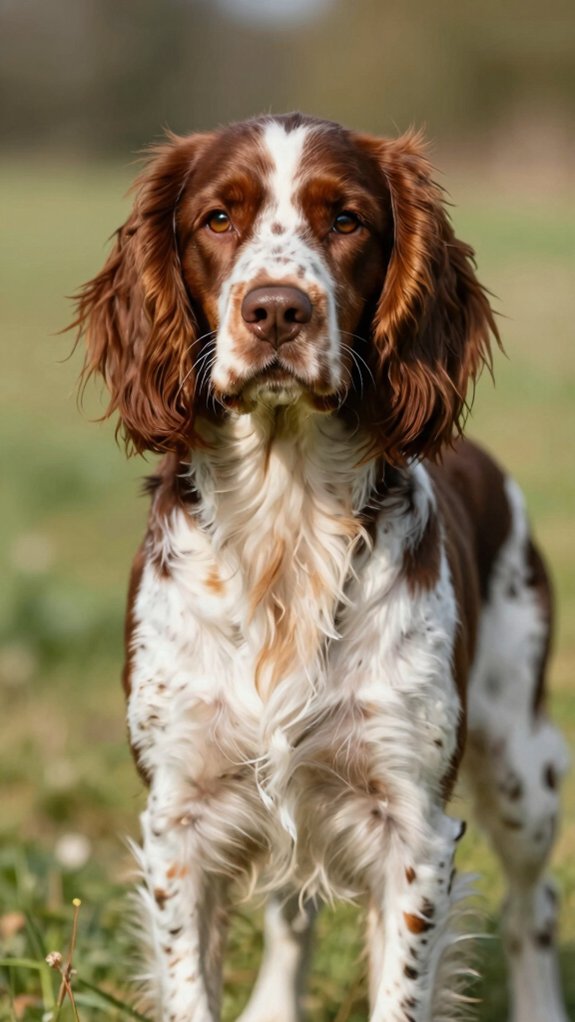
Coat colors add to the English Springer Spaniel’s distinctive look, often pairing liver, black, or white with liver or black markings. You may notice a dark head and ears, plus a white blaze or muzzle.
| Pattern | Common details | What you’ll notice |
|---|---|---|
| Liver and white | Liver patches, white trim | Warm contrast |
| Black and white | Black patches, white blaze | Crisp contrast |
Genetic color patterns vary among field and show lines, while both share the breed’s standard-focused appearance. Their double coat feels weatherproof and thornproof, with feathering on ears, legs, chest, and belly. Moderate shedding and Seasonal coat changes can make markings shift in prominence, so regular brushing helps.
Family Life

An English Springer Spaniel can be a loving fit for an active family because it enjoys people, stays eager to please, and wants to join your daily routines. You’ll build a strong bond by including your dog in walks, games, training, and calm family time.
First time owners should plan about two hours of exercise and mental activity daily. In a busy household management matters, create a routine that covers meals, play, rest, and training.
Your lively dog can enjoy children, but supervise play, especially during rowdy puppy years. It may struggle when left alone, so provide companionship, enrichment, and gradual alone-time practice.
Hunting Background

That family-friendly teamwork comes from the English Springer Spaniel’s roots as an English gundog. In England, hunters bred Springers to flush “spring game,” especially birds, by leaping into action and driving them into the air.
Your Springer may inherit strong field stamina from long days of flushing and fetching. A strong nose also supports scent teamwork, so your dog often enjoys working beside you during tracking or retrieving games.
Springers share early land-spaniel roots with Cockers, but they developed as the larger flushing and retrieving type. Their history helps explain their attentive, people-focused nature and persistent urge to follow scents. You can channel it through safe, structured activities.
Puppy Development

English Springer Spaniel puppies are lively, smart people-pleasers, so they usually respond well to early training classes and gentle, consistent guidance.
Keep lessons short and frequent, then add fetch, basic obedience, and scent games to channel their high energy and busy minds.
Build crate training into daily life with treats, calm praise, and brief, positive sessions.
Practice alone time routines by leaving for short periods and increasing them gradually, so departures feel ordinary.
Introduce your puppy to friendly dogs, people, and other pets carefully and under supervision.
These experiences help your Springer grow confident, social, and easier to live with as part of your family.
Health Considerations

Keeping your English Springer Spaniel healthy means watching for a few breed-related concerns, especially hip and elbow dysplasia, eye disease, ear infections, heart problems, diabetes, and skin conditions. Ask breeders for parents’ joint scores and consider genetic testing.
Work with your veterinarian on a screening schedule, including yearly eye exams for PRA, cataracts, and painful glaucoma. Watch for stiffness, coughing, tiring easily, increased thirst, or frequent urination.
Check your dog’s ears often and clean them gently, since moist canals encourage yeast and bacteria. Also monitor allergies, seborrhea, and autoimmune skin disease. Regular care helps your Springer stay comfortable and included in family life.
Training Style
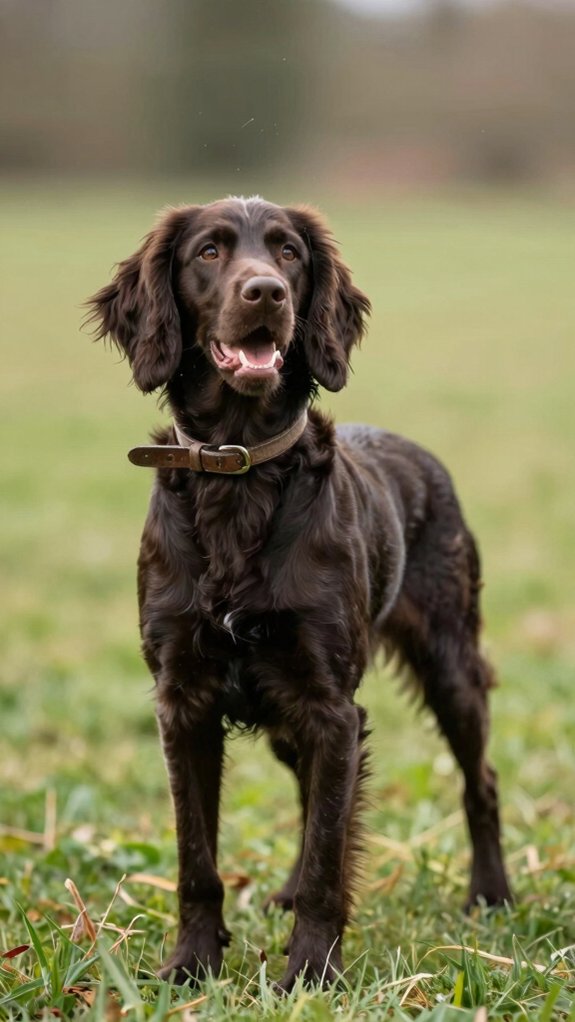
Because English Springer Spaniels are willing to please, they usually respond well to praise, tasty treats, and clear, consistent guidance. Use positive reinforcement to reward the behavior you want, and keep sessions upbeat and brief.
Start puppy classes and early socialization so your dog learns polite greetings and calm responses. Practice recall, “drop,” and basic obedience in different places, building confidence as you go.
Your Springer needs training consistency from everyone at home, including the same cues and rules. Rotate simple challenges, and consider obedience, agility, rally, or flyball-style classes. Patient guidance helps your energetic companion become a reliable family member.
Daily Enrichment

Training works best when it continues into your Springer’s daily routine, giving their active mind and body a clear outlet. Aim for about two hours of physical and mental exercise each day.
| Activity | Simple option |
|---|---|
| Scent work | Track scents on walks |
| Training | Practice recall and “drop” |
| Sports | Try agility or rally |
Rotate activities with praise and treats, so your dog stays eager to learn. Indoor enrichment, puzzle toys, and crate games can help during alone time. Without enough engagement, your Springer may become rowdy or destructive. Build belonging through shared jobs, whether you’re hiking, training, or playing flyball.
Lifespan

With proper care, an English Springer Spaniel typically lives about 12–14 years, although some reach 15. You can help your companion reach the upper end of this lifespan range with daily exercise, mental stimulation, and a balanced routine.
Schedule annual vet visits, then increase monitoring around age seven. Senior care helps your veterinarian spot changes early, including hip or elbow problems and eye conditions such as cataracts, glaucoma, or PRA.
Keep up with grooming, ear and eye checks, dental care, and nail trims. These simple habits support comfort and health, helping your Springer stay active and connected with your family for years.
Living with Other Pets

English Springer Spaniels usually get along well with other dogs, especially when you socialize and train them early. Use gradual introductions in a neutral area, then provide supervised interactions at home.
Your Springer may chase cats, rabbits, or other small pets because of strong scent and hunting instincts. Careful, managed meetings can help, but keep watching for chasing, fear, or stress.
Feathery pets, including budgies, canaries, and parrots, may trigger a stronger response, so use secure barriers and never assume they’re safe together.
If you have several pets, give each one a private space. Monitor closely during the first weeks, and step in calmly when needed.
Is This Breed Right for You?

An active household that can provide about two hours of exercise and mental stimulation each day may find an excellent companion in an English Springer Spaniel. If you enjoy long walks, fetch, swimming, tracking, or agility, you’ll fit this breed’s pace.
You’ll also need time for interactive training, since your willing-to-please dog thrives on positive reinforcement and steady guidance.
Families can enjoy this affectionate companion, though supervise lively play with young children and socialize early.
If you work long hours, plan support to prevent separation anxiety, chewing, barking, or indoor accidents.
Consistent house training helps.
Weekly brushing manages moderate shedding, making grooming part of belonging together.