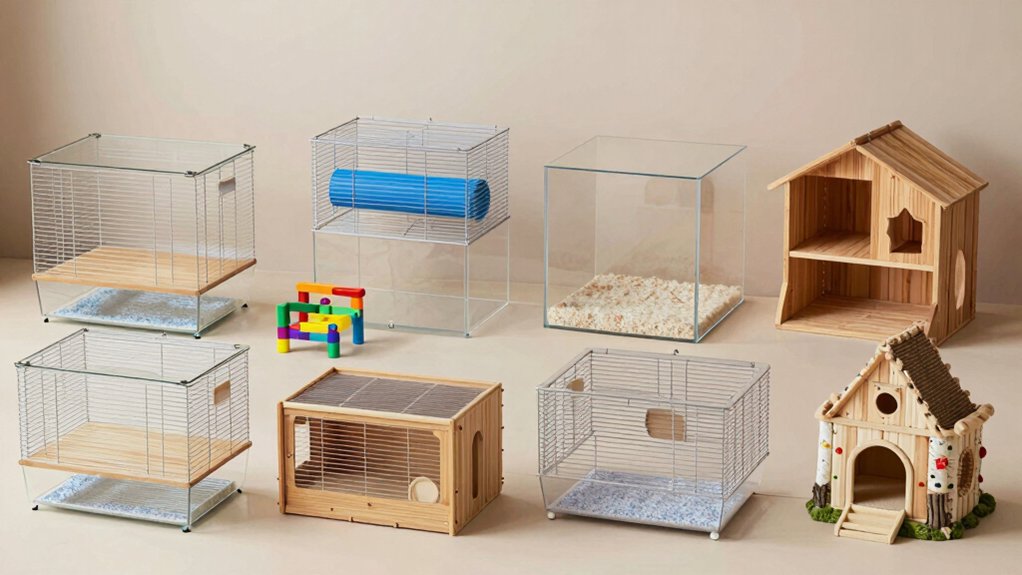

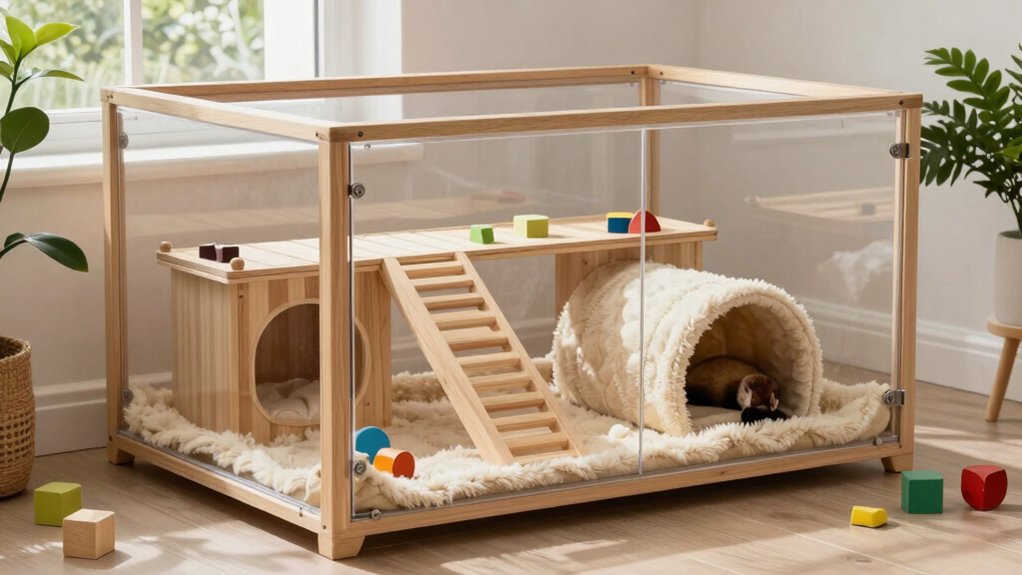
You’ll want a multi-level cage at least 24×36×48 inches with platforms 12–14 inches apart, sturdy powder-coated metal bars (≤1″ spacing for adults), solid covered floors, and wide ramps covered in fleece or carpet to prevent slips and bumblefoot. Use paper-based bedding, multiple litter boxes, heavy bowls, and lots of tunnels, hideouts, and puzzle toys. Place it in a quiet, draft-free room at 65–75°F. Keep daily spot-cleaning and weekly deep cleans, and you’ll find plenty more setup tips ahead.
Disclosure: This post may contain Amazon affiliate links, at no extra cost to you. Content on Pawtangle is created with research support from AI tools and carefully reviewed, edited, and fact-checked by the lead author, Dr.Fahri Pat , to ensure accuracy and reliability. Learn more
Key Takeaways
- Provide a multilevel cage (min 24×36×48″) with 12–14″ between levels for safe climbing and vertical enrichment.
- Use powder-coated metal wire with ≤2.5 cm bar spacing, solid covered floors, and double-locking latches for safety.
- Offer cozy communal hammocks, wide platforms, and enclosed hideouts to support rest and social bonding.
- Create play zones with ramps, tunnels, puzzle feeders, and rotated toys to encourage exploration and foraging.
- Place the cage in a quiet, draft-free area (65–75°F), spot-clean daily, and deep-clean weekly to maintain health.
Ideal Cage Size for Ferrets
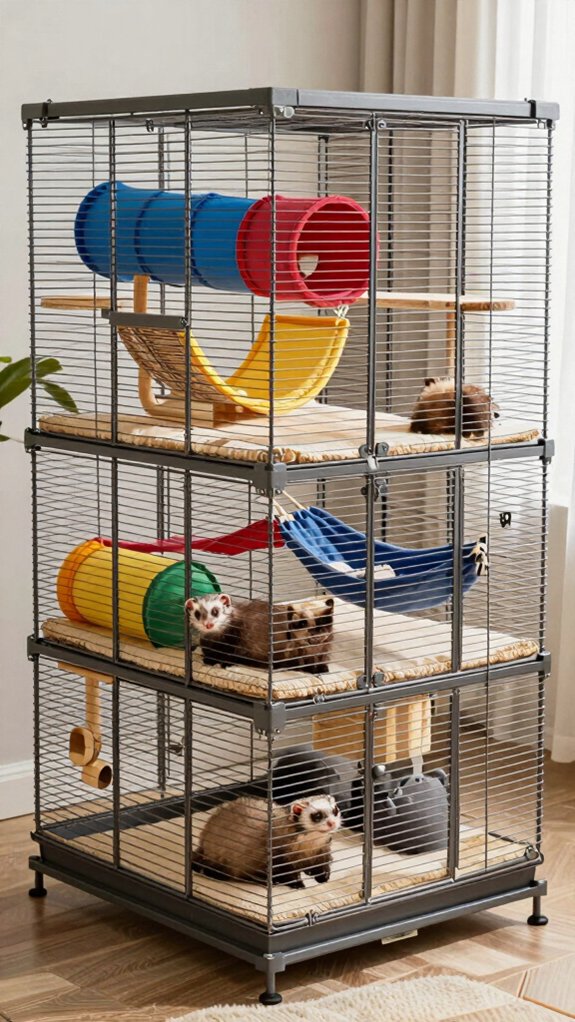
Start with at least a 24″ x 36″ x 48″ cage and you’ll give your ferret the minimum room it needs to move, play, and investigate; taller, multi-level enclosures are even better because they let ferrets climb and use vertical space. You’ll want to note ferret dimensions when choosing a cage: adult spacing must stay under 2.5 cm (1″) to prevent escapes, kits need 1.3 cm (0.5″). Choose sturdy, non-toxic metal wire and avoid brittle plastics. Ascertain solid, covered flooring to prevent bumblefoot. Prioritize adequate cage height for vertical enrichment so your ferret feels safe, active, and loved.
Multi-Level Cage Layout
When you design a multi-level ferret cage, think vertically as well as horizontally so each tier becomes a safe, usable part of their home: space levels about 12–14 inches apart to reduce jump strain, fit wide platforms for lounging and play, and link floors with sturdy, carpet- or fleece-covered ramps (zigzag patterns work well) to encourage movement without risking falls. You’ll support ferret climbing techniques and smart vertical space utilization by arranging ramps to create gentle inclines and clear sightlines. Make each level cozy and communal so you and your ferrets feel connected.
- Wide platforms for rest and play
- Zigzag ramps to boost activity
- Soft ramp coverings for grip
Safe Cage Materials
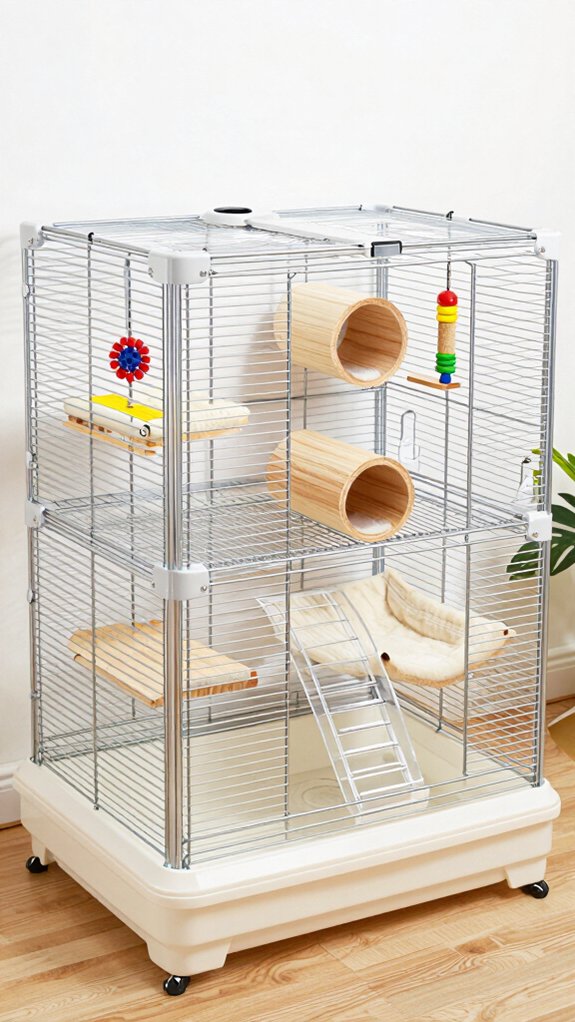
Because ferrets chew and investigate everything, choose cage materials that are tough, non-toxic, and easy to inspect so you won’t be surprised by escapes or injuries. Use powder-coated metal wire for cage safety and material durability, avoiding galvanized wire and brittle plastics that can harm ferrets. Keep bar spacing ≤2.5 cm (1 in) for adults and ≤1.3 cm (0.5 in) for kits to prevent slips or entrapment. Provide solid, covered flooring to avoid bumblefoot; never rely on bare mesh. Select chew-safe plastics, fabrics, and woods for accessories, and inspect seams and coatings regularly for wear or damage.
Deep Bedding and Litter Setup
A good deep-bedding and litter setup gives your ferret comfortable sleeping spots and reliable toileting areas while minimizing dust and odors. Use paper-based bedding or fleece blankets as bedding materials to reduce respiratory risks and make cleaning easier. Place low-dust pelleted paper or wood pellets in litter boxes, avoid clumping clay and dusty litters, and set boxes in preferred corners—use several in larger cages. Clean litter boxes twice daily and replace bedding liners regularly to keep things dry and healthy. You’ll create a welcoming, hygienic space that supports bonding and your ferret’s wellbeing.
- Paper-based bedding
- Fleece blankets
- Low-dust pelleted litter types
Tunnel and Tube Systems
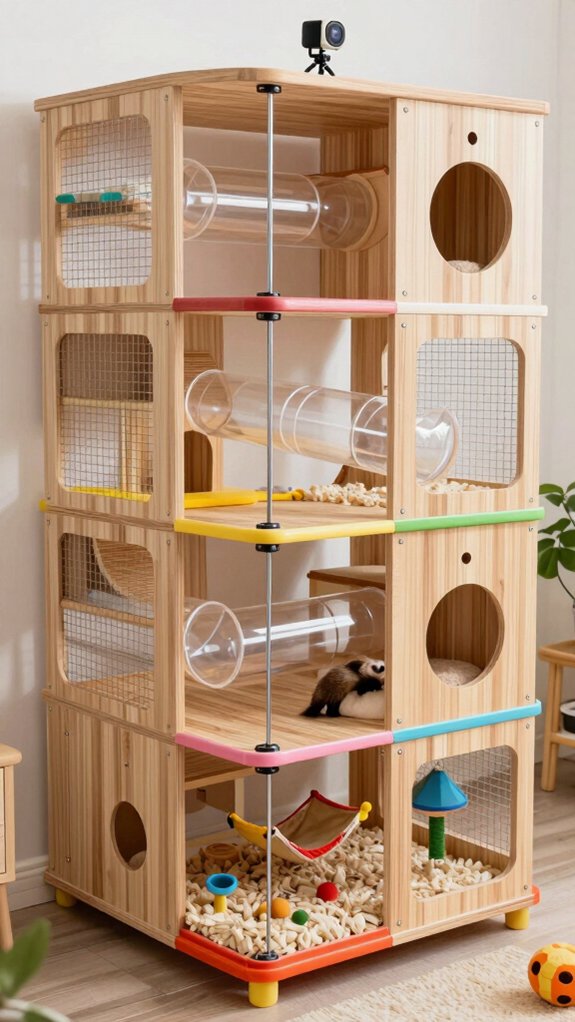
Good tunnel and tube systems give your ferrets safe, stimulating pathways that mimic natural burrows and expand usable cage space. You’ll choose tunnel materials like clear tubes and flexible hoses with smooth edges to prevent entrapment, and guarantee diameters of at least 4 inches so movement isn’t restricted. Plan junction points that offer multiple travel routes to boost exploration benefits and reduce boredom. Incorporate tubes into multi-level cages to use vertical space and encourage natural burrowing behavior. Inspect and clean regularly to maintain hygiene, removing debris and bacteria. You’ll create a safe, engaging network your ferrets will love.
Sleeping and Hammock Areas
When you set up sleeping and hammock areas, prioritize multiple, machine-washable fleece hammocks at different heights alongside covered sleep boxes so your ferrets can choose their preferred light, temperature, and privacy levels; use soft fleece blankets or paper-based bedding to reduce respiratory risks and swap seasonal fabrics to match temperature changes. You’ll create layered temperature zones with varied hammock heights and covered boxes, encouraging safe use of climbing structures while respecting each ferret’s lounging preferences. Rotate bedding types for hygiene and comfort. Aim for accessible routes between levels so every ferret feels included and secure in their resting spots.
- Multiple hammock heights for choice
- Covered boxes for privacy
- Mix of bedding types and routes
Play and Enrichment Zones
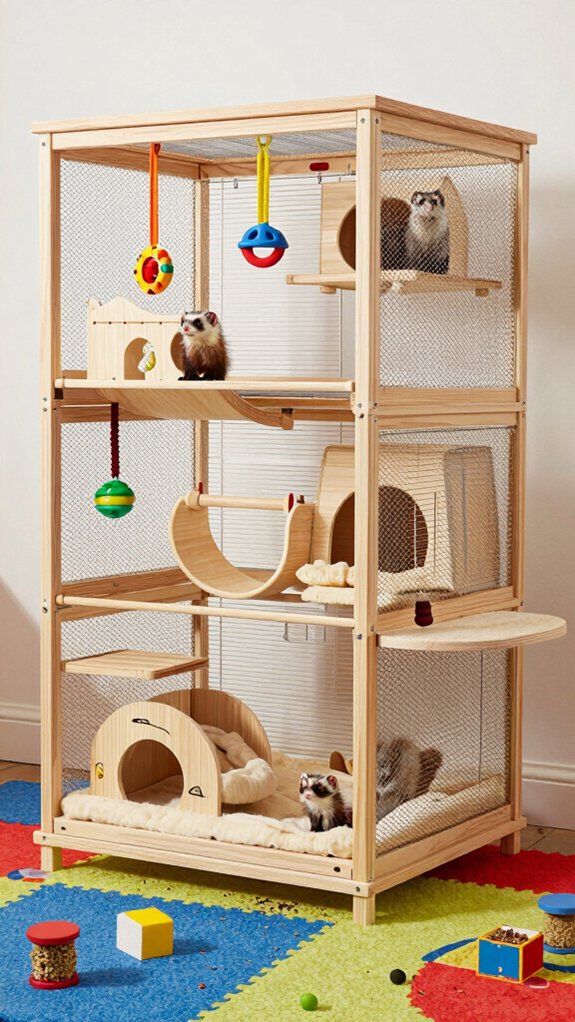
Because ferrets need both physical challenge and mental stimulation to stay healthy, plan play and enrichment zones that combine multi-level climbing routes, tunnels, and dedicated engaging areas so every activity has purpose and safety in mind. You’ll install climbing platforms and ramps to build strength and offer varied heights for hammocks and cozy naps. Add interconnected tunnels and hideouts to satisfy burrowing instincts. Create engaging toy zones with puzzle feeders and foraging challenges, rotating items weekly to prevent boredom. Place durable, washable toys and secure attachments. Design pathways that let ferrets navigate without crowding, and make space that feels welcoming to you both.
Easy-Clean Cage Design
After planning play areas that keep your ferret active, think about how you’ll keep that space clean and healthy with minimal fuss. Design with removable shelves and smooth pans so you can lift, wipe, or replace surfaces without wrestling the whole cage. Choose non-porous materials and machine-washable bedding to cut odors and streamline chores. Use wide-opening doors for easy reach during daily spot cleaning and weekly deep cleans. A consistent schedule keeps you and your ferrets comfortable and connected.
- Removable shelves for quick access and thorough cleaning
- Smooth pans that wipe down easily
- Machine-washable bedding and accessories
Ventilation and Airflow
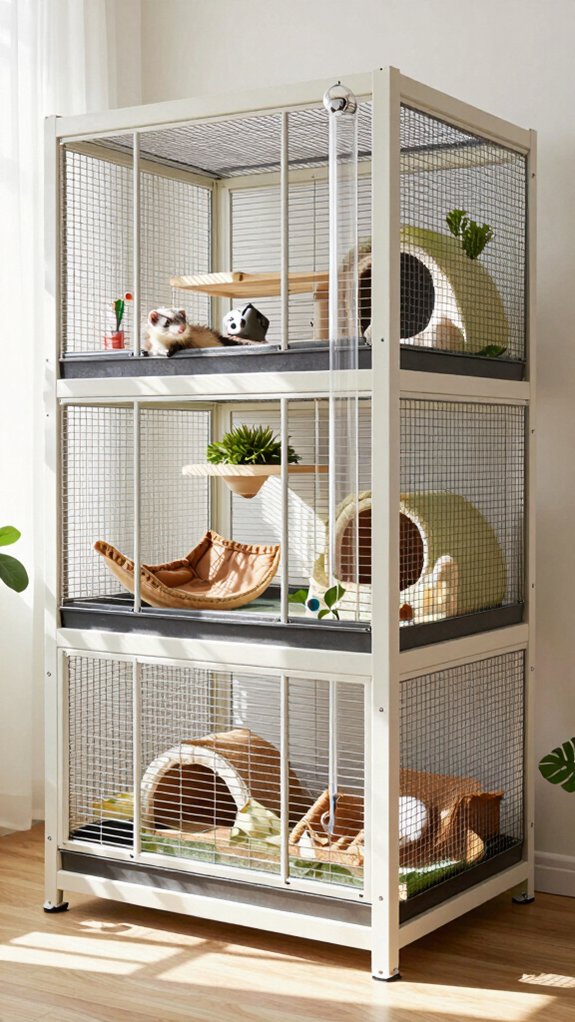
Good ventilation keeps odors down and protects your ferrets’ respiratory health, so design the cage with plenty of openings or mesh panels that allow steady air exchange without exposing them to drafts. You’ll place the cage away from drafty windows and vents, and choose mesh size that prevents escapes while promoting airflow. Monitor temperature to avoid prolonged heat above 26°C (79°F). Do routine airflow monitoring for dust buildup or blocked vents; reposition or clean the cage when needed. Schedule ventilation maintenance—wipe surfaces, vacuum nearby areas, and check seals—to keep the space safe, comfortable, and welcoming for your ferrets.
Food and Water Placement
When you set up food and water stations, mount bowls securely on middle-level shelves so ferrets can reach them easily without risking spills or messes. You’ll choose durable food bowl types like heavy ceramic or stainless steel to resist sliding and last through daily use. Provide multiple water sources—bottles and bowls—so each ferret finds a preferred option and stays hydrated. Clean bowls regularly to prevent bacteria and protect health. Place stations away from high-traffic play areas to reduce mess and stress. These small, consistent choices help your ferrets feel safe, cared for, and genuinely at home.
- Heavy ceramic food bowl types for stability
- Stainless steel bowls to resist wear
- Multiple water sources (bottle + bowl) for preference
Ferret-Proof Accessories
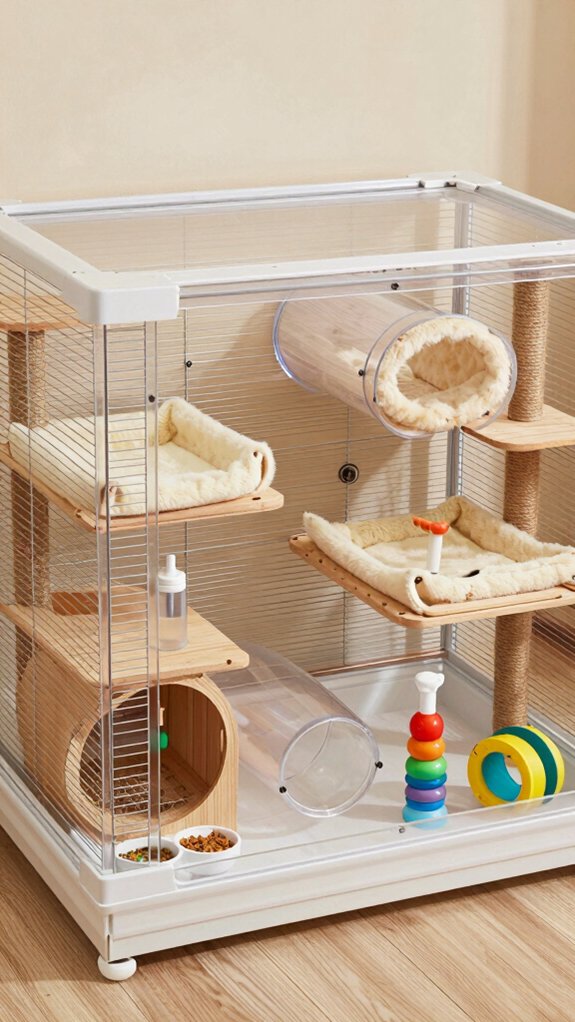
You’ve set up food and water spots where they’re safe and accessible; now let’s make sure the rest of the cage is just as secure and comfortable. Choose ferret accessories made from non-toxic materials since ferrets chew instinctively. Prioritize toy durability—sturdy, chew-resistant items and smooth-edged tunnels prevent injury and survive rough play. Pick machine-washable fleece hammocks and bedding for comfort and easy cleaning. Inspect accessories weekly for wear and replace damaged pieces without delay. By selecting safe, strong items and maintaining them, you’ll create a welcoming, dependable space where your ferrets can investigate, play, and relax with you included in their routine.
Cage Setup for Multiple Ferrets
If you’re housing more than one ferret, plan a cage that’s roomy enough for them to play, rest, and escape each other when they need space — aim for at least 60 × 60 × 90 cm (24 × 24 × 36 in) as a starting point. Add multilevel ramps spaced 12–14 inches for safe climbing, multiple corner litter boxes, and heavy mounted bowls so everyone eats comfortably. Rotate toys to encourage healthy ferret interaction and prevent boredom. Keep cage cleanliness consistent with quick daily spot-cleaning and weekly deep cleans to protect health and harmony.
- Multilevel platforms with safe spacing
- Multiple litter stations
- Secured food/water bowls
Indoor Cage Placement Tips
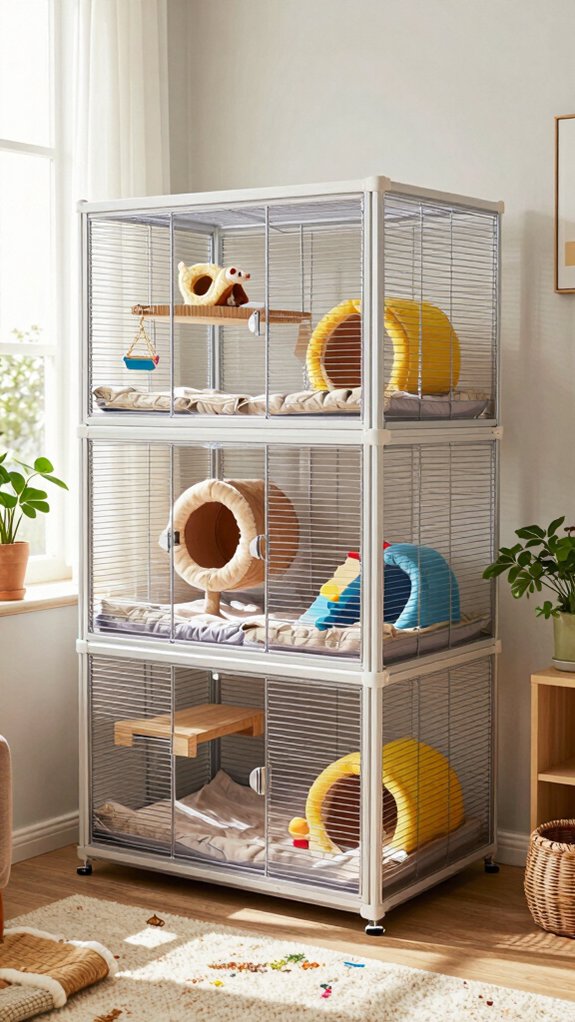
Find a quiet, draft-free spot that stays between about 18–23°C (65–75°F) and keeps your ferrets out of direct sunlight. Place the cage where you can monitor them easily—near family activity without constant noise—so they feel included and secure. Prioritize cage temperature stability, good ventilation to prevent odor and moisture, and avoid damp areas that risk health problems. Put the cage on a solid, level surface to prevent tipping and make cleaning straightforward. Arrange for clear cage accessibility from at least one side for feeding, litter changes, and handling; that practical setup supports your bond and their well-being.
DIY Ferret Cage Concepts
When you build a DIY ferret cage, focus first on safety and functionality: choose sturdy, non-toxic materials like powder-coated metal wire, keep bar spacing at or under 2.5 cm (1 inch), and fit secure latches so your ferrets can’t slip out or get injured. Plan multi-level ferret activity zones with ramps and platforms to boost exercise and curiosity. Use cardboard boxes as replaceable hideouts and add hammocks, tunnels, and chew-safe toys for enrichment. Embrace cage customization options that suit your space and herd, creating a welcoming, connected home where you and your ferrets thrive.
- Multi-level platforms and ramps
- Box hideouts with multiple entrances
- Hammocks, tunnels, chew-safe toys
Common Cage Setup Mistakes
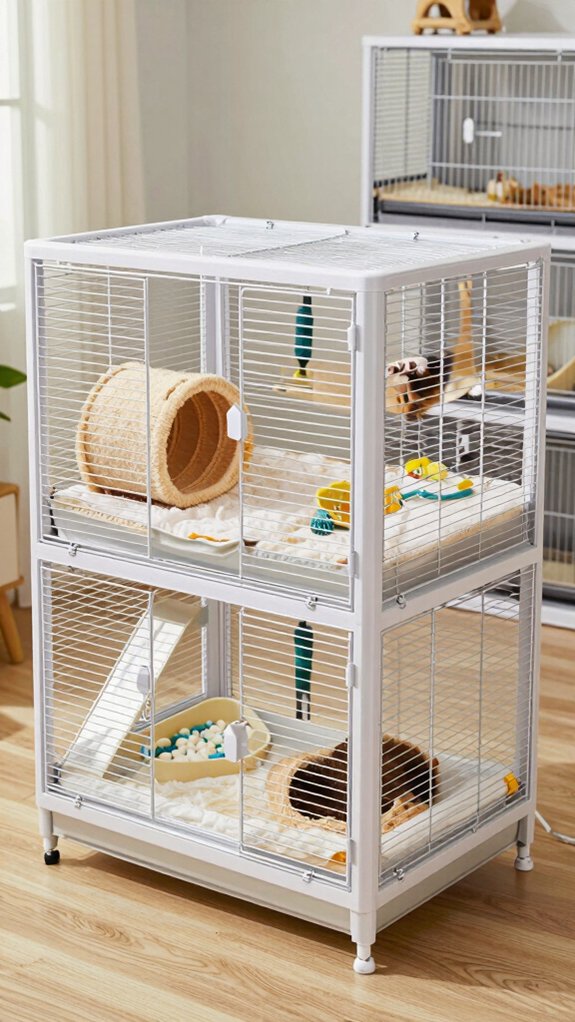
Because ferrets are curious and persistent, small mistakes in cage setup can quickly lead to escapes, injuries, or chronic health problems, so you’ll want to spot and fix them early. Avoid bare wire floors — they cause sore feet and pododermatitis; choose solid or covered flooring. Check bar spacing (≤2.5 cm adults, ≤1.3 cm kits) and secure double-locking latches. Keep good ventilation to prevent odor buildup and support ferret health. Don’t overcrowd: leave room for play, tunnels, and easy cage cleaning. You’re not alone—these fixes protect comfort, safety, and your bond.
| Mistake | Fix |
|---|---|
| Bare wire | Solid flooring |
| Loose latch | Double-locking |
Frequently Asked Questions
Can Ferrets Share Cages With Other Small Pets Like Rabbits?
No, you shouldn’t house ferrets with rabbits; ferret compatibility concerns are real, and small pet interactions can stress or injure rabbits. You’ll need separate, supervised introductions, careful monitoring, and bonded same-species companions instead.
How Often Should I Rotate Toys and Enrichment Items?
Rotate toys weekly, but refresh your enrichment schedule monthly with new or cleaned items; you’ll keep things novel by swapping favorites every 3–7 days and introducing bigger changes each 2–4 weeks to maintain involvement and comfort.
Are Heated Pads Safe for Ferret Hammocks?
Yes — you can use heated pads with care; prioritize heating safety by choosing low-watt, thermostatted pads and secure covers. Match hammock materials to heat tolerance, avoid plastics, and check frequently to keep your ferrets cozy.
Can I Transport a Multi-Level Cage Safely in a Car?
Yes — you can, but you’ll want to treat it like moving a small fortress: secure shelves, lock doors, anchor the cage to avoid tipping, pad corners, check cage stability and travel safety, and drive gently so everyone feels safe.
Do Ferrets Need UV Lighting Indoors?
No, ferrets don’t strictly need UV lighting indoors, but you should consider it for ferret health and lighting benefits; it’ll support vitamin D, mood, and circadian rhythm, and you’ll feel reassured providing balanced, safe light.