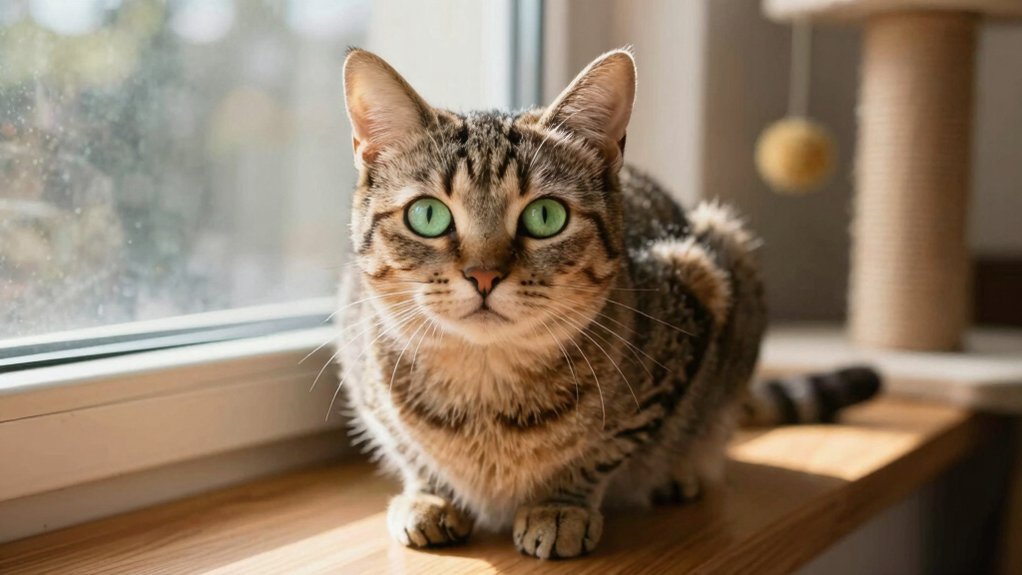

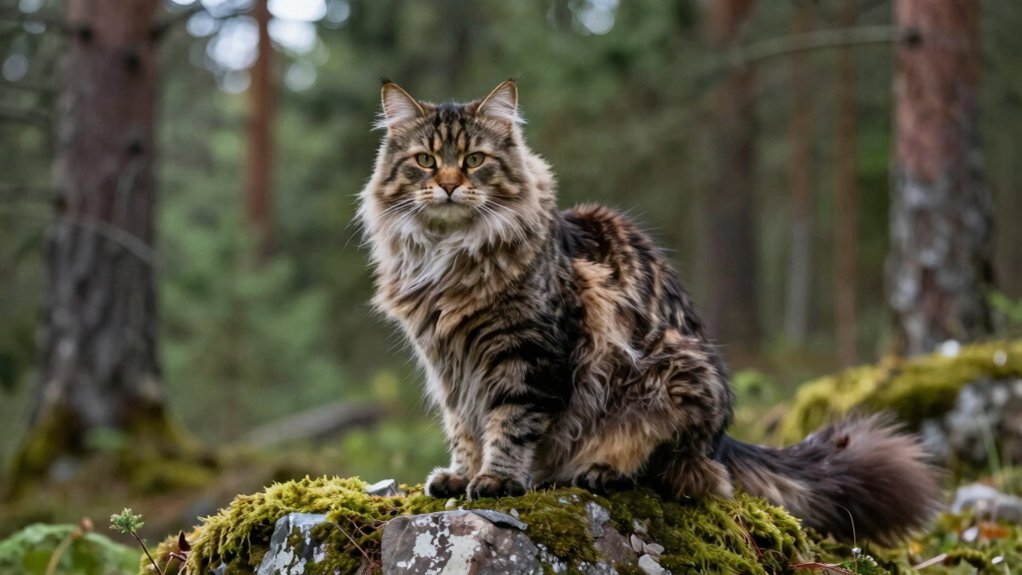
You’ll get a large, muscular, water‑resistant cat with a dense double coat, tufted ears, and an equilateral head that matures by about five years. You’ll need weekly grooming, more in seasonal sheds, measured high‑protein meals, and twice‑daily play plus climbing space to meet activity needs. Monitor cardiac and orthopedic health and choose tested breeders to reduce genetic risk. You’ll find a social, adjustable companion with informed care — continue for practical care steps and screening guidance.
Disclosure: This post may contain Amazon affiliate links, at no extra cost to you. Content on Pawtangle is created with research support from AI tools and carefully reviewed, edited, and fact-checked by the lead author, Dr.Fahri Pat , to ensure accuracy and reliability. Learn more
Key Takeaways
- Large, muscular long-haired breed with a water-repellent double coat, ruff, bushy tail, tufted ears, and almond-shaped eyes.
- Requires weekly grooming, increased brushing during spring shedding, ear checks, and twice-weekly teeth brushing.
- Needs high-protein measured meals twice daily, fresh water, kitten food until one year, and mixed wet/dry feeding.
- Daily enrichment: two 15–20 minute play sessions, sturdy climbing structures, and a window perch for mental stimulation.
- Regular veterinary screening for heart (HCM) and hip issues, plus choosing health-tested breeders to reduce genetic risks.
Origin and History
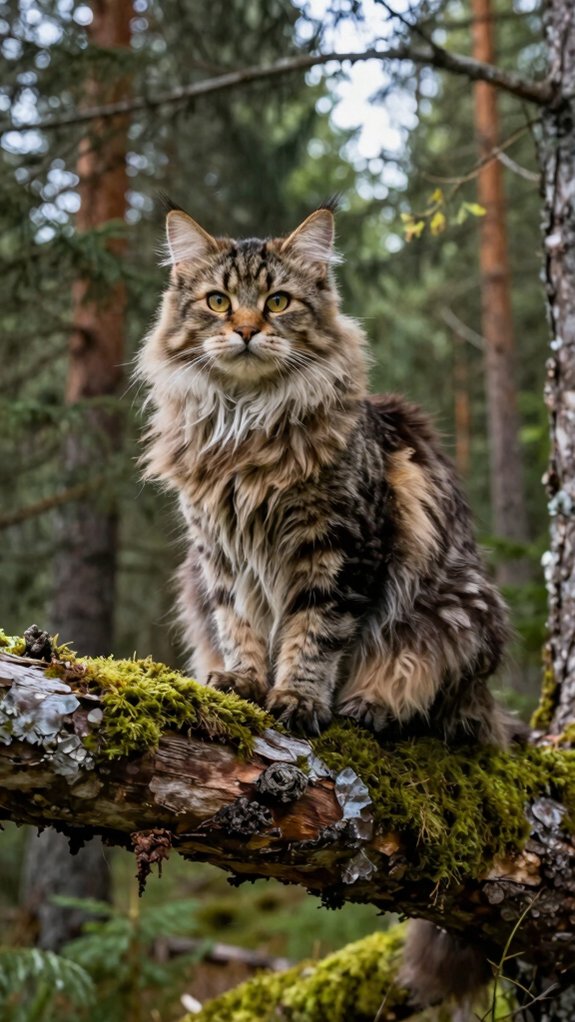
About 4,000 years ago, the Norwegian Forest Cat (skogkatt, or “wegie” in the U.S.) emerged as a sturdy working farm cat tied to Norse culture and mythology. You’ll find evidence linking the breed to Viking heritage and mythological significance: favored by Freya and likely transported to North America by late-900s adventurers. Official recognition in 1938 and U.S. championing by The International Cat Association in 1984 are documented milestones. Mid-1970s conservation efforts rescued the breed from near extinction caused by stray interbreeding; U.S. imports in 1979 expanded its community. You’re invited to join a tradition rooted in care and continuity.
Physical Appearance
The Norwegian Forest Cat presents a large, muscular frame that reaches adult proportions by about five years and typically weighs 9–16 pounds, reflecting its evolution as a working, outdoor-adapted breed. You’ll notice Norwegian characteristics in a dense, water-repellent double coat with a ruff and bushy tail, tufted ears with lynx tips, and an equilateral triangular head with almond eyes. These Forest features suit cold climates and function. Key visual traits you should expect:
- Double coat: insulating, water-repellent
- Ruff and tail: added protection
- Tufted ears with lynx tips
- Triangular head, almond eyes
This description is factual, respectful, and inclusive.
Size and Body Structure
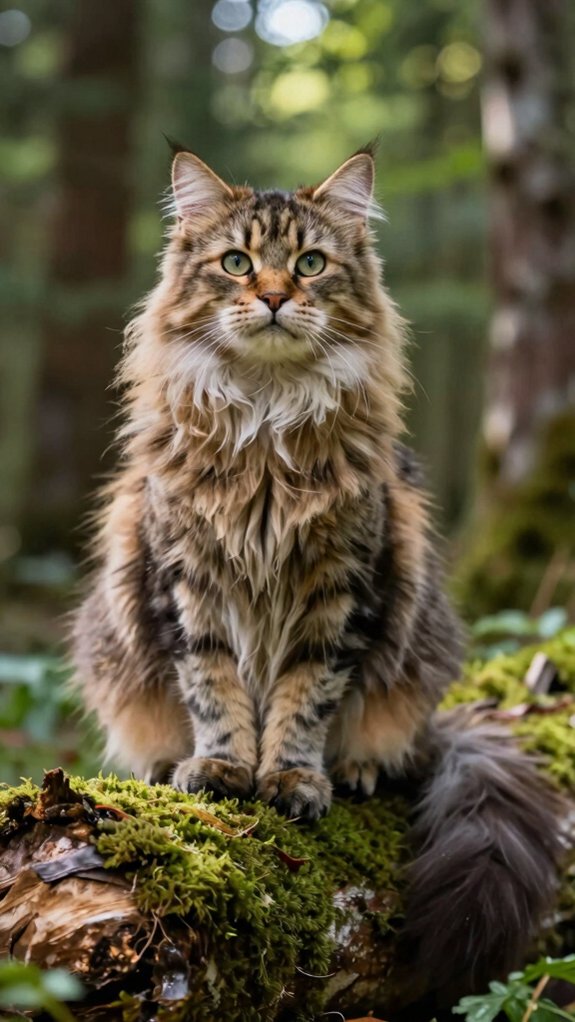
Norwegian Forest Cats typically present a substantial, muscular frame—males often reach 12–18 pounds while females range toward the lower part of the 9–18 pound spectrum—reflecting their adjustment to outdoor, working roles. You’ll note a long body with rear limbs longer than the front, creating a distinctive stance that supports climbing and leaping. Clinical observations report up to 36 inches in length and maturation by about five years. When evaluating weight range and body proportions, consider sex and age; measurements help identify healthy growth versus excess or deficit. You’re encouraged to track them to guarantee well-being and inclusion in care decisions.
Coat and Fur Features
Although adjusted to severe climates with a thick, water-repellent double coat, you should assess your cat’s fur for seasonal changes and grooming needs to maintain skin health and insulation. You’ll note a dense undercoat and longer outer guard hairs, plus a voluminous ruff and bushy tail. Evidence supports weekly brushing to prevent matting and reduce shedding, with heavier loss during spring molting. Respecting your cat’s needs nurtures belonging and care.
- Inspect coat weekly.
- Brush to remove loose undercoat.
- Monitor skin for irritation.
- Note color variations for identification and records.
Prioritize fur maintenance consistently.
Personality Traits
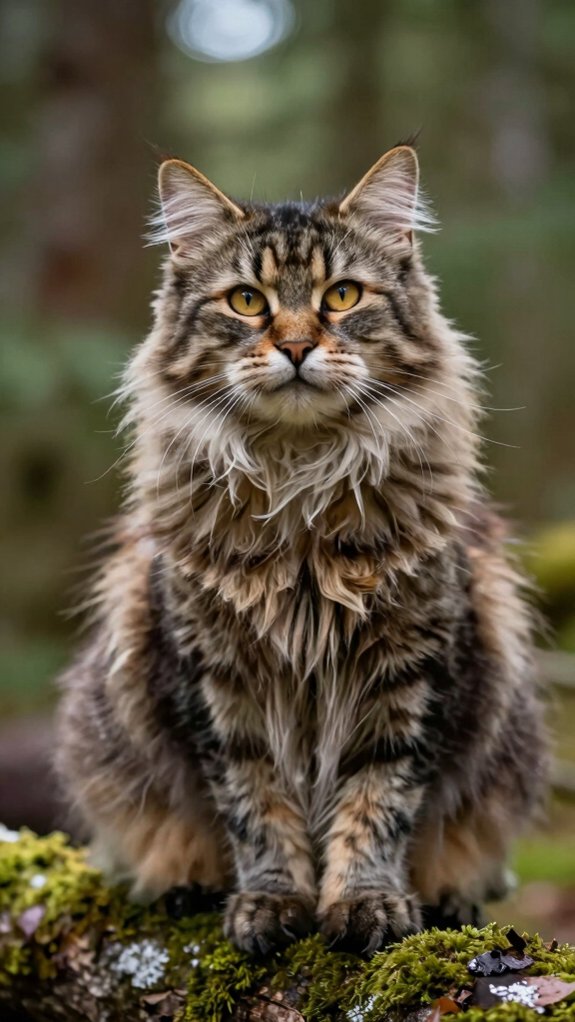
Personality-wise, you’ll find these cats both independent and affectionate: they seek companionship without demanding constant attention, show playful behavior well into adulthood, and tolerate children and other pets with notable gentleness. You’ll notice playful independence in how they entertain themselves, solve problems, and investigate, yet they remain socially present—preferring proximity over laps. Clinical observations report consistent gentle affection and tolerance, making them suitable for family settings where belonging matters. You can rely on steady interaction rhythms rather than needy contact. Expect intelligence, measured sociability, and predictable responses to routine, supporting harmonious, evidence-based care and attachment.
Behavior and Temperament
When you observe their behavior, these cats balance sociability with autonomy: they seek companionship and engaging play yet value independent exploration and will often entertain themselves. You’ll note social behavior that’s friendly but sometimes reserved with strangers; they’re seldom lap cats and prefer ambient proximity. Playful interactions persist into adulthood, reflecting sustained curiosity and problem-solving needs. They’re calm, patient, and typically tolerant with children and other pets. To support their temperament and mental health, provide structured enrichment:
- Puzzle feeders
- Vertical climbing spaces
- Engaging toys rotated regularly
- Predictable social routines
These measures encourage belonging and well-being.
Interaction with Humans
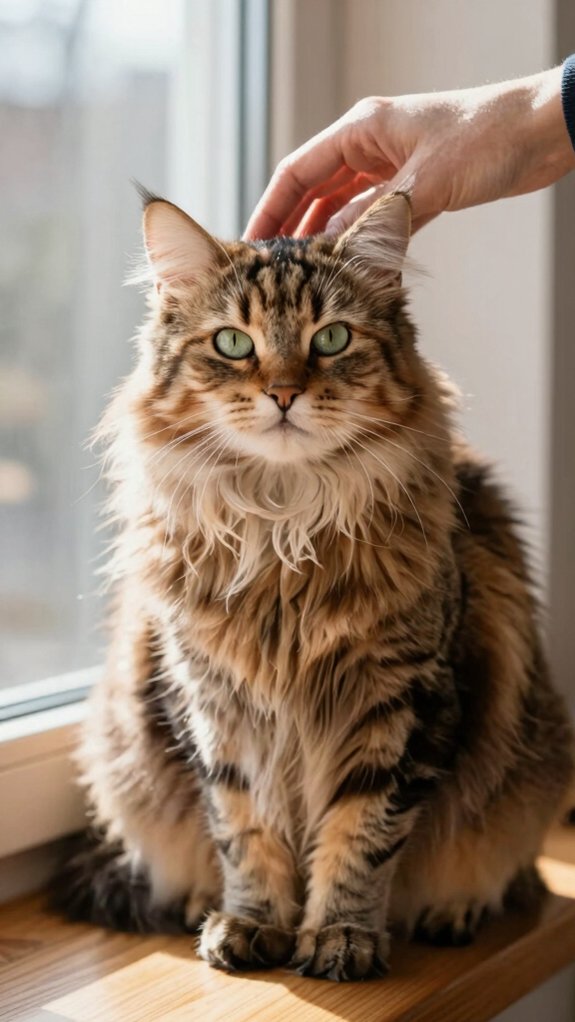
Because Norwegian Forest Cats balance independence with a clear affinity for people, you’ll find they seek regular companionship without demanding constant physical contact. You’ll notice strong social bonds: they stay near you, offer soft purrs and chirps, and prefer presence over laps. They handle solitude but welcome engaging play to stay mentally stimulated. They’re reserved with visitors, so build trust gradually. Below is a concise guide to interaction cues and needs:
| Behavior | What it means | How you respond |
|---|---|---|
| Nearness | Affection without sitting on you | Offer gentle attention |
| Purring | Contentment | Maintain calm presence |
| Chirping | Excitement | Initiate play |
| Independence | Self-entertainment | Provide toys |
| Reservation | Stranger caution | Slow introductions |
Compatibility with Children
Although they remain independent, Norwegian Forest Cats are patient and sturdy enough to make reliable companions for children, including energetic or sometimes rough play. You’ll find their playful interactions persist into adulthood, matching kids’ energy while offering gentle companionship when needed. Evidence suggests they tolerate handling better than more fragile breeds, but respect is crucial. Teach children boundaries and supervised play to reduce stress. Consider these simple guidelines:
- Model calm handling and petting technique.
- Limit overstimulation and provide retreat spaces.
- Rotate toys to encourage appropriate play.
- Reward gentle behavior from both child and cat.
These steps build safety and belonging.
Living with Other Pets
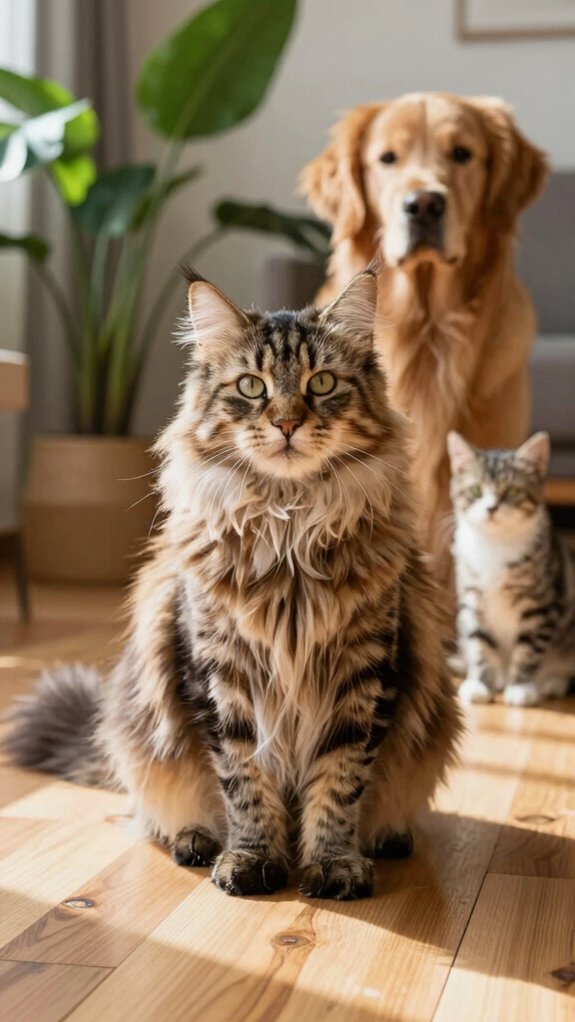
Having established how well Norwegian Forest Cats handle children, you can expect similar compatibility with other household pets. You’ll find they adjust readily, showing an independent yet social demeanor that supports peaceful coexistence. Evidence suggests respectful dogs and other cats often form bonds through playful interactions and mutual tolerance. Their patient, gentle temperament reduces aggressive responses to rough behavior, and their ability to self-entertain limits competition for attention. Observe social interactions closely during introductions, provide separate resources, and allow gradual exposure. With consistent, compassionate management, you’ll create an inclusive home where the breed’s adventurous spirit contributes to harmonious multi-pet living.
Daily Care Requirements
When you care for a Norwegian Forest Cat, consistent routines for grooming, exercise, and monitoring health will prevent common coat, weight, and mobility issues; weekly brushing (more during spring molt), twice-daily measured high-protein meals, and at least two 15–20 minute engaging play sessions each day form the backbone of their daily needs. You’ll provide daily grooming attention, meet their exercise needs, and create belonging through predictable care. Follow these practical daily tasks:
- Measured high-protein meals twice daily
- Two 15–20 minute stimulating play sessions
- Climbing access (cat tree/shelves) for stimulation
- Quick health checks: nails, ears, posture
Maintain consistency; it reduces stress and builds trust.
Grooming Routine
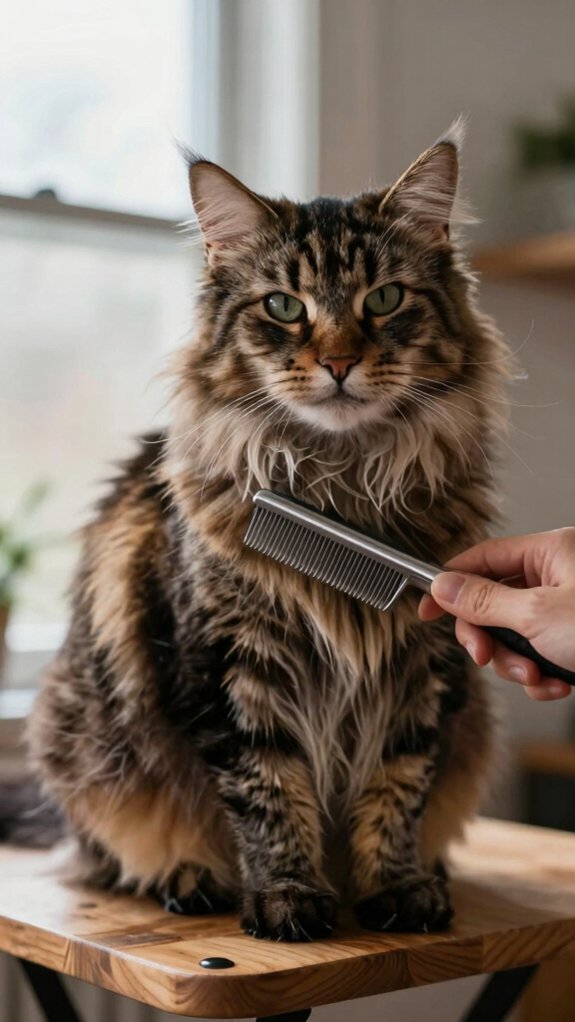
Because Norwegian Forest Cats have a dense double coat that molts seasonally, you should establish a weekly grooming routine (increasing frequency during the spring shed) using a stainless‑steel comb to detangle fur and distribute natural oils; during each session check for skin problems, parasites, or changes in coat condition, inspect ears for debris or signs of infection, and plan teeth brushing twice weekly while consulting your breeder about appropriate bathing products and techniques given the breed’s water‑repellent coat. You’ll use specific grooming tools and adjust grooming frequency based on coat condition and lifecycle.
| Action | Frequency |
|---|---|
| Brushing | Weekly (more in spring) |
| Combing | During brushing |
| Ear check | Every session |
| Teeth brush | Twice weekly |
| Bathing consult | As advised by breeder |
Nutrition and Diet Needs
Grooming sessions give you a regular chance to assess your cat’s body condition and appetite, which leads naturally into nutrition and diet needs for Norwegian Forest Cats. You’ll provide a high protein diet to support muscle and activity, keep kitten food until one year, and balance wet food with dry for hydration and dental health. Serve measured portions at least twice daily, monitor weight, and keep fresh water available. Use engaging feeders to stimulate hunting. Consult your veterinarian or breeder to tailor food by life stage and health. Shared care reinforces your bond and keeps the cat thriving.
- Protein focus
- Wet food inclusion
- Measured meals
- Vet consultation
Common Health Concerns
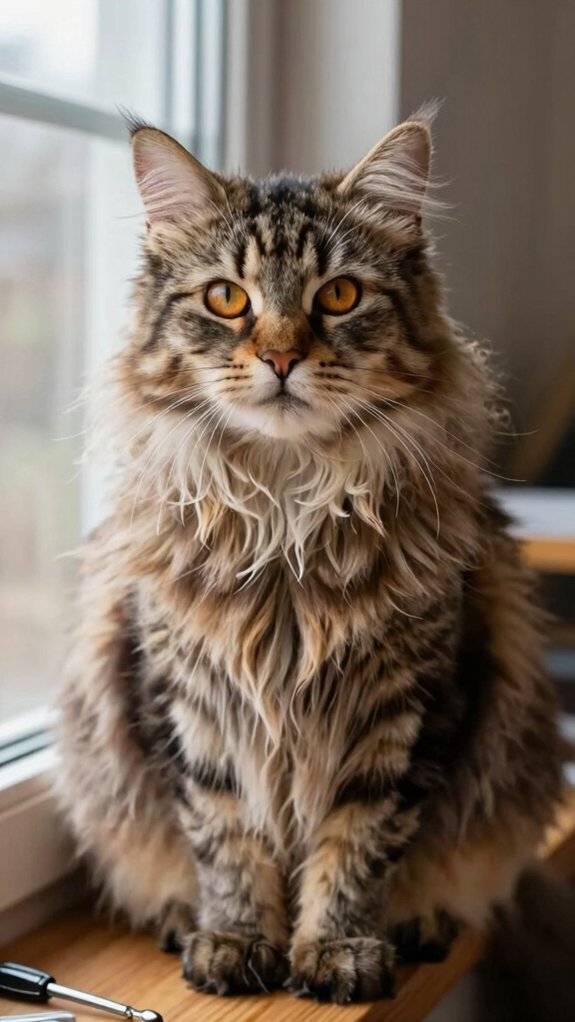
Several inherited and developmental conditions can affect Norwegian Forest Cats, so you’ll want a vigilant, evidence-based approach to their health. You should prioritize regular veterinary checkups, cardiac screening for hypertrophic cardiomyopathy (HCM), and orthopedic evaluation for hip dysplasia. Seek breeders who perform health testing to reduce risk of genetic conditions like glycogen storage disease type IV. Early detection improves outcomes and lifespan. You’ll find reassurance in clear records, supportive veterinary partners, and community resources that share evidence-based guidance.
| Condition | Screening | Action |
|---|---|---|
| HCM | Echo | Monitor/treat |
| Hip dysplasia | X-ray | Manage/surgery |
Activity Level and Play
Alongside routine health screening and early intervention for inherited conditions, meeting a Norwegian Forest Cat’s activity needs helps prevent obesity and supports musculoskeletal and cardiovascular health. You should provide at least two daily play sessions of 15–20 minutes, using engaging toys that stimulate hunting instincts and cognition. Include climbing structures and a window perch to satisfy exploration drives and enrichment needs. Consider these practical elements:
- Two daily engaging play sessions
- Varied puzzle feeders and chase toys
- Sturdy cat trees and vertical pathways
- Accessible window perch for visual stimulation
You’ll promote wellbeing, connection, and long-term mobility.
Advantages and Challenges of the Breed
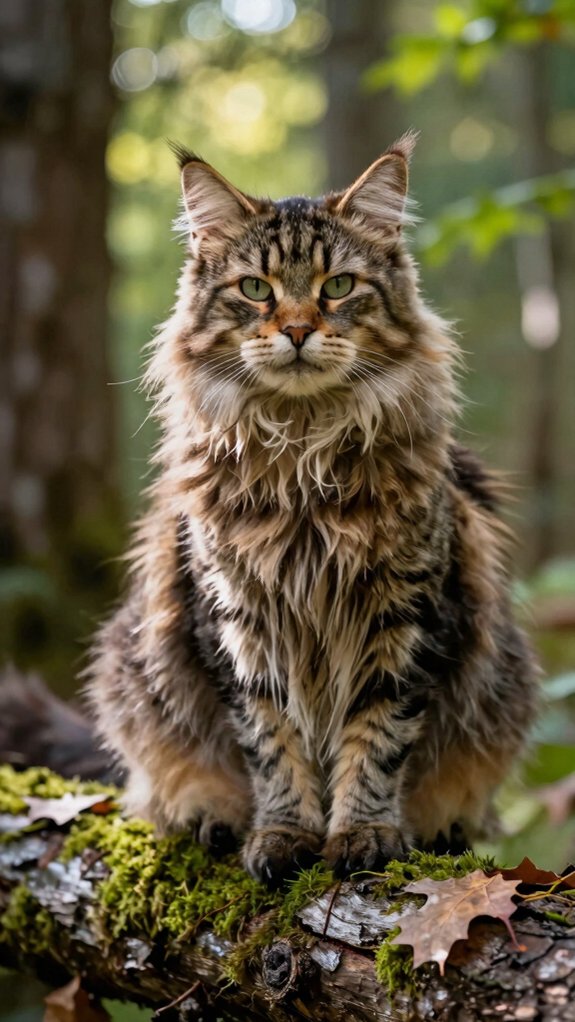
Although they’re broadly gentle and social, Norwegian Forest Cats present a mix of clear benefits and manageable challenges for owners. You’ll appreciate an advantages overview: family-friendly temperament, flexibility, and moderate grooming compared with some long-haired breeds. Challenges overview notes: seasonal heavy shedding, need for exercise, and hereditary risks like HCM and hip dysplasia requiring vet screening. You’ll belong to a caring routine that balances play, grooming, and health checks.
| Benefit | Requirement | Risk |
|---|---|---|
| Friendly with families | Weekly grooming | HCM screening |
| Good with pets | Engaging play | Hip dysplasia |
| Flexible home pet | Climbing structures | Seasonal molting |
Frequently Asked Questions
Do Norwegian Forest Cats Require Special Legal Permits or Registrations?
No, you typically don’t need special legal permits or registrations for Norwegian Forest Cats; legal requirements and breed regulations usually mirror those for other domestic cats, though breeders may follow extra registration standards with breed clubs for pedigrees.
Are They Hypoallergenic or Suitable for Allergy Sufferers?
Like a soft breeze, they’re not hypoallergenic; you’ll still trigger cat allergies despite diligent fur grooming. Clinical evidence shows no breed is allergy-free, but empathetic strategies—cleaning, air filters, testing—help you belong with less symptoms.
Can Norwegian Forest Cats Be Trained to Walk on a Leash?
Yes — you can leash train them; with gradual, reward-based steps you’ll build confidence, reduce stress, and enable safe outdoor exploration. Evidence shows consistent training and patience improve success and strengthen your bond and belonging.
Do They Adapt Well to Apartment Living Without Outdoor Access?
Yes — but wait: they’ll need more than patience. You’ll provide ample apartment space and deliberate indoor enrichment, following evidence-based routines; you’ll stay attentive, compassionate, and consistent so your cat feels secure, involved, and belonging.
Is Professional Breeding Certification Necessary When Buying One?
You don’t strictly need professional breeding certification, but you should prioritize breeder reputation and health guarantees; choose evidence-based records, ask about genetic testing, and trust breeders who communicate transparently so you feel welcomed and confident in your decision.