
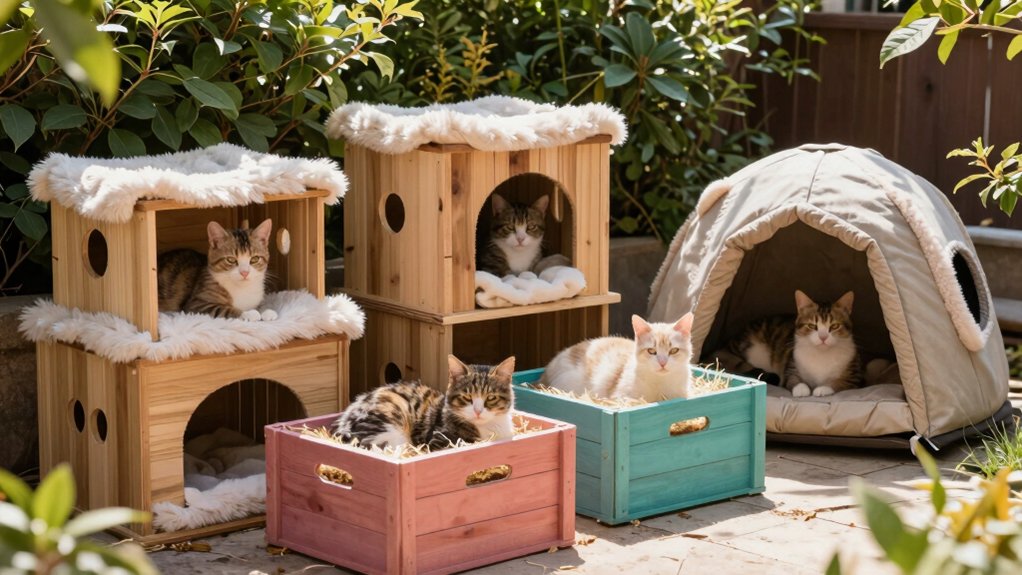
You can build or buy insulated, weatherproof shelters that keep outdoor cats warm, dry, and safe from predators. Use treated plywood or plastic bins with closed‑cell foam, straw bedding, raised floors, slanted roofs, and small 5.5–6 inch entries to reduce drafts and access by larger animals. Heated pads, waterproof tarps, or camouflaged huts work too. Maintain shelters monthly, replace bedding, and site them away from prevailing winds. Keep going and you’ll find specific designs, materials, and placement tips.
Disclosure: This post may contain Amazon affiliate links, at no extra cost to you. Content on Pawtangle is created with research support from AI tools and carefully reviewed, edited, and fact-checked by the lead author, Dr.Fahri Pat , to ensure accuracy and reliability. Learn more
Key Takeaways
- Insulated wooden shelters (plywood + foam board) retain heat and resist moisture for winter protection.
- Plastic storage bin shelters with inner insulation offer low-cost, weatherproof refuge.
- Straw-filled compact boxes provide dry, warm bedding and resist moisture better than blankets.
- Raised, small-entry designs (5.5–6″ opening) reduce drafts, predator access, and ground moisture.
- Heated pads or K&H-style heated units add safe warmth where temperatures drop dangerously low.
Insulated Wooden Shelter

An insulated wooden shelter gives outdoor cats durable, weather-resistant protection by combining a sturdy plywood shell with internal insulation like foam board to improve heat retention. You’ll find this shelter design reliably reduces heat loss when you place insulation materials between walls and seal joints; evidence supports plywood’s durability and foam board’s R-value for small enclosures. Raise the unit on pallets or bricks to limit ground moisture and preserve dry bedding. Keep an entry around 5.5–6 inches to allow cats in while reducing predator access. Incorporate a slanted roof and an awning over the doorway to shed precipitation. You’ll be providing a measurable improvement in safety and comfort for community cats, reinforcing belonging through intentional, practical care.
Plastic Storage Bin Shelter
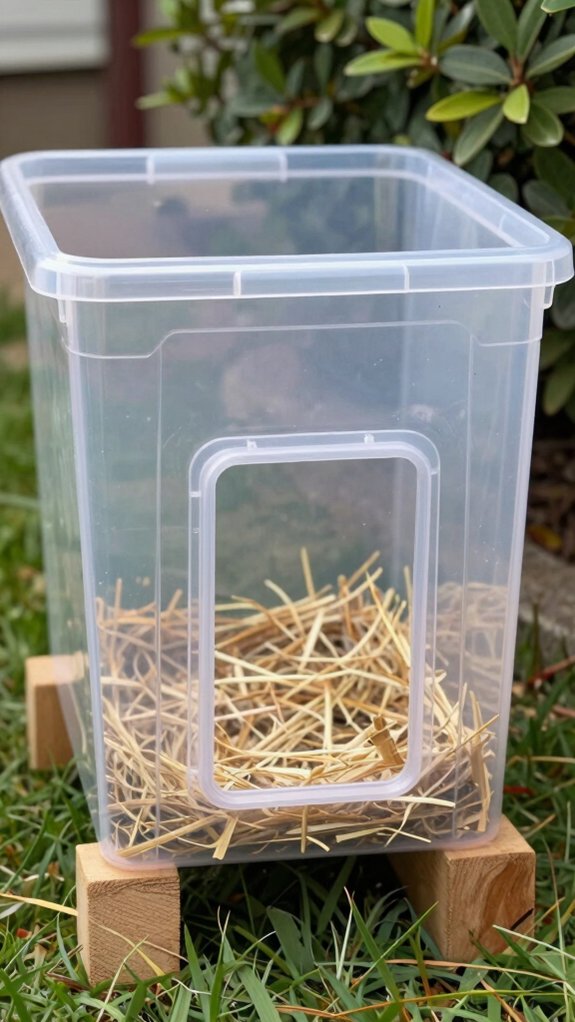
A plastic storage bin shelter offers a low-cost, evidence-supported option for keeping outdoor cats warm and dry by combining a rigid outer shell with an insulated inner chamber. You can build this using two bins: one outer shell with a small doorway cut above ground level and an inner bin that becomes the sleeping chamber. Line the outer walls with Styrofoam for winter insulation and raise the shelter on pallets or bricks to reduce ground moisture. Fill the inner bin with straw—its moisture-resistant properties support cat safety and warmth. Inspect the shelter regularly for dampness, replace bedding as needed, and verify the doorway remains unobstructed. This practical design lets you provide reliable, community-minded protection without complex tools.
Straw-Filled Winter Shelter
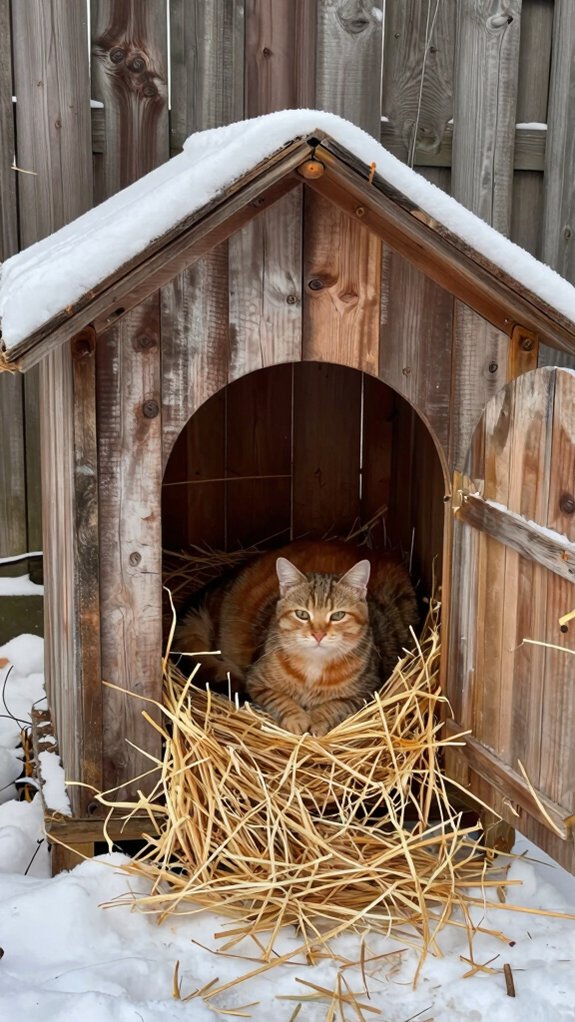
If you liked the simplicity of the plastic-bin design, consider a straw-filled winter shelter to improve insulation with minimal upkeep. You’ll create a compact interior to reduce air exchange, use a small (5.5–6 in) raised entrance, and place the unit off cold ground on pallets or bricks. Straw is moisture-resistant and retains heat better than hay or blankets, so applying winter insulation techniques is evidence-based. Check bedding often and replace soiled straw; follow straw maintenance tips to prevent dampness and disease. You’ll provide a reliable, low-cost refuge that honors community care.
| Feature | Purpose | Action |
|---|---|---|
| Small interior | Minimize drafts | Build tight walls |
| Raised entrance | Block snow | Position above ground |
| Straw bedding | Insulate | Replace when damp |
| Pallets/bricks | Moisture barrier | Raise shelter |
Raised Outdoor Cat Box
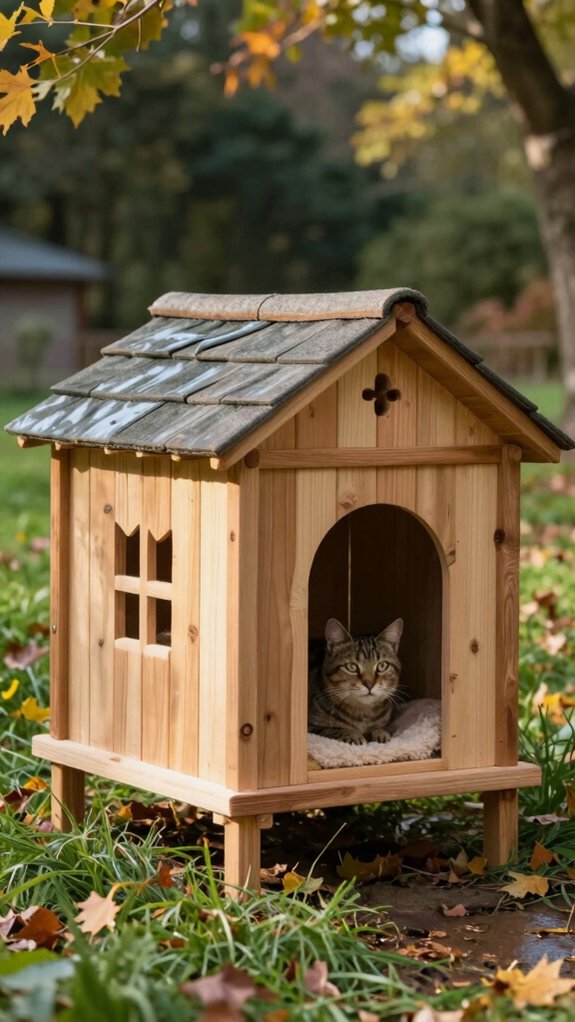
When you raise a cat box above ground level, you reduce moisture exposure, limit contact with cold soil, and make it harder for predators to access the shelter; studies and field experience show these factors improve outdoor feline comfort and survivability. You should use weather-resistant shelter materials like treated wood or plastic and insulate the floor with straw to retain body heat. Design small entry points and orient the box away from prevailing winds to minimize drafts and exposure. Anchor the structure securely and perform regular maintenance checks for dampness, rot, or loose fittings to preserve cat safety. When you care for these details, you build a reliable, durable refuge that helps cats feel protected and welcomed in your community.
Waterproof Tarp Shelter
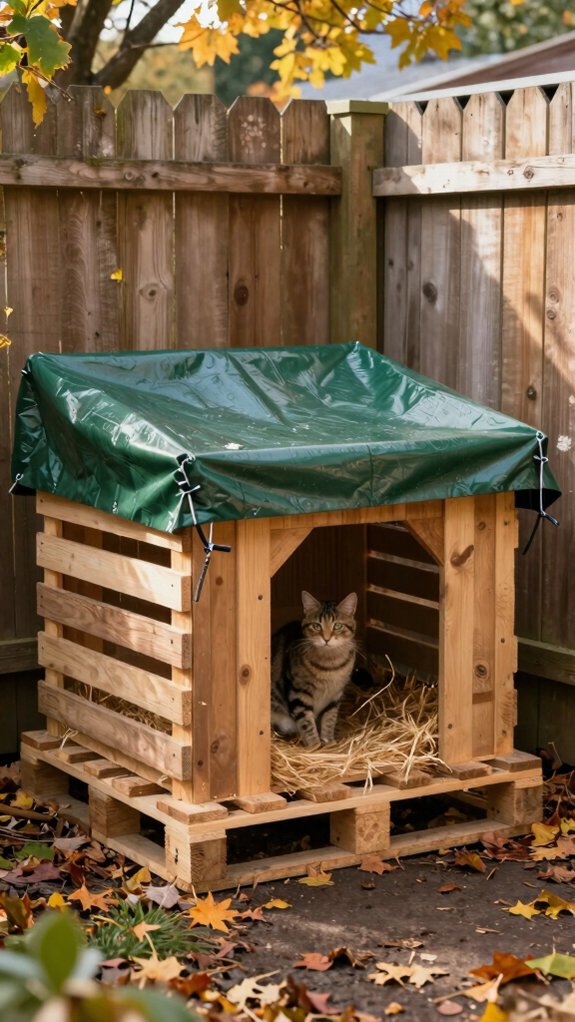
Raised boxes work well, but you might need a quicker, more portable option for emergency or temporary shelters; a waterproof tarp shelter offers that flexibility while still protecting cats from rain and snow. You’ll build a sturdy frame from wood or PVC, drape a durable tarp with a slanted roof for runoff, and line the interior with straw for insulation. Place it facing away from prevailing winds—shelter location advice matters for safety and comfort.
- Inspect tarp seams and anchors monthly — tarp maintenance tips prevent leaks.
- Raise the floor slightly to avoid ground moisture.
- Secure entrances to reduce drafts and allow easy cat access.
You’ll provide reliable, evidence-based protection while nurturing a welcoming space for cats.
DIY Foam Insulation Shelter
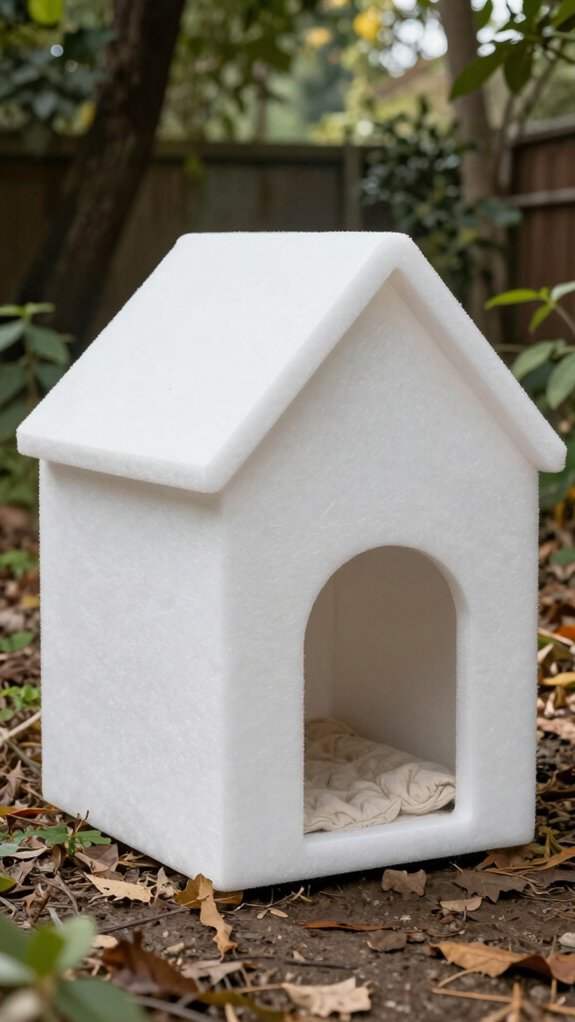
One practical option is a double-bin foam-insulated shelter that uses two plastic storage bins—an outer bin lined with Styrofoam and an inner bin filled with straw—to create a well-insulated, weather-resistant refuge for outdoor cats. You’ll cut a ~6×6-inch doorway above ground level to keep rain and snow out while preserving internal warmth. The straw offers dry, low-conductivity bedding that supports cat comfort and is easy to replace. Choose a snug-fitting lid on the outer bin so you can access the interior for routine cleaning without disturbing occupants. Inspect foam insulation regularly; moisture or dirt will reduce thermal performance. This evidence-based, compassionate approach helps you provide reliable shelter while connecting with others who prioritize safety and belonging for community cats.
Heated Outdoor Shelter
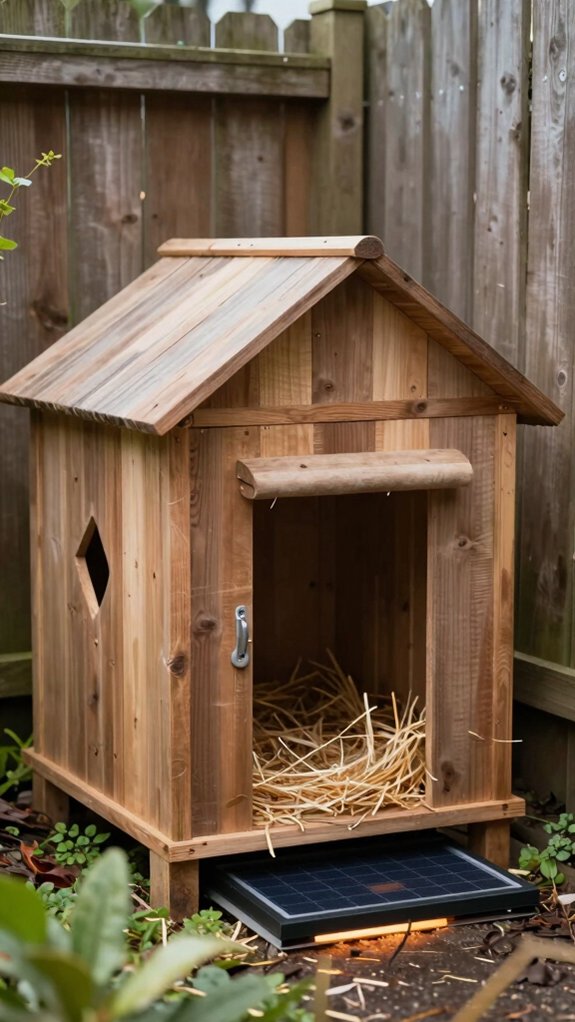
If you want to provide reliable warmth beyond passive insulation, a heated outdoor shelter offers an evidence-based option that actively maintains safe temperatures for cats in cold weather. You’ll choose units with a heated floor pad and insulated walls to reduce heat loss; thermostatic controls help maintain ideal warmth as conditions change. Straw bedding complements the system by retaining body heat while avoiding moisture buildup. Many models are weatherproof and user-friendly to assemble, promoting consistent care you can depend on.
- Verify thermostatic control and heating-element condition regularly.
- Use straw, swap bedding, and inspect for moisture.
- Position shelter to shield from wind, rain, and snow.
You’ll provide dependable, safe refuge and belonging for outdoor cats.
Porch Corner Cat Shelter
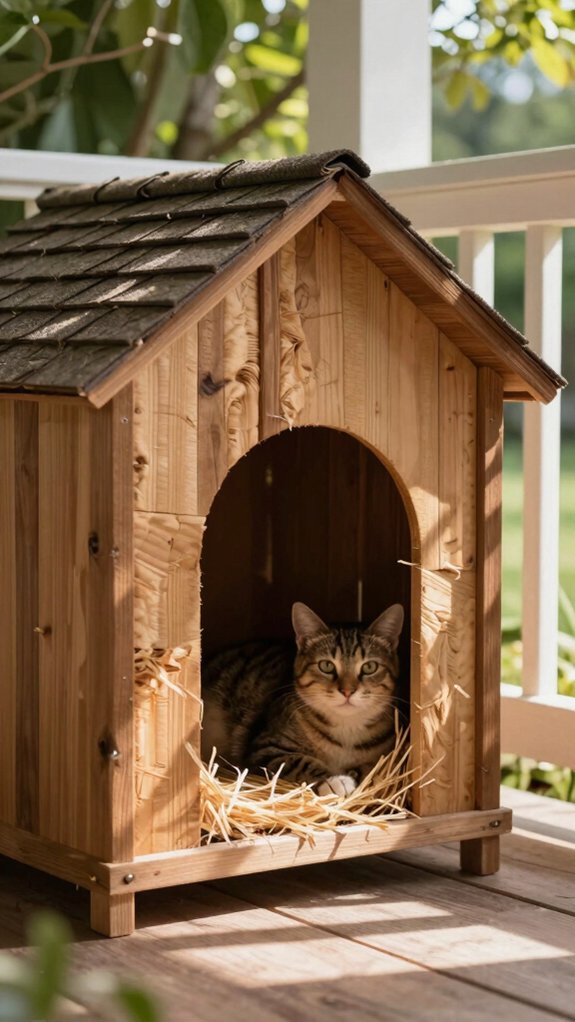
A porch corner cat shelter offers a compact, evidence-based way to protect outdoor cats by leveraging existing porch or patio structures to block wind and precipitation while creating a predictable, secure resting spot. You can fit a weather-resistant box of wood or plastic into an unused corner, reducing exposure and improving cat safety through natural windbreaks. Insulate with straw for thermal stability and include small, predator-deterring entry points sized for cats. Guarantee ventilation to limit moisture and respiratory risk; routine shelter maintenance—checking insulation, sealing gaps, and clearing debris—preserves function. Placing the shelter in a familiar corner promotes predictable use and social bonding, so you’ll provide consistent, measurable protection that respects feline behavior and cultivates belonging.
Recycled Cooler Shelter
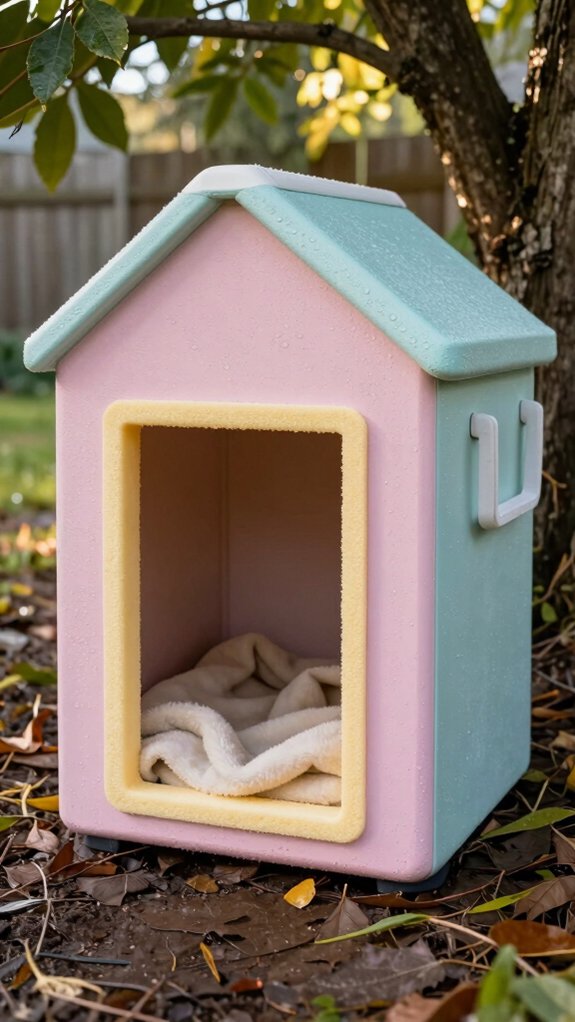
Porch corner shelters work well when you have a fixed structure, but when you need a low-cost, mobile option you can repurpose a thick-walled cooler to provide comparable protection. You’ll perform simple cooler modifications: remove the lid, cut a roughly 6×6-inch entry, and line the interior with straw to provide moisture-resistant insulation and allow burrowing warmth. Raise the unit on pallets or bricks to avoid ground moisture and promote a dry microenvironment. Maintain cleanliness by checking for damp straw and replacing as needed; this preserves thermal performance and reduces disease risk.
- Entry sizing: ~6×6 inches to exclude larger predators.
- Insulation: straw only — no blankets that retain moisture.
- Shelter placement: raised, sheltered, and accessible for regular checks.
Under-Deck Cat Shelter
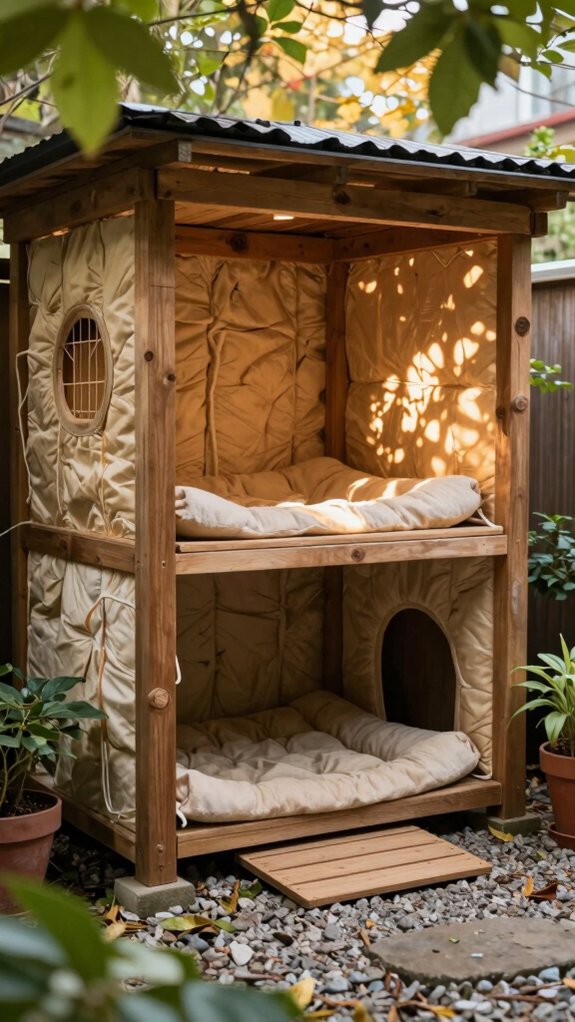
Because the space beneath a raised deck already offers shelter from precipitation and sun, you can convert it into a reliable refuge for outdoor cats by clearing debris, creating a dry insulated sleeping area, and controlling access to deter predators. You’ll apply under deck design principles: level a clean floor, add raised insulated beds (straw or foam), and fit a small entrance that limits larger animals. Emphasize shelter maintenance with scheduled inspections for moisture, pests, and structural hazards. Monitor occupancy and replace insulation seasonally to sustain warmth and hygiene. This evidence-based approach respects cats’ need for safety and community; you’ll feel connected by providing consistent, monitored refuge that balances comfort with protection.
| Task | Frequency |
|---|---|
| Debris removal | Monthly |
| Insulation check | Seasonal |
| Entrance inspection | Monthly |
| Pest control | As needed |
Two-Entry Safety Shelter
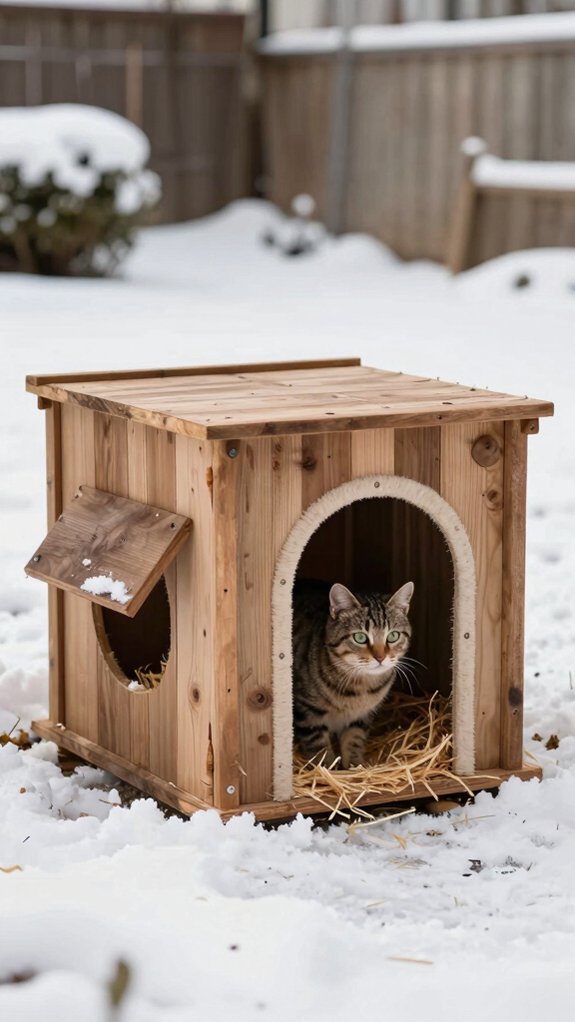
If you’ve used the space beneath a deck to shelter cats, you can apply similar principles to a compact two-entry safety shelter that gives animals multiple escape options while preserving warmth. You’ll design a small, insulated unit where two offset openings create reliable escape routes while reducing draft exposure. Place doorways away from prevailing winds and situate the shelter in a quiet, familiar spot to encourage use.
- Use straw insulation; it stays dry and supports heat retention.
- Keep the interior small enough to conserve warmth but large enough for movement.
- Position entries so cats can exit opposite perceived threats, maintaining sightlines.
This shelter design balances safety and comfort, offering your community cats predictable refuge and belonging.
Weatherproof Cat Hut
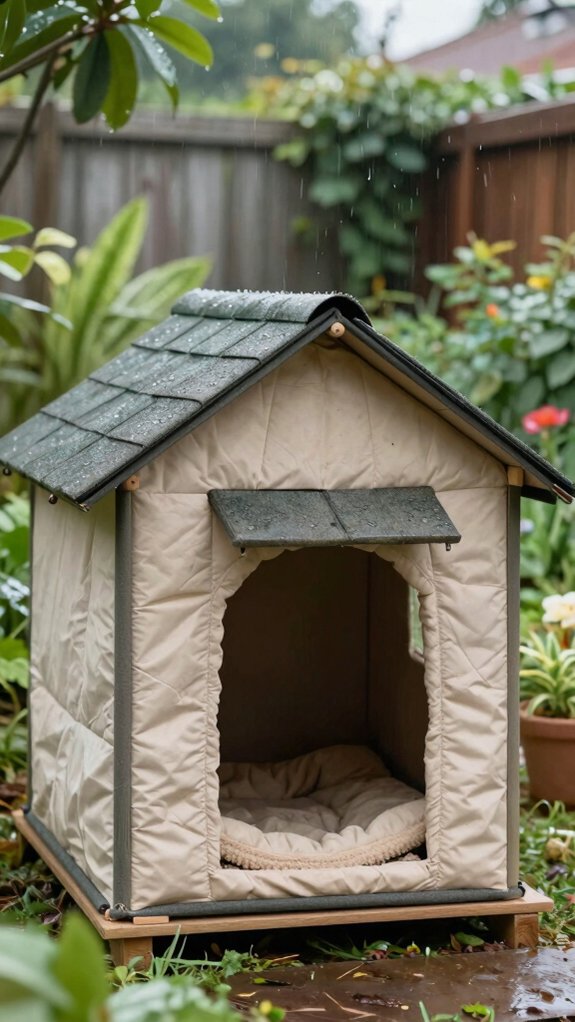
When you build or choose a weatherproof cat hut, prioritize materials and design features proven to keep outdoor cats dry and warm while minimizing moisture buildup and predator access. You’ll want insulation—straw or closed-cell foam—because evidence shows these reduce heat loss without trapping dampness. Choose material choices that are waterproof and durable: treated plywood, heavy-gauge plastic, or coated metal for exteriors combined with a raised floor to prevent pooling. Include a slanted roof and covered entrance to shed precipitation and limit drafts. Keep the entry small to deter predators while allowing comfortable access for cats. These choices balance safety, longevity, and comfort, and they help you provide a dependable shelter that welcomes community cats home.
Camouflage Garden Shelter
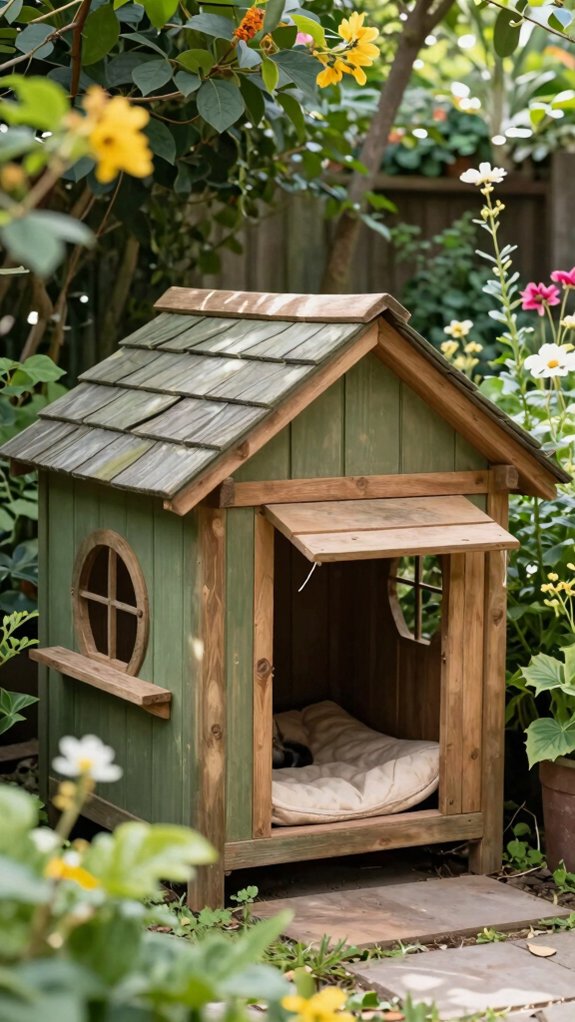
Having secured a weatherproof hut, you can additionally reduce stress and predator attention by situating a camouflage garden shelter that blends into plants or scenery features. You’ll create natural camouflage using shelter materials like faux rocks, low-profile planters, or decorative garden elements that mask entry points. Design considerations are evidence-based: insulation for warmth, ventilation to prevent moisture buildup, and drainage to avoid damp conditions. Routine checks and cleaning preserve function and safety. You’ll cultivate belonging for community cats by placing the shelter where they already feel safe and can access cover easily.
- Prioritize insulated core, but keep external profile low.
- Use durable shelter materials resistant to moisture and pests.
- Schedule regular inspections for hygiene and structural integrity.
Small Yard Cat Shelter
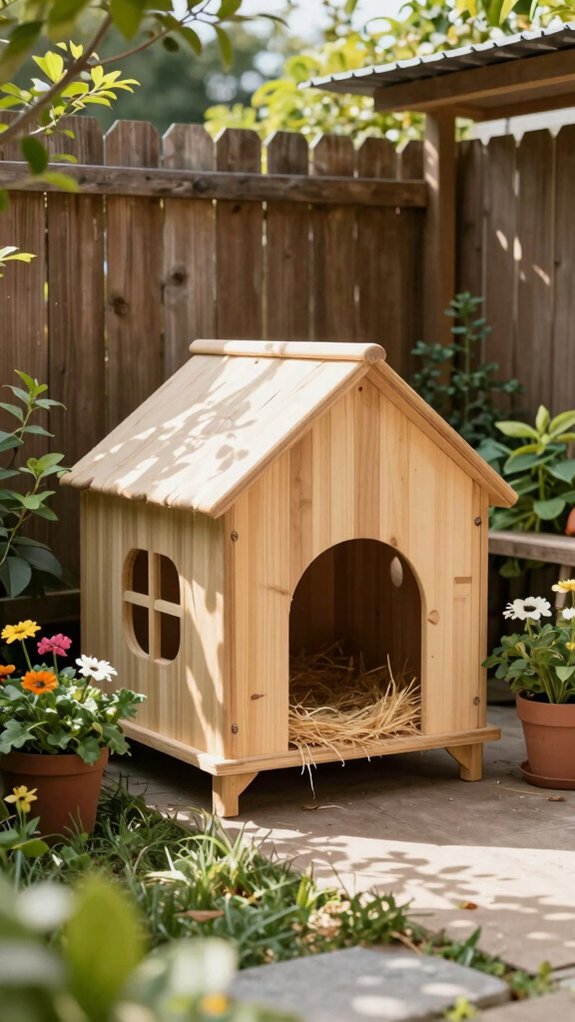
Although space is limited, you can provide a safe, dry, and warm shelter in a small yard by using sturdy repurposed materials (wooden pallets, insulated bins, or old dog houses), elevating the unit off the ground, and insulating the interior with moisture-resistant bedding like straw. You’ll choose cat shelter materials that balance durability and insulation; wooden pallets or insulated storage bins work well. Elevation on bricks prevents moisture transfer and keeps bedding dry. Fit an entrance no larger than 6 inches to deter larger predators while allowing access. Sit the shelter in a quiet spot, oriented away from prevailing winds, with some natural cover nearby for comfort but not obstruction. These steps support outdoor cat safety and create a welcoming space you’ll feel proud to maintain.
Community Cat Shelter
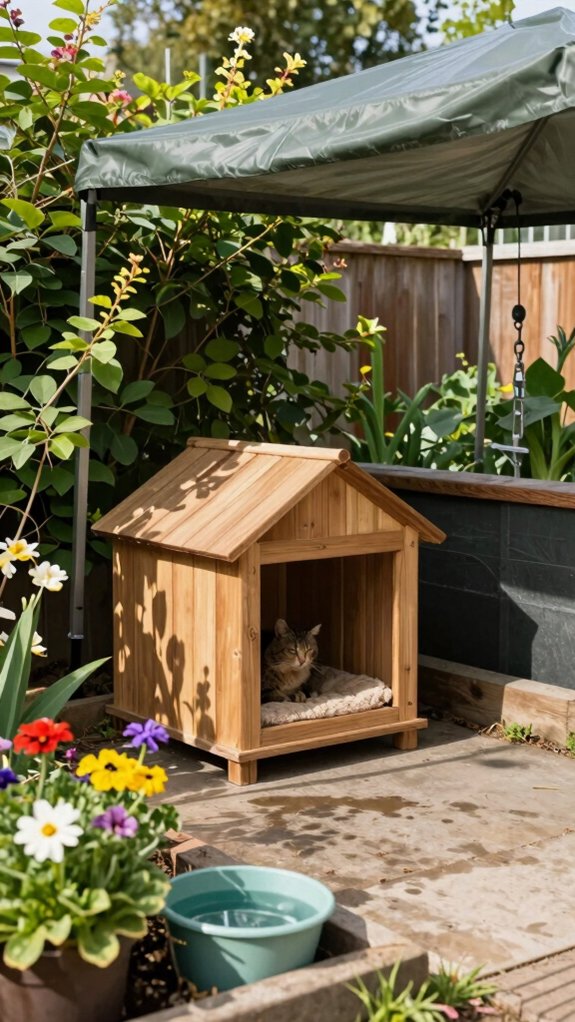
Community cat shelters offer a measurable way to improve the welfare of feral and stray cats by providing insulated, raised refuges that reduce exposure to cold, moisture, and predators. You can support colony health by selecting insulated designs (DIY or pre-built), elevating shelters, and locating entrances away from prevailing winds. Evidence shows these interventions reduce hypothermia risk and allow caregivers to monitor cats for TNR and medical needs.
- Choose insulation and elevation to limit moisture and predator access.
- Use proven designs (Alley Cat Allies DIY or K&H heated models) matched to budget and skills.
- Coordinate with neighbors and volunteers to maintain shelters and document outcomes.
Prioritize community involvement to strengthen cat welfare and shared responsibility.
Frequently Asked Questions
Can Outdoor Shelters Attract Predators or Pests?
Yes, they can. You’ll reduce risk with predator avoidance measures and pest prevention: raise shelters, secure entrances, use sturdy materials, seal gaps, install motion lights, and clean regularly—evidence shows these steps lower threats while supporting your community.
How Do I Secure a Shelter Against Theft?
You secure it by choosing sturdy shelter materials and installing tamper‑resistant locking mechanisms; bolt the base, anchor to ground, hide fasteners, use keyed or combination locks, and check regularly—these evidence‑based steps protect belongings and reassure you.
Can Trapped Moisture Cause Illness in Insulated Shelters?
An ounce of prevention—yes, trapped moisture can cause respiratory infections and hypothermia in insulated shelters. You’ll need ventilation solutions and moisture-wicking insulation materials; we’ll support you with evidence-based steps to protect every cat.
What Permits Are Needed for Community Cat Colonies?
You typically need permits conforming to community guidelines and local zoning laws: nuisance, animal control, or public health permits may apply, and you’ll coordinate with authorities; we’ll help navigate requirements so your colony feels safe and accepted.
How Do Shelters Impact Local Wildlife and Birds?
Shelters can increase predation risk if cats’ hunting persists; you’ll observe altered cat behavior and potential declines in local bird populations, upsetting ecosystem balance. You’ll need evidence-based mitigation and inclusive stewardship to protect wildlife.