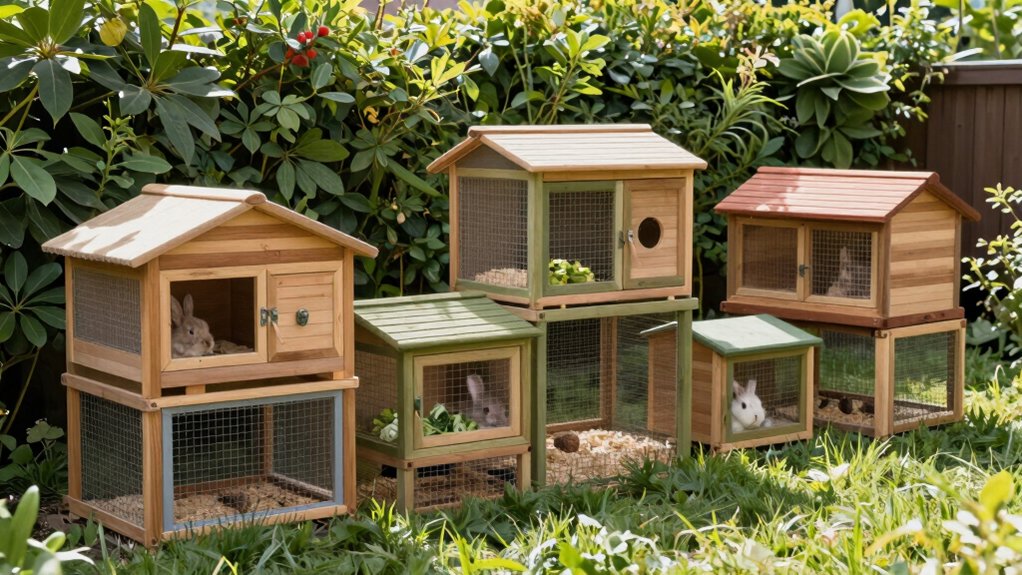
You can give your rabbit a safer, more comfortable outdoor home by choosing designs that balance weatherproofing, ventilation, and predator protection. Pick a raised wooden hutch or A-frame for runoff, add mesh ventilation and shade roofing to prevent overheating, and use insulated walls or a cozy den for winter. Include an enclosed run or multi-level platforms for exercise, plus secure locks and buried wire to stop tunneling. Keep cleaning and maintenance simple, and investigate more ideas to enhance your setup.
Disclosure: This post may contain Amazon affiliate links, at no extra cost to you. Content on Pawtangle is created with research support from AI tools and carefully reviewed, edited, and fact-checked by the lead author, Dr.Fahri Pat , to ensure accuracy and reliability. Learn more
Key Takeaways
- Choose a sturdy, predator-proof design (heavy-gauge welded mesh, buried barriers, double locks) to keep rabbits safe.
- Provide proper ventilation and shade (mesh panels, high vents, and a shade roof) to prevent overheating and condensation.
- Include insulated, cozy sleeping areas with small vents and soft bedding for warmth during cold weather.
- Add enrichment like ramps, platforms, hiding shelves, and an attached run to encourage exercise and natural behaviors.
- Plan maintenance-friendly features—removable droppings trays, sealed wood, and accessible doors—for easy cleaning and longevity.
Raised Wooden Hutch
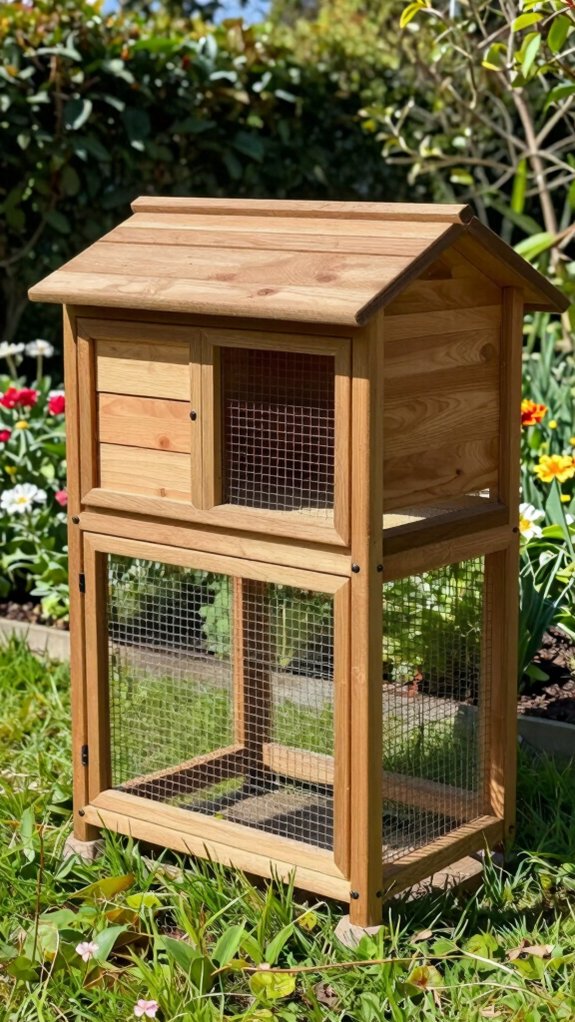
When you choose a raised wooden hutch, you get a sturdy, roomy home—typically about 7 feet long and 30 inches deep—that gives rabbits space to move and a dry, ventilated spot off the ground. You’ll appreciate internal wire mesh that stops chewing and prolongs the structure while a den area supplies shelter and security. Elevation reduces moisture and improves airflow for comfort and health. Include a bonus shelf for rabbit behavior enrichment and plan regular cleaning, repairs, and protective coatings as hutch maintenance tips. You’ll create a safe, active refuge where your rabbits—and you—feel cared for.
Weatherproof A-Frame Design
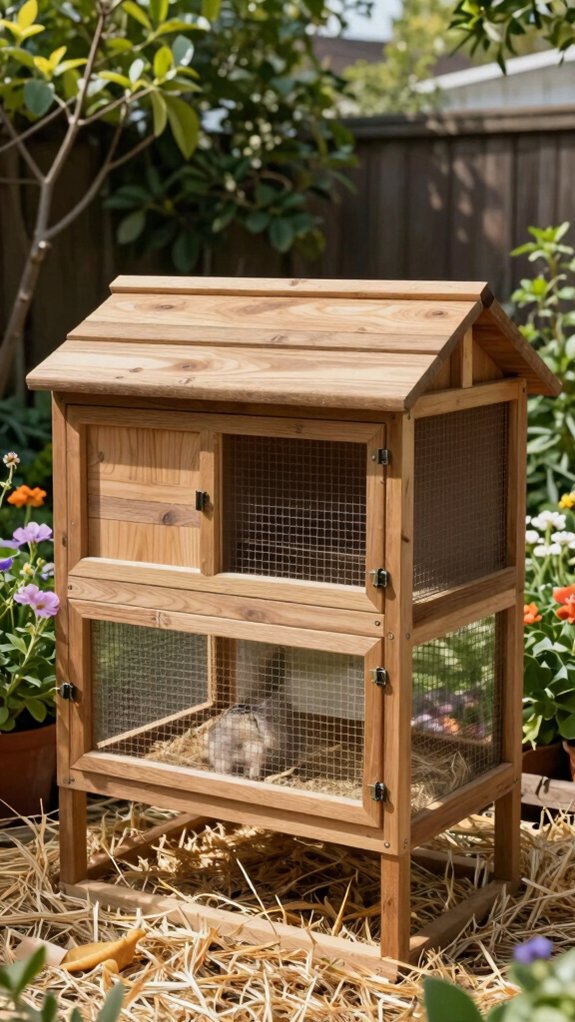
If you liked the raised wooden hutch for height and airflow, consider an A-frame weatherproof design for even better water and snow shedding. You’ll appreciate A frame advantages: the steep roof forces runoff away, preventing pooling and damp bedding. Build with weatherproof materials—treated timber, metal flashing, and sealed joints—to withstand wind and precipitation. Keep the hutch raised to reduce ground moisture and add insulation against temperature swings. Place ventilation openings high and sheltered to allow fresh air without direct drafts. The efficient A-frame layout gives cozy lounge and living zones for rabbits, supporting comfort, safety, and a shared sense of care.
Multi-Level Hutch Layout
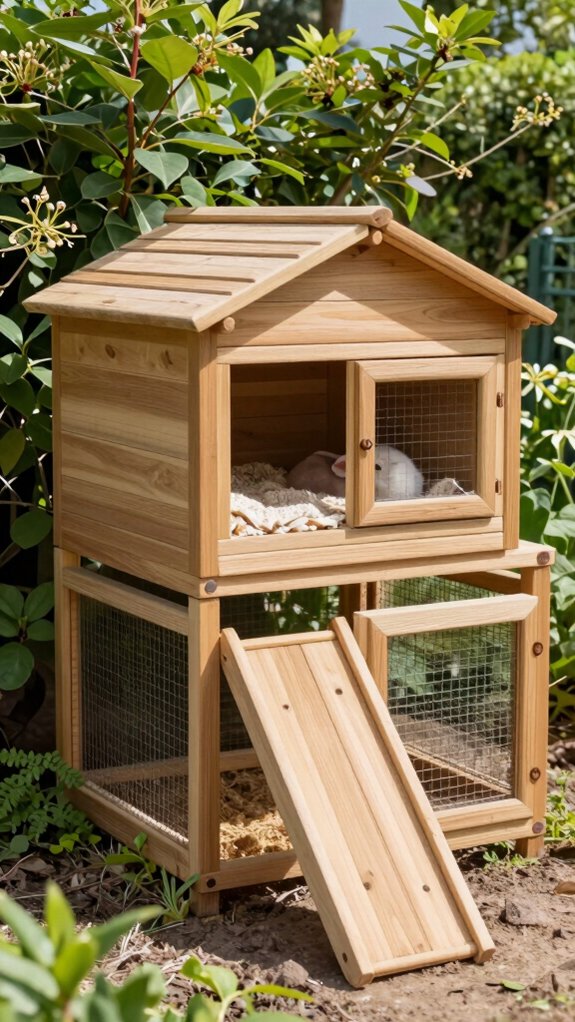
Although compact yards can limit floor space, a multi-level hutch lets you expand vertically so your rabbits get more room to hop, climb, and investigate. You’ll create varied zones that support welfare, using climbing platforms, ramps, and tunnels to increase exploration opportunities and mimic natural behaviors. Guarantee ventilation on each level and avoid steep inclines for safety. Build with durable, chew-resistant materials and add soft bedding in hide areas. Share tasks with family or friends so maintenance feels communal.
- Ramps with gentle slopes
- Sturdy climbing platforms
- Enclosed tunnels for security
- Open upper level for airflow
Hutch with Enclosed Run
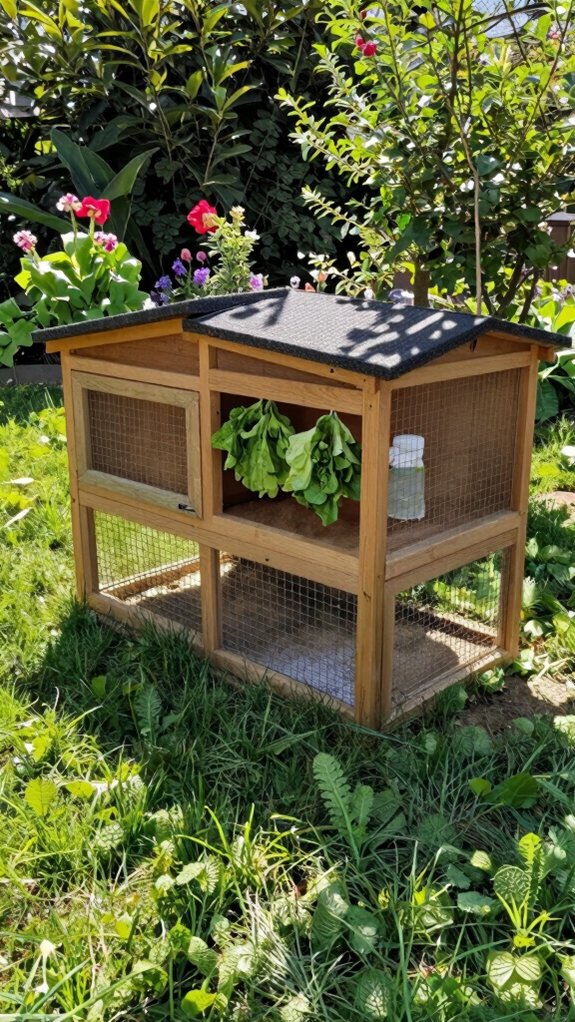
Moving from stacked levels to a setup that blends shelter and play, a hutch with an enclosed run gives your rabbits a safe space to rest and enough room to exercise without constant supervision. You’ll provide a cozy sleeping area linked to a wire mesh run that encourages bunny exercise, fresh air, and sunlight while keeping predators out. Raise the hutch to avoid ground moisture and improve insulation. Add ramps between levels so your rabbits investigate and stay active. Use reinforced corners and secure enclosure locks to prevent intruders. This practical design supports health, enrichment, and the sense that your rabbits belong in a safe home.
Insulated Winter Hutch
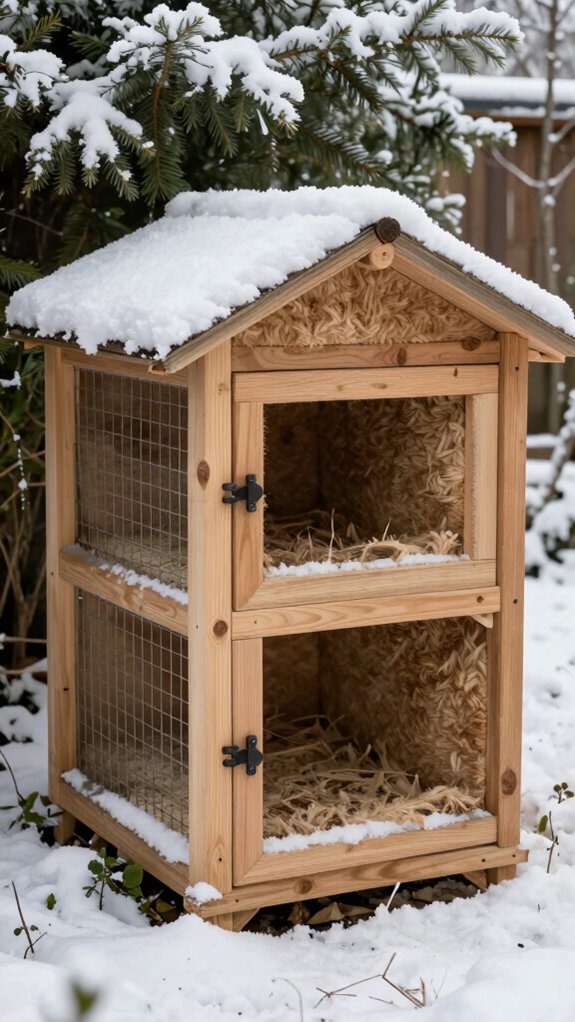
When temperatures drop, design an insulated winter hutch that keeps your rabbits warm and dry without trapping moisture—use solid insulated walls and a well-sealed roof (rigid foam board or insulated plywood), create a snug den area packed with straw or hay for nesting, and include small, well-placed ventilation vents to prevent condensation. You’ll focus on winter insulation, raised flooring, and cozy bedding to protect health and comfort. Build with care so every rabbit feels secure.
- Solid insulated walls and sealed roof for heat retention.
- Raised base to avoid ground dampness.
- Snug den with straw or hay nesting.
- Small vents and removable entrance flap.
Open-Air Mesh Hutch
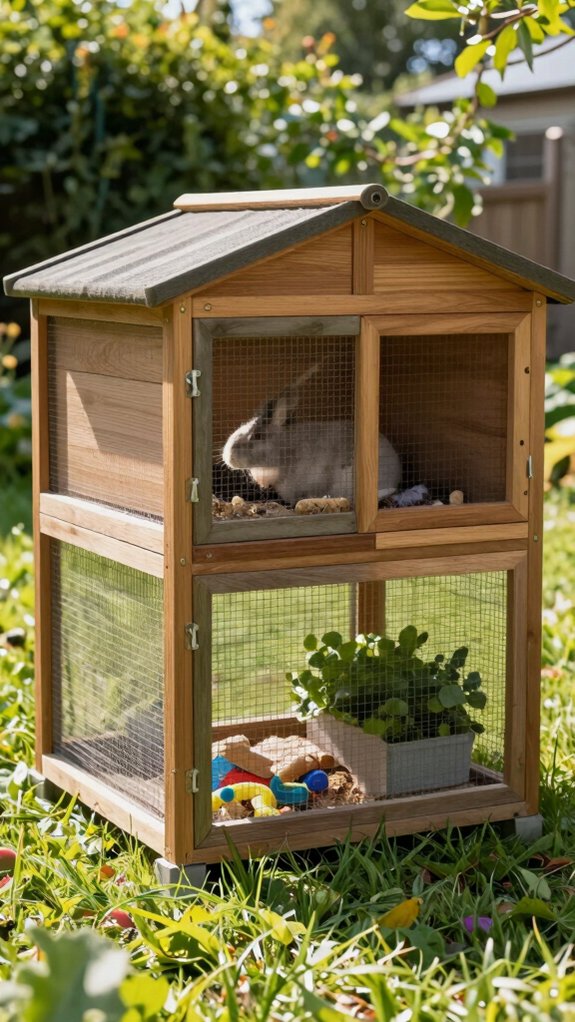
If you want your rabbits to benefit from fresh air and sunlight without sacrificing safety, an open-air mesh hutch gives excellent ventilation, predator protection, and easy integration with outdoor runs. You’ll appreciate the ventilation benefits: wire mesh promotes steady airflow and natural light, reducing dampness and respiratory risks. Raised construction keeps bedding dry and creates a cozy sleeping spot off the ground. The mesh design lets rabbits exercise and investigate when coupled to an outdoor run, supporting physical and mental welfare. Check mesh integrity regularly, tighten fastenings, and repair damage quickly to maintain predator protection and long-term safety.
Hutch with Storage Compartment
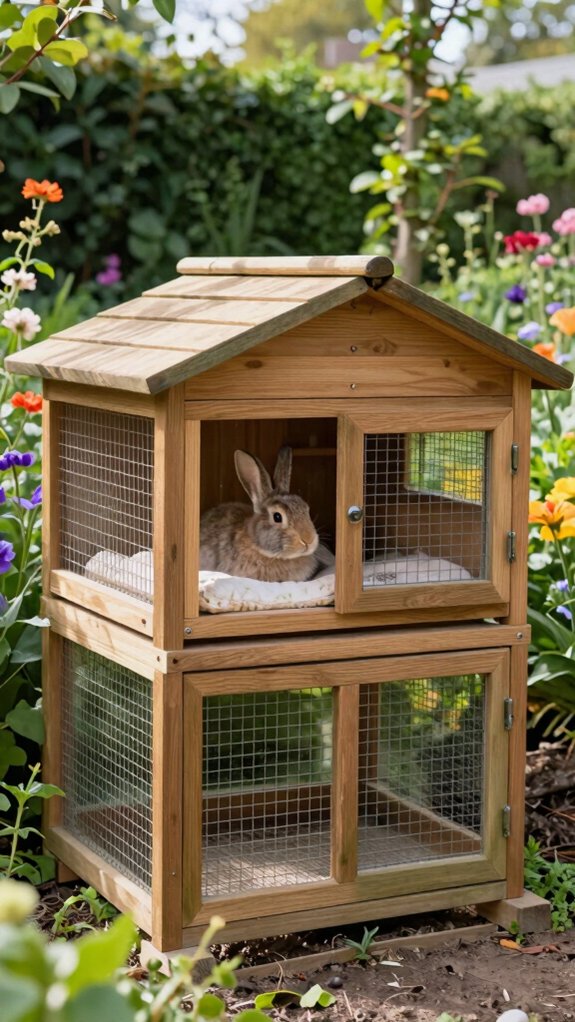
A hutch with a built-in storage compartment lets you keep food, bedding, and cleaning supplies organized and weather-protected without cluttering the rabbit’s living area. You’ll appreciate a thoughtful hutch design that places a lockable, weather-resistant compartment beneath the main enclosure, maximizing space and protecting supplies. It supports storage organization while keeping the living area clean and safe, and it can be finished to match your garden for a sense of home.
- Use treated wood or metal for durability.
- Include ventilation to prevent damp.
- Add removable bins for easy access.
- Secure latches to protect supplies.
Portable Hutch on Wheels
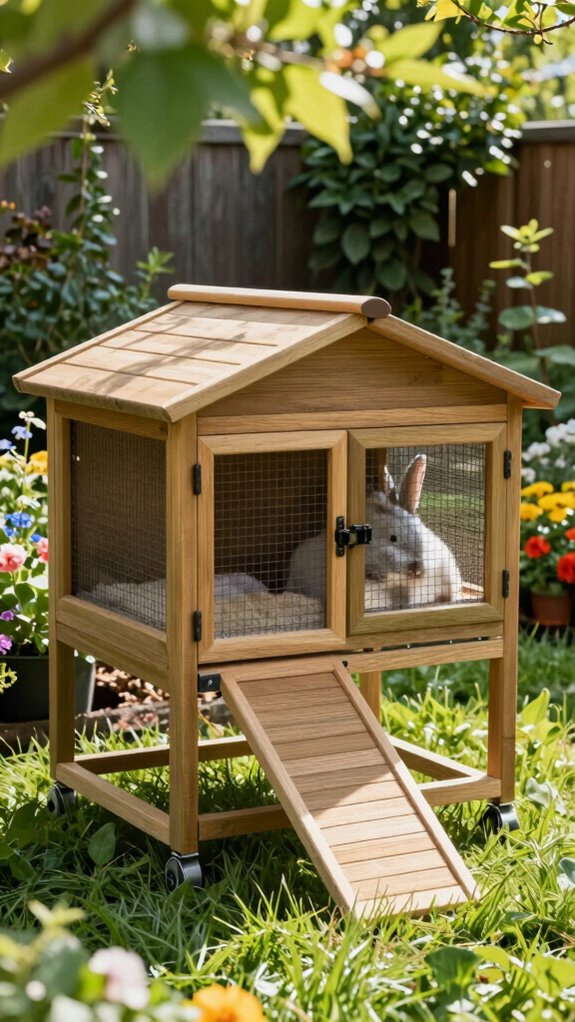
You can keep supplies tucked under a stationary hutch, then move on to a portable hutch on wheels to give your rabbit fresh grazing and variety. You’ll choose lightweight wood or PVC for durability and ease of movement, with sturdy, lockable wheels to secure the unit and protect rabbit health. Include wire mesh for ventilation and sunlight while deterring predators. Design ramps and multiple levels to promote exercise and mental stimulation. Regular hutch maintenance—checking wheel locks, cleaning mesh, and inspecting materials—keeps your rabbit safe and comfortable. This approach helps you and fellow rabbit keepers share reliable, welfare-focused solutions.
Corner Garden Hutch
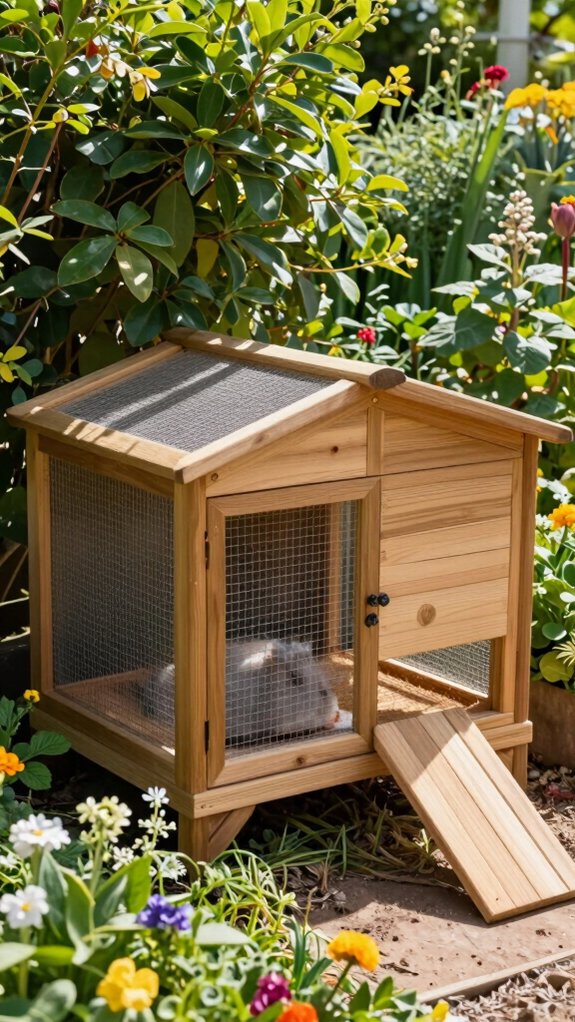
When you tuck a triangular hutch into an unused garden corner, you’ll save space while giving your rabbit a secure, sheltered home that still gets fresh air and sunlight. You’ll appreciate corner hutch benefits: the triangular design fits snugly, optimizes yard use, and feels cozy for your rabbit. Build solid wooden walls with a wire mesh front for ventilation and predator protection. Add a base run for safe exercise and include shelves or platforms for exploration. Your care creates belonging and wellbeing through thoughtful layout, sturdy materials, and easy access for cleaning, feeding, and regular interaction.
- Triangular design placement
- Solid walls + mesh
- Built-in run
- Shelves for enrichment
Hutch with Shade Roof
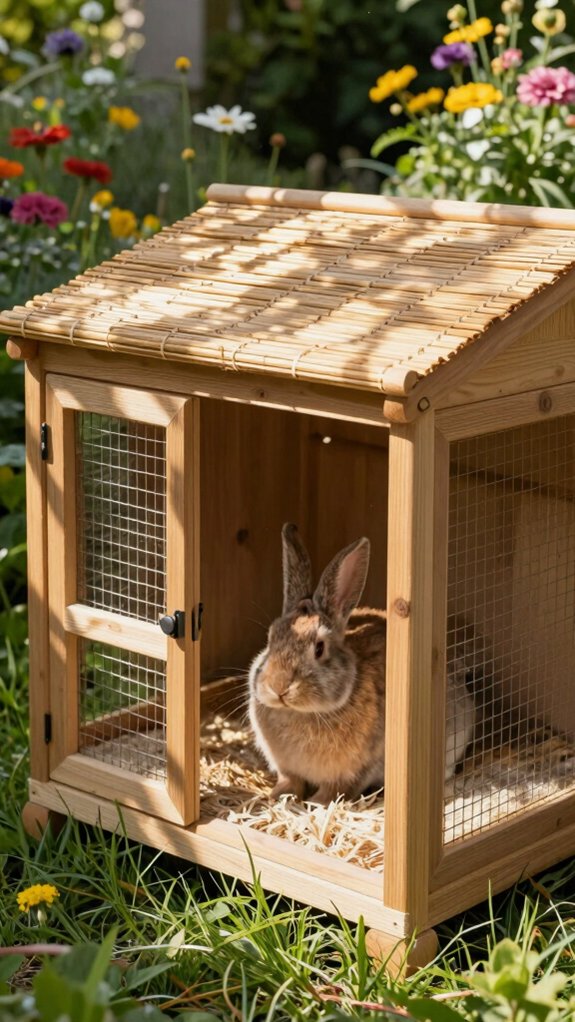
If your rabbit spends any time outdoors in warm weather, give its hutch a shade roof to prevent overheating and reduce stress by creating a reliably cool retreat. Choose durable shade materials like corrugated plastic or canvas so light filters while blocking sun. Add ventilation options: raised eaves, screened vents, or adjustable panels to keep airflow steady. Inspect the roof often for wear and replace as needed. You’ll help your rabbit feel safe and included in your care routine.
| Benefit | What to check |
|---|---|
| Cool retreat | Roof integrity |
| Airflow | Vent placement |
Predator-Proof Wire Design
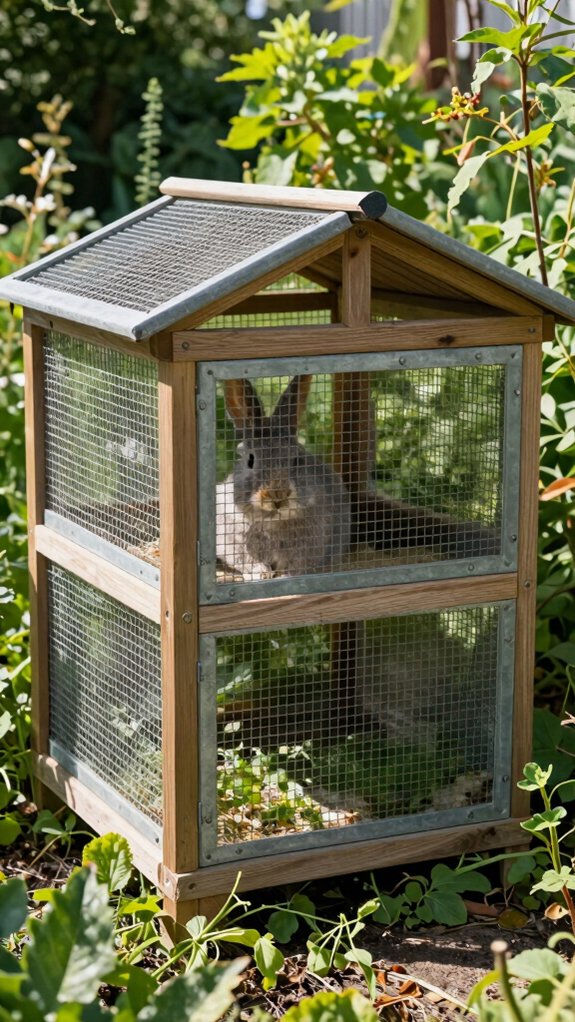
Adding a shade roof helps keep your rabbit cool, but you also need a secure wire design to keep it safe from ground and aerial predators. You’ll use heavy gauge welded mesh for wire mesh security, burying it twelve inches to stop tunneling and adding a solid roof for bird-of-prey protection. Reinforce corners and joints to resist forced entry, and fit double locks on doors for reliable predator deterrence. Build with care so everyone feels included in the rabbit’s safety.
- Heavy gauge welded wire with small openings
- Bury mesh at least 12 inches deep
- Secure roof installation
- Reinforced joints and double locks
Rustic Farm-Style Hutch
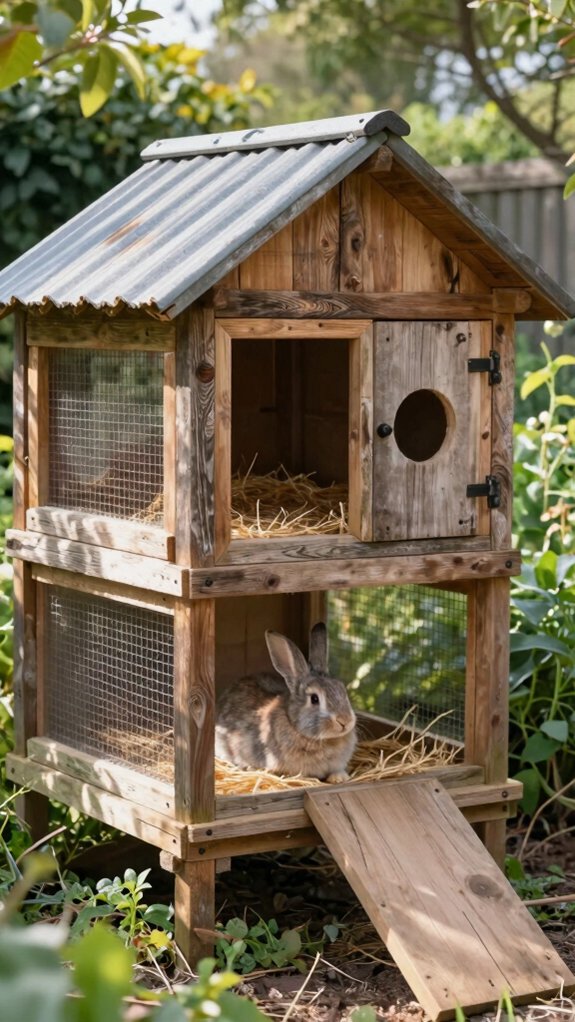
Although a rustic farm-style hutch looks charming, you should prioritize sturdy, weather-resistant construction that keeps rabbits dry, warm, and protected from predators. Use natural materials like treated hardwood for insulation and pair them with secure latches. Raise the hutch off the ground, add ventilation and shaded areas, and include a spacious attached run for safe exercise. Customize ramps, levels, and hutch accessories to encourage natural behaviors. Share care duties with fellow keepers to build belonging and consistency.
| Feature | Benefit | Tip |
|---|---|---|
| Raised floor | Dry, insulated | 6–12″ elevation |
| Attached run | Exercise | Predator-proof mesh |
| Ventilation | Cool air | Adjustable vents |
| Shaded area | Heat relief | Trees or awning |
Modern Minimal Hutch
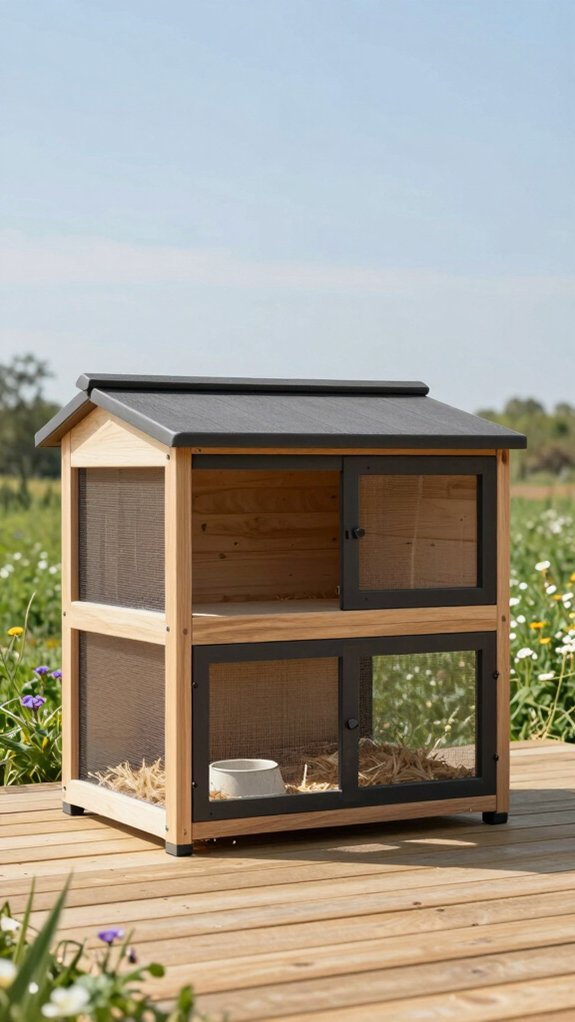
When you choose a modern minimal hutch, prioritize clean lines and sturdy, weather-resistant materials that give rabbits ample room to move while keeping maintenance straightforward; use treated hardwood paired with secure wire mesh, a sloped or flat roof for runoff, and well-placed ventilation openings to balance airflow and predator protection.
- Emphasize minimalist design and contemporary aesthetics so the hutch fits your outdoor space while centering rabbit welfare.
- Provide a spacious interior with raised platforms and ramps that encourage natural movement and exploration.
- Place ventilation high and protected, balancing fresh air with predator safety.
- Choose finishes and joinery that resist moisture and streamline cleaning, nurturing a shared sense of care.
Compact Hutch for Small Yards
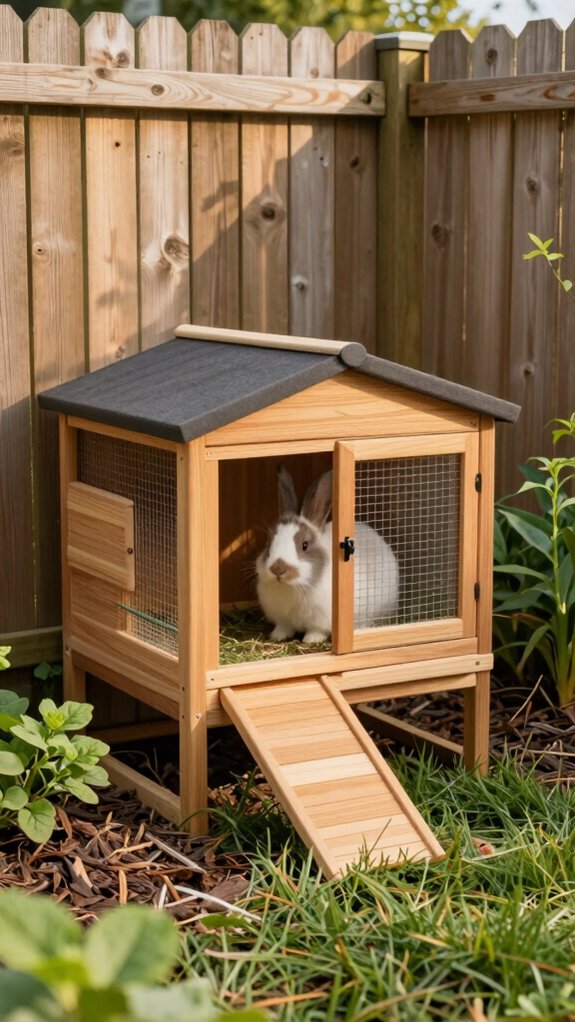
If you’ve only got a small yard, a compact hutch that’s at least 30″ deep and 7′ long gives your rabbits the space they need to stretch and play while fitting into tighter outdoor areas. You’ll prioritize space optimization by elevating the hutch to prevent moisture and deter ground predators. Include an internal den area for weather-safe hiding and line interior wood with wire so rabbits can’t chew structure. Add a bonus shelf for climbing and rabbit enrichment, arranging bedding and toys to encourage movement. You’ll create a secure, cozy home that respects welfare and invites shared care.
Hutch with Removable Tray
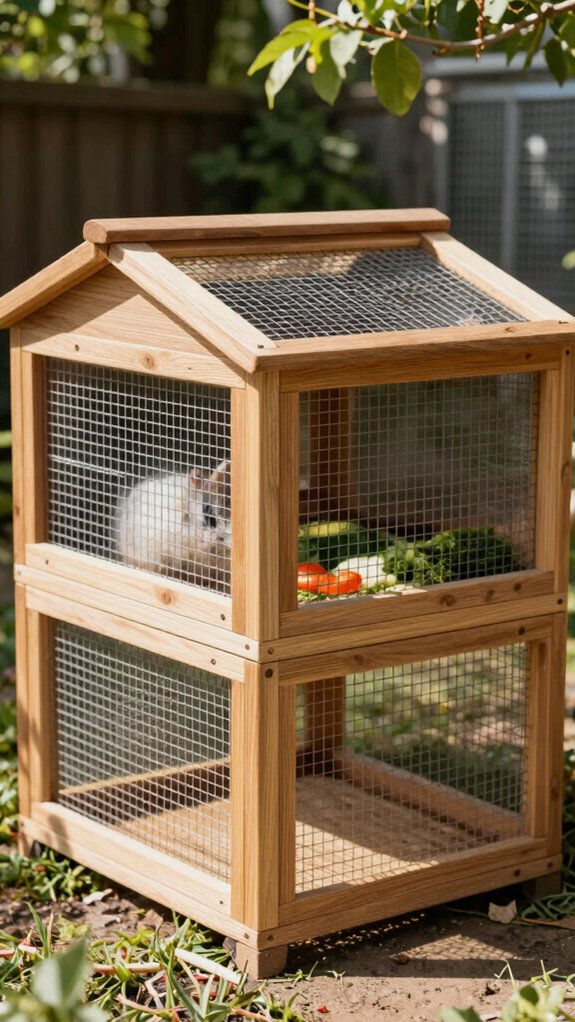
Moving from a space-saving layout to maintenance concerns, a hutch with a removable tray makes daily care much simpler for small-yard owners. You’ll appreciate how sliding out the tray lets you discard waste, replace bedding, and perform routine hygiene maintenance without heavy lifting. Durable, non-toxic trays withstand weather and wash easily, helping prevent odor control issues and bacterial buildup. Secure latches keep rabbits safe while giving you quick access. Including a removable tray encourages regular upkeep and creates a tidy, healthy home your rabbits deserve.
- Easy slide-out cleaning
- Washable, durable materials
- Secure, quick access
- Promotes regular hygiene maintenance
Frequently Asked Questions
How Often Should Bedding Be Completely Replaced?
You should replace bedding materials completely every one to two weeks, depending on cleaning frequency and soiling; you’ll want frequent spot-cleaning, weekly full refreshes for bonded welfare, and sooner changes when damp, odorous, or after illness.
Can Two Unrelated Rabbits Share the Same Hutch?
Yes, you can, but you’ll need careful bonding techniques and assess rabbit compatibility; you’ll supervise neutral introductions, provide separate hideouts, gradual shared space, spayed/neutered partners, and monitor welfare to nurture secure companionship.
What Vaccinations Do Outdoor Rabbits Need?
You’ll need core vaccinations against myxomatosis and RHD (RHD1/RHD2), following a vet-led vaccination schedule; prioritize rabbit health, regular boosters, records, and community support so you’ll feel confident protecting welfare.
How Do I Transport a Hutch Safely During Relocation?
You’ll secure hutch stability by emptying, reinforcing joints, and locking doors; use transport methods like a padded trailer bed, moving straps, or a covered van. You’ll check ventilation, prevent tipping, and reassure rabbits throughout the move.
Are Indoor Predators Like Cats a Risk to Outdoor Hutches?
Yes — you should: about 60% of backyard cats roam daily, so you’ll reinforce wire, add covered runs and secure latches; understand cat behavior, practice predator prevention, and include neighbors so you’ll protect rabbits and build shared care.