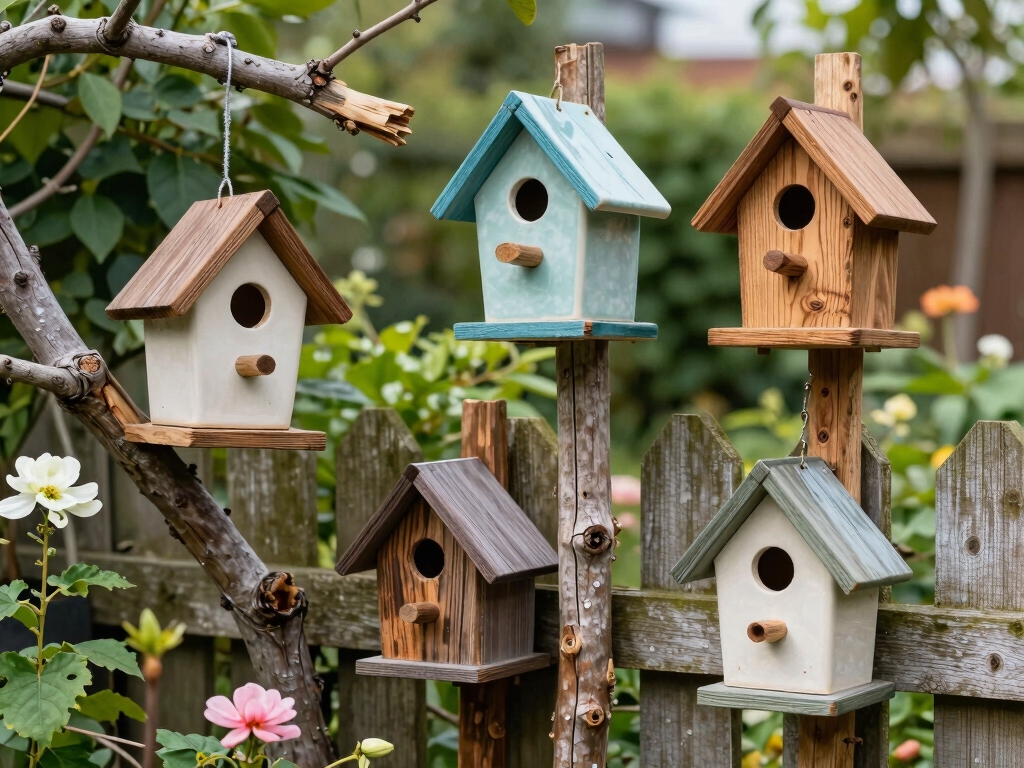
Unique DIY birdhouses can add charm with little effort, especially when they mix good looks with bird-friendly basics. A teacup shelter, mossy cottage, or painted mini house can look playful, while drainage holes, smooth entrance edges, no perch, and a weatherproof roof keep nests safer and drier. Mounted on a sturdy post near flowers, these pieces lift a garden fast, and a few more ideas are waiting just ahead for gardeners wanting style with substance.
Disclosure: This post may contain Amazon affiliate links, at no extra cost to you. Content on Pawtangle is created with research support from AI tools and carefully reviewed, edited, and fact-checked by the lead author, Dr.Fahri Pat , to ensure accuracy and reliability. Learn more
Key Takeaways
- Choose whimsical designs like fairy cottages, teacups, or vintage tins to add instant garden charm.
- Match entrance size to birds, using 1–1.5 inches for wrens, chickadees, and small bluebirds.
- Add drainage holes, ventilation slots, and a sealed roof to keep nests dry and healthy.
- Use reclaimed wood, moss, bark, or stone accents for a natural, handcrafted look.
- Mount bird houses facing east or southeast, with nearby perennials for cover and easy fledgling flights.
Why Creative Birdhouses Make a Difference
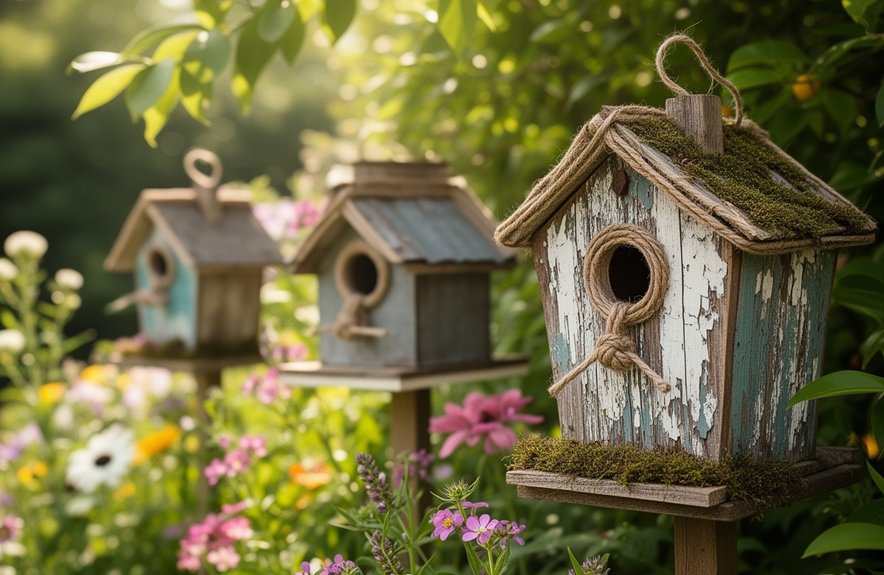
With a little thoughtful design, a birdhouse can do far more than add charm to a yard. It supports habitat enrichment when the entrance matches the species, such as one and one-eighth inches for chickadees or one and one-half inches for tree swallows. Proper height, shade, drainage, and ventilation help nests stay dry and safe.
Placed near vines or perennials, it also becomes a seasonal attraction, giving birds cover and nearby foraging. A front perch is best left off, since it can invite trouble more than tenants. That small attention helps feathered neighbors settle in year after year with ease.
Unexpected Materials That Stand Out
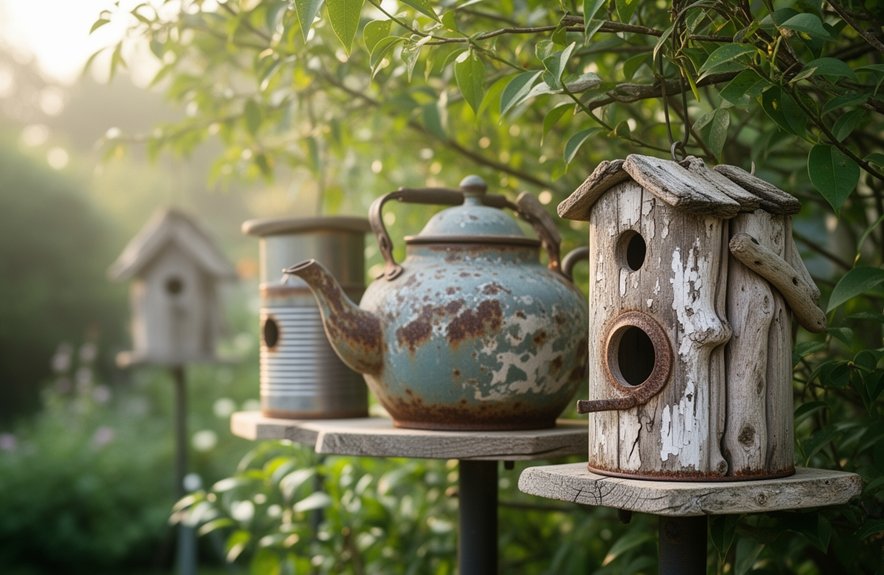
Teacups, teapots, and even old boots can become birdhouses with a little planning, and their odd shapes give a yard a playful look.
Recycled wood scraps can fill in the gaps, making perches, floors, and roof pieces that are sturdy and easy to cut.
With drainage holes, ventilation, and a snug entrance, these unlikely materials can work well without losing their charm.
Teacups and teapots
Vintage teacup bird houses can bring a tea-party charm to the garden, and they work best when a 1 to 1.5 inch entrance hole is drilled in the side, or when a teapot’s spout is used as the doorway.
Vintage china looks cheerful, but the cup should be sealed with exterior silicone, then fixed to a saucer or base with epoxy and stainless screws, so wind cannot tip it. Tea themed entrances feel welcoming, and a small metal flange helps guard the opening. Glazed teapots suit rainy spots, while drainage, ventilation, and an unpainted interior keep the nest calmer inside.
Recycled wood scraps
After the tea-party look of cups and teapots, recycled wood scraps can bring a rougher, more rustic charm to a bird house.
Reclaimed pallet boards, barn wood, and cedar fence pickets often carry a weathered patina, and their aged grain usually needs only mild sanding and a low-VOC sealer.
Planed offcuts can become neat walls or roofs, especially when paired with leftover flashing for a water-shedding top.
A few clean cuts, a safe entrance hole, and a sturdy mounting block help the finished house feel welcoming, like a small porch for feathered neighbors that fits right in with others.
Old boots and shoes
Boot-and-shoe birdhouses bring a playful surprise to the yard, and old leather boots can become sturdy nesting spots with a little cleanup. After drainage holes and a 1/4-inch entrance are added, wrens and chickadees may settle in.
Rubber-soled shoes handle rain well, especially with sole insulation from a small waterproof tray and a few vent holes. Paint or seal the outside, and position openings away from wind so the little neighbors feel settled, safe, and welcome there.
- Vintage lacing can hold a hanging high-top.
- A tall boot can stand on a post.
- Wooden clogs can divide into two chambers.
Whimsical and Artistic Designs
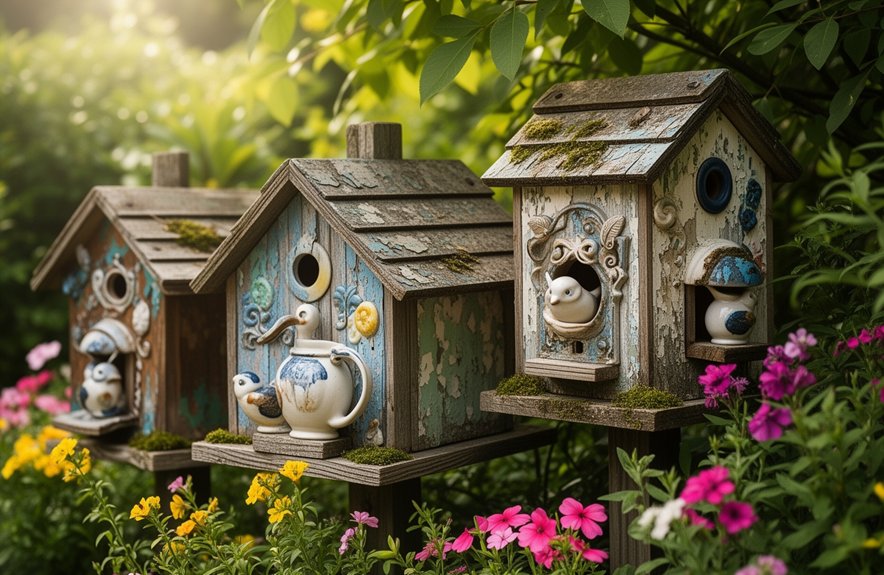
Whimsical bird houses can take the shape of fairy cottages, with tiny windows, curved roofs, and little details that make them feel storybook-ready.
Colorful painted cottages work well too, using exterior-grade paint in soft or bright shades, with simple patterns that help the house stand out in the garden.
Miniature house replicas add another playful touch, and when the scale stays neat and the openings stay clear, the result looks charming without losing its practical purpose.
Fairy house styles
Among cottage-garden plantings, fairy-style birdhouses work best when they borrow from nature, using moss, bark, pinecones, and reclaimed wood to create a small, enchanted look that blends in instead of standing out. Miniature turrets and enchanted porches add storybook charm, while 1-to-1.5-inch openings keep the house sized for wrens, chickadees, and small bluebirds.
- Mossy roofs feel tucked-in and safe.
- Tiny copper flowers and carved doors suggest a kind neighbor lives there.
- Hanging clusters on jute rope make the garden feel shared.
The result can feel welcoming, as if the yard invites birds and people into the same little story.
Colorful painted cottages
For yards that want a little more color than moss and bark can offer, painted cottage birdhouses bring a cheerful, hand-made look while still fitting a garden setting.
Low-VOC acrylic paint and a primer coat help it hold through several seasons, and a touch-up every two to three years keeps it fresh. Dip-dot flowers, painted panes, and faux shutters add bright trimwork without crowding the entrance hole.
Mounted on a painted 4×4 post beside yarrow or salvia, it peeks out kindly, while seasonal palettes, from spring greens to autumn reds, keep the garden feeling welcome, using exterior seal only.
Miniature house replicas
Miniature-house birdhouses turn a yard into a tiny streetscape, with roof flashing, copper, or even pennies giving the roof a convincing old-world look.
Careful miniature scale modeling keeps window mullions, tin flowers, and 1:12 trim convincing, while the entrance hole stays species-appropriate and the clean-out door hides inside.
- Weathered copper or pennies create ornamental roof textures that feel aged and familiar.
- Vintage tin dollhouses and small clocks can become sturdy nests with sealant and drainage.
- Mounted on 4×4 posts, the replica can climb with clematis and look like part of the block.
Neighbors may linger, feeling quietly included too.
Nature-Inspired Birdhouse Ideas
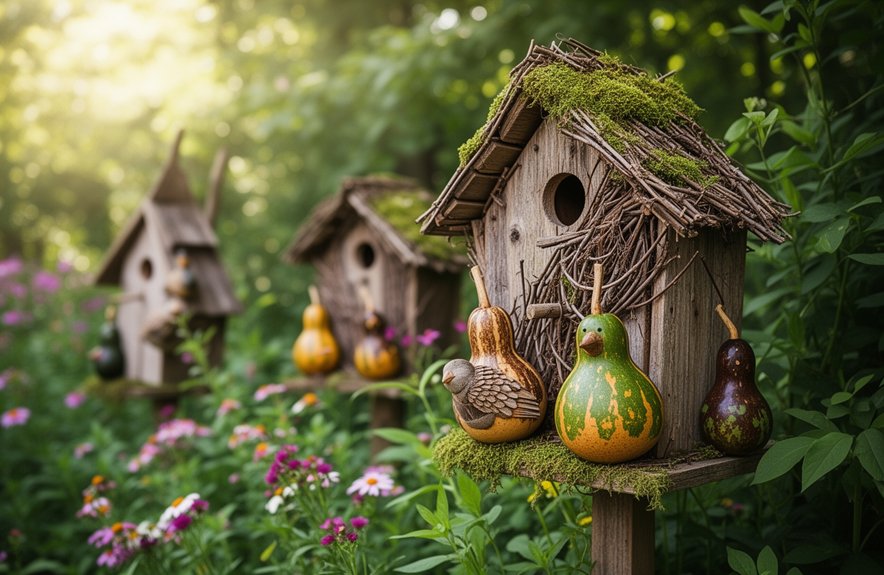
Nature-inspired birdhouses can blend into a yard by using bark, logs, stone, and other earthy materials that look as if they grew there on purpose.
A log-style house or a bark-covered box can give small birds a cozy cavity, while cedar or eucalyptus helps the build last longer outdoors.
For a softer look, moss-covered roofs and stone accents add color and texture, and they bring a tidy woodland feel without asking for much fuss.
Log and bark designs
A hollow-log hideaway can be a simple, sturdy choice, made from a 6–10 inch diameter log section that is about 6–12 inches tall, with a 1–1.5 inch entrance hole for chickadees, nuthatches, or wrens. Bark insulation and an entrance perch help it feel like part of the yard, not a stray project.
- It gives neighbors a small, shared place to gather.
- Reclaimed bark keeps the surface natural and calm.
- A sealed floor and late-winter cleanout make upkeep easy.
Mounted on a post or hung from a branch, it suits wrens and other backyard regulars, and welcomes them home well.
Moss-covered houses
Wrapped in moss, a birdhouse can look like it belongs under the trees, while still giving birds a dry, sheltered place to nest. Sheet moss or preserved moss, glued and sealed on the roof or sides, creates a woodland look and steady insulation. For a living mossscape, builders can add a shallow tray, sphagnum, and grounds fabric, then keep it shaded and lightly moist.
Maintenance tips include sealing seams, keeping moss away from the entrance, and adding tin flowers or driftwood above the mossline for birdtiques that feel cheerful, not fussy, throughout the season, with subtle charm in place.
Stone and earthy textures
Pebble-and-bark birdhouses bring a woodland feel to the yard, and they can still be built to last.
- Stone veneer on a light frame keeps weight low while thin-set and sealers help block rain.
- succulent roofs add a tiny living crown, with a root barrier and 1/8-inch gaps for rustic ventilation.
- Bark, pinecones, or slate chips give a shared woodland look and a 1 1/4-inch entrance welcomes small songbirds.
Placed near shrubs or a fence, the house can feel like part of the garden circle, where wrens, chickadees, and small sparrows arrive, stay safe, and make the place feel lived in.
Upcycled and Eco-Friendly Creations
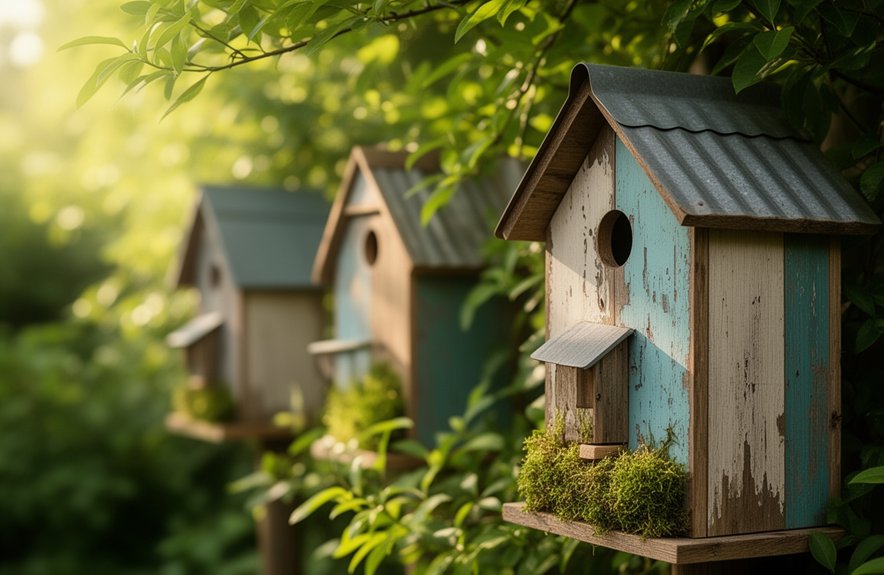
Upcycled birdhouses give old items a second job, and tin cans, metal containers, and even plastic bottles can become useful shelters with a little cleanup and care.
Repurposed household pieces, like old tins, jars, or small kitchen parts, can be sealed, drilled for drainage and airflow, then painted or weatherproofed on the outside.
The result is a sturdy little home that helps reduce waste, and it may even look clever enough to make a squirrel pause for a second glance.
Tin cans and metal containers
A plain tin can can turn into a sturdy birdhouse with just a few careful changes, such as a 1/4- to 1/2-inch entrance hole, a few drainage and ventilation holes, and smoothed edges so no bird gets scratched on sharp metal.
- A chrome flange or rubber gasket around the entrance adds predator guards.
- Exterior primer and low-VOC paint help with metal maintenance outside only.
- A small wood base, clean-out door, and roof seam keep nests dry.
Vintage watering cans, biscuit tins, and cookie tins can join a garden’s shared shelter, giving neighbors in feathers a modest place to belong.
Plastic bottle birdhouses
Clear-bottle birdhouses can give a plastic soda bottle a second life, as long as the entrance is cut near the top, the edges are sanded smooth, and the bottom gets a few drainage holes.
Two small vents near the top help air move, while a tilted hang with sturdy wire or a backplate lets rain slip off and makes cleaning easier.
A non-toxic paint coat on the outside, plus insulating liners of coconut coir or wood shavings inside, keeps the space comfortable, and the bottle can support community nesting without looking flashy.
Place it six to twenty feet high.
Repurposed household items
Toolbox-to-treasure birdhouses can give old household items a useful second act, from weathered metal watering cans to vintage tin dollhouses and even decorative clocks. Drill entrance holes, add drainage, and seal seams with exterior adhesive, and the charm stays strong.
- Garden faucets become sturdy perches with a little cleaning.
- Vintage signage can frame a cozy nest box.
- Penny roofs and reclaimed wood bring shine and shelter.
Hardware like gaskets or flanges helps guard nests, while low-VOC paint keeps finishes neighborly and safe. Each retrofit offers a small, shared welcome, and the birds repay it with lively morning visits nearby.
Functional Designs Birds Actually Love
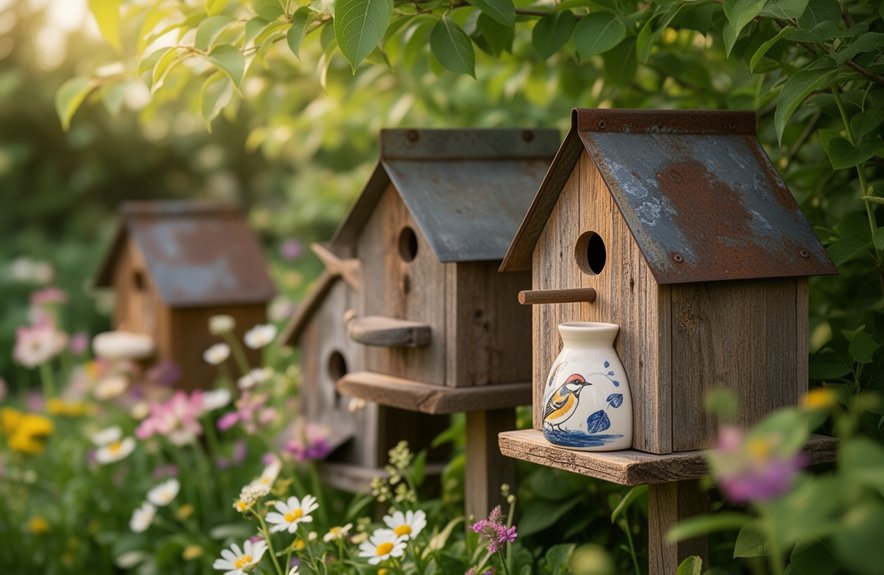
A bird house works best when its entrance hole matches the species, because a chickadee or bluebird can get in while bigger pests stay out.
Small vents near the top and drainage holes in the floor help keep the nest cooler and drier, which birds appreciate more than soggy bedding.
A sturdy mount, placed at the right height and fitted with a clean-out door or removable bottom, makes seasonal care easier and helps young birds leave safely.
Proper hole sizing
How large the entrance hole is can decide which birds move in, and which ones stay away. Matching the opening to the species makes the house feel like a proper clubhouse, not an all-guest pass.
- 1 1/8 inches suits chickadees, wrens, and nuthatches.
- 1 1/2 inches welcomes bluebirds and tree swallows.
- Predator guards help when squirrels or larger birds hover nearby.
That kind of entrance precision helps birds settle in with less worry. A smooth, sanded edge and no perch below the hole keep the doorway tidy. Precise sizing, set with a hole saw, gives birds a safer place to belong.
Ventilation and drainage
Built with a few small openings, a birdhouse stays drier and cooler, which helps nestlings avoid damp bedding and overheated afternoons.
Four drainage holes near the bottom corners, or two in thinner wood, let rain escape fast, and ventilation slots near the top release warm air.
The wood should stay unpainted inside, with holes left open.
For a quick check, drainage testing is simple: pour in a cup of water, and it should leave in a minute or two.
In hotter climates, short slits under the roof overhang can boost airflow without inviting rain, a comfort with big payoff.
Safe mounting ideas
On a sturdy 4×4 pressure-treated post, a nest box stays steadier and safer, especially when the post is set at least 2 feet deep or anchored in concrete. Good post mounting also leaves room for predator guards, like a baffle and entrance plate, while entrance orientation should face east or southeast, away from wind and hot afternoon sun.
- Birds find a calm, welcoming doorway.
- Fledglings get clear space to launch.
- Families feel safer when raccoons stay out.
Exterior-grade screws keep it secure, 6–12 inches of clear space helps fledglings, and the garden feels like home again for each neighbor.
Who This Works Best For
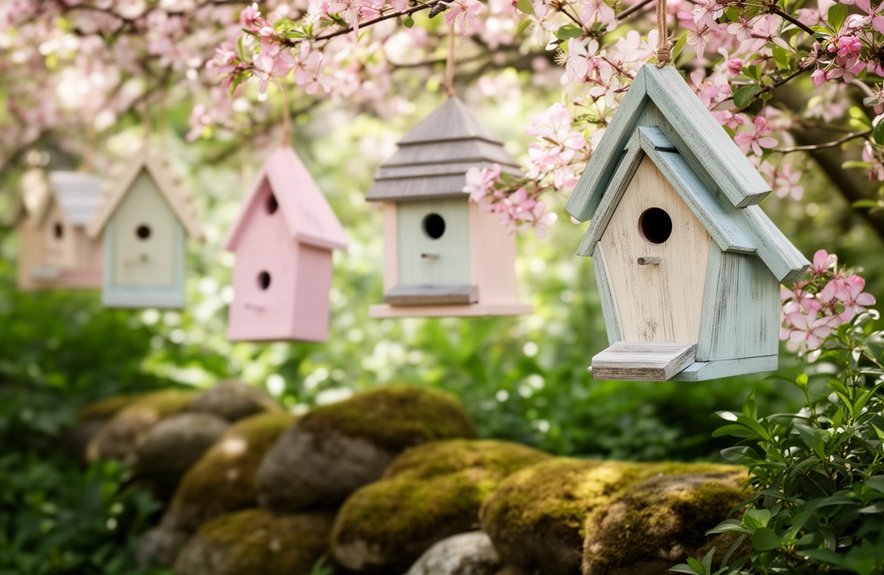
For cottage-garden homeowners, DIY bird houses add vertical interest and a bit of seasonal charm, especially when a house is mounted on a 4×4 post and clematis is trained up the support over a season or two.
DIY crafters and upcyclers also fit well, since coat hooks, sink handles, vintage jewelry, and other odd finds can become birdtiques for about the cost of a kit.
Birdwatchers benefit too, because matching entrance size, house depth, and placement height helps the right species settle in, while low-maintenance gardeners appreciate cedar, drainage holes, and easy seasonal maintenance, often shared in community workshops.
Frequently Asked Questions
How Often Should DIY Birdhouses Be Cleaned?
Like a lantern refreshed for returning guests, DIY birdhouses should be cleaned once yearly, after the nesting timeline ends. This annual maintenance helps the shared haven stay safe, welcoming, and ready for new occupants again.
What Entrance Hole Size Suits Different Bird Species?
Small songbirds usually need a 1⅛-inch entrance hole, while bluebirds prefer 1½ inches and larger species more. Proper entrance placement near the top protects the nesting chamber, helping each bird feel safely welcomed home today.
Where Is the Safest Place to Mount a Birdhouse?
Safest placement is on a post or tree at least five feet high, facing away from prevailing winds. Quiet corners and Protected heights help birds feel welcome, while avoiding predators, traffic, and heavy human activity.
How Can I Weatherproof a Wooden Birdhouse?
A small backyard birdhouse, for example, can be protected by brushing on exterior sealant and adding a raised base. This helps the flock’s future home stay dry, welcoming, and part of a caring garden community.
How Do I Keep Predators Away From Birdhouses?
Predators are kept away by mounting houses high, installing baffles, and using motion lights. A caring neighborhood benefits when entrances stay small and guards remain nearby, helping feathered families settle securely together each season comfortably.