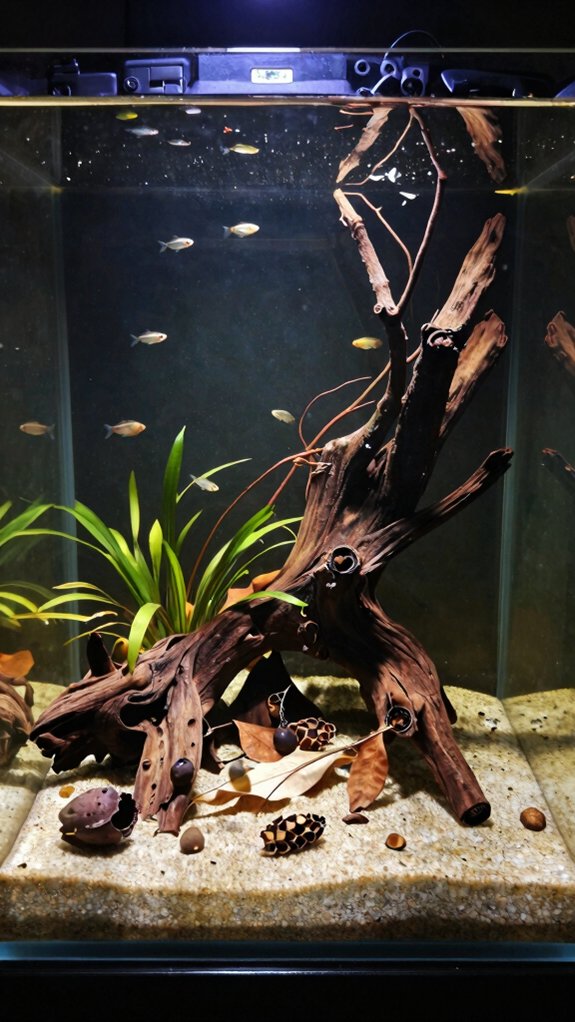
A beginner blackwater aquarium is a soft, dim setup with dark sand, driftwood, and leaf litter that turns the water tea-brown and calm. A 20-gallon tank is a solid start, with gentle flow, low light, and hardy fish like ember tetras, neon tetras, or a betta. Add a few Anubias or Java fern, keep water changes small, and avoid overcleaning. The basics are simple, and a few useful details can make it even easier.
Disclosure: This post may contain Amazon affiliate links, at no extra cost to you. Content on Pawtangle is created with research support from AI tools and carefully reviewed, edited, and fact-checked by the lead author, Dr.Fahri Pat , to ensure accuracy and reliability. Learn more
Key Takeaways
- Use soft, low-TDS water with near-zero KH to keep pH stable and blackwater conditions natural.
- Start with a 20-gallon tank, gentle sponge or low-flow filtration, and calm circulation.
- Build the aquascape with driftwood, dark fine sand, and a few subtle rocks for a natural forest-stream look.
- Add leaf litter, catappa leaves, or alder cones to create tea-colored water, tannins, and helpful biofilm.
- Maintain it with small weekly water changes, light cleaning, and careful matching of temperature and tint.
What Is a Blackwater Aquarium
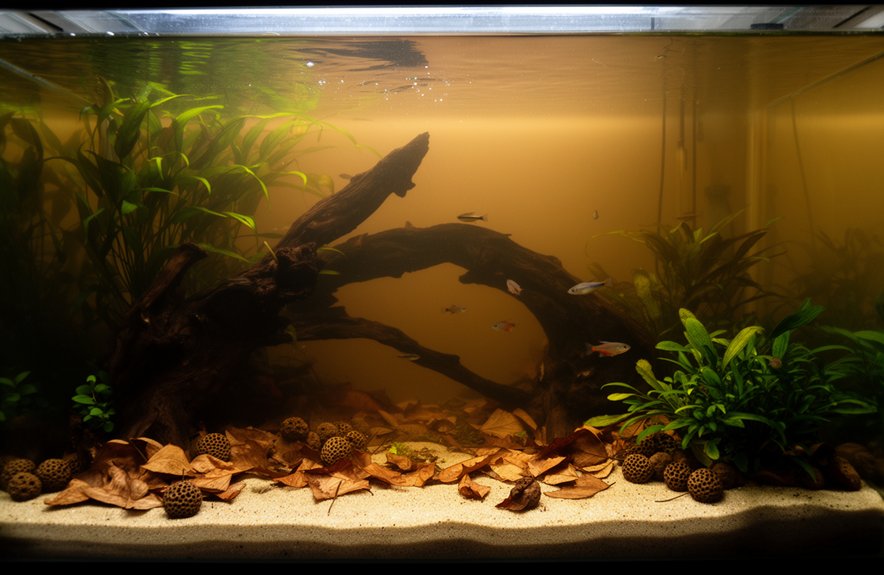
It usually uses leaf litter, seed pods, and driftwood to create that natural, brown-water feel, while also supporting fish and helpful micro life.
The result is a calm, dim scene that looks a bit like nature brewed a very large cup of tea.
Tea-colored water from tannins
Tea-stain water is one of the easiest ways to spot a blackwater aquarium, and that brown tint comes from tannins and humic substances released by decaying botanicals, not from dirt or dye.
Indian almond leaves, alder cones, and driftwood each offer different speeds of tannin extraction, with wood darkening water faster and leaves lasting weeks. Boiling botanicals can speed release, which helps a new setup look settled sooner.
Beyond color, the tea tint brings microbial benefits, supports biofilms and microfauna, and may encourage calmer behavior in fish and shrimp. It gives the tank a lived-in look, without looking muddy.
Soft, acidic conditions
For a blackwater aquarium to feel authentic, the water needs to be soft and mildly acidic, with very low mineral content so tannins can do their work. A target of low TDS and near-zero KH helps keep pH in the 4.5 to 6.5 range, where many species settle in comfortably.
Purified water, or a very soft tap supply, usually gives the best start, because hard water resists change. Good carbonate management matters, and an acidic substrate can help steady conditions. During setup, test pH and KH often, then make small water changes so the habitat stays calm, not dramatic.
Inspired by Amazon & forest streams
Forest-stream water is the look and feel that gives a blackwater aquarium its character, with a soft tea-colored tint, scattered leaves, and botanicals that slowly release tannins and humic substances.
- It echoes Amazon channels, where canopy leaflitter and seasonal inundation shape the water.
- It uses low-mineral water, often RO or distilled, so soft, acidic conditions stay steady.
- It keeps slow flow, a gentle detritus layer, and calm shelter for shrimp, catfish, and fry.
A blackwater tank feels like a small shared world, not a spotless display. Test KH, pH, and ammonia weekly, then change water conservatively.
Tank Size Recommendation
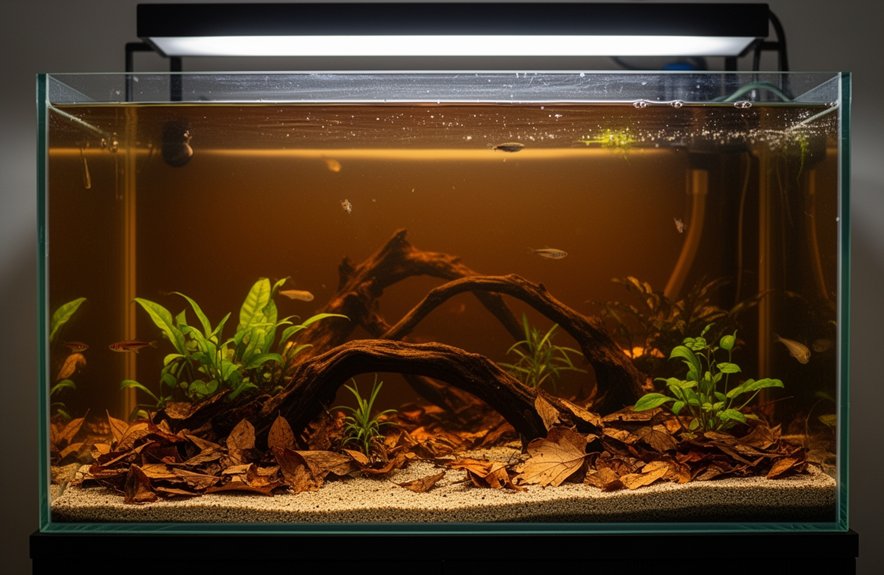
A blackwater aquarium usually starts best at 10–20 gallons, since that gives enough room for water conditions to stay steadier without becoming a huge project.
Larger tanks are often easier to keep balanced, because changes in pH, hardness, and temperature happen more slowly. For beginners, a modest size often offers the best mix of stability, manageable maintenance, and fewer surprise headaches.
10–20 gallon minimum
At least a 20 US gallon tank is a solid starting point for a blackwater setup, because the extra water volume helps keep pH and hardness more stable as botanicals break down. This minimum volume gives room for a leaf-litter bed, a modest driftwood layout, and calm swimming space, so the tank feels like a real little habitat, not a crowded jar.
- Follow stocking guidelines: small tetras, dwarf apistos, or shrimp with a few Corydoras.
- Use a simple hardscape and low-light epiphytes.
- Keep changes small, about 10% every 1–2 weeks, to stay steady.
Larger = more stable water
For a blackwater tank, bigger usually means steadier water, and a 60–80 L tank is a sensible starting point.
Larger volumes add tank inertia and better parameter buffering, so pH, temperature, and ammonia changes stay calmer for the fish.
| Size | Stability | Best use |
|---|---|---|
| 20 L | Low | Very small setups |
| 60–80 L | Good | Beginner blackwater home |
| 100+ L | Better | Sensitive species |
A 100 L tank softens tannin swings, supports leaf litter life, and makes routine changes less dramatic. When space is tight, choose the largest tank that can be maintained confidently, and match replacement water first.
Essential Materials
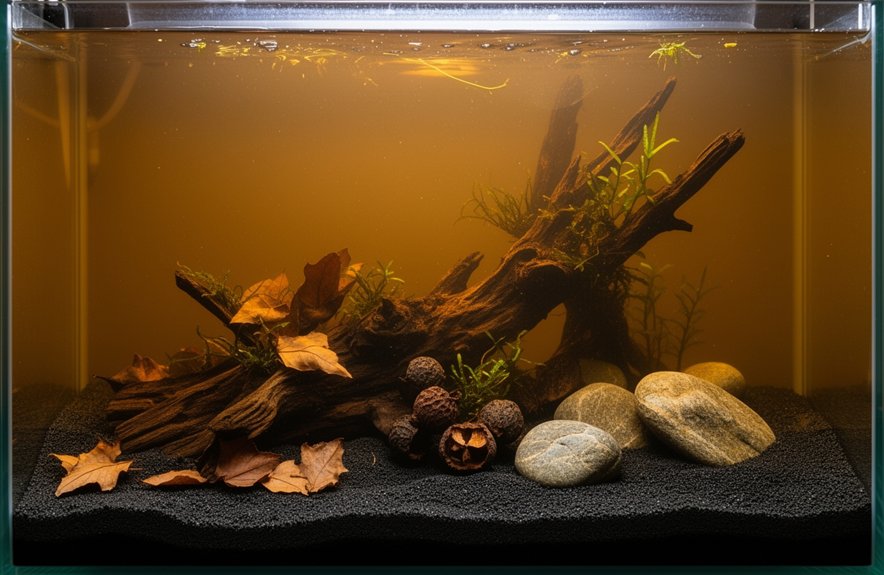
A blackwater tank usually starts with driftwood, because it gives off the tannins that tint the water and help create that tea-like look, along with Indian almond leaves and other botanicals for added cover.
A dark substrate or sand also helps the scene feel natural, while a gentle filter, often a sponge filter, keeps the water moving softly without stirring up the setup.
Together, these basics build the calm, shaded look that blackwater fish tend to appreciate.
Driftwood (main source of tannins)
Driftwood is often the main source of tannins in a blackwater aquarium, and pieces like mopani, bogwood, or dragon and azalea wood can tint the water within hours to days. Choosing the right wood helps the tank feel like a shared natural home, not a sterile box.
- Boil or soak for wood curing, then use sink techniques to speed setup.
- Expect slow tannin release, biofilm, and a soft detritus layer.
- Anchor pieces with glue, rocks, or buried ends, and watch for rot.
Gentle, reliable wood keeps the scape looking settled and welcoming.
Indian almond leaves / botanicals
Adding Indian almond leaves, also called Catappa leaves, is one of the simplest ways to build a blackwater look without much fuss. They release tannins, tinting water tea-brown, while giving mild antibacterial support and a calm place for shrimp foraging.
| Step | Tip |
|---|---|
| Prep | Dry fully, then boil or steep |
| Cool | De-chlorinate before use |
| Dose | One leaf per 10–20 L |
| Watch | Check ammonia after adding |
Add slowly, because biofilm is normal, and many shrimp nibble it happily. Leaves usually look useful for 2–3 weeks, then fade. Keep spare packs dry and cool.
Dark substrate or sand
For the base of a blackwater tank, fine inert sand is usually the safest choice, since it helps mimic natural riverbeds without changing water chemistry. A dark sandscape feels calm and natural, and a fine grain finish helps fish settle in as if they belong there.
- Pick inert, rinsed sand, not calcareous material.
- Keep the layer shallow, about 2–4 cm, to stay neat and safe.
- Top it with aged leaf litter, so mulm forms on the surface, not below.
If stems are used, a little aquasoil in back works, but rocks should stay minimal.
Gentle filter (sponge preferred)
A sponge-first filter setup keeps a blackwater tank calm, steady, and friendly to delicate life. A sponge filter gives biological filtration, soft flow, and enough surface movement for gas exchange, so leaf litter and tiny creatures stay in place.
Choose a model rated for the tank size, one large sponge for 40–100 L, or two smaller ones for bigger tanks. Good sponge placement is low and angled toward a back corner, where it nudges water gently. If a canister or motor-driven filter is used, add a prefilter sponge to soften the jet. For filter maintenance, rinse sponges in tank water during water changes.
Step 1: Build the Base
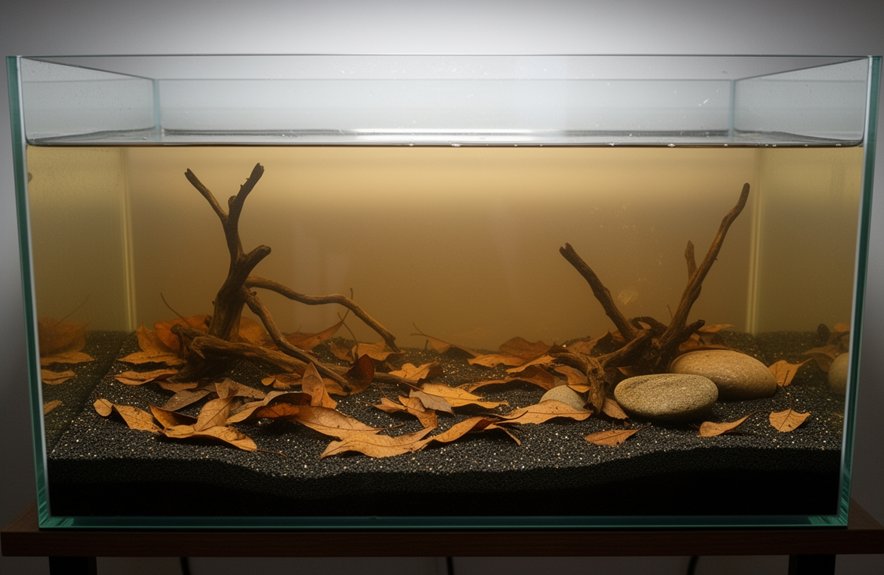
Start with the foundation, because a blackwater aquarium looks most natural when the base is built to hold both structure and leaf litter.
A low-mineral mix with aquasoil in back and fine sand in front gives the group a calm, riverbed feel, while reducing substrate compaction.
- Set driftwood and small rocks for a stable shape.
- Add a thin leaf layer for detritus and microfauna seeding.
- Keep plants damp, then place epiphytes on wood and stems toward the rear.
Gentle flooding protects the base, and everyone gets a cleaner start.
Add dark substrate and place driftwood as the main focal point
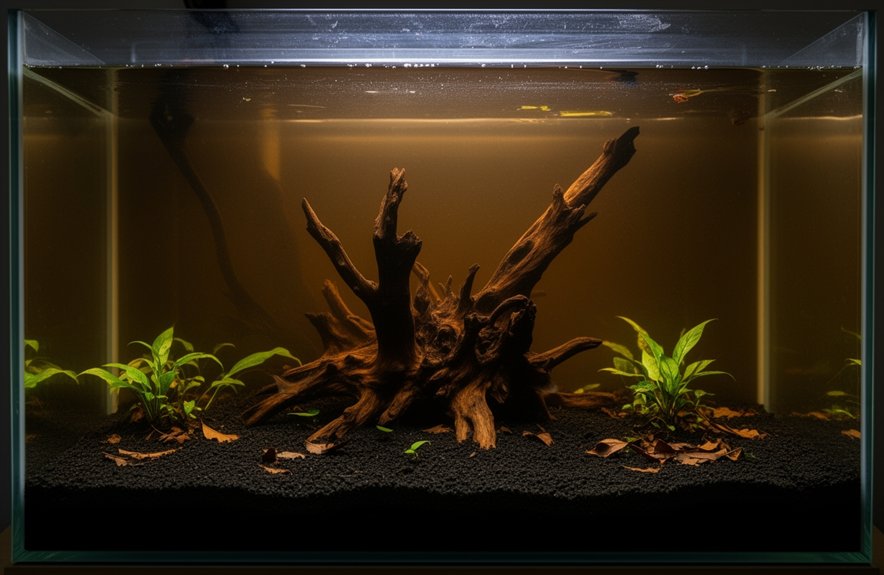
Underneath the soft blackwater tint, the substrate sets the mood, so a dark sand or fine-grain option like Red Flint sand works well to deepen the look and keep the front of the tank shallow, with a little more height toward the back for extra depth.
| Choice | Effect | Why it matters |
|---|---|---|
| Dark sand | Soft tone | Builds substrate contrast |
| Shallow front | Open feel | Guides the eye |
| Taller back | Added depth | Makes the scape feel shared |
| Driftwood | Main focus | Gives wood placement purpose |
| River rocks | Light support | Stay subtle, not showy |
A well-aged wood piece can then anchor the scene, and the group will feel natural, calm, and easy to keep.
Step 2: Add Botanicals
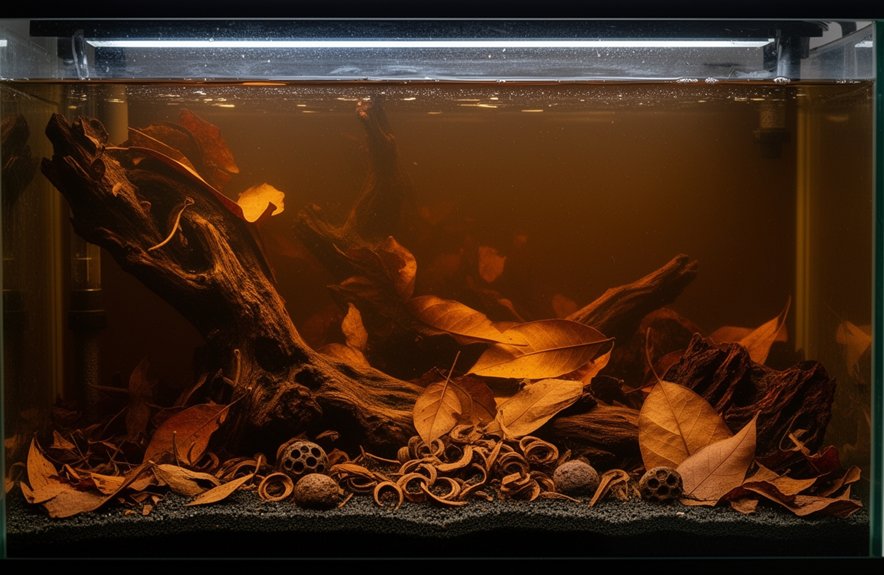
With the hardscape in place, the next layer is botanicals, which give a blackwater tank its leaf-strewn, lived-in look. A small starter load helps the setup feel familiar and stable.
- Choose durable pieces, like 3–6 Catappa leaves per 20–40 L, or 1–2 alder cones per 10–20 L.
- Use botanical sterilization, then cool and dechlorinate the brew before adding.
- Practice gradual dosing, place items over the substrate, and watch pH, KH, ammonia, and oxygen.
Inspect weekly, since leaves and cones break down at different speeds, and replace anything that looks too tired for the team.
Scatter dried leaves and seed pods for natural look + tannins
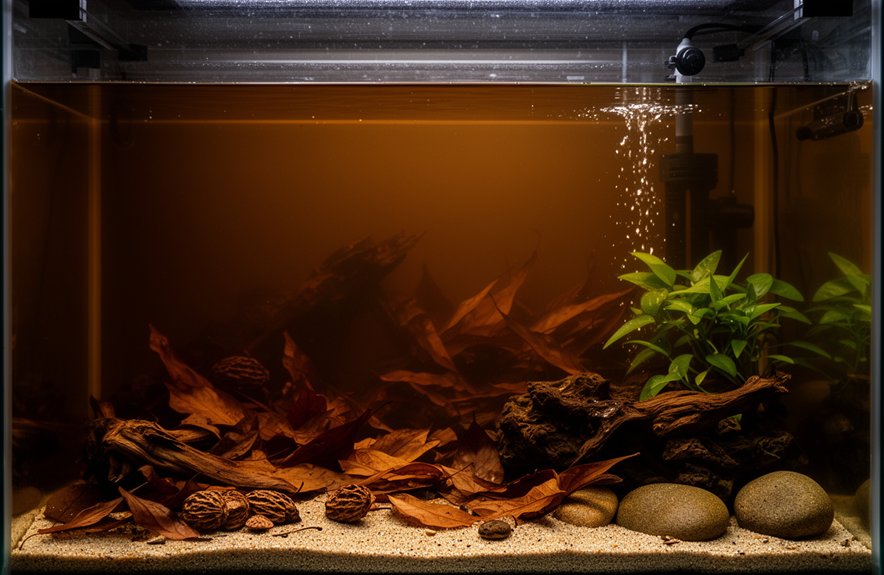
Leaf-litter and seed-pod scatter is what gives a blackwater tank its soft, forest-floor look, while also adding tannins that tint the water and help build the right feel.
| Botanical | Effect |
|---|---|
| Catappa leaf | Slow tint |
| Oak leaf | Natural texture |
| Alder cone | Deep amber |
| Biofilm | Gentle snack |
| Drifts | Calm shelter |
A thin, patchy layer on substrate and wood keeps roots free, and leaf mulch processes stay balanced. The first weeks bring soft biofilm, and microbial grazing interactions can help shrimp and fry. A top-up here and there keeps the scene looking like a shared woodland floor.
Step 3: Fill Water Slowly
Once the leaves and seed pods are in place, the next job is to add water without stirring up the whole scene. A small group can follow simple slow pouring steps and keep the setup looking calm and natural.
- Break the stream with a plastic bag, crumpled cling film, or dye-free paper towel, so sand and mulm stay put.
- Fill over 10–30 minutes for a 20–60 L tank, or scale up slowly, for gradual acclimation.
- Use preconditioned, dechlorinated water at tank temperature, and pause if cloudiness rises.
A squirt bottle helps keep roots and botanicals damp, because no one likes dry feet.
Water will turn light brown over time (this is GOOD)
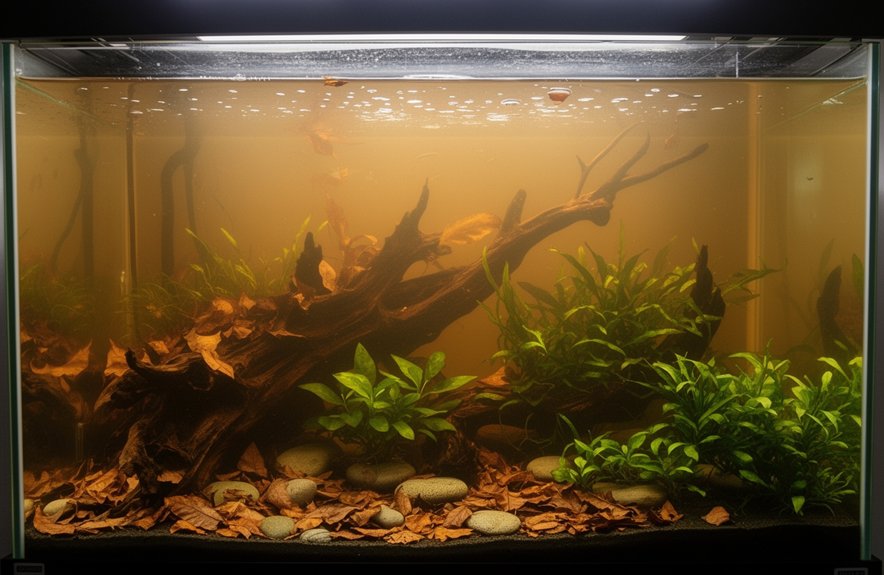
Over the next few days, the water will often shift to a light tea-brown color, and that is a good sign. This tint comes from tannins released by botanicals and driftwood, and it brings tannin benefits with mild antibacterial and antifungal support. It also improves visual authenticity, giving the tank that calm, natural look many keepers want.
The color may deepen after fresh additions, then fade a bit after water changes. In hardier water with some buffering, the tint may appear without much pH change. A little cloudiness or biofilm is normal, and even helpful.
Step 4: Install Low Flow Filter
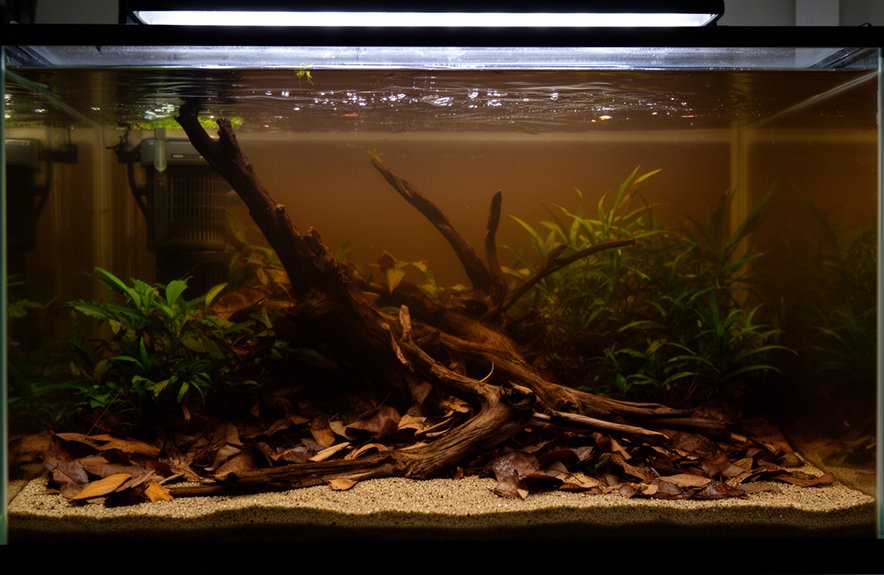
With the water taking on that soft tea tint, the next job is to keep it moving gently, not forcefully. A canister or sponge filter with adjustable output helps with flow balancing, and it usually feels more at home in a blackwater tank than a loud dynamo.
- Aim for 2–4× tank volume per hour, then dial it down if needed.
- Add a prefilter sponge or route the return behind hardscape, so the botanical layer stays put.
- Choose biofiltration placement with ceramic rings, bio-balls, or sponges, and watch ammonia and nitrite closely.
Avoid strong current → blackwater = calm water
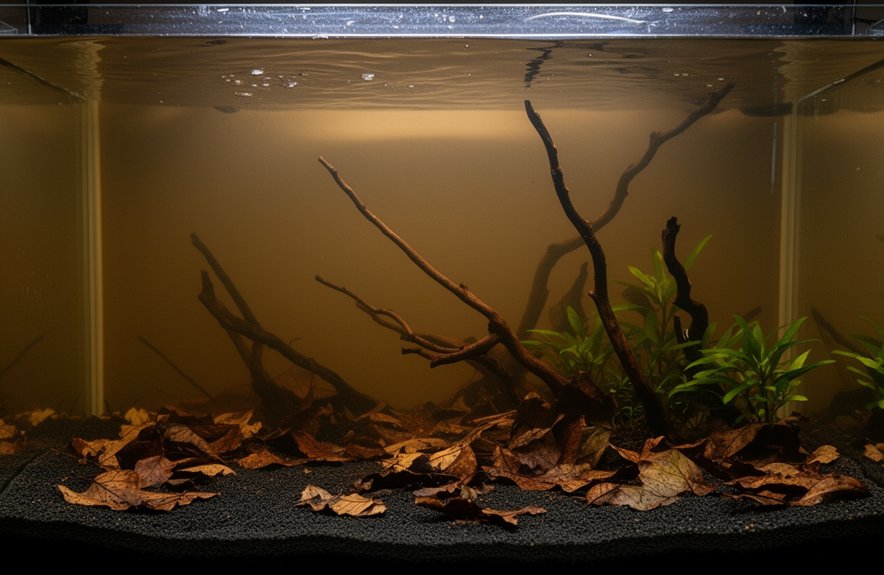
In blackwater setups, the water should move like a quiet stream, not a rushing hose. Gentle circulation helps the tank feel natural, and it keeps leaf litter and botanicals in place for the whole group to enjoy.
A low-flow filter, prefilter sponge, or flow deflector can soften the return, while filter floss or a sponge over the nozzle helps reduce outlet speed. Many keepers aim the current along the glass, then check flow measurement by eye until plants barely sway. This calm setup supports microfauna distribution, shrimp, and biofilms, without turning the tank into a wind tunnel.
Step 5: Keep Lighting Low
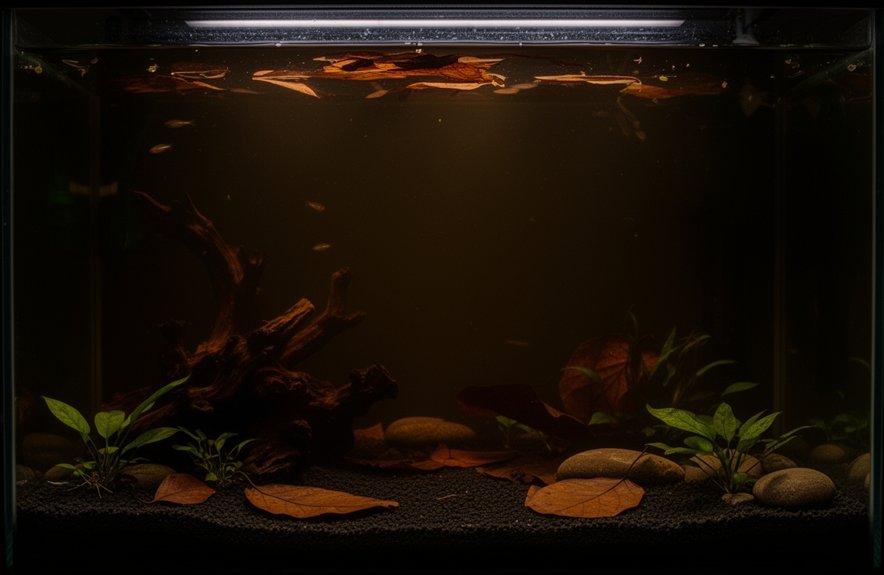
Soft lighting often works best in a blackwater aquarium, because these habitats are naturally shaded by roots, leaves, and tannin-stained water.
Keep PAR low, around 20–50, or use low-output LEDs, so the tank feels natural and algae stays in check.
A warm light spectrum, dimmed to 30–50%, usually fits the scene without making fish look startled.
- Choose a short photoperiod, about 6–8 hours.
- Match plant selection to dim spots, like Bucephalandra, Anubias, Java fern, crypts, and floaters.
- Watch growth closely, trim dead bits, and let slow progress do its quiet work.
Dim light creates that moody natural vibe
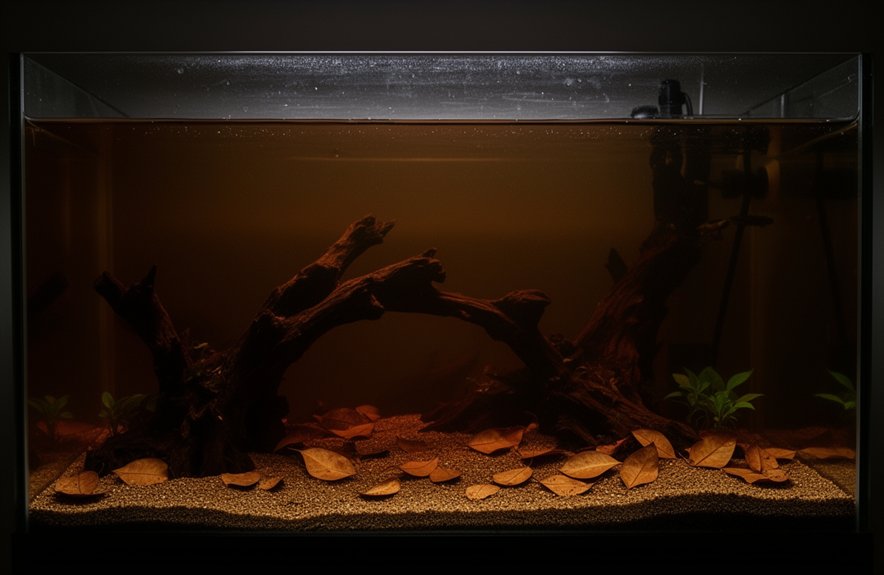
Under dim light, a blackwater aquarium takes on that quiet, moody feel that makes the whole setup look more like a shaded forest stream than a bright glass box.
Low-output LED fixtures, or dimmable lights set near 10–20 µmol·m²·s⁻¹ PAR, keep the scene soft and help hold algae in check.
Simple spectral tuning can lean warm and gentle, while moonlight simulators add a calm evening touch.
Floating plants, leaf litter, and epiphytes like Java fern or Anubias deepen the shade, and a short 6–7 hour day keeps the whole look steady, natural, and pleasantly unbothered.
Step 6: Cycle the Tank
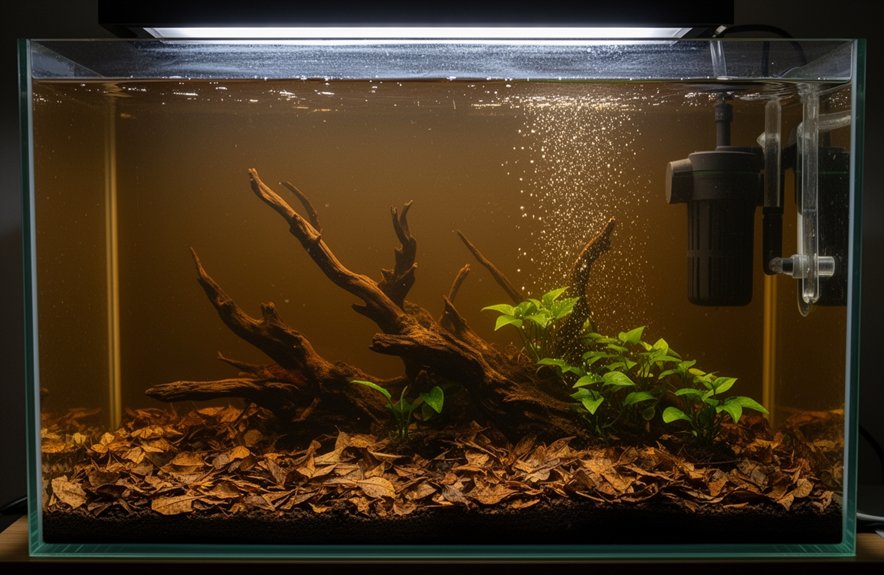
Begin the cycle by adding a small batch of pre-boiled or soaked botanicals, or a few hardy shrimp or snails, rather than fish, so the tank can build its bacteria safely.
- Test ammonia daily, watching the spike rise and then fall.
- Expect cloudy water, tannins, and an initial ammonia jump from decaying leaves.
- Keep flow gentle, add an airstone if needed, and do small 10% water changes with matched water.
This microbial succession builds oxygen microzones on botanicals, helping beneficial bacteria settle in. When ammonia and nitrite read 0 ppm and nitrate rises, the group is ready for the next step.
Wait 2–4 weeks before adding fish
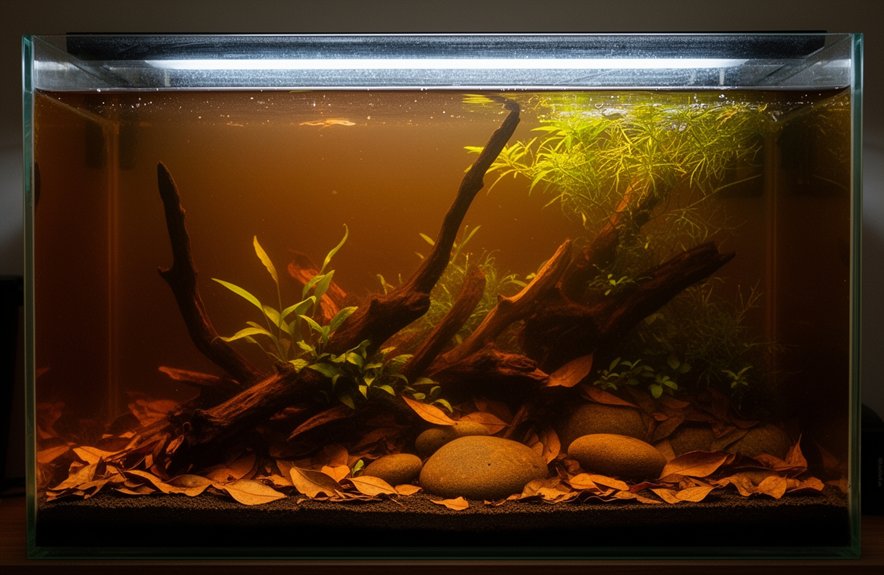
This is also the right time to prep replacement water so it matches the tank more closely, whether that means RO water or aged tap water with similar pH, KH, and TDS.
During the 2–4 week wait, the tank settles after post cycling, tannins soften, and early ammonia or nitrite spikes fade. Test pH, KH, ammonia, nitrite, and nitrate twice a week, and keep ammonia and nitrite at 0 ppm.
Small 10% water changes every 1–2 weeks help keep things steady, and an airstone can help if botanicals are dense. Watch for biofilm, too, it is a good sign that stocking rates can be gentle.
Best Beginner Fish
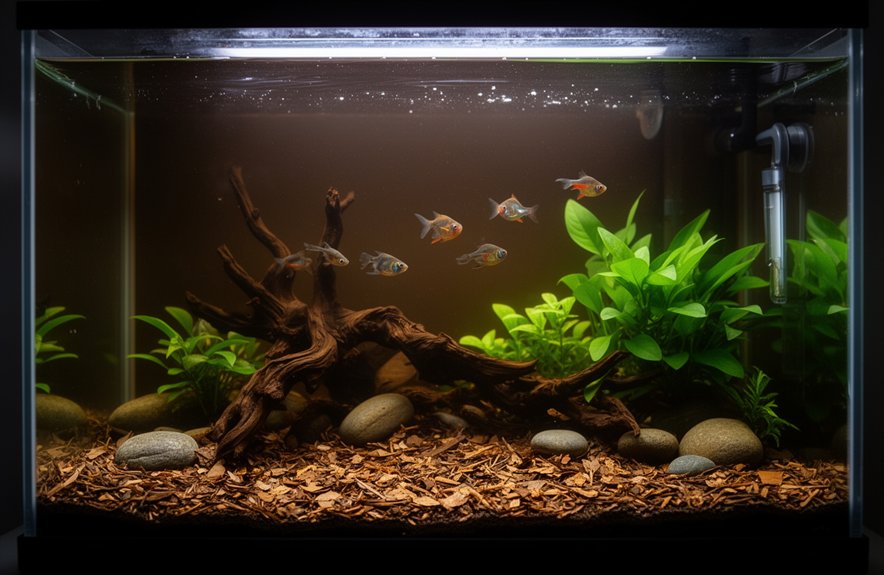
For a first blackwater fish list, a betta can be a calm pick in a properly sized tank, while neon tetras, ember tetras, and small rasboras are classic schooling choices that stay lively in soft, tinted water.
These fish do best in low flow with plenty of cover from leaves, wood, and plants, where they can settle in without fuss.
Small, peaceful species are usually the safest start, and they tend to look their best when they are not asked to outswim a waterfall.
Betta
Betta splendens can be a strong choice for a blackwater aquarium, because they do well in soft, slightly acidic water with a pH around 5.5–7.0 and low KH. Their betta behavior fits calm, sheltered tanks, and good fin care starts with very low flow, so use a sponge or turn down the pump.
- Add catappa leaves and driftwood for tannins.
- Include floating plants and epiphytes for cover.
- Keep 24–28°C steady, and change 10% of water gently.
With leaf litter, the tank feels natural, and a betta can settle in like it belongs.
Neon tetra
Neon tetras are one of the easiest “starter-school” fish for a blackwater aquarium, because they stay small, look bright in soft light, and do well in calm, tannin-tinted water.
A group of 8 to 12, or more, helps their schooling interactions feel relaxed and natural, so they seem less skittish and more like a shared little squad.
Soft, slightly acidic water, plenty of plants, floating cover, and leaf litter suit them well. Keep flow gentle, changes small, and feed micro pellets, frozen daphnia, brine shrimp, and a little flake. Their breeding behavior is less the point here than easy, steady care.
Ember tetra
Ember tetras are another excellent small-school choice for a blackwater aquarium, and they may be even easier for beginners than many larger fish.
- Keep 8–12 together, so they settle in as a calm little crew and show natural schooling, with better coloration improvement.
- Use soft, slightly acidic water, low light, leaf litter, and gentle flow, because that setup feels like home, not a crowded hallway.
- Feed flakes, micro-pellets, and frozen or live foods, which supports health and breeding behavior.
Regular small water changes help keep them steady, bright, and comfortably at ease.
Rasbora
Rasboras are a smart first pick for a blackwater setup, because these small, schooling fish settle in well and bring life to the tank without asking for much fuss. Harlequin rasboras and chili or emerald rasboras suit soft, slightly acidic water, and they look their best in groups of 8 to 12 or more.
Their shoaling behavior shine in leaf litter, floating plants, and gentle flow, where tannins make the water feel calm and welcoming. Feed micro-pellets, flakes, and frozen foods, then keep water stable with small changes. Rasbora breeding is possible, but patience helps.
Optional Plants (Low Light)
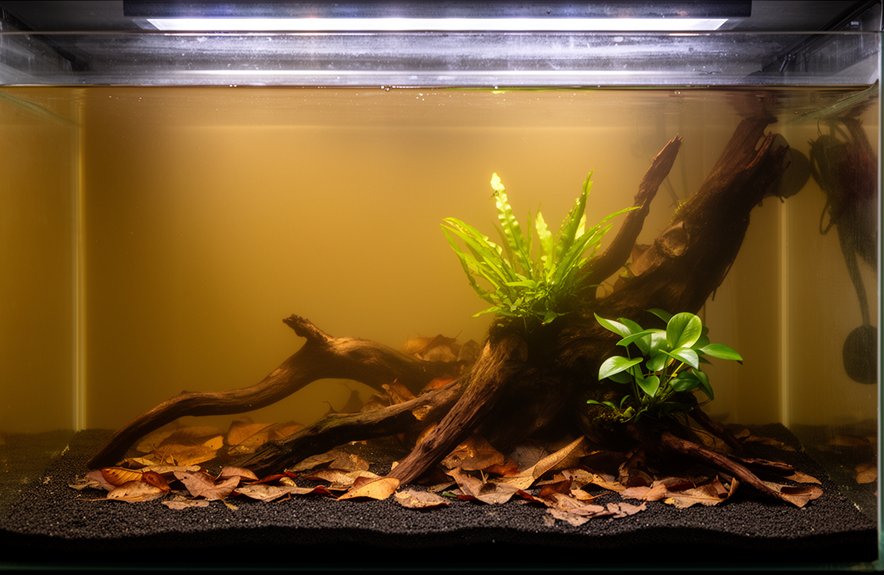
Anubias and Java fern are strong choices for a blackwater tank, since they handle low light well and do best when tied to wood or rock instead of buried in the substrate.
Floating plants can also help by softening the light, using up extra nutrients, and keeping algae from getting too comfortable.
Together, these plants add a natural look without asking for much attention, which is usually a pleasant deal in a shaded tank.
Anubias
Low-light blackwater tanks can be a good home for hardy anubias, such as *A. barteri* and *A. nana*, because these plants handle soft, acidic water with little trouble.
- Attach them to wood or rock, and keep rhizomes above the substrate, because burial invites rot.
- Expect slow growth, with only a few new leaves each month, so they suit patient keepers who like a settled look.
- Gentle leaf maintenance, plus careful anubias propagation by division, helps the plant stay tidy and welcome.
Place them near the front or middle, where broad leaves can meet leaf litter and feel right at home.
Java fern
Java fern fits neatly beside anubias in a low-light blackwater tank, and it brings the same easygoing attitude to soft, acidic water. It should be tied to wood or rock, never buried, because the rhizome rots if covered.
Its slow growth suits beginners who want a calm, natural aquascape placement, with compact dark-green leaves that stay tidy. In blackwater conditions, it tolerates low KH and mild nutrient supplementation, but does not demand much.
Midground hardscape is a smart home, and healthy plants often form small plantlets for easy sharing. It is hardy, fish-safe, and shrimp-safe, which helps the whole tank feel welcoming.
Floating plants
Drifting quietly at the surface, floating plants can be a useful optional layer in a blackwater aquarium, especially when the goal is softer light and a more sheltered feel. Salvinia and red root floaters do well in low light, and dense floating mats can block about 70% of surface light, helping limit algae.
- They soak up nitrates and phosphates, so water stays clearer.
- They give shy fish and fry a calm overhead cover.
- They need trimming every few weeks, and some pest snails will appear, but easy removal keeps flow open and roots away from filters.
Maintenance Tips
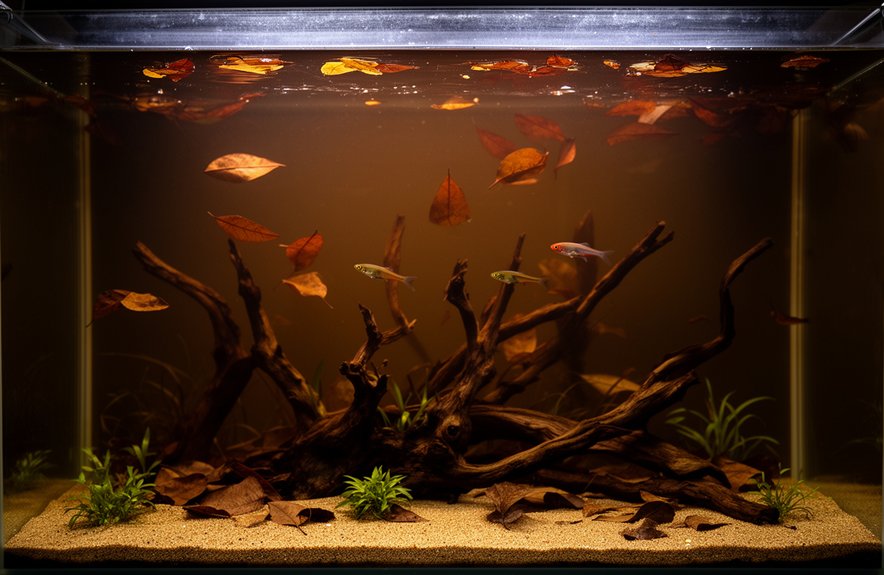
A blackwater aquarium usually stays healthiest with a small weekly water change of about 10–15 percent, which helps refresh the system without disturbing it too much.
It is best not to overclean, since a natural look depends on leaf litter, mulm, and gentle detritus, not a spotless display.
If the tint starts to fade, adding a few new leaves can bring back the tea-colored water and keep the scene looking right.
Weekly 10–15% water change
Each week, a blackwater aquarium benefits from a small 10–15% water change, which helps ease out extra nutrients and dilute any rising ammonia or nitrite without wiping out the tank’s natural tint or chemistry.
- Prepare new water a few days ahead, matching temperature, pH, and tint with botanicals.
- Use slow siphoning, and gently lift only a little leaf litter and mulm, so the tank keeps its helpful biofilm.
- Add water back slowly, a bit of gradual acclimation goes far here, and keep the flow soft with a prefilter sponge.
Check pH and kH twice weekly, and adjust if needed.
Don’t overclean (natural look önemli)
Weekly water changes help keep a blackwater tank steady, but the real trick is not scrubbing away its character.
| Keep | Do | Why |
|---|---|---|
| Mulm | Leave a thin layer | Mulm preservation supports stability |
| Leaves | Keep scattered litter | Natural look stays intact |
| Cleaning | Spot-clean only | Minimal disturbance protects biofilms |
| Botanicals | Remove only slime-soft ones | Stops ammonia jumps |
| Flow | Use sponge outflow | Detritus stays settled |
A gentle siphon of 5–10% surface debris is enough. Shrimp, small catfish, and nerite snails help quietly. Test pH and KH often, and match new water closely, so the community feels settled.
Tannins azalırsa yeni yaprak ekle
When tannins start to fade and the water looks lighter, it helps to add a fresh batch of botanicals, such as 2–4 Indian almond leaves or a few alder cones for every 20–30 L, so the tank keeps its rich color and steady humic support.
- Boil or steep new leaves first, cool them, then pour in the infusion for gentle tinting.
- Use tannin replenishment in small steps, with gradual topping up every 1–2 weeks.
- Check pH, KH, and ammonia twice weekly, and skim excess debris if the crew seems less lively.
Common Mistakes
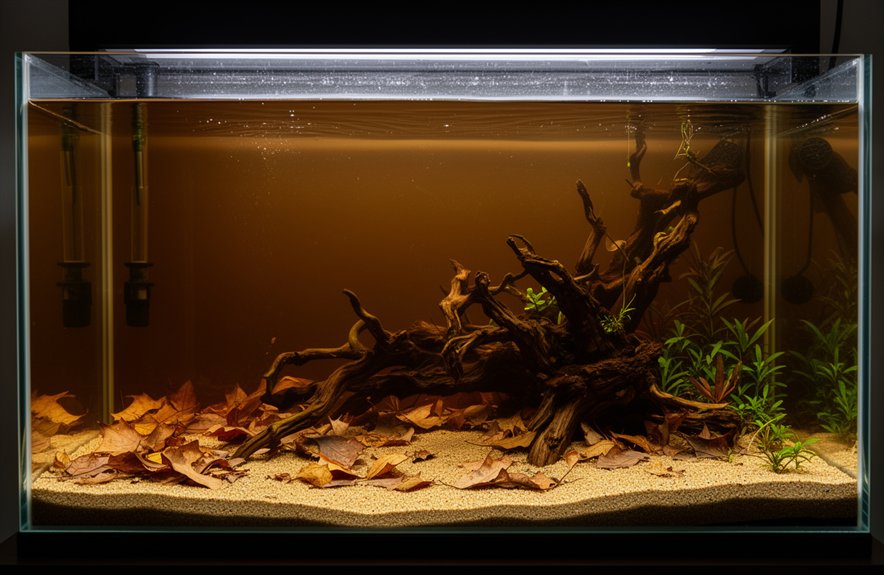
Common mistakes in a blackwater aquarium usually start with rushing the setup, and the tank politely makes that obvious. Large botanicals dropped in at once can trigger oxygen spikes and upset microbial balance, so boil, soak, and add them slowly.
| Mistake | Better move |
|---|---|
| Hard tap water | Use RO, distilled, or softened water |
| Strong outflow | Dampen flow, add a sponge |
| Deep vacuuming | Stir gently, keep mulm |
| Panic changes | Watch ammonia and nitrite |
Expect cloudiness, biofilm, and slimy molds early on, then make small water changes only.
Frequently Asked Questions
What Mistakes Do Beginner Fish Owners Make?
Too much, too soon: beginners often commit overfeeding fish and incorrect cycling, then overclean or overcrowd. As the adage goes, slow and steady wins the race; patient care helps them feel part of a thriving tank community.