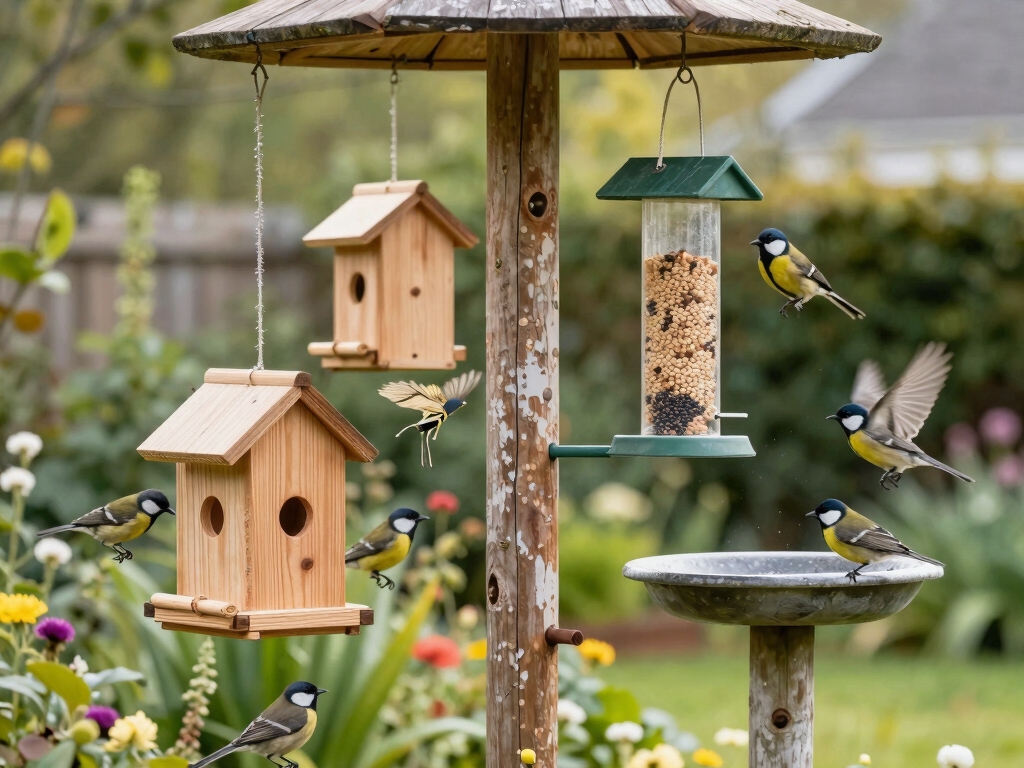
A smart DIY bird feeder station works best when it mixes safe cover, varied heights, and easy-clean parts. Feeders should sit a few feet from shrubs, about 30 feet from windows, and at different levels for finches, woodpeckers, and ground birds. Durable wood or metal helps it last, while weekly cleaning keeps pests away. A tidy setup with a tray, tube feeder, and suet cage brings more birds, and the next ideas build on that.
Disclosure: This post may contain Amazon affiliate links, at no extra cost to you. Content on Pawtangle is created with research support from AI tools and carefully reviewed, edited, and fact-checked by the lead author, Dr.Fahri Pat , to ensure accuracy and reliability. Learn more
Key Takeaways
- Place feeders 5–6 feet from shrubs and about 30 feet from windows to reduce predator risk and collisions.
- Create a layered station with feeders 5–10 feet apart at different heights for clearer flight paths and less crowding.
- Match feeder types to birds: tube for finches, suet for woodpeckers, and trays for doves and jays.
- Keep feeders clean, dry, and measured, with weekly washing and fresh seed to discourage pests and disease.
- Use weather-resistant wood or rustproof metal, plus squirrel guards and sturdy hangers, for a durable, attractive station.
Why Most Feeder Setups Fail (And How to Fix It)
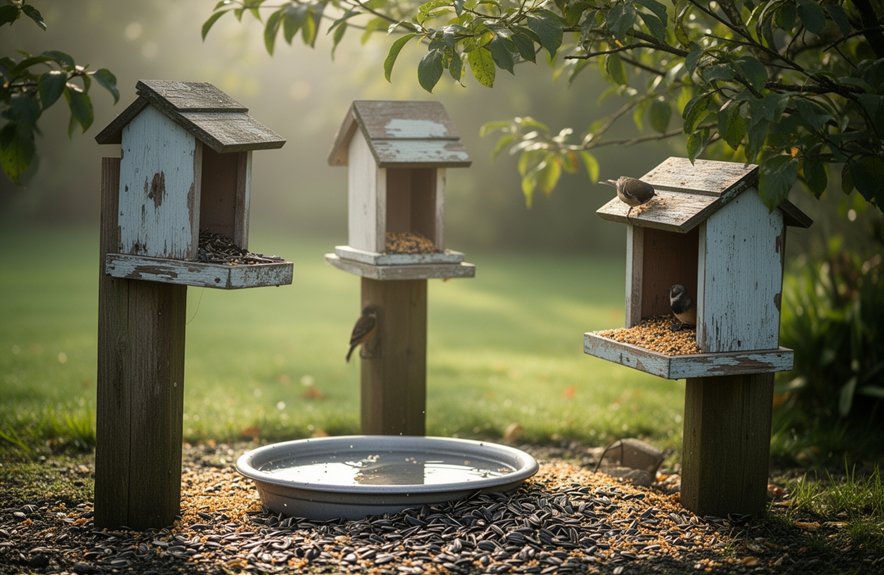
Often, the problem is not the birds, but the setup. Feeders tucked under dense cover invite cats and other ambush predators, so a safer station keeps them five to six feet away from shrub edges and in clear view. A simple predator landscaping tweak can make a big difference, and birds notice the safer path home.
Variety also matters, because one feeder type limits the crowd. Clean gear, fresh food, and a steady feeding schedule keep guests returning, while measured portions reduce mess and rodent traffic. Placement near windows, with shelter nearby, helps people feel included in the chorus.
Smart Layout Ideas That Birds Prefer
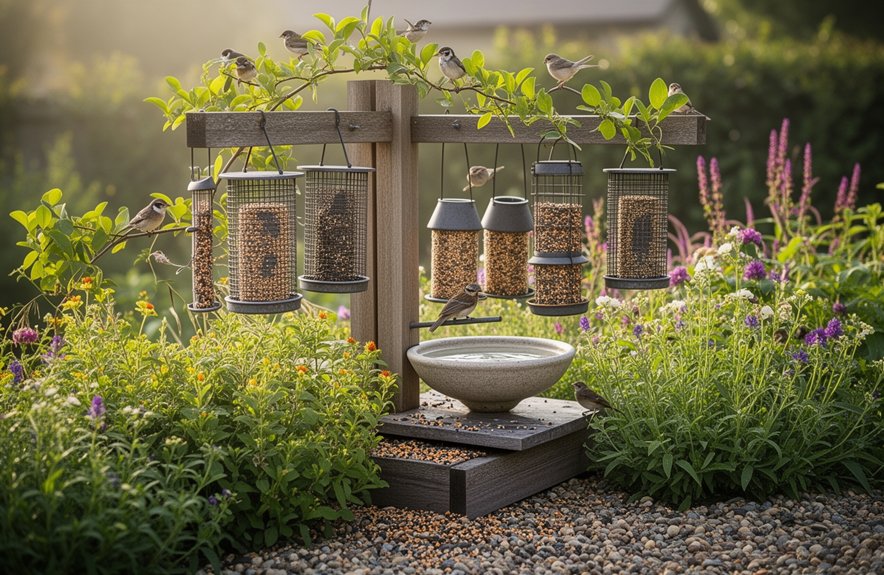
A smart feeder layout often uses multi-height feeding zones, with ground feeders lower, songbird feeders in the middle, and suet or other feeders a bit higher, so more species can feed comfortably.
It usually works best to keep feeders near natural shelter, like shrubs or trees, but not tucked into dense cover, since birds like a quick escape route and predators like surprise visits.
A safe feeding triangle can help too, with feeders about 5–6 feet from hiding spots and 10–30 feet from perches, which gives birds a clear path in and out, and keeps the setup working without turning the yard into a cat buffet.
Multi-height feeding zones
From ground level to the treetops, a feeder setup that uses more than one height gives different birds a place to feed without crowding each other.
- Ground trays welcome doves and sparrows.
- A 3–4 foot shelf suits juncos and towhees.
- Tubes and nyjer feeders at 5–8 feet bring finches and titmice.
- Suet cages nearby suit woodpeckers, while layered perches and seasonal adjustments keep the station flexible, clean, and easy to enjoy.
That mix gives neighbors of the sky and ground a fair turn, and it keeps the yard feeling like a small, shared flock club for every passing season.
Open vs sheltered placement
In the right spot, a feeder can feel like a safe little café for birds. Open placements on a 6-foot pole give clear flight paths and let doves and juncos see trouble coming.
Sheltered spots under eaves or a tree canopy keep rain off seed, but they still need perch clearance so birds do not bump into edges.
A sun/shade balance helps too, with morning sun and afternoon shade keeping nectar and seed fresh longer. Small feeders for finches or titmice can sit near thin branches, where quick landings feel easy and the lobby feels welcoming for the flock.
Creating a safe feeding triangle
Set three feeders in a rough triangle, about 5–10 feet apart, so birds can move between food spots with clear flight paths and quick access to nearby perches.
Keep the triangle 5–6 feet from dense shrubs, and 10–20 feet from tall trees, so cats have fewer hiding spots.
- Tube feeder at 4 feet.
- Hopper at 6–8 feet.
- Suet cage at 10–12 feet.
- Birdbath and native shelter within 10 feet.
Seasonal adjustments help, and community workshops often show that these small shifts turn a yard into a shared bird stop for neighbors who like calm mornings.
DIY Feeder Types That Work Together
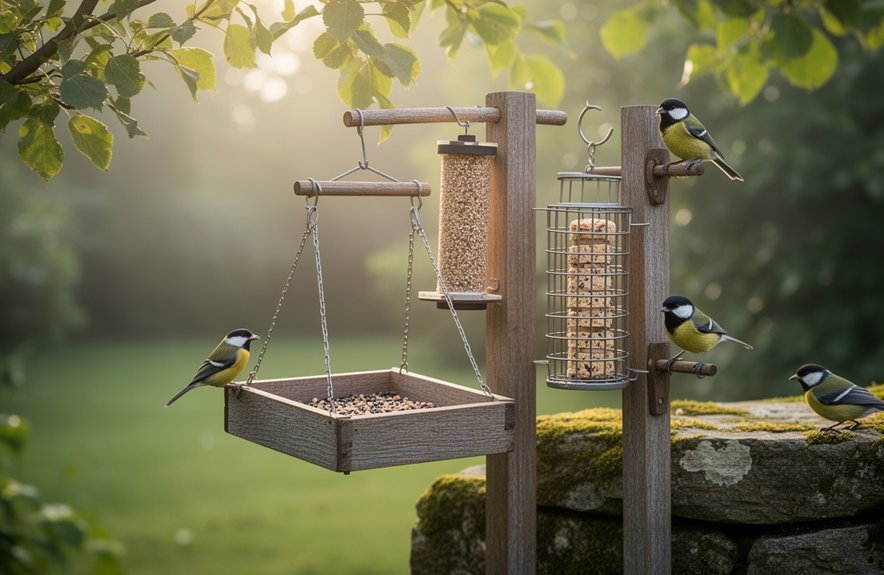
A mixed feeding setup can make a yard feel more welcoming, especially when seed feeders serve finches and other small birds, while suet cages give woodpeckers a high-energy stop.
Ground trays can then handle larger species like doves and jays, keeping the busier birds from crowding the smaller ones at one perch.
When each feeder type has a clear job, the station works more smoothly, and the birds are less likely to stage a squabble over dinner.
Seed feeders for small birds
Several small feeders can cover a lot of ground around a yard, especially when each one matches a bird’s favorite food. Tube feeders with nyjer ports hold thistle for finches and siskins, and small cages help the guests feel at home.
A mix can look like this:
- A narrow tube for nyjer.
- A shallow dish for black-oil sunflower.
- A protected feeder set 5 to 6 feet from shrubs.
- Refills stay fresh.
Seed soaking benefits may help older seed stay softer, yet fresh seed still draws the best crowd, and regular visits feel easy to enjoy.
Suet cages for woodpeckers
Woodpeckers often show up best when the feeder mix includes suet, and a simple cage can keep them coming back without crowding the seed feeders nearby.
Placed 6 to 10 feet high on rough-barked trunks or sturdy branches, the cages work best near cover and a perch, with flightperch placement helping birds land and leave fast. Rustproof metal cages, or repurposed stakes with a lid, hold plain or peanut-based seasonal suet year-round.
Spacing several cages 10 to 15 feet apart lowers squabbles, and a small baffle helps when squirrels arrive. Fresh cakes and weekly washing keep the station tidy.
Ground trays for larger species
Ground-level tray feeders give larger birds a simple place to feed without crowding the hanging stations, and a shallow, sturdy platform about 12 to 18 inches wide works well for mourning doves, quail, and juncos.
To help the flock feel at home, a tray can be filled with millet, cracked corn, and mixed seed, then set on a paver or mulch base.
- Dry
- Open
- Lift
- Clean
Placed 5- to 6-feet from shrubs and near trees, it echoes native grasslands.
Seasonal rotations keep meals fresh, and the birds return like regulars at a good cafe.
Materials That Last Outdoors
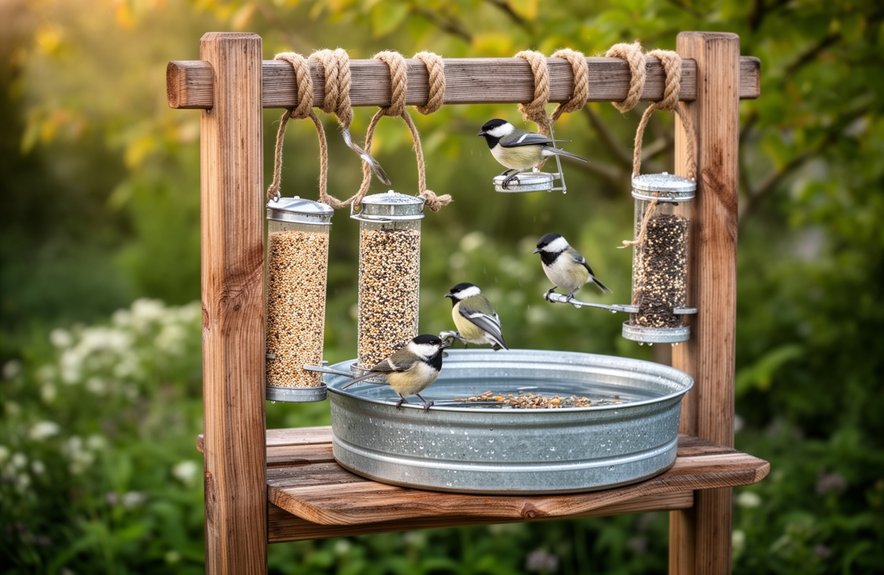
Durable bird feeders start with materials that can handle rain, sun, and busy beaks. Weather-resistant wood, rust-proof metal, and tough plastics or glass all help a feeder stay strong through more than one season.
Smooth, easy-clean surfaces also make scrubbing simpler, which is a small win when seed gets everywhere.
Weather-resistant wood choices
For a bird feeder that will live outdoors, cedar, redwood, and teak are smart choices, since cedar and redwood naturally resist rot and insects, while teak carries its own water-fighting oils. ACQ-treated boards can work for budget builds, but creosote stays out, and cut ends get sealed near bird food.
- Cedar roof
- Redwood sides
- Teak perch
- Sealed edges
Simple native timbers fit many yards, and oil finishes or a bird-safe sealant on cut ends help blocks stay sound after rain. The result feels like part of the garden, not a temporary gadget, and birds seem to notice the shelter.
Rust-proof metal options
Choosing rustproof metal parts helps a bird feeder stay steady outdoors, so heavy-duty steel S-hooks, about 3 inches long, and a 6-foot wrought-iron plant stand make strong hanging points that resist corrosion and can hold several feeders at once.
Galvanized feeders last longer, and plain metal can be upgraded with protective coatings before rust starts. Soft rustproof wire, around 15 feet, can secure cages without the sad snap of flaky metal. Placing hangers away from irrigation spray and standing water slows corrosion, and a seasonal check for tiny rust spots keeps the station safe and neighborly for all nearby.
Easy-clean surfaces
With smooth, nonporous materials, a bird feeder is much easier to keep tidy, since glass saucers, ceramic dishes, and Rust-Oleum–treated metal surfaces rinse clean with hot water and dish soap before seed and grime get a chance to settle in.
That routine keeps the station ready for regular visitors, and it fits a welcoming yard.
- Smooth trays catch husks in a neat ring.
- Shallow dishes leave little room for sludge.
- Nonstick coatings and removable liners lift out fast.
- Sealed edges keep rain and droppings from hiding.
A quick scrub each day keeps the station inviting, and nobody likes a grumpy mold patch.
Placement Strategies That Increase Bird Visits
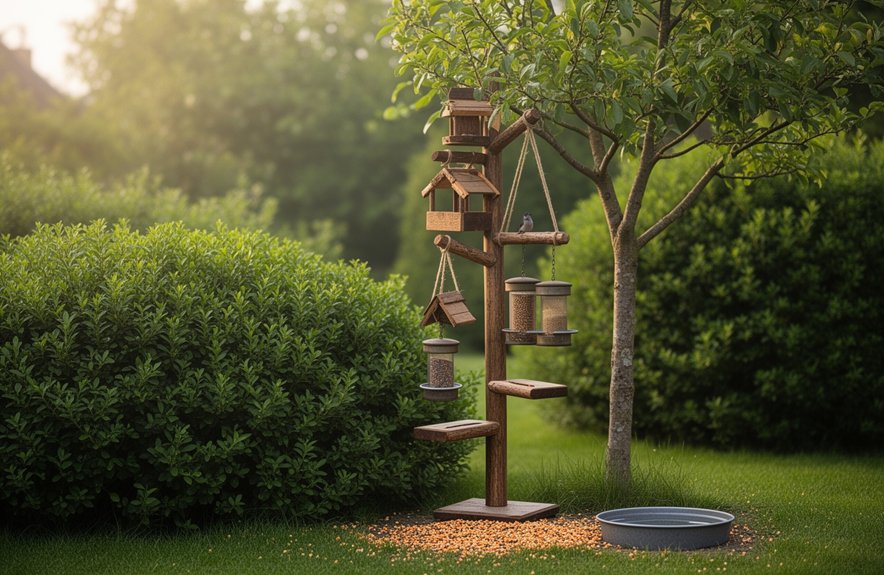
A feeder usually works best when it sits a few feet from dense shrubs, so birds have quick shelter without giving neighborhood cats an easy hiding place.
Placement near a window or favorite viewing spot helps people enjoy the birds, but it should stay far enough away to lower the risk of window strikes.
Quiet corners often bring more visits than busy walkways, since birds tend to prefer a calm spot with a little cover and fewer sudden surprises.
Distance from windows and predators
Near windows and hiding spots, bird feeders can become risky fast, so placement matters as much as the feeder itself.
- Feeders sit 30 feet from glass, with window decals, cat deterrents if needed.
- Feeders rise three to four feet high, beyond easy jumps.
- Feeders stay 10 to 30 feet from perches, so birds can reach cover, but predators cannot hide directly overhead.
- Feeders rest in a quiet corner, away from heavy foot traffic.
That spacing keeps birds calm, cuts collisions, and makes the yard feel like a safe stop for the whole flock, neighborhood alike, through every season outside too.
Near natural shelter like shrubs
Just beyond dense shrubs, a feeder can give birds quick cover without handing cats a sneaky launch point. A placement about 5–6 feet from brush keeps a clear approach, while trees or tall shrubs 10–30 feet away give a ready retreat. Native cover like oaks, serviceberries, or fan palms adds shelter, nesting material, and seasonal food, so the feeding spot feels part of the same small habitat, not a lonely stop.
A branch or pole 3–6 feet above the feeder offers a lookout perch, and that simple predator buffer helps birds settle in. Leaving about 5 feet of open space in front lets birds scan for danger, and the yard’s regular visitors get a safer, easier routine every morning there, too.
Quiet vs high-traffic areas
Feeder placement works best when the yard’s busiest spots and calm corners are matched to the birds’ needs. In quiet spots, a feeder 4–6 feet high near a window or patio feels safe, while avoiding heavy foot traffic. In lively areas, a pole feeder with a tray and open space gives birds room to land and leave.
- Calm corner, close view.
- Busy path, wide landing.
- Keep 10–30 feet from cover.
- Rotate with seasons; clean daily.
Birds avoid urban noise, and visitor patterns stay steadier when routines are predictable. A tidy station helps everyone settle in.
Design Ideas That Look Good in Your Yard
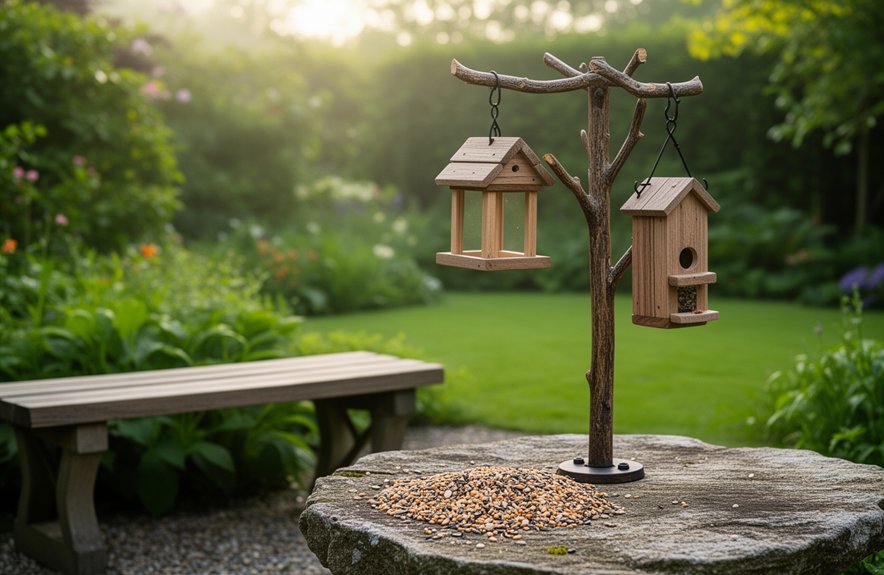
A bird feeder station can look neat and polished when it uses a minimal modern style, with clean lines, simple metal poles, and a few matching containers.
Rustic natural wood setups bring a softer feel, especially when paired with wood mulch, teacup feeders, or other handmade touches that fit the garden.
Decorative focal points, such as a tall plant stand or a layered mix of feeder heights, can make the yard feel lively while still keeping the space tidy and easy to enjoy.
Minimal modern feeder stations
Clean lines do most of the work here, so a slim, matte-black feeder station can look more like yard art than clutter.
Sleek silhouettes suit urban minimalism, and a single 6-foot wrought-iron stand can hold metal tube feeders, glass saucers, and a low suet cage without crowding the view.
- Tube feeders for finches and chickadees.
- Saucer dishes for peanuts, jelly, and mixed seed.
- Suet loop for woodpeckers and wrens.
- Keep it 5–6 feet from shrubs, 8–10 from windows.
Removable saucers and rustproof parts make washing simple, and small refills keep the station tidy and inviting.
Rustic natural wood setups
With weathered wood and simple lines, a rustic bird station can feel like part of the garden instead of an add-on.
A reclaimed cedar tray, mounted on a 4×4 post or railing, holds seed and suet, while galvanized nails and a sloped roof help it stay dry.
Handmade perches from dowels or small branches, plus a shallow water dish, invite sparrows and cardinals.
Placed near shrubs, but not too close, it gives birds shelter without giving cats an easy path.
A yearly oil finish and weekly cleaning keep the setup tidy, with seasonal accents kept natural and calm overall.
Decorative garden focal points
Set on a small paver patio, a bird feeder grouping can look like a planned garden feature instead of a random add-on. Anchored by native shrubs, the station feels tidy, welcoming, and easy to share with neighbors and birds alike.
- A wrought-iron stand with layered feeders.
- Recycled teacups, a pie pan, and a mason jar in vintage accents.
- A bowl on a railing with grape jelly or seed.
- Bee balm, oaks, and fan palms for seasonal color and shelter.
Together they form a calm focal point that keeps visitors returning throughout the year with a quietly polished, garden-nook finish.
Frequently Asked Questions
How Can I Attract More Birds to My Birdfeeder?
More birds visit when feeders offer varied seed, suet, and a mealworms supply, placed near native plants, water, and safe perches. Clean feeders often, keep food fresh, and use small ports to welcome friendlier species.
What Is the 5 7 9 Rule for Bird Feeders?
About 70% of backyard birds avoid exposed feeders, preferring safer group spaces. The 5-7-9 rule means feeder placement 5 feet from shrubs, 7 feet from cover, and 9 feet between feeders, with seasonal maintenance adjusting.
Why Put a Potato in the Bird Feeder?
Birds may benefit when a raw potato steadies food, catches crumbs, and keeps small servings accessible. Some call it potato bait, but it is a simple support that helps a feeder feel welcoming for everyone.
Why Should You Sprinkle Coffee Grounds Around Your Bird Feeder?
Coffee grounds can be sprinkled around a feeder because, though some fear they will harm birds, used grounds deter ants and enrich soil. This coffee enrichment and soil amendment helps nearby plants sheltering the flock.