
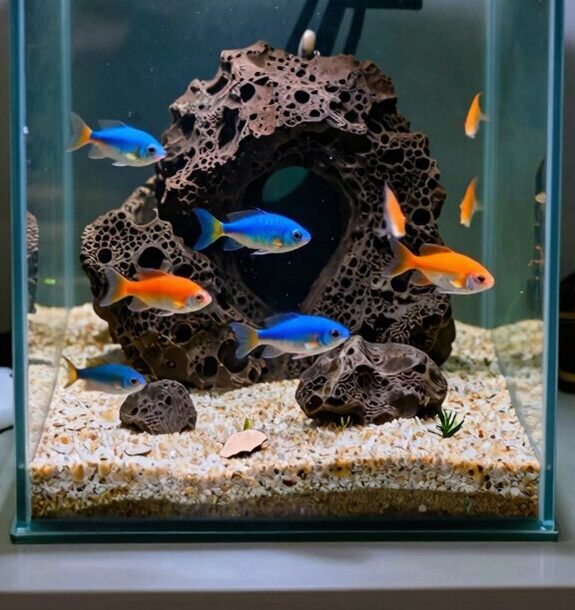
An African cichlid tank works best when it is larger than expected, stocked with similar-sized fish, and built around sturdy rock caves and open sand. Hard, alkaline water, steady heat, and strong filtration help keep stress low and aggression in check. Feed only what they finish quickly, watch for bloat or ich, and quarantine new fish first. Set it up right once, and the fish usually do the rest, with fewer surprise dramas than a soap opera.
Disclosure: This post may contain Amazon affiliate links, at no extra cost to you. Content on Pawtangle is created with research support from AI tools and carefully reviewed, edited, and fact-checked by the lead author, Dr.Fahri Pat , to ensure accuracy and reliability. Learn more
Key Takeaways
- Choose a large tank, ideally 55–75+ gallons, to reduce aggression and give African cichlids room to establish territories.
- Build a rocky aquascape with caves, ledges, and hiding spots; use sand or fine gravel and broken sight lines.
- Keep hard, alkaline water stable: pH 7.8–8.6, GH 10–20 dGH, and temperature around 75–85°F.
- Use strong filtration and good flow, with canister or HOB filters rated for about twice the tank size.
- Feed small portions once or twice daily, quarantine new fish, and watch closely for bloat, ich, flukes, and fin rot.
Why I Got Into African Cichlids in the First Place
He was first drawn to African cichlids by the color, and the fish did not disappoint. Lake Malawi mbuna and peacocks offered shifting blues, golds, and reds, and that vivid mix tapped into color psychology in a simple way: the tank felt alive.
He also liked the social drama, from territorial flares to mouthbrooding care, because it gave real behavioral enrichment. Rock piles, caves, and open swim space let those habits show.
The appeal stayed practical too, with hardy, long-lived fish and easy-to-find species. For anyone wanting a vibrant, active community, they fit well.
Picking the Right Tank Size — and Why Bigger Really Does Matter Here
After the color, movement, and social behavior come the practical side of the tank, and tank size is where African cichlid keepers often make or break the setup.
A 30-gallon tank can work for one or two smaller fish, but adding about 3 gallons per extra fish helps everyone breathe easier.
For a group, 55 to 75+ gallons gives better swim space, calmer territory lines, and fewer fin-nips.
Bigger water also stays steadier in temperature and pH, which helps keep the group healthy.
Good tank placement and strong filtration matter too, and smart stocking tips usually start with more room, not less.
The Rock and Sand Setup That Works (and Looks Great)
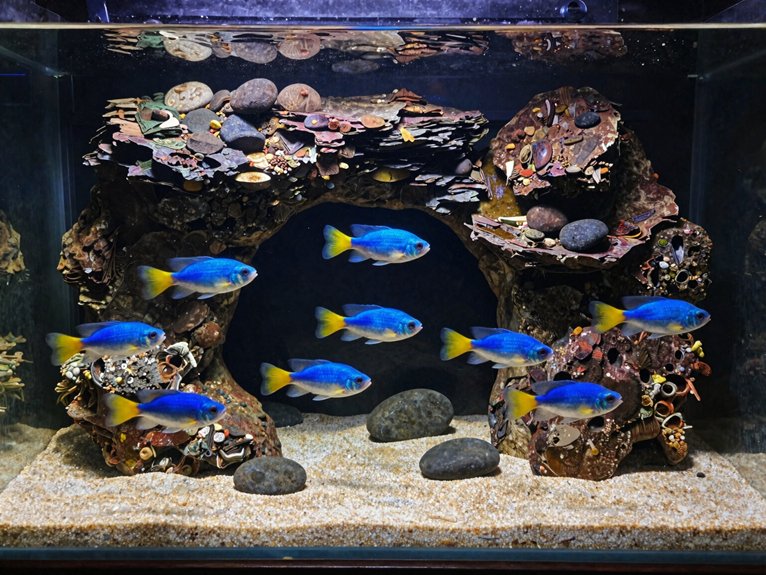
At the bottom of the tank, the setup should look like a rocky slice of lake shoreline, not a bare bowl of glass. Use substrate layering with 3–5 cm of coarse sand or gravel, so diggers can sift without undoing the plan.
Build stacked caves and ledges from safe limestone, slate, or sandstone, with flat contact points and a little silicone if needed. Leave several hiding spots per fish, because everyone likes a corner of their own.
Add some limestone or crushed coral, then rinse, boil, and cure new rockwork. Good rockscape maintenance keeps the scene steady and the group calmer.
Water Chemistry for African Cichlids: It’s Simpler Than It Sounds
For African cichlids, the water should feel like a slice of their native lakes, meaning hard, alkaline, and steady rather than soft and changing all the time.
A target pH of 7.8–8.6 and GH around 10–20 dGH gives solid native simulation, while stable warmth around 75–85°F keeps stress low.
Carbonate buffering matters, so limestone, crushed coral, or aragonite can help hold the line without constant chemical fuss.
Use a testing routine for pH, KH, GH, ammonia, nitrite, and nitrate, then make gradual adjustments with small water changes or slow media additions.
Fish prefer calm chemistry, not surprise plot twists.
Malawi, Tanganyika, or Victoria — How I Chose My Fish
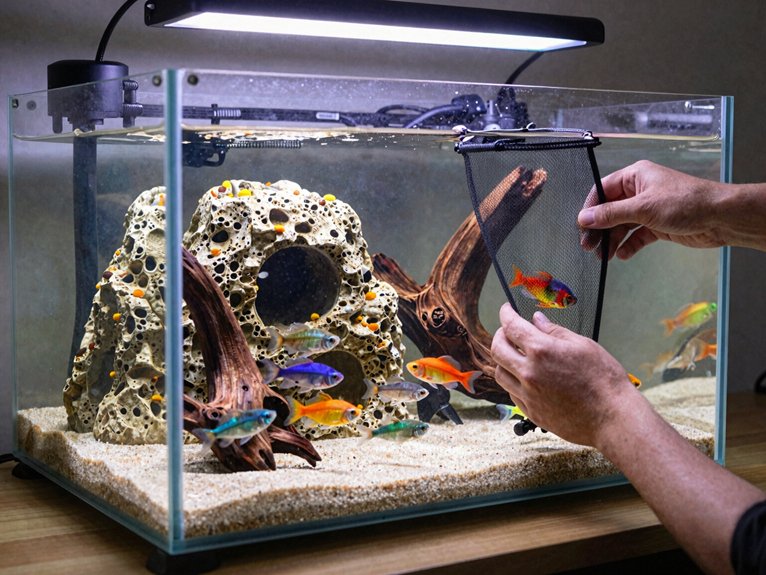
Which lake makes the best starting point? For this aquarist, lake comparisons pointed to Malawi first, then Tanganyika, while Victoria waited. Malawi mbuna and peacocks were easy to find, vivid, and usually workable in 30-plus gallon tanks.
| Lake | Fit | Note |
|---|---|---|
| Malawi | Strong | Colorful, common, social |
| Tanganyika | Careful | Unique, but stricter |
| Victoria | Later | Less common, touchy |
Breeding considerations mattered too, so size, temperament, rockwork, and caves were matched within one lake biotope. Malawi’s mbuna liked plants replaced by tough decor, and peacocks wanted more protein. Water stayed near 7.8 to 8.6, warm, and steady.
My Favorite African Cichlid Species for a Community Tank
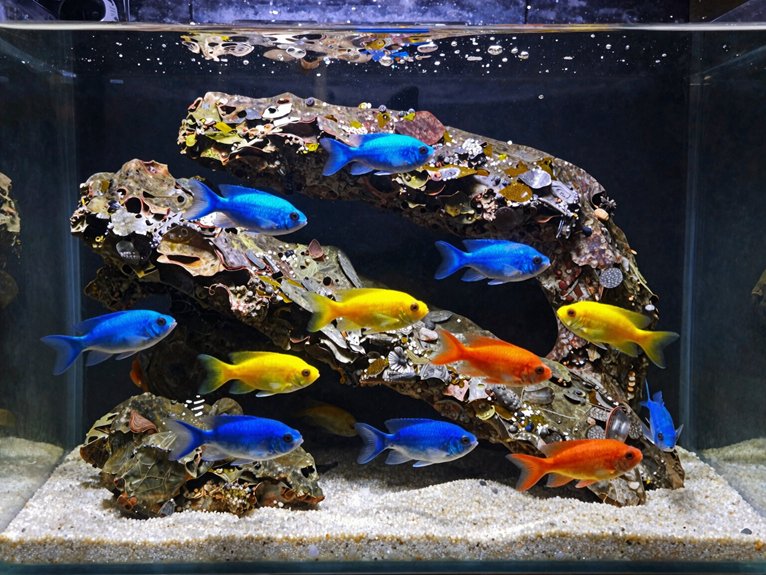
With the lake choice settled, the next step is picking species that can share space without turning the tank into a turf war.
Peacock cichlids are a reliable anchor, and their peacock diversity brings color without constant brawling, especially in tanks with open water and a few rocks.
For a livelier mix, some herbivorous mbuna, like Labidochromis, can fit with other similar fish if there are plenty of caves.
Haplo coexistence works best with size-matched partners, such as Otopharynx or Cynotilapia, plus broken sight lines.
Matching diet, water, and temperament helps the group feel like a real community, not a crowded argument.
How Many Fish Is Too Many? Stocking an African Cichlid Tank
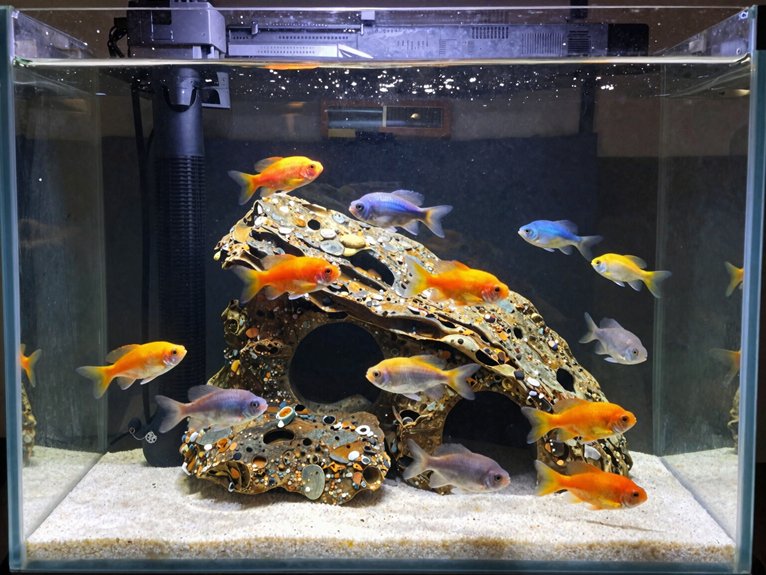
Stocking an African cichlid tank works best when space and temperament are treated as carefully as color. A 30-gallon tank suits up to two small fish, then about 3 more gallons per extra small-to-medium cichlid helps prevent crowding and quarrels.
For Mbuna, a larger tank with 8 to 12 similar-sized fish often spreads aggression better than a lonely pair. Compatibility charts help match fish of similar size and behavior, and breeding control is easier when species are chosen with care. Strong filtration, caves, and close watching keep the group steadier, since one bully can spoil the neighborhood.
Feeding African Cichlids: What I Feed Mine Every Day
Every day, African cichlids do best with a balanced, measured feeding routine, and the key is to give only what they can finish in 1 to 2 minutes.
A steady feeding schedule works well, with high-quality cichlid pellets or flakes as the staple, chosen for the species, since mbuna prefer plant-based foods while peacocks and haps need more protein. Portion control matters, because small meals help gut health and keep fish lively.
Once or twice a week, frozen brine shrimp, bloodworms, or black soldier fly larvae add variety, and vitamin supplements or spirulina wafers round things out nicely.
Keeping the Tank Clean Without Spending Hours on It
A clean African cichlid tank starts with strong filtration and regular small chores, not marathon scrubbing sessions. A canister or hang-on-back filter rated for twice the tank size, packed with fine mechanical and biological media, does most of the heavy lifting, while air stones or circulation heads keep water moving.
Each week, remove 20–30 percent of the water, siphon gravel, and test pH, ammonia, nitrite, and nitrate. Crushed coral helps hold the right alkaline range. Feed only what disappears in 1–2 minutes, and use rockwork, caves, and easy-vacuum gravel for low-drama automated upkeep, not medication protocols.
Health Problems to Watch For (and How I Handle Them)
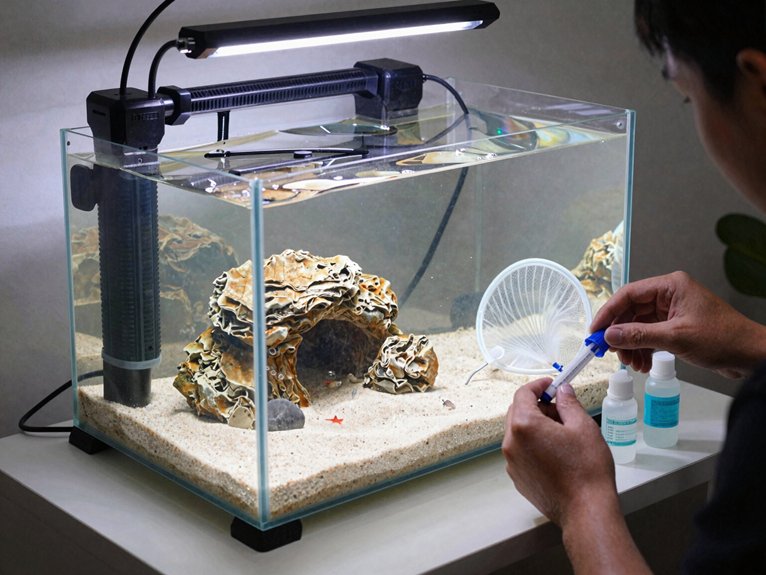
Once the tank is clean and the water stays steady, the next job is spotting trouble early, because cichlids often show health problems before they fully crash. A careful keeper watches for Malawi bloat, flukes, fin rot, and ich, and acts fast.
Mild bloat often gets 48 to 72 hours of fasting and peeled peas, while worse cases need metronidazole or veterinary help. Flukes respond to praziquantel, fin rot may need antibiotics, and ich calls for warmer water and formalin or malachite green. Preventive quarantine, stable water, and checking medication interactions keep the group safer.
How the Tank Looks Now vs. When I First Set It Up
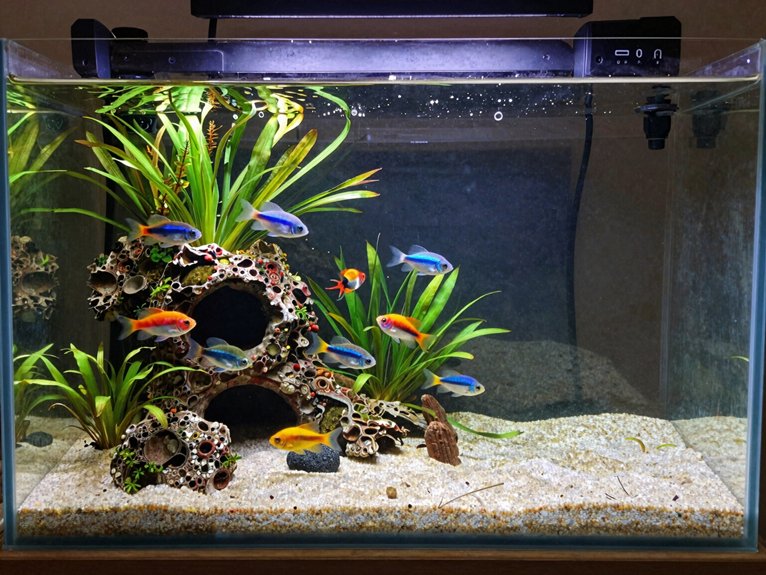
What began as a bare-bones setup with just a heater, filters, and plain gravel has changed into a tank that looks much more like an African cichlid home. The before/after view shows a clear rockwork evolution, with sturdy caves, limestone, and a coarser substrate that feels right for digging fish.
- More rock cover now gives each fish a place to belong.
- The black backing and artificial plants calm the scene.
- Stronger flow and filtration keep the water lively and clean.
The tank now reads like a small rocky shoreline, not a starter box.
Things I’d Do Differently If I Started Over
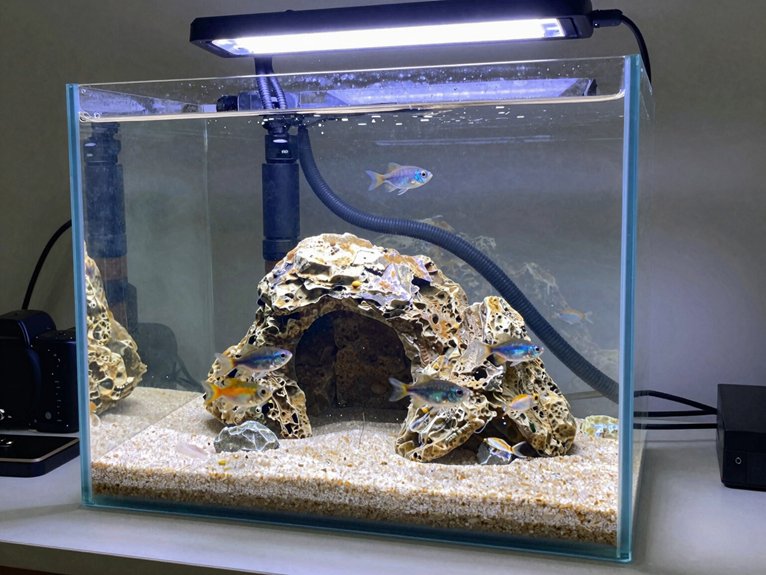
Looking back at the tank now, it is easy to see a few choices that would have made life simpler from the start.
First, a bigger tank would have saved trouble, because African cichlids need room to sort out territory and tank feng shui. More rock caves, cleaned and boiled, would have helped each fish claim space and practice better breeding etiquette.
Second, stronger filtration and more flow would have kept water steadier, with less stress all around.
Finally, better tankmates, no delicate plants, and food matched to each species would have made the whole group feel more settled, and less likely to act like tiny bouncers.
Frequently Asked Questions
What Mistakes Do Beginner Fish Owners Make?
Begin by discussing the biggest mistakes: overcrowding tanks and improper cycling, then poor water chemistry, weak filtration, and mismatched diets. Such errors often increase stress and illness, leaving newcomers feeling isolated instead of welcomed into successful fishkeeping.
Can Cichlids Go 2 Days Without Food?
Yes, healthy cichlids can usually handle 2 days without food. Such feeding gaps may offer fasting benefits, but metabolic rates and stress indicators should be watched closely; juveniles, sick, or thin fish should not fast.
What Is the Easiest Cichlid for a Beginner?
Mbuna from Lake Malawi are often the easiest choice: hardy species, lively colors, simple care, and a predictable setup. Their peaceful temperament is relative, yet they fit beginners seeking a confident, welcoming first cichlid experience.