
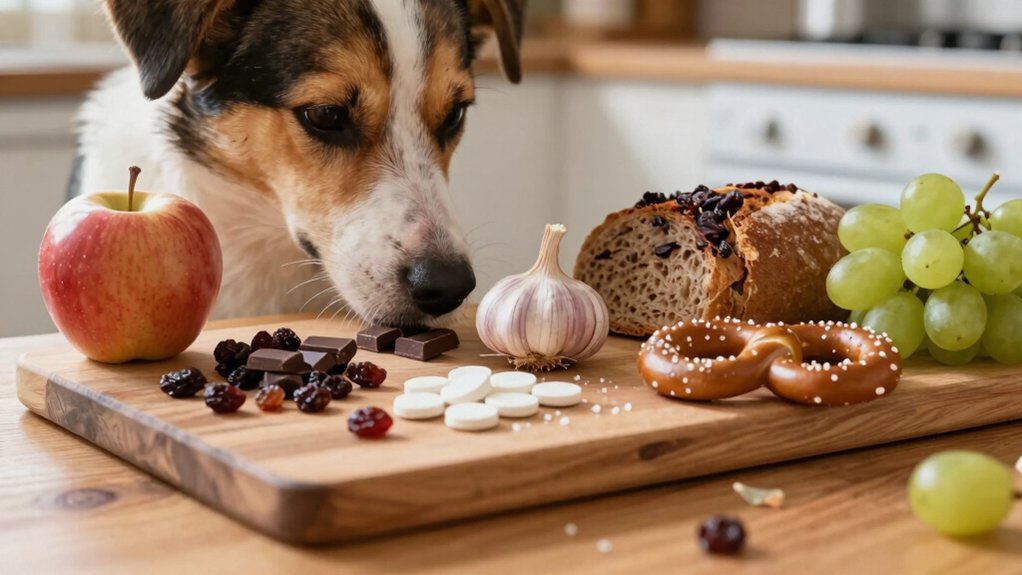
You shouldn’t feed your dog chocolate, grapes, onions, garlic, xylitol, alcohol, or raw dough—yikes, those can turn into fast vet emergencies! Also skip dairy in big amounts, salty snacks, and greasy fat trimmings, because they can cause vomiting, diarrhea, pancreatitis, or worse. Even tiny bites of some foods can be risky, so keep treats simple and dog-safe. Want the full list? The sneaky hazards ahead might surprise you!
Disclosure: This post may contain Amazon affiliate links, at no extra cost to you. Content on Pawtangle is created with research support from AI tools and carefully reviewed, edited, and fact-checked by the lead author, Dr.Fahri Pat , to ensure accuracy and reliability. Learn more
Key Takeaways
- Chocolate, especially dark chocolate, cocoa powder, and baking chocolate, can poison dogs and affect the heart and nervous system.
- Grapes and raisins can cause kidney failure, even in tiny amounts.
- Xylitol, found in gum and candy, can rapidly drop blood sugar and may trigger liver failure.
- Onions, garlic, and related powders can damage red blood cells and cause anemia.
- Cooked bones, avocado pits, alcohol, raw dough, and salty or dairy foods can cause choking, blockage, poisoning, or severe stomach upset.
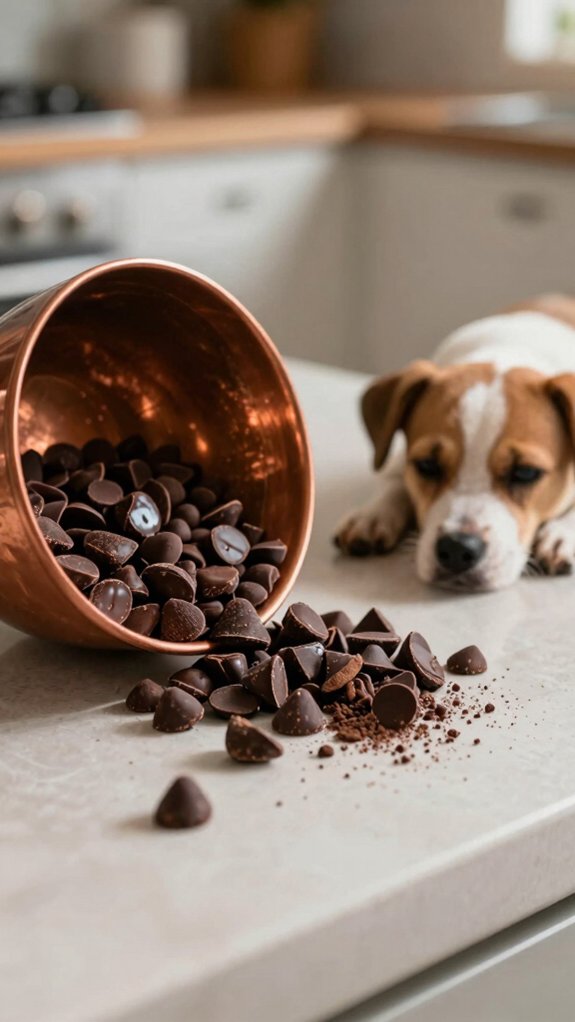
Chocolate
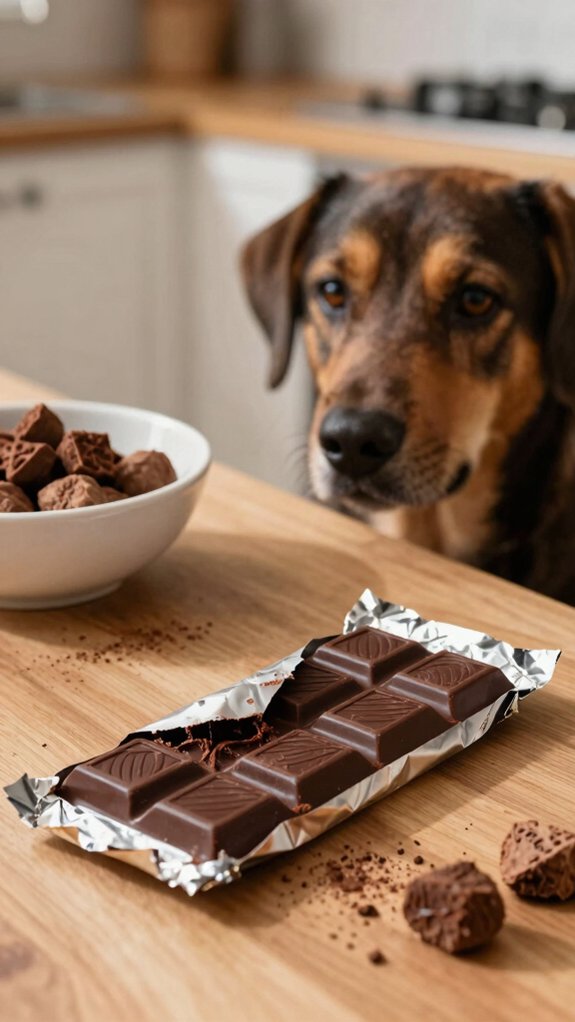
Chocolate may seem like a sweet treat, but it’s packed with theobromine, which your dog can’t handle well.
That means it can stir up your dog’s heart and nervous system, and even a small bite can cause big trouble!
Contains theobromine
Even though a brownie may look harmless on the counter, it can be a real danger to your dog because it contains theobromine, a stimulant that also shows up in caffeine. You and your crew can dodge this household danger by keeping chocolate away from curious noses and choking hazards.
| Chocolate type | Risk |
|---|---|
| Cocoa powder | Very high |
| Baking chocolate | Very high |
| Dark chocolate | High |
| Milk chocolate | Lower, but still risky |
Small dogs can react to tiny bites, and signs may pop up fast. Watch for vomiting, diarrhea, or jittery behavior, then call your vet or poison help right away!
Can affect heart and nervous system
Although a little nibble might seem no big deal, chocolate can mess with your dog’s heart and nervous system because it carries theobromine and caffeine, two stimulants dogs can’t handle well.
You might see vomiting first, then hyperactivity, tremors, or seizure warning signs, and that’s your cue to act fast!
Dark chocolate, cocoa powder, and baking chocolate pack the biggest punch, so they’re extra risky.
These toxins can trigger heart rhythm issues and a racing heartbeat, especially in small dogs, where even a little can hit hard.
Don’t wait and see—call your vet right away.
Grapes and Raisins
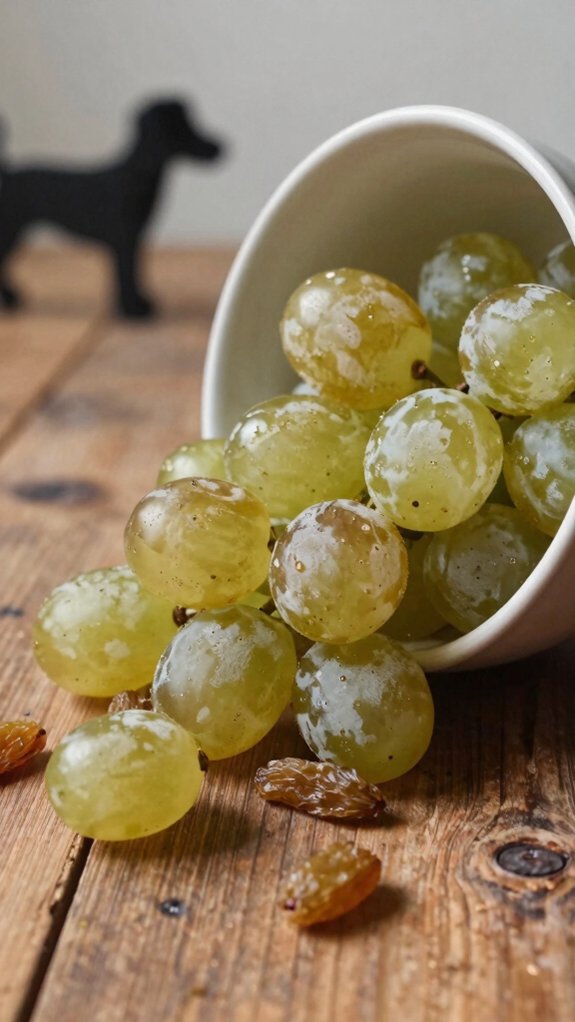
Grapes and raisins might seem harmless, but for your dog, they’re a big danger and can quickly lead to kidney failure.
Even a tiny amount can be harmful, and “just one or two” isn’t a safe gamble—yikes!
If your dog gets into them, act fast and call your vet right away.
Linked to kidney failure
Watch out—some “healthy snack” foods turn into a real emergency for dogs, and the scary one here is the sweet little grape and its wrinkly cousin, the raisin! If you’re checking dog hydration warnings or sharing electrolyte safety tips, skip these completely; they can trigger sudden kidney failure. You may see vomiting, diarrhea, belly pain, or lots of drinking and peeing within 24 hours. Sensitivity isn’t predictable, so a past okay doesn’t mean it’s safe now. Here’s a quick glance:
| Food | Risk |
|---|---|
| Grapes | toxic |
| Raisins | toxic |
| Grape juice | dangerous |
Call a vet fast—teamwork saves tails!
Even small amounts can be harmful
Tiny treats can turn into big trouble fast, and grapes and raisins are a perfect example! Even a few can make your dog very sick, so don’t shrug them off.
You may notice vomiting, diarrhea, belly pain, extra drinking, or lots of peeing, then sluggish behavior.
The scary part? Kidney failure can show up within about 24 hours, and there’s no known safe amount.
For Preventing poisoning, keep these off the snack list and offer Safe human snacks like carrots or apple slices instead.
If your pup eats grapes or raisins, call your vet or animal poison control right away—fast help can save kidneys!
Onions and Garlic
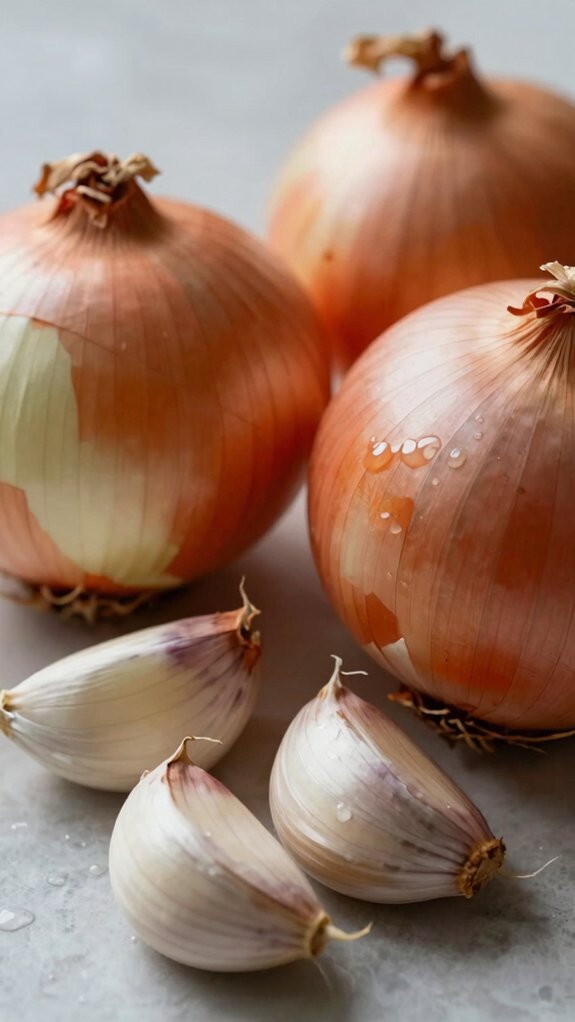
Onions and garlic might seem harmless, but they can seriously damage your dog’s red blood cells, which is a big deal! Even a little onion powder, a few garlic scraps, or food seasoned with either one can start the trouble, and that damage can lead to anemia.
Damage red blood cells
Tucked into a stew, sprinkled from a shaker, or dropped on the floor while you’re cooking, onion and garlic can look harmless—but they’re a big deal for dogs! They damage red blood cells, so your buddy may seem off later, not right away. Keep up dietary vigilance, and if your dog snatches even a few slices or a dusting of powder, stop access fast and make emergency vet contact.
- Watch for tiredness, pale gums, or weird breathing.
- Garlic can hit harder and faster.
- Dark urine or weakness means trouble.
Can lead to anemia
Even a little onion or garlic can cause big trouble for dogs, because the harmful compounds in these foods can damage red blood cells and lead to anemia.
You might notice weakness, pale gums, heavy breathing, or dark urine, and those signs can show up within a day or a few days.
Yikes!
Even onion powder, chives, or leeks can do it, so keep cooking scraps and jars of chopped garlic out of reach.
If your dog may have eaten any, call your vet right away.
Quick help matters, whether you’re treating pancreatitis or managing dehydration.
Xylitol (Artificial Sweetener)
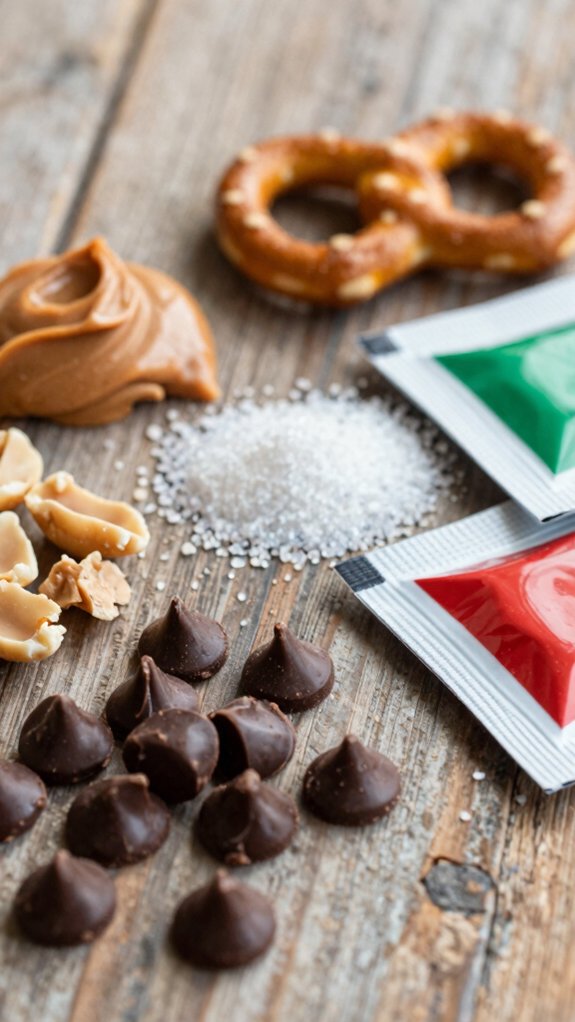
Watch out for xylitol, a sneaky artificial sweetener often hiding in gum and candy, plus other “sugar-free” treats you mightn’t expect.
If your dog eats it, their blood sugar can drop fast, and that can turn into weakness, wobbling, or even a scary collapse in about an hour.
Yikes—so always check labels before you share a snack, because even a tiny bite can be a big problem!
Found in gum and candy
In gum, candy, and other sneaky little “sugar-free” treats, xylitol can hide like a troublemaker in plain sight.
You might think one mint is harmless, but it isn’t!
Read labels every time, because “diet” and “low sugar” snacks can still be risky.
Keep these goodies away from your dog, and don’t let strangers share treats at the park.
If your pup gets into any, call a vet fast.
Hydration dangers and salt toxicity can wait—xylitol is a bigger emergency.
- Check wrappers closely
- Toss loose gum safely
- Act fast, then breathe
Causes rapid blood sugar drop
If your dog sneaks a piece of xylitol, their body can flip into emergency mode fast, because this sweetener tricks the pancreas into dumping out a big insulin burst! You may notice wobbliness, weakness, or a sudden crash in energy, sometimes within an hour, and that’s no joke.
For label reading basics, scan gum, candy, desserts, and even some peanut butter before you share a bite. If you spot xylitol, skip it—your pup’s safety squad will thank you!
Call your vet right away and follow vet emergency steps, because xylitol can keep getting worse, even leading to liver failure, seizures, collapse, or death.
Alcohol
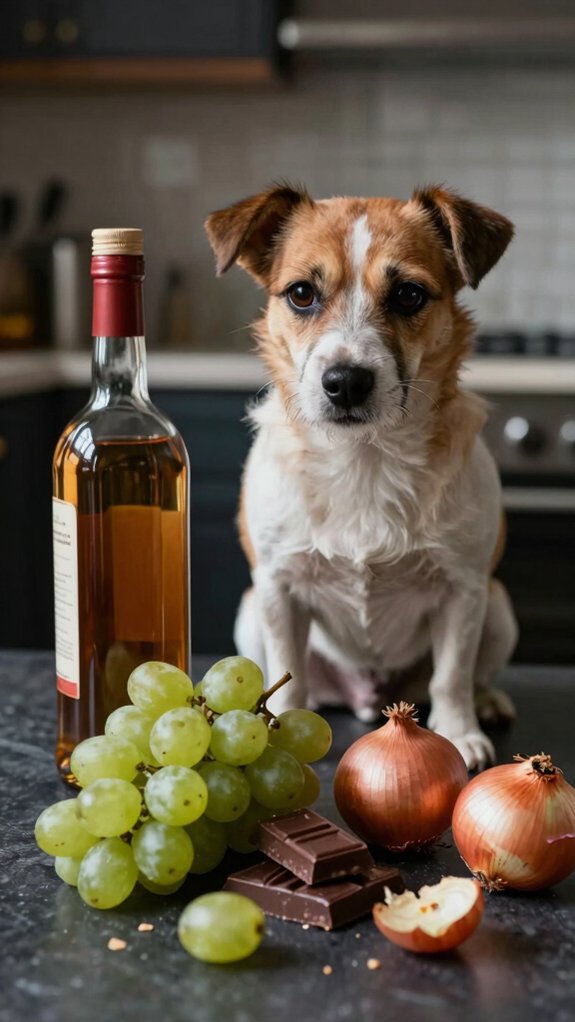
Alcohol can be seriously dangerous for your dog, and even a small sip can hit harder than you’d think.
It can quickly throw off coordination and make breathing harder, so your pup may look wobbly, sleepy, or just plain “not right” fast.
Yikes—if you suspect any exposure, call your vet or animal poison control right away, and keep drinks, spills, and alcohol-based products out of reach.
Highly toxic even in small amounts
Even a tiny sip can turn into a big problem fast, because a dog’s body absorbs alcohol quickly, sometimes causing serious trouble in about 30 minutes.
You’re not overreacting—check alcohol poisoning symptoms like vomiting, tremors, or weird behavior right away!
- Home first aid myths can waste precious minutes; don’t wait for it to “wear off.”
- Watch for hidden alcohol sources in baked goods, hand sanitizer, and even antifreeze.
- Emergency vet timing matters, so call ASPCA Poison Control at (888) 426-4435 now.
If your dog ate uncooked yeast dough, that’s a sneaky double hit, since fermentation can make more alcohol and bloat fast.
Affects coordination and breathing
Because your dog’s body can soak it up so fast, alcohol can throw off coordination and breathing before you’ve had time to blink. You might notice wobbling, vomiting, tremors, or a sleepy slump, then bigger emergency symptoms like slow breathing or collapse. Keep all drinks and booze-based products far away, because even a tiny sip can wreck hydration balance and the nervous system.
| Sign | What you may see |
|---|---|
| Early | Incoordination, vomiting |
| Later | Trouble breathing, depression |
| Severe | Coma, blood pH changes |
If you suspect alcohol, call your vet or poison control immediately—no home remedies, ever!
Caffeine
Caffeine might seem harmless when it’s hiding in coffee, tea, or those buzzing energy drinks, but for your dog, it’s a real troublemaker.
It can kick your dog’s heart and nervous system into overdrive, which is no joke—think racing heartbeat, shaky paws, and a very bad day.
Even a small sip can be risky, so if your pup gets into caffeine, call your vet right away!
Found in coffee and energy drinks
- Keep cups, cans, and leftovers out of reach.
- Don’t toss “used” grounds where curious noses can snack.
- Call your vet fast if your dog gets any caffeine.
Signs can show up quickly, so don’t wait!
Stimulates heart and nervous system
Even a tiny sip can turn into a big problem, since caffeine races through a dog’s body like it’s late for a meeting!
You might notice jitters, panting, vomiting, tremors, or a heart that’s beating way too fast.
Caffeine wakes up the heart and nervous system, but not in a cute, bouncy way, more like an overload.
Coffee, tea, energy drinks, and dark chocolate can hurt even small dogs fast.
Think of it like Grapes and raisins or Xylitol in gum, it’s never “just a taste.”
Call your vet or poison control right away!
Macadamia Nuts
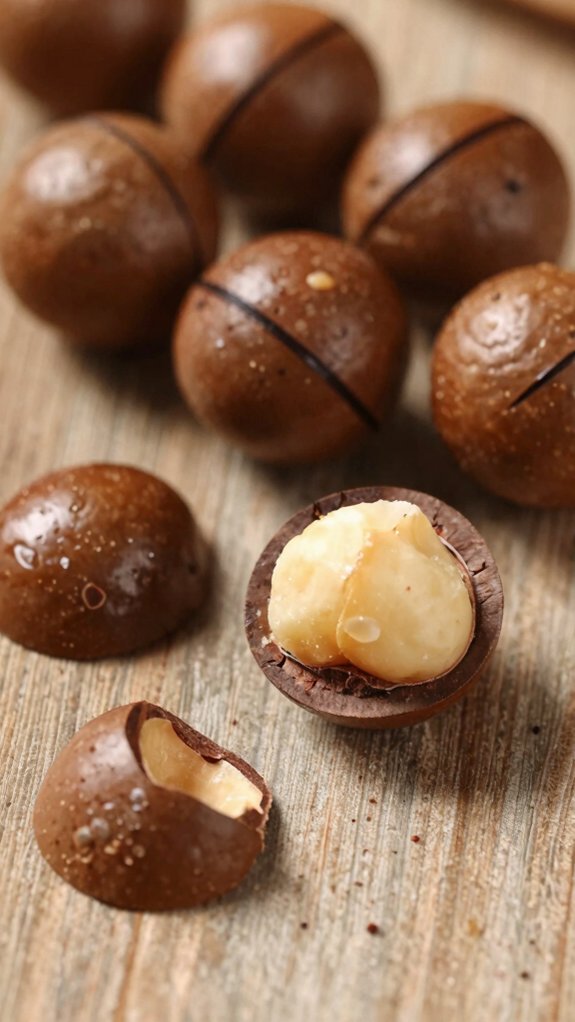
Macadamia nuts might seem harmless, but even a small bite can make your dog weak, wobbly, and plain unhappy.
You could notice trouble walking or standing, and tremors may show up too, which is definitely not a “shake it off” moment!
If your dog sneaks a cookie or snack with these nuts, call your vet right away before the problem gets worse.
Causes weakness and tremors
If your dog snags a few macadamia nuts, don’t brush it off as a tiny snack gone wrong, because these little nuts can pack a nasty punch!
Early detection signs often show up fast: vomiting, severe weakness, and then those shaky tremors that can make your pup look wobbly and worried.
- Don’t wait for “safe” baking to save the day.
- Watch for lethargy, depression, or a feverish feel.
- Call for Emergency vet guidance right away.
You’re not overreacting, you’re protecting your buddy!
More serious signs can build within 12 hours, so quick help matters.
Can affect mobility
When those sneaky little nuts get into your dog’s tummy, the trouble can show up fast, and it can mess with how they move around!
You might notice wobbliness, slow steps, or a pup who just wants to flop down and nap.
That’s not a cute lazy day, it’s a vet check urgency moment.
Macadamia nuts can trigger vomiting, weakness, hyperthermia, and tremors, and even a few can do it.
Symptoms may start within hours, and by 12 hours your buddy could struggle to stand.
Skip exercise after accidents, call your vet or poison control right away, and keep your pack safe!
Avocado
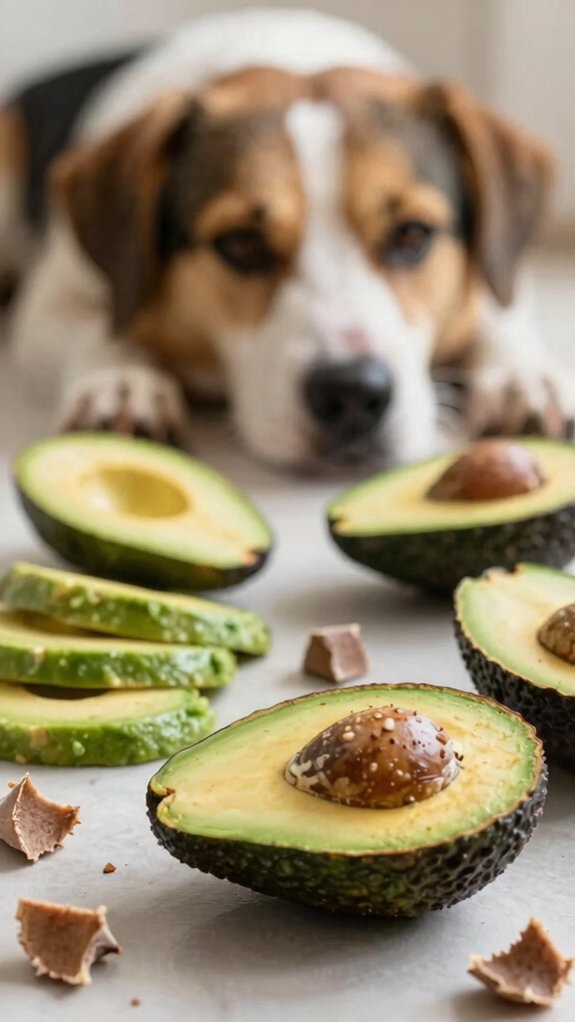
Avocado might seem harmless, but you shouldn’t share it with your dog because it contains persin, a toxin that can upset their stomach.
You could see vomiting or diarrhea, and that’s never a fun surprise for either of you!
If your dog grabs a bite, keep an eye out and call your vet if they seem sick.
Contains persin
Even though avocado toast is a trendy snack for people, it’s a no-go for dogs!
Avocado contains persin, and you should keep the flesh, skin, leaves, and pit away from your pup.
Training avoidance habits helps your dog skip countertop snacks, and if they grab a bite, don’t wait.
- The pit can choke or block the gut.
- The fruit’s high fat can stir up pancreatitis.
- Guacamole leftovers? Call your emergency vet contact, fast!
You want your buddy safe, happy, and part of the pack, so stash avocados out of reach and act quickly if a sneaky nibble happens.
May cause digestive upset
Most dogs will sniff avocado like it’s just another weird green snack, but their stomachs may not agree! If you share even a little, persin can trigger vomiting and diarrhea, and the high fat can upset your pup’s tummy fast. No fun for either of you!
There’s more, too: the pit is a serious choking hazard, and it can lead to intestinal obstruction if swallowed. Yikes! Some dogs seem fine after a tiny lick, but bigger amounts can be dangerous, even deadly. If your dog eats avocado, call your vet or poison control right away.
Cooked Bones
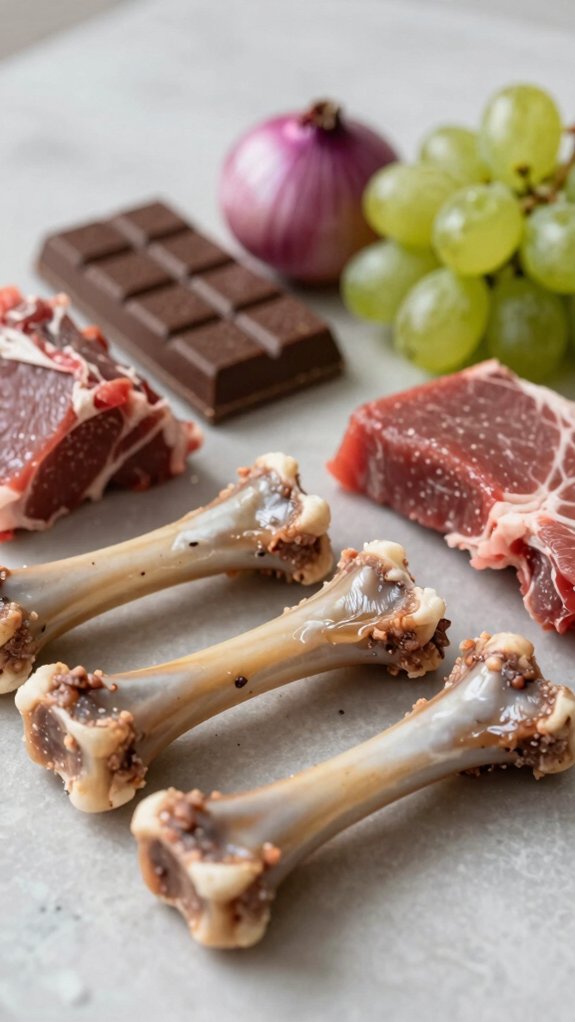
Oh no—cooked bones can splinter into sharp pieces, and those nasty shards can choke your dog or scratch the mouth and throat.
Even worse, they can cut deeper and damage the stomach or intestines, which isn’t a “wait and see” moment.
If your dog gets into them and starts vomiting, straining, or acting sore and tired, call your vet right away!
Risk of splintering
When it comes to cooked bones, the big danger is splintering, and that’s no small thing! You might think a chicken or fish bone is harmless, but heat makes bones brittle, so they crack into sharp shards fast.
- Those splinters can jab your dog’s mouth or throat in seconds.
- They can also trigger drooling, pawing, vomiting, or trouble pooping.
- Your pack is safer when you focus on choosing safe chews and preventing choking hazards.
Skip cooked bones altogether, and grab vet-safe dog chews instead. That simple swap keeps your buddy happier, safer, and way less likely to need an emergency vet visit!
Can damage internal organs
Cooked bones can do a lot more than scratch up your dog’s mouth, yikes—they can also send sharp fragments deep into the body and cause real damage.
You might see vomiting, constipation, belly pain, or bleeding, but the trouble can hide, then show up days later when pieces lodge in the stomach or intestines.
That’s scary stuff! In some cases, the fragments cause a blockage or a perforation, and your pup may need emergency surgery.
For Preventing poisoning, skip these and choose Safe pet snacks instead.
If your dog ate one, call your vet right away—don’t try home vomiting tricks!
Raw Dough with Yeast
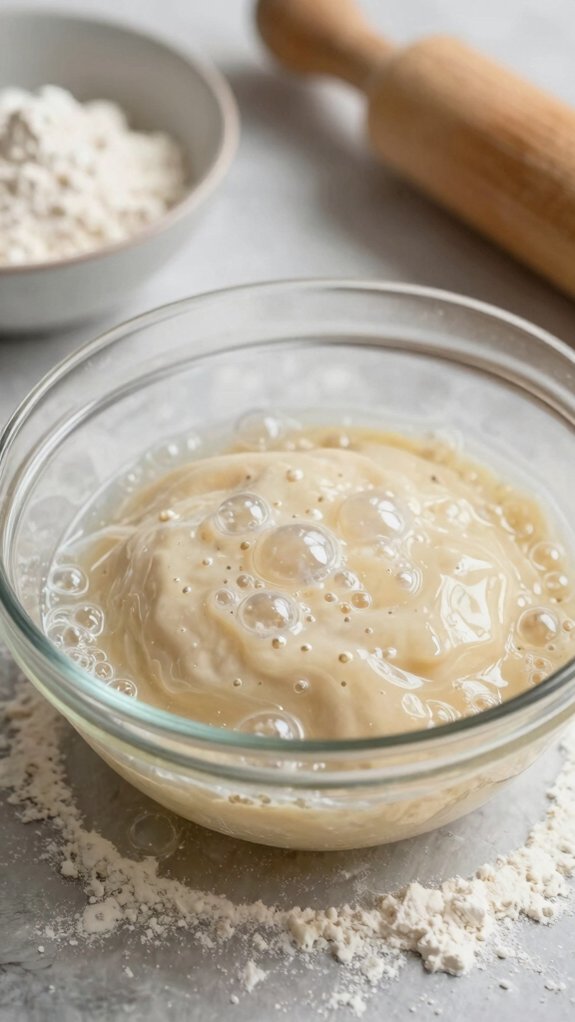
Raw dough with yeast might look harmless, but if your dog sneaks a bite, it can keep rising in the stomach like a tiny bread balloon—yikes!
That expansion can cause painful bloating, and the yeast can also make alcohol, which may lead to vomiting, wobbliness, and trouble breathing.
If you think your dog ate some, call your vet right away, because this isn’t a “wait and see” kind of mess.
Expands in stomach
Even a tiny bite of dough can turn into a big problem in your dog’s stomach, because the yeast keeps working and the dough keeps rising like it’s training for a bakery marathon!
You belong in the “better safe than sorry” crowd, so focus on preventing emergency ingestion with safe kitchen storage and by choosing dog friendly snacks instead.
- Watch for a swollen belly, retching, vomiting, or sudden distress.
- Call your vet right away for recognizing early poisoning.
- Don’t wait, because the dough keeps growing after it’s eaten.
That quick call could save your pup from a scary, messy emergency!
Can cause bloating and alcohol poisoning
That same kitchen caution applies to raw dough with yeast, because this sneaky stuff can turn into a stomach troublemaker fast! If you nibble it, the dough can keep rising in your dog’s belly, making gas, bloating, and even a twisted stomach. Yikes!
Watch for a swollen abdomen, retching, vomiting, or clear discomfort, and act fast.
As the yeast ferments, it can make alcohol, so your dog may act wobbly or sick, almost like alcohol poisoning.
Don’t try home fixes or baking soda hazards, and never guess about xylitol danger.
Call an emergency vet or poison hotline right away—quick help matters!
Dairy in Large Amounts
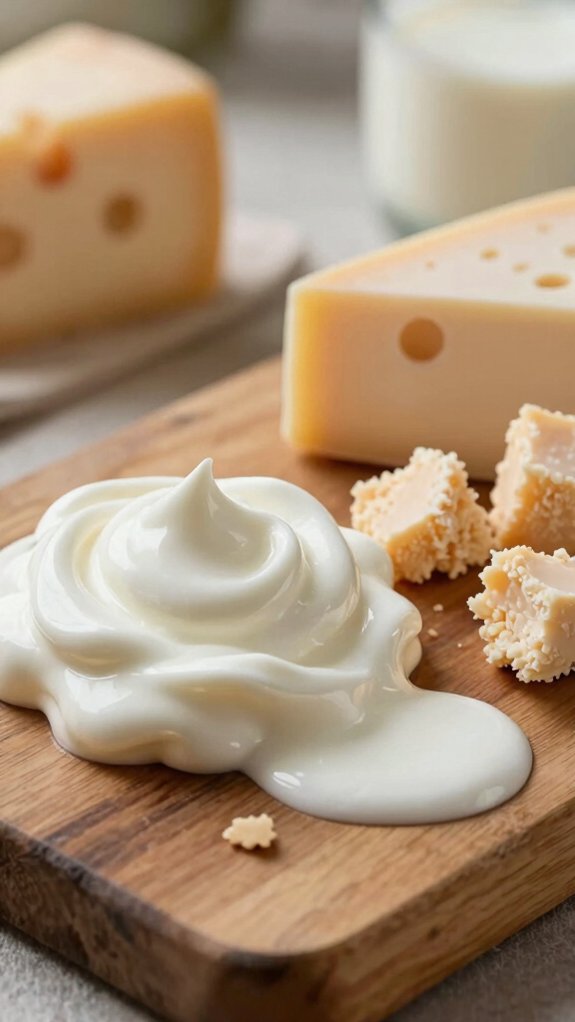
Whoa, dairy can be hard for your dog to digest, especially in big amounts, because many dogs don’t handle lactose very well. That can lead to messy stomach trouble like gas, cramps, diarrhea, and even vomiting—yikes!
Ice cream sounds fun, but it can be even riskier, so stick with dog-safe treats to keep your pup feeling great.
Hard to digest for many dogs
When it comes to dairy, many dogs handle a tiny lick or two just fine, but a bigger helping can turn into a messy stomach adventure fast! If you’re sharing snacks, remember lactose intolerance can make milk tough to process, and the diarrhea risk jumps with larger portions.
- Milk and cheese may sit heavy, even if your pup begs for more.
- Ice cream can pack extra fat and sneaky ingredients, so read labels!
- If your dog’s treated to too much dairy, watch for trouble and call your vet if vomiting or loose stools keep going.
Can cause stomach issues
Even a little dairy can stir up trouble for some dogs, because most of them don’t make enough lactase to break down lactose properly. That means milk, ice cream, and cheesy bites can spark vomiting, diarrhea, gas, and belly pain, especially in big servings. You’re not alone if your pup begs for a taste, but these aren’t benign snacks.
| Dairy | Risk | Better choice |
|---|---|---|
| Milk | upset tummy | safe substitutes |
| Ice cream | pain, diarrhea | frozen banana |
| Big licks | dehydration | water, kibble |
If symptoms linger, call your vet fast!
Salty Foods
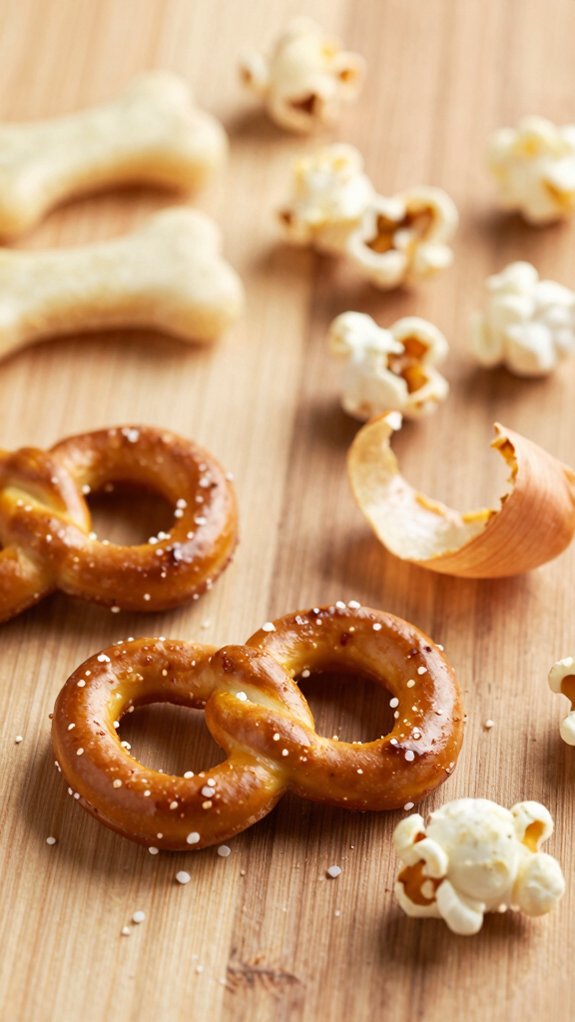
Salty snacks might seem harmless, but they can quickly dry your dog out and leave them thirsty, uncomfortable, and out of sorts.
You should watch out for potato chips, pretzels, popcorn, and even a sneaky spill of table salt, because too much sodium can cause dehydration fast.
In serious cases, salt can trigger sodium poisoning, so if your dog sneaks a salty bite, call your vet right away—no home remedies, just quick action!
Can lead to dehydration
Because salty snacks can sneak into your dog’s day so easily, it helps to treat them like tiny troublemakers! Too much salt can upset body balance and leave your pup parched fast, especially after chips, pretzels, popcorn, or a sneaky trash raid.
- Watch for thirsty-drunk, then bathroom sprinting.
- If vomiting or diarrhea starts, step up symptom monitoring.
- Keep safe storage tight, and skip home fixes.
If your dog gulps a big salty amount, call poison control or an urgent veterinarian right away. Quick help can stop dehydration from snowballing, and that’s a win for your pack!
Risk of sodium poisoning
A stray salt shaker, a handful of chips, or a sneaky pretzel stash can turn into a real emergency for your dog in a hurry! Too much sodium can trigger a hydration imbalance, then hit you with excessive thirst, extra peeing, diarrhea, and a vomiting warning you shouldn’t shrug off.
Salty snacks like popcorn and potato chips may seem harmless, but even a few licks can upset your dog’s body fast.
In serious cases, salt can damage kidneys and cause shock.
If your pup gets into salty food or a shaker, call your vet right away—don’t wait for symptoms.
Fat Trimmings
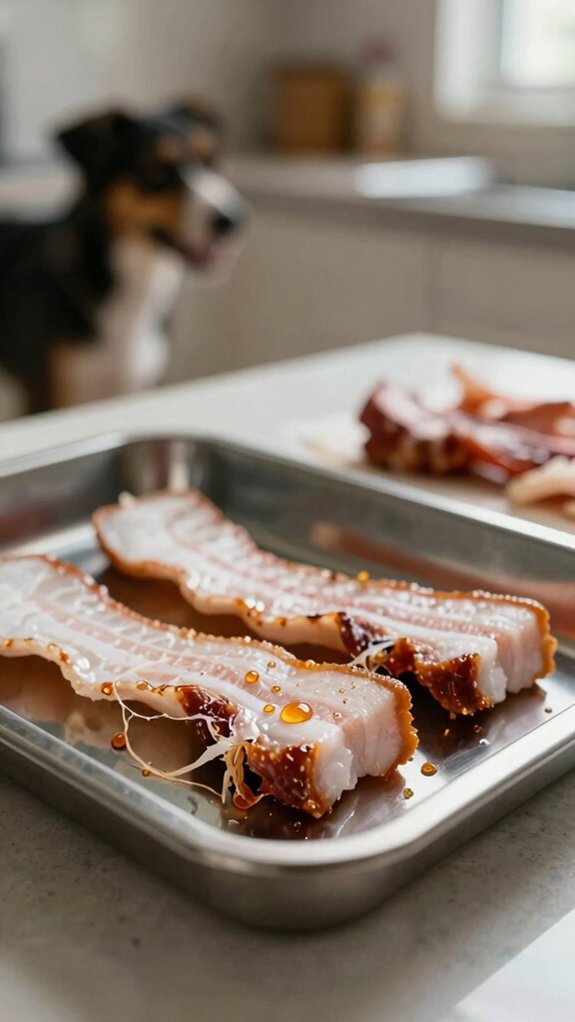
Fat trimmings might look like a tasty little bonus, but they can upset your dog’s stomach fast and cause vomiting or diarrhea. Yikes, greasy scraps like bacon fat or fried drippings can also trigger pancreatitis, which is a painful inflammation of the pancreas.
May cause pancreatitis
Those tasty-looking scraps from dinner can be a sneaky troublemaker! When you toss your dog bacon grease, hot dog ends, rib trimmings, or fried chicken skin, you’re feeding a fat bomb that can trigger pancreatitis.
This painful pancreas inflammation can hit fast, and if your pup seems really sick, they may need urgent vet care.
- Tiny breeds like Miniature Schnauzers and Yorkshire Terriers can be extra sensitive.
- Even “just a treat” scrap can turn into a messy night.
- Keep fatty food out of reach, and choose vet approved treats, like low sodium snacks, instead.
Leads to digestive problems
Even when they’re not labeled as “toxic,” greasy fat trimmings from bacon, hot dogs, ribs, or fried meats can still make your dog’s stomach revolt! You might see vomiting, loose stools, or a grumbly belly, and that’s no fun for either of you.
These scraps can also spark pancreatitis, especially in small breeds like Miniature Schnauzers and Yorkshire Terriers. So, keep up preventive feeding habits: skip the table scraps, store leftovers safely, and teach everyone at home the rules.
If your pup gets into fatty food, keep more away and watch for recognizing early symptoms like repeated vomiting, diarrhea, or belly pain. Call your vet right away!