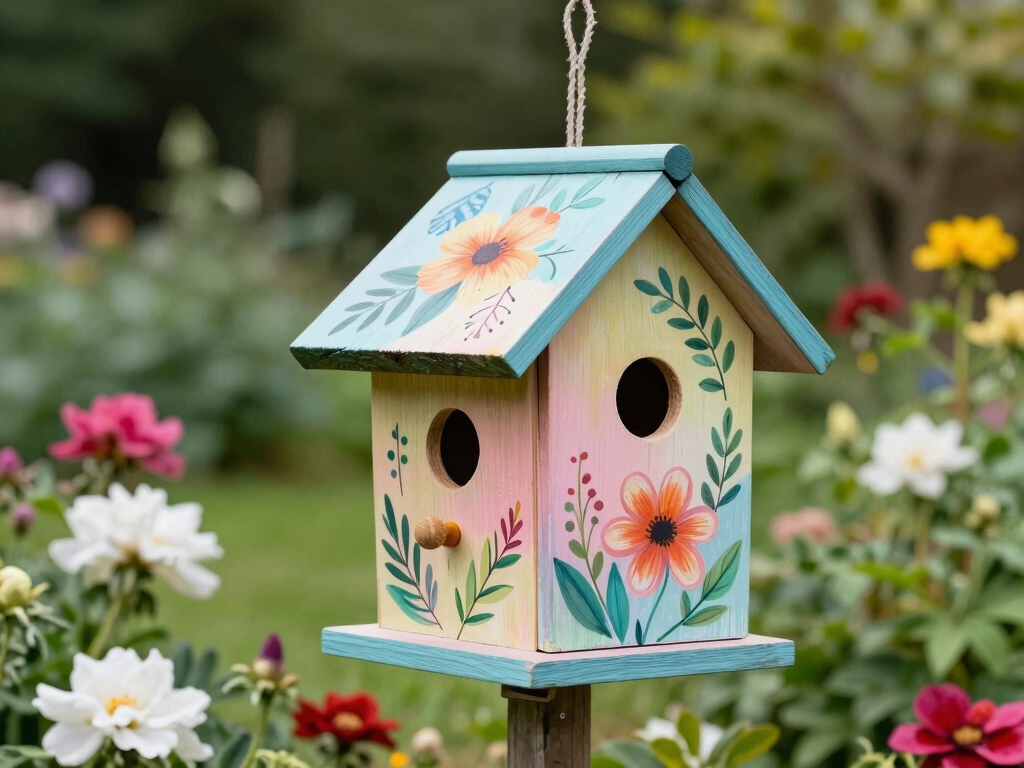
Light creams, pastels, and soft storybook palettes make birdhouses stand out without overheating in sun. A blush, sage, and buttercream scheme, or a meadow look with sunflower yellow and moss green, gives charm while staying practical. Simple stripes, polka dots, tiny windows, and floral accents add personality, and a matte outdoor sealer keeps the finish strong. Leave the entrance rim bare for safety, and the next ideas get even more playful from there, details bloom.
Disclosure: This post may contain Amazon affiliate links, at no extra cost to you. Content on Pawtangle is created with research support from AI tools and carefully reviewed, edited, and fact-checked by the lead author, Dr.Fahri Pat , to ensure accuracy and reliability. Learn more
Key Takeaways
- Use light creams, pastels, and soft sage to keep birdhouses cool while blending beautifully into sunny garden spaces.
- Try storybook palettes like blush pink, buttercream yellow, and crisp white for a cheerful cottage look.
- Add simple patterns such as polka dots, stripes, or geometric shapes using thin acrylic coats and painter’s tape.
- Choose nature themes like wood grain, mossy details, sunrise gradients, or sunflower motifs for a standout garden style.
- Seal only the exterior with a matte UV-resistant finish, and leave the entrance rim and interior unpainted for bird safety.
Why Paint Matters More Than You Think
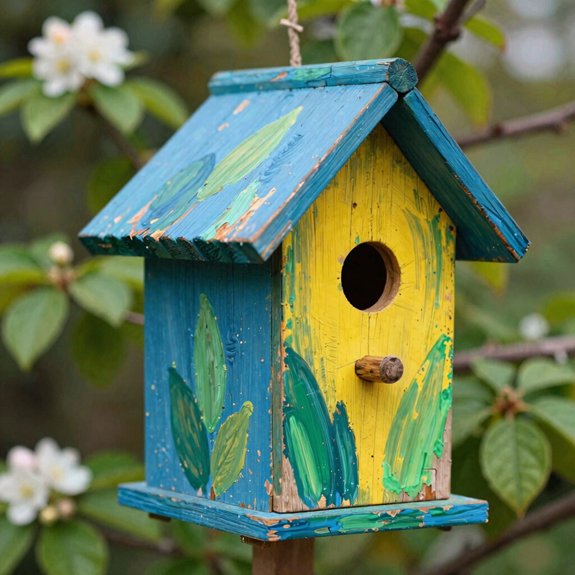
A birdhouse’s paint job does more than decorate it, because color and finish can change how safe and comfortable the little home feels.
Lighter creams and pastels reflect heat, improving thermal comfort in sunny spots, while very dark paints can trap warmth and stress nesting birds. Exterior-grade acrylic with a UV resistant matte sealer lasts longer, and leaving the entrance rim unpainted helps avoid fumes and flakes. Subtle finishes, like layered glazes, keep wood breathable, and nature-blending colors can lower predator visibility without turning the birdhouse into a billboard.
That balance helps birds settle in, and neighbors feel welcome.
Color Themes That Always Look Good Outdoors
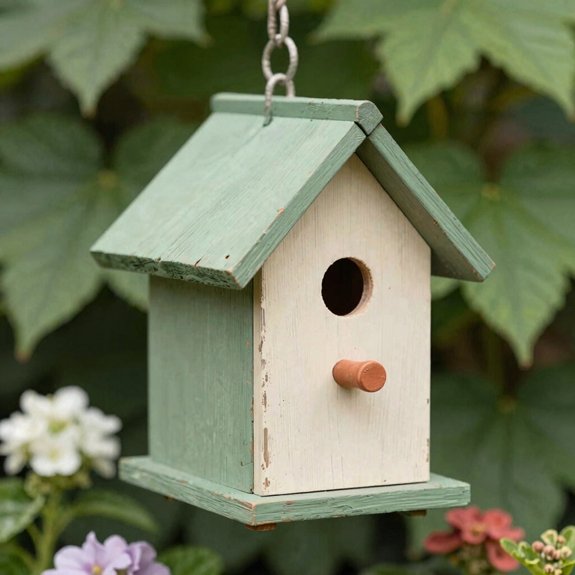
Soft pastel garden palettes, such as blush, mint, and lavender, usually look calm outdoors, and they fit nicely among flowers without shouting for attention.
Bright, bold colors like sunflower yellow or coral can turn a birdhouse into a cheerful focal point near a path or patio, especially when paired with a lighter roof to help manage heat.
Neutral and natural tones, including warm white, soft taupe, and gentle sage, create a clean look that blends with porches, patios, and garden beds with almost no fuss.
Soft pastel garden palettes
In the garden, blush pink, soft sage, buttercream yellow, and crisp white make a birdhouse feel like part of the flowers, while still standing out enough for visitors to spot.
- Use acrylic pastels, seal with a matte outdoor finish after drying, and treat pastel maintenance as part of the routine.
- Keep patterns simple, such as tiny florals, gingham, or soft polka dots, so the house feels welcoming, not busy.
- Choose shade placement, because lighter tones stay cooler and fit the shared garden mood. That keeps the birdhouse comfortable for guests, and it still looks like it belongs there naturally.
Bright and bold statement colors
Bright birdhouses work best when they use high-visibility, weather-safe acrylics, such as sunflower yellow, coral, or turquoise, because those colors stay lively outdoors and give the garden a clear focal point.
A bright base, like sunflower yellow, paired with a forest green or chocolate brown roof gives color contrast and high impact, while a matte outdoor sealer adds weatherproof finishes that help the paint last through sun and rain.
Placed near pathways or seating, coral or turquoise becomes pathway attracting, and one or two pastel accents, if used, keep the house tidy instead of shouty for visiting neighbors nearby.
Neutral and natural tones
For a calmer look outdoors, neutral birdhouse colors like warm white, soft taupe, muted grey, sandy beige, and cedar brown do a good job without fading into boredom.
- Earthy greens and browns improve thermal camouflage and keep the house quieter in bright beds.
- Use soft trim, not dark paint, so the surface stays light.
- Choose a matte outdoor sealer with plant friendly finishes to guard color.
The result feels easy to share, and it lets birds fit in without the garden losing its welcome.
Creative Patterns That Add Personality
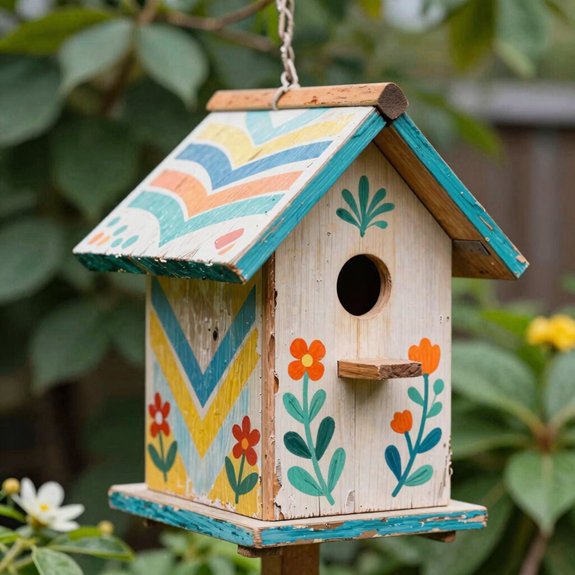
A birdhouse gets extra charm from floral vines, tiny roses, or leafy stems painted over a soft base, since simple botanical details can feel fresh without crowding the surface.
Geometric shapes like triangles or chevrons add a clean, modern look, while painter’s tape helps keep the edges neat and tidy.
Polka dots and stripes bring in a playful touch, and they work best when the sizes and spacing stay even, so the pattern looks cheerful instead of busy.
Floral and botanical designs
On a pale base coat, soft florals can give a birdhouse a gentle garden feel, especially when tiny roses, daisies, and winding vines are layered in blush pink, buttercream, sage, and white. A light hand with fine-tip brushes adds depth, while open space near the entrance keeps the design airy and bird friendly.
For a shared garden look, seasonal motifs and pollinator borders help the piece feel at home among nearby plants.
- Paint stems first.
- Build petals from light to dark.
- Seal with matte outdoor finish, so colors stay calm, durable, and ready for many seasons of visitors outside.
Geometric patterns
How can a birdhouse look modern without feeling busy?
Painter’s tape can map out triangles, chevrons, or diamonds, and each taped section should stay at least half an inch wide so the edges read distinctly on wood. A simple palette, such as black, white, and gold, or warm white, taupe, and soft black, keeps the design calm and welcoming, while negative space helps the pattern breathe.
Thin acrylic coats, fully dried between layers, prevent bleeding, and metallic accents can add a small lift. A matte outdoor sealer finishes the look. The result feels neat, friendly, and easy to share.
Polka dots and stripes
With painter’s tape, a birdhouse can gain crisp horizontal or vertical stripes, and keeping each band at least 1/2 inch wide helps the lines stay clean and easy to read on small wood surfaces.
A soft palette of blush, sage, and buttercream keeps the look friendly, while ombre gradients or metallic accents can add a gentle spark without crowding the design.
- Use dotting tools, or a round brush end, for polka dots about 1 to 1.5 inches apart.
- Paint two thin coats, drying between layers.
- Seal with matte outdoor sealer, then lightly distress edges for cottage charm.
Nature-Inspired Painting Ideas
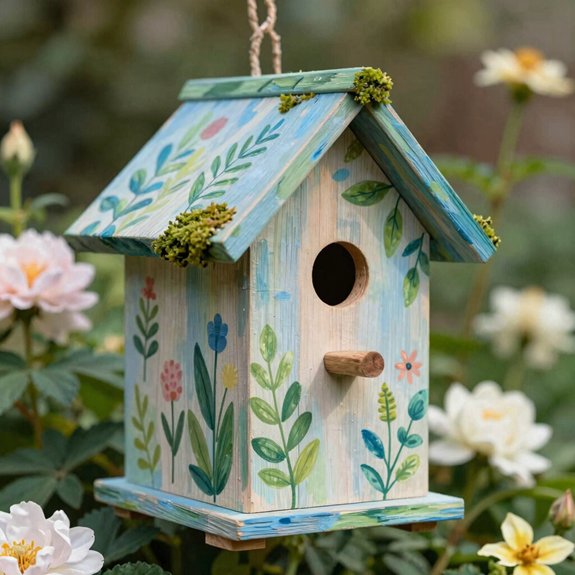
Nature-inspired birdhouses can echo tree bark and woodland scenes with brown, gray, and mossy green paint, then add simple grain lines or tiny leaf shapes for a forest feel.
Another option is a sky-and-cloud design, using soft blue walls, white clouds, and a pale roof, which gives the house a calm look without much fuss.
Sunflower and meadow styles bring more cheer, with yellow petals, green stems, and small wildflower details that help the birdhouse look right at home near garden beds.
Tree bark and woodland looks
A bark-brushed birdhouse starts with a cream coat, then a dry-brushed layer of beige or taupe, lightly sanded at the edges so it looks weathered and tree-like rather than freshly painted.
- These bark texture techniques use vertical striations in burnt sienna, raw umber, and a touch of black, with thin highlights for bark grooves.
- Mossy detailwork comes from stippled sage and olive in crevices near the base, then outdoor matte sealer protects the texture.
- Muted ochres, rust, and pale green can mark fungi at the eaves, with cedar or cypress underneath and the rim left bare.
Sky and cloud themes
For a clean sky look, the birdhouse can start with a pale sky blue base, then soft white cumulus clouds can be added with a dry-brush or sponge so the edges stay airy instead of stiff.
Thin watercolor-wash layers soften the clouds, and the paint should stay outside the entrance rim, keeping the interior cooler in sun. A blush pink to buttercream yellow to soft lavender gradient gives a sunrise mood, and an outdoor matte sealer protects the finish. Hand painted constellations and glow in the dark accents add a small glimmer at dusk, with quiet, welcome charm nearby.
Sunflower and meadow styles
Here, a birdhouse can borrow the look of a bright summer field by starting with a rich sunflower yellow body, then adding large sunflower heads with golden-yellow and burnt-orange petals and textured brown centers.
- Paint a muted sage or moss base, then add trailing wildflower vines with daisies, clovers, and buttercups so the piece feels linked to nearby beds.
- Use sunflower borders and a deep forest green or warm brown roof, which keeps the bright art grounded.
- Finish with tiny bees, a ladybug, and a matte sealer; meadow silhouettes stay soft, and the birds keep their doorway untouched today.
Whimsical and Fun Designs
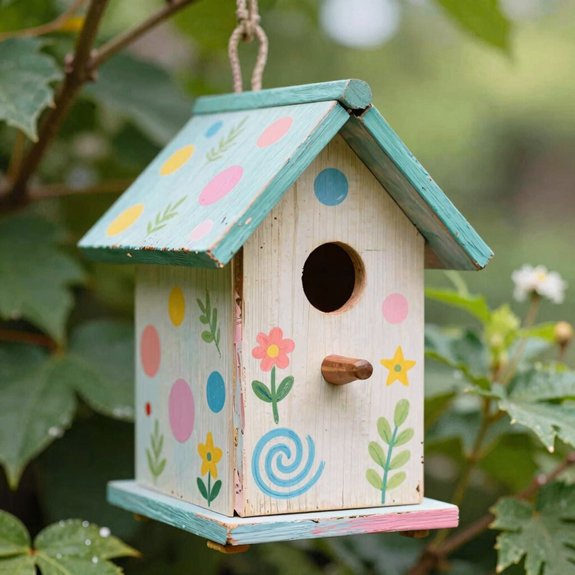
Whimsical birdhouse designs can turn a plain wooden box into a tiny scene, with mini house facades, fairy cottage trim, and painted windows that catch the eye from across the garden.
Soft storybook colors, small shutters, and little chimneys help the birdhouse feel like a cottage from a picture book, while cartoon-inspired shapes, such as a camper or train, add a playful twist for family spaces.
A few neat details, like polka dots, tiny doors, or animal faces, can make the design feel lively without losing its practical purpose.
Mini house facades
Tiny painted facades can turn a simple birdhouse into a small storybook cottage, especially when one face gets tiny windows, shutters, and a mini door in soft pastel colors like blush pink, sage, or buttercream.
Light distressing with fine-grit sandpaper softens edges, while slate-gray tiles, a tiny chimney, and a window box keep it tidy.
- Add miniature hardware with a painted doorknob.
- Use scale landscaping, like picket trim or vines under half an inch.
- Seal only the exterior with matte outdoor sealer.
It stays charming, and suited to shared garden spaces for small communities and quiet patios near friends.
Fairy cottage styles
A storybook-cottage palette of blush pink, soft sage, buttercream yellow, and crisp white gives a birdhouse a cozy look that reads plainly from a distance.
Light edge distressing keeps the finish soft, while mini doorways, shutters, and a tiny faux chimney suggest a fairytale cottage.
Moss roofs and textured brushwork can mimic shingles, and a few climbing roses add charm without crowding the form.
The scale should match the house size, so details stay readable.
For safety, the nesting space stays unpainted, then the exterior cures and gets a matte outdoor sealer for weather protection in any garden setting.
Cartoon-inspired birdhouses
From storybook cottages, the look can move into playful cartoon territory, with bold shapes, high-contrast outlines, and simple features like oversized eyes, smiling beaks, and cartoon wings.
- Use pastel blush, sage, or buttercream, with large dots or one face per side.
- Keep the entrance about 1.25 to 1.5 inches, leave the rim bare, and add playful predator mimicry.
- Finish with matte sealer, or seasonal holiday themed accents, and let children paint with washable acrylics.
The result feels welcoming in a neighborhood garden, and it stays simple enough for nesting birds to recognize and use without confusion.
Techniques That Make Designs Pop
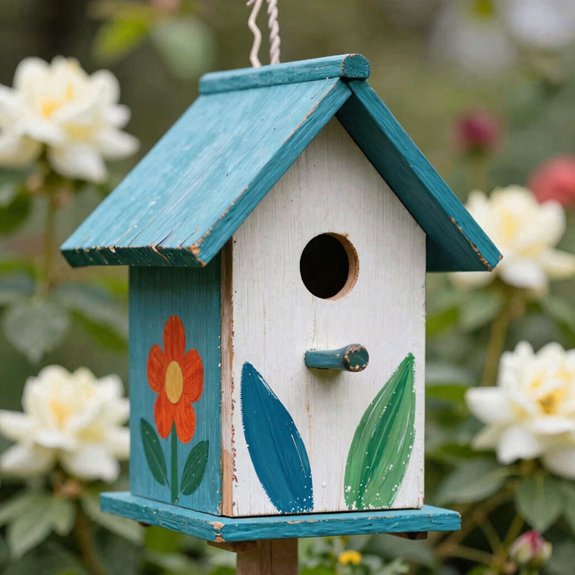
Simple layering and shading can give a bird house more depth, especially when lighter and darker paint are brushed on to suggest rounded edges and small details.
Stencils help keep stripes, florals, and other patterns neat, so the design stays crisp without much fuss.
A little sanding at the edges, after the topcoat dries, can add a worn cottage look that feels charming instead of messy.
Layering and shading basics
After the base coat cures, layering can turn a plain birdhouse into something with real depth, because light, midtone, and shadow work together instead of fighting each other.
Careful wet-over-dry passes prevent muddiness, and each layer should stay faint, so neighbors notice depth before they notice the paint itself.
- Apply midtones first.
- Add micro layering with diluted paint for soft shadows.
- Finish with dry-brushed highlights on edges, then seal it, so the house feels like it belongs in the garden crew.
Stenciling for clean patterns
Clean patterns begin with a well-placed stencil, whether it is painter’s tape for stripes and chevrons or an adhesive template for more detailed shapes.
For repeat motifs, stencil placement should stay centered on each face, with dots or flowers spaced evenly, so the design feels balanced and easy to share. A sponge or pouncing brush helps tap paint through the openings, and the stencil can be lifted while the paint is still tacky for cleaner edges.
After the paint cures, weatherproofing stencils with a clear outdoor matte sealer keeps the pattern sharp through rain and sun for many seasons.
Distressed and vintage effects
A vintage look can make a birdhouse feel like it has already spent years in the garden, and the effect starts with layers. A dark base, a lighter topcoat, and gentle sanding reveal paint peeling at edges, like a familiar heirloom.
- Dry-brushing cream on corners softens wear.
- Crackle medium adds faux oxidation and tiny age lines.
- Linen glazing deepens crevices, then a matte seal keeps the finish outdoor-ready.
Small touches, like antique hardware, help the birdhouse feel part of a welcoming, timeworn nest, without looking staged, and that keeps garden feel warm for everyone at home.
Frequently Asked Questions
How Do I Clean a Birdhouse Before Painting?
Clean the birdhouse by removing debris, then wash interior with mild soap and water, rinse well, and let it dry. Next, sand exterior lightly so the surface feels ready and welcoming for paint and birds.
Which Paint Sealers Are Safest for Outdoor Birdhouses?
Low VOC sealers and water based finishes are safest for outdoor birdhouses, because they limit fumes and protect birds. They help a garden community feel welcoming, while still giving the house durable, weather-resistant care gently.
How Often Should I Repaint a Birdhouse?
It should be repainted every spring if weather has faded the finish, though a biennial refresh often suffices for sheltered birdhouses; that routine helps the home stay welcoming, protected, and part of a garden community.
Can Painted Birdhouses Still Attract Nesting Birds?
Absolutely—painted birdhouses can still attract nesting birds, as if the whole neighborhood had moved in. Success depends on color preference, safe non-toxic paint, and predator deterrence, so those small homes remain welcoming, secure, and inviting.
Should I Remove Old Paint Before Adding New Designs?
Yes, old paint should usually be removed first, so the new design bonds well. He or she may strip primer, then repaint, while checking weather stripping. That helps the birdhouse feel cared for and welcoming.