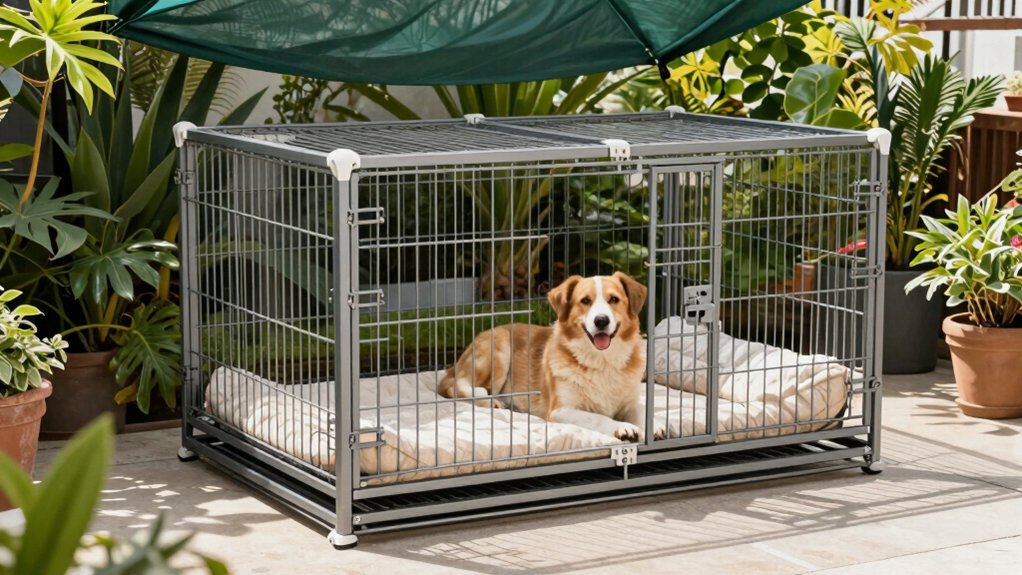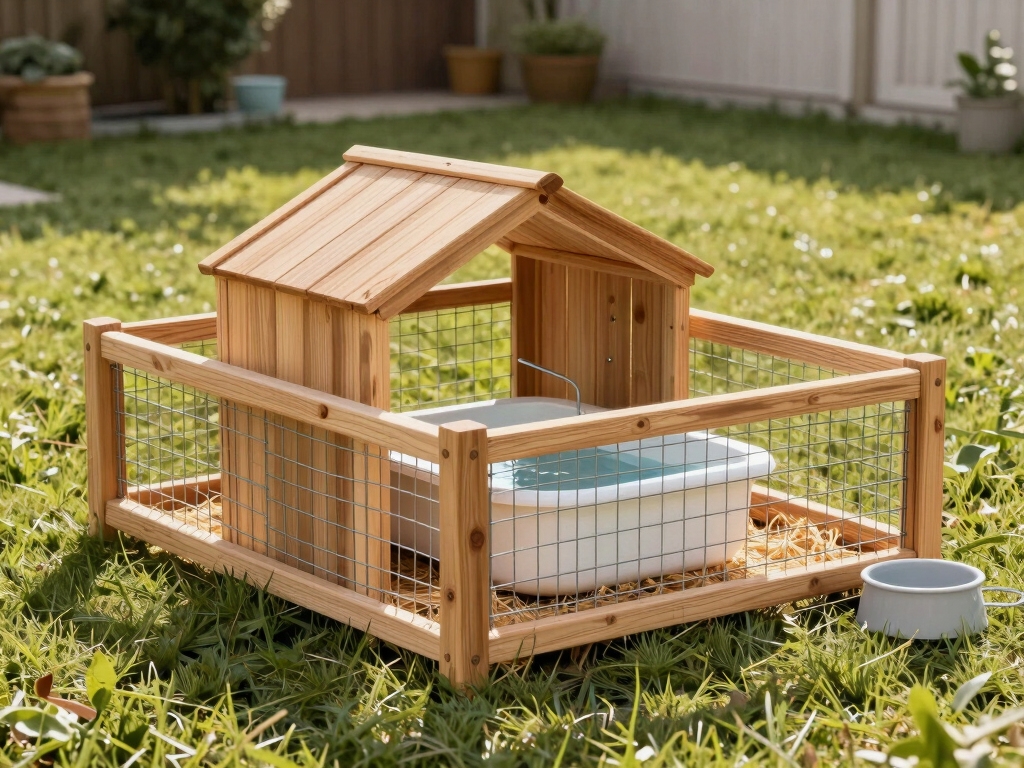
These 17 duck pen ideas mix safety, low mud, and backyard charm, so a flock can stay dry, calm, and easy to manage. Good options include hardware-cloth runs, buried mesh skirts, raised coops, gravel splash zones, movable panels, and small patio pens with tidy roofs and simple latches. A few builds use pallets, PVC, or repurposed kennels, which keeps costs down too. The next section shows how each idea fits different yards and budgets, too.
Disclosure: This post may contain Amazon affiliate links, at no extra cost to you. Content on Pawtangle is created with research support from AI tools and carefully reviewed, edited, and fact-checked by the lead author, Dr.Fahri Pat , to ensure accuracy and reliability. Learn more
Key Takeaways
- Use 1/2-inch galvanized hardware cloth on walls, roof, and vents to block predators while keeping the pen airy.
- Add a buried hardware-cloth skirt around the perimeter to stop digging foxes, raccoons, and dogs.
- Build a raised coop with a secure night door and spring-guard latches for clean, easy, and cute overnight housing.
- Set pools and waterers on gravel with drainage rock to reduce mud, keep footing firm, and make cleanup simpler.
- Use sectional panels or a walk-in layout to create separate feeding, resting, and splash zones that are easy to rotate.
Why a Proper Duck Pen Matters
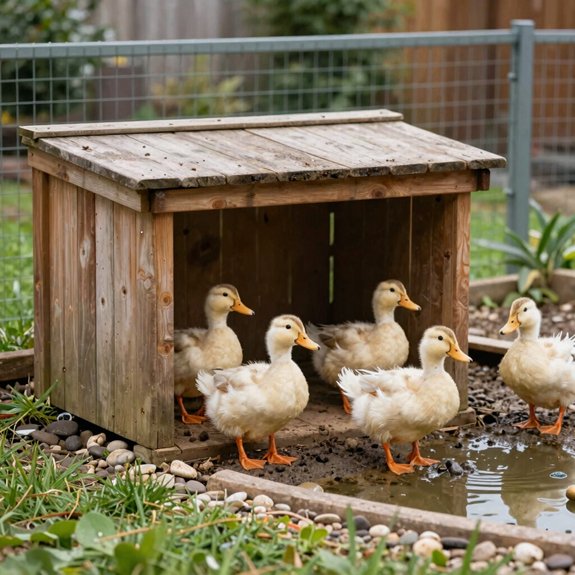
A proper duck pen does more than hold ducks in one place, it helps keep foxes, raccoons, and dogs out while giving the birds a safer daily space.
With enough room, good drainage, and dry footing, the pen stays cleaner, the ducks stay healthier and calmer, and the mud does not take over like it pays rent.
Thoughtful layout also makes feeding, refilling water, and cleaning easier, which is a welcome break for both ducks and their keeper.
Protects ducks from predators (foxes, raccoons, dogs)
Because foxes, raccoons, and dogs are quick to test weak spots, a duck pen needs ½-inch or smaller galvanized wire mesh on every opening, plus a 12-inch buried hardware-cloth skirt around the perimeter.
Secure, human-only latches, such as eye-and-hook safety latches with spring guards, help keep clever paws out, because simple slides can be opened. A roofed run adds another shield, and at night the birds should stay inside a locked coop or fully covered run.
Motion activated lighting and nighttime patrols can make a yard less inviting, and that routine helps the flock feel part of the home.
Keeps environment clean and dry
Keeping a duck pen clean and dry starts with giving the birds more room than the bare minimum, since about 125 square feet per duck helps spread out traffic and keeps mud from turning the whole yard into a soup bowl.
- Gravel border around splash zones lets runoff drain away after rain easily.
- Drainage matting under wet spots keeps footing firmer and tidier overall.
- Rotating fenced sections lets soil rest and dry between visits better.
- Clover or hardy greens absorb moisture and help the ground recover.
- Pool water draining to gardens leaves less standing muck for shared spaces nearby.
Improves duck health and behavior
Giving ducks enough room to move, swim, and rest does more than make the pen look orderly, it lowers crowding stress and helps cut down on disease spread.
With 2–6 square feet in the coop and a roomy run, ducks can stretch, preen, and settle into calmer routines.
Daily water time supports feather care and natural foraging, adding mental enrichment and keeping busy bills out of trouble.
Secure mesh, good airflow, and flock company help them feel safe, while social bonding and quiet comfort make group life easier.
A steady, dry space keeps routines calm and behavior more settled.
Makes feeding and cleaning easier
A well-planned duck pen also saves time at chore hour, since the feeding area stays drier and the cleanup stays smaller.
- Feed stations stay 10 to 15 feet from pools.
- Bucket waterers sit on gravel pads.
- Drainage rock keeps splash zones tidy.
- Movable panels help section off the pen.
- automatic feeders and waterproof storage reduce leftovers.
With feed offered in daylight and leftovers removed at night, rodents, flies, and stray nibblers have fewer openings, and the pen stays easier to refresh, easier to sweep, and easier for the whole flock to share without turning chores into a muddy event.
Small Backyard Duck Pen Ideas
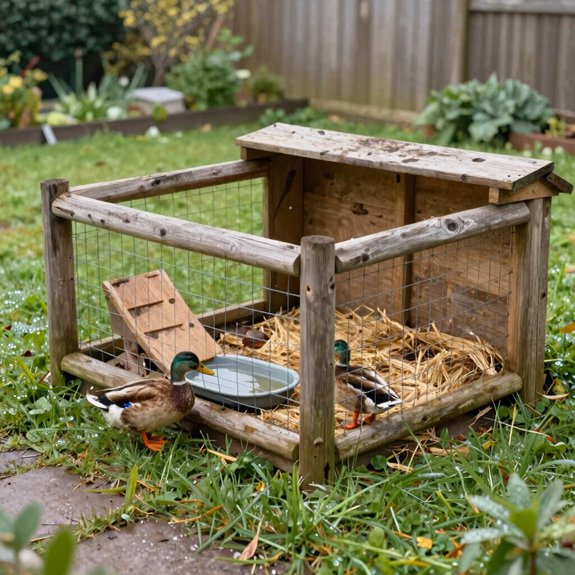
A small backyard can still fit a useful duck setup when the layout uses a corner pen with vertical fencing, a movable duck tractor, or a patio-friendly mini enclosure.
Even in a tight space, the run should still allow about 125 sq ft per duck by day, with a secure coop sized for the flock at night.
A raised pen with ramp access or a garden-and-duck combo can save room, while sturdy fencing, a splash zone near the pool, and a few planted groundcovers help keep the yard cleaner and more useful.
Corner pen with vertical fencing
In a tight backyard corner, the pen can be laid out as a simple L-shape or rectangle, with at least 25–50 square feet total and two small sections so one side can rest while the other is in use.
Vertical fencing supports vertical aesthetics and noise reduction, while keeping the corner orderly.
- 2×4 treated frames hold panels.
- 6-foot height helps deter predators.
- A buried skirt blocks diggers.
- Gravel and trench manage runoff.
- A small coop offers refuge.
Shrubs, tall planters, or a deck can hide open edges, give shade, and help the flock feel tucked in on windy evenings.
Movable duck tractor design
With wheels or skids on a lightweight 2×4 or pallet frame, a movable duck tractor can be shifted a little each day, giving ducks fresh grass while keeping any one spot from turning into a mud patch.
½-inch hardware cloth on the lower sides and a removable roof or mesh top block raccoons and hawks, with solar ventilation keeping air moving.
A portable nesting box and 2–6 square feet per bird give the flock sheltered sleeping space.
A small pool with pea gravel and a drain-friendly liner limits splash mud, and the tractor should be locked up at night.
Patio-friendly mini enclosure
For a patio, the goal is a compact duck space that stays clean, safe, and easy to move. A small coop with 4–6 sq ft per duck inside and 25–50 sq ft in the run helps neighbors of every feather feel settled.
- Buried wire skirts stop digging.
- Pea gravel under the pool limits mud.
- A vented night house keeps raccoons out.
- Lightweight panels can shift the pen with portable shade.
- Simple lines support patio aesthetics and calm the corner.
That balance makes the setup feel like part of the home, not an afterthought, and gives the ducks a spot to belong each day.
Raised pen with ramp access
Building the pen off the ground gives ducks a dry, tidy place to live, and a 2–3 foot raised frame made from sturdy treated lumber works well for a small backyard setup.
A 12–18 inch ramp with a 1:6 slope and textured surface improves ramp traction, while ½-inch galvanized mesh and a buried skirt help block diggers. Screened vents, a secure night door, and removable ramp panels make the pen to use. Inside, sections can be closed off for rest or cleaning, and a centered tub on a drained lower pad keeps water where it belongs, preserving raised aesthetics.
Garden + duck combo layout
A raised duck pen can sit beside a small garden, as long as the setup keeps water where it belongs. Higher ground, 125 sq ft per duck, and a drained splash zone help the beds stay useful, not soggy.
- wildflower strips soften edges and welcome pollinators.
- shade corridors cool paths and guide ducks.
- Rotate beds with fencing, clover, lettuces, kale.
- Keep pond away from wood structures.
- Use shrubs and trellis vines for cover.
A locked night house and clear drainage let the space feel shared, tidy, and calm, so ducks and gardeners can settle in together, peacefully enough.
Smart Duck Pen Layout Ideas
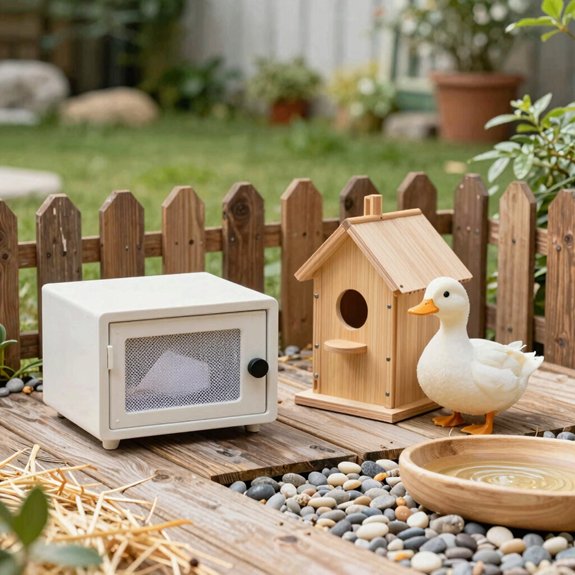
A smart duck pen often starts with a clear layout, such as a pond-centered plan or a split zone that keeps water, feed, and resting areas separate.
A walk-in pen can make daily care easier, while a free-range hybrid setup gives ducks extra room when the yard is safe and supervised.
Good paths, dry ground around water, and a secure night door help the whole space stay tidy and simple to manage.
Pond-Centered Layout
A pond-centered layout can place water in the middle of the pen, with shelter, shade, and feeding areas around the edges, so ducks move naturally between resting, swimming, and foraging.
This setup can support more natural behavior, since the birds stay close to water while still having easy access to dry ground and cover.
With a simple ring of fencing, plants, or small shelters around the pond, the pen can feel organized, and the ducks can keep busy without making one corner a mud patch.
Water in the middle, shelter around
At the center of a duck pen, a pond or kiddie pool can work well when it is surrounded by a 1–2 foot splash zone, because that extra room gives water somewhere to go besides turning the ground into soup.
- central pond layout
- shelter ring above ground
- raised coop keeps bedding dry
- gravel border reduces mud
- simple gates let spaces recover faster
Encourages natural behavior
Centering the pen around a pond or plastic pool gives ducks room to dabble, dunk, and preen the way they would on open water.
A gravel splash ring keeps mud down, and sectional panels let grass recover for Foraging enrichment.
When pool sits high and drains well, ducks keep Social bonding strong, while shrubs, mesh, and cover help feel calm and safe.
Split Zone Design
A split zone layout gives ducks a dry sleeping area and a separate wet play space, which helps keep bedding cleaner and feet less muddy.
With a simple removable fence, the pen can be rotated so grass and planted beds get a chance to recover. That small bit of planning often turns a soggy mess into a cleaner, easier setup.
Dry sleeping area + wet play zone
Under the right conditions, a split-zone duck pen keeps life much cleaner, with the dry sleeping coop set on higher, well-drained ground and the wet play area placed a short distance away.
- raised coop stays dry
- seasonal rotation gives rest
- splash zone sits apart
- secure latch protects flock
- bucket waterer inside coop
That simple split helps neighbors of feathers feel settled together.
Reduces mud and mess
When the duck pen is laid out in split zones, mud has a harder time taking over, because one section can rest and grow back while the other gets used.
| Zone | Role |
|---|---|
| Rest | grass regrows |
| Use | ducks move in |
| Path | mulch pathways stay dry |
| Water | drain to garden |
That rotary grazing rhythm keeps footing firmer and the flock feeling at home there.
Walk-In Pen Design
A walk-in duck pen makes daily chores much easier, since a full-height door lets the keeper step inside for cleaning, feeding, and quick egg checks without awkward reaching.
With enough room for at least 125 square feet per duck, it also works well for multiple ducks, giving them space to move without turning the whole pen into a splashy mess.
Sturdy mesh, a covered roof, and a simple layout with zones can keep the pen safer and easier to manage, which is always a helpful trade for a few extra minutes of setup.
Easier cleaning and feeding
For easier daily upkeep, a walk-in duck pen with a full-height door and a clear 3–4 foot aisle lets a keeper reach feeders, eggs, and dirty spots without stepping over birds.
- raised feeders keep feed dry and off ground
- splash panels lift out fast for spraying
- sealed bin near entry
- prep shelf saves time
- plywood or concrete aisle handles quick hosing
Ideal for multiple ducks
Two ducks need room to move, and a walk-in pen works best when it gives at least 125 square feet per duck, or about 250 square feet total for a pair. Sectionable gates help with multi duck space, while a roofed corner and eye-and-hook latch keep nights calm. Rotational grazing, drainage, and a splash zone make cleanup easier, and everyone feels settled.
Free-Range Hybrid Setup
A free-range hybrid setup gives ducks the best of both worlds, with a secure night coop and a fenced daytime run, so they stay safe without feeling boxed in.
During the day, supervised roaming can be added in short sessions, while the main pen still provides a predator-proof backup when trouble shows up with claws or a bad attitude.
With a bit of planning, this setup keeps safety and freedom in balance, and it makes duck-keeping feel far less like guesswork.
Secure pen + supervised roaming
In a hybrid layout, ducks stay safe in a predator-proof run at night, then get supervised roaming time by day, so they can enjoy more space without turning the whole yard into a buffet for trouble.
- latch
- mesh
- sections
- drainage
- cover
Supervised outings and rotational grazing keep the flock calm, the grass recovering, and neighbors happier when ducks borrow the yard.
Balanced safety and freedom
Balancing safety with freedom, a hybrid duck pen gives birds a secure coop at night and a roomy fenced run by day, so they can move, forage, and still stay out of predator trouble.
Electric mesh, buried skirt wire, and roof mesh block diggers, climbers, and hawks, while sectioned zones, pools on gravel, and wild foraging support recovery and nighttime enrichment, too.
Easy DIY Duck Pen Builds
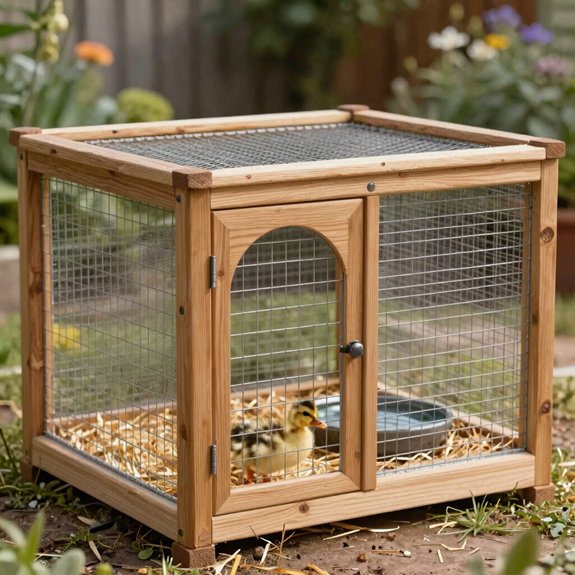
Easy duck pen builds often start with simple frames, such as PVC pipe and wire mesh, wooden pallets, or even repurposed garden fencing, since each option can go up quickly without much fuss.
A small chicken coop can also be converted for ducks, as long as it has dry bedding, secure latches, and enough room for them to move without bumping elbows.
For a budget build under $100, the best results usually come from using what is already on hand, with sturdy materials chosen first and extra polish saved for later.
PVC pipe + wire mesh pen
A PVC-and-wire-mesh pen offers a light, sturdy setup that is simple to assemble and simple to change later. Builders often like portable frames and modular panels, because the pen can grow with the flock.
- Use 1 to 1.5 inch schedule 40 PVC.
- Attach 1/2 inch hardware cloth with zip ties.
- Add a 12 inch buried mesh skirt.
- Leave a splash zone near the pool.
- Make quick-release joints for rotation.
A small flock gets room to settle in, and the setup stays easy to move, clean, and tweak. That helps the flock feel settled, and the pen keeps a rhythm.
Wooden pallet enclosure
Pallet walls can turn into a sturdy duck enclosure with surprisingly little fuss.
Set them upright, fasten the panels with 2x4s and exterior screws, and aim for walls about 3 to 4 feet high. For pallet sustainability, the reused wood fits a practical build, and staining techniques can help the outside last longer.
Bury chicken wire at least 12 inches outward, seal slats to about 1/3 inch, and cover openings with 1/2-inch galvanized mesh. A light pallet-board roof with tarpaulin or corrugated plastic gives shade and rain cover, while higher ground and a gravel splash zone keep mud down.
Chicken coop converted for ducks
An old chicken coop can become a useful duck pen with a few smart changes, starting with wider doorways, about 12 to 16 inches across, so ducks can move in and out without bumping their sides.
A simple door widening and waterer swap help the space feel familiar and safe.
- Use hardware cloth on openings.
- Add a shallow stock tank nearby.
- Keep solid flooring with shavings.
- Bury a mesh skirt around edges.
- Divide the run for grass recovery.
That setup helps neighbors share the same little flock space, and ducks get cleaner footing, easier care, and a calmer home.
Repurposed garden fencing
With a few lengths of repurposed garden fencing, a duck run can come together fast, especially when 4- to 6-foot welded wire or cattle panels are used to make a daytime space of about 125 to 250 square feet per duck.
Upcycled panels join with zip ties or carriage bolts, so the frame feels tidy and easy to move today.
A 12-inch buried skirt, or a 1- to 2-foot apron, helps block diggers, while hardware cloth on openings keeps raccoons from testing the gate.
Modular runs also make room for shade cloth, a light roof, and easy section changes cleanly.
Budget build under $100
A used 10x10x6 chain-link dog kennel can become a solid duck pen fast, especially for one or two ducks, and it often costs about $50 to $80 if found used or on clearance.
- thrift sourcing
- pea gravel
- pallet coop
- shade cloth
- decorative signage
Using thrift sourcing for a kennel, tarp, and house, the whole setup stays under budget, with a kiddie pool sunk into a 2×6 ring, rocks for drainage, and a buried chicken wire skirt to block diggers.
It gives the ducks a place that feels cared for, not patched together, and ready for quiet evening routines nearby.
Predator-Proof Duck Pen Tips
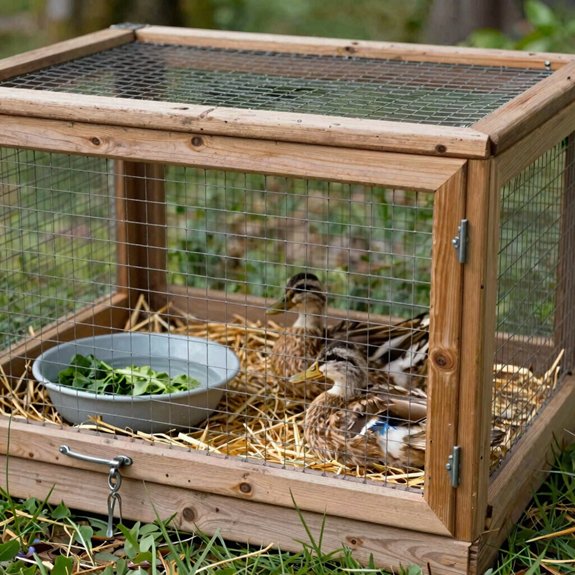
A secure duck pen starts with hardware cloth instead of chicken wire, and the mesh should be buried about 20–30 cm underground so digging predators meet a dead end.
Strong locks and latches on doors and nest boxes help keep clever visitors out, and a fully covered top adds another layer of protection overhead.
A small night shelter inside the run gives ducks a safer place to settle after dark, which is often when trouble likes to prowl.
Bury mesh 20–30 cm underground
Digging a shallow trench around the duck pen and burying galvanized or PVC-coated hardware cloth, or chicken wire, about 20–30 cm (8–12 in) underground can make a big difference, especially when the buried section is angled outward like an underground skirt.
- Extend the mesh 30–60 cm outward before backfilling.
- Anchor it to posts or footings every 60–90 cm.
- Pack soil or rocks tightly over the trench.
- Leave 10–30 cm aboveground for mesh visibility.
- Inspect after rain, and fix gaps quickly.
That simple edge helps the pen look tidy, and it keeps neighbors of the duck flock from finding weak spots.
Use hardware cloth (not chicken wire)
Once the buried edge is set, the next layer of protection is the material itself, and that means 1/2-inch or smaller galvanized hardware cloth, not hex chicken wire.
A duck run stays safer when every opening, wall, and roof panel uses the same tough galvanized mesh, secured to frames with u-nails, heavy-duty staples, and trim lumber.
Gaps at doors and vents should stay tiny, about 1/3 inch or less, so mice and young predators cannot slip through.
Covering the top also helps against climbing and flying threats, while hardware cloth-backed frames and spring latches keep access points steady and familiar.
Add secure locks and latches
Locking the door with a simple sliding latch is not enough for a duck pen, because raccoons are clever little burglars with very good hands.
- Use eye-and-hook locks with spring guards.
- Bolt strike plates into framing.
- Add ½-inch mesh and trim boards.
- Place locks high, or double-lock.
- Try padlocks, carabiners, or hotwire.
These raccoon proofing techniques help a small flock feel settled at night, and the right hardware reinforcement methods keep latches, hinges, and doors from being pried loose, so the coop stays calm, sturdy, and ready for morning chores for the whole duck crew to enjoy together daily.
Fully cover the top
A good duck pen does not stop at the walls and door, because the top needs protection too.
| Cover | Why |
|---|---|
| Mesh | Stops hawks |
| Framing | Stops sagging |
| Bolts | Close gaps |
Solid hardware cloth or a rigid roof in risky areas should span the full top and be tied to the walls with bolts or u-nails, with seams overlapped so snakes and paws find no easy opening. A few supports every three to four feet keep the cover steady, while roof ventilation can stay open at the ridge. Decorative netting may add shade, but only over the secure layer safely below.
Include a night shelter
By nightfall, ducks should be closed into a sturdy shelter, with about 2 to 6 square feet per bird inside, or closer to 5 to 6 square feet for large breeds and cold weather.
- Tight door at dusk.
- Dry duck bedding inside.
- Heat lamps only if needed.
- Vent placement keeps air moving.
- Latches for humans only.
The night shelter should sit on higher, well drained ground, and windows need half inch mesh or smaller, with a buried wire skirt around the base.
That quiet setup helps the flock rest safely, which makes the duck crew feel at home together.
Cute & Aesthetic Duck Pen Ideas
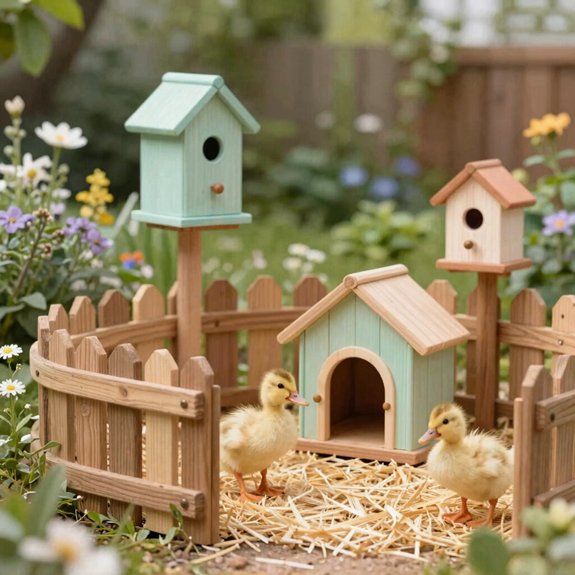
A duck pen can look charming with a cottage-style wooden house or a rustic farmhouse frame, especially when the coop is painted in soft pastel colors.
A small pond lined with stones and plants adds a neat focal point, while flowers and tucked-in garden beds make the space feel cheerful without crowding the ducks.
With simple details like a tidy porch and a few trailing vines, the pen can stay practical and still look like something from a storybook.
Cottage-style wooden duck house
For a cottage-style duck house, rot-resistant lumber like cedar or black locust gives the structure a sturdy start, and a raised floor about 4–6 inches off the ground helps keep bedding dry and feet in better shape.
The design feels like a lakeside home, with decorative shutters and weatherproof trim adding charm.
- Steep roof overhangs shed rain.
- ½-inch wire guards vents.
- A spring-latch secures nights.
- Front and back doors aid cleaning.
- Shrubs and a porch make it welcoming.
Optional wheels or lifting points let the house move seasonally, keeping the flock with familiar shelter wherever the yard changes gently.
Painted pastel coops
Pastel-painted duck coops can look cheerful without becoming too hot, especially when cedar or treated plywood panels are finished in pale mint, blush, or sky blue. Exterior-grade primer, two UV-resistant coats, and sealed cut edges help block moisture, while white or dark gray trim around mesh-covered windows and doors adds tidy contrast.
Shade cloth or a roof overhang can keep temperatures friendlier, and low-VOC paints support easier pastel maintenance. Color psychology also helps the coop feel calm and welcoming.
Touch-ups every 2–4 years keep the finish bright, sturdy, and ready for muddy residents, and keep the flock feeling settled.
Mini pond with stones and plants
Beside the coop, a small pond edged with stones can make the pen look tidy and give ducks a handy place to splash.
- A shallow ramp helps ducks step in and out easily.
- Pea gravel around the edge keeps mud from spreading.
- Protected pots can hold water plants and tasty greens.
- Decorative stones add a neat look and catch splashes.
- Low cover nearby gives shade and a calmer feel.
It helps the pen feel cared for, like a small shared space ducks can trust, while drained water moves away and the ground stays drier through a simple sloped path.
Flower garden integrated pen
Around the edges of the pen, a flower-garden layout can soften the look of the coop while still keeping the ducks’ muddy habits in check. Place coop and pool on higher ground, then use 1–2 ft gravel as a splash buffer. Protect beds with low wire, and choose native plants like nasturtiums, clover, mint, and rosemary.
| Area | Use | Rest |
|---|---|---|
| Bed edge | Duck-safe grazing | Rotate weekly |
| Path strip | Gravel buffer | Controls runoff |
| Hedges | pollinator hedges | Add color |
Removable sections let each patch recover, so the garden stays tidy, friendly, and pleasantly shared for ducks and neighbors alike, without turning charm into muck.
Rustic farmhouse design
With reclaimed wooden pallets and cedar fence pickets, a rustic farmhouse duck pen can look charming without driving up the cost, especially when it uses a 6–8 ft coop with a pitched roof and a small covered porch.
- A shallow stock tank keeps the farmhouse pond tidy.
- Pea gravel forms a neat splash zone and cuts mud.
- Sliding barn doors and salvaged hardware add easy charm.
- Farmhouse windows with hardware cloth keep air moving.
- Handcrafted signage and a flower box soften the edges.
A weathered stain and metal roof panels finish the look, while space stays roomy and safe.
Common Mistakes to Avoid
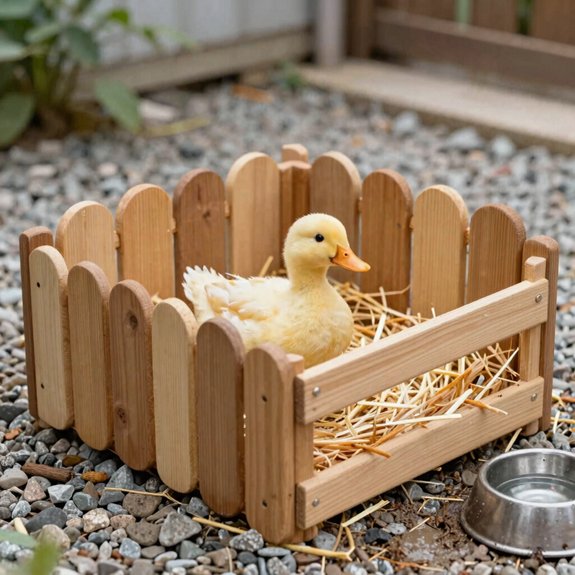
Common duck pen mistakes often start with poor drainage, too little space, and layouts that are hard to clean, which can leave the ground muddy and the ducks stressed.
Open-top pens also invite predators, while weak ventilation can make the space feel damp and stale, more like a soggy shoe box than a home.
Simple planning helps, with dry footing, enough room, covered protection, and an easy-to-rinse design that keeps chores from turning into a daily wrestling match.
Poor drainage → muddy conditions
Mud has a way of winning when a duck pen sits on low ground, because every dip catches water and turns into a muddy basin.
- slope correction lifts the site
- a rock perimeter holds splash
- sand trenches move runoff
- raised beds keep footing dry
- drain water away, not back
Temporary fixes such as sawdust or straw soon break down, so proper drainage works better. Perforated pipes in rock sleeves, plus sand or gravel in wet traffic spots, keep feet cleaner.
A shallow, rock-filled splash box also catches overflow, and drains should send water to gardens or a ditch safely.
Too little space → stress
Crowding quickly turns a duck pen into a tense place, because ducks need room to move, rest, and peck around without bumping into one another.
Inside the coop, 2 to 6 square feet per duck helps prevent space stress, with more room for larger breeds.
In the daytime run, generous space matters even more, about 125 square feet per duck, so crowding effects stay low and pecking, trampling, and boredom do not take over.
Young ducks should leave tiny brooders by 3 to 4 weeks, and open floor space should include shade, hiding spots, and shallow water for comfort.
Open-top pens → predator risk
Left open to the sky, a duck pen can turn into an easy target for hawks and owls, so unsecured daytime free-ranging is a risky shortcut. Good aerial defenses matter, and daytime supervision keeps the flock safer.
- Use overhead netting or shrubs.
- Choose mesh panels, not single wire.
- Add a buried predator skirt.
- Lock ducks in a closed coop at night.
- Build a solid roof for unattended pens.
These small fixes help the birds feel at home, without becoming supper. That way, the pen fits the neighborhood of duck keepers, and the birds stay part of the safe flock.
Bad ventilation
Why does a duck coop start to smell sharp after only a short time? Insufficient airflow traps ammonia, so the flock needs a ventilation balance, not a sealed box. High screened vents on every side keep air moving, while airflow seals around sleeping spots stay draft-free.
| Good choice | Result |
|---|---|
| upper vents | drier air |
| hardware cloth | safer breeze |
Tiny sliding gaps can wobble with weather, but adjustable screens or panels keep comfort steady. That simple mix helps ducks breathe easier and feel at home, for the whole flock, without inviting mice, snakes, or damp corners, even on cold nights inside.
Hard-to-clean layouts
Even with good airflow, a duck pen can still become a muddy chore if the layout traps water and waste in the wrong places.
- Pool too close to the coop, no rock splash zone.
- No drain slope or pipes, so puddles linger.
- Artificial turf or dense outdoor bedding traps poo.
- Open deep litter gets rain, becoming compacted bedding.
- No partitions, so overwatered grass never recovers.
Layouts separate wet zones, give grass time to heal, and keep chores short enough for a shared routine.
Who These Ideas Are For
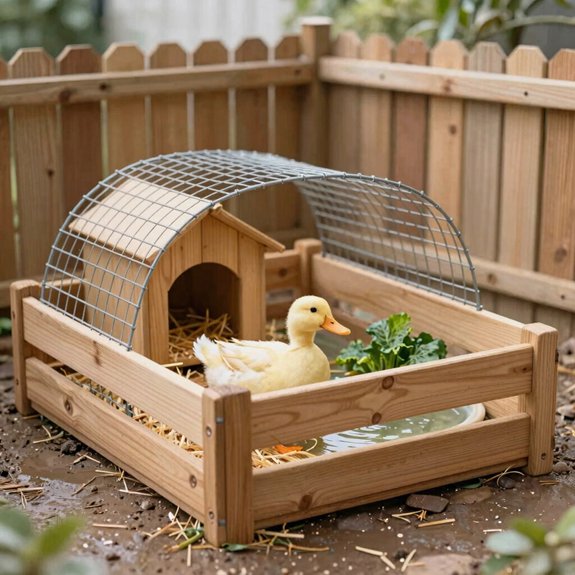
These duck pen ideas can suit many keepers, from beginners who want a simple DIY setup to small-space owners who need a compact, predator-proof layout.
Hobby farmers may prefer larger walk-in pens with more room for ducks to roam, while design lovers often want a build that looks tidy and attractive as well as useful.
A good duck pen does not have to be stylish, but it should match the space, budget, and care level of the person using it.
Beginners → simple DIY pens
For beginners, the best duck pen ideas are the simple ones that are easy to build, easy to check, and roomy enough to keep birds calm. A starter layout often uses minimal materials, like pallets, an old dog house, or a 10×10 kennel.
- Give each duck 125 sq ft outside.
- Plan 2 to 6 sq ft inside, larger for comfort.
- Reinforce openings with ½-inch hardware cloth and a buried skirt.
- Lock birds up before dusk with secure latches.
- Add a kiddie pool, rotate grass, and rest wet ground.
That keeps the flock safe, the pen tidy, and progress steady.
Small spaces → compact layouts
A compact duck pen works best in very small yards, where space has to be shared with patios, paths, or plant beds, but each duck still needs about 125 square feet of daytime run space.
| Zone | Use | Note |
|---|---|---|
| A | coop | 2-6 sq ft |
| B | run | rotate grass |
| C | pool | pea gravel |
| D | beds | clover, vertical garden |
That layout fits people who want a tidy, shared space, not a barnyard sprawl. Removable panels keep the zones resting, the shallow pool stays drier on gravel, and compact enrichment like tucked greens helps the flock feel at home without wasting precious corners.
Hobby farmers → large walk-in pens
On hobby farms with enough room to walk inside the pen, duck housing can shift from a small backyard setup to a larger, working space that gives each bird at least 125 square feet, with about 250 square feet for two ducks.
- sturdy framed runs with half-inch mesh
- covered roofs keep raccoons, owls, and snakes out
- sectioned gates help pasture rest and regrow
- buried skirts discourage digging visitors
- community workshops and volunteer days can help build
That setup suits families who like shared chores, because the work stays manageable, the birds stay safer, and routines feel pleasantly communal overall.
Design lovers → aesthetic builds
Style and shelter can share the same yard. These builds suit owners who want ducks housed in a pen that feels planned, calm, and inviting. They should still allow 125–250 sq ft per pair and a small coop sized for rest, not crowding. Cedar, black locust, and other decor forward materials bring texture, while privacy panels and planter boxes help with site integration. Hardware cloth, buried skirts, and hidden drains keep the look clean and the ducks safe. Mesh sides, shade, and removable winter panels finish the job without stealing the charm through every season quietly for easy smiles.
Real Results of a Good Duck Pen
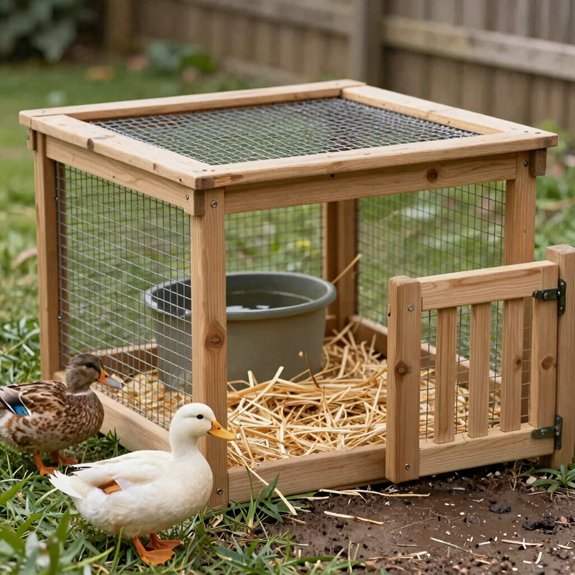
A well-planned duck pen often leads to healthier, cleaner ducks, because better space, drainage, and a splash area help keep mud and waste under control.
It also saves time on upkeep, since dry footing, rotating sections, and planted cover reduce constant muck work and keep the pen easier to manage.
With solid nighttime protection and room to forage, ducks stay safer from predators and show more natural behavior, from nibbling greens to wandering with purpose instead of pacing like tiny nervous landlords.
Healthier, cleaner ducks
When ducks have enough room to move, sleep, and eat without crowding, their feathers stay cleaner and their breathing tends to improve. That comfort shows up as clean plumage, steadier respiratory health, and calmer flocks.
- roomy run
- ventilated coop
- splash zone
- duck waterers
- rocky footing
With at least 125 square feet per bird, a roomy coop, good drainage, and separated drinking areas, ducks avoid mud, scuffed feathers, and heavy ammonia. Small changes like pea gravel borders and stirred bedding help the flock feel settled, and that sense of order usually keeps the pen looking neat, too, for the flock.
Less maintenance time
Larger duck pens usually save time as well as keep birds happier, because extra space gives the grass a chance to recover and leaves less mud to scrape off boots.
Sectionable fencing lets one patch rest while another gets used, so re-seeding and bedding replacement stay minimal. A rocked splash zone near water keeps muck from spreading, and mechanized watering cuts daily fuss. Inside sheltered housing, deep litter can be stirred and topped up instead of fully cleaned out each week, leaving minimal upkeep and a calmer routine for the people who care for the flock day after day.
Better safety from predators
Fortress-like hardware turns a duck pen into a safer place at night. Small openings get covered with ½-inch galvanized mesh and roof panels stay tight with u-nails.
- A buried skirt blocks diggers.
- Spring-loaded latches foil clever paws.
- Concrete posts help where bears roam.
- Motion activated lighting discourages nighttime visits.
- A vegetation free perimeter keeps approaches clear.
Birds are locked inside after dusk, leftover feed is removed, and shrubs or structures can block easy swoops from above.
That simple routine leaves the flock and the people caring for it feeling like they belong to a well-protected, tidy little team together.
More natural duck behavior
A secure pen does more than keep ducks safe, it also gives them room to act like ducks. With enough space, about 125 square feet per duck, they can forage, dabble, preen, and rest without feeling crowded.
A shallow splash zone or small pool supports bathing and head-dunking, while a drained perimeter helps keep mud down and eyes clean. Rotating planted sections offers foraging enrichment, so clover, lettuce, and dandelions regrow instead of vanishing in one enthusiastic afternoon.
Shrubs, beds, and other cover create safe swoop paths, support social signaling, and give the flock quiet places to tuck in.
FAQs
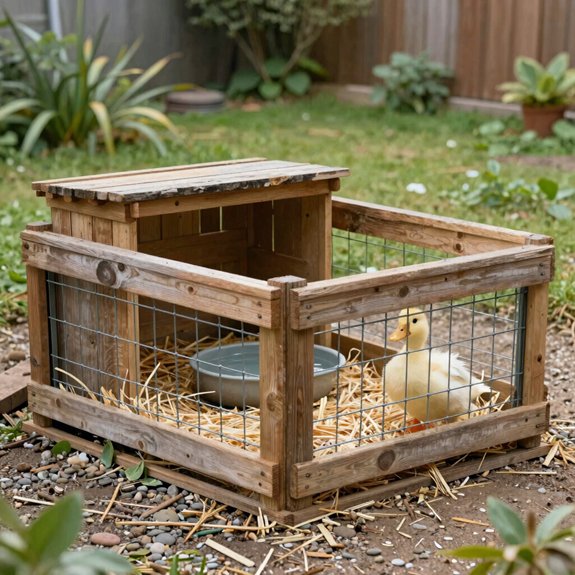
Common questions about duck pens usually start with space, water, and who can share the space, so it helps to ask how much room each duck needs, whether a pond is truly necessary, and if chickens can live alongside them.
Cleaning habits and flooring choices matter too, since dry, easy-to-rinse surfaces can save a lot of muddy work later, which ducks seem to produce with cheerful enthusiasm.
A few clear answers to these basics can make a pen safer, tidier, and much easier to manage.
How much space per duck?
If the flock will spend time indoors, a duck coop should allow about 2–6 square feet per duck, with smaller breeds usually needing 2–3 square feet and larger breeds closer to 5–6 square feet.
These indoor guidelines support space allocation that helps ducks settle in together without crowding.
In cold weather, the upper end matters most, because confinement lasts longer and everyone appreciates elbow room.
- Small ducks need 2–3 square feet each.
- Large ducks need 5–6 square feet each.
- Give more room in cold weather.
- Build bigger if the flock may grow.
- Add activity space outside the coop later.
Do ducks need a pond?
Ducks do not strictly need a pond, but they do need water deep enough to dunk their heads, rinse their nostrils, and keep their eyes clean. Many pond myths suggest otherwise, yet a shallow tub, kiddie pool, or bucket-style waterer can work well for a small flock.
For better comfort, owners can refresh portable pools every 1–2 days, and add gravel or drainage if water stays in one place. Good setup also reduces mud and limits wildlife interactions, so the pen stays cleaner, calmer, and easier to share, and ducklings should wait for full swimming until feathers turn water-resistant.
Can ducks live with chickens?
Usually, ducks can live with chickens, as long as the pen is roomy, dry enough, and set up for both species.
Mixed flock interactions work best when cohabitation challenges stay small.
- Leave elbow room.
- Offer a dunkable water dish.
- Use drier bedding and drainage.
- Separate drakes or sleeping zones.
- Fit small mesh, plus good airflow.
That simple setup helps the flock share the same home without the usual squabbles, so everyone can settle in comfortably.
Small partitions and careful spacing reduce stress, which matters when mixed flock interactions become noisy, pecky, or slightly dramatic, the way backyard roommates can be.
How often should you clean the pen?
Regularly, a duck pen needs a quick touch-up every day, a fuller clean each week, and a deep clean about once a month. Daily maintenance means spot-cleaning droppings and wet bedding near waterers, then rotating a section so the flock keeps a fresher patch to enjoy.
| Task | Timing | Note |
|---|---|---|
| Daily spot-clean | Every day | Less smell, fewer flies |
| Bedding refresh | Weekly | More often after rain |
A monthly seasonal deep clean removes all bedding, scrubs waterers, checks repairs, and resets the pen, so everyone feels ready for the next week. That rhythm keeps the space welcoming, tidy, and easy for everyone.
Best flooring for duck pens?
Underfoot, the best flooring for a duck pen is a solid wood or concrete base topped with 2 to 4 inches of large-flake pine shavings or straw, because it stays dry, feels easier on webbed feet, and can be cleaned out without much trouble.
In high-traffic splash zones, pea gravel or small drainage rock can guide water away, and a deep-litter system belongs only in a fully sheltered coop.
- Pea gravel keeps splash zones drier
- Rubber mats help under drinkers
- Heated flooring suits cold shelters
- Avoid full artificial turf; it traps waste
- Rotate movable pens to rest grass there.
Resources & Setup Checklist
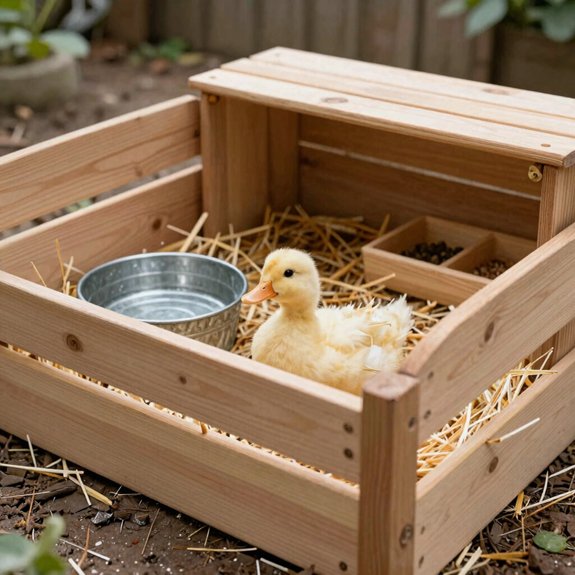
A good duck pen setup begins with a basic materials list, a realistic budget, and a few sturdy extras for weather changes and daily use.
Seasonal care can then be planned around simple shifts like more bedding in cold months, added shade and drainage in warm ones, and the occasional mud rescue.
A steady cleaning routine keeps the pen tidy, and the ducks usually appreciate not having to step through a small swamp every morning.
Basic materials list
The basic materials list starts with sturdy framing, using treated lumber or rot-resistant wood such as cedar or black locust, with posts set in concrete for a permanent pen or cull wood and pallets for a budget-friendly, movable setup.
- ½” galvanized mesh for windows
- Buried mesh skirt to block diggers
- Roofing panels or shade cloth overhead
- Solid floor with bedding options
- Pool, waterers, and drainage rock
A calm, well-kept setup helps ducks feel settled, and it keeps chores simple for the keeper, so the flock settles in like it owns the place from the first rainy week without any fuss.
Budget planning tips
Budgeting for a duck pen works best when the keeper starts with a clear target, since a basic starter setup can run about $50–$200 with repurposed materials, while new lumber, wire mesh, and a small prefabricated coop can push the cost past $300.
| Step | Focus | Note |
|---|---|---|
| Site | Drainage | Dry |
| Measure | Space | Larger |
| Source | cost saving hacks | Pallets |
| Buy | material sourcing tips | Latches |
Priority stays on ½-inch hardware cloth and a buried mesh skirt, because those cost saving hacks protect the flock and prevent rebuilds. Fasteners, hinges, predator latches add $20–$60, and weekly cleaning and repair time keeps things calm.
Seasonal care adjustments
When the weather shifts, a duck pen works best with a few seasonal swaps, from mesh walls and shade in summer to dry bedding and small upper vents in winter.
- Use seasonal bedding that stays dry, like pine shavings.
- For heat mitigation, add shade, cool water, and mesh sides.
- In rainy weeks, a gravel splash zone helps stop mud.
- At night, secure birds in a predator-proof coop.
- In winter, use small upper vents, not drafts, for airflow.
That rhythm keeps the flock comfortable, and neighbors in the duck crowd appreciate a pen that feels ready for every season, year-round.
Cleaning routine guide
Often, a duck pen stays cleaner with a simple daily rhythm, a quick sweep of the splash zone and high-traffic rock areas, plus a full spray-down of the pool and pea gravel every 2–7 days, depending on use and fly pressure.
At the coop, a small kit with hose, pump or siphon, scrub brush, bucket, and gloves keeps jobs easy.
A daily checklist can cover emptying and scrubbing waterers, removing leftover feed at night, stirring bedding, and spraying rocks so puddles do not linger.
A predator inspection at the perimeter closes the loop after the ducks call it done.
Frequently Asked Questions
How Do You Create a Safe Duck Habitat?
Two ducks need about 250 square feet outside, a number that often surprises new keepers. Safe habitat building means predator proofing, shelter design, clean water, drainage, and cozy spaces so the flock feels secure together.
What Do Ducks Like to Play With Indoors?
Ducks often enjoy shallow tubs, floating balls, treat puzzles, untreated wood, and hanging greens indoors. A toys rotation keeps interest high, while mirror reflections may spark curiosity if closely supervised and never cause stress there.