
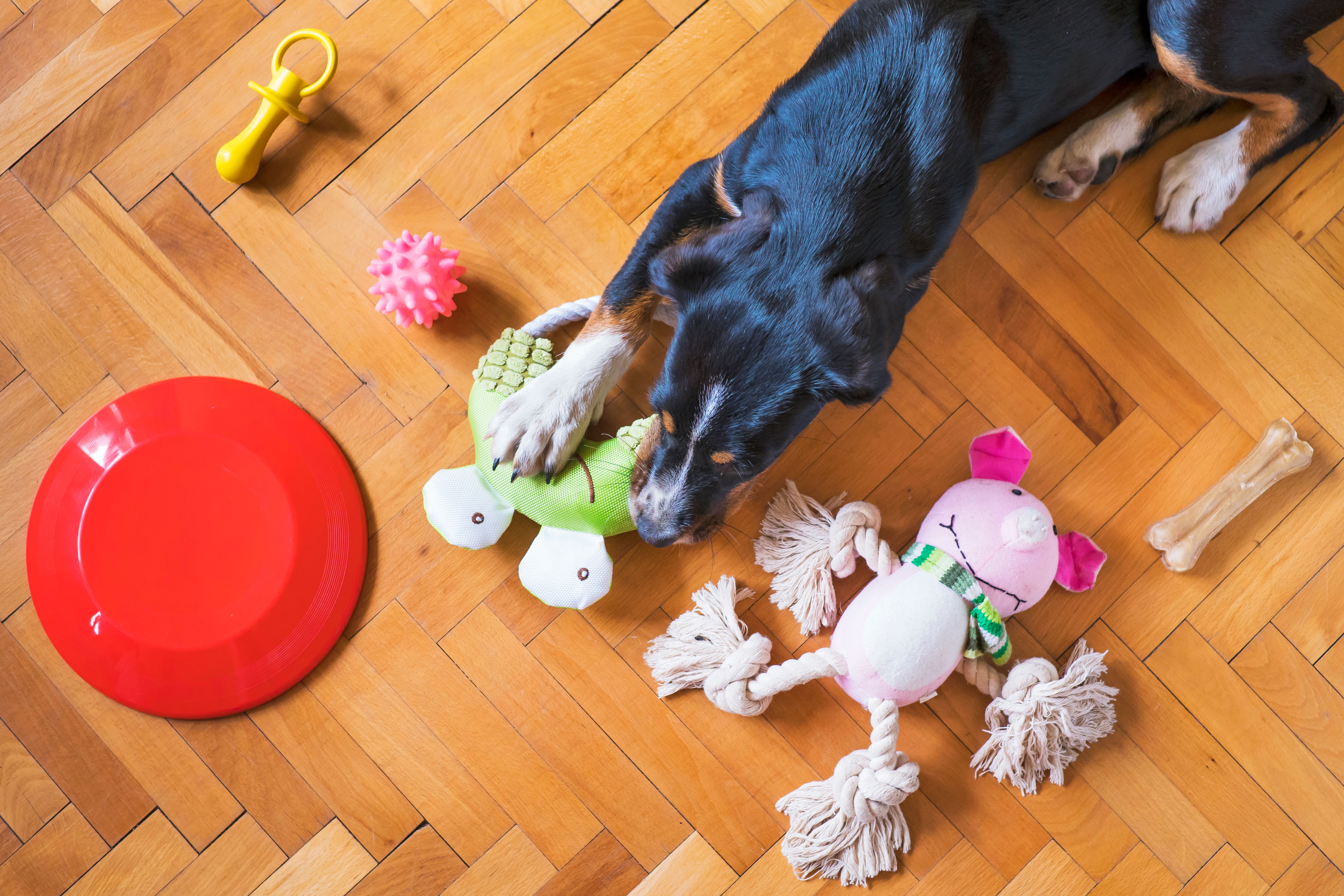
Working from home sounds perfect until your dog decides that your laptop, keyboard, and next video call are all invitations for attention.
Disclosure: This post may contain Amazon affiliate links, at no extra cost to you. Content on Pawtangle is created with research support from AI tools and carefully reviewed, edited, and fact-checked by the lead author, Dr.Fahri Pat , to ensure accuracy and reliability. Learn more
You sit down to answer an email, and there is a paw on your arm. You start a meeting, and suddenly your dog needs to go outside. Five minutes later, the squeaky toy arrives.
Sound familiar?
The goal is not to keep your dog entertained every minute of the day. A healthier approach is to build a routine that gives your dog opportunities to sniff, explore, chew, learn, rest, and spend time with you at predictable points throughout the day.
Veterinary and animal-behavior organizations recognize enrichment as an important part of supporting a dog’s physical and emotional wellbeing. Variety matters because dogs have different interests, energy levels, ages, and abilities.
Here are 17 practical ways to help your dog stay busy and settled while you get your work done.
Why Your Dog Wants Your Attention While You Work
From your dog’s perspective, working from home can be confusing.
You’re physically present, but suddenly unavailable. You are sitting still for long periods, staring at a screen, while your dog has no idea why you cannot throw the ball, open the door, or give them attention.
Some dogs respond by bringing toys, whining, barking, pacing, nudging your hand, or repeatedly checking whether you are finally ready to play.
This does not automatically mean your dog is being difficult. Sometimes they simply need more appropriate ways to use their body and brain.
According to the American Animal Hospital Association, enrichment can include cognitive challenges, food-based activities, play, and opportunities to express natural behaviors.
The trick is finding activities that fit your individual dog rather than trying to make your dog busy with more and more toys.
17 Easy Ways to Keep Your Dog Busy While You Work From Home
1. Start With a Sniff Walk
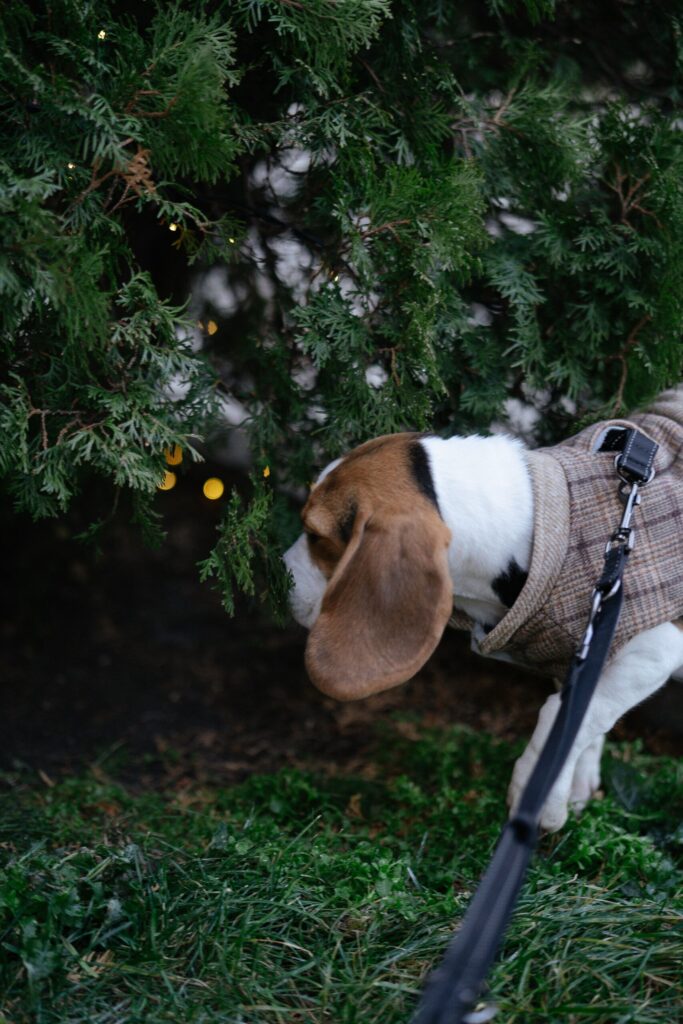
Before opening your laptop, give your dog an opportunity to use their nose.
A slow walk where your dog is allowed to stop, investigate, and sniff can be more mentally engaging than simply rushing around the block.
You do not need an elaborate morning adventure. Even a modest change in pace and route can give your dog something new to process.
Starting the workday after a little physical and mental activity may make settling down easier for some dogs.
2. Turn Breakfast Into a Brain Game
Instead of serving every meal in a traditional bowl, occasionally make your dog’s normal meal more interactive.
You can use a food puzzle, snuffle mat, or another veterinarian-approved enrichment feeder. This gives your dog a chance to search and work for part of the food they already need.
AAHA specifically recommends food-based enrichment as a way to encourage natural foraging behavior.
Just remember to account for treats and enrichment food as part of your dog’s overall daily intake.
3. Create a “Settle” Spot
Your dog does not necessarily need to be far away from you while you work.
In fact, many dogs are happier when they can relax somewhere nearby.
Place a comfortable bed or mat a short distance from your desk. Reward calm behavior when your dog chooses to lie there quietly.
Over time, the spot can become a signal that says, “This is our quiet time.”
4. Freeze a Stuffable Food Toy
A durable, size-appropriate stuffable toy can turn a few minutes of preparation into a longer activity.
Use a portion of your dog’s normal food or another suitable filling recommended for your pet. Freezing the toy can make the food last longer and encourage slower eating.
Always choose an appropriate size and supervise your dog when introducing a new enrichment item.
5. Rotate Toys Instead of Leaving Everything Out
You do not need a mountain of toys scattered across the floor.
Try putting most toys away and offering only a few at a time. Rotate them every few days so familiar toys feel a little more interesting again.
A toy rotation can also make it easier to notice which activities your dog actually enjoys.
6. Play Find It
One of the simplest enrichment games costs almost nothing.
Ask your dog to wait briefly, then hide a few pieces of their normal kibble or small treats in easy-to-find locations around one safe room.
Give a simple cue such as “find it” and let your dog’s nose do the work.
Start easy. Once your dog understands the game, you can gradually make the hiding places more challenging.
The ASPCA includes scent games and “find it” activities among its canine enrichment suggestions.
7. Make a Simple Cardboard Search Game
Have an empty cardboard box?
You may already have the beginning of an enrichment activity.
Place some safe food inside the box and allow your dog to investigate. You can use several boxes and make the challenge slightly more interesting once your dog understands the game.
Always supervise activities involving cardboard or any material your dog might tear apart and swallow.
8. Practice Short Training Sessions
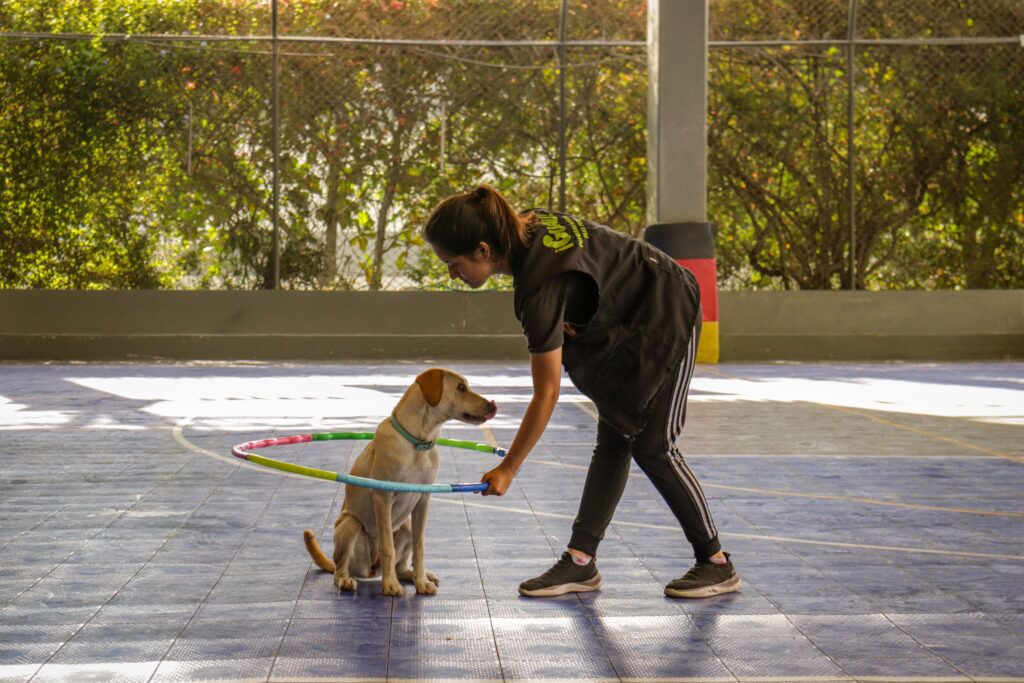
Training does not need to be a 30-minute event.
Two or five minutes can be enough to give your dog’s brain something different to focus on.
Practice familiar cues such as sit, down, stay, touch, or go to your mat. You can also teach a simple new trick.
The American Kennel Club notes that mental stimulation and learning activities can help keep dogs engaged and reduce boredom-related behavior.
Keep sessions positive and end before your dog becomes frustrated.
9. Give Your Dog a Safe Chew
For many dogs, chewing is naturally satisfying.
A safe, appropriately sized chew can give your dog something quiet to work on while you finish an email or join a meeting.
Choose products appropriate for your dog’s size, age, chewing style, and health needs. Inspect them regularly and remove anything that becomes damaged or small enough to swallow.
10. Try a Lick-Based Activity
Licking can be a calming and engaging activity for some dogs.
A suitable lick mat or food toy can provide something constructive to focus on during a short work block.
As with any food-based activity, use an appropriate portion and monitor your dog the first few times you introduce it.
11. Create a Small Indoor Activity Zone

You do not need a dedicated dog room.
A small, safe section of your home can become your dog’s activity area.
Add a comfortable bed, a few rotating toys, and one or two enrichment options. Keep dangerous household items, electrical cords, medications, and foods your dog should not eat safely out of reach.
The goal is not to create constant stimulation. It is to give your dog a predictable place where appropriate activities are available.
12. Give Your Dog a Simple Household Job
Some dogs love having something to do.
You can turn ordinary behaviors into little “jobs.”
For example, your dog might learn to carry a toy to a basket, bring a soft item to you, or go to their mat when you begin a work session.
The American Kennel Club recommends giving dogs appropriate jobs or responsibilities as one way to provide outlets for physical and mental energy.
13. Hide Part of the Daily Meal
Another easy option is to divide part of your dog’s normal food into several small portions and use them for simple search activities throughout the day.
You might scatter kibble in a safe area, place food inside an appropriate puzzle feeder, or use short training sessions to turn meals into learning opportunities.
This can be especially useful for dogs that finish a bowl of food in seconds and immediately start looking for something else to do.
14. Use a Window Watching Station Carefully
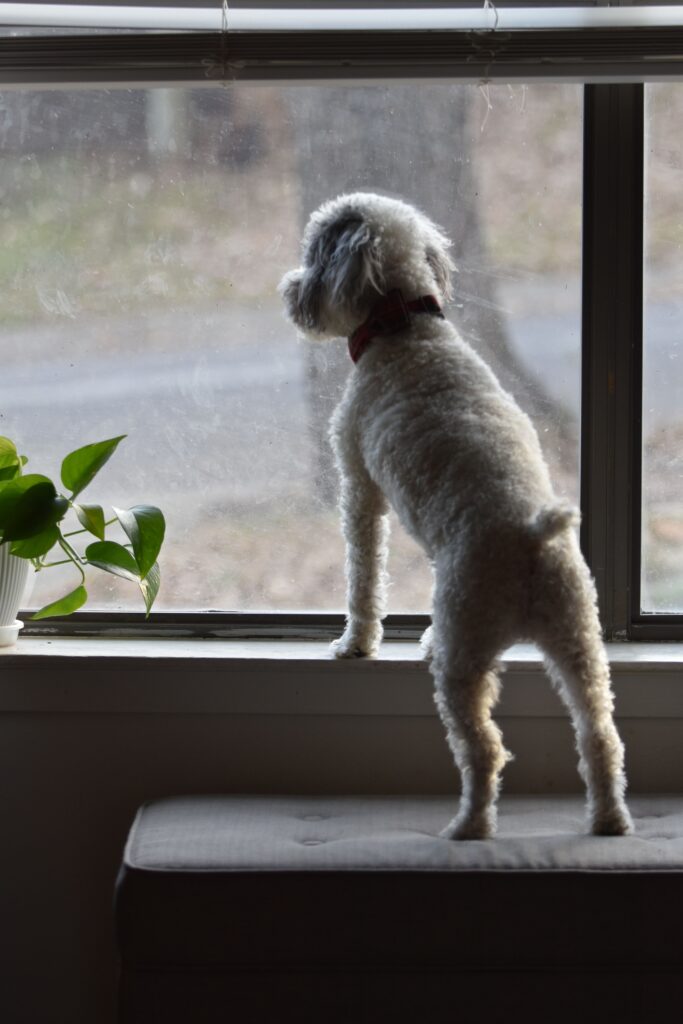
A window can provide hours of natural visual enrichment for some dogs.
Place a secure bed or resting area near a safe window and let your dog observe the outside world.
However, pay attention to your dog’s response.
If watching people, dogs, bicycles, or wildlife causes repeated barking or intense frustration, the window may be creating more stimulation than your dog can comfortably handle.
In that case, move the bed farther away or use curtains and another quiet resting area.
15. Schedule a Midday Sniff Break
One of the biggest mistakes remote workers make is assuming enrichment must happen before or after work.
Your lunch break can become an excellent reset point.
Take your dog outside for a short sniffing walk rather than rushing through a purely functional bathroom trip.
You can then return to work with a fresh routine for the afternoon.
16. Protect Quiet Nap Time
Keeping a dog busy does not mean keeping a dog active all day.
Rest is part of a healthy routine.
After a walk, play session, meal, or training activity, give your dog an opportunity to relax somewhere comfortable.
Young puppies and some older dogs may need especially careful management of activity and rest throughout the day.
Sometimes the best enrichment strategy is simply helping your dog learn that nothing exciting needs to happen every few minutes.
17. Build a Predictable Workday Routine
Dogs often do well when they can predict what happens next.
Your routine does not have to be exact to the minute. A simple pattern is enough:
- Morning walk or sniff time
- Breakfast or food enrichment
- Quiet work period
- Short interaction or training break
- Rest period
- Midday outdoor break
- Afternoon enrichment or quiet activity
- End-of-work walk and play
Predictability can make the day easier for both of you because your dog gradually learns that your attention is not disappearing forever. There will be another opportunity for connection.
A Simple Work From Home Routine for Dogs
Here is a realistic example that does not require you to become a full-time dog entertainer.
| Time | Dog Activity |
|---|---|
| 7:30 AM | Sniff-focused morning walk |
| 8:15 AM | Breakfast using a puzzle or food enrichment |
| 9:00 AM | Quiet rest while you begin work |
| 10:30 AM | Two-to-five-minute training session |
| 12:30 PM | Short outdoor sniff and bathroom break |
| 1:00 PM | Rest or safe independent enrichment |
| 3:00 PM | Find-it game or short training session |
| 5:00 PM | End-of-work walk, play, and social time |
The exact times do not matter. What matters is creating a rhythm that works for your dog’s age, health, energy level, and your actual work schedule.
When Boredom May Actually Be Stress or Separation Distress
This distinction is important.
A dog that occasionally brings you a toy during a meeting may simply want attention.
A dog that repeatedly panics, paces, vocalizes intensely, drools, destroys doors or windows, attempts to escape, or becomes distressed specifically when separated may have a more serious behavior problem.
Those signs should not simply be treated by buying another puzzle toy.
The American Animal Hospital Association describes separation-related distress as a condition that can involve excessive vocalization, pacing, restlessness, destructive behavior, and other signs of significant distress.
Behavior that appears suddenly or is accompanied by changes in appetite, mobility, elimination, or general wellbeing also deserves veterinary attention.
When the problem goes beyond ordinary boredom, talk with your veterinarian or a qualified veterinary behavior professional rather than trying to solve the issue through enrichment alone.
The Best Routine Is the One Your Dog Can Handle
There is no perfect enrichment schedule that works for every dog.
A young Border Collie may need very different challenges from a senior Cavalier King Charles Spaniel. A food-motivated dog may love puzzle feeders, while another dog may prefer scent games, training, or simply watching the world from a comfortable bed.
The best approach is to observe your dog.
Do they become calmer after sniffing?
Do they settle better after a short training session?
Do certain toys make them frustrated instead of relaxed?
Does the window create peaceful observation or nonstop barking?
Your dog’s behavior gives you useful feedback.
And remember, enrichment is not about keeping your dog busy so you never have to interact with them. It is about creating a healthier balance between together time, independent activity, exercise, learning, and rest.
Frequently Asked Questions
How do I keep my dog busy while I work from home?
Start with a predictable routine that combines exercise, sniffing, food enrichment, short training sessions, safe chewing, and regular rest. The goal is not constant entertainment but appropriate activity throughout the day.
How can I keep my dog quiet during video meetings?
Prepare the dog before the meeting with a bathroom break, sniffing activity, and appropriate enrichment. A comfortable settle spot and a predictable routine can also help. Avoid introducing a new toy or food item for the first time during an important meeting.
Is mental stimulation as important as physical exercise?
They serve different purposes, and many dogs benefit from both. Mental activities such as scent work, food puzzles, and training give dogs opportunities to investigate, solve problems, and engage with natural behaviors.
Can I leave my dog with a puzzle toy while I work?
That depends on the individual dog and the item. New enrichment products should be introduced while you can supervise. Check toys for damage and choose items that are appropriate for your dog’s size and chewing habits.
What if my dog still cannot settle while I work?
Look at the bigger picture. Your dog may need more appropriate exercise, a different type of enrichment, or a more predictable routine. If there are signs of panic, persistent barking, destructive behavior, escape attempts, or major changes in behavior, speak with your veterinarian or a qualified behavior professional.