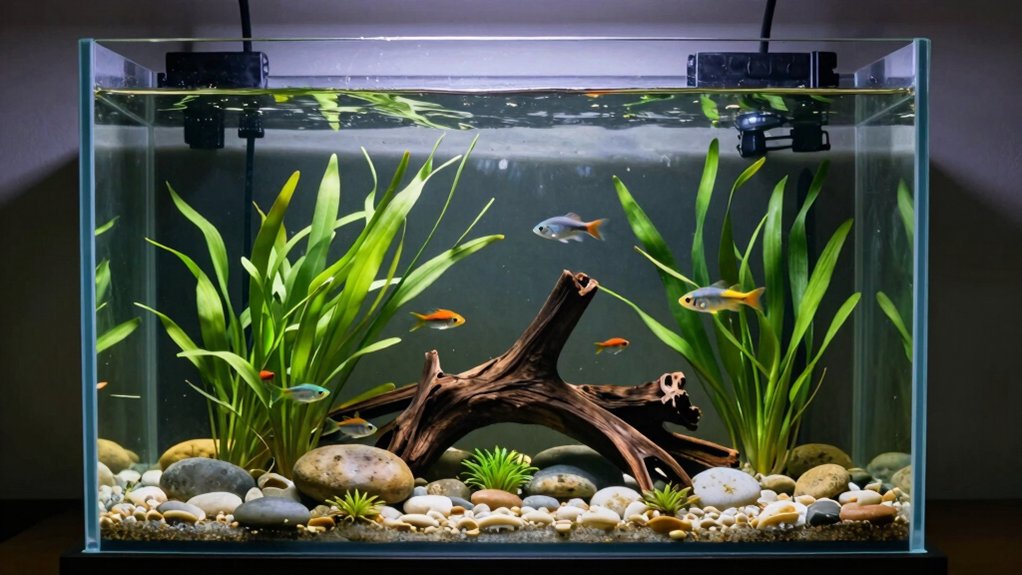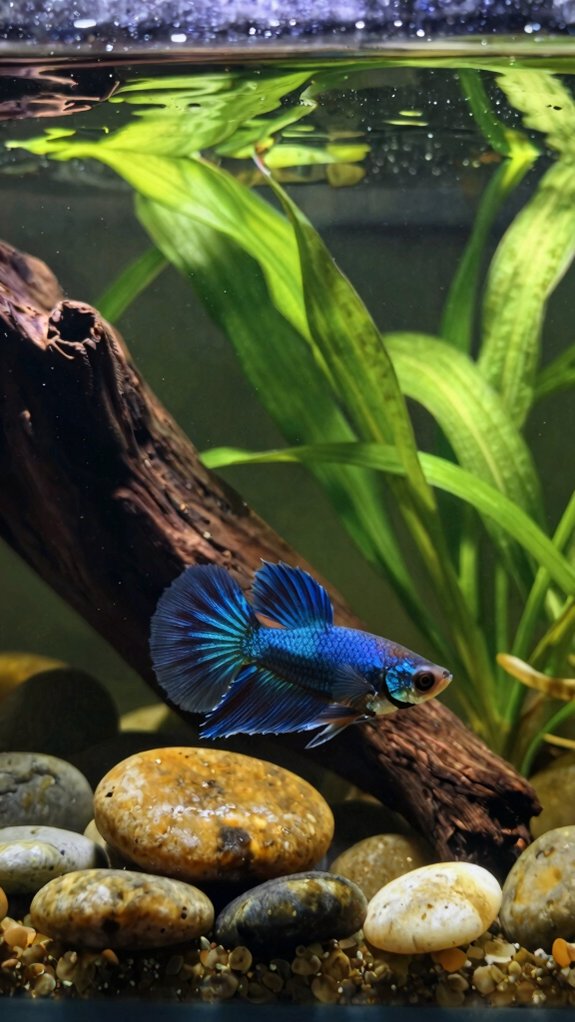
A beautiful betta tank usually starts with a simple 5–10 gallon layout, soft sand, and one strong focal piece like driftwood or stone. Add low-light plants such as Java fern, Anubias, buce, or moss, then finish with floating plants or a blackwater tint for a calmer look. Keep open swimming lanes, gentle flow, and warm water, and the setup feels natural without looking crowded. More ideas below can make each style easier to copy.
Disclosure: This post may contain Amazon affiliate links, at no extra cost to you. Content on Pawtangle is created with research support from AI tools and carefully reviewed, edited, and fact-checked by the lead author, Dr.Fahri Pat , to ensure accuracy and reliability. Learn more
Key Takeaways
- Use a 5–10 gallon tank with gentle heat, soft lighting, and low flow for a calm betta environment.
- Choose pale sand or light gravel with open swimming space to keep the aquascape airy and natural.
- Create a focal hardscape with driftwood, dragon wood, or lava rock placed slightly off-center.
- Attach Java fern, Anubias, Bucephalandra, and moss to wood or stone for a lush low-light look.
- Add floating plants, catappa leaves, or blackwater tint to soften light and enhance a natural aesthetic.
Minimalist Betta Tank
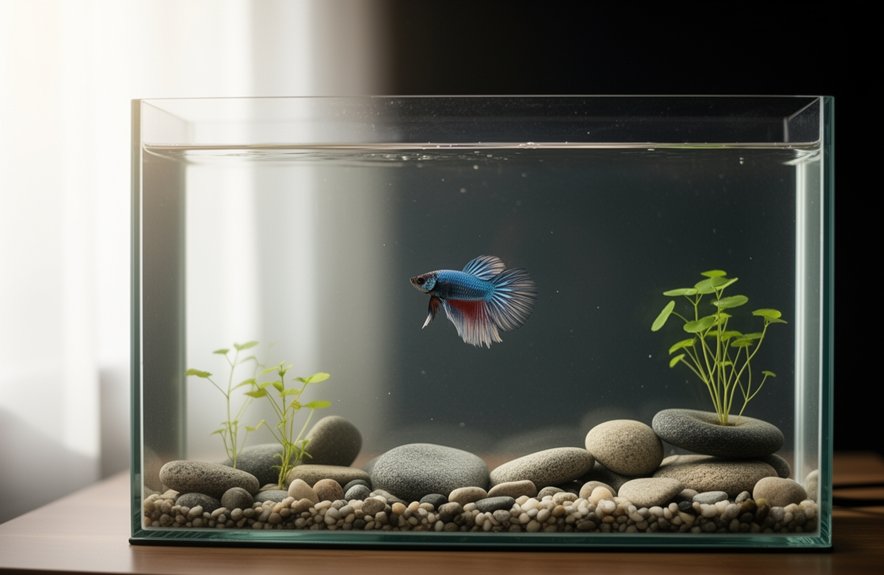
A minimalist betta tank works best when it feels open, calm, and easy to care for, so a 5–10 gallon aquarium with plenty of swimming room is a solid place to start. A single focal piece of smooth spider wood or a few flat river rocks gives the layout a neat geometric hardscape, while pale sand or light gravel keeps the scene airy.
Sparse plants, like Anubias nana, a small Java fern, or one Cryptocoryne, add shelter without filling the negative space. Gentle filtration, steady heat, and soft LED lighting finish the setup, and the betta stays the clear star.
Blackwater Betta Setup
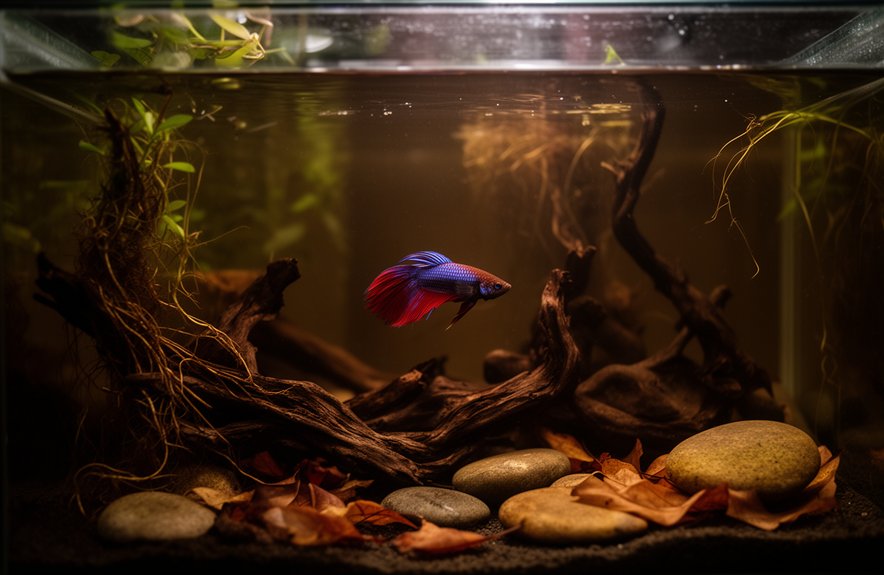
A blackwater betta setup leans into a tinted water aesthetic, with tea-colored water from Indian almond leaves or alder cones giving the tank a calm, natural look. Driftwood, dark substrate, and floating plants help soften the light, while the betta still gets the shaded resting spots it likes. The result is a moody, pond-like scene that looks unusual at first, then quietly grows on people.
Tinted water aesthetic
For a betta tank with a tinted, tea-colored look, the easiest path is to build a gentle blackwater setup with natural tannins. Add one to three catappa leaves or a handful of alder cones per 5–10 gallons, and let the filtered tannins soften the water. Muted lighting helps the warm tone feel calm, not muddy.
Driftwood, black sand, and low-light plants like Cryptocoryne, Java fern, and frogbit deepen the look. Keep flow very gentle, so bubble nests stay intact. With weekly 25% changes and stable warmth, the scene stays inviting, like a small shared refuge.
Driftwood and Moss Layout
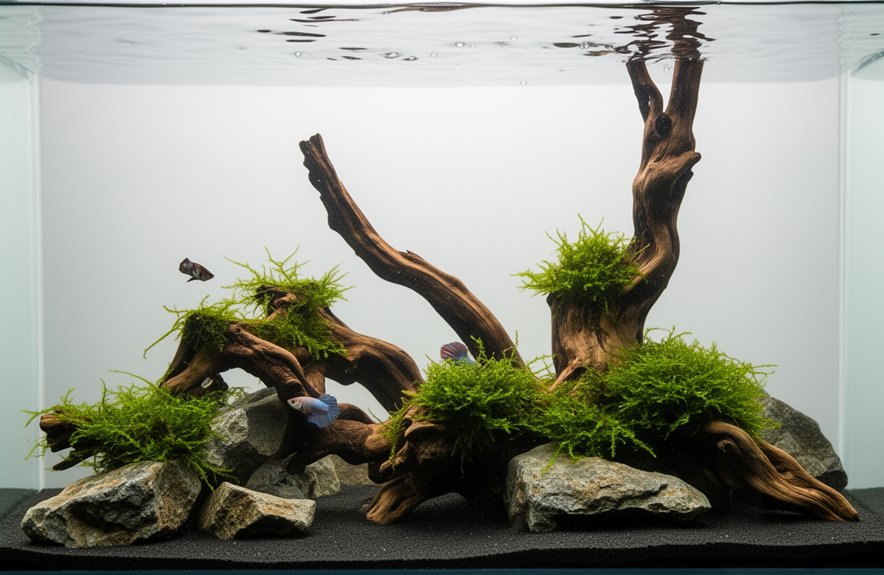
Among the most natural-looking betta tank setups, driftwood and moss can turn the aquascape into a small forest with purpose. Good driftwood placement starts with 1–3 boiled hardwood pieces, set vertically or angled, so open swim lanes stay clear.
| Item | Tip | Result |
|---|---|---|
| Driftwood | Sand sharp ends | Safer fins |
| Moss | Tie or glue it on | Moss propagation |
| Layout | Midground to background | Calm rest spots |
Java moss, fissidens, or Christmas moss usually grab hold in 1–4 weeks, then fill out in 6–12. Tannin tint may linger, but that quiet amber look has its fans.
Nano Planted Betta Tank
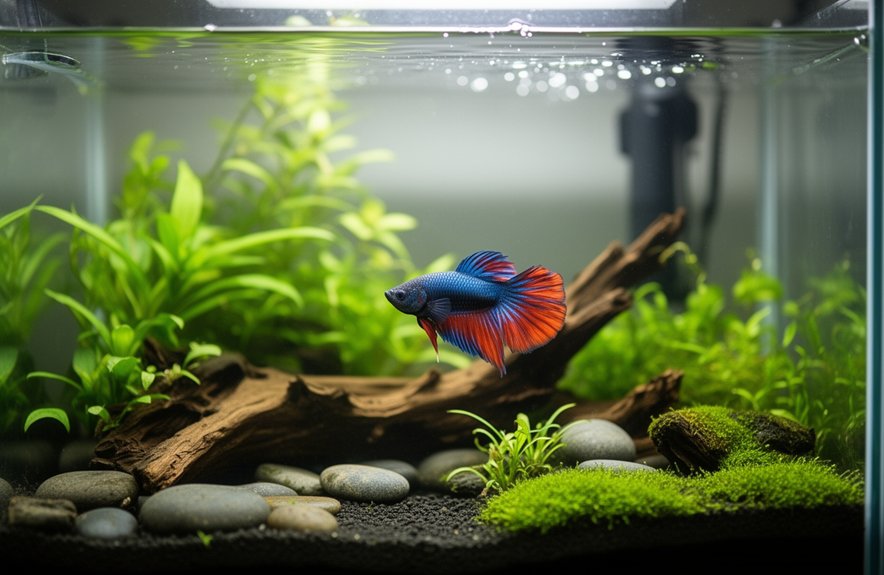
A nano planted betta tank, usually around 5–7 gallons, gives a betta enough room to swim while still fitting neatly on a desk or shelf. In micro aquascaping, a nutrient-rich soil under fine sand supports crypts and root feeders, while Anubias, Java Fern, buce, and moss stay attached to lava rock and dragonwood. Gentle filtration, cycled media, and a heater keep water steady for a plakat. This setup suits betta behavior well, with caves, resting spots, and a few marimo moss balls helping the fish feel at home, not on display.
Floating Plant Paradise
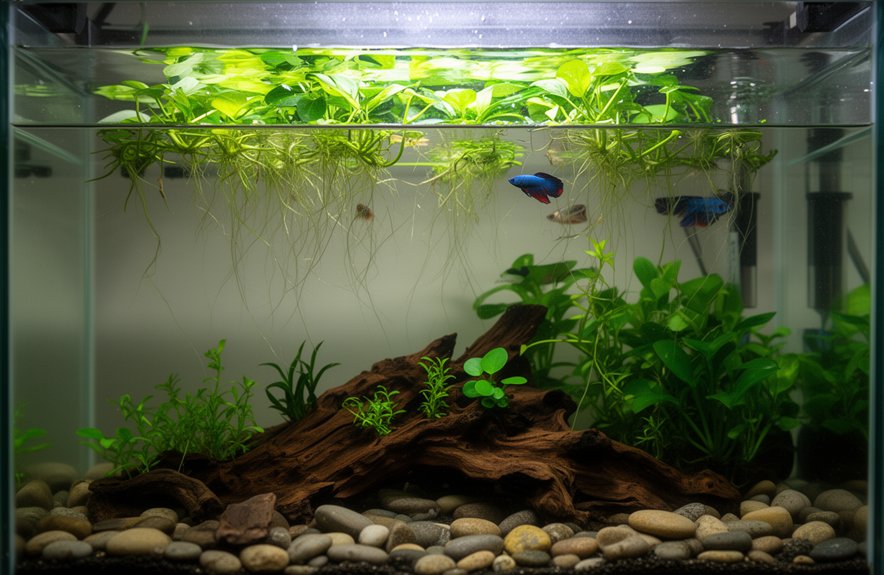
Duckweed or frogbit can turn the water’s surface into a soft green canopy, giving a betta shady resting spots and helping cut down bright light that can feed algae.
A light layer works best, with enough open water left for swimming lanes and bubble nests, so the tank does not feel crowded.
These floaters also grow fast, so a quick trim keeps them neat and useful instead of taking over like tiny leafy tenants.
Duckweed or frogbit
A floating plant mat can turn a betta tank into a calmer, softer-looking space, and duckweed or frogbit are both strong choices. Their floating canopy shades the water, helps with temperature steadiness, and supports nutrient export by soaking up nitrate and phosphate.
Duckweed spreads fast and makes dense cover, while frogbit forms larger leaves that give bettas resting spots and bubble-nest help. Both need gentle flow, moderate light, and weekly thinning, about 25 to 50 percent, so the surface stays open and the filter can breathe. A little trimming keeps the whole scene tidy and welcoming.
Soft Pastel Substrate Theme
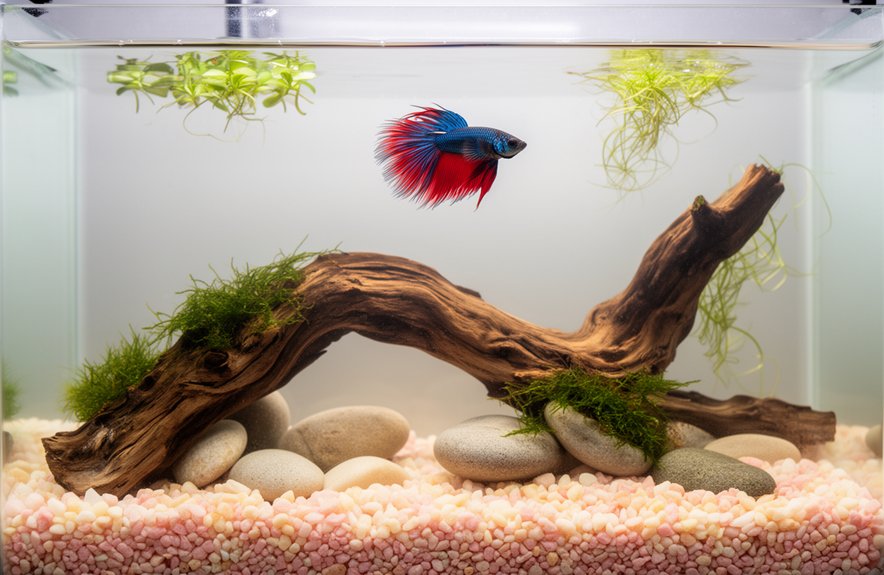
For a soft pastel substrate theme, the tank can start with a pale, fine-grain sand over a nutrient base, which keeps the look gentle while still giving plants room to grow. This pastel substrate works best in subtle gradients, not full brightness, so the scene feels calm and shared.
- A soft peach path or cream slope adds quiet interest.
- Black lava rock or dragon wood gives useful contrast.
- Anubias, Java Fern, and Cryptocoryne help the light sand feel natural.
A single almond leaf or careful surface vacuuming can soften the palette and keep the sand tidy.
Zen Style Betta Tank
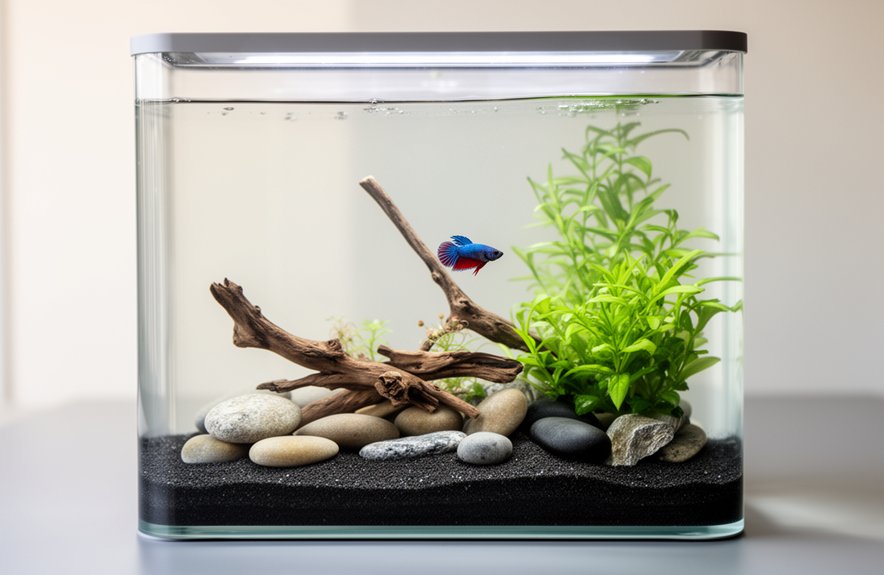
Zen style works best in a betta tank when the layout stays simple, with just a few smooth river rocks and one piece of spider or dragon wood to create a calm focal point and plenty of open space. A pale sand base, about half an inch deep, keeps the scene clean and easy to care for.
Anubias nana and one Java fern are enough for a quiet meditation corner, while Cryptocoryne wendtii can rest in the back. Soft light, frogbit, gentle flow, and a heater help the tank feel serene, wabi sabi, and welcoming.
Rock and Sand Aquascape
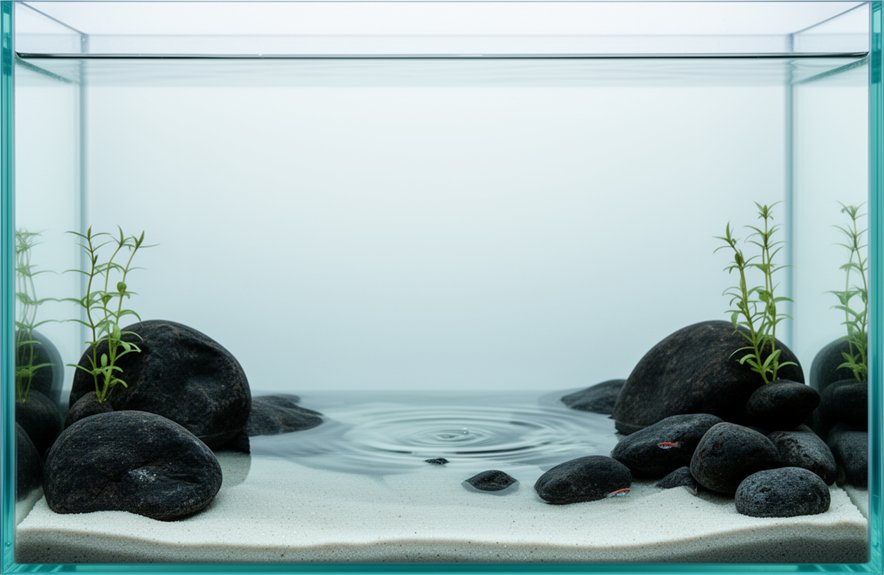
With rock and sand, the layout can feel natural and still give a betta plenty of room to move. A fine sand cap over rich soil makes a soft foreground, while textured shifts from black lava rock to flat stone add height and calm structure. Small ledges and micro cavelets offer resting spots without crowding the fish.
- Keep open lanes between rock clusters.
- Anchor Anubias, Java Fern, and Bucephalandra to hardscape.
- Use gentle flow, and siphon sand during changes.
The result feels steady and welcoming, a home that looks gathered, not forced, with room for fins to glide.
Jungle Style Betta Tank
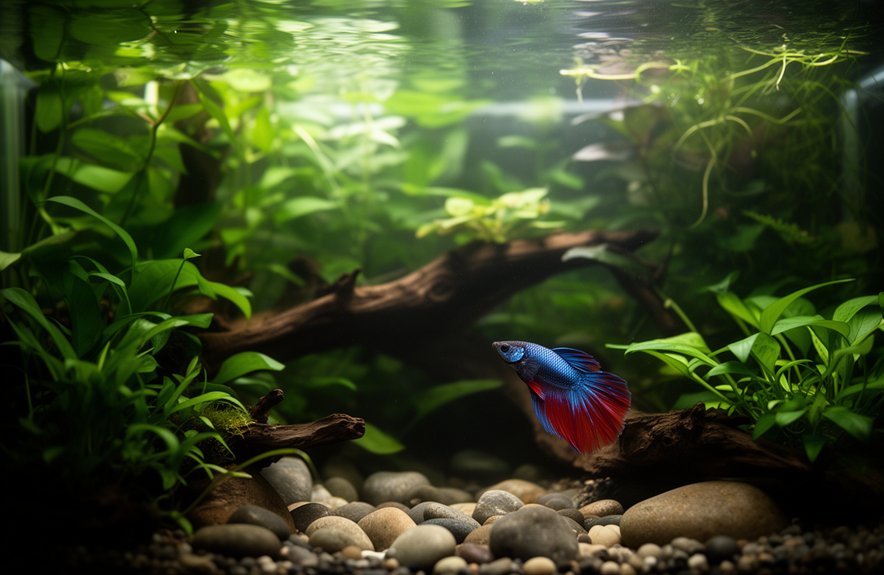
A jungle style betta tank starts with a dense, layered plant look, where Java fern, Anubias, and Cryptocoryne fill the midground and background with plenty of cover. Driftwood, rock ledges, and floating plants can add shade and structure, making the setup feel like a small underwater forest rather than a bare bowl. With dark substrate and leaf litter below, the tank gains a rich, natural look that helps the betta feel tucked in and at ease.
Dense plant look
A jungle-style betta tank works best when the plants feel layered, not crowded at random. Vertical planting with Hornwort and Vallisneria rises behind Cryptocorynes and Anubias, while shadowed overhangs from driftwood give the scene depth. A 2–3 inch swimming lane keeps the betta from feeling boxed in.
- Fine substrate with sand over nutrient soil helps root feeders thrive.
- Java Fern, Bucephalandra, and Anubias cling to wood and lava rock.
- Frogbit, salvinia, or Marimo moss balls soften light and make resting spots.
Gentle flow and 76–82°F water keep fins calm, because no one enjoys a leafy traffic jam.
White Sand Clean Aesthetic
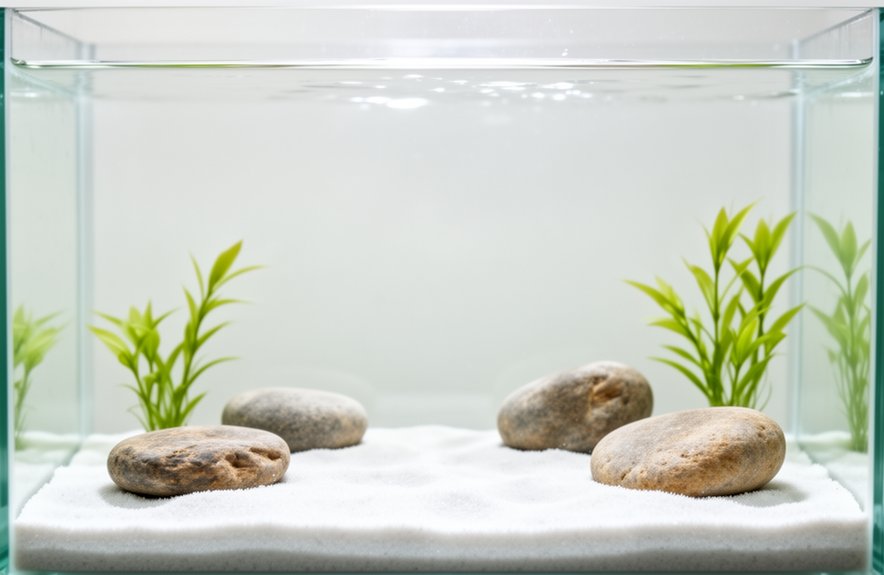
Against a clean white sand base, a betta tank can look bright, calm, and much larger than it really is. A white sandscape with a pale substrate works best as a thin cap over richer soil, so rooted plants like Cryptocoryne can still grow while the surface stays crisp. Dark dragon wood or black lava rock adds strong contrast, helping a betta’s colors stand out without crowding a small tank.
Keep the sand lightly raked, spot-siphon during weekly water changes, and choose smooth, attached plants like Anubias or Java Fern. Open space keeps the scene tidy, not empty.
Low Light Natural Setup
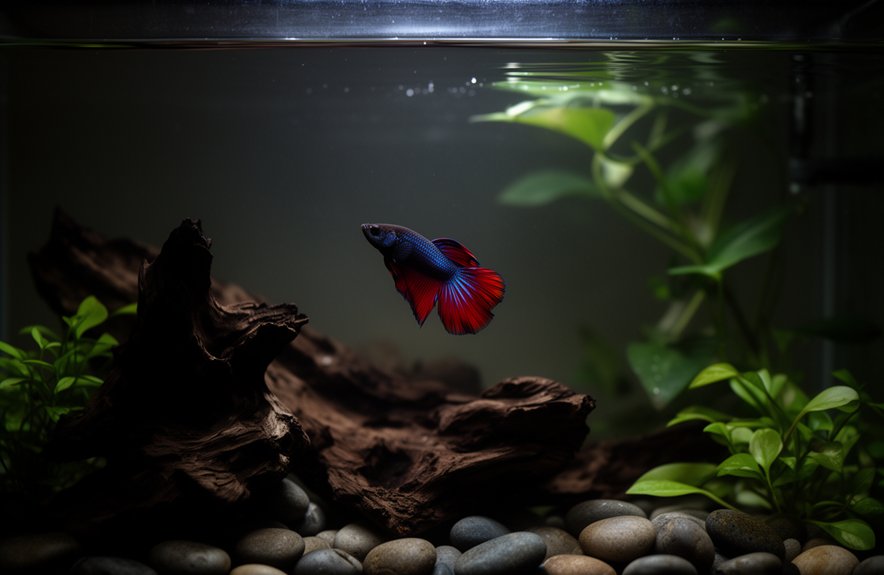
For a betta tank with a softer, more natural feel, low light can work beautifully, especially when the layout keeps that clean look from the white sand idea but tones it down. A 5–10+ gallon tank, dark substrate, and black lava rock help the fish stand out in a dimly lit scene.
- Subdued planting with Java Fern, Anubias, and Cryptocoryne keeps care simple.
- Leaf litter and boiled dragon wood add tint and comfort.
- Shadowed caves, gentle flow, and warm 76–82°F water make the space feel calm, like a small shared refuge.
Single Statement Driftwood Tank
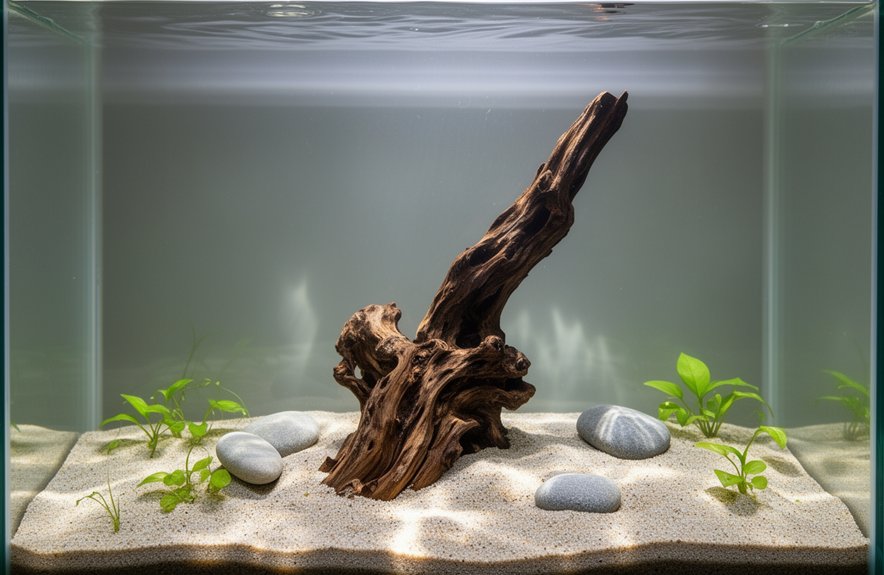
A single, well-aged piece of driftwood can give a betta tank a simple focal design, especially when it stands against a dark background and leaves clear swimming lanes around it. Low-light plants like Java Fern, Anubias, and Bucephalandra can be tied to the wood, then left to settle in as they soften the shape without hiding it. With open sand in front and a few lava rock accents at the base, the whole setup stays clean, natural, and easy to enjoy.
Simple focal design
When a betta tank needs a clean, eye-catching center, a single piece of spider wood or dragon wood can do most of the work. Smart centerpiece placement, slightly off-center, follows the rule of thirds and leaves negative space for easy swimming. A simple sand bed, a few edge crypts, and low-light plants keep the scene calm and welcoming.
- Tie Anubias or Java Fern to one side of the wood.
- Add a marimo ball, or a small patch of java moss, near the base.
- Use soft LED light and gentle flow to show texture, not clutter, because the fish deserves room to glide.
Nature Inspired Betta Aquascape
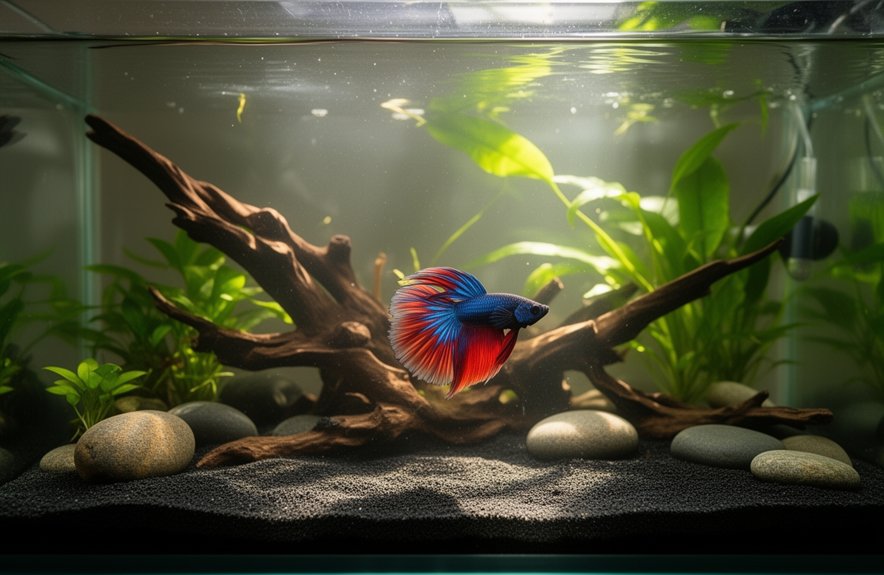
In a nature inspired betta aquascape, a 5–10 gallon tank gives the fish stable water conditions and enough room to move, while still keeping the setup compact and natural-looking. A 7-gallon cube works well, especially when black lava rock or flat stones build riverbank terracing and caves, with vertical rhizome mounting of Java fern, Anubias, and Bucephalandra on wood and stone.
Crypts and low-tech stems can root in Controsoil under a thin sand cap, while frogbit, salvinia, and marimo balls add shade and calm. Gentle flow, 76–82°F water, and a sponge-covered intake help the betta feel at home.
Frequently Asked Questions
How to Make a Fish Tank Look Aesthetic?
Create an aquascape with varied textures, balanced hardscape, and natural lighting. Dark background, lush plants, hidden equipment, and open swimming space help the tank feel calm, welcoming, and visually cohesive for shared enjoyment.
Which Color Betta Is Looking Most Beautiful?
Blue and turquoise bettas often appear most beautiful; their Iridescent shimmer catches the eye like moonlight on water. In a planted tank, they create Vibrant contrast, inviting observers into a shared sense of calm, wonder, and belonging.
What Is a Betta Buddy?
A betta buddy is a compatible companion for a betta, such as a snail, shrimp, or small peaceful fish. Careful observation of stress signals helps keep the aquarium calm, safe, and welcoming for all inhabitants.
Conclusion
These 13 betta tank ideas all point to the same simple goal, a calm space that looks natural and gives the fish room to thrive. One helpful guide is that about 70% of bettas stay near the upper part of the tank, so floating plants, open water, and gentle cover can make the layout look better and work better. With a few smart choices, a tank can feel polished without looking fussy, which is the sweet spot.