
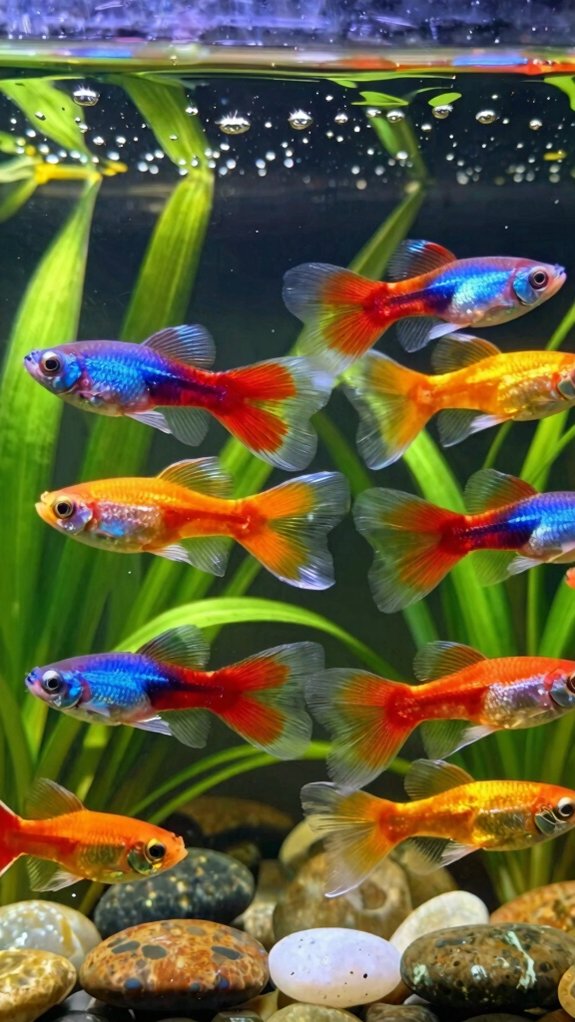
A colorful guppy tank works best with a mix of open swim space, bright plants, and simple hardscape that lets fish shine. Good ideas include a heavily planted jungle with moss and hornwort, floating plants for fry cover, bright gravel with dark sand, a driftwood-and-moss layout, or a clean minimalist setup with one focal plant. A 10 to 20 gallon tank keeps these scenes tidy, lively, and easier to enjoy, and more ideas follow below.
Disclosure: This post may contain Amazon affiliate links, at no extra cost to you. Content on Pawtangle is created with research support from AI tools and carefully reviewed, edited, and fact-checked by the lead author, Dr.Fahri Pat , to ensure accuracy and reliability. Learn more
Key Takeaways
- Use dense plants like Java moss, hornwort, and water sprite to create colorful hiding spots and fry-safe cover.
- Add floating plants such as Salvinia or duckweed to soften light and form root mazes for lively, natural movement.
- Choose black sand, white quartz, or fine gravel to make red, blue, and yellow guppy colors pop.
- Include one driftwood piece or rock focal point with open swim space to balance beauty and let guppies display freely.
- Keep gentle filtration, weekly water changes, and 78–82°F water for healthy fish and steady, vibrant growth.
Heavily Planted Guppy Tank
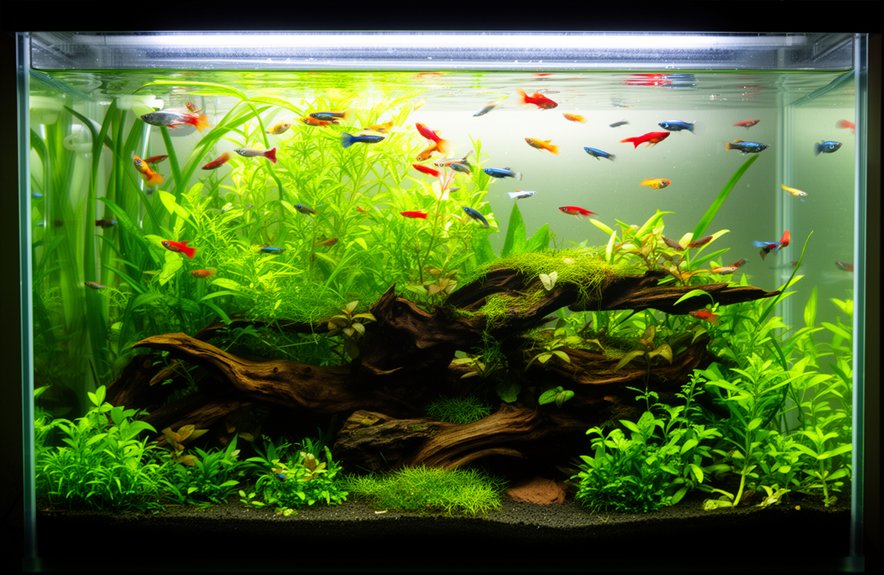
In a heavily planted guppy tank, dense growth does more than look nice, it gives fry plenty of places to hide and helps adult guppies feel calmer. Fast-growing stems like hornwort and water sprite, plus dwarf hairgrass in front, build dense vegetation and a layered aquascape that feels secure. Java moss, Amazon sword, and Java fern can fill out the tank, support clean water, and keep the scene lively. Bright LED light, a nutrient-rich substrate, gentle flow, and regular trimming help plants stay healthy. With 72–82°F water and weekly changes, the setup stays balanced.
Floating Plant Setup
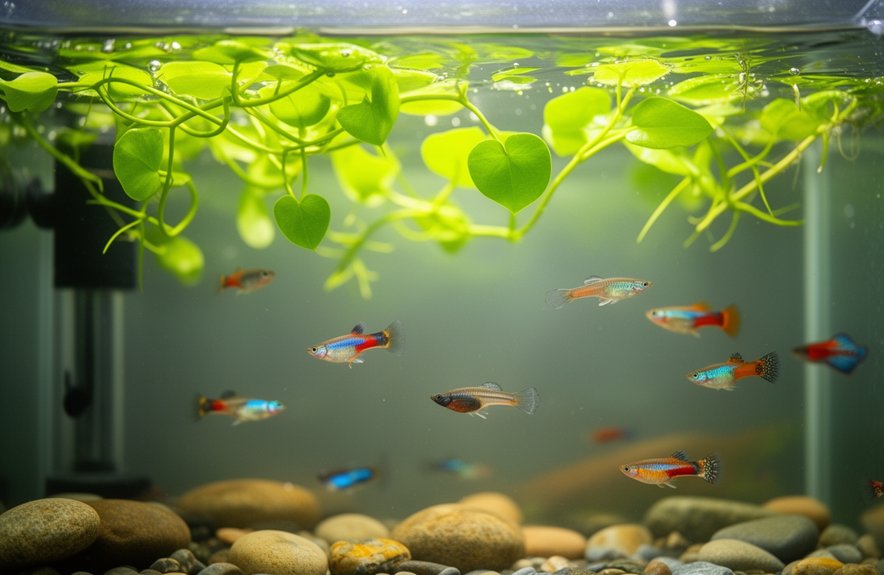
Floating plants can give guppy fry an easy first refuge, since their roots create a soft maze where tiny fish can hide from larger tankmates. Salvinia, duckweed, or water lettuce work well when they cover only part of the surface, because fry get shelter without the tank feeling shut in. Adding a layer of Java moss or hornwort below them can make the nursery even safer, which is a small upgrade with a big payoff.
Guppy fry protection
Placing floating plants like water sprite, hornwort, or duckweed across the surface gives guppy fry a safer place to slip out of sight, while also softening the water flow around the tank. In fry nurseries, this kind of cover supports predation prevention and helps young fish feel part of a calmer, shared space.
A mat covering about 50 to 75 percent of the surface makes shady refuges, slows the current, and keeps fry from being pushed into filters. Sponge filters, covered inlets, and gentle flow work best. Trim fast-growing plants often, and mix in Java moss below for extra escape routes.
Bright Gravel Color Theme
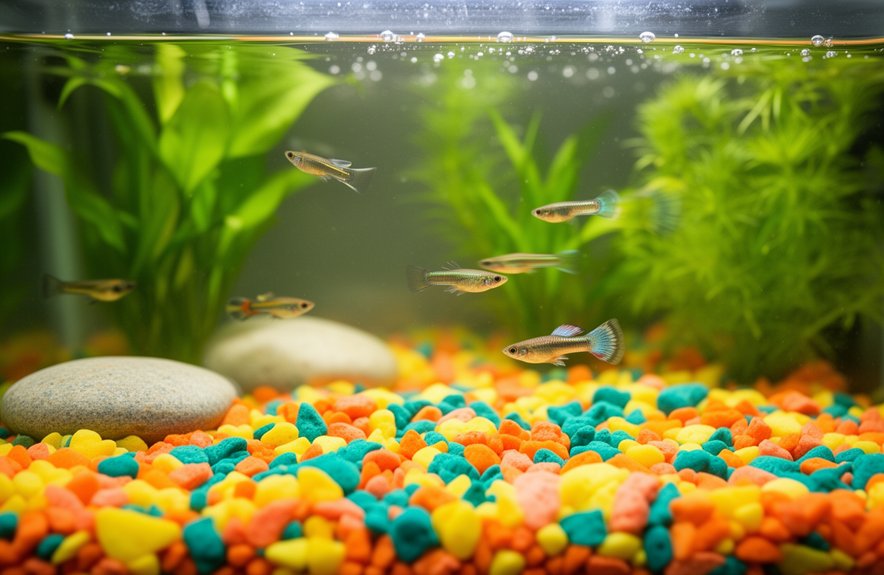
A bright gravel color theme can give a guppy tank real visual punch, especially when dark or light substrates are used to make the fish stand out. Black sand or white quartz creates strong color contrast, helping reds and blues glow, while a solid black background keeps the scene tidy and welcoming.
Fine to medium gravel, 0.5 to 2 mm, supports delicate fins and plant roots. Good substrate care means rinsing dyed pieces well, then checking water after setup. Limiting bright gravel to 10–20 percent, with natural substrate and Java moss, keeps the tank lively, not loud.
Nano Guppy Aquarium
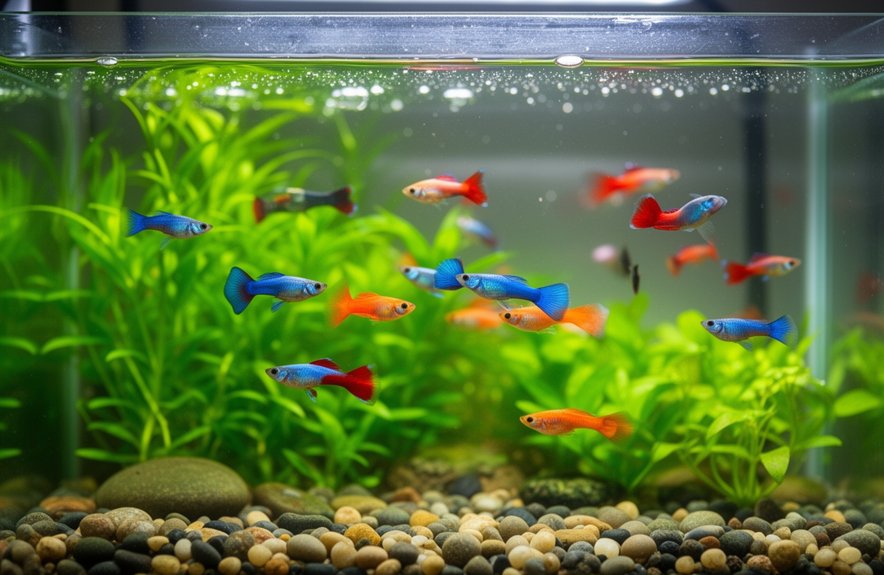
For a small but lively setup, a nano guppy aquarium can work well in 10 gallons for a modest group, though 20 gallons gives the fish more room and helps keep water conditions steadier. Dense planting with short stem plants and moss gives fry a safe place to join the crowd, while dark substrate helps colors pop. Gentle micro filtration and steady temperature stability between 76–78°F support calm, healthy fish. Light stocking, with more females than males, lowers chasing, and a pair of pygmy corydoras can fit in if space allows, quietly keeping the neighborhood friendly.
Driftwood and Moss Layout
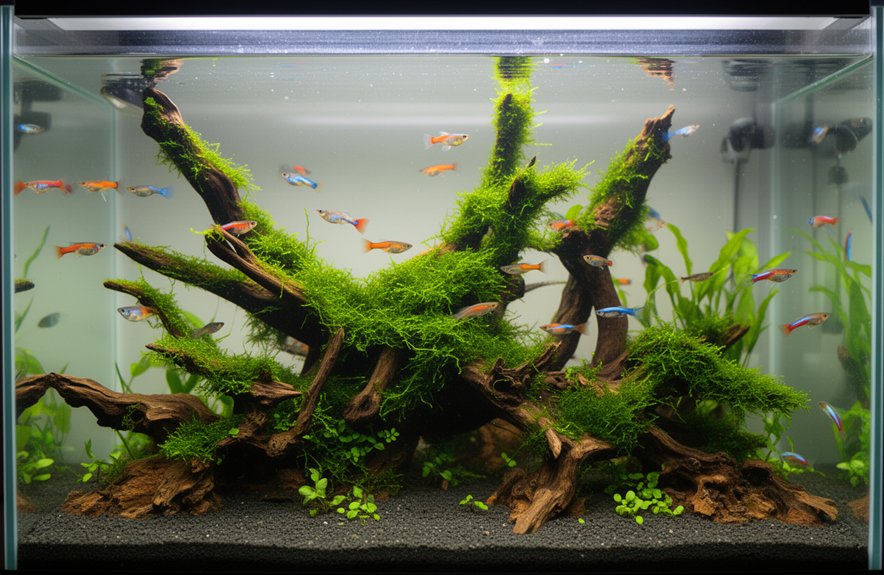
With the plants and open water already set, the next layer is the hardscape, and driftwood can give a guppy tank a natural center. One or two smooth pieces, placed slightly off-center, help fish feel at home while bright colors stand out against the dark wood.
Attach Java moss or Christmas moss with fishing line or gel, then let moss propagation fill in the gaps. Gentle overhangs make small shelters, not clutter, and driftwood sealing helps keep the layout stable. Short stems or carpet plants at the base add soft swim-throughs, while moderate LED light keeps the scene lively.
Open Swimming Space Tank
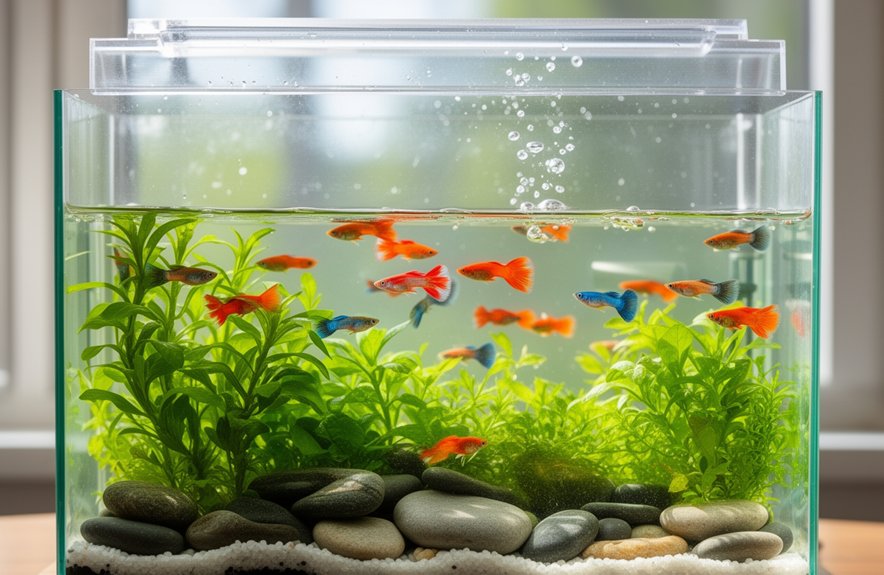
In an open swimming space tank, most of the layout should stay clear, so guppies have room to cruise through the middle and upper water without bumping into decor. This open swimspace works best when 60 to 70 percent of the tank stays unobstructed, letting small schools show off full fin spread and easy turns. Low planting at the back, with hornwort or water sprite, supports sightline preservation and adds cover without crowding the view. A sponge filter or gentle canister flow keeps movement calm, while black sand and one focal rock help colors pop.
Low Tech Planted Tank
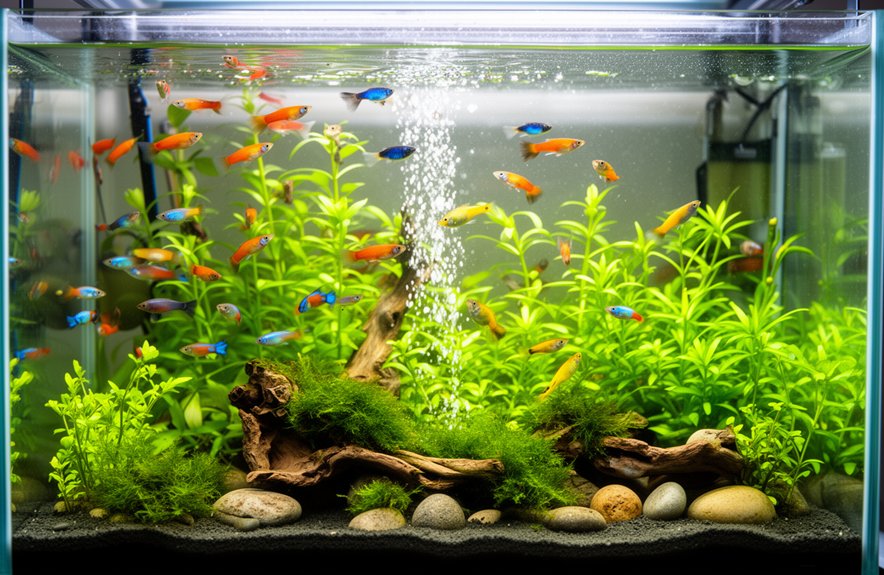
A low-tech planted guppy tank is often praised for easy maintenance, since a 10–20 gallon setup gives enough room for fish and plants without turning upkeep into a chore.
With simple, low-light plants like Java moss, hornwort, and water sprite, the tank can stay healthy, provide fry cover, and still avoid the fuss of CO2 or strong lights.
A gentle sponge filter, steady weekly water changes, and moderate LED lighting usually keep the system balanced, so the plants and guppies can do their part with less drama than a soap opera.
Easy maintenance
For easy maintenance, a low-tech planted tank is a smart fit for guppies. Low maintenance lighting keeps Java moss, hornwort, and Amazon sword growing under gentle LEDs, and no CO2 system is needed. A self-regulating top off can help hold water levels steady, which keeps the routine simple.
A nutrient-rich substrate, or root tabs in gravel, supports plants without constant feeding. Gentle sponge or low-flow filtration keeps fry safe and water calm. Weekly 20–30% changes, warm stable water, and modest stocking help the tank stay clear, balanced, and pleasantly easy to care for.
Jungle Style Guppy Tank
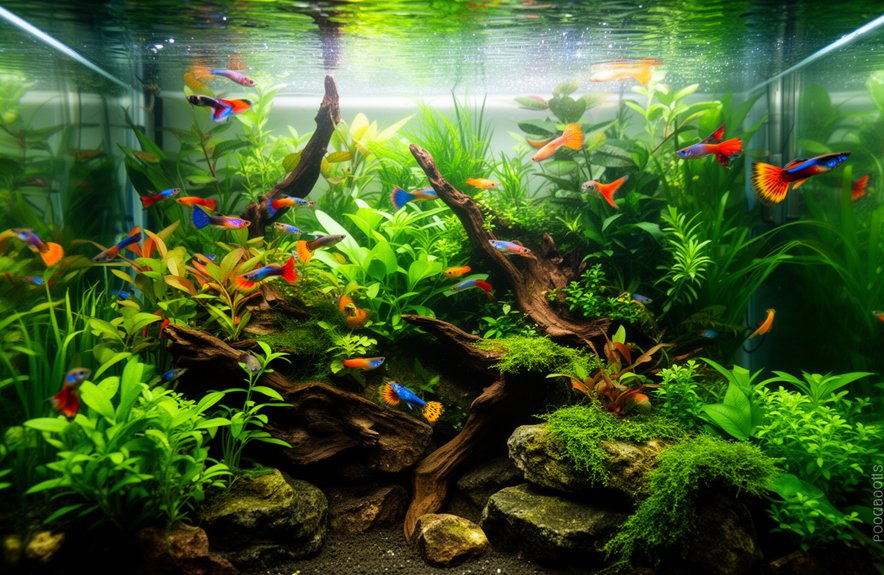
With layers of green from top to bottom, a jungle-style guppy tank uses dense stem plants like hornwort, water sprite, and rotala, plus plenty of Java moss, to create cover and safe hiding spots for fry. A nutrient-rich substrate and 8–10 hours of moderate to high LED light help the jungle grow thick, while canopy pruning keeps the top from closing in. Driftwood and smooth stones add shaded corridors, and a gentle filter supports stream simulation. In a 10–20 gallon tank, a small group of guppies, with weekly water changes, can thrive and show bright color.
White Sand Aesthetic Tank
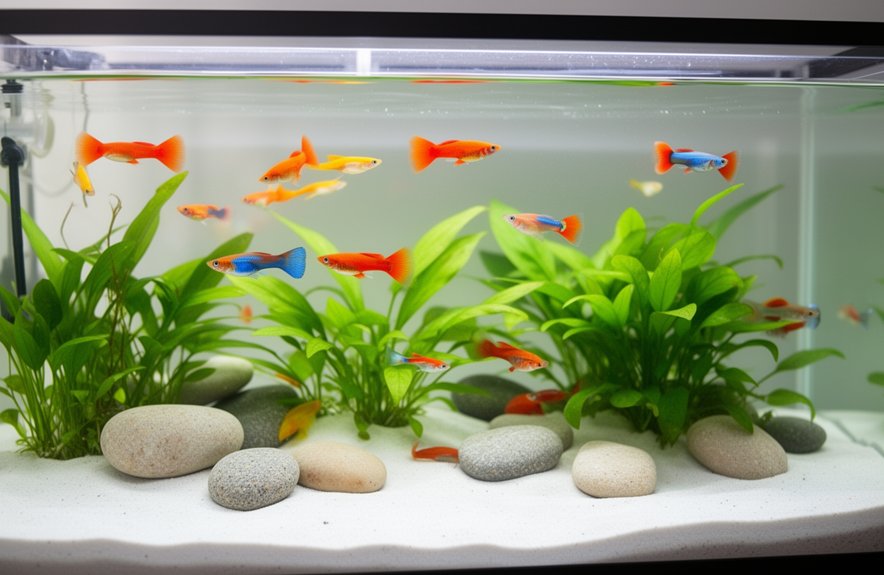
After the lush, planted look of a jungle-style guppy tank, a white sand setup brings a cleaner, brighter feel that makes guppy colors stand out right away. Fine aragonite or silica sand, kept shallow, creates a crisp foreground that feels open and calm.
A dark background adds depth, while contrast lighting helps guppy fins and patterns shine. A minimalist hardscape, with driftwood and a few rooted plants, keeps the layout tidy without looking empty. Dwarf hairgrass, anubias, or Amazon swords soften the scene, and gentle filtration plus weekly vacuuming keeps the sand bright and the tank easy to share with pride.
Community Tank with Guppies
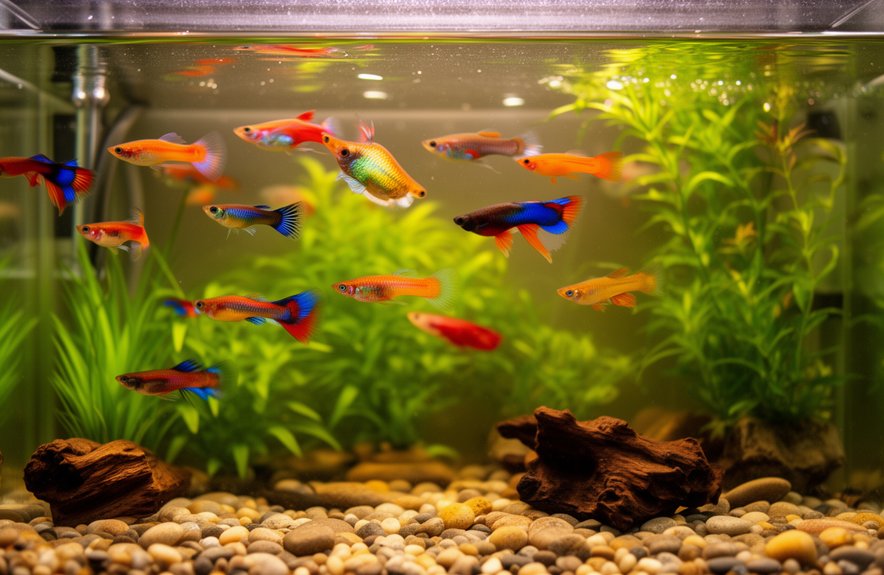
Bringing guppies into a community tank works best when the mix stays peaceful and roomy, so a 20-gallon setup or larger gives everyone space to settle in. Peaceful Corydoras, like Corydoras pygmaeus, and neon tetras often fit well, and they help keep community interactions calm and balanced.
Tank etiquette matters too, so a good rule is one male guppy for every two or three females, with about 1 inch of fish per gallon as a starting point. Soft flow, steady warm water, and shared cover from dense plants help each fish feel included, not crowded.
Rock and Plant Mix Layout
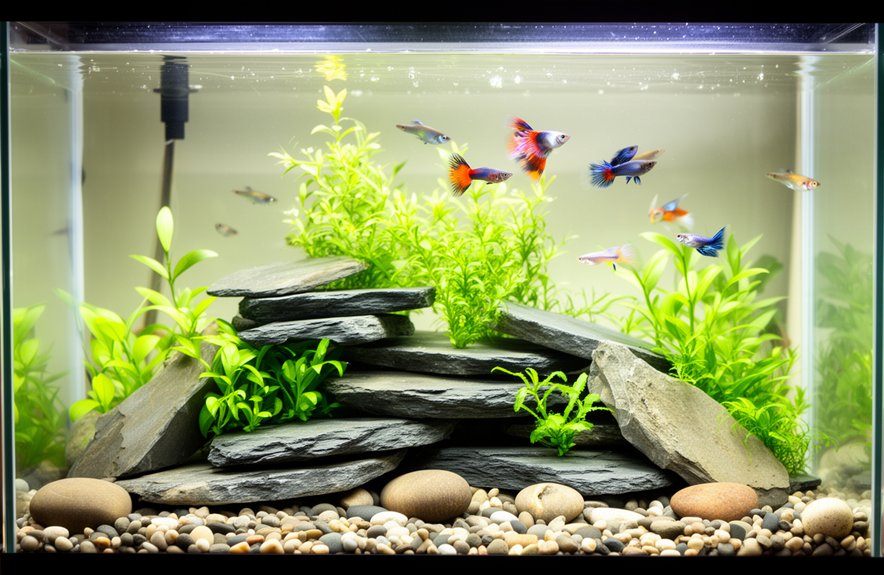
A balanced rock and plant layout can give a guppy tank both structure and open water, with smooth river rocks and driftwood setting the main shapes. Dense stem plants behind and between the rocks add height and shelter, while carpeting plants in front keep the scene neat and leave room for swimming. A few moss-covered stones or fern-topped logs can round out the look, and the tank ends up feeling planned rather than crowded.
Balanced design
A balanced guppy layout often starts with a small rock outcrop placed a little off-center, then softened with midground swords and cryptocorynes around it. This rock balance gives the tank a calm, lived-in feel, while plant rhythm keeps the scene from looking stiff. Behind the stones, Hygrophila and Rotala can rise in loose groups, hiding edges and giving fry safe pockets. A dark substrate under the rocks makes guppy colors pop, and a carpet of Monte Carlo or Dwarf Hairgrass keeps the foreground fresh. Leave open swim lanes, about a third of the tank, so the fish can simply enjoy home.
Breeding-Friendly Tank Setup
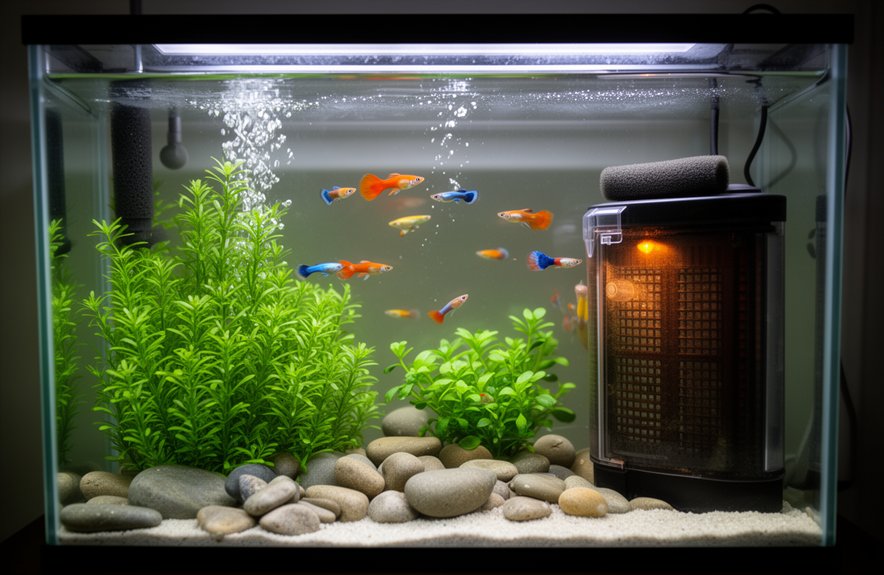
For breeding guppies, the tank should be at least 10 gallons, with 20 gallons or more being even better for larger broods, and it should be packed with dense plants like Java moss, hornwort, and water sprite so fry have plenty of hiding spots. These breeding tanktips help create calm fry nurseries, where newborns can tuck away safely.
A sponge filter keeps water clean without pulling in tiny fish, and a temperature around 78–82°F supports steady growth. One male with two or three females usually works well, and a dedicated nursery tank helps protect pregnant females. Stable pH, partial water changes, and rich feed round things out.
Minimalist Guppy Tank
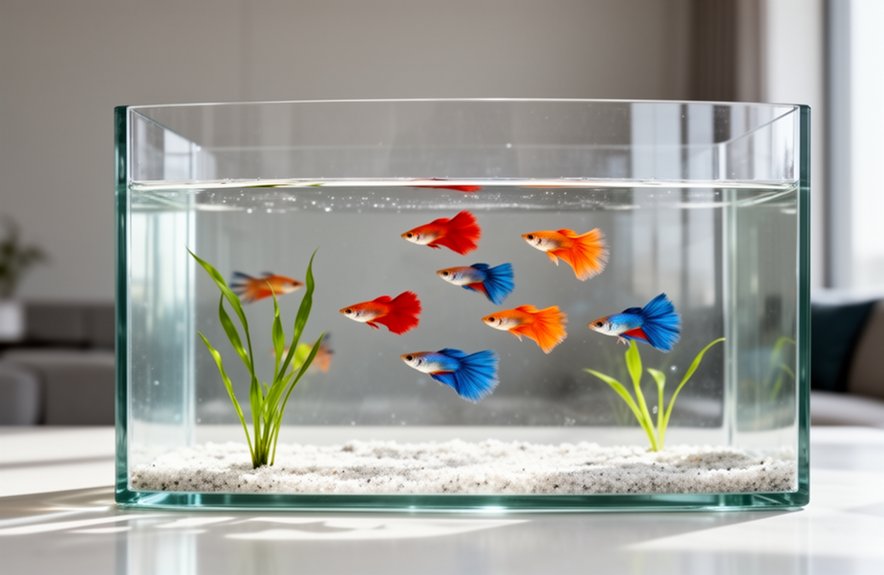
Clean lines give a minimalist guppy tank its charm, and they also make the fish stand out beautifully. A simple black sand bed or fine white gravel keeps the layout calm, while sparse hardscape leaves useful negative space for each guppy to shine.
One or two easy plants, such as an Amazon sword or a single stem, add a single focalpoint without crowding the view. A 10 to 20 gallon tank works well for a small group, with gentle filtration, 76 to 78°F water, and balanced LED light. The result feels open, tidy, and welcoming, like a neat room with lively company.
Frequently Asked Questions
How Often Should Guppy Tank Water Be Changed?
Guppy tank water should be changed weekly, with partial changes of 20–30%. Regular nitrate monitoring helps keep the shared habitat healthy, letting the group enjoy steady conditions, comfort, and a welcoming environment together.
What Water Temperature Do Guppies Prefer?
Guppies prefer warm, stable water, ideally 72–82°F. The best range supports health, color, and activity; temperature fluctuations should stay minimal. In a well-kept tank, they thrive, settle in, and belong comfortably together.
Can Guppies Live With Shrimp Safely?
Yes, guppies can live with shrimp safely in many tanks. Compatible shrimp like cherry shrimp often coexist well, though breeding concerns arise because guppies may eat shrimplets. A planted, peaceful setup helps everyone belong.
How Many Guppies Fit in a 10-Gallon Tank?
About four to six guppies fit in a 10-gallon tank; measure twice, keep once. Respect tank capacity and stocking guidelines, so the group stays healthy, calm, and welcomed in its small shared home.
What Foods Keep Guppies Most Colorful?
High carotene flakes and live brine shrimp help guppies stay vivid, especially when varied with quality micro-pellets and occasional vegetables. A steady, protein-rich diet supports color and healthy fins, helping every tank feel welcoming and lively.
Conclusion
In the end, a guppy tank works best when it balances color, comfort, and easy care. Whether the setup uses thick plants, bright gravel, or a clean minimalist look, each choice can help the fish feel at home and make the tank more pleasant to watch. A good design is like a small stage, where guppies can move, flash their colors, and keep the whole scene lively without much fuss.