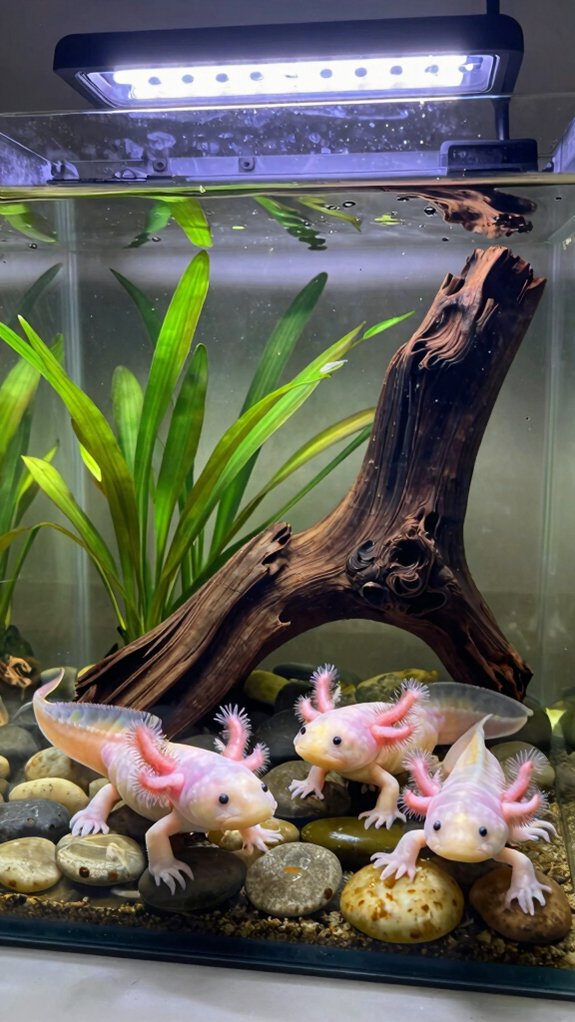
Axolotl tanks work best when they stay cool, open, and easy to clean. Safe ideas include a bare-bottom setup, fine sand, a minimalist layout, low-light natural plants, rock caves, moss, open swimming space, blackwater style decor, and one large hide with simple accents. Each option keeps clutter low and water care easier, while still looking neat. The best tank style often depends on how much effort someone wants to spend, and a few more smart choices follow.
Disclosure: This post may contain Amazon affiliate links, at no extra cost to you. Content on Pawtangle is created with research support from AI tools and carefully reviewed, edited, and fact-checked by the lead author, Dr.Fahri Pat , to ensure accuracy and reliability. Learn more
Key Takeaways
- Use a bare-bottom or fine sand setup to prevent impaction and make waste easy to spot and clean.
- Keep the tank cool, filtered gently, and ammonia and nitrite at 0 ppm with weekly water changes.
- Leave most of the floor open so your axolotl has calm swimming lanes and plenty of horizontal space.
- Add one large, smooth hide per axolotl, placed off-center with the entrance facing open water.
- Choose low-light plants, soaked driftwood, and simple decor for a safe, natural blackwater look.
Bare Bottom Tank Setup
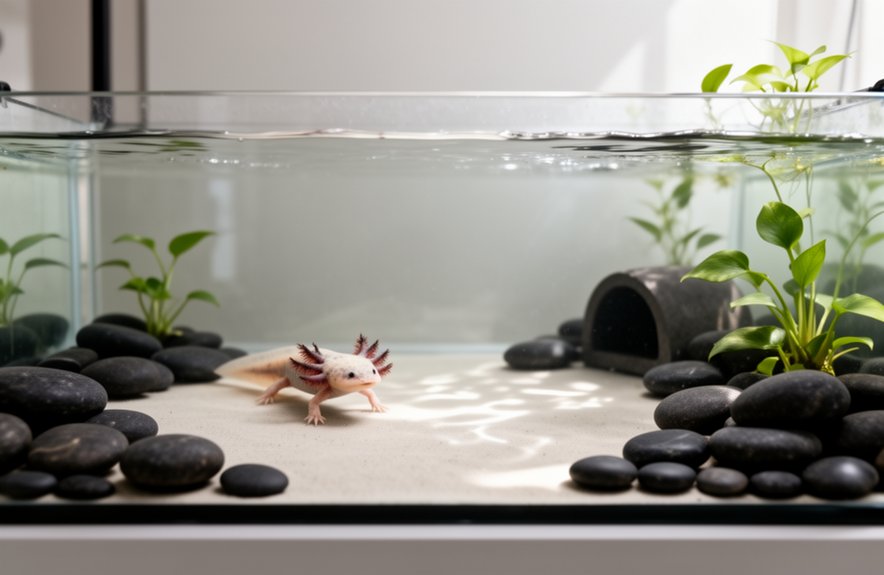
A bare-bottom axolotl tank is often the simplest and safest setup, because there is no loose substrate for an axolotl to swallow by accident. The smooth glass or acrylic floor also makes cleaning easy, so waste and uneaten food are easy to spot. Weekly water changes, plus gentle vacuuming, help keep ammonia and nitrite at 0 ppm, with nitrates under about 30 ppm.
A sponge filter or low-flow canister keeps biofiltration steady without strong currents. Multiple hides, such as PVC pipes or smooth caves, help axolotls feel at home. Keep temperature gradients stable, and follow a calm lighting schedule.
Fine Sand Substrate Tank
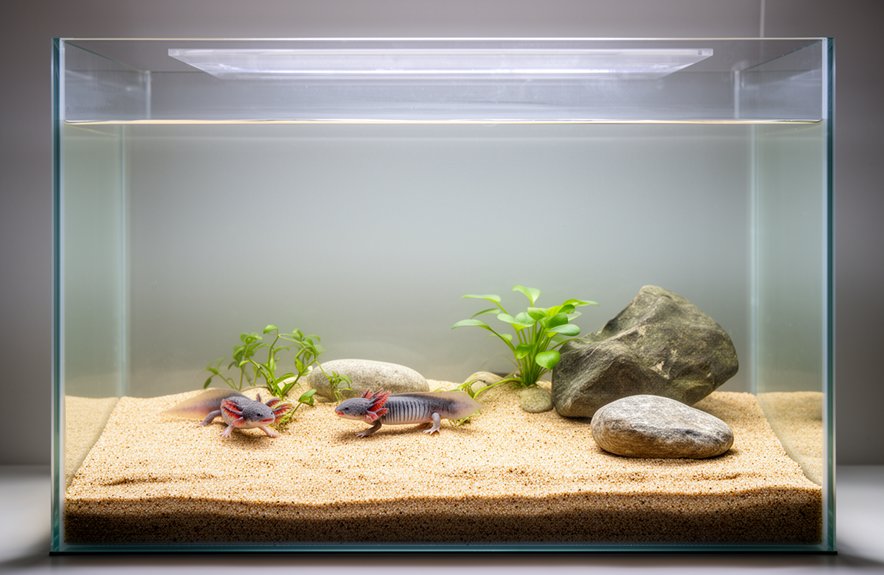
Fine sand can be a safer pick for axolotls, since it is soft enough to lower the risk of accidental swallowing compared with gravel. A shallow layer, about 1–2 inches, gives the tank a clean look while still keeping the bottom easy to manage. With gentle upkeep, this setup can stay practical, tidy, and kind to those famously mouthy little swimmers.
Safe for swallowing
Grains of aquarium sand can make an axolotl tank safer underfoot, as long as they are fine, rounded, and much smaller than gravel, because that lowers the chance of sharp edges and impaction. For ingestion prevention, many keepers choose 0.2–0.5 mm sand, rinse it until the water runs clear, and accept a little cloudiness at first. A shallow layer, about 0.5–1 inch, is easier to clean and less likely to trap waste. Those wanting zero risk can use substrate alternatives like bare-bottom tanks or smooth slate. Regular siphoning keeps hidden food from causing ammonia trouble.
Minimalist Axolotl Tank
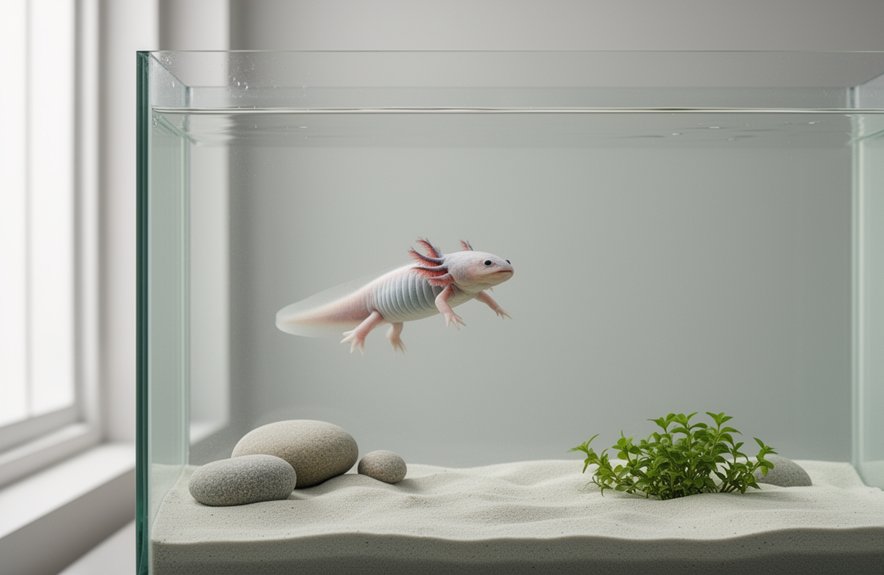
For a minimalist axolotl tank, the cleanest look often starts with a bare-bottom setup or a very fine white sand substrate, rinsed well so debris stays low and impaction risk stays down.
| Element | Purpose |
|---|---|
| River rocks | Anchor the layout |
| Spider wood | Add shape |
| Anubias | Stay hardy |
| Sponge filter | Keep flow gentle |
A pair of smooth rocks and one or two wood pieces leaves negative space and calm resting spots. A single Anubias or java moss clump adds muted textures without fuss. Dim lighting, a black background, and open swim lanes help the tank feel tidy, welcoming, and easy to maintain.
Low Light Natural Tank
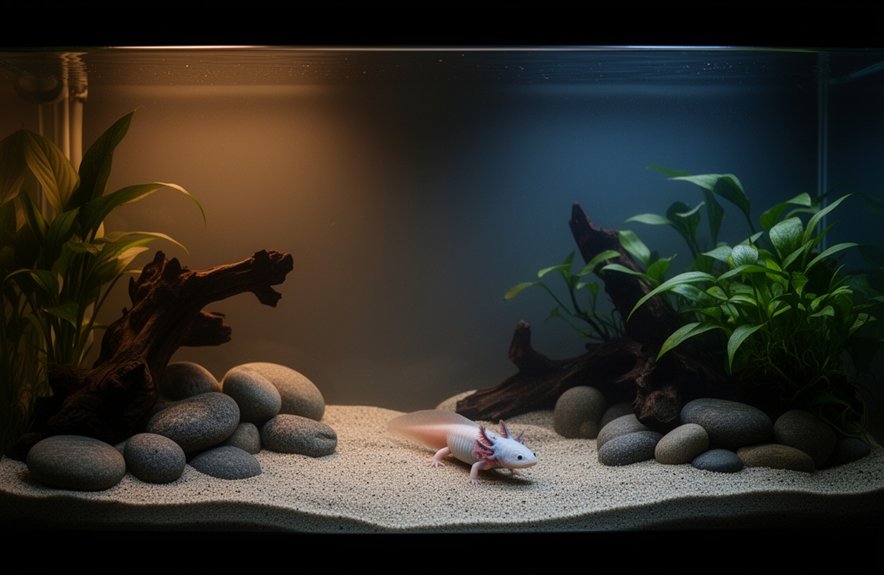
In a low light natural axolotl tank, the goal is to create a calm, shaded space that feels more like a quiet stream bed than a bright display. Floating water lettuce, Java moss, and muted foliage help soften the light, keep temperatures in the safe 60–68°F range, and give the axolotl dim refuges that feel reassuring.
A fine sand floor, or bare bottom, keeps the setup safe, while smooth river rocks add a natural look without risk. Gentle sponge filtration, plus hornwort, Java fern, anubias, or marimo moss balls, supports clean water and a restful scene.
Rock Cave Hideouts
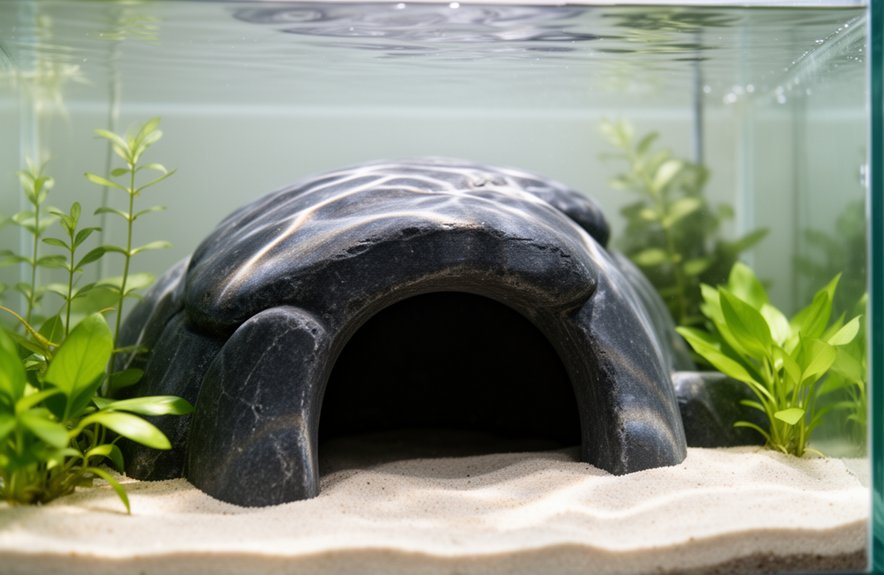
Rock cave hideouts give axolotls vital shelter, and they work best when built from smooth, stable stones with roomy openings. Each hide should have enough space for the whole animal to turn around easily, with at least one clear exit so no one feels boxed in. A few well-placed caves around the tank can help reduce stress, and they also add a neat, natural look without turning the setup into a rock slide.
Essential shelter
A good axolotl hideout starts with a sturdy rock cave, since these animals like a safe, dim place to rest and retreat. Well-made shelters copy natural caves and help reduce stress and temperature effects from bright light.
Each axolotl should get one cave big enough to enter fully, with smooth inside walls and no sharp edges. Stacked slate or aquarium-safe rock works best, if it is rinsed, boiled, and secured with silicone.
Set caves on level sand or bare bottom, test for wobble, and choose designs with more than one opening, so everyone gets a fair exit plan.
PVC Pipe Hide Setup
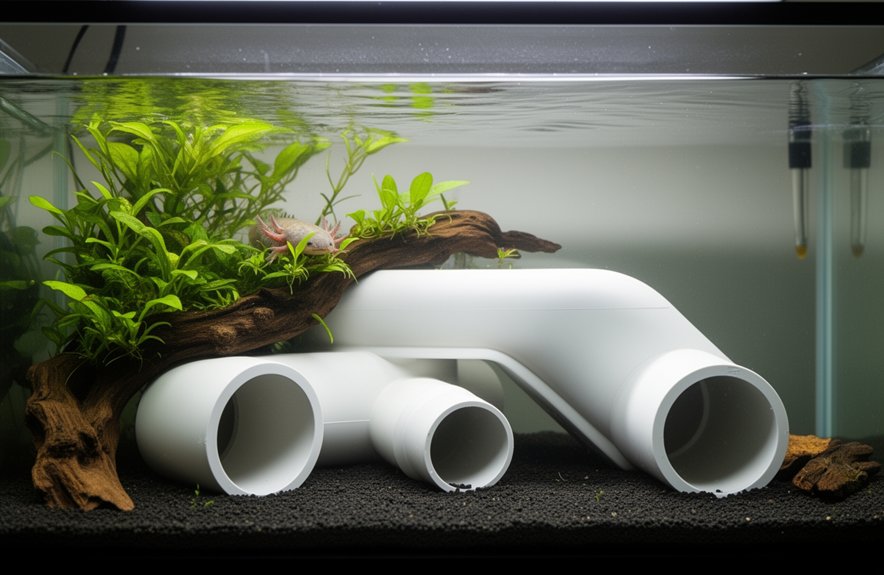
PVC hide basics start with the right tube, and that means smooth, food-grade PVC cut to a size the axolotl can fully enter and turn around in. These PVC tunnels work best with Smooth entrances, rounded edges, and a rinse before use, so the home feels safe and welcoming.
- Choose the right diameter for age
- Secure one end so it stays put
- Add top holes for water flow
- Place it near calm, shaded spots
One hide per axolotl helps everyone feel settled. A quiet pipe can be simple, sturdy, and oddly charming.
Driftwood Natural Layout
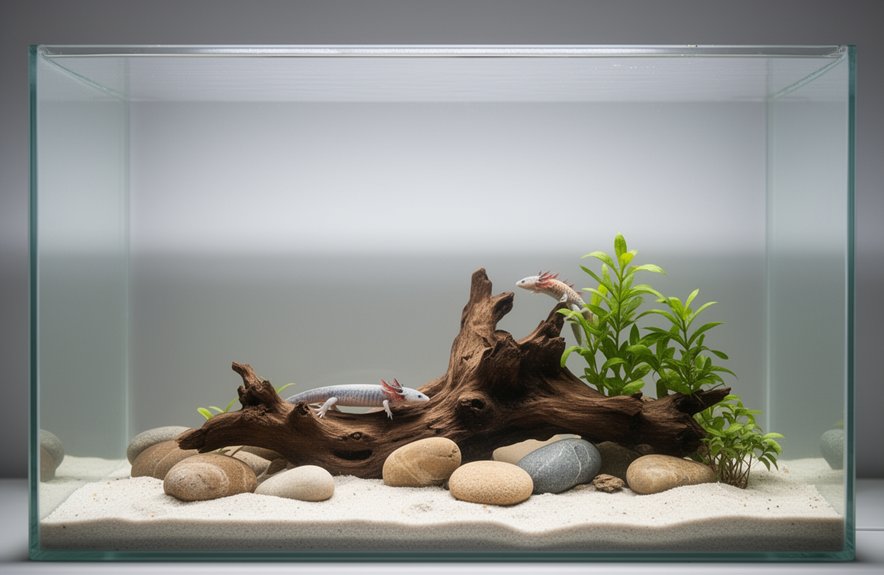
Driftwood can give an axolotl tank a softer, more natural look after the clean lines of a PVC hide, and it works best when the pieces are fully soaked and aquarium-safe.
Soak it for 4 to 6 weeks or longer, rinse it well, and remove loose bits before placement. Then build gentle height changes and natural overhangs, but keep open lanes for swimming and easy surface access.
Smooth river rocks or buried ends can hold the wood steady, while attached anubias, java fern, or java moss add shelter.
Tannin management matters, because wood may tint water and nudge pH.
Cool Toned Aquascape
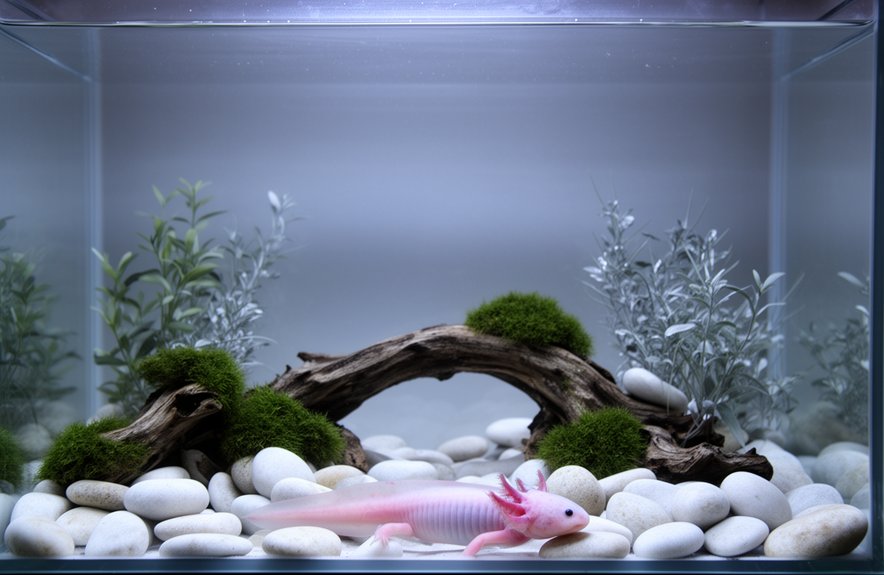
Under cool lighting, a pale gray or white sand base can make an axolotl tank feel like a moonlit lake, and it also avoids the impaction risks that come with gravel. This moonlit substrate pairs well with bluish rockwork and smooth driftwood, placed in odd groupings for calm depth and easy resting spots.
- Add java fern, anubias, or java moss for muted green balance.
- Use water lettuce or duckweed to soften light and shadows.
- Keep water near 60–68°F for steady comfort.
- Choose a sponge filter or low-flow outflow, so the current stays gentle and the lanes stay peaceful.
Live Plant Axolotl Tank
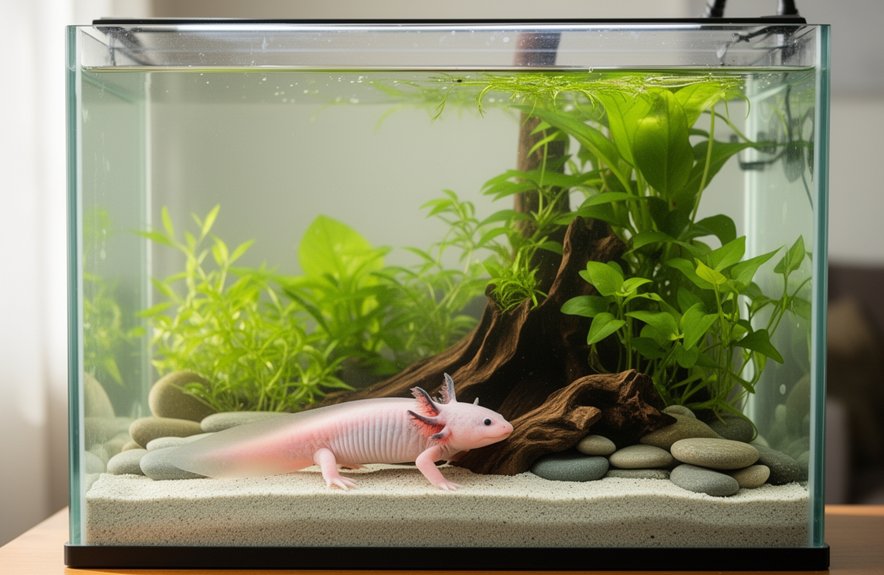
A live plant axolotl tank works best with hardy choices such as java fern, anubias, hornwort, java moss, and marimo moss balls, since they handle cool water and low light with less fuss.
Anubias and java fern are usually tied to driftwood or smooth rocks, because burying their rhizomes can cause rot, and axolotls are not exactly gentle gardeners.
With sand or a bare bottom, plus a few root tabs and anchored plants, the setup stays safer, neater, and easier to keep in place.
Hardy plant choices
Live plants can give an axolotl tank a softer, more natural look, and the best choices are the tough ones. Java fern and Anubias fit well for substrate free planting, while low maintenance propagation makes them easy to share or replace.
- Java fern attaches to wood or rocks, and stays happy in cool water.
- Anubias has sturdy leaves and should sit above the substrate.
- Hornwort floats, shades the tank, and helps with nitrates.
- Java moss and marimo add cover, while cryptocoryne grows slowly, but still joins the team.
Moss and Fern Setup
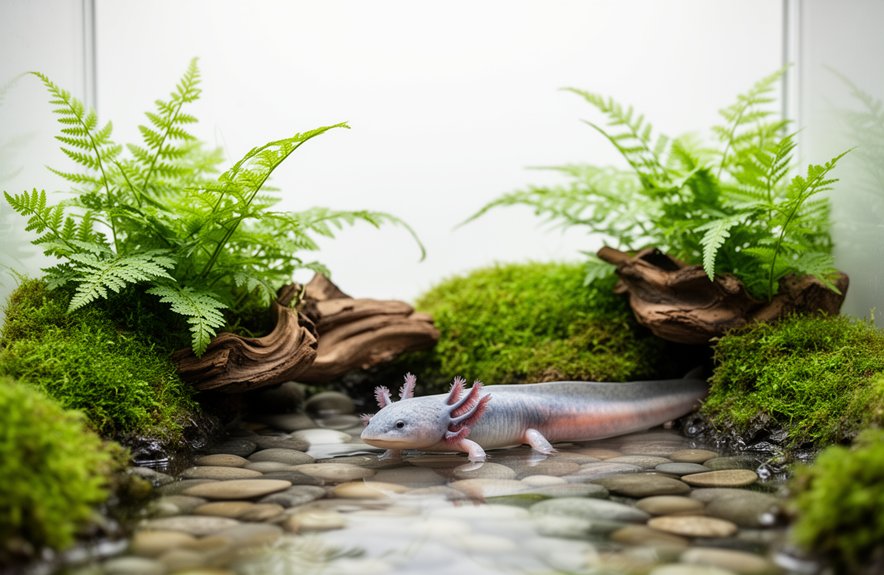
For a moss-and-fern setup, cold-tolerant, low-light plants are the safest bet, and java moss plus java fern fit that role well because they handle 60–68°F water and the dimmer light axolotls prefer. A moss wrapped cork can stay snug in place, while a fern tiered display on driftwood or smooth rock, secured with thread or superglue gel, keeps roots anchored. Marimo balls work as gentle accents on fine sand, and sheltered planting zones help foliage survive burrowing. New plants should be rinsed, quarantined, and checked for decay, because nobody wants surprise ammonia.
Open Space Swimming Tank
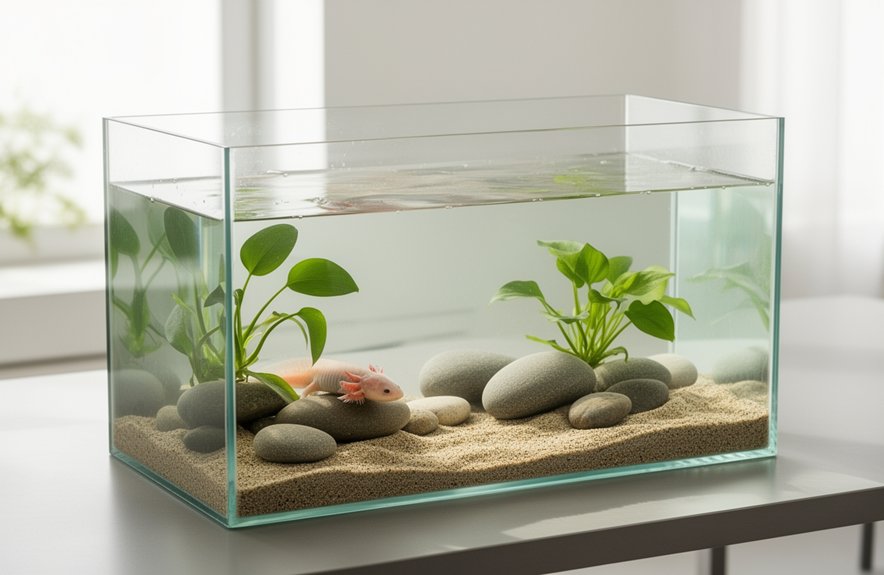
Open swimming room matters in an axolotl tank, because these animals like to glide more than they like to climb. A 20–40 gallon long tank gives one adult axolotl generous horizontal lanes and calm, unobstructed swimming, which feels orderly and welcoming.
- Keep 60–70% of the floor open.
- Use bare bottom or fine sand, never gravel.
- Place rocks, driftwood, or pots along the back and sides.
- Choose gentle flow, then add a little floating shade.
This layout stays simple to clean, keeps movement easy, and leaves the center open, like a tiny aquatic hallway.
Blackwater Style Axolotl Tank
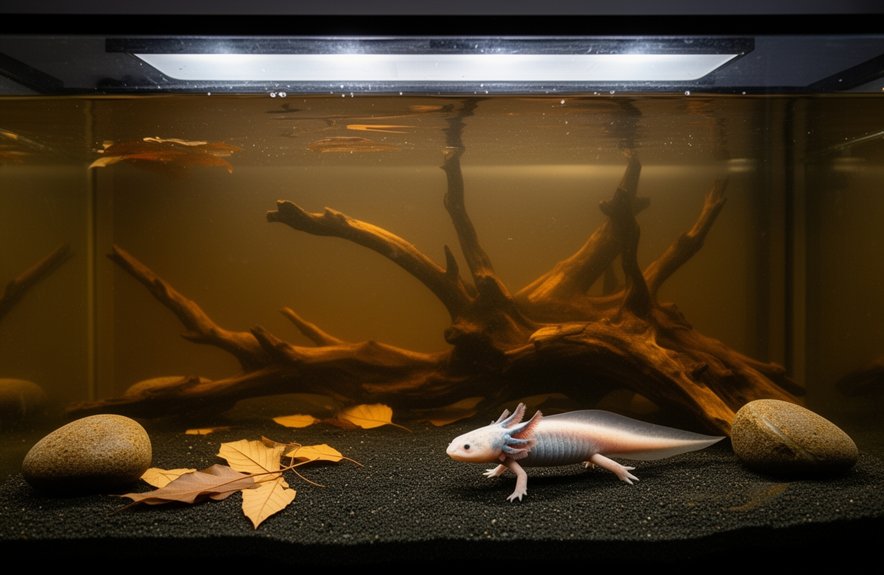
A blackwater axolotl tank can give the setup a soft, natural look, with amber-tinted water, smooth driftwood, and gentle shadows that feel calm rather than crowded.
Simple decor like river rocks, terracotta hides, and a few floating plants helps the tank look earthy while still giving the axolotl places to rest.
With low light and careful water care, the result is a peaceful habitat that looks close to nature without trying too hard.
Soft natural look
A blackwater glow can give an axolotl tank a soft, natural look, with tea-colored water that feels closer to a cool woodland stream than a bright aquarium. Soft lighting and muted textures help the scene feel calm, and many keepers like the shared, easygoing feel it creates.
- Use Indian almond leaves or driftwood for gentle tannins.
- Keep water cool, about 60–68°F, with low flow.
- Choose fine sand or a bare bottom, plus caves.
- Add Java fern, anubias, or marimo balls for simple green balance.
Weekly care and clean, treated décor keep the setup safe and welcoming.
Large Hide + Simple Decor Layout
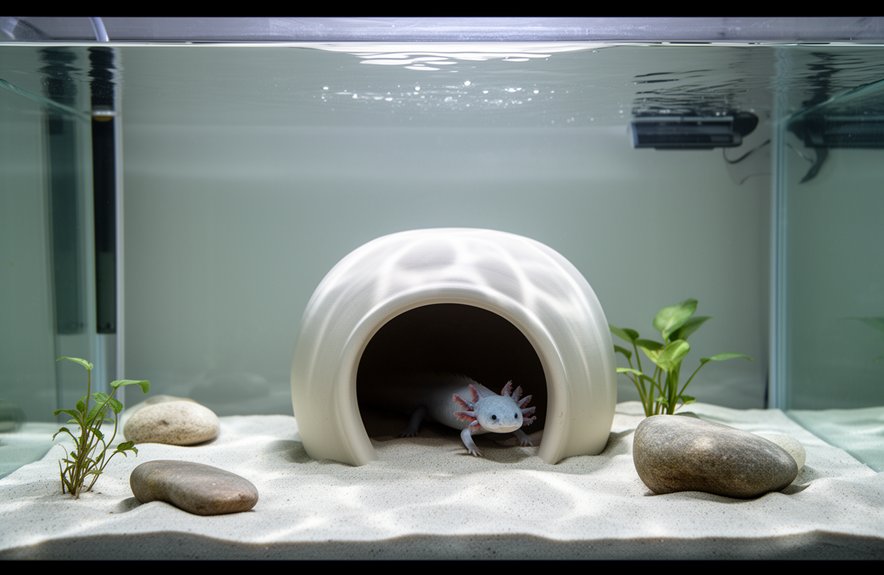
For a calm, axolotl-friendly setup, the best starting point is one large hide that fully fits the animal, such as a smooth terracotta pot or PVC pipe, with the opening facing an open swimming lane so the axolotl can slip in and out without fuss. That entrance orientation helps reduce stress signals and gives a clear retreat.
Place the hide off-center on fine sand or a bare bottom, then keep decor simple, with one soaked driftwood piece and one or two low-light plants, like java moss or anubias. Leave half the floor open, add gentle filtration, and keep water cool.
Frequently Asked Questions
What Else Can I Put in a Tank With an Axolotl?
Safe additions include live plants, hide caves, and smooth décor. A bare-bottom or fine sand setup works best. Gentle filtration, no sharp items, and secure, aquarium-safe pieces help the axolotl feel comfortable and included.
Can I Decorate My Axolotl Tank?
Yes—an axolotl tank can be decorated with naturalistic décor for sensory enrichment, as long as everything is smooth, aquarium-safe, and low-profile. One hide per axolotl, fine sand or bare bottom, and gentle plants help them feel secure.
Conclusion
A well-planned axolotl tank often looks simple for a reason, it puts the animal first. One keeper once said their favorite setup was “like a calm lake with a few good hiding spots,” and that image fits well. Whether the tank uses sand, rocks, or open swimming space, the best designs feel steady, clean, and easy to live in. In the end, a safe tank is the prettiest one, even if the axolotl does most of the decorating.