Anyone who has watched a shrimp bulldoze a new stem plant knows a tidy tank can unravel fast. These 13 planted aquarium ideas start with easy wins: low-tech tanks with Anubias and Java fern, jungle layouts with Cryptocorynes, or a calm minimalist scene. Use gentle light, 6–8 hour days, and weekly water changes. Tie epiphytes to wood, keep open space, and trim early. The lushest tanks often hide one surprising trick at the end here.
Disclosure: This post may contain Amazon affiliate links, at no extra cost to you. Content on Pawtangle is created with research support from AI tools and carefully reviewed, edited, and fact-checked by the lead author, Dr.Fahri Pat , to ensure accuracy and reliability. Learn more
Key Takeaways
- Choose low-tech plants like Anubias, Java Fern, Bucephalandra, Cryptocorynes, and mosses for lush growth with modest light and easy care.
- Use epiphytes on driftwood or rocks, and plant Cryptocorynes midground to create depth in jungle and mixed layouts.
- Keep lighting gentle at 6–8 hours daily to reduce algae and support low-tech, nano, and carpet-style aquascapes.
- Build strong compositions with slopes, open negative space, and simple focal hardscape for minimalist, nature aquarium, island, or Iwagumi designs.
- Maintain weekly water changes, regular pruning, and a small cleanup crew like Neocaridina shrimp to keep the tank healthy and tidy.
Low Tech Planted Tank
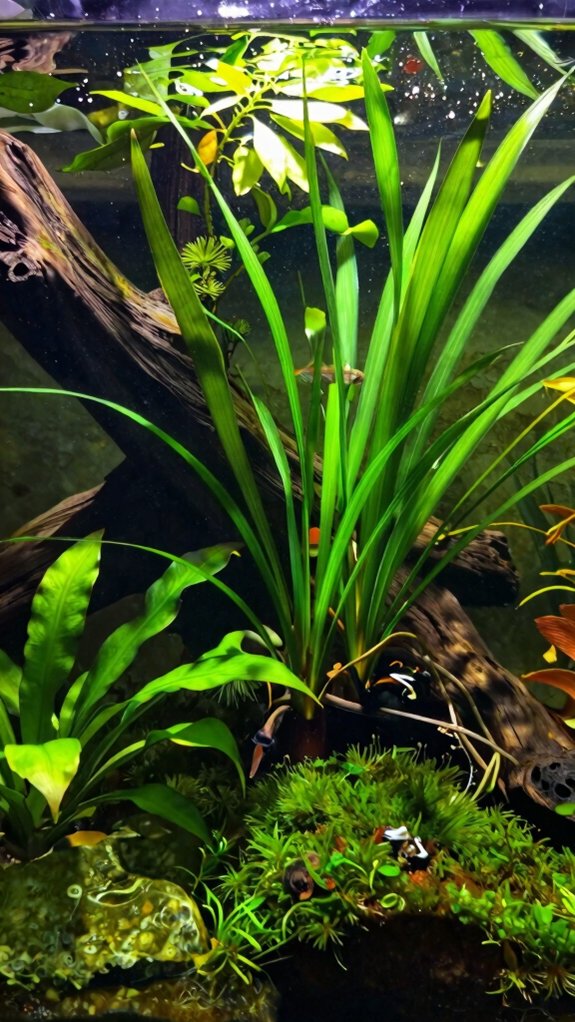
When a fish tank starts turning into an algae mess, it usually means the lights are too strong or the care routine is trying too hard. A low tech planted tank stays calm by using Anubias, Java Fern, Bucephalandra, Cryptocorynes, and mosses under modest light. This low maintenance aquascape asks for 15–25% weekly water changes, gentle feeding, and a short photoperiod. It feels safe for pets and easy on wallets. After the nitrogen cycle finishes, hardy shrimp and small fish help keep microfauna balance. The smartest trick comes last: rinse filter media in tank water, not tap, to protect helpful bacteria.
High Tech CO2 Aquascape
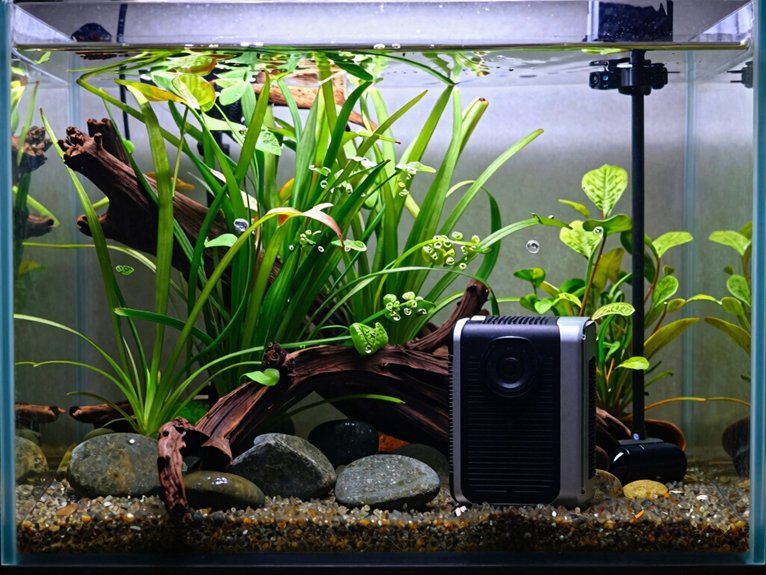
When a curious pet knocks a leaf or two out of place, a high tech CO2 aquascape can rebound quickly because the plants grow fast and fill in gaps before they become a bigger problem. With strong light, steady CO2, and rich nutrients, carpeting plants and stems often race upward so fast that weekly trimming becomes part of the routine. That quick growth can look amazing, and it also means the tank needs careful attention so the underwater garden stays neat instead of turning into a green jungle.
Fast plant growth
A busy aquarium can feel a lot like a house pet with zoomies: the fish look happy, the plants start reaching for the light, and then—just like a cat knocking a cup off the table—things can get messy fast if the balance is off.
- Pressurized CO2 keeps stems fed.
- Strong light helps carpets race upward.
- Daily nutrients stop hungry gaps.
- Weekly water changes and rapid trimming keep the crew safe.
CO2 monitoring and steady flow matter most, because dense growth fails when bubbles or current drift. Trim early before the tank shades itself and algae moves in fast again.
Jungle Style Aquarium
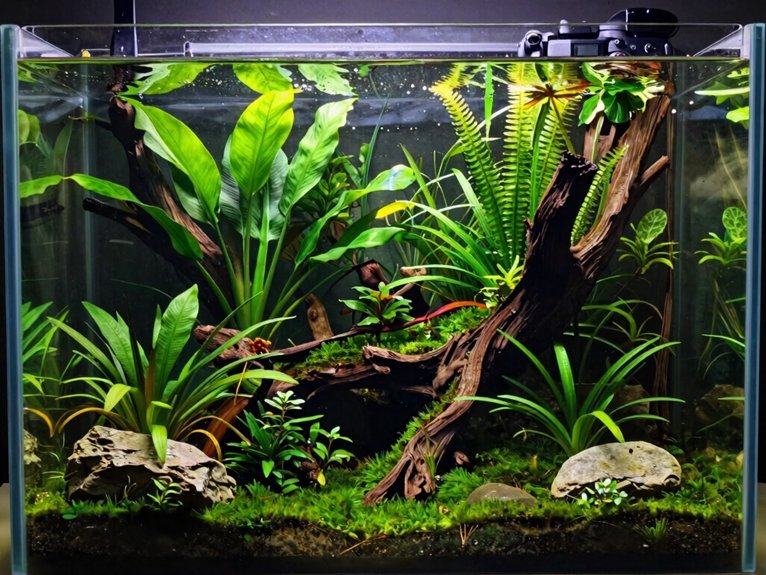
The trick is to make the tank look untamed without letting it turn into a mess. Jungle-style aquariums do that with sloped substrate, tall background plants, and midground Cryptocorynes that feel like a tiny forest. Hardy epiphytes such as Java fern, Anubias, Bucephalandra, and moss can cling to driftwood and rocks, giving overgrown hardscape and canopy pathways without demanding much CO2 or fertilizer. Small tetras, rasboras, and Neocaridina shrimp stay calm in the cover, while low light, six-hour days, and weekly trims keep algae from stealing the mood. That balance keeps the tank welcoming, wild, and easy for beginners.
Dutch Style Planted Tank
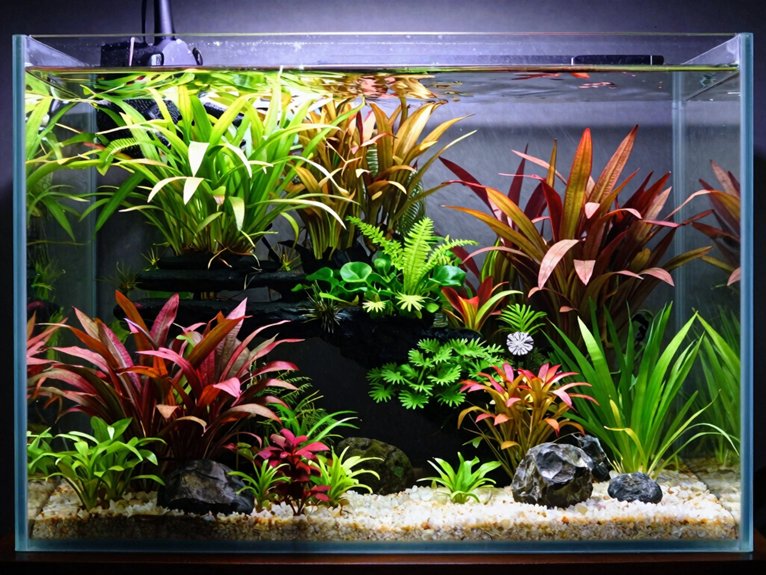
It works best with lots of stem plants and carpets, often using only a few main species in big groups so the colors and leaf shapes really pop; think Rotala, Ludwigia, and a low carpet like Hemianthus or Staurogyne. In Dutch style, dense beds and color zoning create a garden feel.
- High light
- CO2 and nutrients
- Weekly water changes
- Seasonal pruning
It usually stays safe for pets with a tight lid, though curious paws still test the glass. Trimming every one to two weeks keeps lines sharp, and new growth fills gaps like a fresh bouquet.
Iwagumi with Carpet Plants
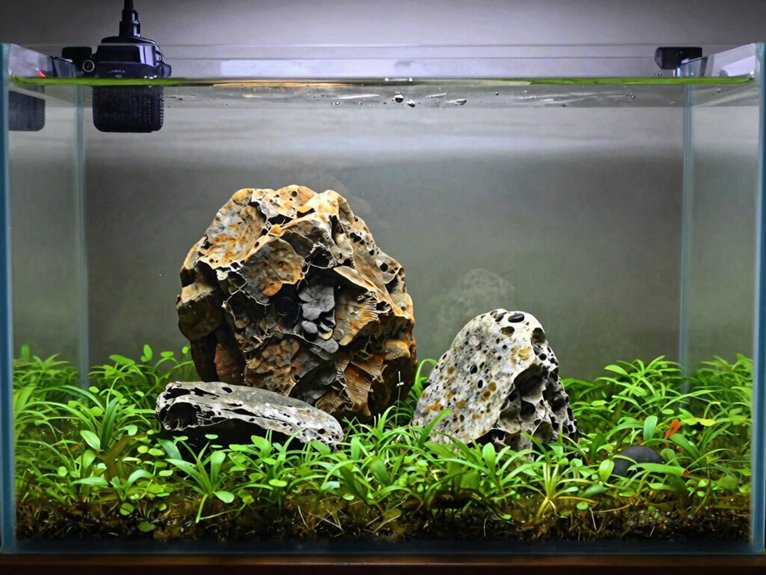
When a curious pet taps the glass and steals the spotlight, an Iwagumi with carpet plants brings the focus back to a calm, rock-led scene in the planted aquarium. The style uses just a few stones, with one main Oyaishi stone acting like the anchor, while a low carpet keeps the foreground neat without stealing attention from the rockwork. With careful trimming and open space around the main stones, the tank keeps its clean, minimal rock focus and still looks full of life.
Minimal rock focus
- Use odd stones.
- Plant dense carpet.
- Keep light gentle.
- Choose tiny fish or shrimp.
A sloped back, low front, and stable CO2 help the scene feel deep. The surprise: fewer rocks often looks richer for calm, welcoming balance in shared spaces daily.
Driftwood Planted Layout
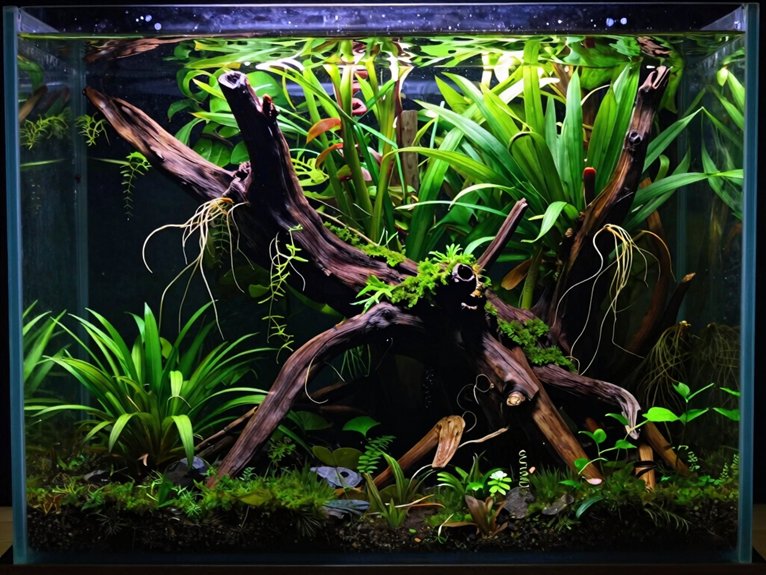
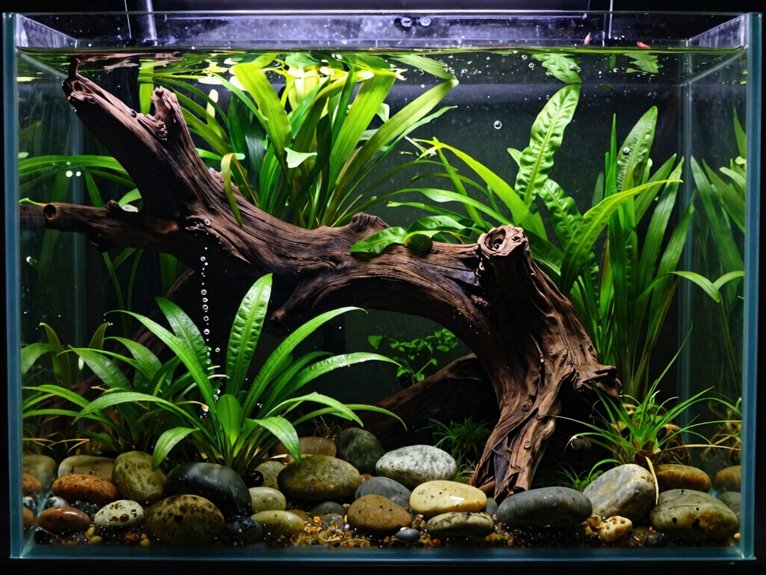
A driftwood planted layout can solve a familiar aquarium problem: a tank that feels flat, bare, or a little too perfect, like a pet who keeps ignoring the expensive toy and only wants the cardboard box. Here, a driftwood focalpoint of one to three pieces gives shape, and branches aim toward the back to make depth and shadow. Wood texture looks best when Java fern, Anubias, and Bucephalandra are tied with thread or glue, trimmed after four to six weeks. In setups, moss on 30% to 60% of wood and a 6 to 8 hour light schedule keep natural.
Nano Planted Aquarium
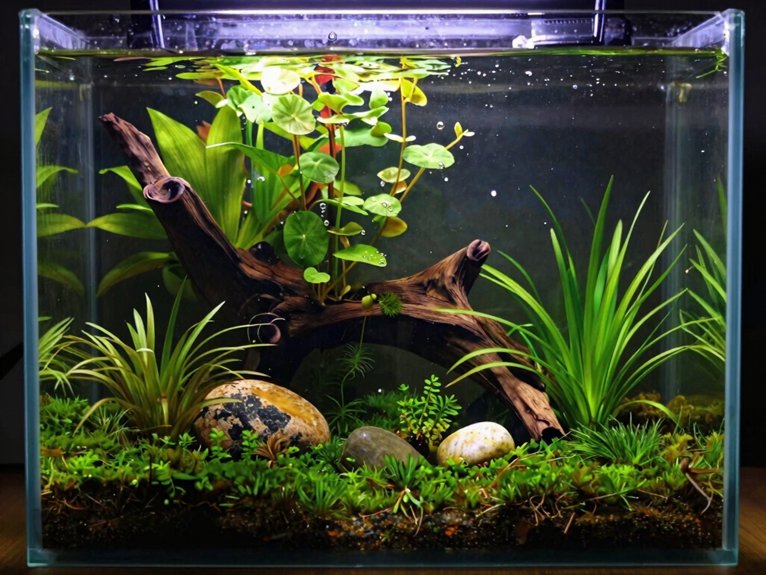
For the layout, a small stone or one piece of driftwood can do the heavy lifting, just like a single perch can make a whole bird cage feel complete. In a nano tank, calm wins: low-tech plants, light stocking, and weekly care keep neighbors happy and water steady.
- Choose Anubias, Java Fern, moss, or Cryptocoryne.
- Keep Neocaridina or a tiny school; shrimp care stays easier.
- Use gentle light for 6–8 hours; nano maintenance stays simple and algae stays shy.
- Change 15–25% weekly, and save the surprise: a sloped substrate makes the whole scene look bigger, like a secret room.
Blackwater Planted Tank
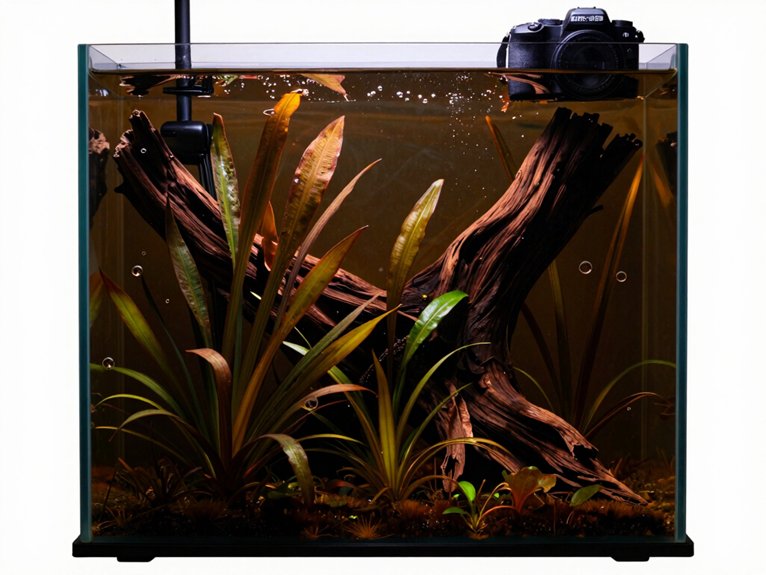
Many aquarium keepers know the surprise of a tank looking a little too plain, and a blackwater planted tank turns that into a rich, tinted natural look instead of a problem. The warm amber water, from leaves and cones, can make the plants and fish feel like they are part of a quiet forest stream. It often gives the aquarium a calm, secretive feel, and that soft color can become the very thing that makes the whole setup stand out.
Tinted natural look
The setup usually starts with driftwood, alder cones, or Indian almond leaves, which slowly release tannins and gently lower pH as the water buffer allows. That warm stain gives tinted aesthetics, and a calm school-fish feel. Good tannin management keeps the look soft, not muddy.
- Use inert sand and root tabs for heavy feeders.
- Pick Anubias, Java fern, Cryptocoryne, or Black Neon tetras.
- Keep light low, 6–8 hours, to curb algae.
- Change 15–25% weekly; carbon helps if tea color goes too far, but most aquarists keep the amber glow for a friendly, natural home that pets and people recognize.
Island Style Planted Tank
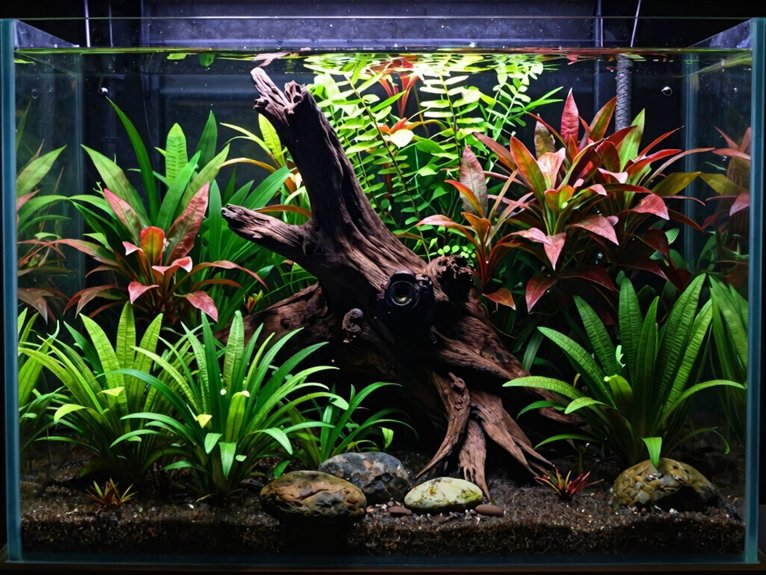
When a fish tank starts looking too flat, it can feel like a cat has chosen the middle of the couch and left everything else ignored—messy, odd, and somehow still charming. An island style planted tank fixes that with an island focalpoint built from driftwood, rocks, and raised substrate. The tallest plants sit at the center, then fade toward the sides, giving a welcoming shape. Bucephalandra, Anubias, Java Fern, and Cryptocoryne keep care low. Neon tetras or rasboras circle the mound, while shrimps add life. Shadow around the island makes the scene feel deep and calm for any home.
Foreground Carpet Focus Tank
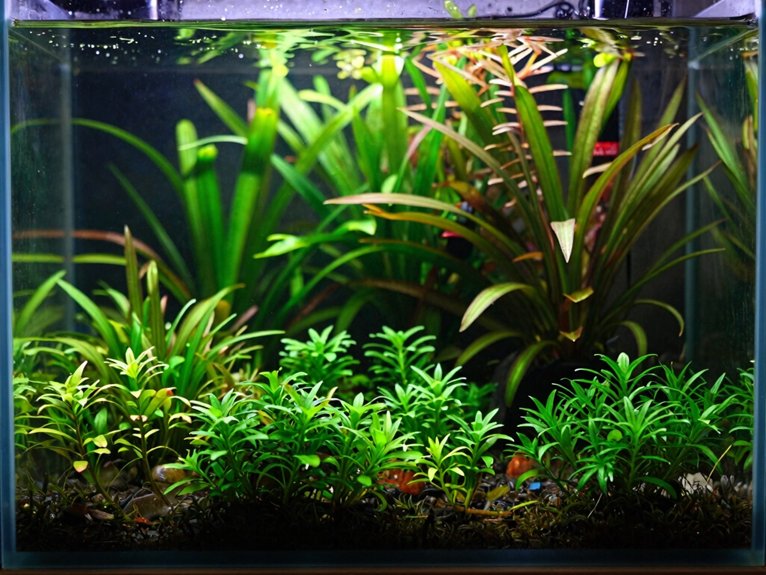
A careful setup helps that carpet stay neat instead of turning into a shaggy mess. In low light carpeting tanks, Micranthemum Monte Carlo or Eleocharis parvula can spread into a soft front edge that feels welcoming.
- Build a substrate slope.
- Plant plugs 1–2 cm apart.
- Use 6–8 hour light and weekly water changes.
- Trim early, before it crowds itself.
With fine substrate and 20–40 plugs, the foreground often reaches 60–80% coverage in months. Even shy fish seem calmer when the front stays open, tidy, and bright. That little discipline keeps the tank peaceful, and pets nearby usually ignore the glass.
Mixed Stem Plant Layout
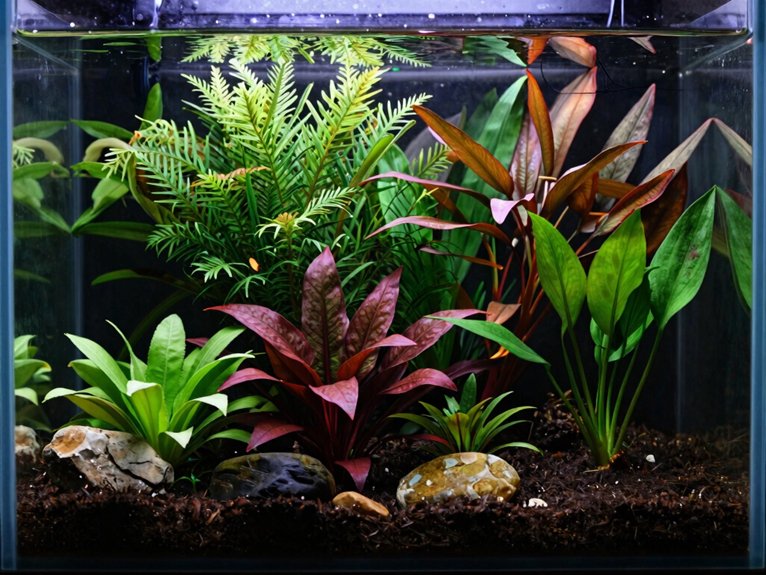
For a clean look, place stems in groups of 3–5, then trim them so the tallest growth sits at the back center or fades toward one side. Mixed stems like Rotala, Ludwigia, and Hygrophila give a tank bold height and friendly color shifts, while slower midground plants steady the scene. This tall stemwork movement style helps a scape feel welcoming, not crowded.
In low-tech tanks, choose hardy stems and keep a seasonal pruning rhythm with weekly water changes; remove about a quarter of overgrowth to curb algae. Fine leaves and broad leaves create depth, and the result looks settled.
Minimalist Planted Tank
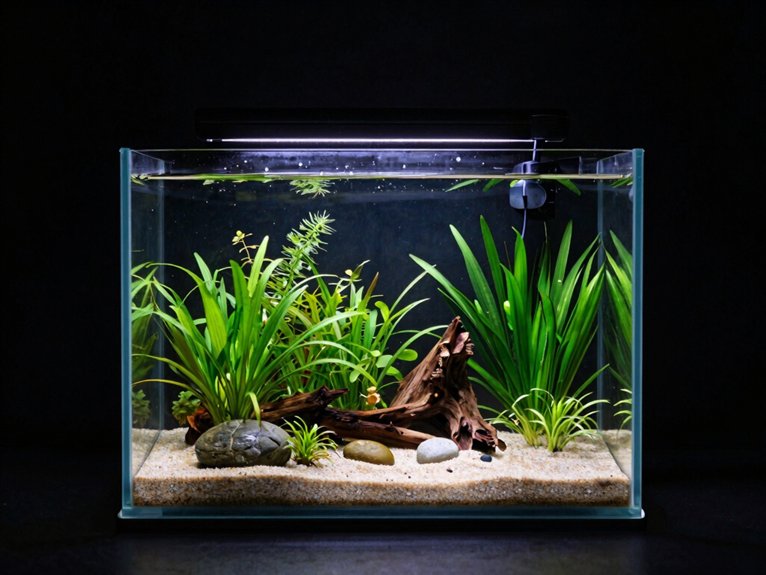
When a curious fish, shrimp, or even a nosy cat outside the glass seems to stir up chaos, a minimalist planted tank can feel like a calm little fix for the room. It uses clean open space, one simple focal piece, and just a few hardy plants, so the whole setup stays easy to care for and never looks crowded. The surprise is that this quiet style often looks best after a few weeks, when the open areas and gentle slope make the tank feel deeper and more peaceful than a busy layout ever could.
Clean open space
That usually means holding back on extras and choosing just one sculptural driftwood piece or a few well-placed stones, then keeping the front 30–50% of the tank footprint open. In a clean open scape, the negative foreground lets the eye rest, just like a cat finally settling after zoomies.
- Use 1–3 stones or one driftwood piece.
- Plant only 1–3 species, like Monte Carlo or dwarf hairgrass.
- Slope substrate higher in back for depth.
- Keep light moderate, with low fertilizer, so trimming stays easy. That keeps the tank calm, tidy, and welcoming for beginners and pets.
Nature Aquarium Style
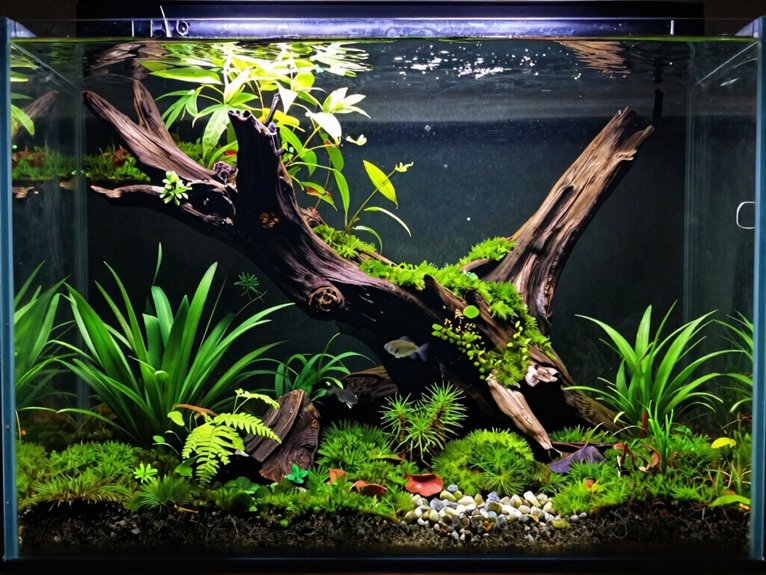
It works best when the hardscape is arranged a little off-center, not lined up like toy soldiers, and the planting stays simple so the open space can breathe. That is the Nature Aquarium style, where rocks, wood, and a few plants echo hills, valleys, islands, or a rainy forest. It often feels like a moss terrarium with biotope replication in mind, yet it still leaves room for the eye. A sloped substrate and smaller pieces in back add depth. One clear focal end, a few shadows, and one to three plant species keep the scene calm, balanced, and welcoming.
Frequently Asked Questions
How Often Should I Prune Aquarium Plants for Best Shape?
Most aquarium plants benefit from weekly trimming, with faster growers needing closer attention; this supports shape maintenance and keeps the scape feeling welcoming for everyone who enjoys a tidy, healthy, shared aquatic space together daily.
What Fish Species Help Maintain a Healthy Planted Tank?
Otocinclus catfish and amanoglo shrimp help maintain a healthy planted tank by grazing algae and cleaning debris. Peaceful schooling tetras, rasboras, and small livebearers can also fit, giving aquarists a welcoming, balanced community together.
How Do I Prevent Algae Without Harming Plants?
Algae is best prevented by balanced dosing, steady lighting, and targeted grazers, while the plants remain unharmed. With calm consistency, the tank community thrives, and everyone feels part of a healthier, shared underwater home together.
Which Substrate Works Best for Long-Term Plant Root Growth?
Aquarium soil, like dark river bed earth, works best for long-term root growth; it stays nutrient rich and porous. For extra support, root tabs nourish heavy feeders, helping plants settle in and thrive together beautifully.
How Much Light Do Planted Aquariums Need Daily?
Planted aquariums typically need 6–8 hours of light daily, with ideal intensity matched to plant type. Careful photoperiod timing helps the tank stay balanced, so aquarists can feel included in a thriving, shared hobby successfully.
Conclusion
A planted aquarium can turn an ordinary room into a calm, living scene, much like a cozy window garden under water. From low-tech setups to bold Dutch layouts, each style gives fish room to move and plants room to shine. The best tank is the one that fits time, budget, and care level. With steady attention and a little patience, the result feels fresh, peaceful, and rewarding every single day.