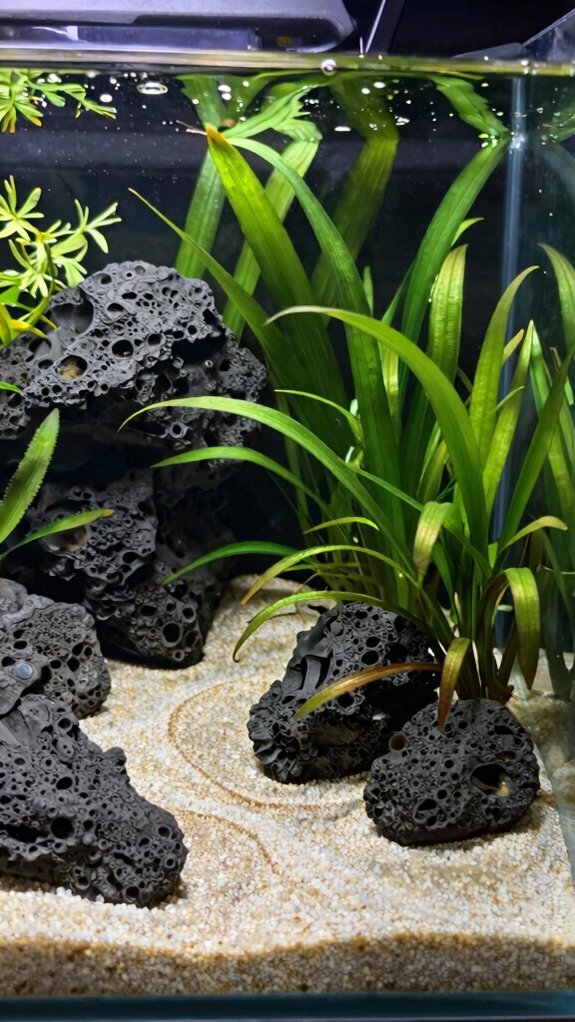
Midnight zoomies can ruin a pretty tank fast. Dr. Pat says a sand path aquascape works best when the layout comes first: sketch a gentle curve, place rocks and wood as borders, then add a thin, rinsed sand strip over a compacted base. Keep the center shallow, plant carpets beside it, and pour water slowly so nothing shifts. That leaves a clean river look, easy upkeep, and one sneaky trick waiting just ahead for now.
Disclosure: This post may contain Amazon affiliate links, at no extra cost to you. Content on Pawtangle is created with research support from AI tools and carefully reviewed, edited, and fact-checked by the lead author, Dr.Fahri Pat , to ensure accuracy and reliability. Learn more
Key Takeaways
- Sketch the layout first, choosing a curved S-shaped sand path with a clear focal hardscape and room for maintenance access.
- Build a stable substrate base with aquasoil in planted zones, leaving the path area free for fine sand.
- Place and secure rocks and driftwood first, burying bases to form natural edges and prevent landslides.
- Add thin, rinsed fine sand slowly, tapering the path wider in front and narrower toward the back for depth.
- Plant carpets and background stems around the path, keeping crowns visible and roots anchored in nutrient-rich soil.
What Is a Sand Path Aquascape
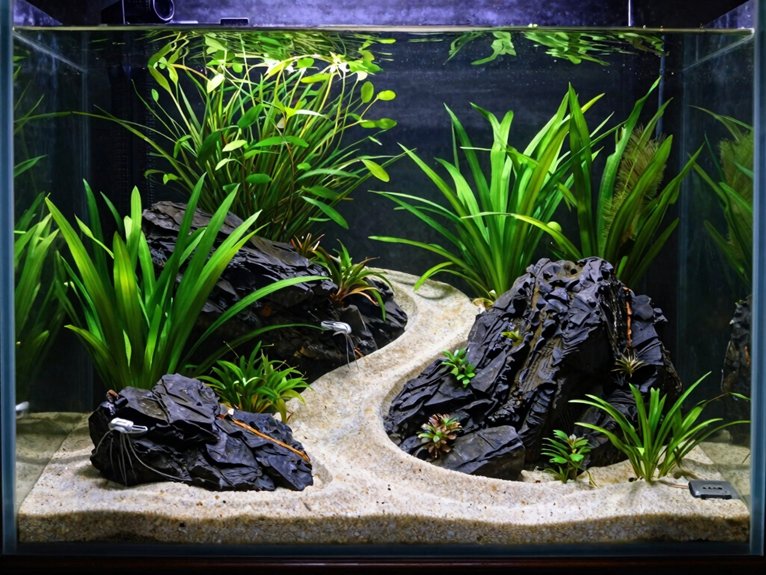
A tank can look a little like a room after midnight zoomies: plants bent, gravel kicked around, and one “perfect” spot somehow ruined by a determined little digger. A sand path aquascape is a planted tank design with a clear strip of fine sand that reads like a trail, riverbed, or shortcut. Dr Pat notes that careful substrate composition creates depth: deeper material behind hardscape, shallower sand in front. Gentle edge blending and stone accents help it feel natural. In habitat behavior, burrowing fish and shrimp will shift the path, and that is normal microfauna interactions, not failed layout.
Materials You’ll Need
A sand path aquascape starts with the right basics: a tank, fine sand for the path, and aquasoil for the planted areas. Rocks and driftwood help shape the route, while stainless tweezers, scissors, and a small substrate rake make the job cleaner and much less messy. With those materials ready, the layout can stay smooth, natural, and sturdy instead of turning into a mini landslide.
Aquarium tank (any size)
Under the glow of a tank light, Dr. Pat says a sand path looks best in a longer aquarium, where the eye can travel like a midnight zoomies run. I pick 60 cm for small rooms or 90 cm when the plan needs drama, then check tank maintenance, lighting placement, and a level stand before anything else.
- Longer tanks frame friends well
- Short tanks still work
- Roomy glass eases cleaning
- Flow stays gentle
- Belonging begins with a clear path
The surprise win: space left at the front keeps the scene calm, even when a dog noses nearby tonight inside.
Aquasoil (for planted areas)
Mud prints on the floor and a nosy cat pawing at the tank usually mean the hardscape is about to get rearranged, so Dr. Pat recommends aquasoil for planted zones. It gives rooted plants long-lasting nutrition and strong nutrient buffering, often for months without extra fertilizer. A 3–6 cm layer works well; deeper around large stems or heavy wood. For better water flow and less compaction, many keep Energy Sand or pumice underneath. Lightly rinse only dusty soil, then place it wet. Its rich surface also supports microbial colonization and a natural, steady start for welcomed fishkeeping confidence and cleaner visuals.
Fine sand (for the path)
When a curious cat decides the aquarium lid is a runway, or a fish tank gets nudged during midnight zoomies, the path can be the first thing to go crooked. I’m Dr. Pat, and I keep it simple: choose fine, inert aquarium sand with grain uniformity, rinse until clear, and lay a thin layer for easy sand compaction. The color should pop beside darker substrate so everyone sees the lane and feels proud of the scape.
- 0.1–0.5 mm grains stay smooth.
- 1–2 cm suits most paths.
- 3–4 cm adds slope.
- Rake lightly later.
- Avoid deep sand over roots gently.
Rocks and/or driftwood
A sand path can look perfect one minute and crooked the next, especially after a cat leaps onto the tank lid like it is a tiny catwalk. Dr. Pat says heavier angular rocks suit crisp edges, while driftwood brings softer curves and visual storytelling. Each base should touch the substrate so midnight zoomies do not cause a landslide. Scale matters: one main piece, then smaller companions, for a believable scene. Porous rock and wood may need deeper sand, rinsing, soaking, or anchoring. Placed before the final slope, they reduce maintenance concerns and help the path feel like home too.
Aquascaping tools (tweezers, scissors)
The long tweezers are best for slipping carpeting plants into place and tucking stray grains back along the path edge. “I want the sand to look calm, not like I wrestled it,” Dr. Pat says. Keep maintenance tweezers for tight spots, and use curved scissors for neat outside-tank trims. An ergonomic grip helps during late-night touchups after midnight zoomies. Tool maintenance matters: rinse, dry, store. A sand flattener and gentle siphon finish the job, so everyone feels at home along the path.
- Tweezers
- Scissors
- Flattener
- Siphon
- Maintenance matters daily
Small choices keep the path neat, safe, and welcoming too.
Plants (carpet + background)
Midnight zoomies can turn a neat aquascape into a tiny disaster zone, and Dr. Pat knows that plant selection matters. For the carpet, choose HC or Eleocharis in small plugs beside the sand path, with roots touching nutrient-rich soil under a thin sand cap. For the background, pick Rotala, Ludwigia, or Hygrophila that handle trimming and grow tall behind the path. Use tweezers, not fingers. Good nutrient management keeps both layers steady, crisp, and welcoming, so the scene feels polished instead of wild. The surprise tip: keep stems away from loose sand, or they may wobble like chewed-up toys.
Optional: CO2 system
For most hobby tanks, that setup usually means a pressurized CO2 cylinder, a regulator with a solenoid for timed control, a bubble counter, and an inline check valve so water stays where it belongs. Aim 20 to 30 mg/L; drop checker monitoring with 4 dKH keeps the path steady.
- Place diffuser upstream of the sand path.
- Gentle flow spreads bubbles and protects carpet roots.
- Keep KH near 3 to 5 dKH and lighting steady.
- Liquid CO2 can help, but it is less stable.
- The biggest win is fewer algae blooms and calmer plants for everyone learning the method today.
Step 1: Plan Your Layout
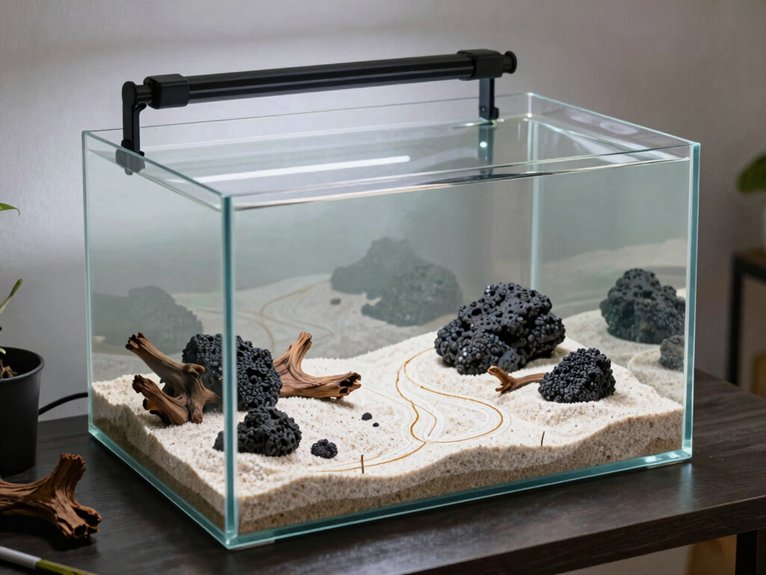
Before a single grain of sand is poured, Dr. Pat sketches the tank, sets the focal point, and lets lighting design and fish selection guide the flow.
| Plan | Why |
|---|---|
| Focal point | Keeps eyes on the main feature |
| Sand path | Gentle S-curve feels natural |
| Planting zones | 3–6 cm depth supports roots |
| Maintenance | Leave trim and rake access |
Coarser gravel or aqua soil in planted pockets makes the sand read brighter, while smaller rocks near the path keep the scene steady. Dr. Pat leaves room for heavy-rooted stems and bottom-feeder traffic, so the layout looks calm, easy to care for, and welcoming.
Sketch a curved or diagonal sand path. Avoid straight lines for a more natural river-like look
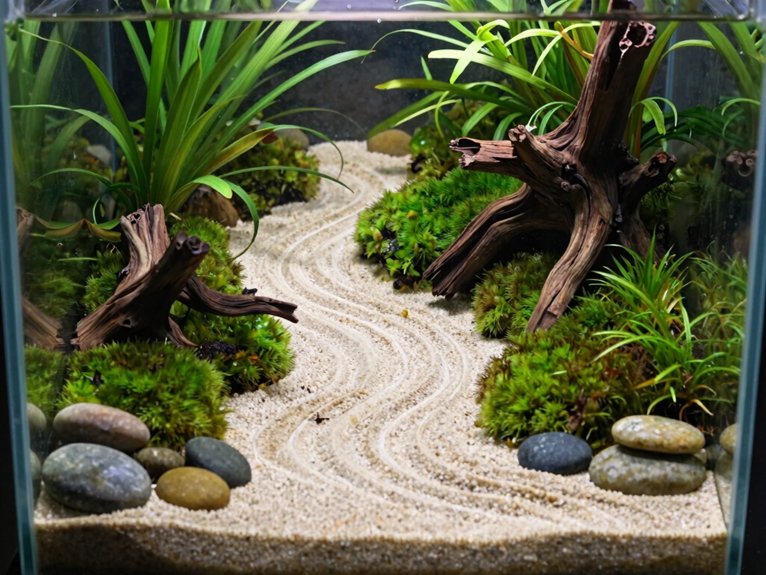
That small choice does a lot of work. A curved or diagonal sand path feels like a river that settled over time, not a ruler. Freehand gentle S-curves and taper the width from front to back for depth. Break the boundary with irregular edges, plus larger stones near the hardscape and smaller gravel toward the sand. Think river fossils and bank vegetation, not lines.
- wider at front reads natural
- thinner back adds distance
- soft slopes hide seams
- broken edge feels woven
- erosion pattern guides eyes like familiar river paths
Step 2: Add the Base Layer
Anyone who has watched a pet send a toy skittering under the couch at 2 a.m. knows the same problem shows up in aquascaping: if the bottom layer is loose or thin, everything above it starts to slide. Dr. Pat would lay 2–4 cm for carpeting plants, or 4–8 cm for rocks, using nutrient-rich aqua soil over a stable pumice base.
| Layer | Job |
|---|---|
| Pumice | Stops compaction |
| Aqua soil | Feeds roots |
| Gravel | Supports slopes |
| Fine top | Smooths the path |
That mix improves substrate chemistry and root oxygenation.轻轻压实, then slope it.
Place aquasoil on both sides where plants will grow. Leave the center empty for the sand path
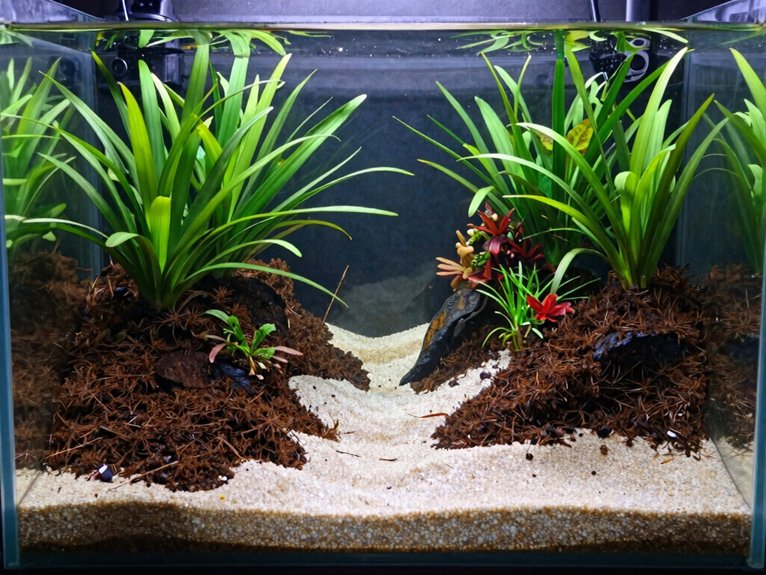
When a cat launches a toy into the one spot nobody can reach, Dr. Pat notes that aquasoil belongs on both sides, 5–7cm deep, while the center stays empty for sand. Raise the rear slightly for slope and depth. Keep path width modest so plants stay dominant. Gently compact substrate around wood and rock bases. Use edge planting to frame the lane. Dense foreground roots help hold sand during changes. This gives newcomers a calm, clear layout and fewer midnight messes later, like chewed-up toys and stray gravel.
- Belonging grows
- Balance settles
- Roots spread
- Edges hold
- Confidence follows now
Step 3: Create Barriers
The sand path aquascape can look perfect one day and fuzzy the next, usually after shrimp start “helping” by pushing sand where it does not belong. To keep the scene calm, Dr. Pat suggests buried rocks, flat slabs, and thin ridges of compacted substrate at the borders. Coarser gravel can form subtle substrate edging, while overhanging driftwood or stones gently guide fauna interaction away from the path. After placement, a light tamp with a sand flattener helps lock everything in. Behind the barrier, marginal stems root in and add extra grip, like a loyal crew holding the line there.
Use small stones or hidden dividers to keep soil and sand from mixing over time
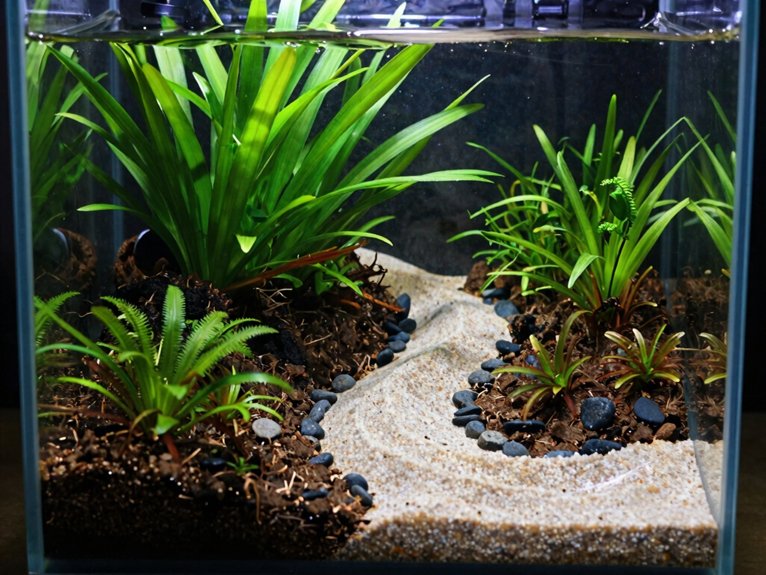
Midnight zoomies have a way of turning a neat aquascape into a tiny sand storm, and Dr. Pat knows that hidden edging saves the day. A thin mesh, pebbles, or slate strips create a capillary break, keeping soil from creeping in.
- Mesh under the border blocks mixing.
- Pebbles make a calm, neat wall.
- Slate strips stay tucked and steady.
- A shallow trap catches stray bits.
- Anchors keep hidden edging secure.
Anchored against stones, these dividers stay safe, cheap, and calm; shrimp may dig, but the path still looks like home, not a buffet spill for everyone nearby too.
Step 4: Add the Sand Path
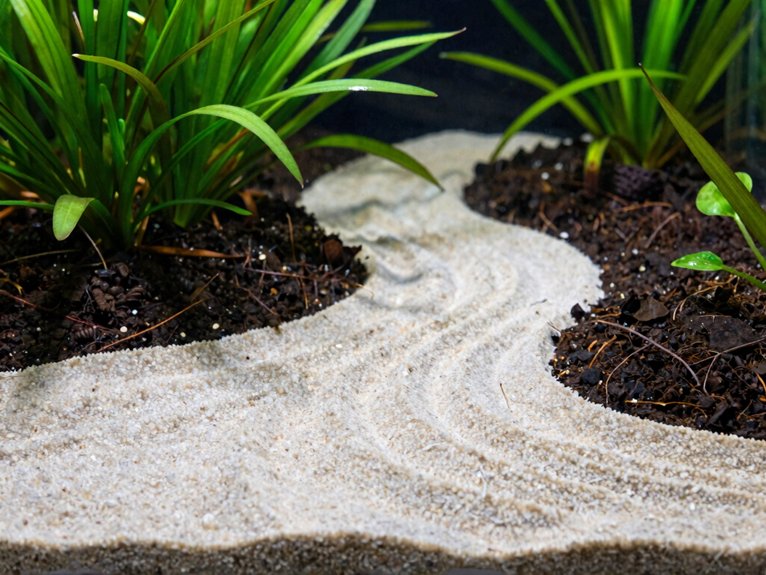
After a long night of midnight zoomies, even a tidy tank can look like a tiny beach got hit by a sand cannon, and Dr. Pat knows the fix starts simple. A thin 2–5 mm layer of fine sand is set with a small scoop, then flattened with a ruler or sand tool so the trail stays crisp and slightly raised at the edges. Choosing a grain size and color that contrast the gravel helps under lighting effects. Tweezers and a soft brush keep hardscape clean, and maintenance routines later can tidy any stray grains without ruining the slope or cozy look either.
Carefully pour fine sand into the center path area. Shape it into a gentle curve
That slow pour matters. Fine, rinsed sand with small grain sizegradation flows from a low height, keeping water clear and the aquarist calm. It lands in the center line, then bends into a soft S-curve, like a familiar trail pets follow at midnight zoomies.
- Keep the layer 3–10 mm.
- Hold width steady for balance.
- Feather edges for belonging.
- Press lightly for sand compaction.
- Expect less drift, less mess.
The result feels safe, natural, and easy to care for, so new members of the hobby can relax, smile, and trust the path will hold through busy weeks with less stress.
Step 5: Place Hardscape (Rocks/Driftwood)
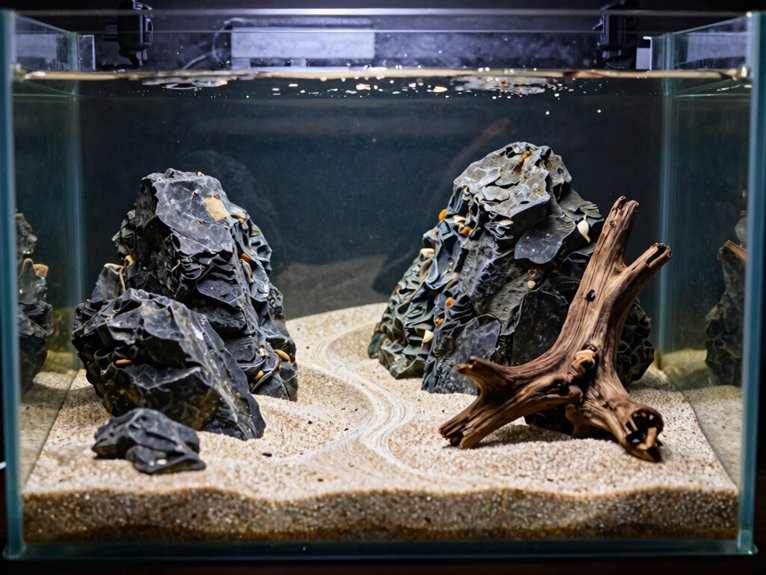
A sand path aquascape can look perfect one minute and messy the next if the hardscape is dropped in without a plan. Large rocks go first on a level base, pressed gently so rock stability can be tested before anything else shifts. Deeper substrate behind them helps anchor the stack, while finer sand may need a hidden layer of heavier gravel underneath to stop sinking. Next, driftwood is angled to support wood orientation and guide the eye toward the path, not compete with it. Mixed sizes should step down naturally, giving the scene a calm, welcoming feel for everyone.
Position rocks or wood along the edges of the sand path to define the flow and add depth
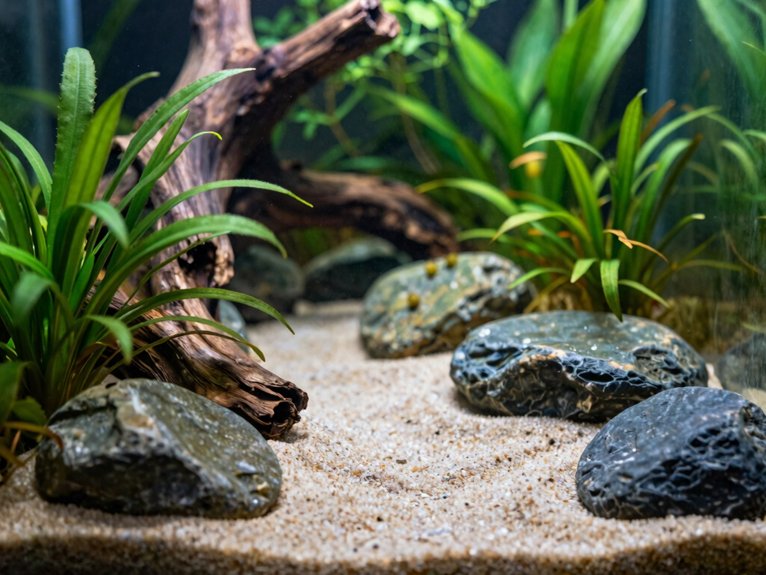
Ever watch a pet turn a tidy setup into chaos in ten seconds flat? Dr. Pat says edge rocks and wood should sit along the sand path, not in it, to guide the eye. He spaces larger pieces near the entrance, then smaller ones toward the center for forced perspective. Substrate-safe edge anchors—partly buried bases or driftwood ends—keep everything steady. Dark stone beside pale sand sharpens the flow, while soft mossy gaps tame the border. That balance feels calm, safe, and shared for everyone at home.
- Start large
- Tighten forward
- Bury bases
- Contrast colors
- Blend gently
Step 6: Plant the Aquarium
Step 6 is where the sand path aquascape starts to feel alive, with carpet plants like Monte Carlo or dwarf hairgrass planted tightly in the foreground for a soft, finished edge. Small bushy plants can fill the midground, while taller stems in the background add depth and help the scene look natural instead of flat. A dense layout also makes the hardscape blend better, so the sand path stays clean and framed like a clear trail through a tiny underwater garden.
Foreground: carpet plants (Monte Carlo, dwarf hairgrass)
The real surprise comes after planting: a very light water flow and a gentle press with an aquarium sand flattener can help the roots grab hold, but overpacking the sand is a classic mistake that slows growth.
- Monte Carlo: 1–2 cm spacing.
- Hairgrass: 1–3 cm spacing.
- Keep crowns at the surface.
- Match fertilizer to the substrate.
- Stronger lighting intensity and substrate additives support faster fill-in.
A carpet tool and stainless tweezers place each tuft neatly, and a quick trim later keeps the foreground low, tidy, and welcoming, like the best kind of pet hair control after midnight zoomies end.
Midground: small bushy plants
When a sand path keeps getting invaded by little green tumbleweeds, Dr. Pat reaches for compact midground bushes. I like Staurogyne repens and Cryptocoryne wendtii; both stay low, neat, and friendly to the border.
| Plant | Best use |
|---|---|
| Staurogyne | Bushy clumps |
| Cryptocoryne | Soft tufts |
| Hemianthus | Stunted bunches |
Plant 3–5 clumps, 2–3 cm apart, with tweezers 1–2 cm deep. Gentle pressure keeps sand edges tidy. A little root tab helps. Trim often; staurogyne propagation stays easy, and cryptocoryne competitors never crowd the path. Midnight zoomies optional. Chewed-up toys stay outside the tank, and the result feels calm, natural, and shared for everyone.
Background: taller plants for depth
A sand path can look perfect in the morning and be half-buried by evening, especially after a burst of midnight zoomies in the tank.
- Rear plants build depth
- Side plants frame the path
- Stagger clusters, avoid straight rows
- Use tweezers for secure roots
- Mix reds and greens for contrast
Place Hygrophila, Ludwigia, and Rotala behind the path, using plant spacing that feels loose, not stiff. A back slope of 2–4 cm helps roots settle. Stagger clusters, trim often, and use tweezers to anchor stems 1–2 cm deep. Red tips behind green stems add color contrast, guiding the eye home.
Step 7: Fill with Water Slowly
Right after a pet kicks litter halfway across the room at 2 a.m. or sends a chew toy skidding under the couch, Dr. Pat reminds aquascapers that filling etiquette matters. Slow water keeps the sand path intact, protects water chemistry, and helps the tank look calm from the start.
He recommends a hose or pitcher with a sponge end, adding about 1–2 liters per minute. Stop near the hardscape top, fix any shifted sand or rocks, and watch for cloudiness.
When the tank is almost full, pour along the walls; the quiet result is a steady, confident scape for everyone.
Pour water gently (use a plate or plastic bag) to avoid disturbing the sand path
Midnight zoomies are one thing, but nothing wrecks a fresh aquascape faster than a strong pour blasting a sand path into a cloudy mess. Dr. Pat recommends gentle pouring with flow diffusion: set a plate or sealed bag on the sand, then pour onto its edge so water slides in softly.
- Keep the stream under low flow.
- Move the barrier forward as the level rises.
- For hoses, aim at the glass corner.
- Less turbulence keeps grains put.
- It costs almost nothing, and the path stays clean. That way, the tank fills calmly, and nobody gets a muddy surprise later.
Step 8: Final Adjustments
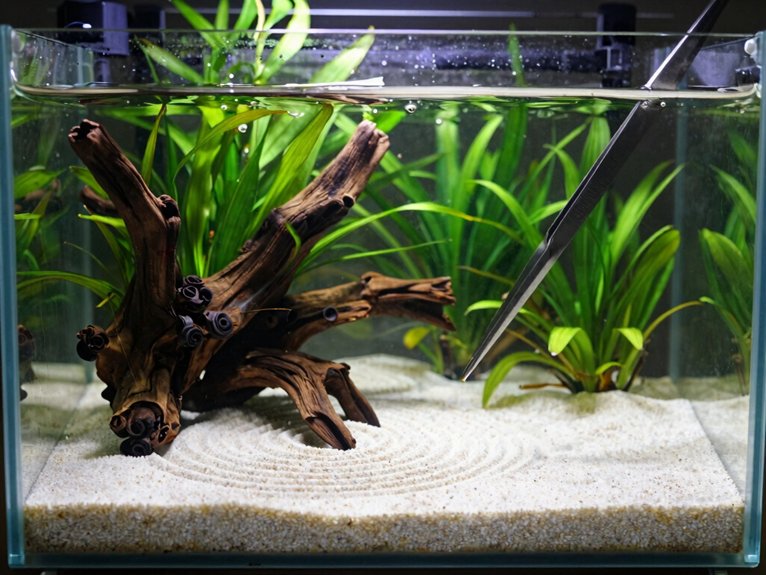
Even after the sand path is filled and settled, the job is not quite done—Dr. Pat knows substrate settling can nudge a path like a cat chasing midnight zoomies. The final touches mean gently raking and lightly compacting the sand with a flattener or spoon, keeping a soft concave line without packing it too tight. He checks slope shifts, adding 1–3 cm where depth looks weak, so the scene feels steady and welcoming. Then he watches fish and shrimp for 24–72 hours; if digging flattens the track, a small top-up restores the calm, clean look for everyone at home.
Refine the path edges, remove debris, and adjust plant placement
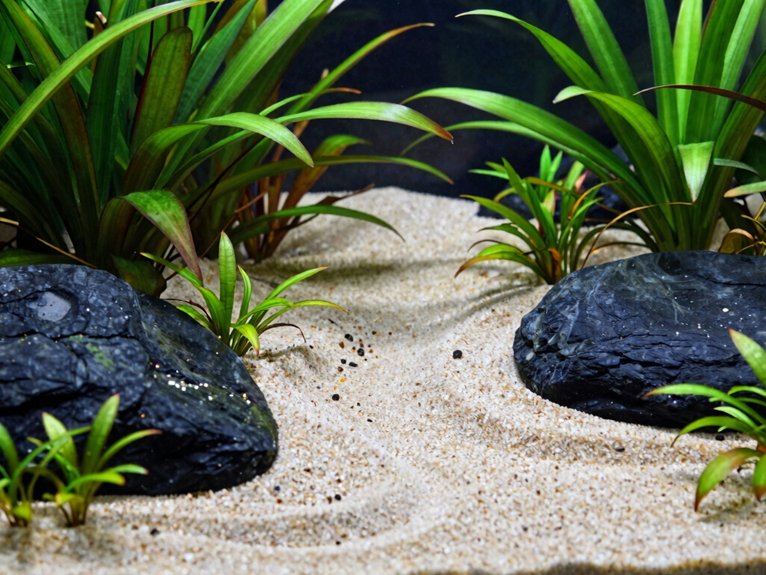
When a sand path aquascape starts looking fuzzy at the edges, Dr. Lee smooths substrate edging with a spatula, keeping the slope gentle and the path crisp. Debris is lifted with a fine net, and stray grains are swept back with a soft brush. Marginal plants are tucked just beyond the line, giving a tidy lawn feel and room for shrimp interaction.
- Crisp edges help neighbors feel included.
- Low-flow cleanup protects planted pockets.
- Tweezers nudge stems, not the whole scene.
- Brush back chips to keep shifts natural.
- Calm shrimp often reveal the best line. That small reset builds shared balance.
Maintenance Tips
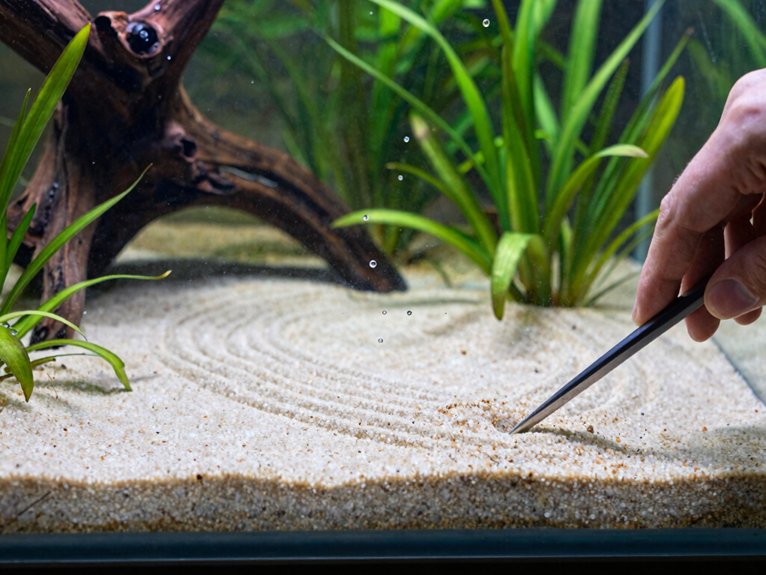
Maintenance keeps a sand path aquascape looking sharp, so during water changes the sand should be vacuumed lightly while the plants around it are trimmed back before they crowd the edges. It also helps to watch for soil slipping into the sand and, if needed, gently lift it out so the path stays clean instead of turning muddy after a busy week of fish and shrimp activity. A quick touch-up here and there usually preserves the slope, keeps the borders neat, and saves a lot of frustration later.
Vacuum the sand lightly during water changes
The trick is to treat it like lint-rolling a black sweater after a pet nap attack: gentle, quick, and a little strategic. During water changes, use low suction and hover above the sand path. A smart vacuum frequency is 10–20% per change, so edges stay crisp. For shrimp safe suction, use a smaller tip and clean every 2–4 weeks if delicate life lives nearby.
- Glide from center outward.
- Follow the curve.
- Avoid divots.
- Check the slope after.
- Smooth loose grains.
That tiny pause keeps the path tidy and the crew feeling right at home during each calm, routine change.
Trim plants regularly
A curved stainless-steel scissors makes those outside-the-tank snips neat and less stressful, while long tweezers can steady wobbly stems so the whole plant does not pop up like a bad hair day. A steady trimming schedule keeps carpet plants compact. | Task | Timing | Result |
| — | — | — |
|---|---|---|
| Foreground cut | 1–2 weeks | Denser growth |
| Border pinch | Weekly | Clear path |
| Clippings out | Right away | Cleaner sand |
Use clipping tools with care. Remove no more than one-third, and the quiet corridor stays welcoming, like a favorite spot after midnight zoomies. Delicate stems recover fast, and the sand path keeps its calm shape when scraps are netted out before they drift and settle.
Watch for soil mixing into sand
During water changes, Dr. Pat spots soil creeping into sand and treats it like muddy paw prints on the rug. He aims flow away, then gently pours or uses a turkey baster for particle prevention. Buried path edges and a fine-mesh barrier keep layers apart, which makes sand maintenance easier for busy tanks.
- Siphon clouds fast
- Rake the slope
- Trim and tuck plants
- Stop strong currents
- Keep sand bright
The surprise fix comes after planting: a quick siphon of any cloud stops dulling before it settles. That small habit saves the whole path, and the scape feels welcoming again.
Common Mistakes to Avoid
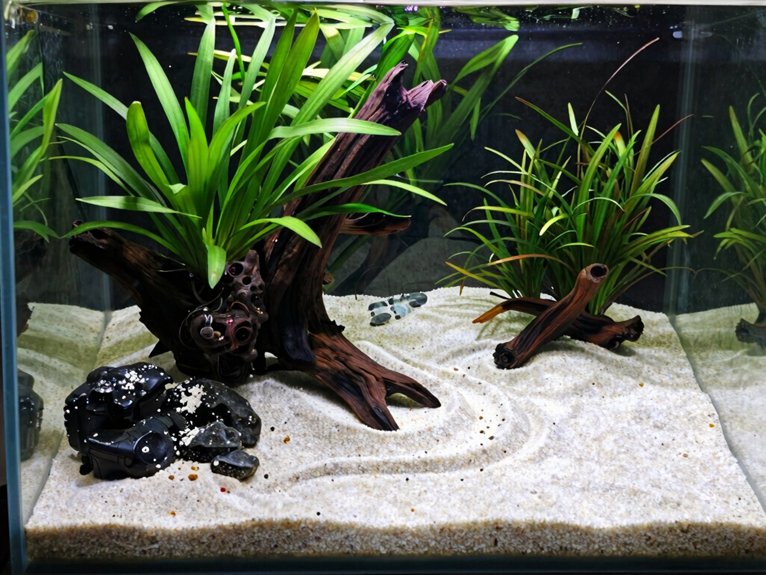
A sand path aquascape can look amazing, but a few small mistakes can make it lose its charm fast. One common slip is making the path too straight, skipping barriers that keep sand from mixing into gravel, or choosing coarse sand that breaks up the clean, soft look. The good news is that each problem is easy to spot early, and fixing it usually saves a lot of rework later.
Making the path too straight
When a sand path in an aquascape starts looking as stiff as a hallway tile, the whole tank can lose its magic fast. Instead, curved motions with a sand flattener help the lane meander like a trail after midnight zoomies.
- Vary edge stones so they feel found, not lined up.
- Blend fine sand with coarser grains for soft borders.
- Add small dips and rises; real paths age unevenly.
- Avoid mirrored placement, which signals unnatural symmetry.
- Let planted clusters hold shape, so shrimp or fish activity does not erase the curve. That keeps route calm, natural, and easy to trust.
Skipping barriers (causes mixing)
The fix is simple, but it needs patience: press the hardscape firmly into the substrate, build the divider deep enough to reach at least one to two times the largest grain size, and give the edge a gentle test before turning up the water flow.
Dr. Pat says skipping barriers invites edge erosion; a weak gap lets sand slip past during siphoning or fish chaos. Barrier testing with gentle flow shows if rocks, wood, or thin slate hold firm. In a tank, that check saves the path, keeps neighbors tidy, and avoids surprise mixing that ruins the calm look.
Using coarse sand (ruins clean look)
Ever rake a sand path perfectly smooth, only to have one busy little shrimp—or a midnight zoomie from a fish with attitude—mess it up in minutes? Dr. Pat says coarse sand often hurts coarse aesthetics: grains stand out, edges blur, and detritus hides fast.
- Use a fine top layer.
- Keep a coarse base below.
- Pre-wet and compact it first.
- Trim borders with a flat tool.
- Add carpeting plants for softness.
Result: cleaner lines, calmer cleanup, lower maintenance frequency. If coarse sand is all that’s available, expect more siphoning. The path can still look sharp, but only with patience, like finding the right kibble. I’ve seen it save a scape after midnight zoomies and even when a cat treated the rim like a runway at home.
Frequently Asked Questions
How Deep Should the Sand Path Be for a Natural Look?
For a natural look, the sand path should usually be 2-3 cm deep and slightly recessed, so the aquascape feels cohesive and inviting, helping the layout blend gently while giving hobbyists a shared sense of harmony.
Which Sand Colors Work Best for Different Aquascape Styles?
Light beige suits nature-style layouts, brightening peaceful layouts and making hobbyists feel included, while volcanic black strengthens dramatic, modern, or high-contrast scenes. Together, they help each aquascaper choose a look that feels confidently personal too.
Can I Use This Layout in a Low-Tech Aquarium?
Yes, this layout suits a low-tech aquarium well, offering low tech compatibility for growers seeking a calm, natural look. It may, however, raise maintenance frequency slightly, so patience and community-minded care help keep it thriving.
How Do I Prevent Algae From Forming on the Sand Path?
Keeping the sand path clear requires regular maintenance and careful light control. Who wants a thriving aquascape community with algae creeping in? Gentle siphoning, restrained feeding, and substrate additives help preserve the shared, clean look.
What Fish Species Suit a Sand Path Aquascape?
Peaceful species like rasboras, tetras, corydoras, and dwarf Gourami varieties suit a sand path aquascape, while careful Cichlid compatibility is crucial. These choices help create a calm, welcoming community where fish feel secure together naturally.
Conclusion
In the end, a sand path aquascape proves that fish, like people, enjoy a little drama and a distinctly defined walkway. A curved path, a steady hand, and a stubborn refusal to use straight lines can turn a tank into a tiny masterpiece. Nature rarely makes perfect edges, so neither should the hobbyist. With patient tweaks and a few well-placed plants, even a humble aquarium can look oddly majestic, and slightly smug about it.