Midnight zoomies can wreck a tank vibe fast. I’m Dr. Pat, and the best 12 river aquascape ideas use a long, low layout with a central sand path, diagonal rocks, off-center driftwood, and gentle flow. Add dark substrate, moss-covered stones, and shallow water for that tiny-stream look. Keep the front open for siphoning and easy cleanup. It feels natural, looks calm, and the smartest trick is saved for what comes next.
Disclosure: This post may contain Amazon affiliate links, at no extra cost to you. Content on Pawtangle is created with research support from AI tools and carefully reviewed, edited, and fact-checked by the lead author, Dr.Fahri Pat , to ensure accuracy and reliability. Learn more
Key Takeaways
- Keep the layout long and low, with fine sand in front and a gentle rise toward the back for depth.
- Use diagonal driftwood and stone terraces to suggest river flow and create a natural focal point.
- Shape a central sand channel or raised berm to form meandering water paths and stronger perspective.
- Add grasses, moss, and epiphytes along curves and hardscape edges to soften lines and mimic riverbanks.
- Maintain gentle one-way flow, shallow water, and easy siphoning to keep the channel clean and natural-looking.
Central Sand Path River Layout
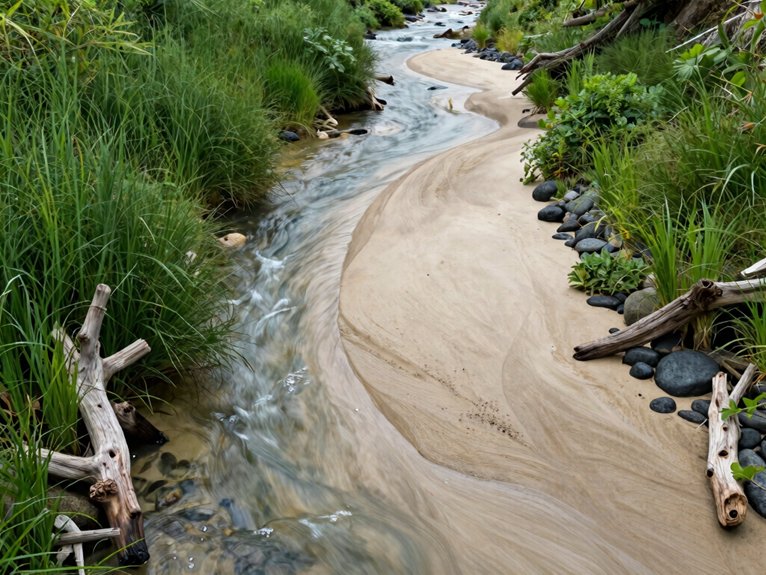
When a fish tank starts looking like a toy box after midnight zoomies, Dr. Pat knows the fix is a calm center line. A 10–20 cm sand path, with sand gradation from 2–3 cm front to 4–6 cm back, makes depth feel real. River stones and a few rounded boulders hold the sides, while edge concealment comes from dense grassy carpets set just beyond the sand. Driftwood placed diagonally adds direction, and attached ferns soften the view. Moderate flow then keeps the channel clean, not chaotic. It feels safe, natural, and easy to belong in.
Curved River Flow Design
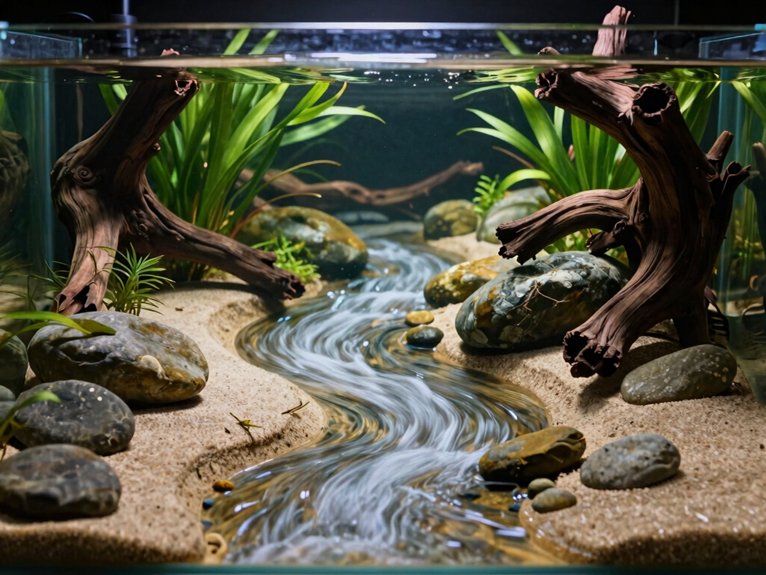
I’m Dr. Pat, and I know the “why does this look so stiff?” problem after a pet knocks over the décor for the third time—Curved River Flow Design fixes that by making the tank feel naturally moving instead of boxed in. A diagonal hardscape, a soft curved sand channel, and flowing plants like Vallisneria or Rotala can guide the eye like water around a bend, which gives the whole scene a calm, real river look. The best part is the open inner curve and darker shadows at the outer bend, because that little trick makes the movement feel alive without needing a big, noisy current.
Natural movement effect
That diagonal line works best when the sand or gravel foreground is formed into a gentle S-curve channel, because the eye follows that bend the same way water would wear a river path over time. Dr. Pat notes this creates a natural movement effect that feels familiar, almost like a place the viewer already belongs. Driftwood and Hakkai stone angle from high right to low left, while water eddies and light ripples seem to live in the open bend. Taller Rotala and Ludwigia stand behind the curve, with low carpeting plants inside it. Trimming Val leaves adds flow, and the hardscape sits slightly forward.
Rock-Lined River Aquascape

A tank can look busy in all the wrong ways, just like a dog that found the lint roller and decided it was a chew toy. Dr. Pat notes that a rock-lined river aquascape works best when rounded stones run diagonally from upper right to lower left, like stone terraces sculpted by aquatic erosion. Bases should sink slightly into sand and gravel, with open channels between clusters for flow. Midground plants soften edges, while carpets stay low in front. A few mossed pebbles add biofilm, but the real trick is placing rocks close to the glass and aiming current downstream.
Driftwood Riverbank Setup
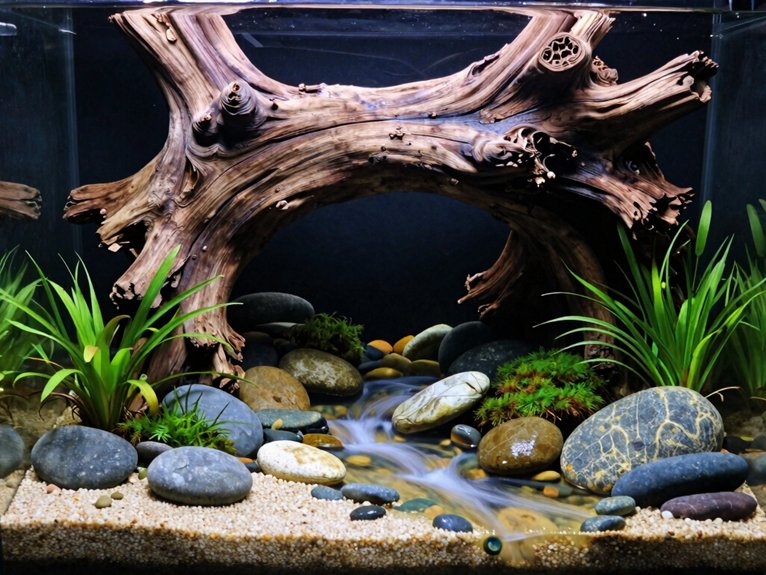
When driftwood keeps popping up like a stubborn dog toy during midnight zoomies, Dr. Pat smiles and checks buoyancy control first. Heavy Malaysian or spider wood, 1–3 kg, sits diagonally like a riverbank, not a raft.
- Wedge pieces under rounded stones for calm startup.
- Spot-glue contact points; safe and cheap.
- Tie Java fern, Riccardia, and moss for epiphyte attachment.
- Add crevices with Hakkai stones, higher right, lower left.
Open sandy channels in front keep the lane clear. A 265 L/h flow helps the tank feel like home, with less mess and more belonging.
Shallow Stream Aquascape
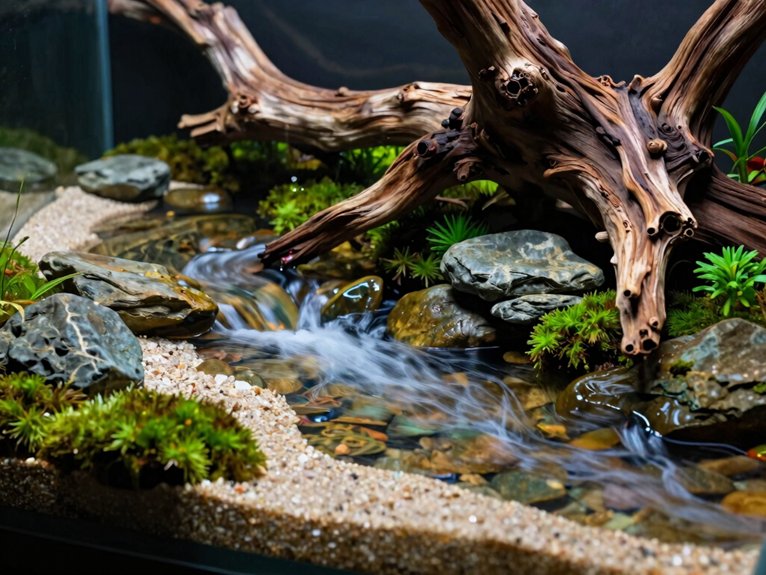
A shallow stream aquascape can make a tank look like a real river by keeping the water low in the viewer’s eye, even when the setup is full and busy. In a long, low tank, the sloped riverbed and directed current create the feeling of a moving channel, with fish and plants reading as if they are part of a natural stream. That simple depth trick is often the biggest reason the scene feels so believable.
Minimal water depth illusion
Under the shimmer of a “tiny river” setup, Dr. Pat sees how cats, dogs, and fish all love a scene that feels alive, not crowded. Optical foreshortening and foreground compression help the tank read as deeper than it is.
- Keep water 8–15 cm deep for a true stream feel.
- Use a long, low tank and push hardscape forward.
- Hide rich soil under 1–2 cm sand for carpets.
- Add gentle, one-way flow and sparse stones.
That mix calms fish, keeps plants rooted, and gives the room a shared, natural rhythm—like everyone finally found the right side of the river.
Double River Channel Design
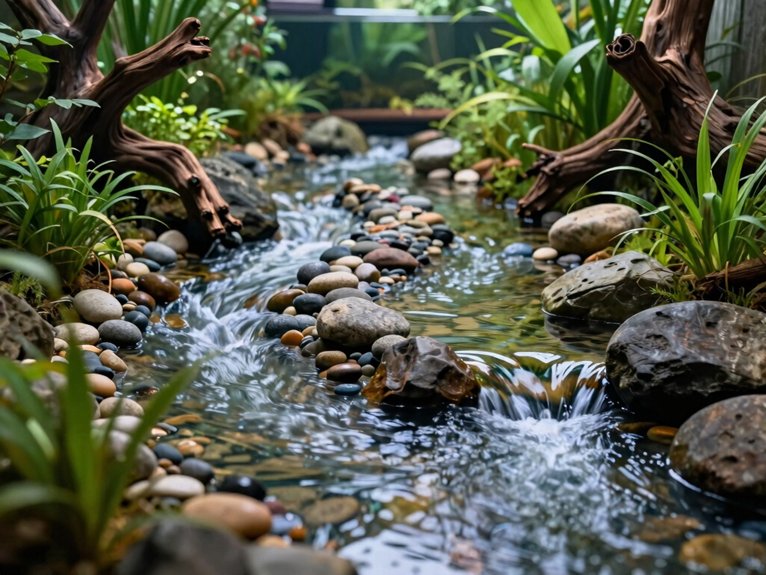
I’d shape the substrate into a slim raised berm down the center, then slope each side so two channels read cleanly from the front glass.
Dr. Pat sees the same problem after midnight zoomies: fish scatter, debris piles up. Here, berm symmetry helps meandering channels feel natural and welcoming.
| Element | Choice | Result |
|---|---|---|
| Berm | 2–4 cm high | Clear split |
| Stones | Rounded, off-center | Gentle pull |
| Plants | Stem background | Current cue |
| Flow | One pump | Fish face upstream |
Add sand lanes for easy siphoning. A weekly 30% change keeps the stream crisp, and the tank looks calm, lived-in, and shared.
Forest River Layout
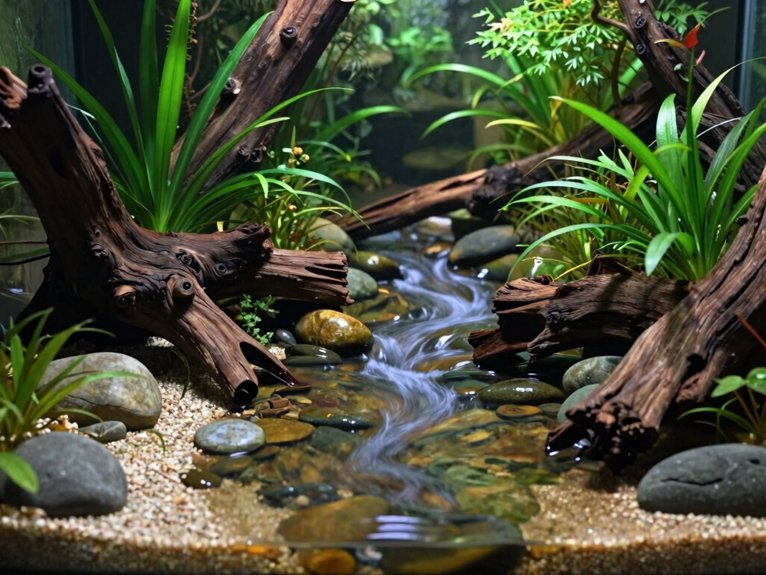
The foreground works best when it stays a little wild but not messy. Dr. Pat likes this forest river layout because it feels like a familiar walk with pets: calm, layered, and a bit playful.
- Set a Hakkai stone and branching driftwood on a right-to-left slope to suggest stream encroachment.
- Carpet Dwarf Hairgrass in an L-shape, with Monte Carlo and open sand channels for leaf litter paths.
- Attach Riccardia, Christmas moss, and Java fern; tuck Utricularia in crevices.
- Build Rotala and Ludwigia masses behind, then keep flow steady and trim hard until the forest settles.
Pebble Riverbed Aquascape
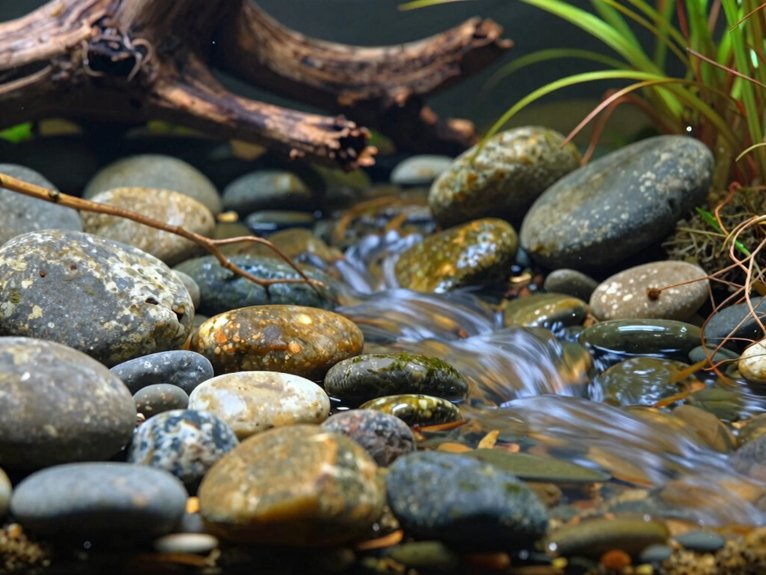
Even the neatest river tank can look messy if the pebble bed has no fine-gravel detail, so the base layer matters as much as the stones on top. In a Pebble Riverbed Aquascape, smooth pebbles and tiny gravel can be molded into a winding channel that looks naturally sorted by flowing water, with larger pieces near the center and finer bits at the edges. That small shift in grain size gives the whole scene a more real river feel, especially when plants and wood frame it like a living bank.
Fine gravel detail
From there, Dr. Pat notes that fine gravel detail can calm a busy tank, much like a dog finally settling after midnight zoomies. A sand mix with grain variation and firm substrate compaction keeps Dwarf Hair Grass rooted.
- Lay 0.2–0.5 mm sand over a thin nutrient layer.
- Scatter 5–15 mm pebbles in broken channels.
- Slope right high to left low with 2–4 cm ripples.
- Set rounded Hakkai stones and flat cobbles as anchors.
He keeps 20–40% of the foreground pebbled, then siphons gently and changes water weekly. The result feels safe, natural, and welcoming.
Island and River Combination
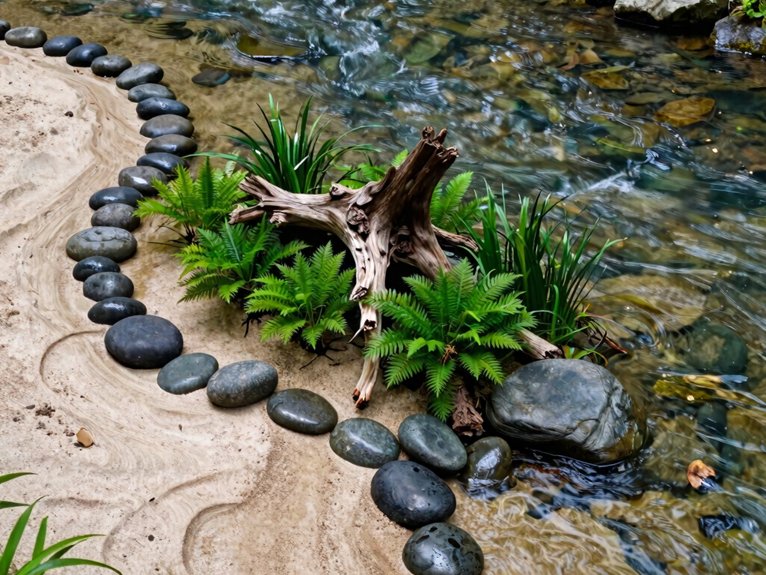
Across a river aquascape, the best island setups solve a problem every pet owner knows too well: “How do I make this look natural without turning into a messy pile?” In my years as Dr. Pat, a raised driftwood-and-Hakka stone island, set off-center, and a sloped substrate can mimic seasonal flooding and emergent vegetation. Fine sand and smooth pebbles keep the river channel clean, while Dwarf Hairgrass and Monte Carlo root along the island. Java fern, Riccardia, and moss soften the edge. A gentle one-way current then guides fish, detritus, and calm, happy eyes downstream.
Dark Substrate River Contrast
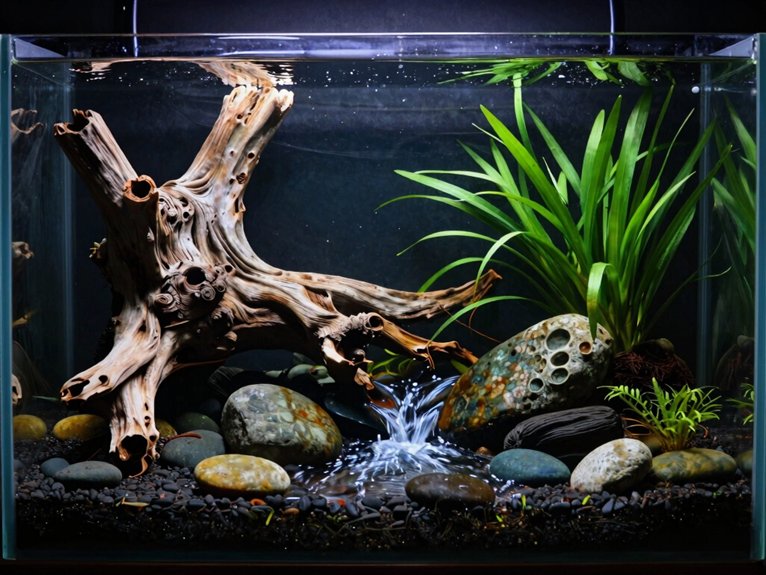
A dark substrate river contrast can save a river aquascape from looking flat, muddy, or just plain “I gave up on Friday night.” Dr. Pat says dark sand makes reds pop, greens glow, and the whole crew feel like they belong.
- Use black or deep brown sand with a nutrient-rich underlayer.
- Grade finer sand in front, coarser gravel behind.
- Set stones and driftwood partly buried for natural edges.
- Plan substrate lighting and detritus management with weekly siphons.
The result looks clean, deep, and calm—like the fish finally got their good lighting.
Nano River Aquascape
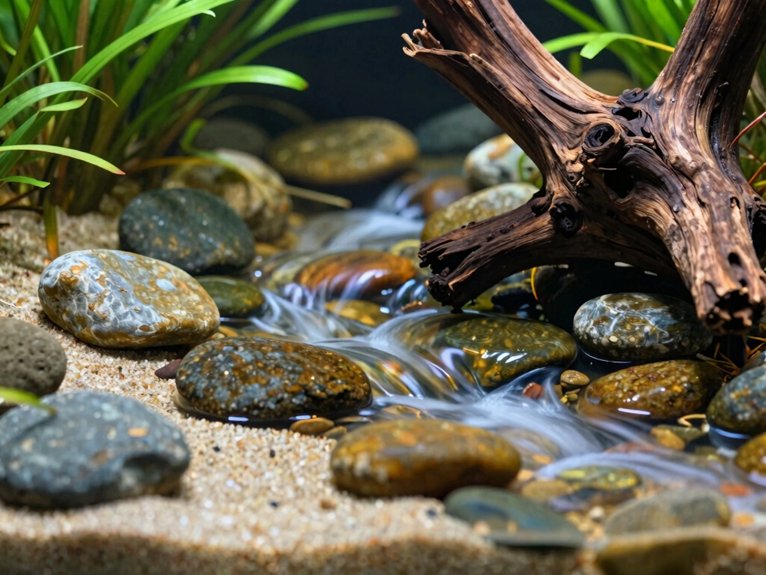
For a 20–40L setup, the trick is to keep the layout long and low, with fine sand in front and a gentle slope rising toward the back. Dr. Pat says that even a tiny river can feel alive after midnight zoomies—by fish, not dogs—when the scene fits together.
| Idea | Step | Result |
|---|---|---|
| Driftwood | Place off-center | Natural focal point |
| Sand slope | 3–4 cm to 1 cm | Strong depth |
| Plants | L-shape carpet | Riverbank feel |
| Flow | Soft rear circulation head | Safe current |
| Stocking | Minnows, corys, shrimp | Happy micro fauna |
Smart lighting placement keeps the channel open.
Moss Covered River Stones
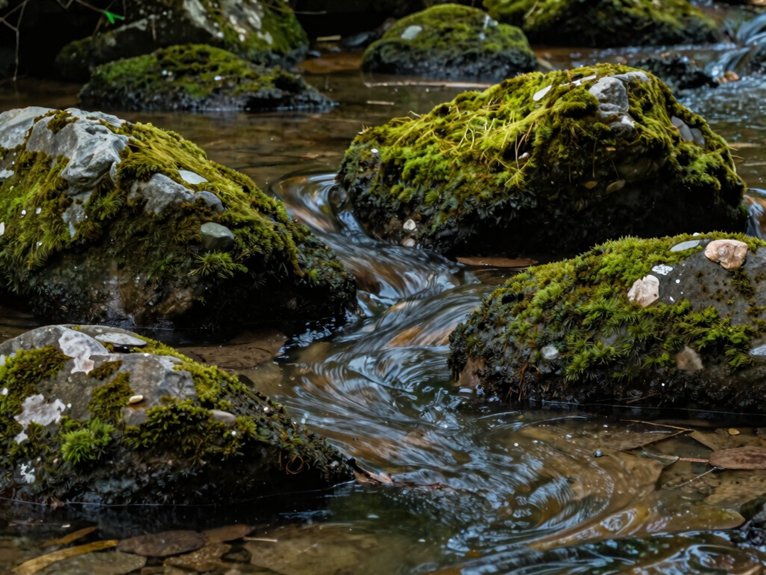
Moss Covered River Stones can bring a soft, natural texture to a river aquascape, almost like a tiny streambank after rain. As Dr. Pat would put it, these stones soften hard lines and make the layout feel calmer, which is handy when everything else seems to be doing midnight zoomies. With the right moss, the result looks gentle and real, not like a pile of rocks waiting for a lint roller.
Soft natural texture
Dr. Pat here: when fish tanks look messy, the fix can be a soft natural texture that feels calm and lived-in.
- Choose smooth river stones, soak and scrub them.
- Tie Java moss, Christmas moss, or Riccardia with line or gel.
- Set clusters on the upstream side, near soft substrate and floating plants.
- Keep gentle flow, trim, and micro-siphon.
Within 4 to 8 weeks, the stones wear a green coat. That moss blends the riverbed, invites biofilm, and gives the tank a neighborly, natural flow.
Frequently Asked Questions
What Fish Species Best Suit a River Aquascape?
Dwarf cichlids and hillstream loaches suit river aquascapes well, their gentle homespun presence quietly inviting unity. Danios, rasboras, and gobies also fit, lending motion and companionship, as if the current itself were welcoming them.
How Do I Maintain Strong Water Flow Safely?
They maintain strong flow safely by prioritizing flow patterns and thoughtful pump placement, keeping outlets diffuse, avoiding dead spots, and adjusting current gradually. This helps the aquarium feel balanced, natural, and confidently shared.
What Lighting Enhances a Natural River Aquarium?
Like dawn over a quiet river, full spectrum LEDs with adjustable color temperatures best augment a natural river aquarium. They reveal vivid greens, soft stones, and gentle depth, helping viewers feel part of a living stream.
Which Plants Work Best in Moving-Water Layouts?
Riparian mosses and streamside ferns work best, along with Anubias and Java fern, because they tolerate current and attach naturally. Their familiar greenery helps the aquarist feel part of a serene, shared waterside scene.
How Often Should River Aquarium Substrate Be Cleaned?
Every 2–4 weeks, it should be lightly vacuumed; in heavily stocked tanks, weekly attention helps. About 70% of aquarists see less debris with routine care, preventing substrate compaction, preserving nutrient pockets, and keeping a welcoming, natural habitat.