
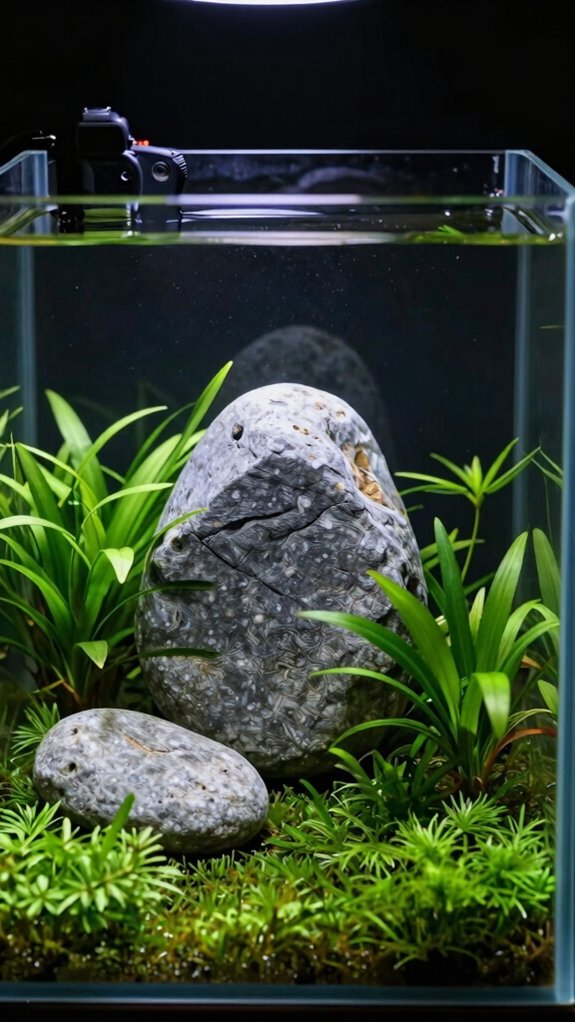
When a tank starts feeling as chaotic as midnight zoomies and chewed-up toys, Dr. Pat keeps 12 Iwagumi Aquascape Ideas for a Clean and Balanced Aquarium Design simple: try a three-stone or five-stone layout, place the main rock off-center, and leave the foreground open for a calm carpet. Use one stone type, low light, steady CO2, and weekly water changes. Add Monte Carlo or hairgrass behind the rocks, and the cleanest trick comes at the end.
Disclosure: This post may contain Amazon affiliate links, at no extra cost to you. Content on Pawtangle is created with research support from AI tools and carefully reviewed, edited, and fact-checked by the lead author, Dr.Fahri Pat , to ensure accuracy and reliability. Learn more
Key Takeaways
- Use a single stone type, with an off-center Oyaishi and smaller supporting stones for a calm, balanced Iwagumi focal point.
- Choose odd-numbered stone groups, like three or five rocks, to create natural rhythm and asymmetrical harmony.
- Keep the foreground open with a low carpet or sand to preserve negative space and emphasize stone scale.
- Tilt stones toward an imagined flow and bury bases slightly in aquasoil for a natural, grounded composition.
- Plant sparsely with low carpets and minimal background growth, then maintain with low light, CO2, and weekly water changes.
Classic Three Stone Iwagumi
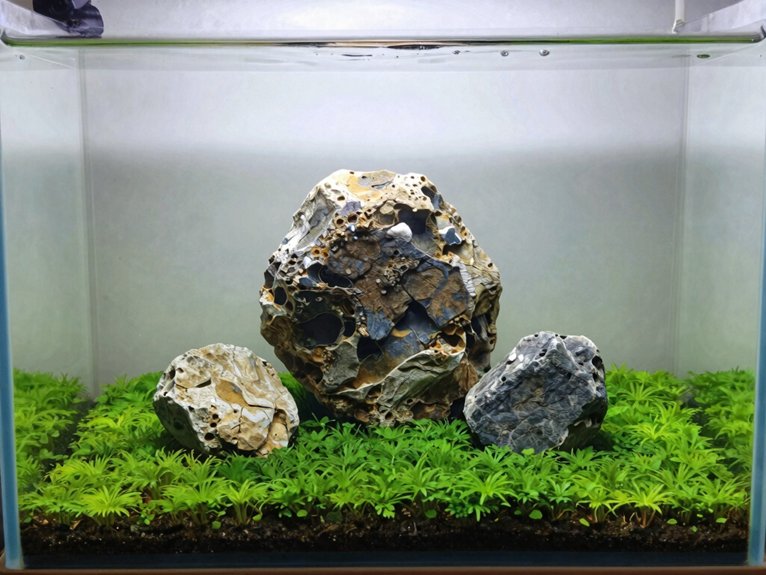
When a tank feels “busy,” the fix is often the same as with a room after a puppy tornado: less clutter, better shape, and one clear place for the eye to rest. The classic three-stone Iwagumi does that well. Stone placement centers on one large Oyaishi and two smaller stones, set in odd-number balance, not mirrors. The main rock gets tilt emphasis toward flow, like a dog leaning into a breeze. Bases sink slightly into aquasoil, while a low carpet leaves open space. I’ve seen this calm a scene fast—no lint roller needed, just patience, CO2, and steady water changes.
Five Stone Layout (Go Iwagumi)
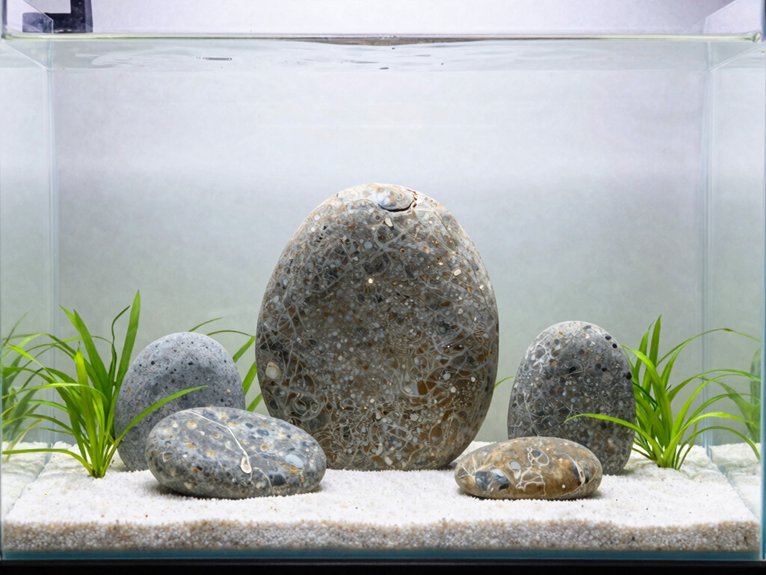
Iwagumi aquascapes can feel a lot like a pet knocking over the same toy three times in a row—balance matters, but too much symmetry gets boring fast. In a Five Stone Layout (Go Iwagumi), the main stone sits off-center as the star, while the other four stones support it with a natural, uneven rhythm that still feels calm. The result is a balanced composition that looks more like a real scene than a neat little stack.
Balanced composition
The main stone, called the Oyaishi, gets placed off-center, about one-third of the way along the tank, so the eye has somewhere to land right away. Dr. Pat says that balance starts with stone hierarchy and flow direction, like a dog choosing the comfiest spot after midnight zoomies. Two Fukuishi then steady the scene, while smaller Soe and Suteishi stones ease the shift, much like a lint roller softens a couch after chewed-up toys. Shared color keeps the group united, but varied height adds depth. Open carpet space then lets the five stones breathe, and the aquarium feels calm, safe, and inviting.
Single Dominant Stone Layout
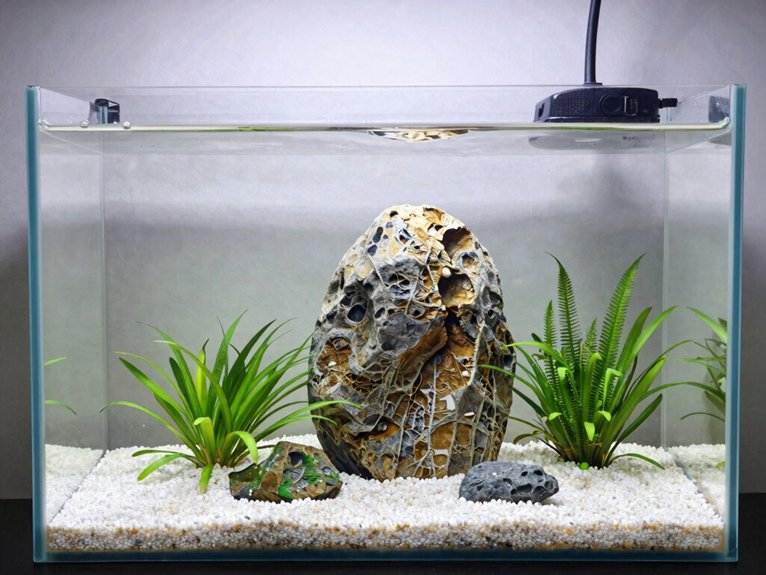
A single stone can make a tank look calm or chaotic in a heartbeat, much like a dog deciding the couch is now a chew toy at midnight. In the single dominant stone layout, the Oyaishi sits about one-third from a side and rises near two-thirds of its visible height, giving the group a clear home base. Its stone orientation should lean slightly with imagined flow, letting shadow play deepen every ridge. Smaller matching rocks nest around it, partly buried, so the scene feels shared, not staged. Low carpet plants and lean water-column feeding keep attention on the stone and reduce algae.
Triangular Iwagumi Design
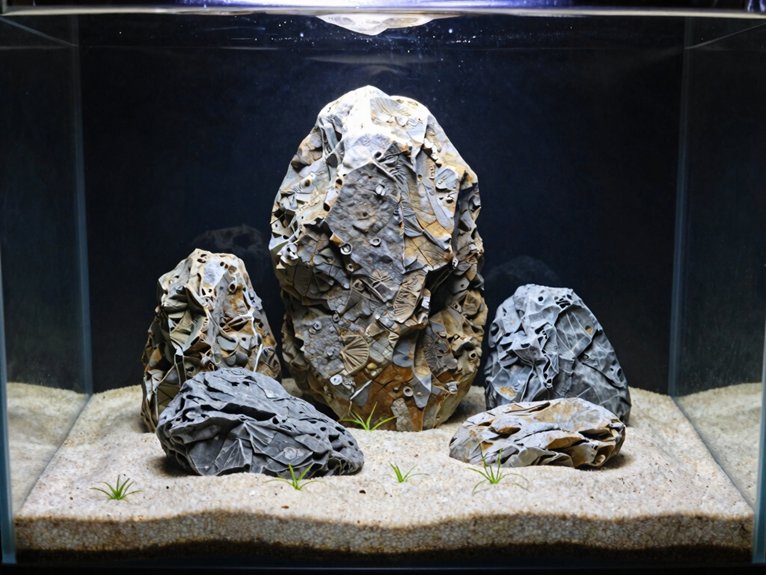
After a tank gets knocked off balance—kind of like a dog launching into midnight zoomies and sending a throw blanket into orbit—Dr. Pat favors triangular Iwagumi for calm control. Three stones form the shape: one Oyaishi and two Fukuishi, with the Oyaishi placed on a rule-of-thirds point for focal asymmetry and stone positioning that feels natural, not stiff.
He tilts the main stone toward imagined flow, buries its base in aquasoil, and keeps two-thirds visible. Matching textured rock and smaller Soeishi add tension.
With a simple carpet, sparse stems, low light, CO2, and careful fertilizing, the whole group gets a clean, welcoming aquascape.
Island Style Iwagumi
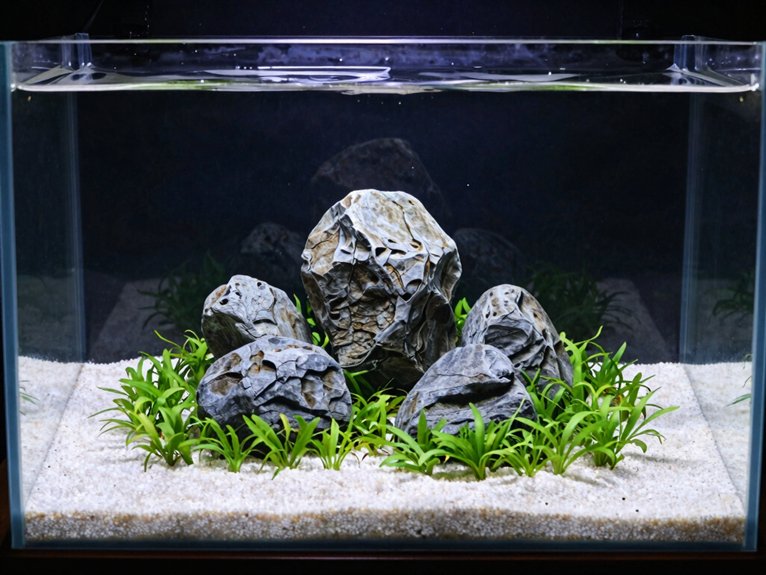
When midnight zoomies have a tank looking like a dog ran through a pile of chew toys, island style Iwagumi brings the calm back fast. Dr. Pat sees the oyaishi set as a central, isolated focalpoint, with one or two smaller stones nearby for balance. A raised mound under it gives carpet plants room, while open sand or water around the edges makes the stone feel proud and safe. I use low, soft plants and steady CO2, like picking the right kibble—simple, not fussy. That setup supports island biodiversity and keeps algae from crashing the party.
Open Space Iwagumi Layout
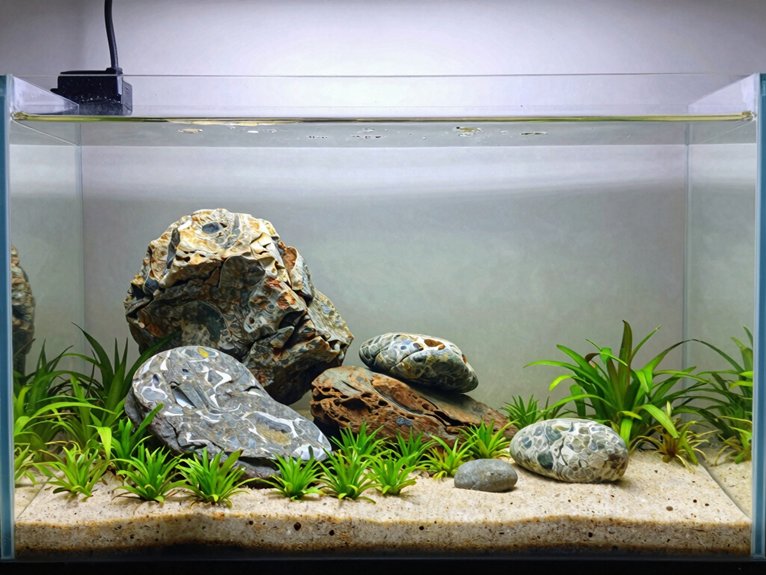
Open space Iwagumi can feel a lot like a living room after midnight zoomies—calm at first glance, but every rock and plant choice still needs a purpose. In this style, minimal negative space is the star, so an odd number of stones and a wide open carpet help the main rock stand out without the tank looking empty. Dr. Pat would point out that the trick is leaving enough breathing room for the eye to rest, because that quiet gap is what makes the whole layout feel balanced and strong.
Minimal negative space
A clean, wide front pane can feel a lot like a living room after a puppy tornado—bare, calm, and suddenly easier to actually enjoy. In this open Iwagumi, Dr. Pat sees negative space as a gentle invitation, not emptiness. The Oyaishi lands on the rule of thirds, while smaller stones build spatial rhythm. Plants stay tucked behind rocks in thin carpet bands, so the foreground stays clear and welcoming. Aqua soil feeds only planted zones; sand covers the rest. With moderate light, steady CO2, and regular siphoning, algae stays shy, and the whole tank feels balanced, peaceful, and easy to belong in.
Low Carpet Plant Iwagumi
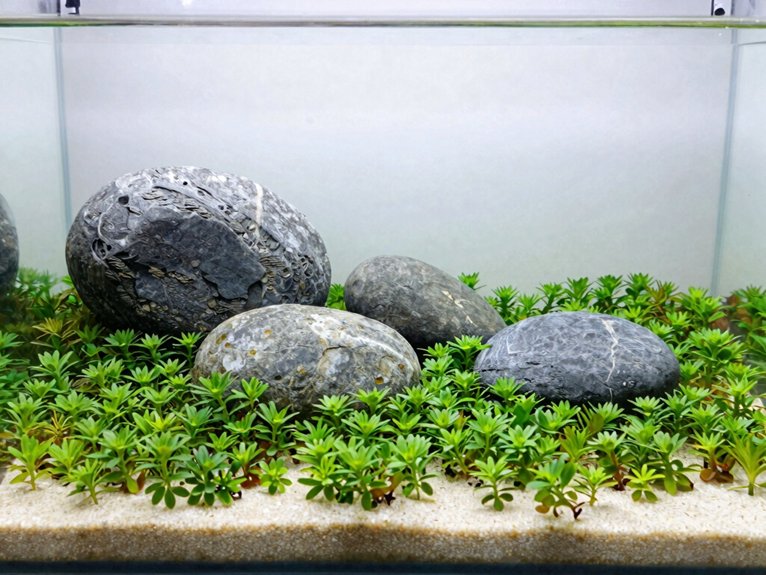
Keeping an Iwagumi tank neat can feel a lot like trying to keep a dog out of the laundry pile—one tiny mess and suddenly everything looks wild. Dr. Pat finds low carpets like Monte Carlo, hairgrass, or Glossostigma helpful for micro carpeting and edge transitions.
| Plant | Benefit |
|---|---|
| Hairgrass | soft, tidy cover |
| Monte Carlo | dense, low spread |
| Glossostigma | fine, bright mat |
| HC | needs more CO2 |
| Trim | keeps balance |
Aquasoil, low-to-moderate light, and stable CO2 support growth. Weekly water changes and careful trimming keep rocks clear. The best trick: let the carpet frame the oyaishi, not steal it.
Sand and Rock Iwagumi Mix
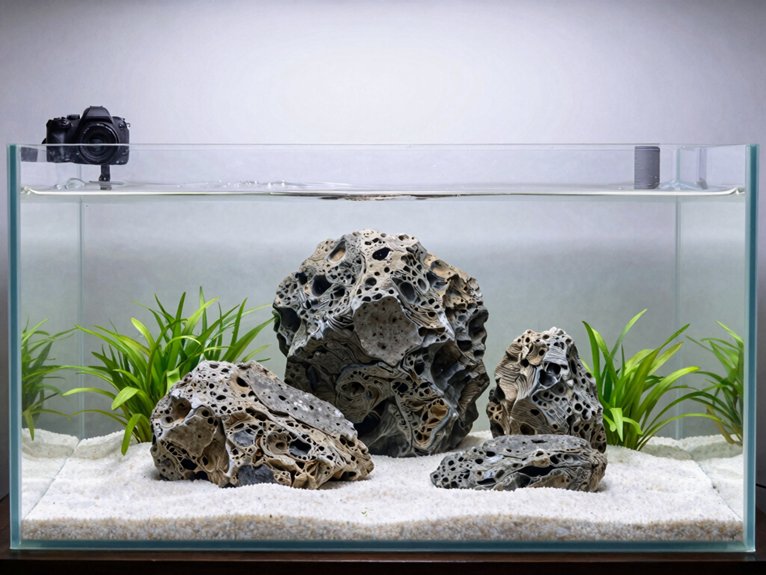
Dr. Pat sees a lot of midnight zoomies, but a sand and rock Iwagumi mix can bring that same lively balance to a tank. Aquasoil stays under carpet zones, while a 1–2 cm sand foreground keeps open space bright and calm.
Large Seiryu or granite stones sit slightly tilted, with 1–2 cm buried for natural shadows. Small matching rocks make smooth sand transitions and careful edge detailing, usually in odd groups. Keep carpet plants on aquasoil, not sand, and hold steady CO2 with low light. The surprise win: cleaner sand, less algae, and a layout that feels welcoming.
High Contrast Stone Layout
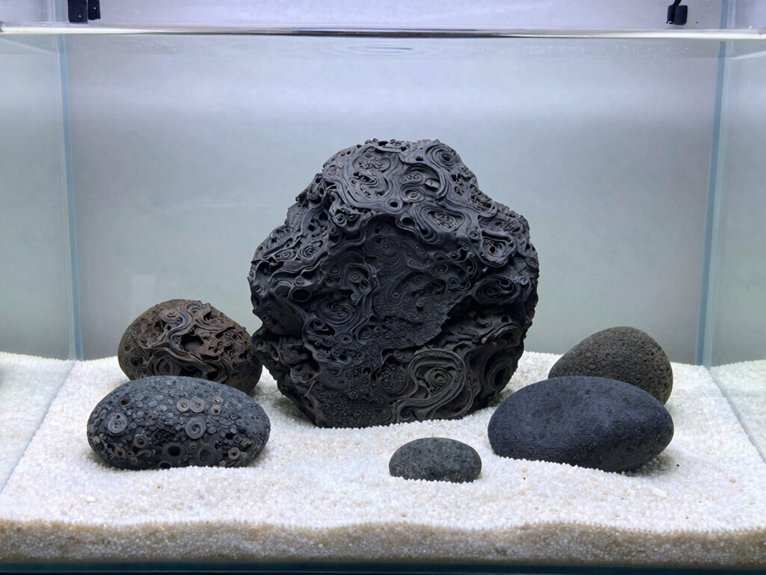
A high contrast stone layout can make an iwagumi feel crisp and dramatic, just like a dark dog toy standing out on a light floor after midnight zoomies. Light substrate and bright green carpet set off dark rocks, so the stones become the clear focal point instead of fading into the background. With the right balance, the whole tank looks cleaner, sharper, and easier on the eyes.
Light substrate vs dark rocks
The trick is to keep the ground bright and the rock faces bold. I’m Dr. Pat, and this feels like choosing the right kibble after a midnight zoomies disaster: simple, but it matters.
- Use pale sand or light aquasoil for clean substrate lighting and contrast maintenance.
- Set dark Seiryu stones over it, with the biggest oyaishi near the rule of thirds.
- Add low carpets like Monte Carlo or HC so everyone feels at home.
- Keep nutrients in the roots, CO2 steady, and water changes frequent.
That stops algae, keeps the scene crisp, and makes the whole tank feel welcoming.
Symmetrical Iwagumi Setup
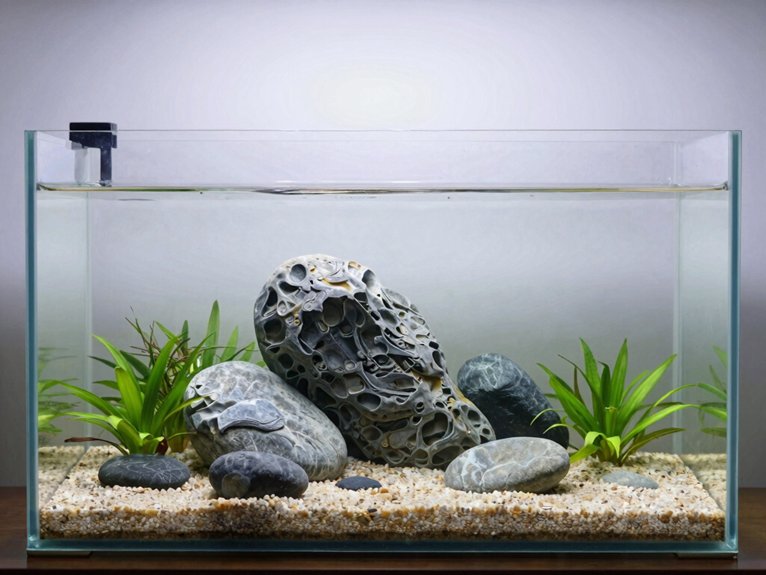
When a tank feels as chaotic as a cat at midnight zoomies, a Symmetrical Iwagumi Setup can bring the whole scene back to calm. It centers one Oyaishi, then mirrors Fukuishi and Soeishi stones for mirror symmetry and formal balance. Similar Seiryu-seki color keeps the scene clean. In the foreground, low carpets like Monte Carlo or Eleocharis parvula spread evenly, leaving open space. Small stones should tilt inward, with tiny bases adding depth. Dr. Pat would call the final trick simple: aquasoil, modest PAR, and CO2 around 25–30 ppm help control algae and keep the layout polished.
Nano Iwagumi Tank
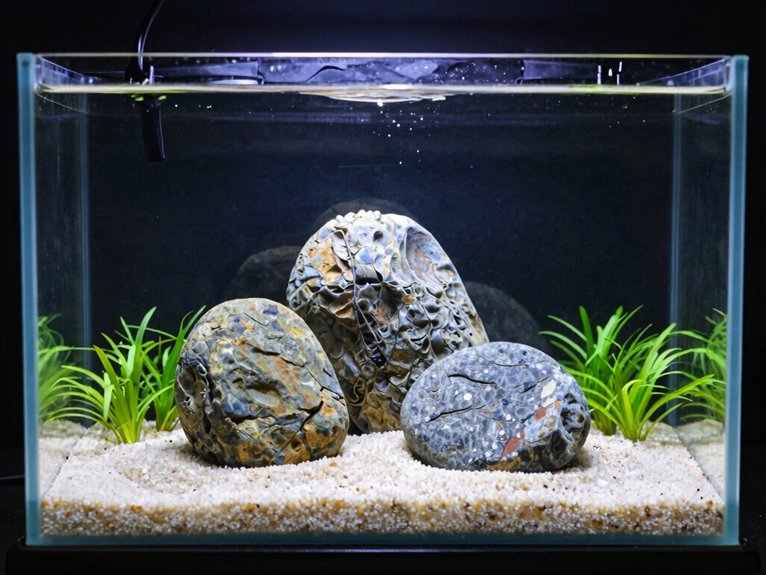
In a Nano Iwagumi Tank, Dr. Pat notes that tiny spaces reward careful micro aquascaping.
- Choose 3 or 5 small Seiryu stones; place the oyaishi near a rule-of-thirds point.
- Keep scaled rockwork strong, with the main stone about two-thirds tank height, so it feels bold, not crowded.
- Use Monte Carlo or Eleocharis parvula for a dense carpet; add only short Vallisneria nana if needed.
- Feed roots with aquasoil, run low light and CO2, and do weekly water changes.
The result: calm, clean balance—like finding the right kibble after a midnight zoomie.
Zen Inspired Iwagumi Design
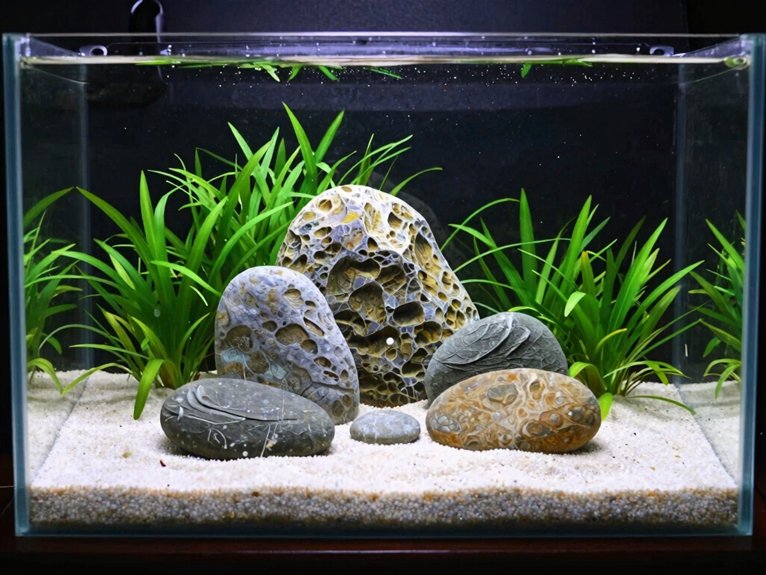
Zoomies can turn a tidy room into a war zone, and Dr. Pat knows a calm tank can do the same for a restless mind. In Zen inspired Iwagumi, he uses meditative planting and asymmetrical flow to bring that same hush home. One Oyaishi stone sits near the rule of thirds, tilted like it is guiding water, with two or four smaller stones supporting it. He chooses one stone type for a unified look, then leaves the foreground open with carpet plants. Light stocking and low light keep algae down, while aquasoil feeds the carpet and preserves peaceful negative space.
Frequently Asked Questions
What Lighting Spectrum Best Enhances Iwagumi Plant Colors?
Full spectrum LEDs with a slight red emphasis best improve iwagumi plant colors; ironically, the simplest light often looks the most polished. This balanced spectrum helps community-minded aquarists feel their aquariums belong together beautifully.
How Often Should CO2 Levels Be Adjusted in Iwagumi Tanks?
CO2 levels in iwagumi tanks should be checked daily and adjusted gradually, with CO2 monitoring guiding a steady dosing schedule. This helps the aquarist feel confident, supported, and part of a thriving aquascaping community.
Which Fish Species Thrive Without Disturbing Iwagumi Layouts?
Peaceful rasboras and dwarf corydoras thrive in iwagumi layouts, staying small and gentle. They help an aquarist’s community feel harmonious, while avoiding plant interference and preserving the tank’s open, balanced stone composition.
What Substrate Depth Supports Strong Root Growth in Iwagumi Aquariums?
An ideal depth of 2 to 3 inches usually supports strong root anchoring in iwagumi aquariums, helping plants settle securely. Many aquarists appreciate this simple foundation, which encourages a harmonious, shared sense of success.
How Do You Prevent Algae in a Minimalist Iwagumi Setup?
Algae is reduced by maintaining nutrient balance and regular maintenance, while keeping lighting moderate, CO2 stable, and water changes consistent. In a minimalist iwagumi, these habits help the aquarist’s tank feel calm, shared, and beautifully cared for.