
Your Bernese Mountain Dog puppy will be affectionate, grow quickly, and need gentle handling. Feed measured portions of large-breed puppy food, split into three or four meals, and avoid extra calcium. Start short training and socialization sessions early, using praise instead of harsh corrections. Provide about 30 minutes of gentle daily activity, but skip jogging, forced running, and repeated jumping. Brush the double coat, puppy-proof your home, watch for heat and bloat, and keep veterinary visits current. More practical milestones and care tips follow.
Disclosure: This post may contain Amazon affiliate links, at no extra cost to you. Content on Pawtangle is created with research support from AI tools and carefully reviewed, edited, and fact-checked by the lead author, Dr.Fahri Pat , to ensure accuracy and reliability. Learn more
Key Takeaways
- Bernese Mountain Dog puppies are affectionate, family-oriented companions that thrive on calm attention and daily interaction.
- Feed measured portions of large-breed puppy food, divided into three or four meals, and avoid unapproved calcium supplements.
- Protect developing joints by avoiding forced running, jogging, repeated jumping, and strenuous exercise until growth plates typically close around 18 months.
- Begin positive-reinforcement training and gentle socialization early, allowing shy puppies time to approach new people, sounds, surfaces, and dogs.
- Brush the double coat regularly, provide heat safety, puppy-proof your home, and maintain veterinary checks for vaccinations, growth, joints, and breed-related conditions.
Gentle Temperament
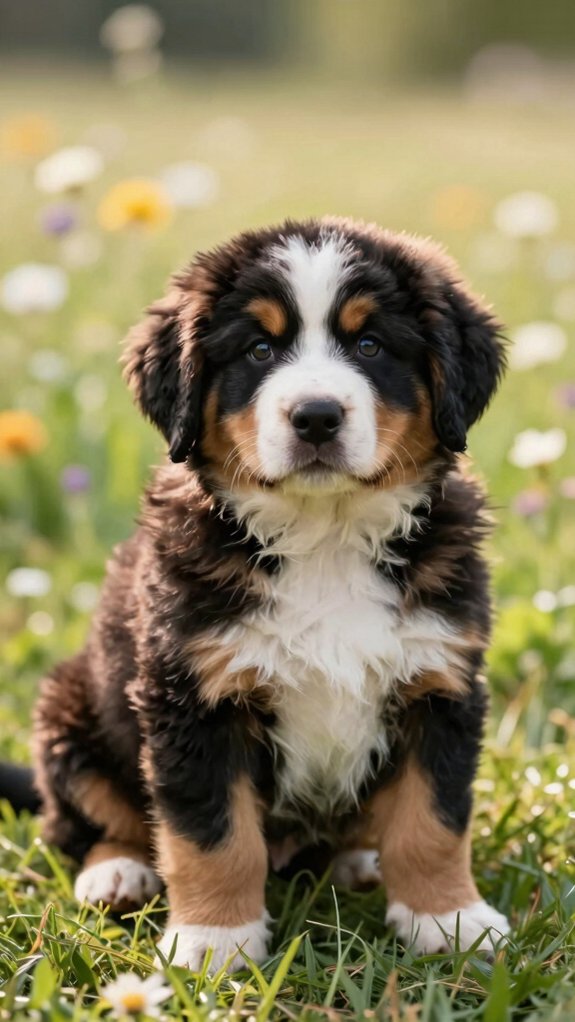
Bernese Mountain Dog puppies are usually calm, affectionate, and good-natured, which makes them steady family companions. You’ll often find yours leaning against you, resting its head nearby, or following you from room to room.
This calm bonding helps your puppy feel included, but don’t expect instant trust with every visitor. Introduce new people slowly, giving your puppy space to watch and approach when ready. Keep greetings quiet and gentle.
Because Berners are sensitive and people-focused, harsh corrections can hurt their confidence. Use positive reinforcement, such as treats, praise, and calm guidance, to teach good manners.
Daily family time also helps prevent boredom and unwanted behavior.
Rapid Puppy Growth
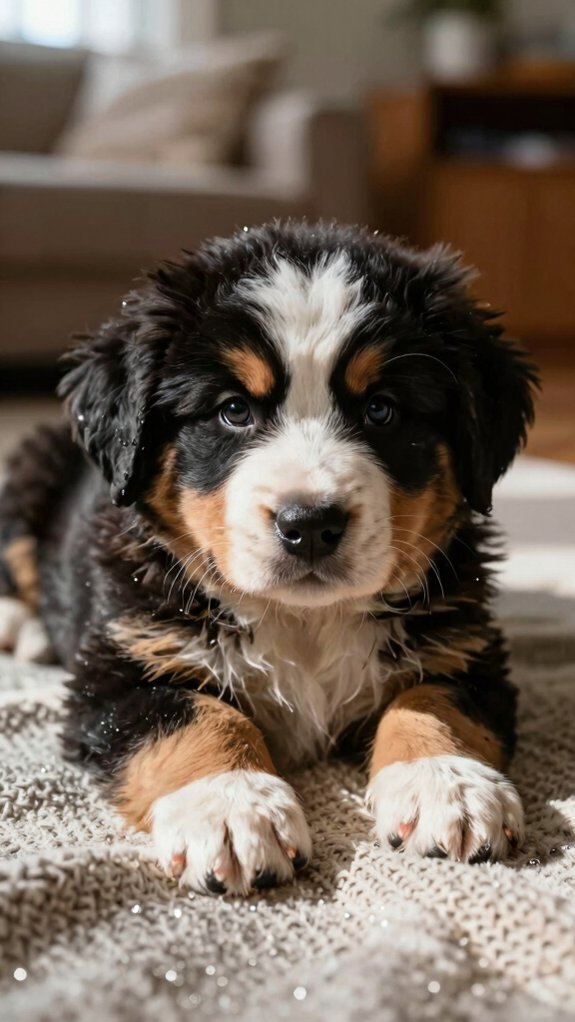
That calm, affectionate puppy may grow much faster than you expect during its first year. Growth spurts can make your Bernese look awkward as proportions shift, yet full size and mental maturity may take about three years.
| What you notice | What helps |
|---|---|
| Fast-growing body | Gentle, natural play |
| Changing shape | Regular weight monitoring |
For joint protection, skip hard jogging and running, and pace activity until growth plates usually close around 18 months. Ask your veterinarian about diet timing and a balanced, age-appropriate plan, while keeping your pup lean to reduce hip and elbow strain. You’re helping your family’s gentle giant grow steadily.
Feeding a Large Breed Puppy
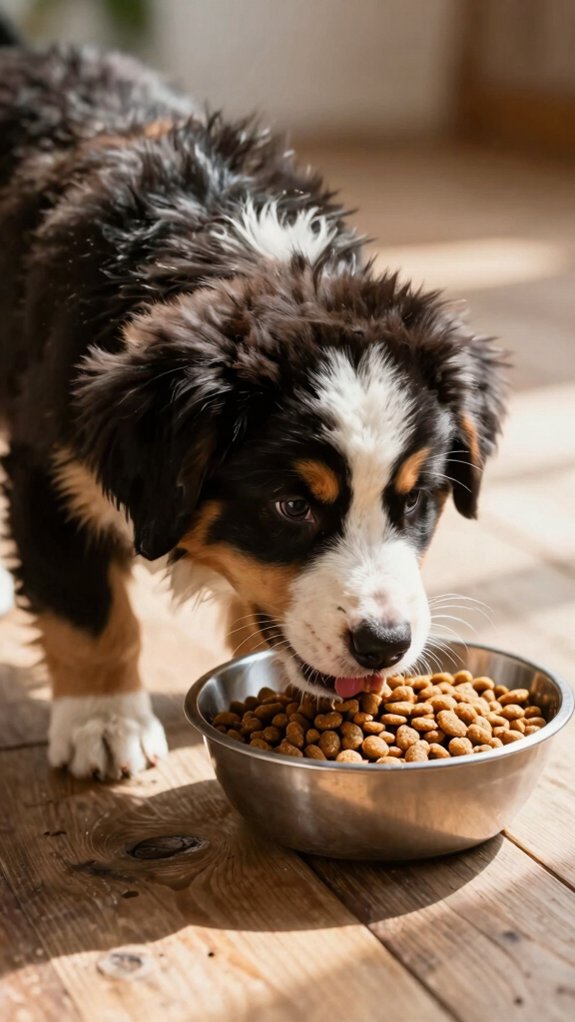
Since Bernese Mountain Dog puppies grow quickly but mature slowly, they need food that supports steady development rather than rapid weight gain. Choose a large-breed puppy formula and follow your veterinarian’s feeding plan.
- Practice portion control, measuring meals instead of guessing.
- Feed three or four smaller meals while your puppy is young.
- Count treat calories, and keep extras modest to protect developing hips and elbows.
- Respect slow maturation, following calcium guidance and never adding supplements unless your vet recommends them.
Follow the food label when changing diets, and avoid vigorous activity right after meals. You’re building healthy routines together.
Early Socialization
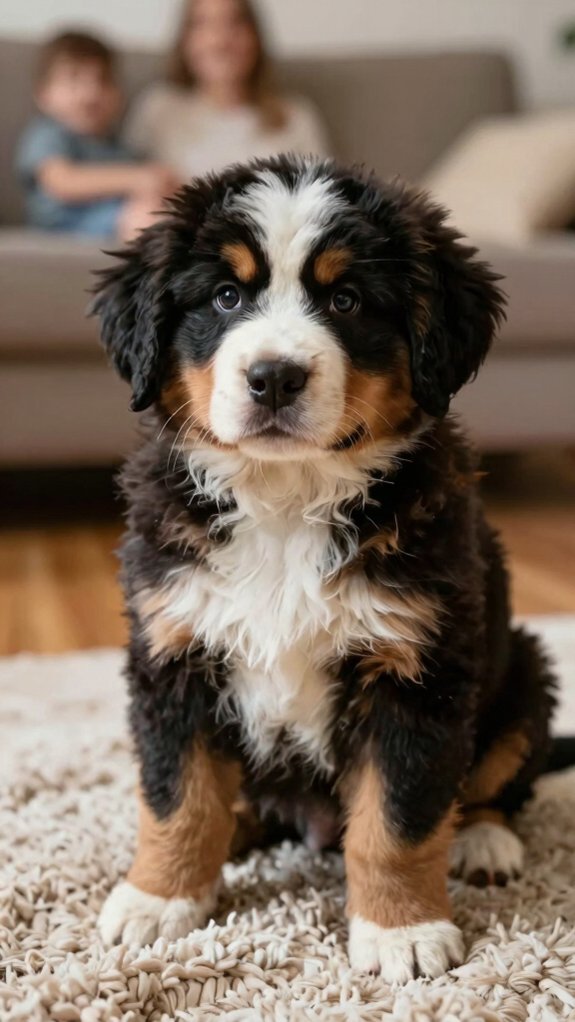
Start socialization in your Bernese Mountain Dog puppy’s first months, when new experiences are easier to shape into positive habits.
Introduce calm people, household sounds, different surfaces, and gentle routines, keeping each session brief and rewarding.
Your puppy may feel shy, so repeat introductions slowly and let them choose a comfortable pace.
Supervise play with vaccinated dogs, and teach polite greetings instead of allowing jumping or frantic excitement.
Include safe obstacle training, such as stepping over low poles, plus leash manners during quiet outings.
Avoid harsh corrections, which can make your sensitive Berner shut down.
Continue socialization beyond puppyhood as confidence and strength develop.
Exercise Without Overdoing It
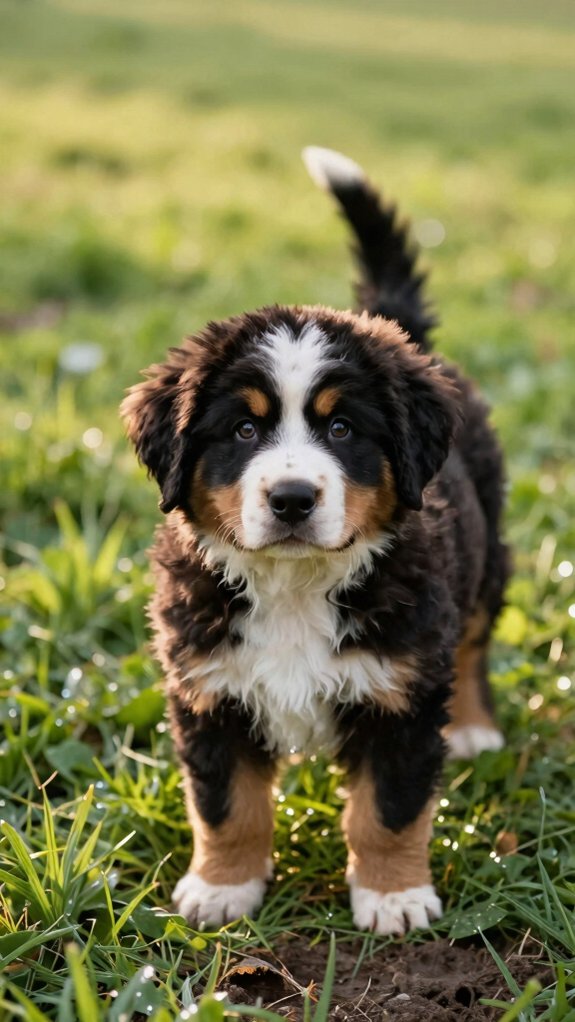
Because Bernese Mountain Dog puppies mature slowly, exercise should build fitness without placing too much stress on growing bones and joints. You’re part of a caring Bernese family, so choose age appropriate pacing over intense workouts.
- Start with about 30 minutes daily, split into easy walks and gentle play.
- Increase time gradually as your puppy grows, and avoid heavy jogging or running until maturity.
- Follow heat safety rules, offer water and shade, and stop for rapid panting, drooling, or bright red gums.
- Watch recovery; frequent rests or early slowing means tomorrow should be calmer.
Low-impact walks and short hikes help your puppy thrive safely.
Grooming Thick Coats
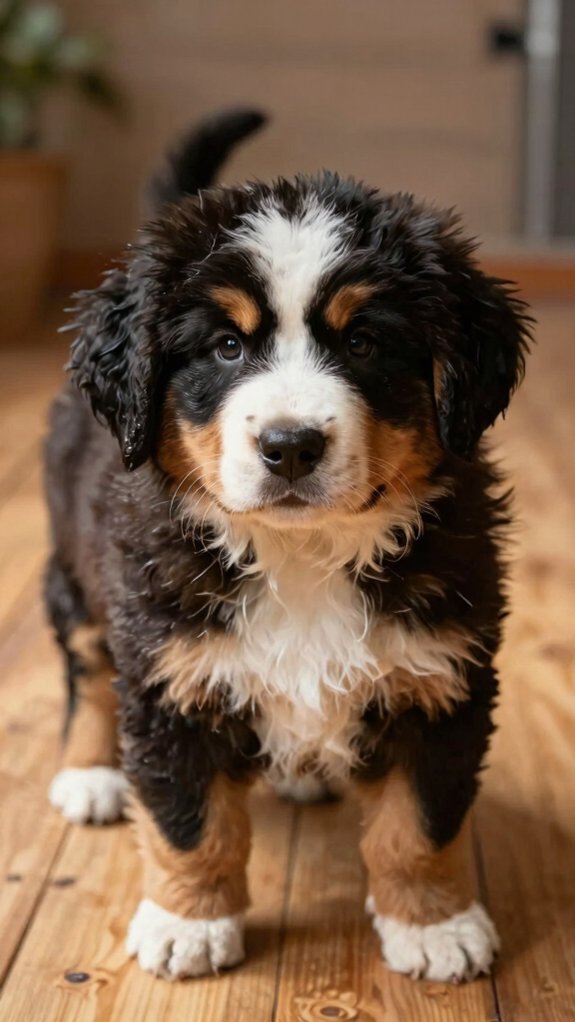
After a gentle walk or play session, give your Bernese Mountain Dog puppy’s thick double coat a quick check. Look for leaves, burrs, or small tangles, especially behind the ears, under the legs, and around the tail.
Brush weekly with a slicker brush or metal comb, then brush daily during shedding season. Deshedding tools can help remove loose undercoat, but use them gently and follow product directions.
Start your grooming routine early, keeping sessions short and calm so your puppy learns to enjoy this shared care. Don’t shave or clip the coat short, since its double layers support insulation and airflow.
Training Basics
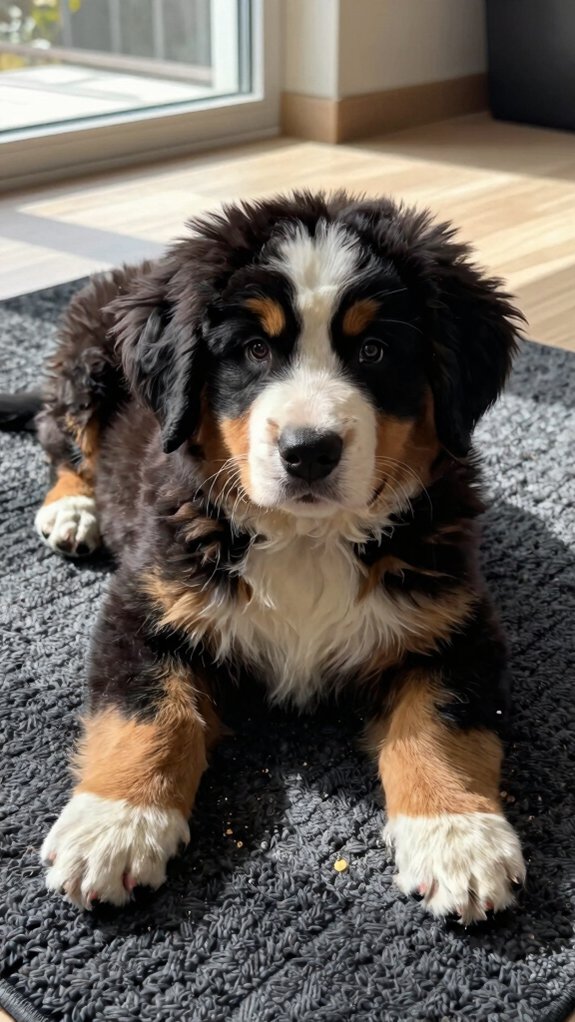
Training your Bernese Mountain Dog puppy early helps build good habits while they’re ready to learn and still developing. Because they’re smart and willing to please, gentle lessons can strengthen your bond.
- Practice sit, come, and leash manners in short, daily sessions.
- Use praise, treats, and play, never harsh corrections.
- Pair crate training with potty consistency, taking your puppy out on a regular schedule.
- Socialize gradually, and avoid heavy jogging while growing.
Keep training positive through age three, adding tricks, tracking, and other enrichment.
These activities prevent boredom and help your big family companion grow into a polite, confident member of your household.
Common Health Issues
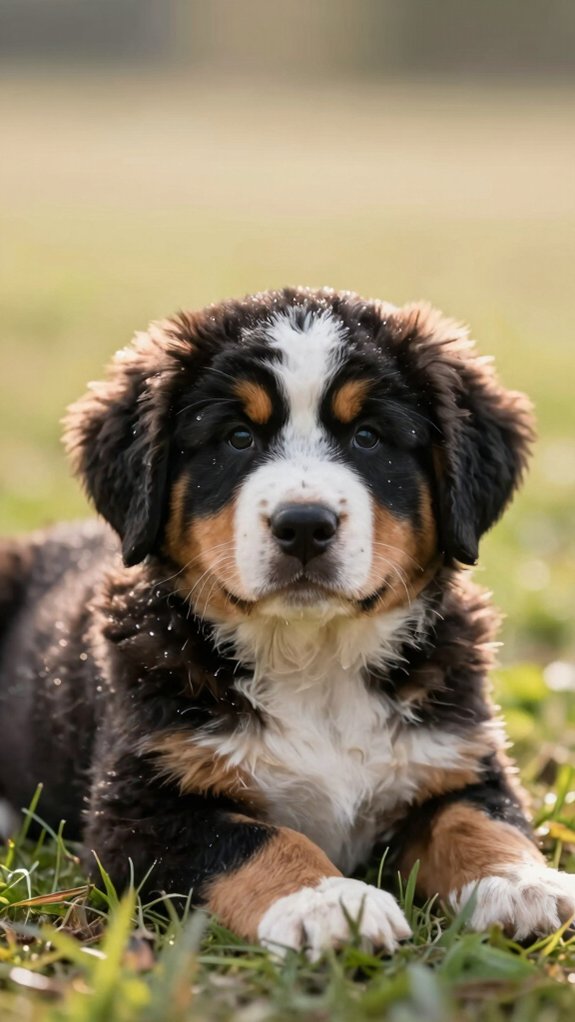
Bernese Mountain Dogs can face several health problems, so regular veterinary visits and careful observation are important from puppyhood onward. Your veterinarian can check for hip and elbow dysplasia, eye conditions, heart problems, autoimmune disease, and Von Willebrand’s disease.
Cancer affects Berners more often than many breeds, so ask about family health history. Learn emergency signs of bloat, including a swollen belly, restlessness, or repeated unproductive retching, and seek help immediately.
Follow vaccine schedules and parasite prevention plans, protect Dental health with brushing, and report changes in movement, vision, appetite, or bleeding. With attentive care, you’ll support your puppy’s well-being together.
Choosing the Right Bed
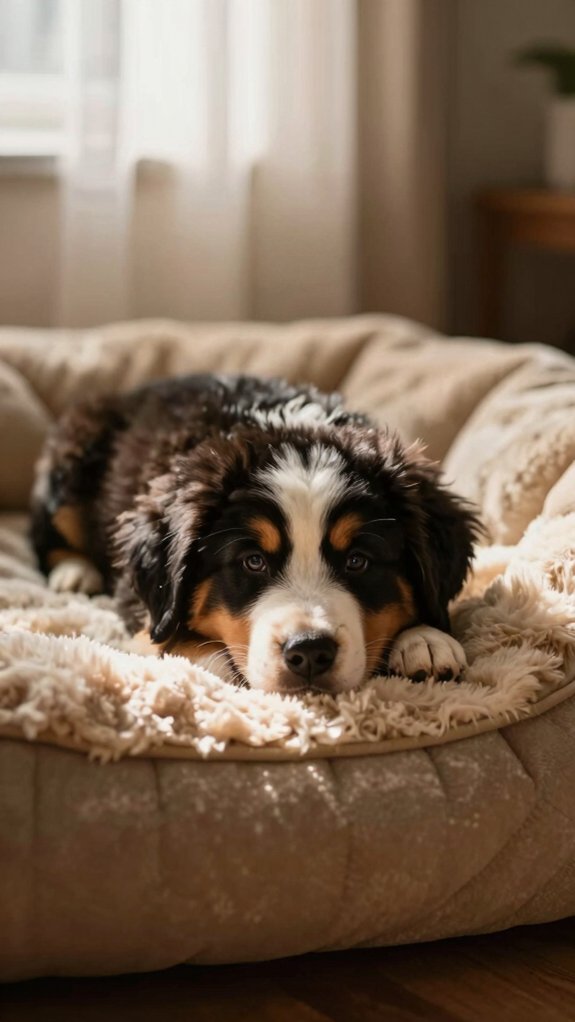
Choose a bed large enough for your Bernese Mountain Dog puppy to stretch out comfortably as they grow. Prioritize Size comfort, since your Berner may reach 70–115 pounds.
Look for firm, orthopedic support to cushion developing joints, and choose washable materials with strong chew durability. A breathable cover or raised cot can help in warm homes.
- Measure your puppy now, then allow room to grow.
- Check seams, zippers, and liners for safe construction.
- Place the bed near family activity, creating a calm home base.
- Wash covers regularly, so your shared space stays welcoming.
A supportive bed helps your puppy rest, settle, and feel included.
Preparing for Heavy Shedding
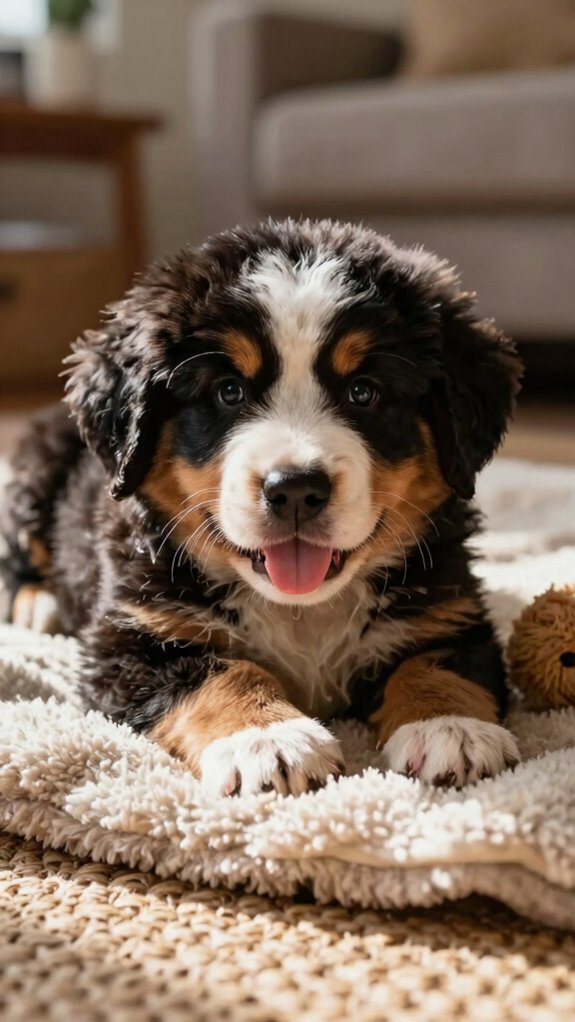
Because Bernese Mountain Dogs have a thick double coat, you’ll need a regular plan for heavy shedding, especially during the two yearly shedding seasons. Brush daily then, using a slicker brush or metal comb for undercoat control, and brush weekly the rest of the year.
Build a grooming schedule early, pairing gentle sessions with praise so your puppy learns to relax. Keep useful shed tools nearby, and never clip the double coat short, since that won’t stop shedding and may harm protection.
Set a vacuum routine for floors and furniture, use rollers for lint removal, and keep coat maintenance steady. A little teamwork makes cleanup manageable.
Family Compatibility
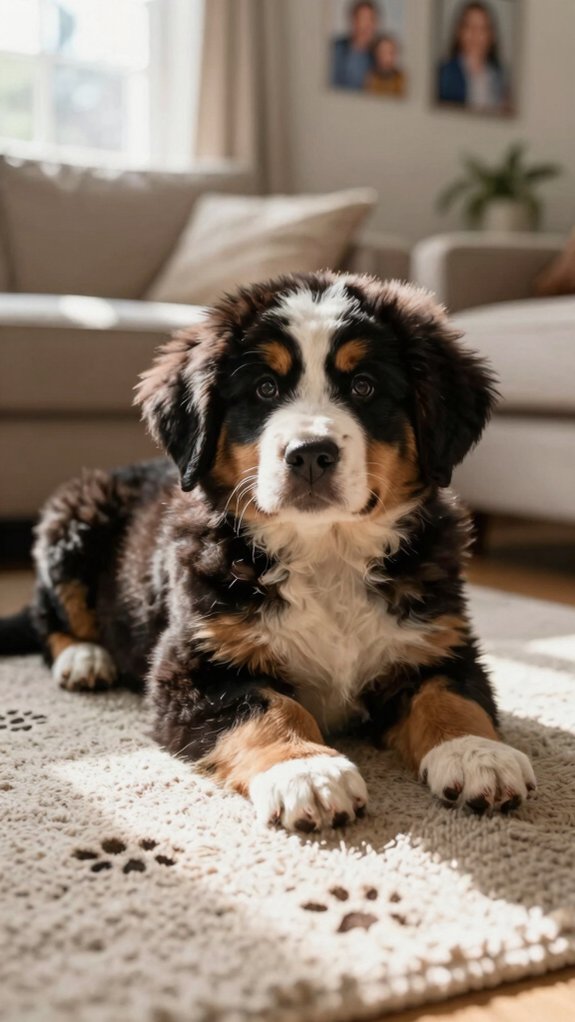
When your family wants a close, gentle companion, a Bernese Mountain Dog can be an excellent fit.
Your puppy will likely stay near familiar people, remain calm at home, and enjoy shared activities.
Because Berners mature slowly, playful energy may continue through your child’s toddler years.
- Build Bonding routines with walks, gentle brushing, and quiet family time.
- Teach toddler manners, including no climbing, pulling, or disturbing sleep.
- Supervise every child-dog interaction, even with a patient puppy.
- Introduce visitors and other dogs early, using calm, positive practice.
Your Berner may seem shy with strangers at first. Give your puppy space, guidance, and time to feel included.
Seasonal Care
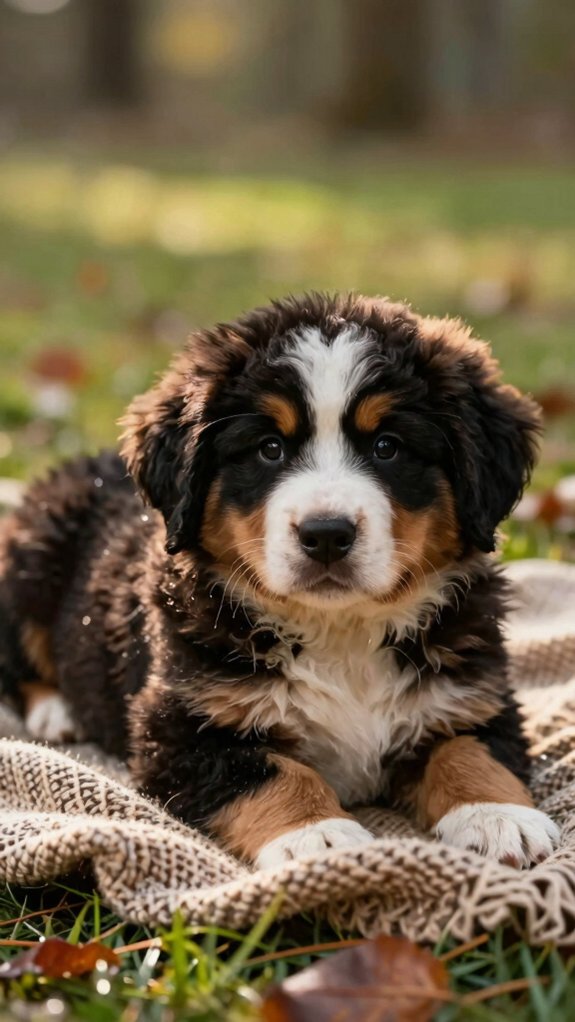
Seasonal changes call for a few adjustments to keep your Bernese Mountain Dog puppy comfortable and safe.
During coat shedding, usually twice yearly, brush daily to manage the thick undercoat and prevent tangles.
For winter grooming, check regularly for mats or ice caught in the fur. Your puppy’s double coat offers insulation, so don’t shave or clip it, which can lead to uneven regrowth, sunburn, and overheating.
Practice heat safety during warm, humid weather. Schedule exercise timing for early morning or evening, reduce intensity, and watch for rapid panting, drooling, red gums, or breathing trouble.
In winter, choose moderate activity and avoid icy surfaces.
Puppy-Proofing Your Home
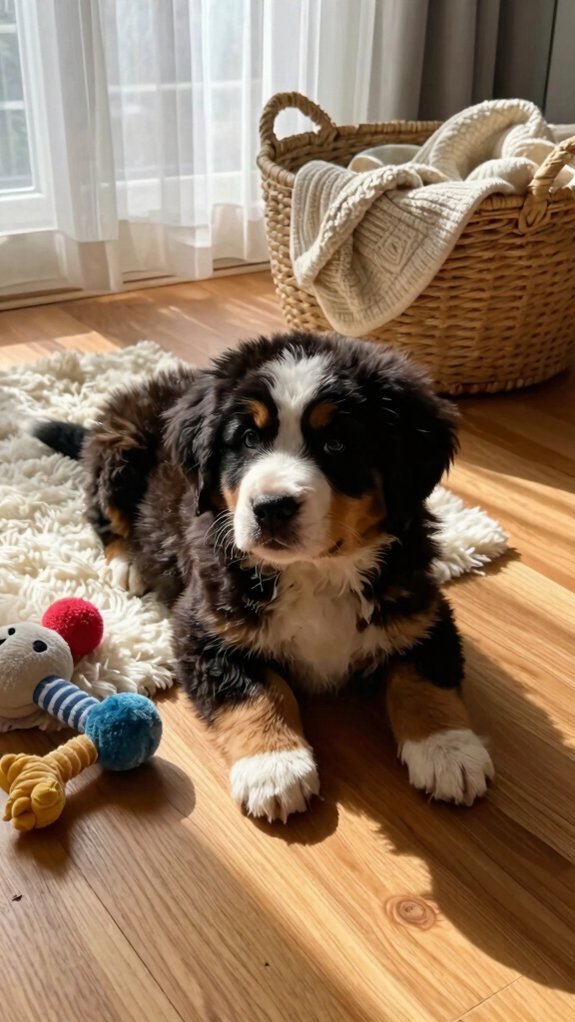
Before your Bernese Mountain Dog puppy arrives, get down to their level and look for anything they could chew, swallow, or knock over. Secure cords, small toys, loose baseboards, Toxic plants, and other indoor hazards.
- Block stairs, use non-slip rugs, and skip high-jump games to protect growing joints.
- Create a chew zone with sturdy puppy-safe chews, rotate them, and reward calm choices during chew training.
- Plan crate placement in a quiet, comfortable spot near family activity, then build alone time slowly.
- Close doors, latch cabinets, and check fences before your puppy investigates.
These steps help your whole household feel ready and connected.
Monthly Development Milestones
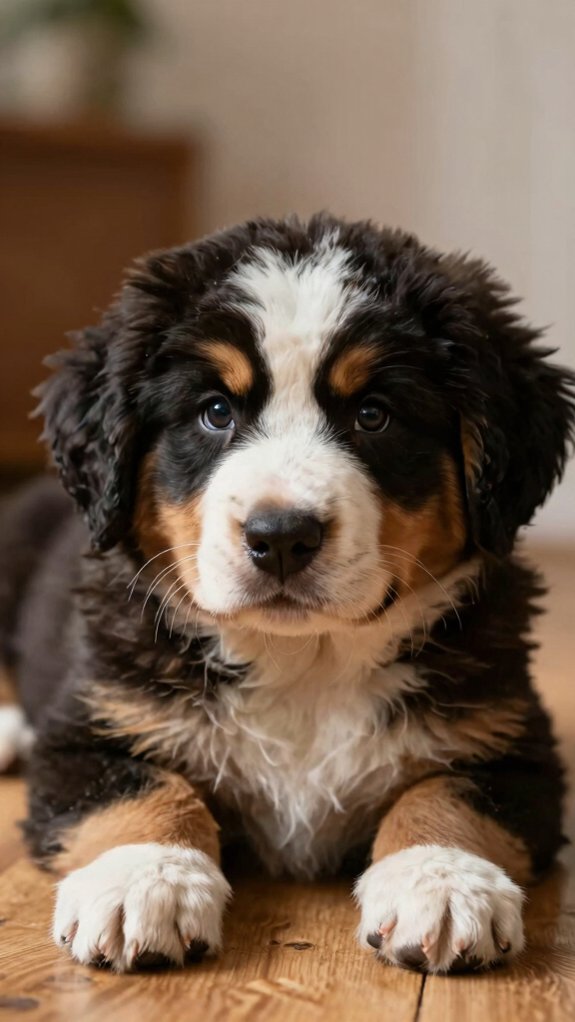
During the first 18 months, your Bernese Mountain Dog puppy will steadily gain size, coordination, and stamina, so keep exercise gentle and build it up slowly.
Monthly changes may seem gradual, but you’ll notice steadier movement, longer focus, and better balance.
At each checkup, review weight, joints, and records with your veterinarian.
Follow the Vaccination schedule and deworming timeline carefully, and ask when screening for hip or elbow concerns makes sense.
Avoid forced running, jogging, and repeated jumping while growth plates develop.
Around 18 months, they typically close, but your Berner may continue growing mentally and physically until about three years.
Life with a Bernese Puppy
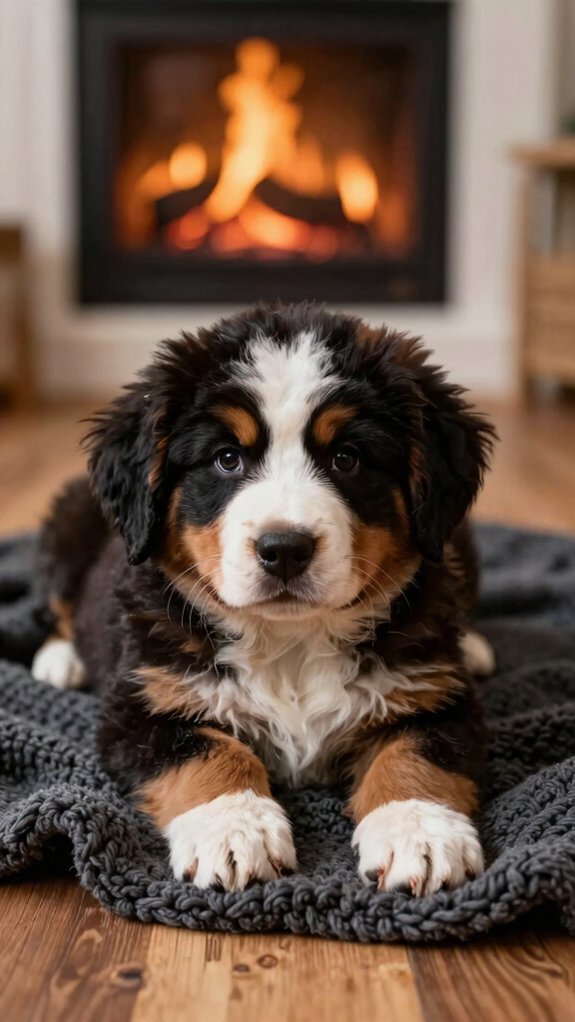
Living with a Bernese Mountain Dog puppy takes patience because this breed matures slowly and may remain playful and rambunctious until about age three. You’re building a family rhythm, not chasing perfection.
- Provide at least 30 minutes of gentle exercise daily, avoiding running that strains growing joints.
- Use positive reinforcement for house training and crate routines, making each step feel safe.
- Offer toys and brief activities when you’re away, since long isolation can invite unwanted habits.
- Brush weekly, or daily during shedding seasons, to manage your Berner’s thick double coat.
With steady care, you’ll grow together as a trusted team.