Small dog breeds excel for seniors because they’re lightweight, easy to handle, and match quieter routines perfectly. Cavalier King Charles Spaniels offer affectionate companionship without demanding exercise, while Shih Tzus thrive in apartments with devoted owners. Maltese and Bichon Frises provide cheerful personalities with manageable grooming. Most live 12–15 years, creating lasting bonds. These breeds encourage park conversations, reduce mobility strain, and fit modest budgets. The real magic happens when you match each breed’s energy level to your lifestyle—something that transforms daily walks into genuine connection.
Disclosure: This post may contain Amazon affiliate links, at no extra cost to you. Content on Pawtangle is created with research support from AI tools and carefully reviewed, edited, and fact-checked by the lead author, Dr.Fahri Pat , to ensure accuracy and reliability. Learn more
Key Takeaways
- Small breeds under 20 pounds reduce physical strain during vet visits, grooming, and daily handling for seniors.
- Calm temperaments and 10–30 minute daily walks match limited mobility while preserving weight management and joint health.
- Affectionate, people-oriented breeds like Cavaliers and Maltese create predictable interactions that reduce frustration and encourage companionship.
- Lifespan of 12–15 years provides long-term companionship; biannual vet visits and senior-formulated diets support aging health needs.
- Low-maintenance breeds like Pugs require minimal grooming, while lap dogs like Shih Tzus suit apartment living and limited mobility.
Why Small Dog Breeds Make the Best Senior Companions

When it comes to finding the perfect furry friend for your golden years, small dog breeds often hit the sweet spot—and I’ve seen firsthand why seniors light up around them.
Small dogs tackle two major challenges: senior mobility and social isolation. A twenty-pound companion won’t strain your back during vet visits or grooming sessions. Crucially, these pups become your ticket to community. Walking a Cavalier King Charles Spaniel or Shih Tzu invites conversations at the park, combating loneliness.
Their calm temperaments and modest exercise needs fit naturally into quieter routines. Plus, they stick around—living twelve to fifteen years—offering genuine, lasting companionship.
Choosing Your Match: How to Match Breed Traits to Your Lifestyle
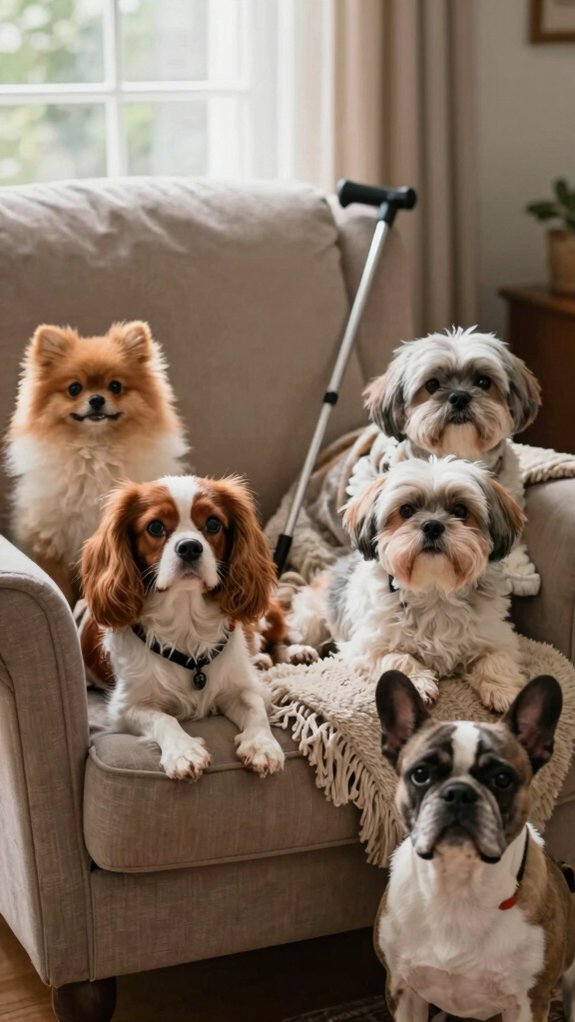
Finding the right small dog breed for your senior years isn’t just about picking a cute face—it’s about matching a dog’s energy, grooming demands, and need for companionship to what you can actually handle day-to-day. I’ve seen too many well-meaning seniors end up frustrated because they chose a high-maintenance Poodle when they really needed a low-fuss Pug, or picked an independent breed when they craved constant cuddle time. The good news is that once you honestly assess your activity level, your tolerance for grooming appointments, and how much companionship you want, finding your perfect match becomes straightforward.
Activity Level Alignment
One thing I’ve noticed after years working with senior dog owners is that most people pick a breed based on how adorable it looks in photos—then reality hits when a high-energy pup needs two hours of exercise and their knees start complaining by day three.
The trick? Match age-appropriate exercise to your actual lifestyle. Low-mobility seniors thrive with Shih Tzus or Maltese dogs—think 10–20 minute daily walks, mostly indoors. Moderately active folks handle Cavaliers or Miniature Schnauzers needing 20–30 minutes daily.
Home safety adaptations matter too: remove tripping hazards, make certain adequate space for gentle movement, and pick breeds whose energy levels won’t create chaos.
Grooming and Maintenance Fit
After matching a senior to the right activity level, there’s another reality check that catches most people off guard: grooming demands can make or break the whole arrangement. Short-haired breeds like Pugs need only weekly brushing—perfect for those wanting minimal fuss. Conversely, Shih Tzus demand daily brushing and professional grooming every 4–8 weeks, requiring serious budget planning and grooming tools. Hypoallergenic breeds shed little but still need regular trims costing $40–$90 per session. Smart budget planning means factoring recurring costs upfront. Consider taking on an adult dog already on a maintenance schedule, or hire mobile groomers to reduce physical strain and keep life manageable.
Temperament and Companionship Needs
What makes a dog the right fit—the breed itself, or what’s actually happening in your daily life? That’s where emotional bonding truly begins. Affectionate breeds like Cavalier King Charles Spaniels and Shih Tzus thrive on lap time, creating natural companionship routines that fit senior lifestyles perfectly. These calm, people-oriented dogs reduce frustration through predictable interactions.
| Breed | Temperament | Best For |
|---|---|---|
| Cavalier King Charles Spaniel | Affectionate, keen to please | Lap companions |
| Bichon Frise | Cheerful, trainable | Active involvement |
| Shih Tzu | Calm, devoted | Quiet home living |
Consider adopting older, house-trained dogs—they’re already settled emotionally and need less intensive training demands.
Cavalier King Charles Spaniel: The Affectionate Lap Dog
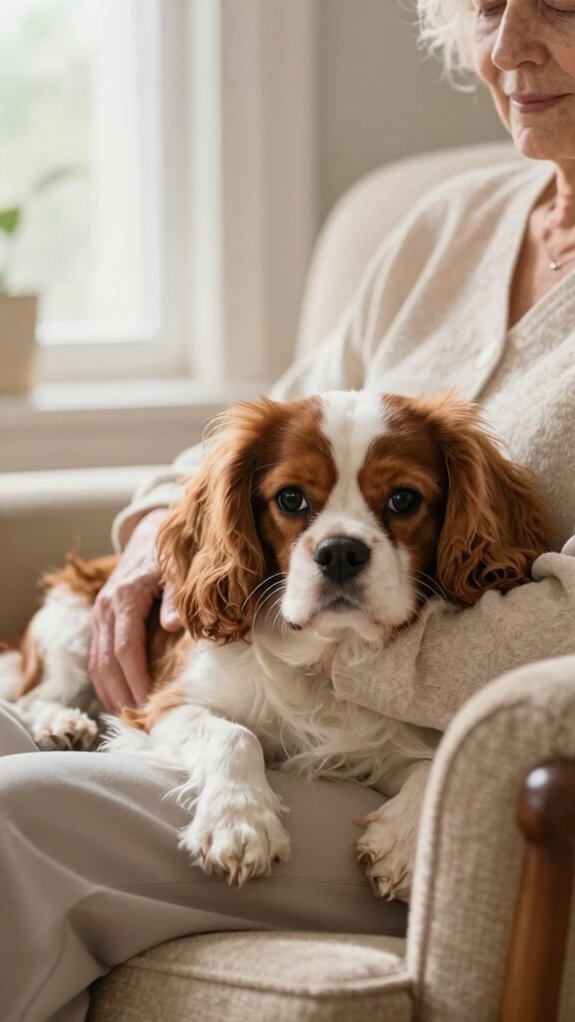
The Cavalier King Charles Spaniel is essentially the golden retriever of lap dogs—compact enough to actually fit on your lap, but with a personality so affectionate that seniors often joke they’ve become permanent furniture in their homes. These 12–13 inch sweethearts thrive on companionship and don’t need grueling exercise routines, making them perfect for older owners who want a devoted friend without the high-energy chaos of younger breeds. That said, their tendency toward heart issues means regular vet visits aren’t optional—they’re the real deal for keeping these gentle souls healthy and happy for years.
Perfect Companion For Seniors
Cavaliers excel at this intuitive companionship. Their gentle nature creates natural senior bonding through daily routines—morning cuddles, afternoon walks, evening lap time. These dogs genuinely thrive on closeness, matching a slower lifestyle perfectly.
What makes them ideal:
- Weigh under 20 pounds, manageable for most seniors
- Require only short walks and indoor play
- Keen to please, needing minimal training effort
Their affectionate temperament means less stress, more connection. They’re not demanding—just present. That consistent companionship becomes the real gift, transforming routines into meaningful moments together.
Moderate Exercise And Care
With their silky ears and soulful eyes, these spaniels have perfected the art of doing absolutely nothing—and somehow making it look like the best part of your day. Daily short walks and indoor play sessions keep Cavaliers content without demanding intense exercise. Their moderate energy means seniors can build tailored routines fitting their lifestyle. Mental stimulation through gentle games—hide-and-seek with treats or puzzle toys—keeps their minds sharp during quieter afternoons. Weekly brushing prevents matting while creating bonding time together. The payoff? A relaxed companion thriving on companionship rather than exhausting athletic demands, making daily life genuinely easier for both of you.
Shih Tzu: A Low-Maintenance Breed for Devoted Seniors
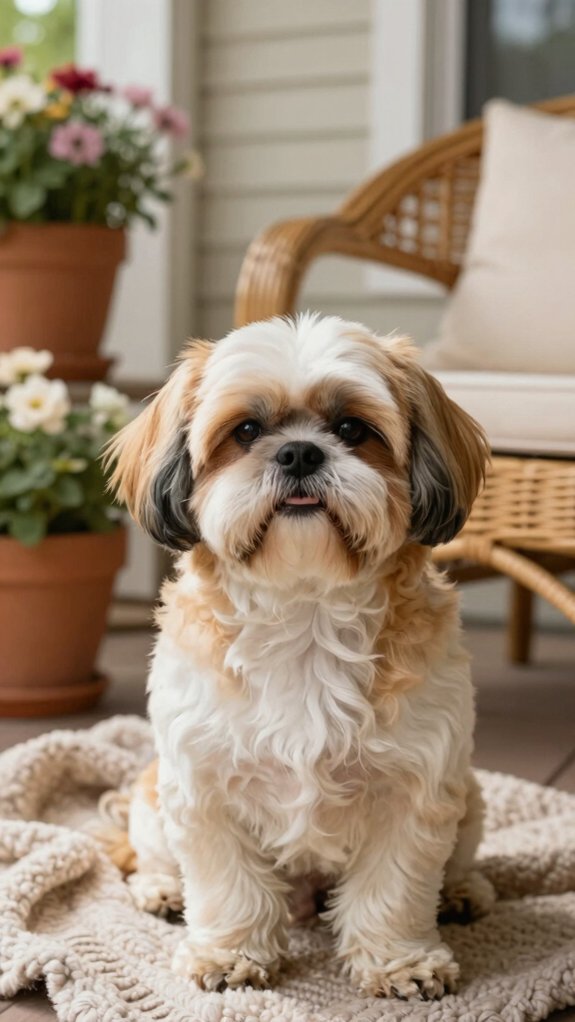
If you’re a senior looking for a dog that won’t exhaust you with constant demands but will absolutely shower you with affection, a Shih Tzu might be your perfect match.
These 9–16 pound companions thrive on shorter daily walks and indoor play, making them ideal for limited mobility situations. Their even temperament and apartment-friendly nature create wonderful senior bonding opportunities without demanding marathons around the neighborhood.
Key considerations:
- Daily brushing prevents mats; puppy cuts reduce grooming stress
- Watch for dental disease and eye problems through routine vet care
- Their need for frequent attention means avoiding long alone periods for home safety
Regular preventive care keeps these devoted lap dogs healthy and happy.
Maltese: Pocket-Sized Comfort and Easy Handling
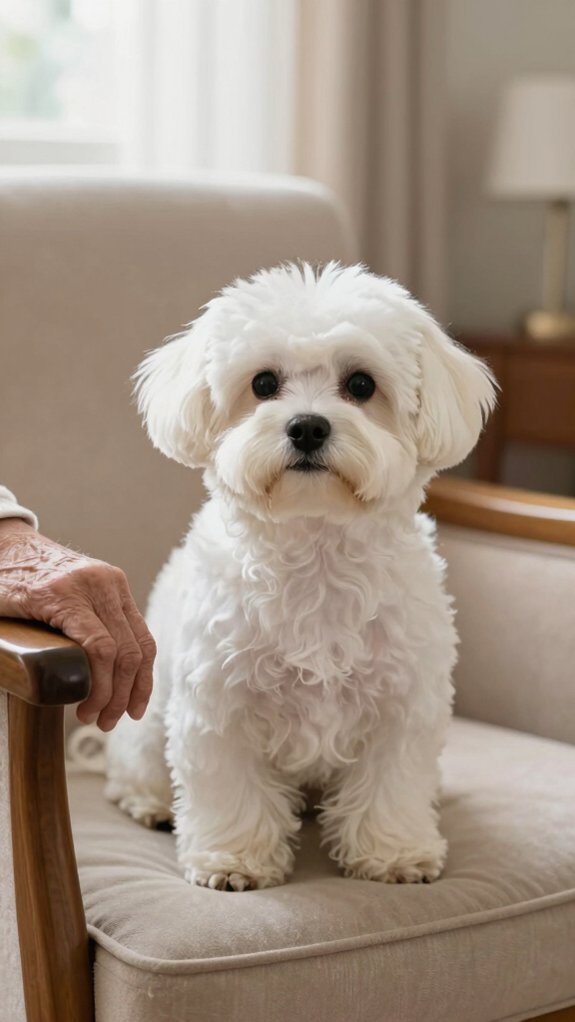
The Maltese might just be the ultimate lap dog for seniors who want a companion that actually fits on their lap—we’re talking under 7 pounds of pure affection that bonds deeply with one person. These little dogs need barely any exercise beyond short daily walks and some gentle indoor playtime, which means your knees won’t take a beating, and neither will your energy levels. But here’s the real trade-off: that gorgeous silky white coat either demands regular professional grooming or you go practical with a “puppy cut” and skip the high-maintenance routine altogether.
Affectionate Lap Dog Companion
Ever notice how some seniors light up the moment a small dog settles into their lap?
Maltese dogs are built for exactly this. Bred as companion lap dogs, they thrive on close human connection and constant companionship. These little ones genuinely prefer cuddling with their owners over solo play, making lap warmth their favorite spot in the home.
What makes them perfect lap companions:
- They follow owners from room to room, never wanting to miss a moment together
- Their affectionate nature means they’re always ready for cuddles and snuggles
- They adjust beautifully to a senior’s daily routine and slower pace
The result? A devoted friend who truly wants to be near you.
Minimal Exercise Requirements
At just under 7 pounds, a Maltese fits snugly in your arms—and honestly, that’s where most of them want to be anyway. These tiny companions need surprisingly little exercise: short indoor play sessions and one 15–20 minute daily walk typically satisfy their activity requirements. I’ve found that mental stimulation matters more than marathon running. Puzzle toys, hide-and-seek games, and indoor enrichment activities keep their clever minds occupied without exhausting their delicate frames. Their compact size makes them perfect for apartments or assisted-living communities. The real secret? Consistent companionship beats lengthy exercise every single time.
Grooming and Coat Care
Daily brushing might sound like a chore, but here’s what I’ve noticed after years working with senior dog owners: those silky Maltese coats mat faster than you’d expect, especially around the ears and face where moisture loves to hide.
- Daily brushing (10–15 minutes) prevents tangles using proper brush tools designed for single-layer coats
- Bathing every 2–4 weeks with hypoallergenic shampoo maintains skin health; thorough drying prevents mat formation
- Regular face and eye cleaning stops tear stains and bacterial buildup that seniors find frustrating
Many owners embrace the “puppy cut” for seasonal grooming flexibility. Professional grooming every 6–8 weeks ($40–$90) keeps things manageable. Nail trims every 3–4 weeks and routine ear checks round out this surprisingly doable routine.
Poodle (Toy & Miniature): Intelligence Meets Hypoallergenic Coats
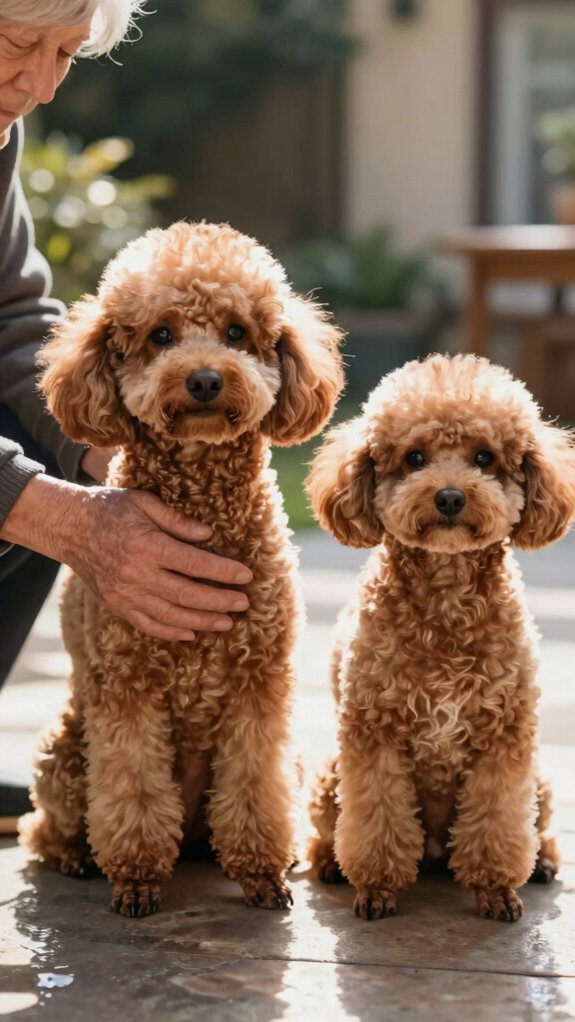
Poodles—both toy and miniature versions—consistently rank among the smartest dog breeds you can bring home, and I’ve watched countless seniors realize that intelligence is honestly a game-changer when it comes to training and daily life together. Their natural ability to excel at obedience means fewer accidents indoors and less frustration overall. On the coat allergies front, those curly, low-shedding coats are genuinely hypoallergenic, reducing airborne dander that bothers sensitive seniors. Training benefits extend beyond housebreaking—poodles pick up commands quickly, making them wonderfully responsive companions. Professional grooming every six to eight weeks keeps their coats healthy and manageable, though it’s an ongoing commitment worth planning for.
Bichon Frise: Cheerful Energy Without High Demands
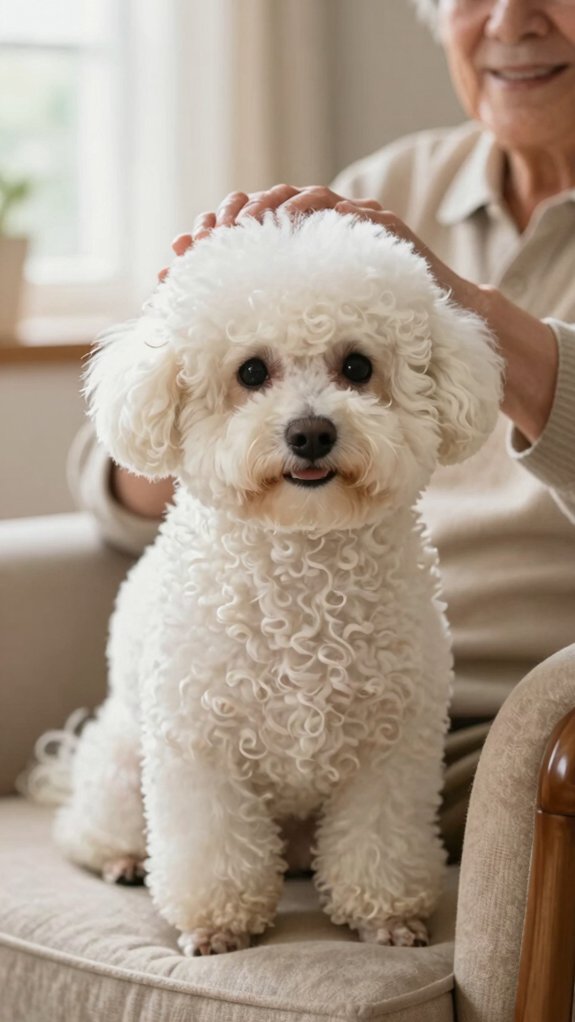
When it comes to finding a dog that won’t exhaust you with constant demands but still brings genuine joy to your day, the Bichon Frise checks nearly every box for seniors seeking a manageable companion. These small dogs weigh just 12–18 pounds and stand around 9.5–11.5 inches—easy to handle and transport anywhere. Their hypoallergenic coats shed minimally, reducing allergens at home.
Why Bichons shine for seniors:
- Moderate energy levels suit short walks and indoor play without overwhelming schedules
- clever and keen to please, they train easily with positive reinforcement
- Thrive in apartments and assisted-living settings, adjusting well to quiet environments
With lifespans reaching 12–15 years, proper diet adjustments and routine veterinary care support longevity. Their cheerful temperament makes them excellent therapy visit companions, bringing comfort to community spaces and fellow residents alike.
Greyhound: A Surprising Large-Breed Option for Low-Activity Seniors
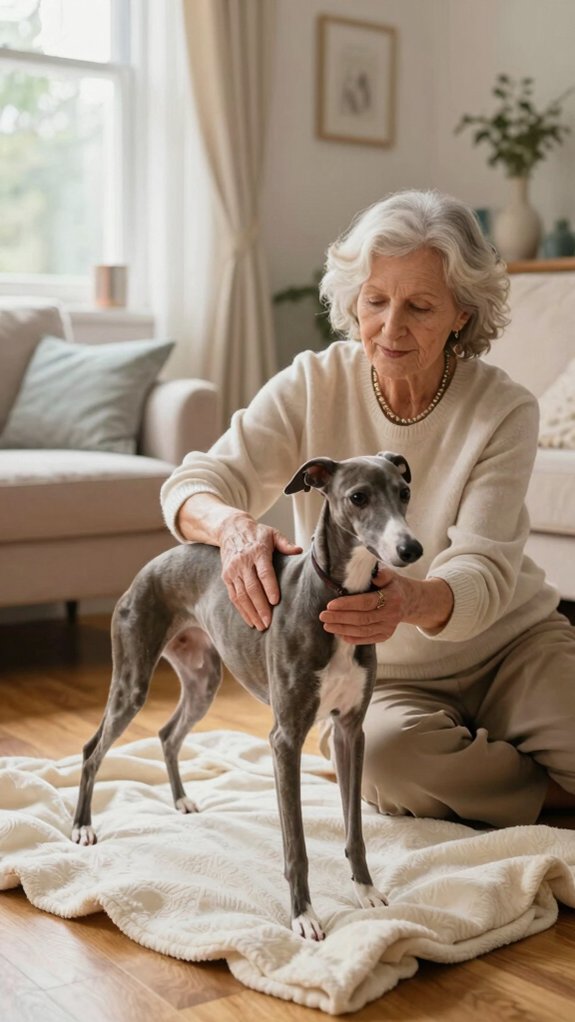
Most people picture greyhounds as racing machines that never stop moving—but here’s where I’d gently push back on that assumption. These gentle giants, typically 60–70 pounds, are actually “40-mph couch potatoes” requiring just one brisk walk and occasional sprints. Their calm temperament makes them surprisingly manageable for seniors seeking low-impact companionship without demanding energy levels. Retired racers often arrive pre-screened through adoption groups, easing adjustment stress. Short coats mean minimal grooming. However, thin skin requires soft bedding and cold-weather protection. Monitor dental health and weight closely. Their surprising suitability rewards patient, thoughtful owners with devoted, quiet household members.
Senior Dog Health: Common Issues, Prevention, and Wellness Care
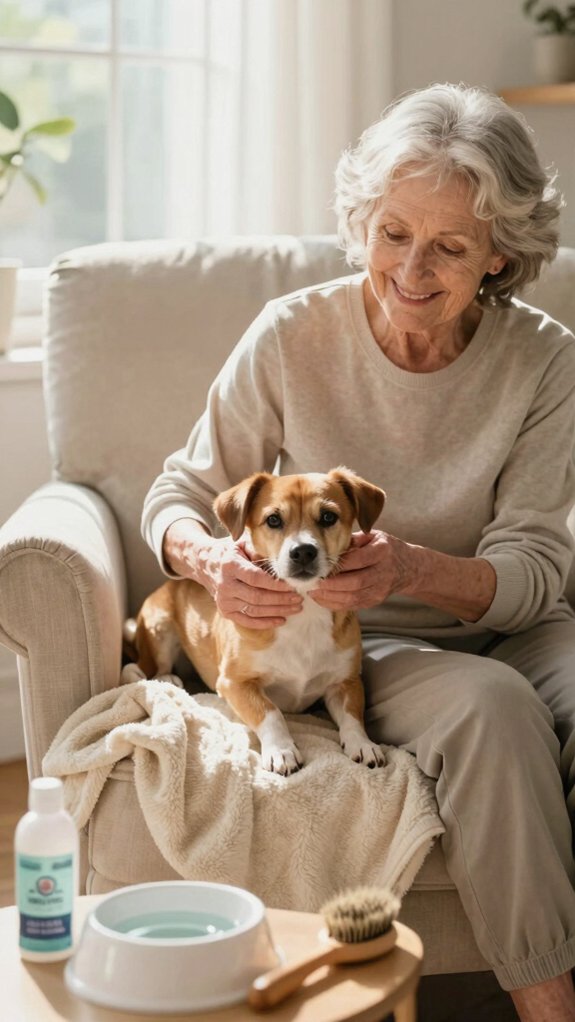
Watching your small dog move a little slower each year—maybe limping after playtime or squinting at the treats you’re holding out—hits different when you realize those sprightly puppy days are behind them. Dental disease, osteoarthritis, and heart issues commonly affect aging small dogs, requiring biannual vet visits and routine bloodwork.
Prevention matters most:
- Senior-formulated diet with omega-3s and glucosamine supports joints
- Low-impact daily walks preserve mobility
- Home modifications like ramps ease strain
Weight management reduces osteoarthritis progression. Geriatric pain management and end-of-life planning conversations with your vet make certain quality years ahead, catching problems early when treatments work best.
Where to Find Your Match: Rescues, Shelters, and Responsible Breeders
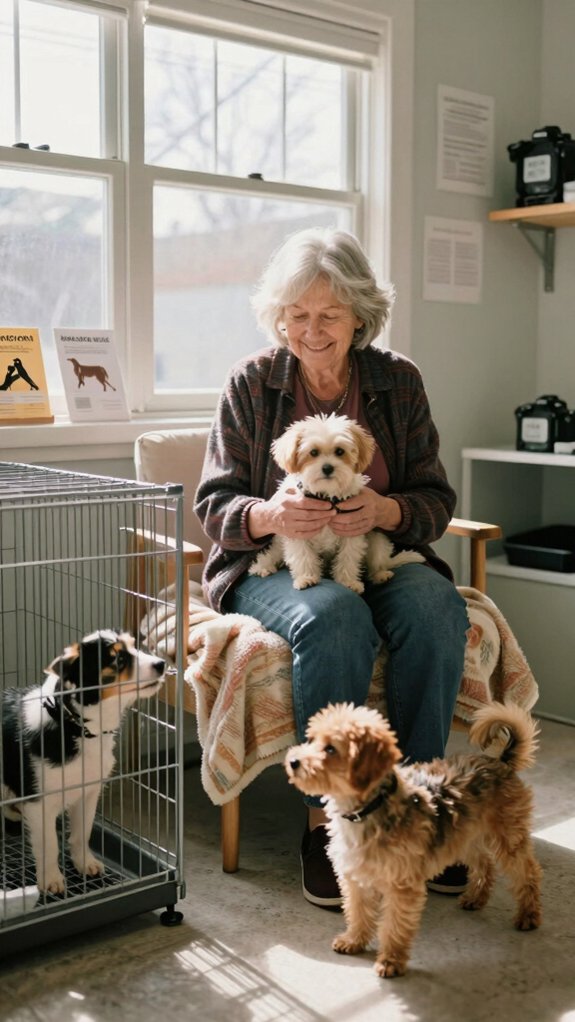
Finding the right small dog for your life—especially when you’re looking for a calmer companion who fits your pace—can feel overwhelming with so many options out there. Local shelters and breed rescues offer pre-screened, adult dogs already house-trained and lower-energy. Temporary care programs let you test compatibility before committing. Responsible breeders provide health clearances and multi-generation records. Always request veterinary documentation, vaccination status, and meet-and-greets first. Breed rescues specialize in purebreds like Cavaliers or Shih Tzus, offering behavior assessments and post-adoption support. Many organizations provide trial periods, removing guesswork from finding your perfect senior-friendly match.
Frequently Asked Questions
What Is the Average Lifespan of Small Dog Breeds, and How Does It Compare to Larger Dogs?
Small dog breeds typically live 12-18 years, considerably longer than larger dogs, which often live 8-12 years. This size correlation reflects established longevity factors, making smaller companions ideal for those seeking extended companionship and shared experiences with their beloved pets.
How Much Does It Typically Cost to Adopt or Purchase a Small Dog Breed?
Small dog taking-in fees typically range from $50 to $300 through shelters and rescues, while purchasing from breeders costs $500 to $3,000. Beyond initial expenses, owners should budget for ongoing expenses including veterinary care, food, and grooming, creating a fulfilling community of responsible pet parents.
Can Small Dogs Be Trained to Alert Seniors to Falls or Medical Emergencies?
Small dogs possess almost superhuman abilities to detect medical crises. They can be extensively trained as medical alert companions, performing fall detection and alerting seniors to emergencies. This transforms vulnerable individuals into enabled community members with constant protective companionship.
What Are the Best Travel Options for Seniors Who Want to Bring Their Small Dog on Trips?
Seniors traveling with small dogs should research pet-friendly hotels and airline pet policies beforehand. Many accommodations now welcome canine companions, creating inclusive travel communities. Airlines offer cabin travel options for smaller breeds, ensuring seniors and their beloved pets discover the world together comfortably.
How Do I Know if My Senior Dog Is Experiencing Pain or Declining Health?
Studies show that 80% of senior dogs experience arthritis. One recognizes pain through changes in appetite, altered mobility patterns, reluctance to climb stairs, or behavioral shifts. Fellow pet caregivers understand these signs indicate veterinary consultation becomes crucial for their beloved companion’s comfort.