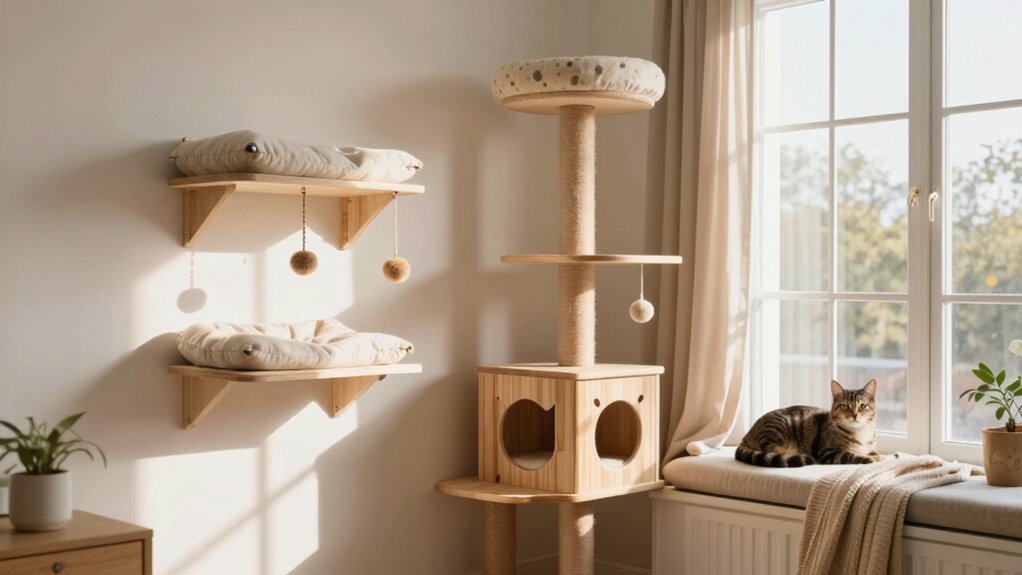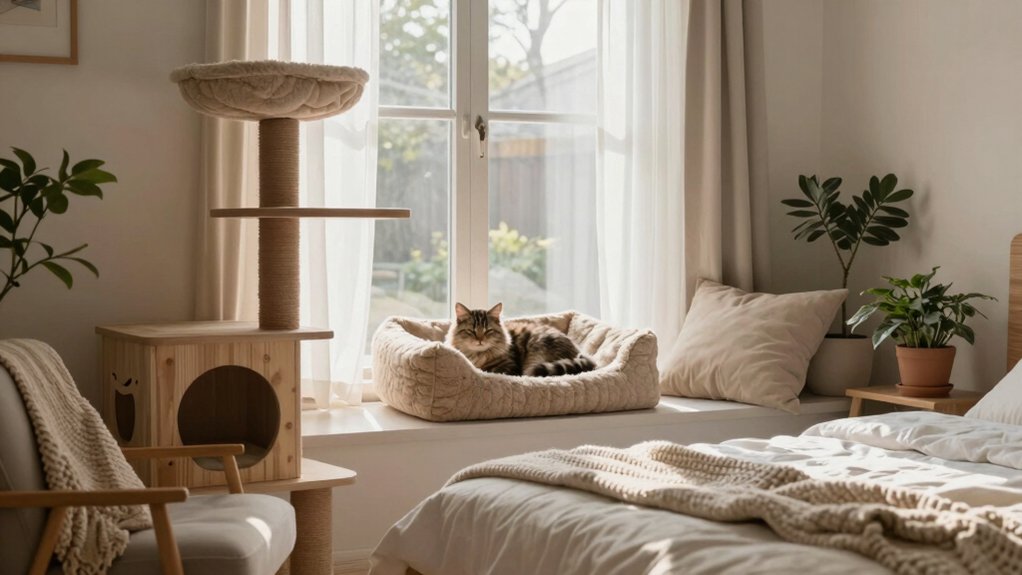
Make your bedroom a safe, cozy haven for you and your cat by adding vertical shelves and a window perch for climbing and views, plus steps or ramps for easy access. Choose scratch-friendly fabrics, stash the litter in a hidden, low-dust unit, and secure cords and drawers. Add washable beds, cat-safe plants, gentle lighting, and steady air circulation to keep things fresh. Keep hazards out of reach, and keep exploring this list for practical setup tips.
Disclosure: This post may contain Amazon affiliate links, at no extra cost to you. Content on Pawtangle is created with research support from AI tools and carefully reviewed, edited, and fact-checked by the lead author, Dr.Fahri Pat , to ensure accuracy and reliability. Learn more
Key Takeaways
- Provide vertical spaces like sturdy shelves and climbing steps near windows for exercise and secure lookout spots.
- Integrate scratching-friendly materials (sisal/jute) and nearby posts to protect furniture and satisfy scratching instincts.
- Create cozy resting zones with enclosed or raised beds, washable covers, and warm, quiet placement.
- Conceal litter boxes with furniture enclosures or top-entry designs and keep them clean and accessible.
- Secure cords, medications, and plants; choose non-toxic greenery and use cord covers or drawer latches for safety.
Elevated Cat Shelves
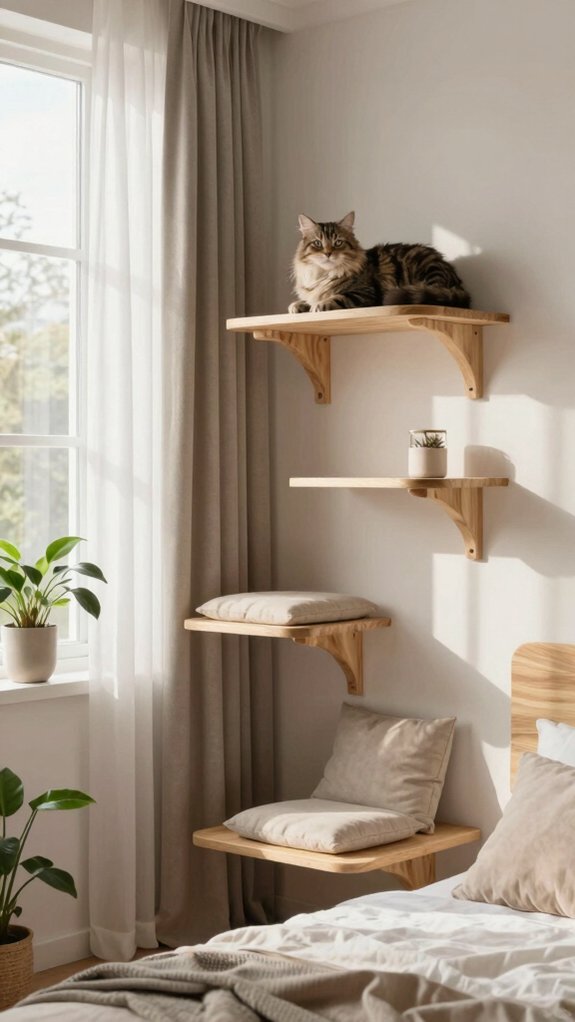
Give your cat vertical climbing space by installing a series of sturdy shelves at different heights so they can move, perch, and survey the room. You’ll encourage healthy exercise and mental stimulation while offering secure spots that feel private and comforting. Place shelves with safe spacing and soft bedding so cats of all ages, including seniors, can reach and rest easily.
Vertical climbing space
One or two well-placed raised shelves can transform a bedroom into a stimulating, secure vertical playground for your cat. You’ll support natural climbing behavior and encourage feline exploration by installing shelves at varied heights, creating exercise routes that reduce stress and strengthen bonds. Choose sturdy, natural wood shelves that blend with your décor and save floor space in smaller rooms. Wall-mounted options let you design escape routes where cats feel safe watching the world. Place platforms near favorite windows and connect them with ramps or perches so every cat in your home finds its spot.
| Feature | Benefit |
|---|---|
| Varied heights | Encourages exercise |
| Wood material | Durable, blends decor |
| Wall-mounted | Saves floor space |
| Window access | Increases security and comfort |
Window Perch Setup
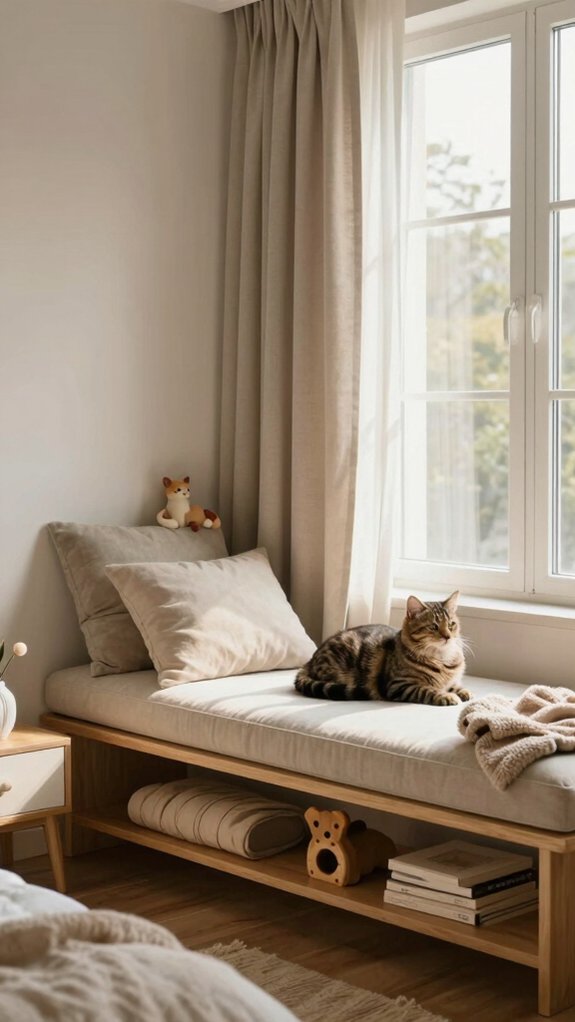
You’ll want a window perch that gives your cat a safe sunbathing spot where they can watch birds and feel the warmth. Pick a sturdy, well-secured perch with soft, washable padding and position it where sunlight is plentiful but away from busy streets or other hazards. Add a lightweight screen or curtain you can close during peak sun to prevent overheating and protect their skin.
Safe sunbathing spot
When your cat wants a sunny lookout, a sturdy window-mounted perch creates a secure raised spot where they can sunbathe and keep an eye on the neighborhood; pick a well-built model with non-slip surfaces, place it where sunlight hits across most of the day, and add a soft cushion so they’ll stay comfortable for long naps while feeling safe off the floor. You’ll support their need for sunlight exposure and territorial watching by choosing a perch rated for your cat’s weight and anchoring it correctly. Tidy perch maintenance—wiping surfaces, washing cushions, checking fastenings—keeps the spot hygienic and safe. Arrange the perch near your usual place so both of you share this peaceful ritual; it builds trust, belonging, and a reliable retreat your cat will love.
Scratch-Friendly Furniture
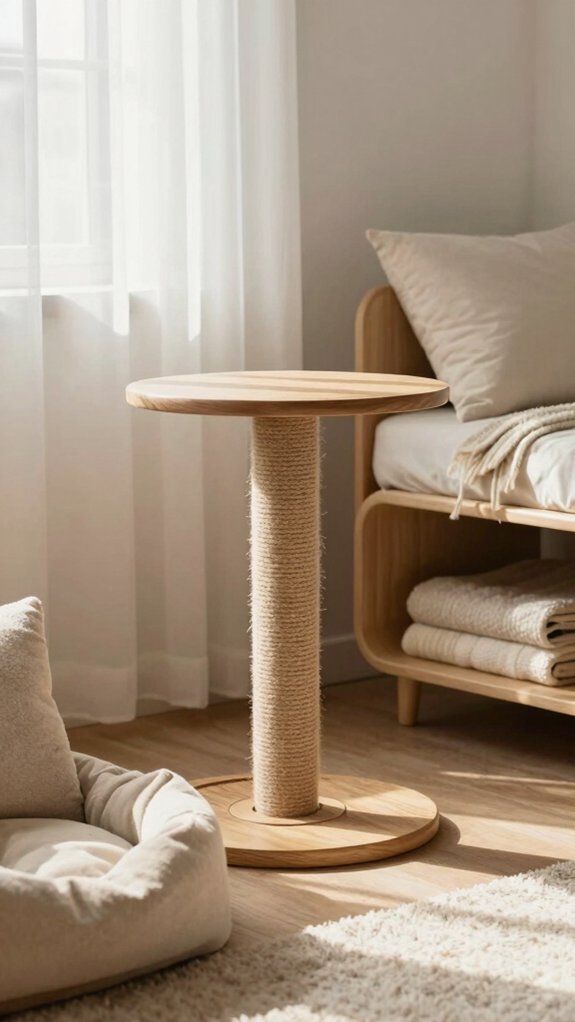
Start with furniture that stands up to claws: pick pieces upholstered in durable materials like sisal, jute, or heavy canvas so scratches won’t show and fabrics won’t shred quickly. You’ll want scratch resistant upholstery and thoughtful furniture color choices that hide wear while matching your style. Place scratching posts or pads next to seating so your cat learns where to go, and consider multi-functional pieces—cat trees that blend with decor give scratching plus resting spots. Choose sturdy bases and rounded edges to prevent tipping when your cat jumps, and pick covers that are removable and washable to keep the room fresh. These practical choices protect your belongings and welcome your cat, creating a shared, cozy space you both enjoy.
Hidden Litter Box Solutions
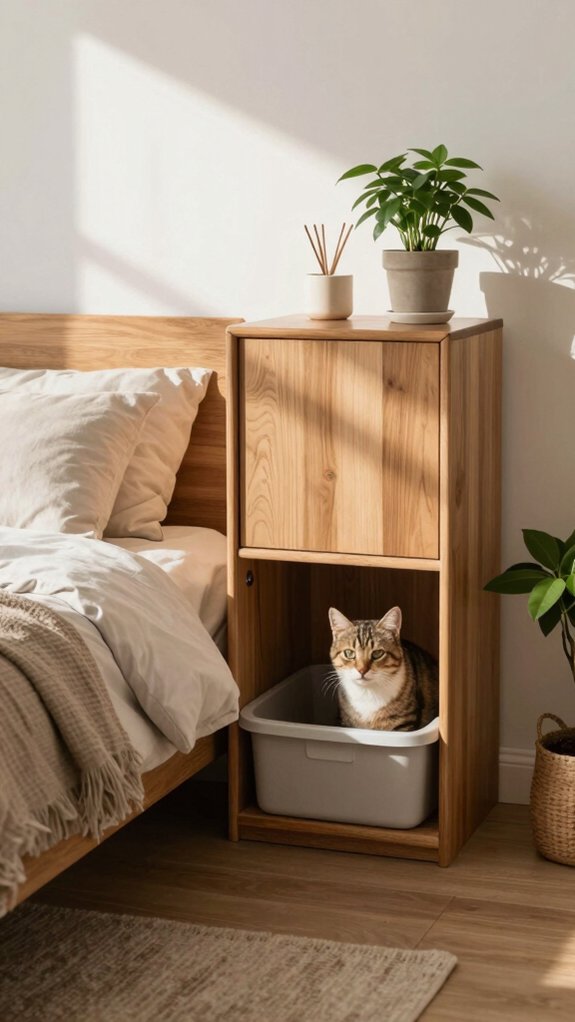
You can tuck a litter box into a bench, cabinet, or behind a decorative screen to keep it out of sight without blocking your cat’s access. Top-entry designs and low-dust litter help contain tracking and odors when the box is placed in a corner or under a console. Keep it clean and accessible so the hidden solution stays hygienic and comfortable for your cat.
Discreet placement ideas
Although a litter box is a necessity, you can tuck it out of sight without sacrificing style or your cat’s comfort; choose furniture-style enclosures, plant-style designs, or hooded boxes that blend with your bedroom and cut down on odor and tracking. Think about litter box aesthetics and discreet furniture options that match your decor—decorative cabinets or benches hide the box while offering storage. Plant-style covers or faux planters let you incorporate a practical piece that feels intentional. A hooded box reduces scatter and controls smell; pair it with low-dust litter to keep the area cleaner. Place the setup in a quiet corner or behind a screen so your cat feels safe. These small choices help you and your cat share a calm, welcoming bedroom.
Cat-Safe Indoor Plants
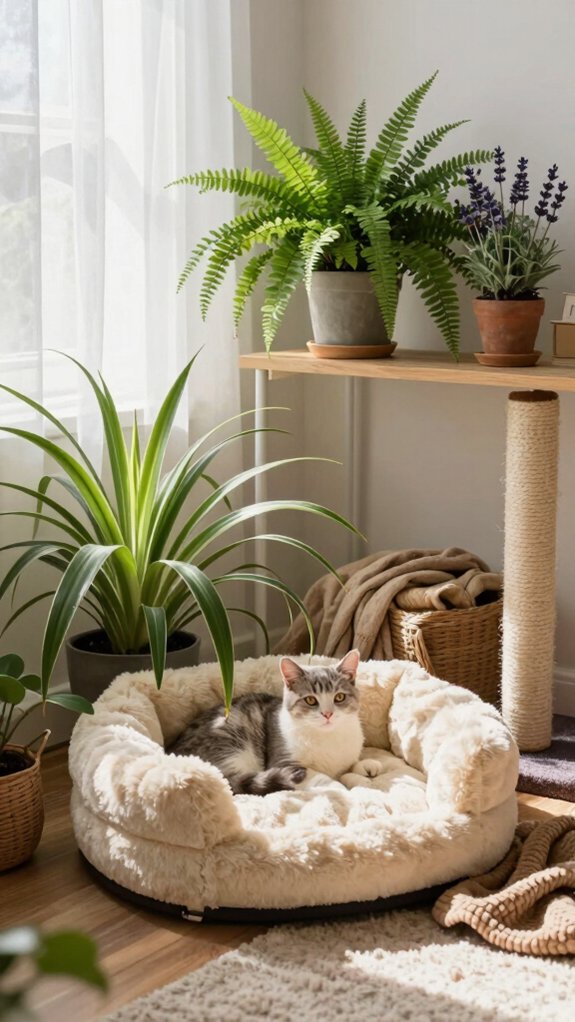
Choose non-toxic plants like spider plants, Boston ferns, and areca palms so your cat can investigate greenery without health risks. They often tolerate low light and can even help clean your bedroom air. Always double-check any new plant against trusted sources like the ASPCA before bringing it home.
Non-toxic options
When you bring plants into a cat-friendly bedroom, pick varieties that are safe, sturdy, and low-maintenance so both you and your cat can enjoy the greenery without worry. Choose non-toxic options like spider plants, Boston ferns, and areca or parlor palms — they tolerate low light and resist curious nibbling. You can also grow cat friendly herbs such as catnip or chamomile in small pots for play and scent, and add feline safe flowers like African violets for color without risk. Always confirm toxicity via the ASPCA list before buying.
- Spider plant: hardy, pet-safe, great hanging.
- Catnip or chamomile: engaging, low-care herbs.
- Parlor or bamboo palm: gentle, bedroom-friendly greenery.
These choices help you create a welcoming, safe space.
Soft Washable Bedding
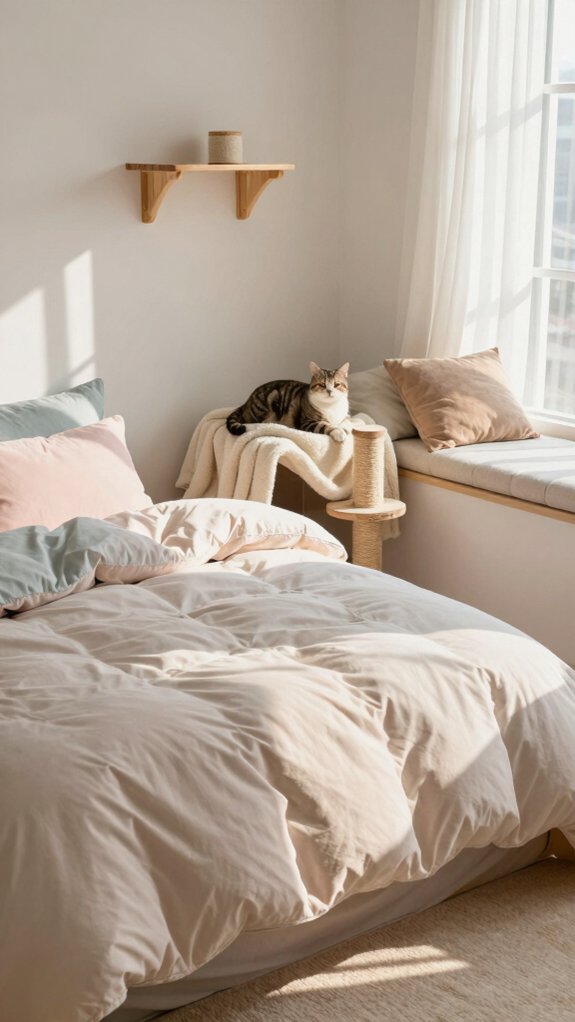
Soft, washable bedding made from natural fibers like cotton or wool gives your cat a cozy, breathable place to nap while staying gentle on their sensitive nose. You’ll want to choose bedding materials that resist odors and hold up to regular machine washing so naps stay fresh and hygienic. Removable covers make cleaning simple, and durable fabrics tolerate scratching and daily use without falling apart. Pick softly enclosed shapes if your cat likes to curl up — they offer warmth and security without hiding spots under furniture. Regular laundering reduces allergens for both of you, important if anyone has cat allergies. With practical, easy-care pieces, you’ll create a welcoming, safe sleep space that keeps you and your cat relaxed and connected.
Under-Bed Hideaway Zone
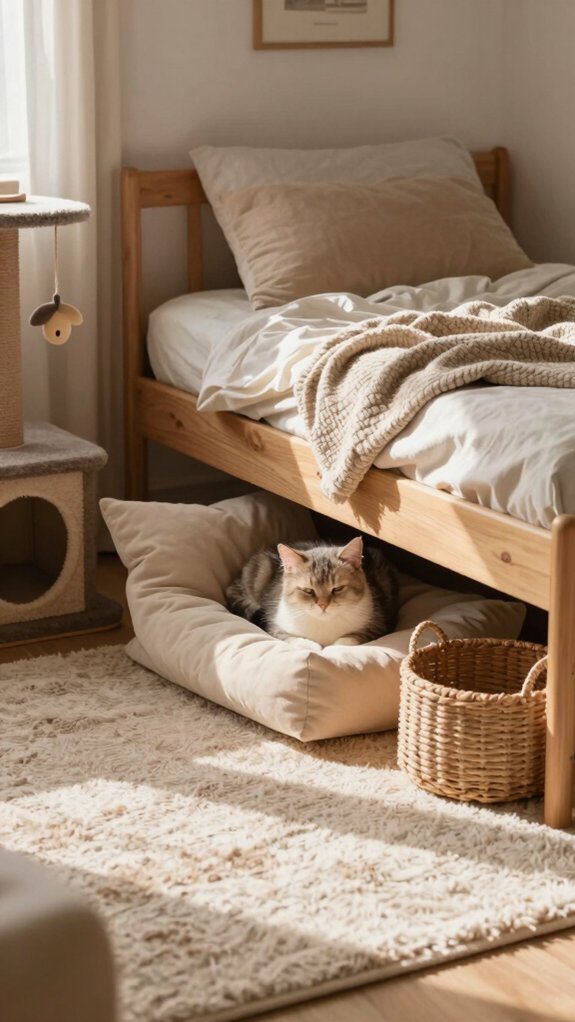
Give your cat a cozy retreat under the bed by adding a soft blanket or pet bed that fills the space without making it tight. Make the opening easy to access and consider a short tunnel or small entryway to invite exploration. Keep the area clean and dust-free so it stays a safe, comforting hideaway.
Cozy retreat space
If your cat needs a quiet place to retreat, turning the space under your bed into a tidy hideaway gives them a secure, comforting refuge from household noise. You’ll make it welcoming with a small cat cave or a pile of cozy bedding that holds familiar scents and encourages relaxation. Keep the area clean and dust-free so your cat feels healthy and at ease. Provide at least two exit points so they always control their escape route, and place a low-profile scratching post nearby to support natural behavior without cluttering the space.
- Soft, washable cozy bedding for scent comfort
- Two clear exit paths for security and control
- Low-profile scratching post to keep them occupied
Create a spot that feels like home.
Wall-Mounted Climbing Steps
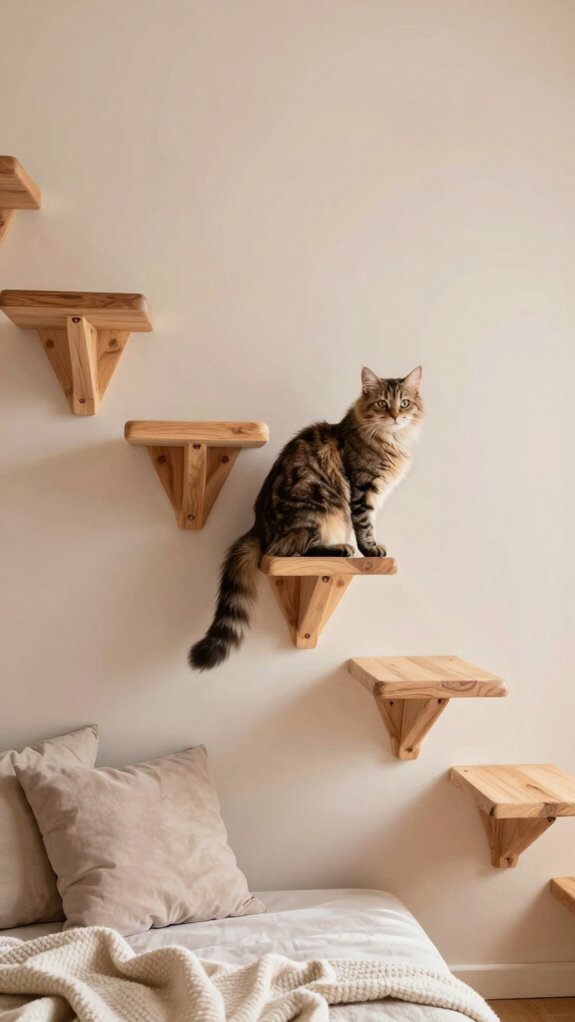
Because cats love vertical territory, installing wall-mounted climbing steps gives them room to investigate, exercise, and settle at different heights without taking up floor space. You’ll create playful, secure pathways that satisfy climbing instincts and offer new lounging perches. Choose stylish designs that match your bedroom so the steps feel like part of the home, not an afterthought. Prioritize climbing step safety: secure anchors, sturdy materials, and weight-tested brackets keep your cat confident and you worry-free. Arrange steps to encourage movement and short jumps, which boosts activity and helps combat obesity. Finish with soft surfaces or removable covers for comfort and cleaning. When you install thoughtfully, your bedroom becomes a shared haven where both of you belong and relax.
Secure Curtain Choices

Keep curtain cords and loose fabric out of paw’s reach to prevent tempting danglers that can cause choking or entanglement. Choose simple, well-secured panels and sturdy tiebacks mounted higher than your cat can reach. You’ll sleep easier knowing the window treatments are safe and won’t become a plaything.
Avoid dangling hazards
When you outfit windows, think durability and safety first so your cat can’t get tangled or pull fabric down during play. You want curtain safety that keeps everyone calm and connected — choose blinds or shades over long, dangling curtains, and pick fabrics known for fabric durability that resist claws and fraying. Secure rods firmly so they won’t fall if your cat launches playtime.
- Use heavy-duty mounts and test them periodically for looseness.
- Replace shred-prone materials with tightly woven or synthetic options.
- Use tiebacks or clips to keep fabric bundled when you’re out or sleeping.
You’re creating a welcoming room where you and your cat feel safe; regular inspection prevents accidents and preserves that peaceful bond.
Nightstand Storage Protection
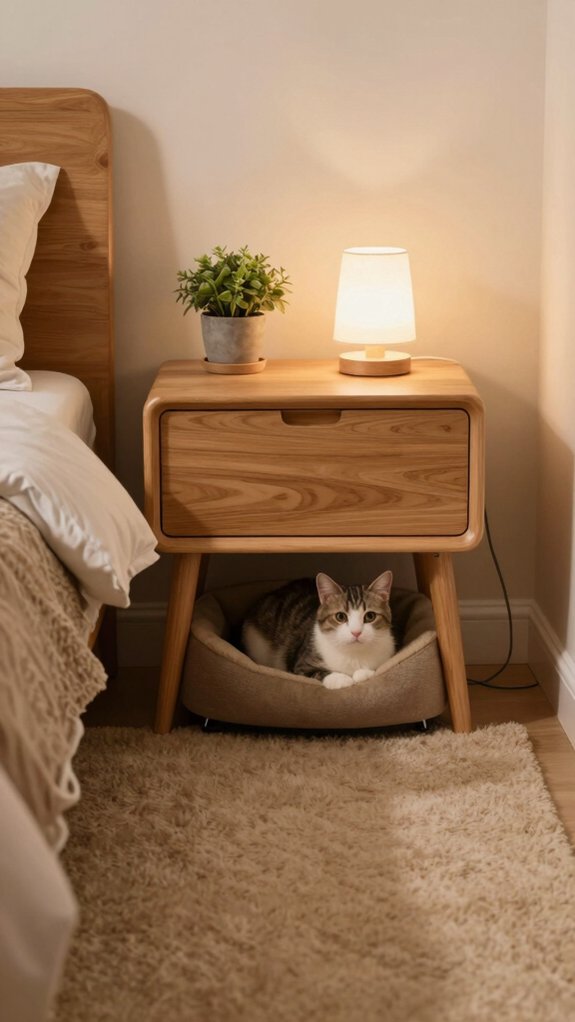
If your nightstand doubles as a catch‑all, take a few practical steps to protect curious cats and your belongings: store medications and small or hazardous items in closed drawers or containers, use drawer organizers to keep things orderly, and consider safety latches on drawers if your cat likes to investigate. Prioritize nightstand security by choosing pieces with enclosed storage or cabinets so dangerous items stay out of paws’ reach. Use drawer organization to separate fragile or hazardous things from everyday items, reducing spills and temptations. Secure lamp and device cords behind the furniture or with cord covers to prevent chewing. These simple adjustments keep your space tidy and safe, and they show care for the cat who shares your room.
Dedicated Cat Corner
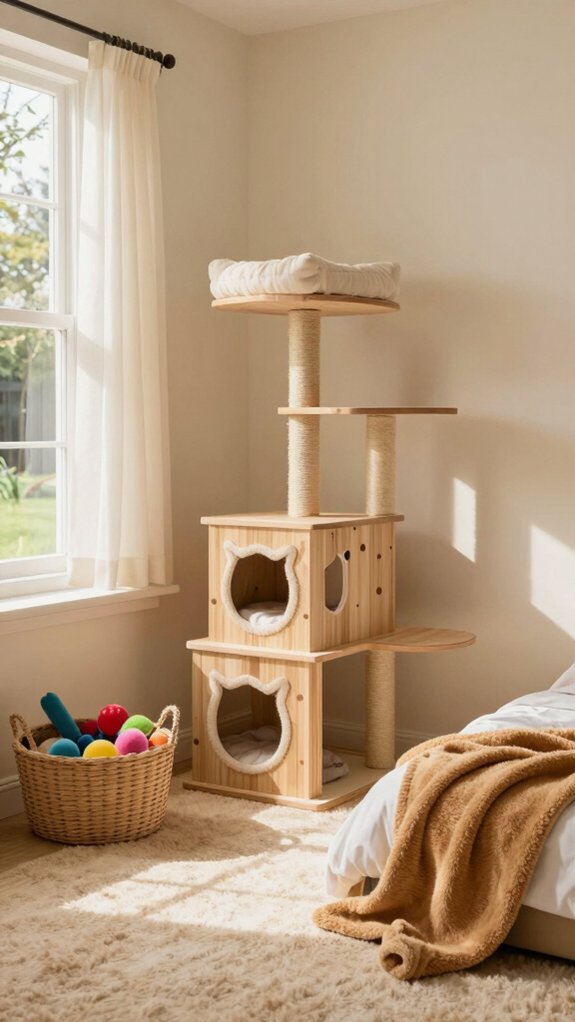
Place a soft bed or cushion in a quiet corner so your cat has a predictable, cozy spot to retreat to. Pick an enclosed or slightly raised option to make them feel secure while they watch the room. Keep the bedding clean and familiar-smelling to reduce stress and encourage regular use.
Bed or cushion area
Because cats value predictability and comfort, set up a dedicated corner in your bedroom with a soft, natural-fiber bed or cushion that matches their sleeping style — a flat mat for sprawlers or a cocoon for curlers — and place it where they already like to nap, such as near a sunny window or a warm vent. Choose cozy bedding in cotton or wool for comfort and easy cleaning. Add familiar scents by placing a worn blanket or an unwashed toy to help them settle. Keep the area tidy with regular washing and vacuuming so it stays inviting.
- Pick a bed style that fits their sleep posture.
- Position the cushion in a warm, quiet spot.
- Wash bedding often to maintain hygiene and scent.
Minimal Breakable Decor
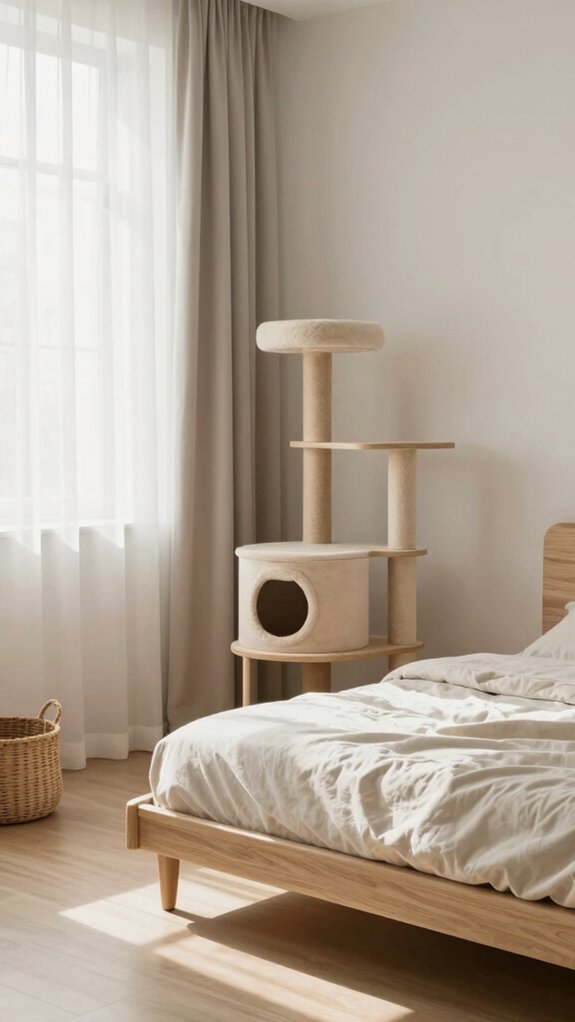
Think of your bedroom as a safe, inviting space for both you and your cat, and favor soft furnishings and unbreakable accents over fragile pieces. You’ll feel calmer choosing soft decor choices—plush rugs, fabric wall art, canvas prints—that cushion curious paws and can take a tumble without shattering. Replace vases and delicate trinkets with breakable item alternatives like heavy ceramic bowls secured on low shelves or wall-mounted displays out of reach. Pick non-toxic materials so chewing won’t harm your cat, and choose durable finishes that stand up to play. Multi-functional pieces—storage ottomans, sturdy cat trees—give you beauty and function, creating a welcoming room where both of you belong and feel safe.
Cord Management Solutions
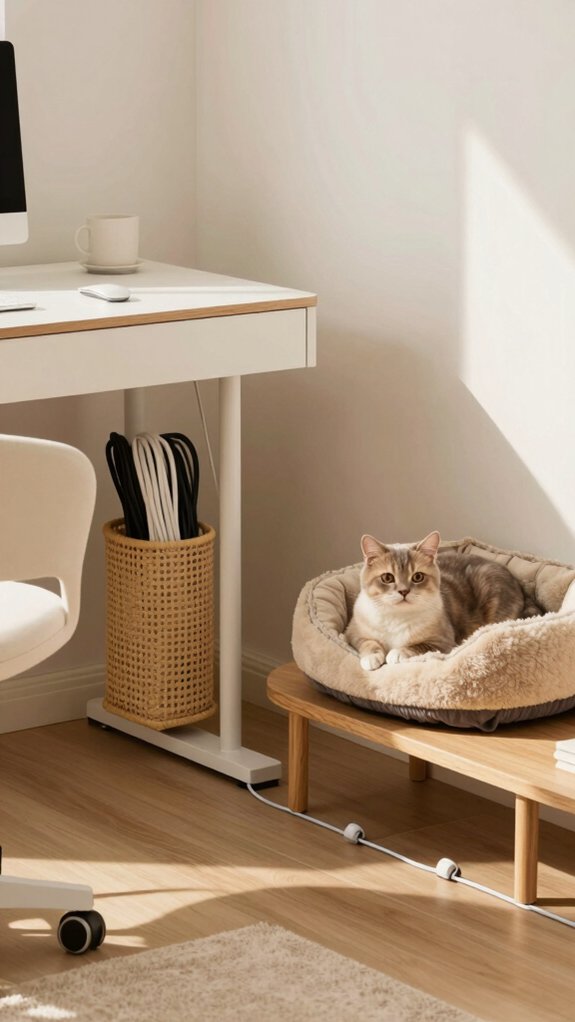
Keep cords bundled, hidden, and out of paw’s reach so your bedroom stays tidy and your cat stays safe. Use sleeves or adhesive clips along baseboards and furniture to secure wires, and swap in wireless or battery devices when you can. Check cords regularly for frays and replace any damaged ones immediately.
Tidy and safe setup
When you tame the tangle of cords in your bedroom, you’ll cut down chewing risks and make the space safer and calmer for your cat. You’ll create a tidy and safe setup by focusing on cord organization and clutter reduction so both of you can relax. Use cord clips or cable ties to secure wires along walls and furniture, and choose cord covers or conduits to keep groups of cables out of reach. Swap to wireless devices where practical, and regularly inspect cords for fraying — replace damaged cables immediately. Rearrange furniture to form a designated no-cord zone that limits access.
- Secure loose wires with clips or ties
- Encase cables with covers or conduits
- Create a no-cord zone with furniture placement
Calm Lighting Environment
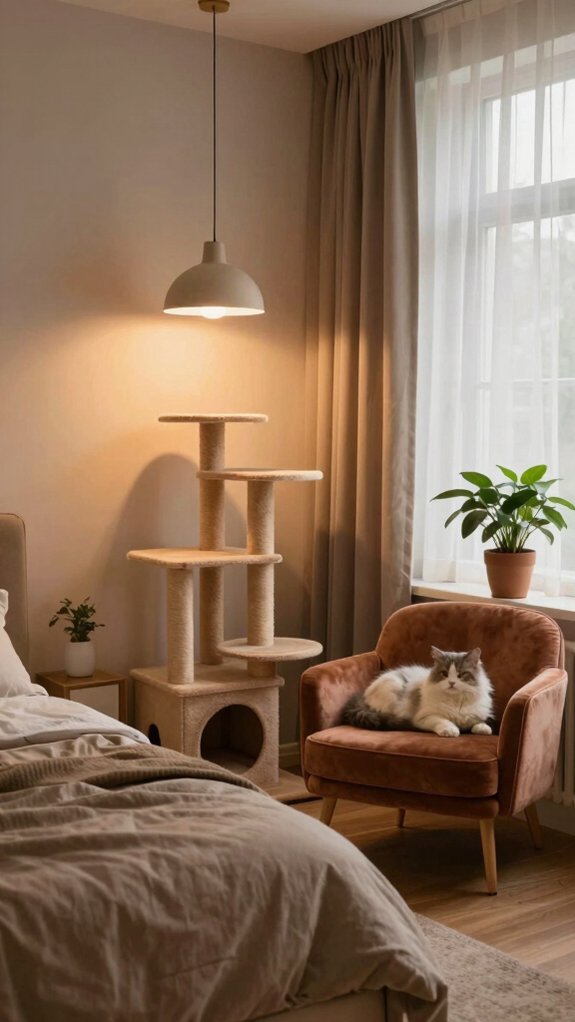
One simple switch—soft, warm-toned lamps—can change your bedroom into a calming retreat for both you and your cat. Pair those lamps with soft color palettes and low, diffuse fixtures to create a cozy, inclusive nook where you both feel safe. Use dimmable lights so you can lower brightness as evening comes, matching your cat’s winding-down rhythm. Daylight matters too: place your cat’s bed near a window for gentle sun patches, then rely on blackout curtains at night to block harsh outdoor glare. Skip overhead fluorescents; they’re unsettling for sensitive felines. Consider combining gentle lighting with ambient soundscapes and steady routines—those small, intentional choices help you build a serene space you’ll both belong in.
Cat Tunnel Integration
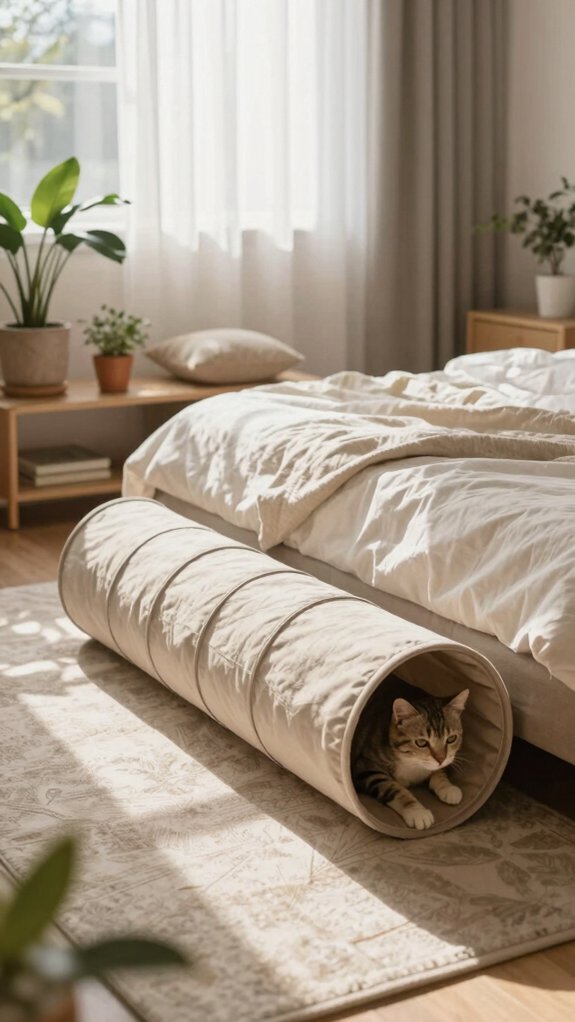
Think about adding a cat tunnel as a play-friendly feature that gives your cat a private, playful route to investigate and hide. You’ll want soft, non-toxic materials and easy-to-clean designs so play stays safe and low-maintenance. Position tunnels near windows or connect several to create a maze that boosts exercise and curiosity.
Play-friendly feature
If you want to give your cat a compact, stimulating retreat, integrating a tunnel into the bedroom is a smart move. You’ll provide a safe, private spot that taps into natural hiding and hunting instincts while lowering stress. Choose tunnel materials—fabric for softness and plastic for structure—so it fits your decor and lasts. Collapsible designs let you move or store the tunnel easily, keeping the room flexible.
- Combine the tunnel with a cat tree or scratching post to create layered play.
- Use multiple textures and entry points to encourage exploration and active play.
- Place the tunnel near a window or cozy corner to become a favored retreat.
You’ll enjoy cat tunnel benefits: more activity, less anxiety, and closer bonds.
Closet Safety Check
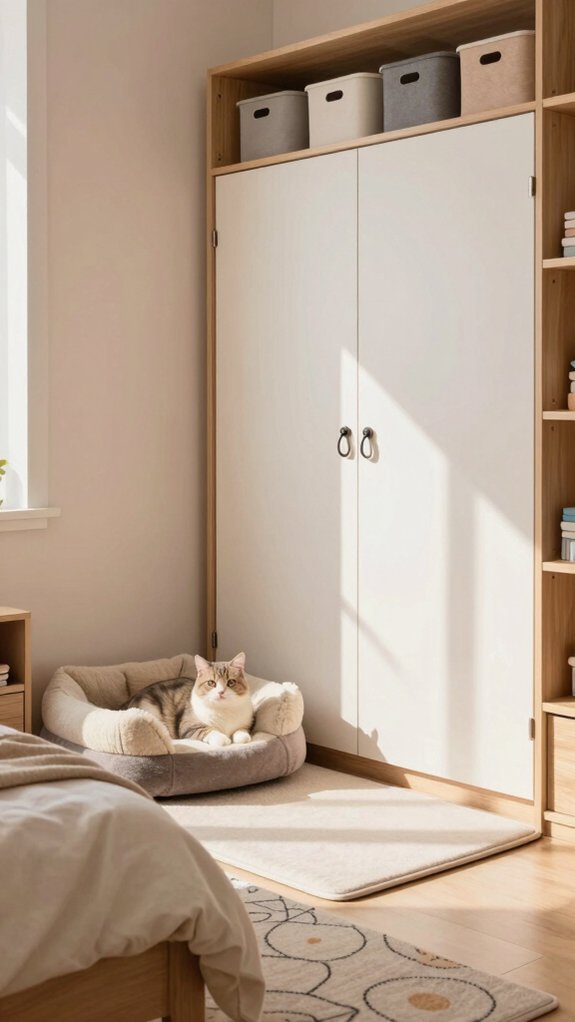
When you check your bedroom closet for cat hazards, focus first on making sure doors close securely so curious cats can’t get trapped inside. You’ll also want to apply smart closet organization and straightforward cat proofing techniques: tuck away cleaning supplies, meds, and small objects in labeled, sealed containers so everyone in your household knows what’s off-limits. Remove or fasten cords, wires, and strings to eliminate strangulation risks, and store shoes and bags in bins or high shelves where paws can’t reach. If your cat loves perching, carve out a small, safe shelf with a soft pad and clear sightlines — it gives them a cozy lookout without exposing them to hidden dangers. These steps keep your shared space calm and confident.
Air Circulation and Freshness
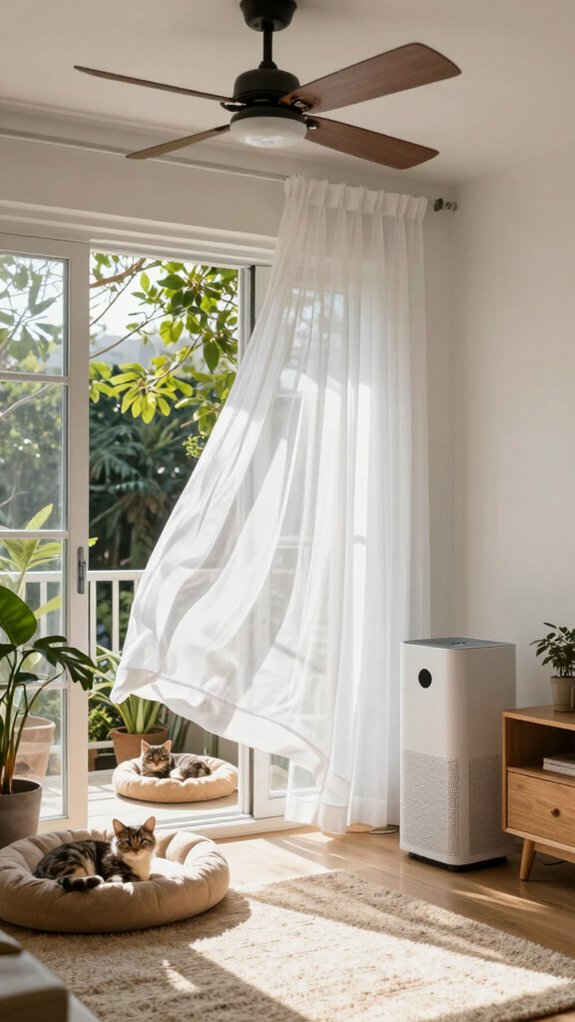
Keep the bedroom between about 68–72°F (20–22°C) so your cat stays comfortable and you don’t need to worry about overheating or chills. You can use a thermostat, ceiling fan, or a quiet portable fan to maintain steady air movement without blowing directly on their favorite nap spots. Regularly airing the room and cleaning bedding will help that comfortable temperature feel fresh and healthy for both of you.
Comfortable temperature control
Although cats tolerate a range of temperatures, aim to keep the bedroom between about 68–72°F (20–22°C) so your cat can relax without getting too hot or chilled. You’ll help reduce stress by doing simple, reliable things: monitor temperature monitoring with a small digital gauge, keep humidity control in check, and avoid extremes near windows or vents. Fresh air matters, but drafts don’t.
- Open windows briefly for circulation and use a fan or purifier to cut allergens and odors.
- Place your cat’s bed away from direct sun and drafty spots to preserve steady warmth.
- Clean and ventilate regularly to prevent excess humidity and mold, keeping the room inviting for both of you.
Frequently Asked Questions
How to Make a Room Cozy for a Cat?
Like a harbor, make the room cozy by adding soft cozy bedding, warm lighting, quiet corners and raised perches. You’ll provide secure resting spots, consistent temperature, calming colors, and gentle routines so your cat feels truly at home.
How to Make a Safe Space for Cats?
Start by cat proofing necessities: secure cords, remove toxins, and create safe hiding spots with soft bedding and multiple exits; you’ll provide raised perches, natural toys, and regular checks so your cat feels protected and truly belonging.
How Long to Leave a Cat in a Safe Room?
You can usually leave a cat in a safe room for 2 to 8 hours, adjusting for cat behavior and individual needs; trust your judgment, check frequently, provide necessities, and extend the safe duration if they seem stressed.