You should never touch or approach a service dog without asking the handler first, and always accept a no. Don’t call, whistle, offer food, or let other pets interfere — sudden distractions can stop essential work. Give teams space, keep pathways clear, and speak to the handler, not the dog. Don’t pry about medical details or assume a dog is just “in training.” Respect policies and privacy; follow these basics and you’ll pick up the rest as you go.
Disclosure: This post may contain Amazon affiliate links, at no extra cost to you. Content on Pawtangle is created with research support from AI tools and carefully reviewed, edited, and fact-checked by the lead author, Dr.Fahri Pat , to ensure accuracy and reliability. Learn more
Key Takeaways
- Always ask the handler for permission before approaching, touching, or photographing their service dog.
- Never distract, call, feed, or make prolonged eye contact with a service dog while it’s working.
- Respect the handler’s privacy; do not ask about their disability or make personal assumptions.
- Keep clear pathways and avoid crowding entrances, aisles, or seating that the team needs.
- Control personal pets and teach children to wait for the handler’s invitation before interacting.
Do Not Pet Without Permission
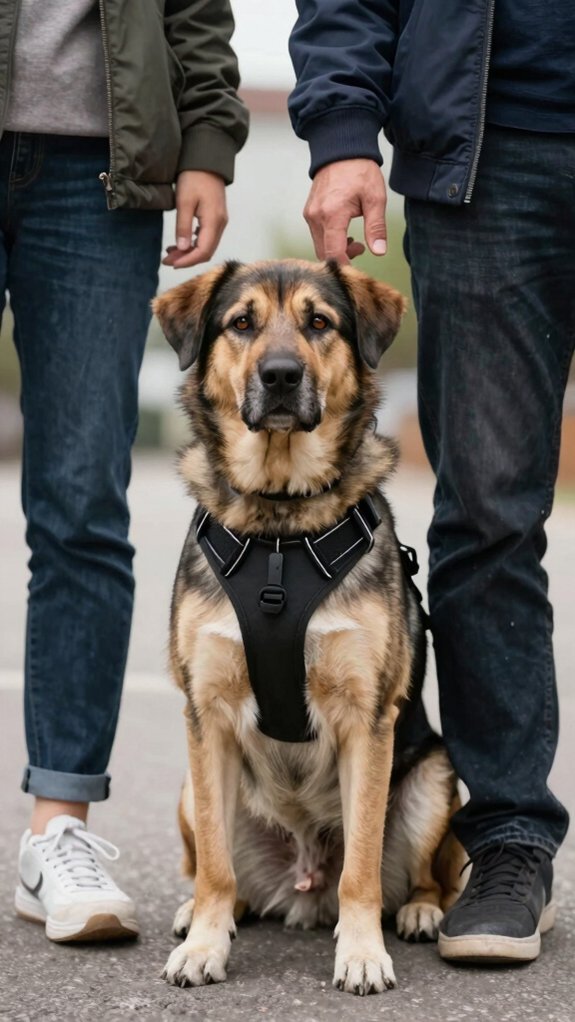
Always ask the handler before you reach out to pet a service dog. They may need the dog to stay focused or may decline interaction for safety reasons. Respecting that boundary helps keep the handler and dog safe and working efficiently.
Always ask the handler first
When you see a service dog, ask the handler before you reach out—don’t touch the dog without permission, since even a quick pat can break its focus and interfere with critical tasks. You should recognize that service dog communication and handler preferences guide every interaction; the handler knows what helps or harms their team. Always wait for explicit verbal permission, and accept a “no” without pushing for reasons. Even seemingly off-duty dogs are often working, so respecting boundaries protects both the dog’s training and the handler’s safety. By following the handler’s lead, you show care and cultivate inclusion in your community. Simple restraint and respect make public spaces more welcoming for service dog teams.
Avoid Distracting the Dog
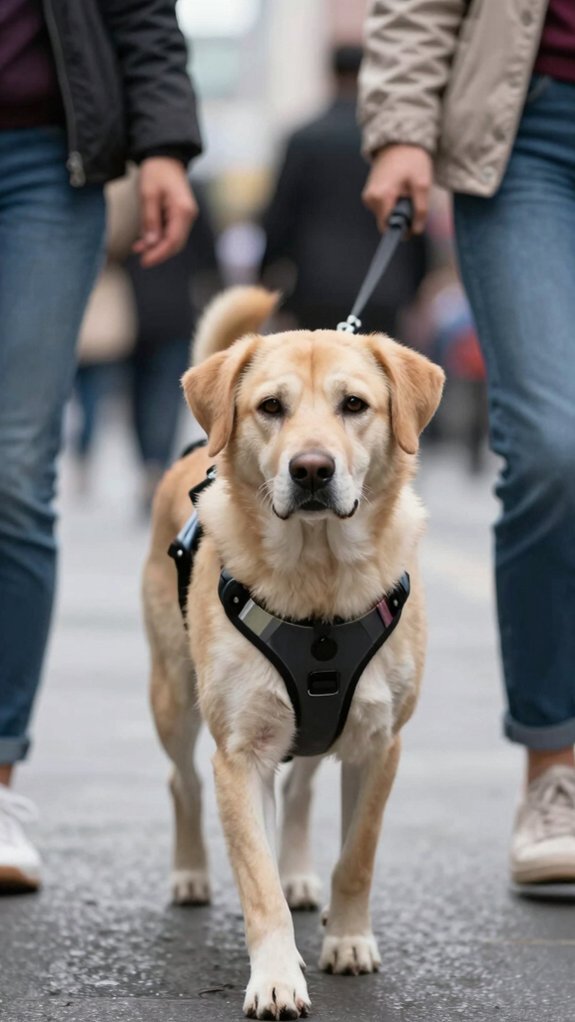
Don’t call, whistle at, or stare down a service dog — those actions pull its attention away from tasks that keep its handler safe. If you need to get someone’s attention, address the person, not the dog, and wait for their cue. Remember the dog is working even when it seems relaxed, so avoid any behavior that could interrupt its focus.
No calling, whistling, or eye contact
Because service dogs are working, avoid calling, whistling, or making eye contact that could pull their attention away from critical tasks; even a quick distraction can compromise their handler’s safety. You should practice distraction management by keeping your distance and resisting the urge to attract the dog’s notice. Keep in mind that even calm-looking dogs are on duty, and extra stimuli can interfere with handler communication or a life-saving response. When you want to offer kindness, wait until the handler invites interaction — that shows respect and builds trust. By honoring this guideline, you help maintain a safe, supportive environment for handlers and their teams. Your thoughtful restraint makes you part of a community that protects independence and wellbeing.
Do Not Offer Food or Treats
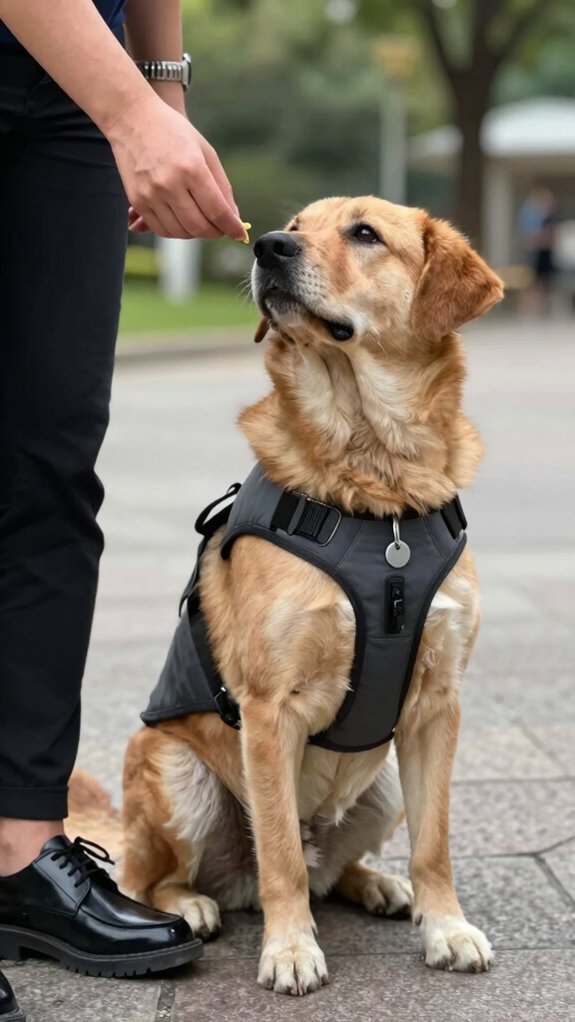
Although it may seem harmless, offering food or treats to a service dog can seriously divert them from their duties and put their handler’s safety at risk, so please resist the urge to feed or hand snacks. You’ll protect service dog health and prevent food distractions by not offering anything. Respect their training, routines, and the handler’s instructions.
| Why it matters | What to do instead |
|---|---|
| Distracts focus and commands | Admire from a distance |
| Alters diet and routines | Ask the handler before interacting |
| Risks emergency response failure | Offer verbal appreciation, not food |
| Compromises training consistency | Teach others to follow etiquette |
You’re part of a supportive community when you follow these simple, safety-focused rules.
Respect the Handler’s Space
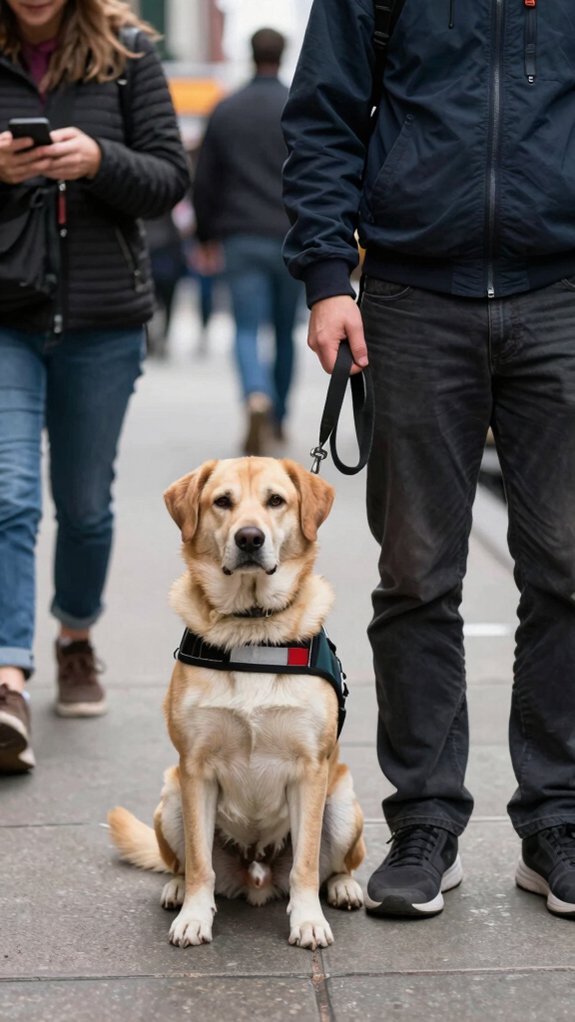
When you’re near a handler and their service dog, give them space so the dog can stay focused and the pair can move safely; crowding or sudden approaches can interfere with a task or put the team at risk. You should honor personal boundaries by keeping a respectful distance and avoiding sudden movements or loud comments that might distract the dog. If you think help’s needed, ask the handler directly and accept their answer—many prefer to manage independently. Don’t initiate conversations about their disability or training; those topics are private. Remember the handler’s comfort matters: they may decline interaction to keep the dog attentive or for personal reasons. Giving room shows respect, supports safety, and helps everyone feel included.
Do Not Ask for Personal Medical Details
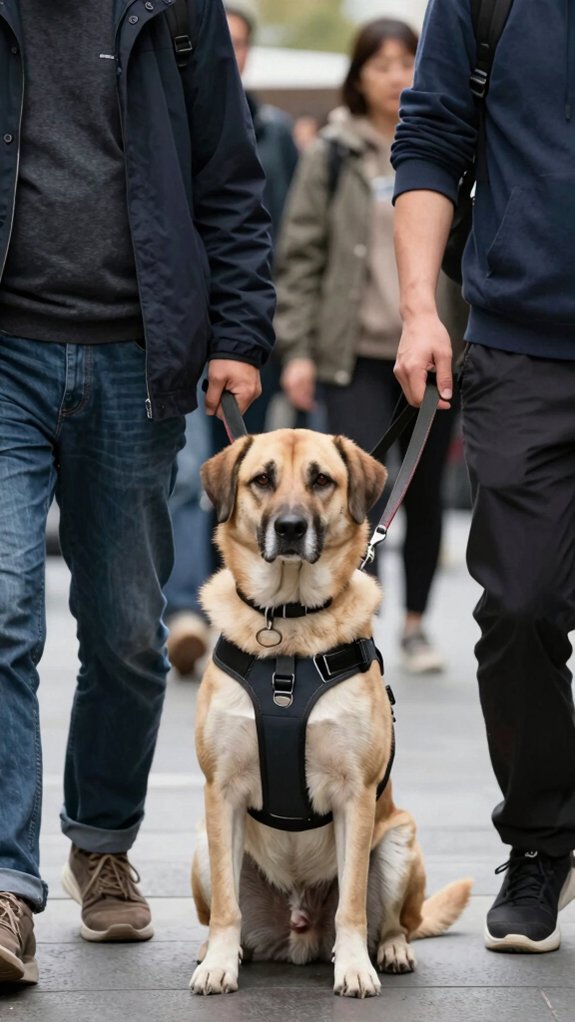
Respect the handler’s privacy by not asking about their medical condition — it’s personal and often sensitive. Many disabilities are invisible, and you shouldn’t assume someone owes you an explanation. If you need to know anything, limit questions to the dog’s tasks and role, as ADA guidance allows.
Privacy matters
If you’re curious about a handler’s condition, don’t ask for medical details — it’s private and you’re not entitled to them. You should honor handler autonomy and practice privacy respect; asking about disabilities can cause discomfort, reinforce stigma, and undermine belonging. The ADA doesn’t require disclosure or documentation, and many conditions aren’t visible. Instead, ask about the service dog’s tasks if you need to know how to interact.
| Do | Don’t | Why |
|---|---|---|
| Ask about the dog’s work | Probe medical history | Protects dignity |
| Offer space and patience | Demand proof | Supports inclusion |
| Follow handler cues | Touch without permission | Respects boundaries |
Respecting privacy nurtures trust and makes public spaces more welcoming for everyone.
Keep Your Own Pets Under Control
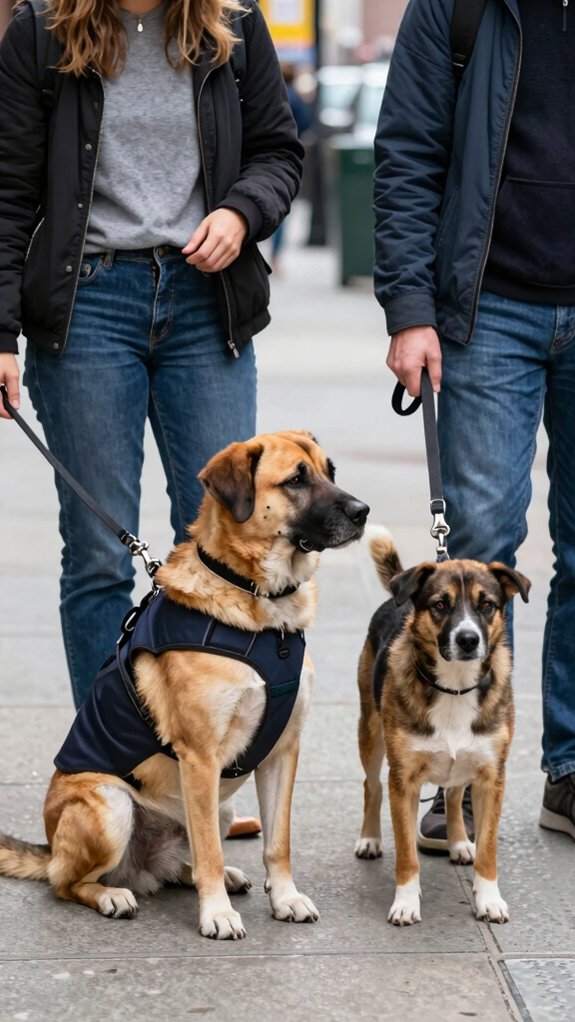
While your pet may be friendly, keep them on a short leash and at a safe distance from service dogs to avoid distracting a working animal. As a community-minded pet owner, you’ll accept pet owner responsibilities by controlling your animal and preventing uninvited approaches. Don’t let curiosity lead to sudden lunges, barking, or sniffing; those behaviors interrupt service dog interactions and can jeopardize a handler’s safety. If the handler consents, follow their guidance; otherwise maintain distance. Supervise closely in public, step in immediately if tension rises, and remove your pet if it becomes a distraction. Respecting these boundaries shows empathy and solidarity with handlers. Your calm, controlled actions help create safer, more inclusive spaces for everyone.
Avoid Blocking Access Points
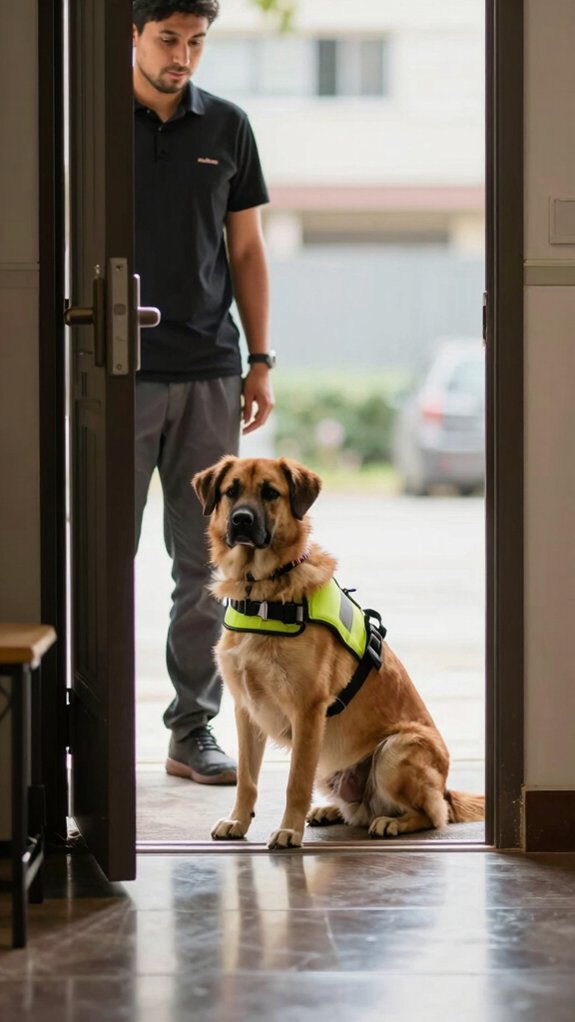
Because service dog teams need unobstructed entry and exit routes to move and respond quickly, you should keep doorways, ramps, and curb cuts clear at all times. Respecting access point awareness helps everyone feel included and keeps handlers safe. When you’re in public, follow these simple actions:
- Step back from doorways and keep bags off ramps so service dog navigation isn’t interrupted.
- Avoid standing or sitting in marked access routes; leave space for a handler and dog to pass comfortably.
- Move strollers, bikes, and merchandise out of curb cuts and entry paths immediately.
- Politely remind others when access is blocked, or alert staff to guarantee clear passage.
You’ll promote safety and belonging by staying aware and keeping paths open.
Do Not Separate Dog and Handler
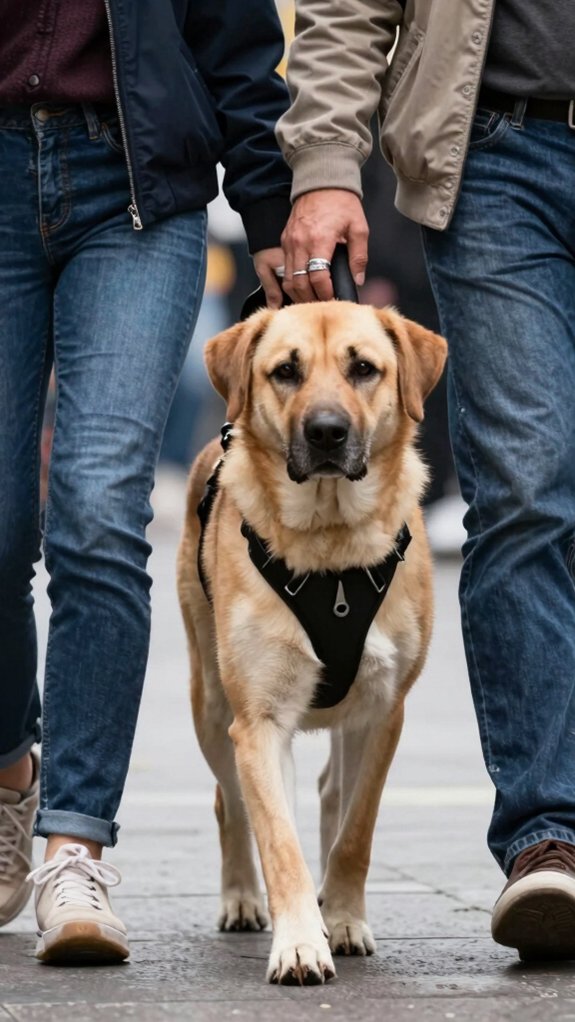
Keeping access points clear goes hand in hand with another important rule: never separate a service dog from its handler. You should understand they operate as a unit; removing one interrupts handler support and the dog’s focus. If a service dog approaches when its handler isn’t nearby, it’s often seeking help for that person—don’t pull the dog away or try to lead it elsewhere. Separation can cause confusion, anxiety, and impaired performance in critical moments. Respect their bond by staying out of their space and offering assistance to the handler if appropriate. By keeping them together, you preserve safety, dignity, and the teamwork that lets the handler participate fully in community life. Your awareness matters—stay considerate and connected.
Teach Children Proper Behavior
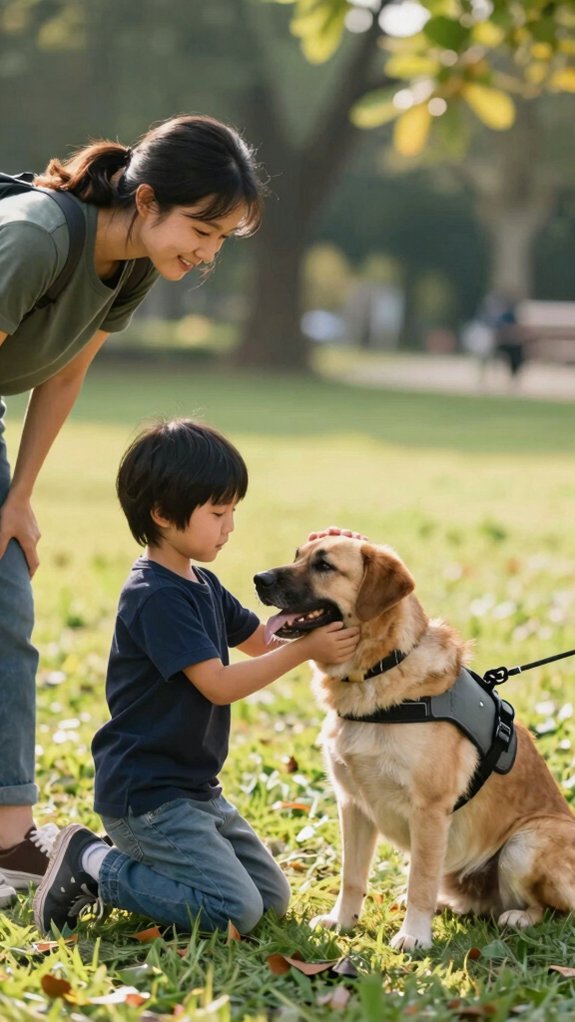
When you teach kids about service dogs, make sure they know never to suddenly reach out or touch a dog without asking the handler—surprise contact can startle the animal and interrupt its work. Tell them to wait for the handler’s permission and to keep hands to themselves unless invited otherwise. Emphasize observing from a respectful distance and always speaking to the handler, not the dog.
No sudden touching
Don’t reach out to touch a service dog without asking the handler first — these dogs are working and sudden contact can distract or startle them, risking the team’s safety. You’ll teach children respectful service dog interactions and the importance of respecting boundaries by explaining why touching can break concentration and endanger the handler.
- Ask the handler for permission every time before approaching a service dog.
- Explain that sudden movements or touches can startle the dog and interrupt crucial tasks.
- Keep a safe distance, especially if you have your own pet nearby, to avoid conflicts.
- Accept a handler’s “no” and model calm, patient behavior to reinforce the dog’s focus and the team’s safety.
Allow Priority Access
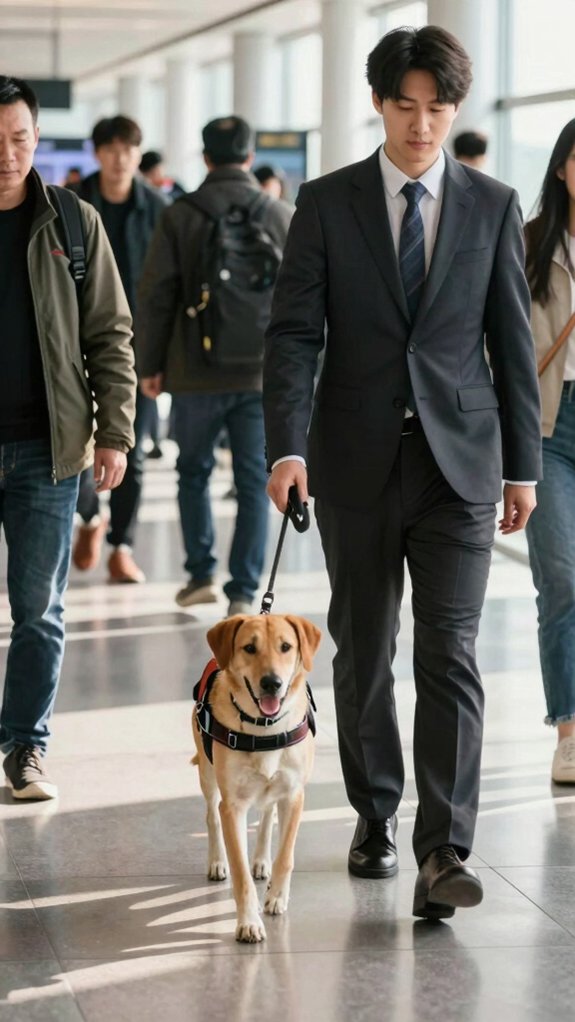
Because service dogs are working, give service dog teams priority access in crowded or confined spaces so handlers can move without delay or distraction. Respecting service dog rights and practicing handler awareness means you step aside, hold doors, or pause your line—simple actions that prevent delays and reduce distractions. When you grant priority access, you’re helping avoid safety hazards for both handler and dog and supporting their ability to perform tasks reliably. This small courtesy promotes inclusion and signals that you understand the real challenges people with disabilities face. Don’t block aisles, crowd exits, or force a handler to navigate around you. You’ll make public spaces safer and more welcoming by recognizing priority access as a basic, respectful rule.
Follow Store and Public Policies
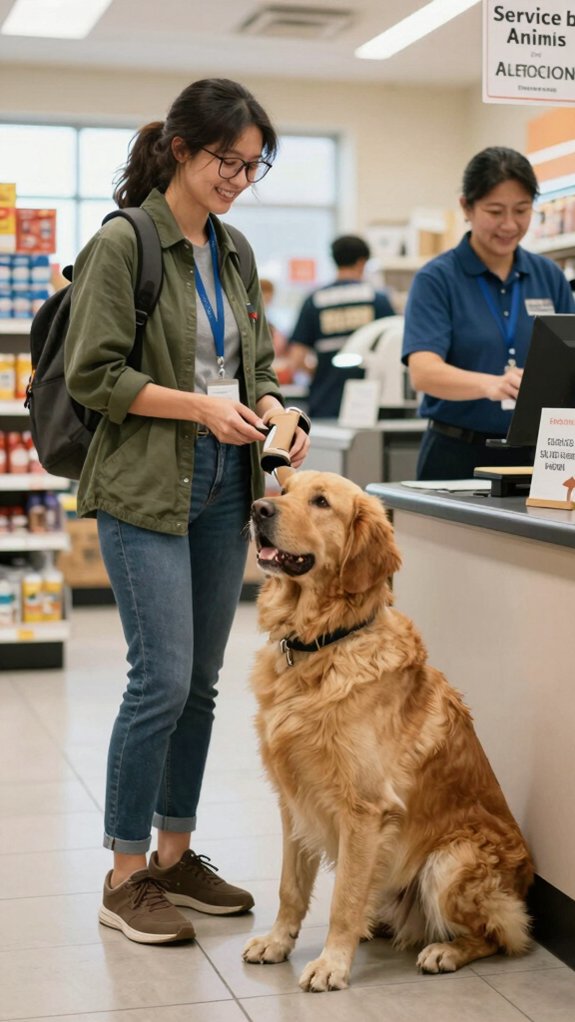
Although businesses must comply with the ADA, you should also know that staff can only ask two questions—whether the dog is a service animal and what tasks it’s trained to perform—and they can’t demand paperwork or medical proof. Respect store regulations and help build public awareness by knowing your rights and responsibilities.
- Confirm that the store’s policy welcomes service dogs and that staff are trained.
- Keep your dog calm and under control so they don’t interfere with service or safety.
- If staff ask the allowable questions, answer calmly and confidently—don’t volunteer extra medical details.
- If your dog becomes problematic, cooperate if asked to leave; exclusion can be limited to behavior, not presence.
Following these rules encourages belonging and smooth access for everyone.
Do Not Assume the Dog Is in Training
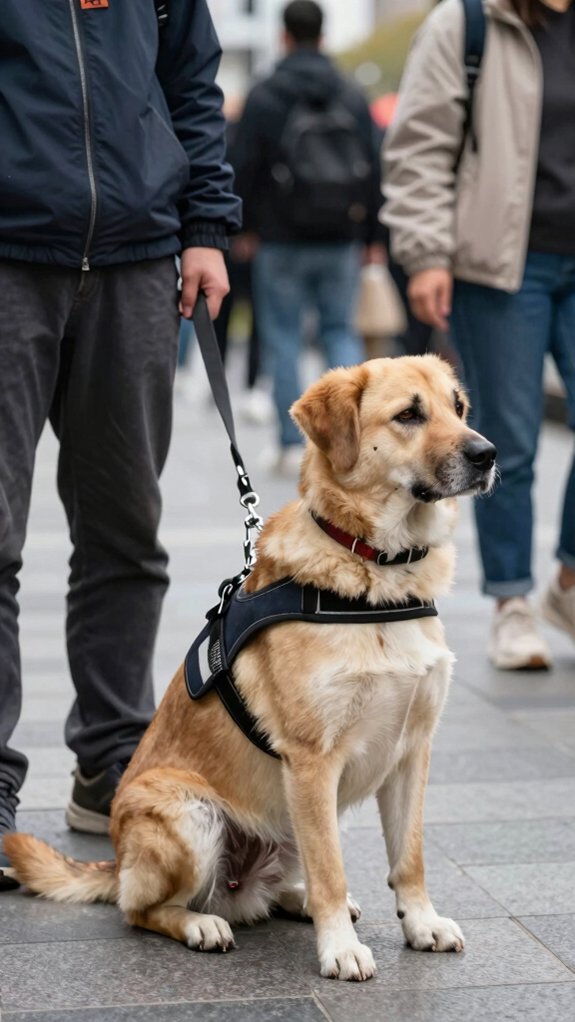
Ever wondered whether that working dog is still “in training”? You shouldn’t assume it is. Service dogs have completed rigorous service dog training to perform life-changing tasks; treating them like puppies or pets risks distraction. Respect the handler responsibilities you see — the dog is actively working and deserves space. Misunderstanding its role can create safety hazards for the handler and undermine trust within your community.
| What you might think | What it actually means |
|---|---|
| “They look young” | Completed training, performing tasks |
| “It’s okay to pet” | Distraction could harm handler safety |
| “Just saying hi” | Interrupts handler responsibilities |
Honor the work, give distance, and include handlers by supporting their right to focus without interference.
Speak to the Handler, Not the Dog
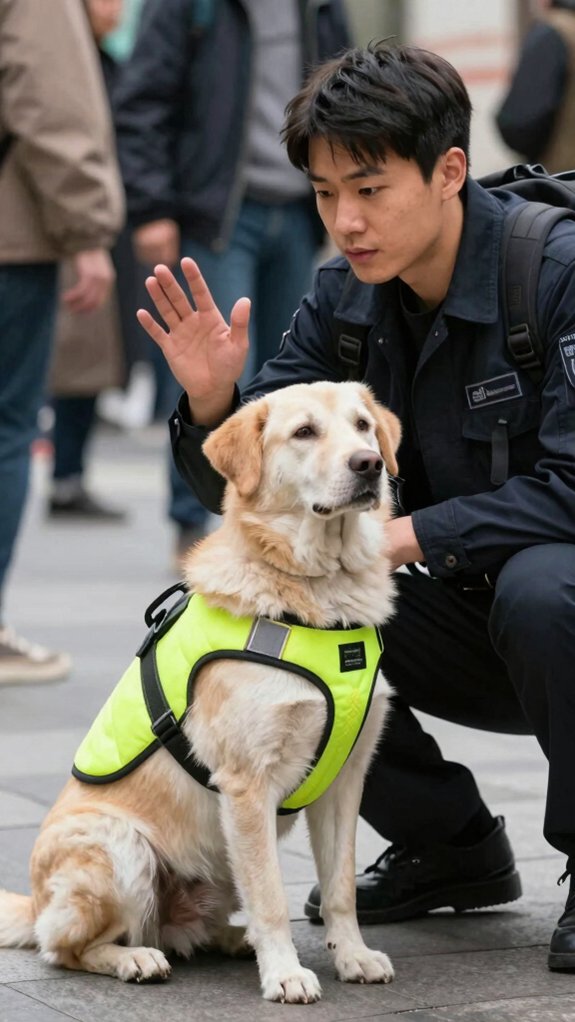
1 simple rule: talk to the person, not the dog. When you meet a service dog team, direct handler communication to the handler—don’t call, pet, or distract the dog. The service dog focus must remain on tasks that keep the handler safe and independent.
- Respect the handler’s role: address questions or offers to help to the person in control.
- Preserve the team’s effectiveness: avoid eye contact or noises that pull the dog from duty.
- Prioritize safety: distractions can interfere with medical alerts or hazard detection.
- Encourage inclusion: speaking to the handler acknowledges their authority and supports accessibility.
You’ll help maintain the working bond and create a welcoming space by engaging the handler first and foremost.
Understand the Difference Between Service and Support Animals
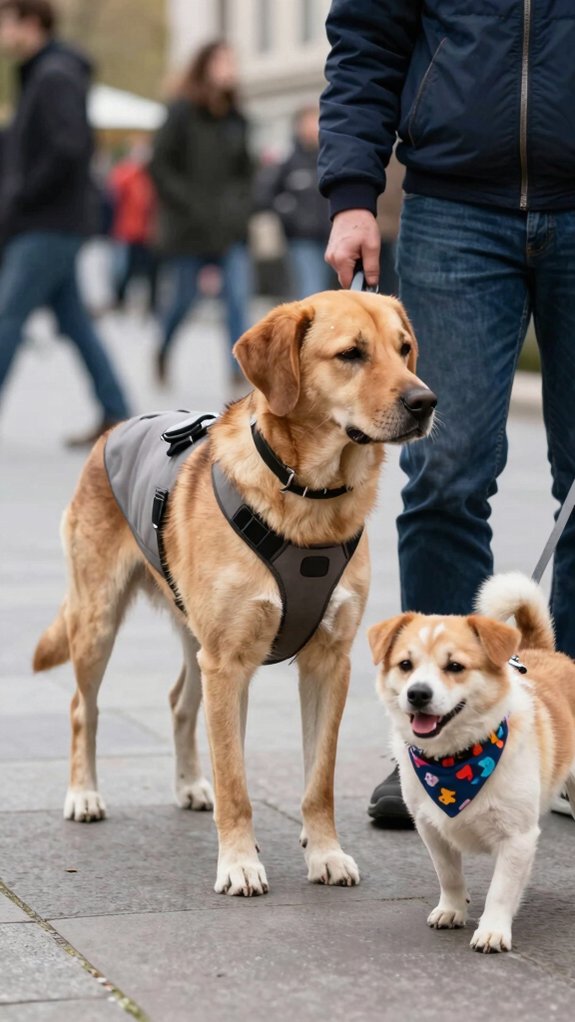
Because they look similar at a glance, it’s important you can tell a service dog from an emotional support or therapy animal: service dogs are specially trained to perform tasks that directly mitigate a person’s disability, while support animals provide comfort but don’t have the same training or legal public-access rights. You should respect that distinction: service dog training prepares animals to guide, alert, retrieve, or interrupt medical events, and those teams rely on unimpeded access under the ADA. Emotional support roles offer companionship but don’t confer public-entry rights, so don’t assume access or discipline requirements match. When you see a working team, speak to the handler, avoid distractions, and don’t challenge their legitimacy. Clear understanding reduces conflict and promotes inclusion for everyone.
Frequently Asked Questions
What Is the Proper Etiquette for Service Dogs?
Imagine a polite bouncer at a party: you respect service dog behavior, ask the handler before touching, keep distance during public interactions, don’t feed or quiz them, and you’ll help everyone feel safe and included.
What Is the 777 Rule for Dogs?
The 777 Rule says your service dog needs seven hours of rest for every one hour of activity; you’ll treat this as handler responsibility, balancing exercise, mental work, and downtime so your team stays healthy, effective, and connected.
What Are the Laws Around Service Dogs?
You’re protected by service dog laws: ADA regulations let trained service dogs access public places, businesses can’t demand proof but may ask about tasks, and handlers can’t be discriminated against so long as the dog isn’t disturbing.