

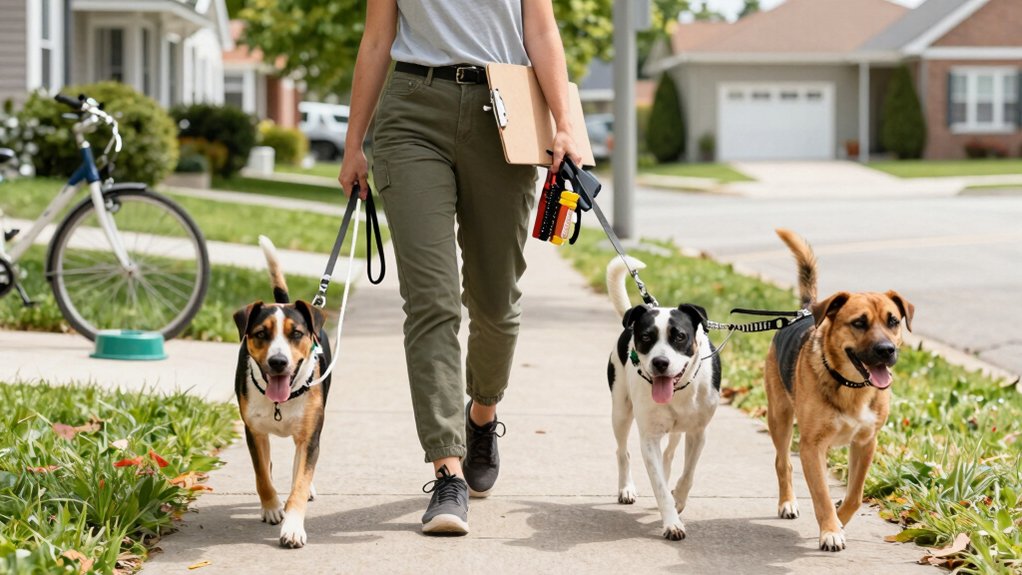
A dog walking business starts with a narrow service menu, such as 30-, 45-, and 60-minute walks and short drop-in visits. It should use a compact service area, clear add-on fees, and pricing that covers labor, insurance, gas, software, and taxes. Startup steps include forming an LLC or DBA, securing insurance, writing contracts, and building a mobile-friendly website. Local outreach, reviews, and referral incentives then drive early bookings, with more detail available below.
Disclosure: This post may contain Amazon affiliate links, at no extra cost to you. Content on Pawtangle is created with research support from AI tools and carefully reviewed, edited, and fact-checked by the lead author, Dr.Fahri Pat , to ensure accuracy and reliability. Learn more
Key Takeaways
- Define a narrow service menu with clear walk lengths, drop-in visits, add-ons, and exclusions like sitting, transport, and aggressive dogs.
- Limit your service area to a small radius, map local demand, and publish zip codes and any travel surcharges.
- Research competitors and price near the neighborhood average while covering labor, insurance, gas, taxes, software, and profit.
- Set up legal and operational basics: LLC or DBA, EIN, separate bank account, insurance, contracts, emergency consent, and safety policies.
- Build a local brand with a simple website, online booking, transparent pricing, and neighborhood marketing through flyers, partners, and referrals.
Choose Your Dog Walking Services

Begin with a narrow, plainly defined service menu: 30-, 45-, and 60-minute dog walks, plus equivalent 30- and 60-minute drop-in visits. This structure reduces confusion and supports consistent scheduling. The provider should specify whether services include solo hikes, group walks, in-home sitting, overnight care, or transportation, because each carries different liability and equipment requirements. Limits on breed, weight, aggression, and medication should be stated in the service agreement. Add-ons such as extra pets, holidays, and nail trims require transparent fees. Clear group etiquette, stated early, helps clients feel included and informed.
Set Your Service Area and Pricing
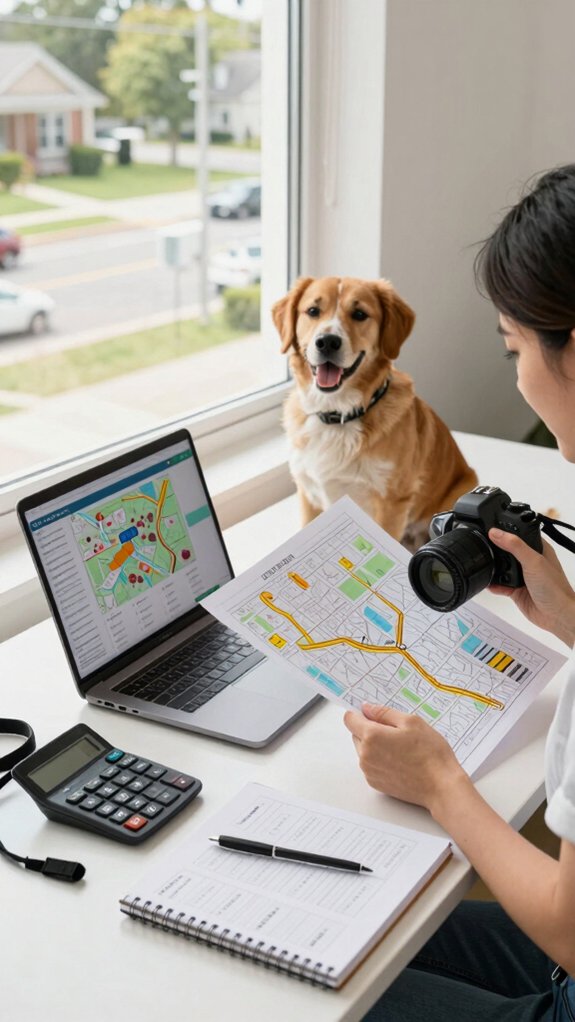
A compact service area should be defined by drive time—typically 10 to 15 minutes or about 3 to 5 miles from the base—to limit travel costs and preserve billable time. Local rates should be reviewed to position pricing near the neighborhood average, not at the lowest end, while covering labor, insurance, fuel, supplies, software, and taxes. A simple, transparent fee schedule for walk lengths, home visits, and surcharges for extra pets, holidays, or late bookings should be published and then adjusted after several weeks of tracking demand and profitability.
Define Service Area
To keep operations efficient and pricing defensible, a new dog walking business should define a compact initial service area, typically a 2–3 mile radius or a set of nearby neighborhoods, to reduce drive time, limit fuel costs, and increase daily client capacity. Mapping neighborhood demographics and peak demand times helps identify areas with high need and fewer walkers. Routes should keep travel between clients under ten minutes whenever possible. A clear service-area page listing zip codes and any travel surcharges sets expectations. Expansion should proceed by adjacent radius only, after reviewing commute time, staffing, and insurance limits.
Research Local Rates
Map the market before setting prices. Effective market analysis begins with competitor mapping within the chosen 2–5 mile service radius or selected zip codes. Posted rates for 30-, 45-, and 60-minute walks should be reviewed and compared to the local average, commonly $15–$25 for a 30-minute visit. Costs must be modeled with rate tools and local data to cover labor, insurance, gas, supplies, and margin. Transparent fee policies for extras, holidays, travel, and cancellations help clients understand boundary-driven charges. Mapping dense and underserved neighborhoods can reveal communities where pricing can stay competitive or rise modestly.
Set Clear Pricing
Clear pricing starts with a defined service area and a rate structure that matches local demand and operating costs. A 2–5 mile radius, or 10–20 minutes from base, limits fuel loss and preserves appointment volume. Rates should cluster near the local average, often $15–$25 for 30 minutes, with transparent extras.
| Service | Price |
|---|---|
| 30-minute walk | $20 |
| Extra pet | +50% |
| Travel beyond zone | $10 |
Publish boundaries, fees, and tiered discounts for longer bookings. Add seasonal promotions only when margins remain protected. Calculate labor, gas, insurance, software, taxes, and profit before setting final prices.
Calculate Startup Costs and Legal Setup

A dog walking business should begin with a clear estimate of startup costs and required legal steps, since expenses can remain under $500 for a basic launch or rise to $1,000–$3,000 for a more professional setup with LLC formation, insurance, branding, and a paid website. A startup checklist should include registration fees, insurance, basic supplies, and client agreements. Legal considerations also include DBA or LLC filing, an EIN, and a separate business bank account. General liability and animal bailee coverage may start near $129 annually. If employees are hired, payroll taxes and workers’ compensation apply. Clear policies strengthen trust and belonging.
Name Your Dog Walking Business

Choosing a dog walking business name should begin with clarity and searchability: a short, memorable name that plainly signals the service, such as “[City] Dog Walking” or “Paws on [Street],” helps clients identify the business online and through referrals. Creative naming should remain disciplined and inclusive. 1. Confirm legal availability with state DBA and USPTO searches. 2. Check domain and major social handle consistency. 3. Select a name suited to expansion and pricing position. 4. File the DBA and use it on insurance, accounts, and contracts. This approach supports legitimacy and belonging within the local client community.
Build Your Brand and Website

Brand identity and website structure should be built around a clear, searchable business name that reflects the service and supports future growth, with domain names and social handles verified before launch through tools such as Shopify’s Business Name Generator and domain registrars like GoDaddy or Namecheap. A mobile-friendly site should present Homepage, About, Services, Service Area, FAQ, and Contact/Booking pages, with transparent pricing for 30-, 45-, and 60-minute walks. Consistent visual identity, brand voice, and a simple logo reinforce trust. Booking tools, online payments, automated confirmations, and a client portal create a professional, welcoming experience that signals reliability and belonging.
Write Contracts, Policies, and Safety Plans

Written contracts and operational safeguards provide the legal and practical structure for a dog walking business. Professional contract templates should define service lengths, inclusions, fees, cancellations, and limits of liability. 1. Service Agreement 2. Medical and emergency plan 3. Safety and incident protocol 4. Operational policies. Emergency authorizations, veterinary consent, and indemnification clauses reduce exposure and clarify responsibility. Policies should state service areas, leash rules, refunds, privacy handling, and holiday surcharges. A written safety plan should require training, incident reporting, and escalation steps. Clear documentation helps clients feel protected, informed, and included. Attorney review is prudent for state-specific compliance.
Get Your First Dog Walking Clients

Early client acquisition is most effective when the service area is unmistakably defined, launch pricing is simple, and local outreach is coordinated across neighborhood groups, pet businesses, and social platforms. Free or discounted introductory walks can generate the first reviews, while targeted flyers, business cards, and a basic online profile establish visibility in high-traffic local channels. A prompt booking process and a referral incentive can then convert inquiries into recurring clients with greater efficiency.
Define Your Service Area
A new dog walking business should define a narrow, practical service area from the outset, typically a 1–3 mile radius or a 10–20 minute drive from the home base, to reduce unpaid travel and preserve billable time. This boundary strengthens local trust and helps clients feel part of a reliable neighborhood network.
- Map client clusters.
- Check competitor density.
- State ZIP codes.
- Add outside-zone fees.
Use Google Maps, local Facebook groups, and community partnerships to identify underserved streets. Keep routes within 5–10 minutes apart, then revisit the zone as capacity grows and seasonal adjustments affect demand.
Offer Simple Launch Pricing
Simple launch pricing should be easy to compare, easy to explain, and profitable from day one. A compact menu of 30-, 45-, and 60-minute walks, or equivalent drop-in visits, gives prospects clear entry points and a sense of fit. Rates should correspond with the neighborhood average, not chase the lowest figure. True costs labor, insurance, gas, software, taxes, and margin must be built in. All fees additional pets, holidays, late bookings, and travel should be disclosed upfront. Tiered incentives and bundled add ons can support early uptake while preserving published pricing and credit-card booking discipline.
Promote Through Local Channels
To secure the first paying clients, the business should use targeted local promotion rather than broad advertising. Trusted visibility in community bulletinboards and neighborhood newsletters can signal membership and reliability. 1. Place flyers and cards at vets, groomers, dog parks, and pet stores with prices, service area, and QR booking. 2. refine Google Business Profile and directories with photos and early reviews. 3. Offer a first-walk-free or 50% off trial to nearby residents and local groups. 4. Exchange referral cards with clinics and trainers. Track flyer codes, links, and referrals, then prioritize the top two converting channels.
Frequently Asked Questions
How Much Should I Charge for a 30-Minute Walk?
$20–$25 is a sound 30-minute walk rate; for example, one walker charges $22 locally, then adjusts for group discounts and peak pricing. This positions the service near community norms, sustainable, and professionally credible.
Is a 20 Minute Walk a Day Enough for My Dog?
A 20-minute daily walk may suffice for many small to medium dogs, providing bathroom relief, mental stimulation, and light exercise. Breed needs, age, and health should guide adjustments; high-energy dogs usually require more.
How Do I Start Being a Dog Walker?
It begins like a compass finding north: define services, study local demand, secure insurance, and arrange licensing. Master leash training, perform client screening, set transparent rates, and create dependable routines that help dogs and owners feel included.
Is $30 a Day Good for Dog Sitting?
No; $30 a day is usually below market rates. Client expectations typically correspond with $40–$100+ depending on care, location, and extras. It may suit promotional pricing, but profitability often suffers.