

Miniature Dachshunds grow very quickly between 8 weeks old and around one year of age. Initially, they will need to learn how to sleep, toilet, socialise and play. After 3 to 6 months they will start to develop their adult body shape. They will need to be on a measured diet and prevented from jumping to protect their long backs. By 7 to 9 months most will be almost fully grown. They will weigh around 11 pounds or less when fully grown. They will need to be switched onto adult food over 10 days. Once they have finished growing they will need to be fed twice a day with controlled exercise. The stages are:
Disclosure: This post may contain Amazon affiliate links, at no extra cost to you. Content on Pawtangle is created with research support from AI tools and carefully reviewed, edited, and fact-checked by the lead author, Dr.Fahri Pat , to ensure accuracy and reliability. Learn more
Key Takeaways
- 8–12 weeks: Long-bodied, short-legged features emerge; prioritize naps, potty training, gentle handling, and positive socialization.
- 3–4 months: Puppy fat fades as adult proportions develop; use low-impact play, short training sessions, and prevent furniture jumping.
- 5–6 months: Adolescence begins, with many puppies weighing 7–11 pounds; provide measured meals, gentle exercise, teething support, and veterinary care.
- 7–9 months: Most Miniature Dachshunds approach full size, while muscle and joints continue developing; maintain spine-safe routines and positive training.
- By one year: Adults typically weigh 11 pounds or less and stand 5–6 inches tall; gradually transition to adult food and controlled exercise.
8–12 Weeks

At 8 weeks old your miniature dachshund will begin to look more like the long-bodied, short-legged breed we know and love. They will be full of playful energy and curious.
Ensure they are getting into a good sleeping pattern with lots of quiet napping in between short bursts of play. Start toilet training by taking them outside regularly, especially after they have woken up, eaten and played. Praise them when they succeed.
From 8-12 weeks old, introduce them to kind people, household noises, safe environments and handling in a positive way.
They may be around 4-6 pounds at 3 months old, and will start to lose their puppy fat.
3–4 Months
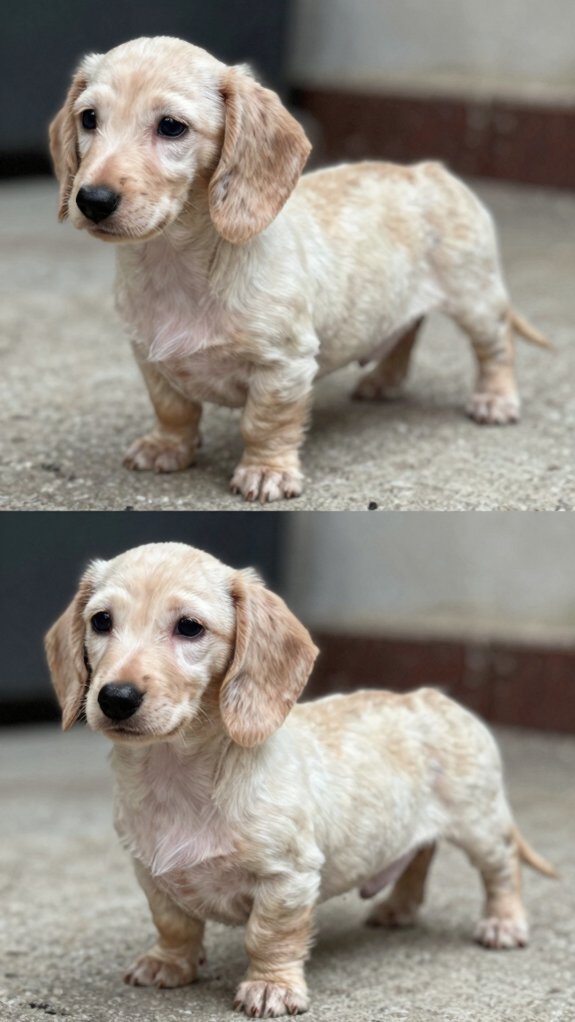
You’ll notice that your tiny Dachshund will begin to lose some of their puppy fat and develop a more elongated and mature looking body as they hit 3-4 months old. You’re witnessing an exciting growth phase so embrace the changes!
| Age | Typical weight |
|---|---|
| 3 months | 4–6 lb |
| 4 months | 5–8 lb |
As your puppy is still growing fast, be sure to play low impact games with them and avoid any jumping up on furniture. Short sessions are best with you using treats or toys. Socialisation exercises can be done with you using treats or toys to encourage your puppy to interact with others in a positive and relaxed way. Keeping a routine will help your puppy feel safe. Early socialisation is important so gently introduce them to new people, noises, textures and experiences.
5–6 Months
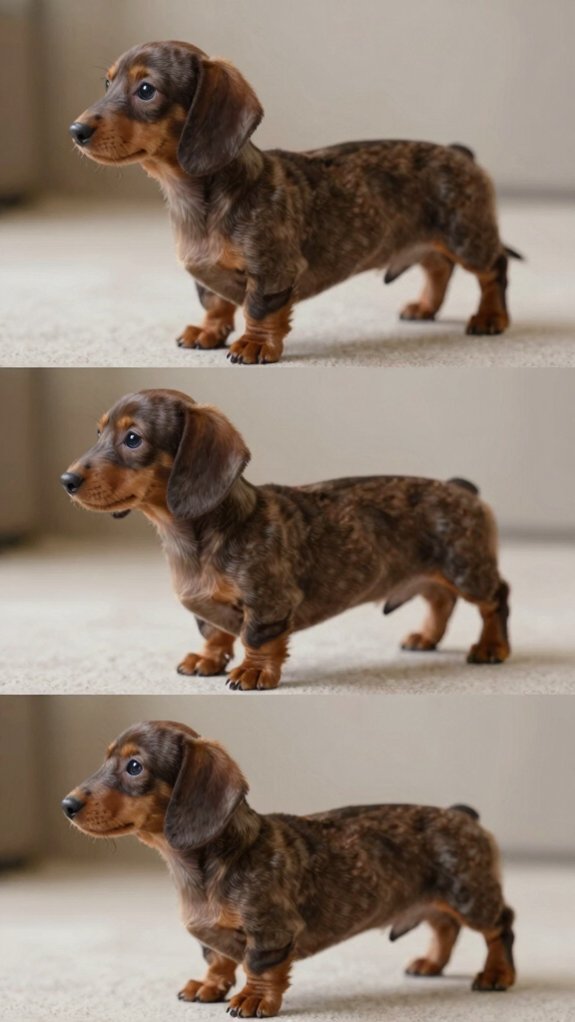
Your mini Dachshund will be moving into their adolescent stage and growth will slow down here. Many will be between 7-11lbs at 6 months old. This depends on their bloodline and individual growth.
Although they may appear almost fully grown they can still look quite gangly. Be aware of their body condition. Extra weight can cause issues with their long back. Use measured food and easy exercise.
Continue to follow the teething schedule. Continue with toilet training. Continue to keep their socialisation positive with people, calm dogs and new environments. Book in your vet appointments around this time to make sure they are growing well. Any concerns can be discussed with your care team.
7–9 Months
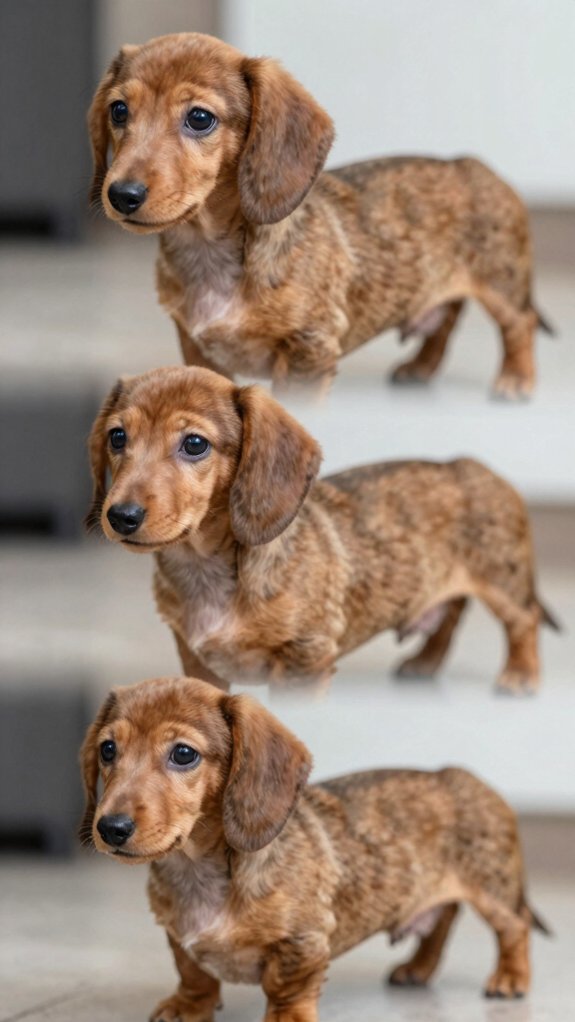
Your miniature Dachshund will likely be almost fully grown between 7-9 months old. Growth will begin to slow down, but they might still put on some weight. Many will be reaching their adult size at 8 months old, though their muscles and joints will still be growing.
Make sure they are eating the correct amount and keep an eye on their body condition. As an adult they should weigh 11lbs or under.
Continue with positive training. They will likely still have a lot of energy.
Check their teething timeline and offer safe chews.
Keep an eye on their coat development, they may need a change in their grooming. They should also be comfortable being handled.
One Year Old
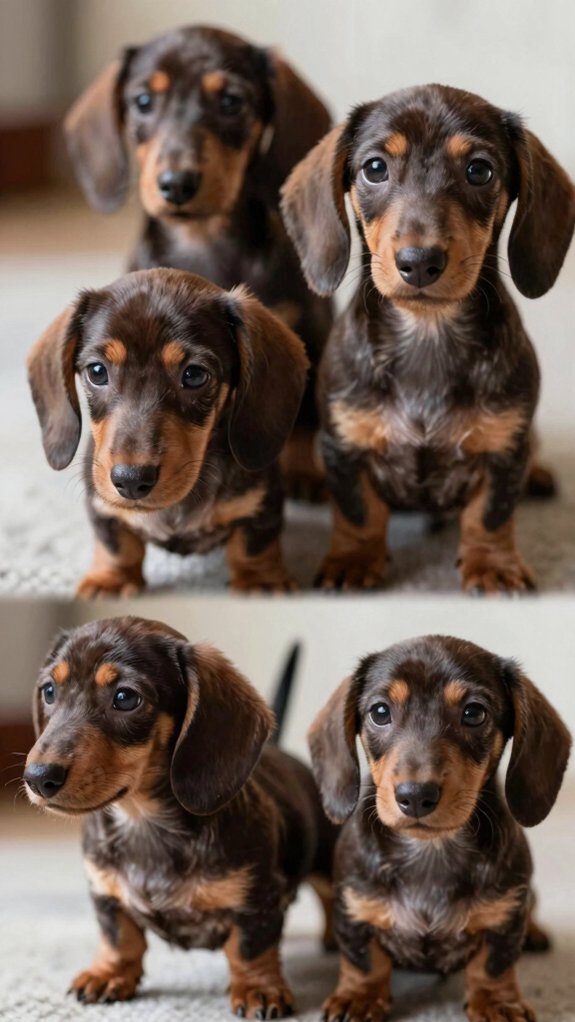
At one-year-old, most Miniature Dachshunds will have reached their adult size (usually up to around 11lbs and 5-6 inches tall at the withers). They will probably have slowed down in their growth but may still bulk up a little as their muscles and joints develop.
You may notice some changes in your dogs temperaments. They may begin to show more of an adolescent personality, becoming more energetic, independent or stubborn. Keeping training sessions short, routines consistent and setting gentle boundaries will help your Dachshund throughout this time.
This is a great time to keep on top of their grooming. Give them a brush through their coat, check their ears, cut their nails and have a look at their teeth once a week. Your family are helping this little friend grow into a confident adult!
Feeding Changes

You can begin to transition your miniature Dachshund onto adult food from puppy food once they are around 9-12 months of age. This is typically done at 12 months of age to ensure they are still getting balanced nutrition but as their growth has slowed down.
Transition them slowly over 10 days. Starting with 75/25, 50/50 and finally 25/75 mix of puppy to adult food. Then onto feeding them adult food.
Feed them two meals a day.
Use the adult feeding guidelines to portion their meals based on their body condition.
Don’t over feed them as they can put on weight and cause strain on their backs.
With your help you can ensure that your long backed friend is comfortable and happy. If they have any stomach issues then slow the transition down and speak to your vet.
Exercise Milestones
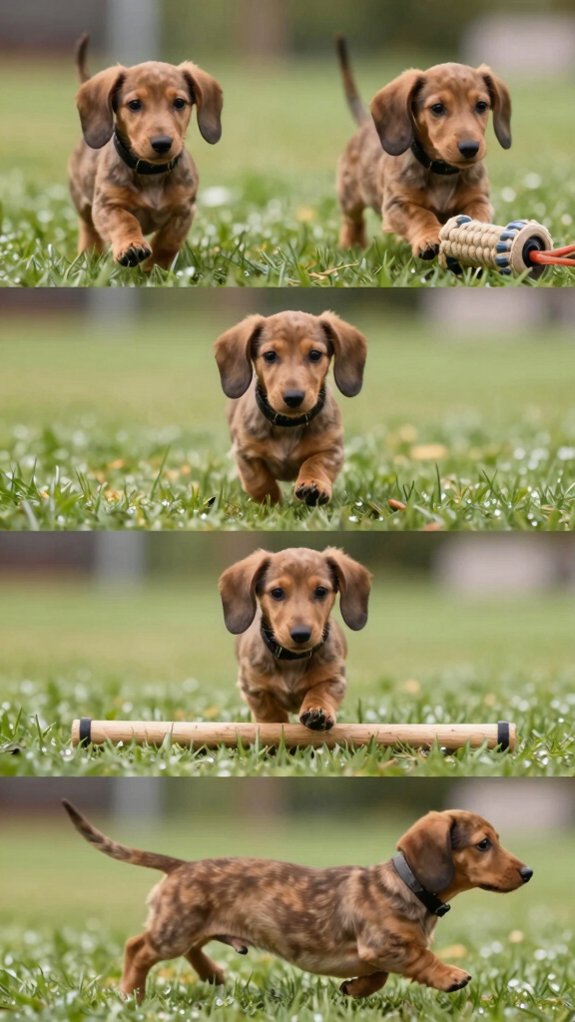
You’ll need to alter the amount of exercise your little Dachshund gets depending on their age. At 8 weeks, you can get them used to short walks and light games. This is a great time to start basic training whilst still having fun and getting them used to socialisation.
Between 3-6 months, they should have lots of exercise but it should be controlled to stop them getting overworked. Avoid any high impact activities. At around 6 months they may have a bit more energy so you should do daily exercises that are easy on their spine. Avoid high jumps and stairs.
Between 7-8 months they should have some moderate exercise with plenty of breaks. Between 9-12 months they should have a variety of low impact exercise. Avoid high impact activities such as sprinting and jumping until they are physically mature (often around 10-12 months).
Weight Expectations

Tiny Dachshunds will grow quickly in the first few months. After being born between 5-6 oz they will grow to between 1-2lbs in 1 month and then around 2-4lbs in 2 months.
They will grow to 4-6lbs by 3 months and 7-11lbs by 6 months.
Most will be below 11lbs as adults and will also be between 5-6 inches in height.
They may go through growth spurts at different times so do not worry if your pup is not growing like others.
Keep track of their weight at home and plan when to take them to the vets.
Ask them about body condition scoring so you can make sure your puppy is looking nice and lean, or not overweight.
Most will be fully grown by 1 year old and then just fill out a little.
Protecting Back Health

Because miniature Dachshunds have long backs and short legs, protect their spines by limiting jumping from furniture, climbing steep stairs, and leaping from high surfaces. Build spine friendly routines with gentle, varied exercise and safe ramp access.
| Risk | Safer choice | Why it helps |
|---|---|---|
| Furniture jumps | Lift or use ramps | Reduces impact |
| Steep stairs | Carry or block them | Limits strain |
| Rough play | Calm games | Prevents twisting |
Use a secure harness, not a pulling collar. Keep your dog lean, switching from puppy to adult food around 9–12 months. If pain, gait changes, lethargy, or unusual hyperactivity appears, contact your veterinarian promptly.