Brush your Miniature Schnauzer weekly, focusing on the beard, legs, belly, underarms, and between the toes, then check with a comb. Bathe about monthly or when needed, using dog shampoo and drying the coat fully. Check nails every two to four weeks, clean ears only when dirty, and schedule professional grooming every 8–10 weeks. Brush twice weekly during spring and summer shedding, and watch winter mats closely. The seasonal guide below helps you plan each step.
Disclosure: This post may contain Amazon affiliate links, at no extra cost to you. Content on Pawtangle is created with research support from AI tools and carefully reviewed, edited, and fact-checked by the lead author, Dr.Fahri Pat , to ensure accuracy and reliability. Learn more
Key Takeaways
- Brush weekly year-round, focusing on the beard, legs, underarms, belly, toes, and other mat-prone areas.
- Bathe approximately monthly, or only when needed for mostly indoor dogs, then rinse thoroughly and dry completely.
- Detangle the beard weekly, increasing to two or three times weekly when food or outdoor debris accumulates.
- Check nails every two to four weeks and clean ears only when dirt, odor, or other concerns appear.
- Schedule professional grooming every 8–10 weeks, with twice-weekly brushing during spring and summer shedding periods.
Weekly Brushing
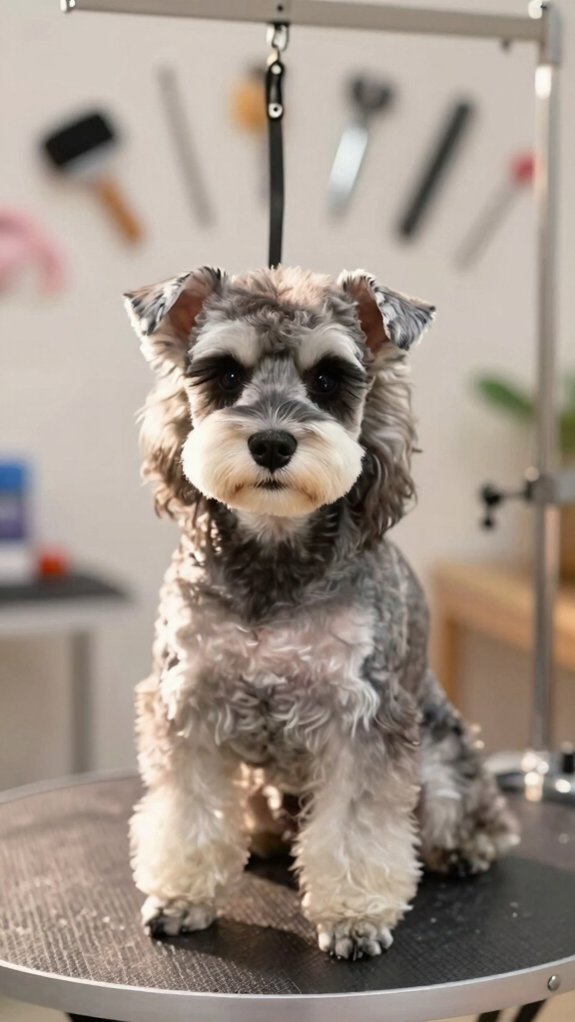
Brush your Miniature Schnauzer at least once a week to prevent tangles in the wiry topcoat and soft undercoat. This routine supports coat shedding control and skin irritation prevention, while keeping your dog comfortable.
Use a slicker or soft-bristled brush, working upward against the hair’s natural lay, especially on the legs. Pay extra attention to the beard, legs, underbelly, underarms, between toes, and beard line.
After brushing, run a medium-toothed comb through the furnishings to check for hidden knots. If you find a mat, hold it away from the skin with your free hand, then comb gently until it’s gone.
Bathing Routine
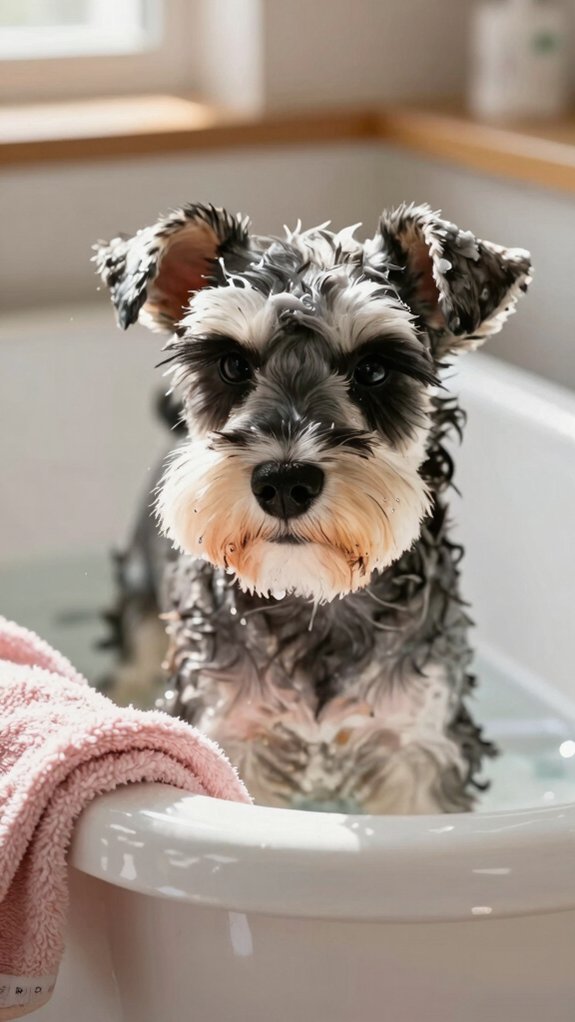
When your Miniature Schnauzer needs a bath, plan one about once a month, or less often if your dog stays mostly indoors and clean. Bathe more often only when dirt demands it.
Use lukewarm water in a spray-in tub or sink, then apply dog shampoo, never human shampoo. Keep suds away from eyes and ear openings, and don’t let water enter the ears.
Your rinse technique supports skin hydration: rinse thoroughly, often twice, until no residue remains. You can gently brush your dog’s teeth during handling, then finish rinsing.
Towel dry first, then use medium heat while brushing, checking that the coat is fully dry and mat-free.
Beard Maintenance
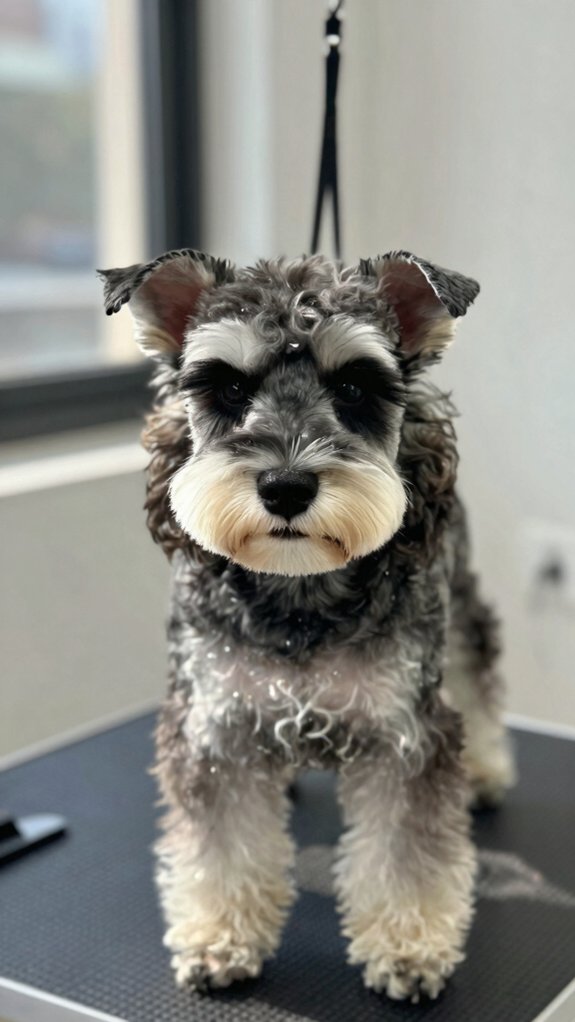
A clean, dry beard helps your Miniature Schnauzer stay comfortable and keeps the classic coat looking neat. Practice Beard detangling at least weekly, or two to three times each week if food and outdoor splashes collect there.
Work gently with a brush and comb, and don’t pull the skin when easing out mats.
For beard odor control, wash the beard with lukewarm water and a dog-safe cleanser whenever it needs freshening.
Rinse thoroughly, then dry it completely. After blow-drying, brush the hair forward and down, and comb again for hidden knots.
Trim the outline while leaving enough rough hair for fullness.
Lift about a thumbs-width underneath, and avoid clipping nose hair.
Nail Care
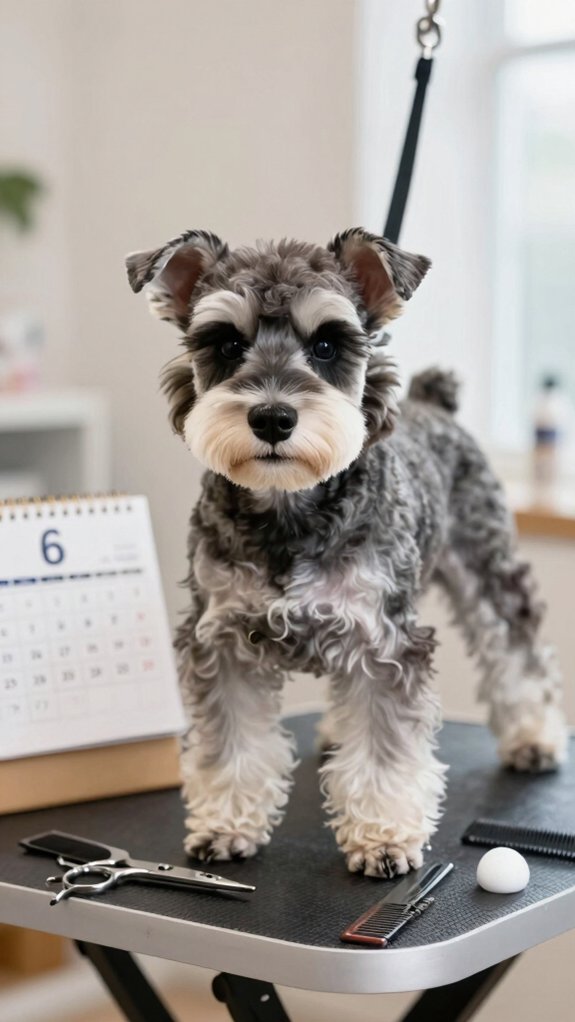
Check your Miniature Schnauzer’s nails every two to four weeks, since walking surfaces and activity levels affect how quickly they grow. This trimming frequency supports paw health and helps protect a comfortable gait.
Use small, controlled snips with scissor-style clippers, cutting from the underside until you see a small dark circle near the quick. If you nick it, apply styptic powder to stop bleeding.
After trimming, check that no nail touches the floor when your dog stands naturally. Gentle nail filing can smooth sharp edges.
Practice safe handling with treats and calm pauses, and ask your vet to demonstrate if your Mini resists.
Ear Cleaning
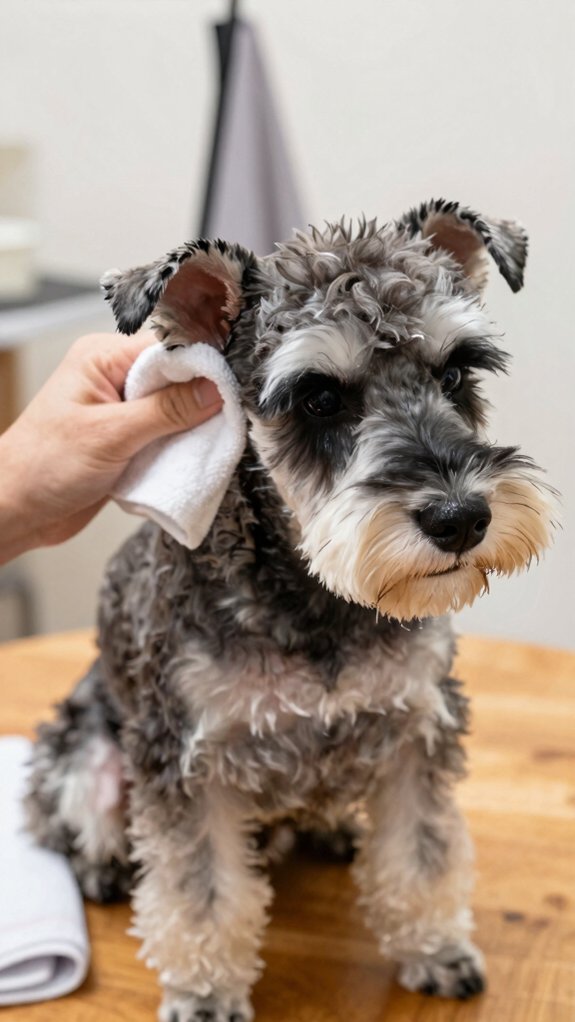
Clean your Miniature Schnauzer’s ears only as needed, such as when you notice visible dirt or an unusual smell. Use a vet-recommended cleaner, and ask your vet before trying a half cider vinegar, half water mix.
Check regularly for thick hair buildup, but trim only loose hairs along the edge. Hold the ear flat and steady to protect the flap, and seek experienced help if the canal is crowded.
Keep water out during baths, then use correct drying techniques to keep the area dry. Watch for ear infection signs, including redness, swelling, discharge, pain, or repeated head shaking, and call your vet right away.
Seasonal Coat Changes
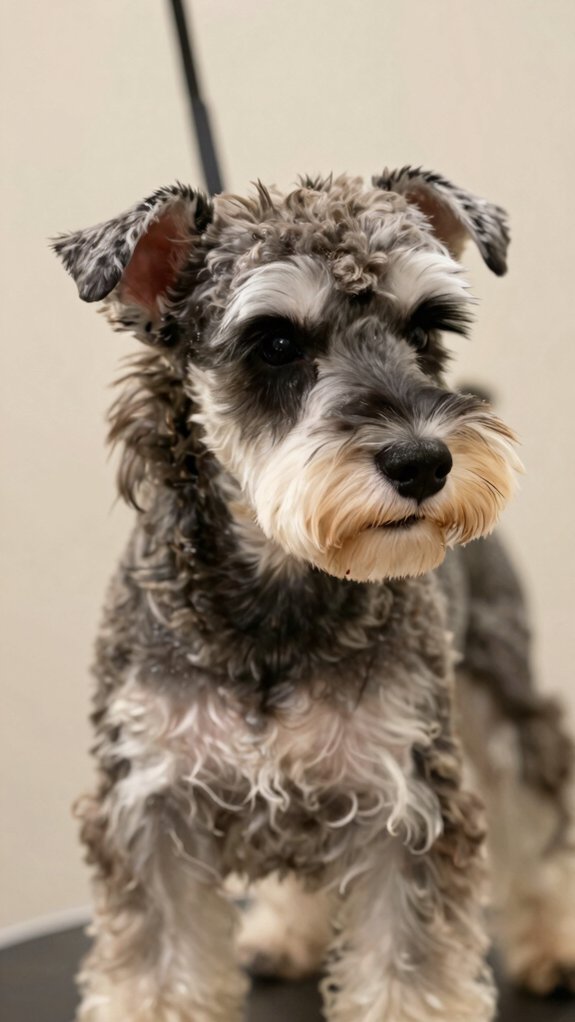
As the seasons change, your Miniature Schnauzer’s soft undercoat may become thicker or looser, while the wiry topcoat usually keeps its shape. You may notice more density than shedding, so brush and comb often as the coat shifts.
For winter undercoat management, check the beard, legs, underarms, belly, and toe spaces for mats. The furnishings may look fuller, and a slightly longer 7F blade can help when clipping.
When warmer weather loosens the undercoat, follow these summer detangling tips: brush gently, comb through problem areas, and dry the coat fully after bathing. Regular care keeps your Schnauzer comfortable and your routine manageable.
Professional Grooming Timeline
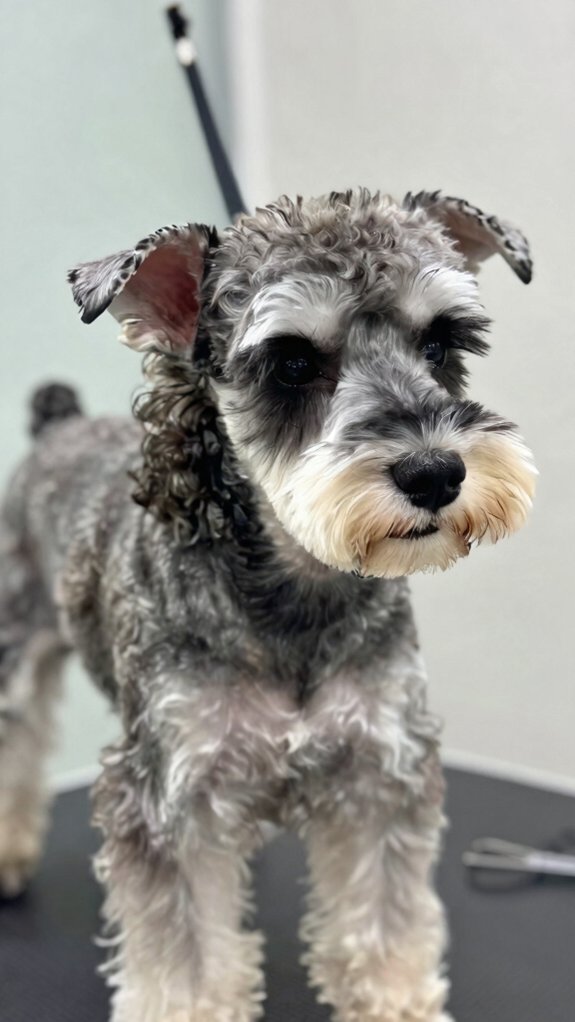
Schedule professional grooming for your Miniature Schnauzer about every 8–10 weeks to maintain the classic show-ring outline. This rhythm keeps the legs, underbelly, beard, and eyebrows formed, while clean areas such as the throat, head, ears, and tail line stay neatly finished.
For pet trims, your groomer can use clippers and follow the same timeline, preventing long furnishings from matting. If you’re learning at home, book several early visits closer together, then move to the standard schedule once brushing and clipping feel reliable.
Seasonal scheduling supports Show ring consistency, helping your Schnauzer look like part of the well-groomed community.
Grooming Checklist by Season
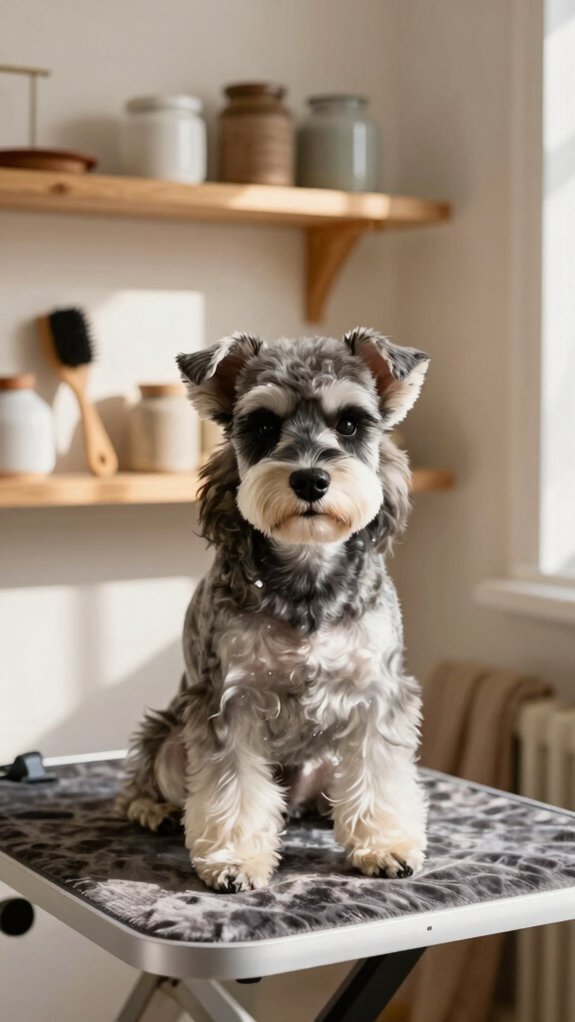
Build your seasonal routine around brushing, safe bathing, coat checks, and daily teeth care. In spring and summer, brush and comb twice weekly, or more during Shedding watch.
Focus on the beard, legs, underbelly, underarms, and between toes for mat prevention, and bathe only when needed.
In early fall, comb through after drying, checking that beard and leg furnishings are fully dry and knot-free.
During peak winter, use a 7F blade for softer coats, clip with the grain, and watch for irritation.
Year-round, keep the classic outline, dry ear canals, brush teeth daily, and check for eye debris, mats, or clipper warmth after every session.
Tools Worth Buying
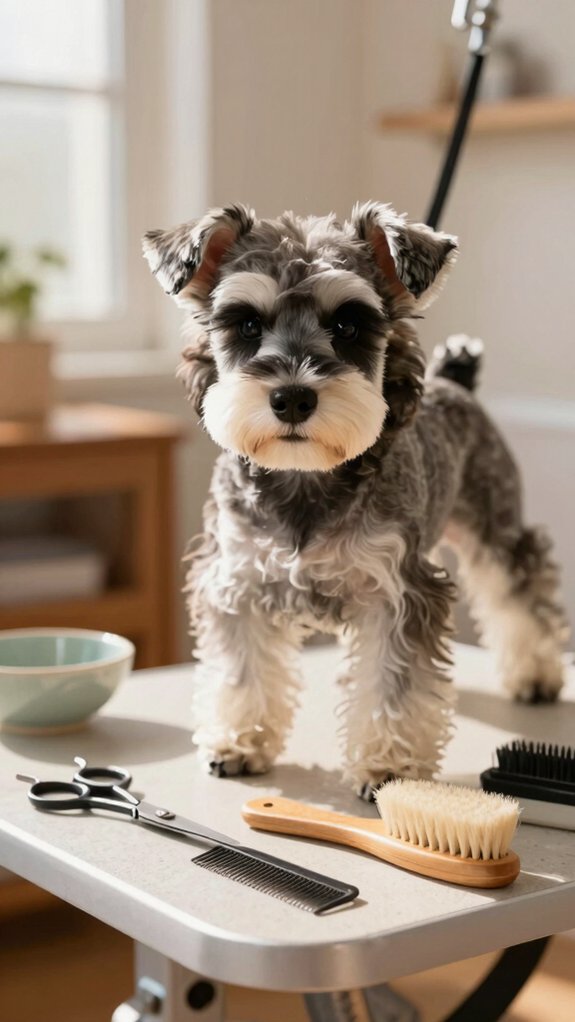
Start with dependable tools that make each grooming session safer and easier. Build your Seasonal grooming kit around these necessities:
- Choose Andis or Oster clippers, a #10 blade, clipper oil, cleaning brush, and spray. Use a 7F blade for a thinner winter coat.
- Keep a slicker brush, soft brush, and medium-toothed comb for legs, face, and furnishings.
- Add mini clippers, blunt-nose scissors, thinning shears, and a fine-tooth comb for eyebrows, beard, ears, and detail work.
- Stock styptic powder, dog-friendly shampoo, and detangling spray.
Safety First includes regular blade maintenance tools and careful cooling. Finish with smart storage organization, so every tool stays ready.