
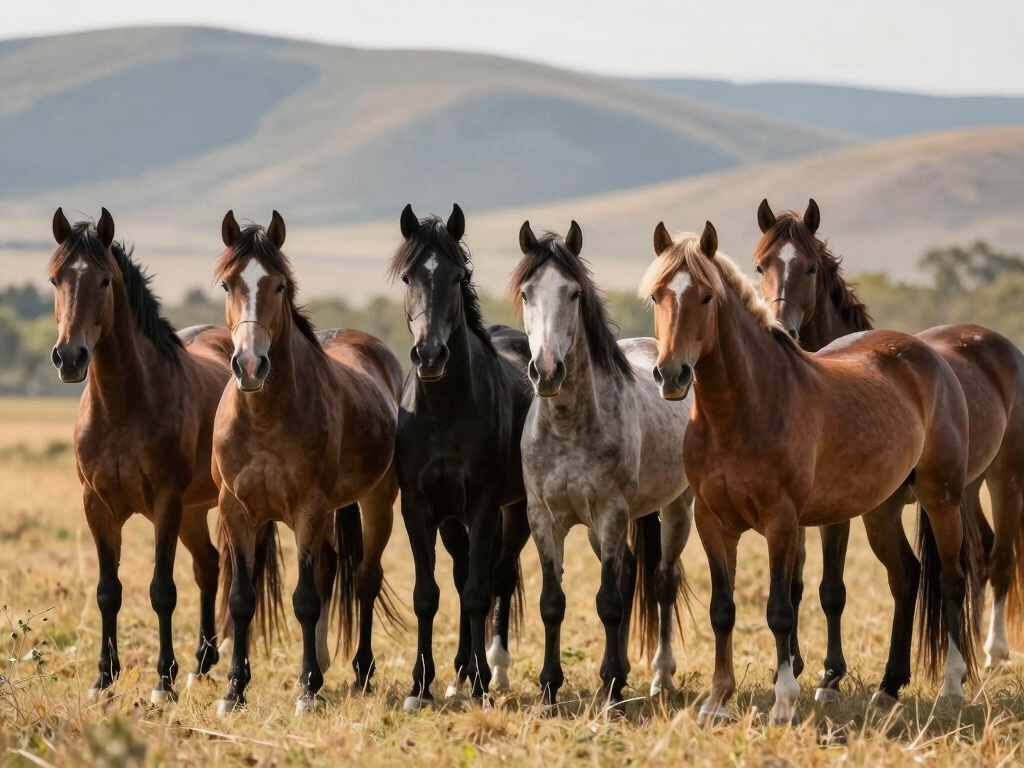
Seventeen rare horse breeds can look almost unreal, with traits like true white coats, metallic sheen, leopard spots, tiny frames, and ancient primitive markings. Examples include the Camarillo White, Akhal-Teke, Falabella, Caspian, Sorraia, and American Cream Draft, along with other hard-to-find breeds kept alive by careful breeding. Rarity usually comes from small populations, tight bloodlines, and habitat limits. Each one shows how unusual horse genetics can be, and more details follow breed by breed below.
Disclosure: This post may contain Amazon affiliate links, at no extra cost to you. Content on Pawtangle is created with research support from AI tools and carefully reviewed, edited, and fact-checked by the lead author, Dr.Fahri Pat , to ensure accuracy and reliability. Learn more
Key Takeaways
- Rare horse breeds often look unreal because they combine tiny populations with unusual genetics and distinctive coats.
- The Akhal-Teke’s metallic sheen and sparse mane make it one of the most striking rare breeds.
- Camarillo Whites are true white horses, with pink skin and white hair from birth, not gray coats.
- American Cream Drafts stand out with pale cream coats, flaxen manes, and a soft metallic gold sheen.
- Knabstruppers, Marwaris, and Bashkir Curlies add leopard spots, inward-curving ears, and curly coats to the list.
What Makes a Horse Breed Rare
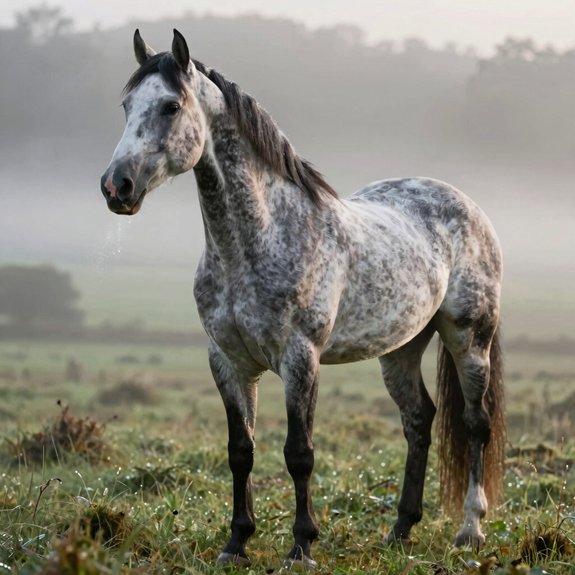
A horse breed is usually considered rare when its population is very small, and there are only a few breeding animals left to carry it forward.
Some breeds are also rare because they come from a limited region or have unusual genes, so they do not spread easily, even when people want them to.
When breeding lines keep shrinking, the breed can become harder to maintain, a bit like trying to keep a small candle lit in the wind.
Low population size
Low population size is one of the clearest signs that a horse breed is rare, especially when numbers drop into the low thousands or even the hundreds.
At that scale, inbreeding grows easier, and genetic diversity can shrink, which may raise the chance of harmful traits and weaker overall resilience.
Breeding registries often mark these breeds as vulnerable or endangered, then guide targeted breeding programs, genetic testing, and careful mate choices.
For rare-breed fans, that work matters, because every healthy foal helps keep the group steady, and a little planning now can save a lot of hoofprints later on.
Limited geographic range
When a horse breed is rare, where it lives can matter as much as how many there are. A narrow range limits gene flow, so local threats, like land-use change or water shifts, can hit hard.
| Range | Risk | Help |
|---|---|---|
| Marshlands | threats | monitor |
| Valleys | disease | connect |
| Islands | isolation | widen |
Breeding plans work best when habitat connectivity is kept in mind because linked herds can share mates without feeling cut off. Clear studbooks, steady monitoring, and cross-border teamwork give owners a practical way to protect a breed that still has a place in the wider horse family and belongs there too.
Unique genetics
Some of the rarest horse breeds owe part of their scarcity to unusual coat genes, especially the ones that produce true white horses. These horses are not simply pale, they often show white genetics from dominant white mutations or melanocyte absence, so foals are born with pink skin and white hair.
Some look white from gray or cream dilution, but those colors are different, and a quick skin check or DNA test helps tell them apart. Because rare color genes can be unpredictable, breeders usually handle them with extra care and a little patience in shared barns and fields.
Declining breeding lines
Rare coat genes can help explain a breed’s scarcity, but a breed can also shrink fast when its main breeding lines thin out.
Founder loss, when a key stallion or mare leaves the pool, can trigger a tight bottleneck, as happened when some lines dropped to only a handful of registered horses. In small or isolated groups, inbreeding rises, rare alleles fade, and pedigree erosion makes future matings harder to plan; changing sports, weak funding, and import barriers can finish the job. Careful record keeping and broad, well-managed pairings help preserve confidence, and give rare breeds a steadier home.
Rare Horse Breeds Around the World
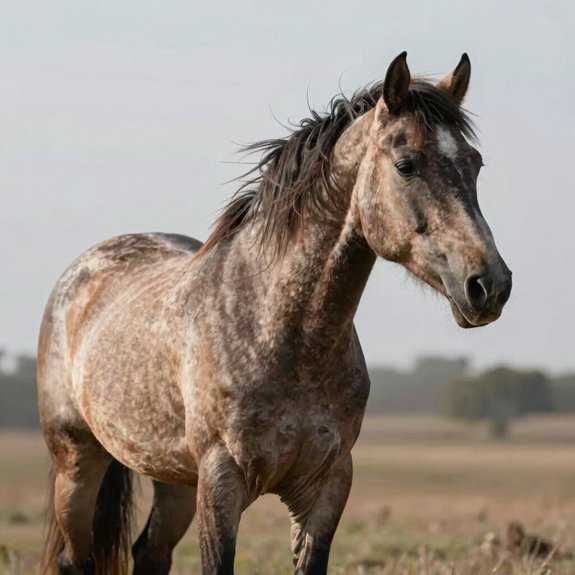
Rare horse breeds appear on every continent, and each one carries a distinct look and history. The Akhal-Teke, Marwari, Suffolk Punch, Caspian Horse, and Camarillo White Horse show this well, from shiny coats and curled ears to compact frames and steady workhorse builds.
A quick look at them makes it easier to see how climate, use, and careful breeding molded each breed in its own way.
Akhal-Teke
The Akhal-Teke is known for a metallic coat that can shimmer in gold, cream, or pale palomino, so it often looks almost polished.
This breed also earned respect for desert endurance, since it was valued for moving well over long, dry ground with limited water and shade.
Together, those traits make it a rare horse that is both eye-catching and built for hard conditions.
Metallic coat
Often, the Akhal-Teke looks as if it has been polished, because its fine hair catches the light and gives every coat color a metallic shine.
That sheen comes from photonic structuring, while sparse manes keep the outline clear.
- photonic structuring
- showcase grooming
- pale palomino examples
Collectors value the small population, because the look feels rare, welcoming, and unmistakably part of the breed.
Desert endurance
Bred to cross hard desert ground, the Akhal-Teke has earned a place in endurance riding for more than its striking coat. Trainers value its desert stamina, efficient gaits, and heat acclimatization, which help it travel far with less strain.
Light-skinned horses need shade and careful sun exposure, while all do best with steady conditioning, clear routines, and enough rest between long efforts.
Marwari
The Marwari stands out at once for its curved, inward-turning ears, which often meet at the tips and give the horse a memorable look.
Bred by the Rathore Rajputs of Rajasthan, it carries a strong royal heritage and was valued for cavalry work in harsh desert country.
That mix of striking shape and noble history helps explain why the breed still draws attention today.
Curved ears
Marwari horses are known for their inward-curving, lyre-shaped ears, a trait that can make their heads look almost sculpted.
- Some ears meet at the tips, while others curve lightly, and judges watch ear symmetry closely.
- The shape may help direct sound, supporting hearing function in a practical way.
- The look sets Marwari horses apart, and riders feel part of a rare circle.
Royal heritage
Those lyre-shaped ears are only part of the story, because Marwari horses were also closely tied to the Rathore clan of Rajasthan, who bred them for cavalry work and royal processions.
Their role in royal ceremonies kept their lineage symbolism strong, and careful breeding by royalty later helped preserve the global population. Today, enthusiasts value them for sure-footedness, intelligence, and presence worldwide.
Suffolk Punch
The Suffolk Punch stands out for its steady draft might, with a compact build that makes it useful for heavy farm and forestry work.
Even so, its numbers are very low, and fewer than 1,000 registered horses remain worldwide.
Breed groups continue careful breeding and conservation use, hoping this calm powerhouse stays more than a footnote in horse history.
Draft strength
Built for hard work, the Suffolk Punch has long stood out for its draft strength, with a compact, muscular body that can still deliver serious pulling force.
Observers note its steady trot, sound hooves, and calm frame, which support hauling.
- pulling mechanics stay efficient
- stamina metrics remain strong
- teams value dependable pace, because a working horse should fit the crew, not fuss
Low numbers
Even with all that draft strength, the Suffolk Punch has another story to tell, because its numbers are very small.
Only a few thousand remain worldwide, so breed societies use conservation breeding, registration, and community outreach to keep the line growing. Public support, careful funding models, and steady awareness help these chestnut horses stay visible, useful, and welcome in future barns everywhere.
Caspian Horse
The Caspian horse is an ancient breed from northern Iran, and it is often counted among the oldest domesticated horse types.
Though small in size, it has a compact, trim build, with an elegant head and a body made for balance and stamina.
That mix of age and shape helps explain why this rare horse has stayed interesting to breeders, riders, and horse lovers alike.
Ancient origin
From the mountains and steppe of northern Iran, the Caspian Horse traces an ancient line that archaeological and historical evidence places more than 2,500 years ago.
- Ancient genetics suggests a long, steady line.
- Archaeological evidence supports its place in early Persian life.
- That history gives modern admirers a small, shared point of pride, a rare breed that still feels unusually close today.
Compact build
Small in stature, the Caspian Horse stands only about 9 to 11 hands high, yet it carries itself with the poise of a much larger animal.
| Trait | Clue | Benefit |
|---|---|---|
| short back | sloping shoulders | balance |
| large eyes | slender limbs | grace |
Compact elegance, miniature strength, and a gentle frame help it suit children, small adults, and neat in-hand work, without losing its polite charm.
Camarillo White
The Camarillo White stands out for its pure white coat, which stays white from birth and gives the breed a bright, unmistakable look.
Its small population makes it especially rare, so careful breeding records and conservation help keep the line going.
That mix of striking color and limited numbers makes it a horse breed worth noting, and worth protecting.
Pure white coat
Camarillo Whites stand out with a pure white coat, pink unpigmented skin, and white hair from birth, so they are true white horses rather than gray horses that slowly fade.
- Their sun sensitivity means shade and turnout help daily.
- Breeding ethics matter because color should not outrun welfare here.
- Gentle handling helps newcomers feel included, and keeps routines calm.
Limited population
By 1991, only 11 Camarillo Whites were known to remain, which made the breed’s future look shaky and put careful breeding plans at the center of its survival.
That small pool created a genetic bottleneck, so studbook tracking and compatible white horses became conservation priorities. The goal was simple: keep the white line healthy and recognizable, so enthusiasts could share its story.
Cleveland Bay
The Cleveland Bay is one of Britain’s oldest horse breeds, with studbook records going back to 1732. Its rare lineage has made it stand out for centuries, and its numbers have stayed low enough to keep conservation groups watchful.
Even now, this classic bay horse carries a long history that still matters, and that is no small feat for any breed.
Historic breed
In the horse world, the Cleveland Bay stands out as one of Britain’s oldest and rarest breeds, with studbook records reaching back to the 1600s.
Historic stables and archival records keep its story alive.
- Strong coach horse
- Calm, steady worker
- Trusted for driving today
Few remain, so careful breeding lets new caretakers join the effort with steady horses and shared pride today.
Rare lineage
Few horse breeds can trace a line as steady as the Cleveland Bay, with studbook records running continuously back to the 17th century. Its Ancient pedigrees, solid bay coat, and calm talent place it among Britain’s rarest treasures.
With only a few hundred breeding animals left, Conservation strategies matter, helping owners, breeders, and fans keep this companion part of the circle still.
American Cream
The American Cream Draft stands out for its pale cream coat, amber eyes, and soft pink skin, a look that makes it easy to spot in a crowd.
This rare draft breed was developed in the United States, starting in Iowa in the early 1900s, which gives it a distinctly American story. Its unusual color and U.S. origin make it a memorable part of rare horse breed history, with a little extra charm on the side.
Cream color
Among rare draft horses, the American Cream stands out for its soft gold coat, flaxen mane and tail, and gentle metallic sheen. Its cream genetics shape the pale color, while heritage preservation keeps the breed known and valued. 1. Calm temperament 2. Strong build 3. Rare presence for people who want a horse that feels welcoming, steady, and easy to admire daily.
U.S. origin
In Iowa in the early 20th century, the American Cream Draft took shape from the mare Old Granny and the stallion Joe Cream, becoming the only draft horse breed developed in the United States.
It remains rare, with only a few hundred registered worldwide, so heritage promotion and breeding incentives help protect its cream gene, calm nature, and working usefulness for families.
Bashkir Curly
The Bashkir Curly stands out for its unusual coat, which can look wavy, tightly curled, or almost like small corkscrews, often changing with the seasons. Many people also notice its friendly reputation as a hypoallergenic horse, since some allergy sufferers report fewer reactions around its hair, though the evidence is still limited. Together, these traits help explain why this rare breed attracts attention from horse lovers looking for something both striking and practical.
Curly coat
Noticing a Bashkir Curly is easy, because its coat can look wavy, tightly curled, or somewhere between, and the curl often grows more obvious in winter.
That look helps riders recognize a hardy breed with Winter curls and manners.
For people with a Curl allergy, coat draws interest, often staying simple.
- Soft mane ringlets
- Tail waves
- Winter coat texture
Hypoallergenic
That unusual curly coat does more than stand out, it also gives the Bashkir Curly a reputation as a horse that many allergy-prone people can handle more comfortably. Many report milder reactions, from reduced dander and unique hair structure, though allergy myths should not replace testing.
Gentle grooming techniques, steady shedding care, and a short visit help shoppers and riders judge fit.
Knabstrupper
The Knabstrupper stands out at once, thanks to its spotted coat that can range from a few marks to a full leopard pattern.
That bold pattern gives the breed a distinct look, and even the lightest “few-spot” horses still carry the same eye-catching style.
In a crowd, it is the horse that seems to arrive with its own built-in headline.
Spotted pattern
With its dramatic leopard spots, the Knabstrupper stands out at once, and its coat can range from a few large dark patches to dense speckling, or even a nearly white few-spot pattern.
- Leopard genetics shapes the pattern.
- Few-spot horses can feel especially prized.
- Night blindness is checked by breeders.
That testing keeps the breed healthy, and gives owners confidence in the group.
Distinct look
Bold spotting gives the Knabstrupper an easy-to-recognize look, whether the coat shows a few large dark patches, a dense freckled pattern, or a nearly white few-spot style.
| Trait | Note |
|---|---|
| Spots | Bold |
| Height | 16 hands |
| Use | Dressage, jumping |
Breeders keep pattern genetics clear, while Coat conservation and selective pairing protect diversity, so the breed still feels rare, useful, and easy to join in.
Falabella
The Falabella stands out in the horse world because it is tiny, usually only 28 to 34 inches tall, yet it still looks like a well-built horse. Its size comes from careful breeding in Argentina, where the Falabella family molded a rare bloodline over time. That mix of miniature stature and limited numbers makes the breed both eye-catching and worth protecting.
Miniature size
Only 28 to 34 inches tall at the withers, the Falabella is an Argentine miniature horse that ranks among the smallest horse breeds in the world.
- In scale comparison, it reads like a pocket-size horse, yet its proportions stay balanced.
- That balance supports in-hand work and light driving.
- Good care matters, because welfare concerns should guide breeding, housing, and handling.
Rare bloodline
Lineage gives the Falabella much of its rare appeal, because this tiny horse was developed in Argentina from carefully chosen South American and European stock.
| Trait | Detail |
|---|---|
| Origin | Argentina |
| Size | Tiny |
| Weight | Light |
| Care | Protected |
Such lost lineages stay visible through breeder networks, where careful records protect size, type, and soundness, so newcomers can feel part of the breed’s small circle today.
Nokota Horse
The Nokota Horse is a rare North American landrace with wild roots in the Standing Rock and Pine Ridge areas.
Its story is tied to the Lakota and Dakota peoples, along with horses that once moved through ranches, herds, and open country in the northern plains.
Today, only a small number remain, so breed groups work to protect their bloodlines, much like guarding a living piece of prairie history.
Wild roots
From the open plains of North Dakota, the Nokota Horse carries a hard-won history, tracing back to feral herds on the Standing Rock Reservation and to horses left behind by U.S. Cavalry.
Its reservation narratives show survival selection in a compact, rugged body.
- Dun, grullo, bay.
- Dorsal stripes.
- Calm, sure-footed trail partners for people seeking steady, welcoming companionship today.
North America
In North Dakota’s plains, the Nokota Horse stands out as a rare North American breed with roots in the Standing Rock and Fort Berthold regions, and in horses once used by the Lakota and Dakota peoples.
| Trait | Use | Note |
|---|---|---|
| Sure-footed | trails | Prairie ecosystems |
| Gentle | ranching | Indigenous horsemanship |
A few hundred remain, so support helps them keep belonging on the plains today, too.
Sorraia Horse
The Sorraia horse comes from Portugal’s Sorraia valley, and its Iberian roots give it a place among the oldest rare horse types.
Its primitive markings, including a dun coat, a dark dorsal stripe, and striped legs, make it easy to recognize at a glance. These features, along with its sparse mane and tail, give it a wild, historic look that stands out in any rare breed list.
Primitive markings
Sorraia horses often wear a built-in “wild coat,” with a dark dorsal stripe, zebra-like barring on the legs, and sometimes a shoulder stripe that makes them look strikingly old-fashioned.
- ancient camouflage
- conservation genetics
- shared traits
Researchers and breeders use them to spot the breed, and the small managed population keeps those features visible for everyone who cares in careful, practical programs today.
Iberian origin
Those old markings point back to a horse that grew up on the Iberian Peninsula, where dry grasslands and open scrub favored compact, sure-footed animals.
The Sorraia carries Iberian origins in a dun coat, strong legs, and a small, athletic frame. Its Steppe adjustment helped shepherds and farmers, and today conservation groups keep this rare line steady, so strength has a place.
Newfoundland Pony
The Newfoundland Pony stands out for its hardy build, with a compact body, strong hooves, and a coat suited to cold, wet weather.
It was formed by work in rough coastal and rural settings, where strength and sure footing mattered more than size.
Today, the breed is still rare and endangered, so conservation programs are working to keep its numbers, and its genes, from slipping away.
Hardy build
Built like a small workhorse, the Newfoundland Pony is a compact breed from Canada’s Newfoundland island, usually standing 12 to 14 hands tall, yet carrying strength that seems to outsize its frame.
Its sturdy conformation and coastal adjustments help it face wind, ice, and salt spray, while a calm nature makes it welcome in shared farm spaces.
- driving
- riding
- grazing
Endangered
Rarity has become the defining issue for the Newfoundland Pony, a small draft-type breed from Newfoundland, Canada, that once numbered in the thousands but later fell to critically low levels after World War II.
Today, only several hundred remain worldwide, and the breed depends on studbooks, selective breeding, community outreach, and habitat restoration to keep its hardy type alive for future generations.
Dales Pony
The Dales Pony is known for working strength, with a sturdy build and sure footing that once made it useful for pack work in the Yorkshire Dales.
Even so, its breeding pool is limited, and the breed remains endangered, so careful planning matters if those useful traits are to stay strong.
Breed societies now support measured conservation breeding, which helps keep this steady pony available for trekking, driving, and showing.
Working strength
Few pony breeds match the Dales Pony for raw working strength. Built for packs and fields, it shows impressive load capacity, and endurance testing would suit its sure-footed, dense frame.
- Broad chest, strong hindquarters.
- 950–1,100 pounds of steady might.
- Late-teen stamina keeps jobs moving.
This kind of horse helps people feel they belong on hard ground for hard work.
Limited breeding
That same sturdy build that made the Dales Pony useful in rough country has not protected it from limited breeding, and today the breed is still uncommon enough to need careful management.
Small numbers and bred isolation in the Yorkshire Dales mean breeders watch bloodlines closely. Practical management strategies, like planned pairings and shared registries, help keep the pony healthy for everyone.
Exmoor Pony
The Exmoor Pony still shows many ancient traits, including a sturdy body, brown-based coat colors, and primitive markings like a dorsal stripe.
These features are not just for show, because the breed is built to handle rough moorland life, poor grass, and harsh weather with quiet efficiency.
In that way, the Exmoor Pony feels less like an ostentatious rarity and more like a living reminder of how well nature can shape a survivor.
Ancient traits
With roots stretching back more than 2,000 years, the Exmoor Pony carries a set of ancient traits that still make it easy to spot today.
Its compact frame, dark coat, and mealy muzzle show ancient adjustments and primal markings.
- Dorsal stripe
- Zebra legs
- Weatherproof coat
Rare yet valued, it helps people feel connected to Britain’s oldest native pony today.
Moorland survival
Across Britain’s peat moors, the Exmoor Pony shows why it has lasted for centuries, since its small size, strong hooves, and thick winter coat help it manage cold wind, wet ground, and rough grazing.
Peatland foraging keeps the breed fed on sparse heather, while winter insulation comes from a waterproof double coat, plus stored fat and herd life, practical traits on moors.
Canadian Horse
The Canadian Horse once came close to disappearing, as numbers fell sharply after it had been a common farm and work animal.
Even so, the breed kept strong genetics, with sturdy bones, stamina, and useful traits that helped breeders protect it.
Today, it stands as a rare reminder that a small population can still carry real strength, if careful breeding keeps it going.
Near extinction
Once common on farms and in traces, the Canadian Horse fell from hundreds of thousands in the 18th and 19th centuries to just a few hundred breeding animals by the late 20th century, which is why it was listed as critical by the Livestock Conservancy.
- population recovery
- grassroots advocacy
- local support kept the breed visible, and the community still welcomes new caretakers.
Strong genetics
After the Canadian Horse was pulled back from the edge of disappearance, attention turned to the traits that make the breed worth protecting.
Careful breeding has kept strong bone, dense hooves, and calm stamina in view, while heritability patterns help registries guard lines.
Those choices also reveal fitness tradeoffs, because preserving type must not shrink diversity or the herd loses resilience overall.
Black Forest Horse
The Black Forest Horse stands out with a chestnut coat, a flaxen mane and tail, and a sturdy build that makes it easy to notice.
Its numbers dropped sharply over the 20th century, and only a small registered population remains today.
Careful breeding programs now help keep this rare breed from slipping quietly out of sight.
Chestnut coat
Chestnut warmth is a hallmark of the Black Forest Horse, or Schwarzwälder Kaltblut, which is usually seen with a rich chestnut body and a pale flaxen mane and tail.
- coat genetics guide the shade
- seasonal sheen adds a glossy look
- careful records keep the look steady
That pattern helps riders recognize the breed as a familiar part of the region each autumn.
Declining numbers
Once common on farms and in forests, the Black Forest Horse slipped toward rarity when tractors and trucks replaced heavy horse labor after World War II.
Since the 1960s, breeders and a society have steadied numbers to about 1,200 to 1,500, yet a founder base still narrows diversity.
Heritage tourism, pleasure driving, low-impact logging, and youth involvement keep this breed in view.
Unique Traits of Rare Horses
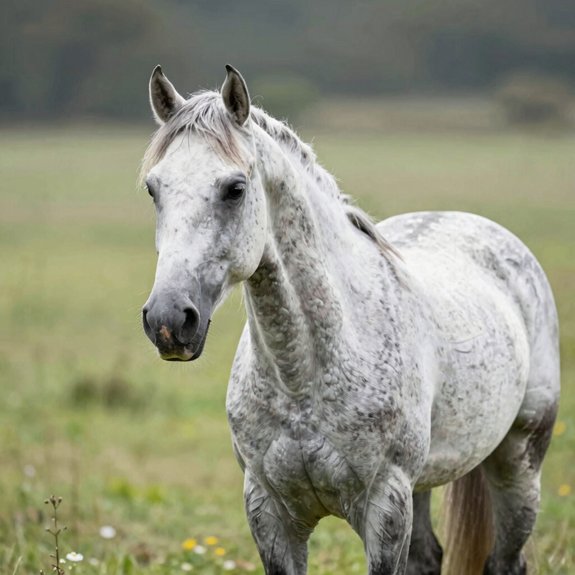
Rare horses often stand out at first glance, whether it is a metallic shine, a curly coat, or a coat color that seems almost unreal. Some breeds also show unusual ear shapes or miniature forms, which can make them look more like living curiosities than ordinary horses. These traits are not just eye-catching, since they often help identify the breed and tell a small part of its history.
Metallic shine
The Akhal-Teke often stands out for a metallic sheen that can look like polished bronze or silk in sunlight, and it shows up across coat colors, from bays and blacks to creams. The effect comes from hair structure and light reflection, not true white genes, so it is a breed hallmark, not a trick of color.
- Look for the glow from a distance.
- Notice how sparse manes and tails leave the body coat open.
- In pale palominos, the shine feels especially bright, giving the horse a statuesque, welcoming presence to admirers everywhere at shows and home.
Curly fur
Sometimes curly-coated horses stand out at first glance because their hair can range from a light wave to tight corkscrews, and the effect often shows up in the mane, tail, and even whiskers.
These coats feel sparse in summer and fuller in winter, and some horses shed less than expected. Owners value curl maintenance that keeps the texture clean without flattening the waves, while allergy management may be easier for sensitive people because dander can be lower. The trait is inherited, so curly parents pass it on, yet the look does not say about speed, stamina, or dressage skill.
Rare coat colors
Some rare horse breeds stand out not only for curly coats, but also for unusual color patterns that can look almost unreal at first glance. Akhal-Tekes may shine with a metallic finish, while few-spot Appaloosas and some Paints can appear nearly white. True white horses are rare, and many pale coats come from gray or cream genes, not true whiteness. That is where pigment genetics matters, and it helps clear up albino misconceptions.
- Look for skin color.
- Check age changes.
- Ask about breeding notes.
These details help riders feel informed, included, and ready to spot the difference without guesswork.
Unique ear shapes
At a glance, ear shape can offer a quick clue when rare horse breeds are being identified, because it often matches the rest of the horse’s overall build.
| Breed | Ear look |
|---|---|
| Akhal-Teke | long |
| Camarillo White | fine |
| Lipizzan | arched |
| Shetland | rounded |
| Draft | broad |
Ear morphology supports breed ID. Long, tapered ears, delicate rims, or compact sets can hint at Evolutionary function, Acoustic signaling, and Social communication. Gentle handling helps owners notice these details. A quick look can feel like finding a familiar face in a crowd. That makes identification easier, and it gives each breed a clearer place to belong.
Miniature forms
Many miniature horses, such as the American Miniature and the Falabella, stand under 34 to 38 inches, yet they keep the balanced proportions of a full-size horse, so they can look like a carefully made toy without losing their horsey shape.
A few rare lines add drama, with cream or cremello coats, metallic sheen, or blue eyes, but health still comes first. Careful breeding and dwarfism ethics keep size reduction from turning risky. In show grooming, small horses still need neat coats, tidy feet, and patient handling.
- Calm training counts.
- Tiny details matter.
- Shared pride grows.
Primitive markings
With a stripe down the back, bars on the legs, and sometimes a faint cross over the shoulders, primitive markings give rare horses a wild, antique look that can seem almost painted on.
They often appear in Akhal-Teke lines and other rare breeds, where a dorsal stripe, leg barring, and sparse manes or tails create a statuesque shape.
In horses with blue eyes, dilute coats, or metallic sheen, the dark lines stand out more. Their evolutionary significance points back to wild ancestors, and because these marks stay stable for life, they serve as identification markers for spotting primitive-type individuals.
Why Rare Horses Are Disappearing
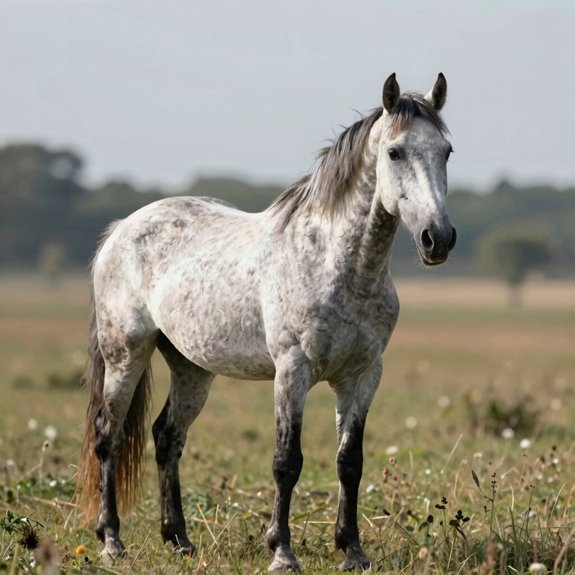
Rare horses are disappearing as industrial changes reduce the jobs they once had, and fewer breeders keep the bloodlines going. Habitat loss, high costs for feed and care, and small foal numbers make each breeding choice harder than it looks.
Low awareness also plays a part, because when people do not know a breed exists, it is much easier for it to fade quietly into the background.
Industrial changes
As tractors and trucks took over farms and roads, the need for working horses dropped fast, and many draft and all-purpose rare breeds saw their numbers sink as farms replaced horse labor throughout the 20th century. That automation impact also shifted rural economies, so fewer hands stayed tied to horse work.
- Farms chose engines.
- Roads favored trucks.
- Traditions faded.
As grazing terrain and local horse jobs shrank, communities had less reason to keep rare breeds nearby, and their presence became a quieter part of the vista. For people who care, small actions like visits, sharing stories, and support help.
Reduced breeding
Tiny breeding pools are a major reason rare horse breeds keep fading, because when only a few animals are available, inbreeding rises and healthy foals become harder to produce.
These breeding bottlenecks get worse when breeders chase color trends or profitable horses, while older lines lose planned replacements and useful traits.
Without shared studbooks, genetic testing, and community incentives, a few rare mares and stallions can carry risky genes, and the next foal crop shrinks again.
Careful pairing, record keeping, and rewards for keeping rare bloodlines active can help a breed stay visible, healthy, and part of the herd.
Habitat loss
Across many regions, habitat loss is squeezing rare horse breeds out of the places they have long called home.
- Farming and urban growth break native grazing lands into small pieces, and breeds such as Akhal-Teke lose space to roam.
- Wetland conservation matters for the Camargue, because drained marshes shrink the wet grasslands that support them.
- Roads, fences, and fading pastoral traditions isolate Mustangs and other local lines, while overgrazing and dry land make forage scarce.
Communities can help by supporting wetland conservation, keeping grazing corridors open, and protecting pastoral traditions, so these horses still have a place nearby today.
High costs
High prices are another reason rare horse breeds keep slipping away, because the most unusual color lines often cost far more than ordinary horses.
In small populations, like the Akhal-Teke, breeding costs rise fast, since genetic testing, careful mate selection, and outcrossing all take time and money.
Pink-skinned white horses also bring upkeep challenges, from sun protection to extra vet visits.
Because buyers chase a few show-quality stars, many horses stay private or get exported, leaving fewer affordable choices.
For anyone hoping to join the circle, patience and planning matter. A steady budget can keep the line alive longer.
Low awareness
Why do some rare horse breeds vanish so quietly? Low awareness leaves them out of public view, so fewer people join community outreach, visit local museums, or share them on social media. With only a few hundred or thousand animals, each missed fan matters.
- school programs can teach children the names and stories.
- social media can show daily care and foals.
- local museums can display images and histories, making belonging feel possible.
Without notice, breeders lose support, and the breed fades faster than a hoofbeat in snow. A little attention now can keep the breed visible, valued, and shared.
Mistakes to Avoid
A common mistake is assuming every rare horse is automatically expensive or out of reach, since price can vary by breed, age, and training.
It is also worth remembering that rare is not the same as exotic, and some breeds are simply uncommon in one region while conservation programs keep their numbers steady.
A closer look at where the breed comes from, and how many are actually left, helps avoid a neat-looking mix-up.
Rare equals expensive
Chasing rarity can be tempting, because unusual horses like Akhal-Tekes, Camarillo Whites, and few-spot Appaloosas can carry big price tags, but the sticker price is only part of the story.
Smart buyers slow down, compare market premiums, and budget for ownership costs before joining the crowd.
- Verify skin color and genetics, since many “white” horses are gray or cream, and they cost less.
- Add sun care and vet visits to ownership costs, because pink-skinned true whites need protection.
- Ask for lineage, tests, and exams, so market premiums reflect rarity, not hype.
That keeps the barn calm.
Ignoring conservation
Looking past the coat alone, conservation-minded buyers and breeders should keep in mind that a pale horse is not always a rare “white” breed, and it is not always the right animal to save.
Misplaced priorities and phenotype fixation can send money toward looks, not herds. Confirm skin color, birth color, and test carrier status before pairing stock.
| Check | Why | Action |
|---|---|---|
| Skin | Sun risk | Inspect and shade daily |
| Birth | True-white proof | Verify at birth |
| Genes | Foal-loss risk | Test pairings carefully first |
| Herd | Diversity over looks | Support broader bloodlines |
That keeps the herd healthy, saves scarce resources, and leaves room for true conservation choices.
Confusing rare and exotic
Rare coats can be impressive, but they do not always mean a horse is truly white or especially rare. A calm eye for Genetic distinctions helps riders avoid Exotic misconceptions and feel informed in the barn.
- True whites have pink skin and white hair.
- Gray horses may look white, yet they often have dark skin.
- Cremellos and pale palominos carry cream dilution, not white.
This check keeps newcomers included and confident, and it stops flashy ads from doing the thinking. That way, stable feels welcoming, and everyone learns the story without getting dazzled by labels alone.
Overlooking regional rarity
From a distance, a pale horse can seem like a once-in-a-lifetime sight, but regional scarcity does not always mean global rarity.
Regional misconceptions often blur the line between a breed being uncommon nearby and being rare overall.
A Lipizzan or Camargue may be hard to spot in one area, yet have steady local availability elsewhere, so a quick sighting should not set off the rare unicorn alarm.
Checking studbooks and population figures gives clearer picture, especially for pale-skinned horses that need sun protection in strong light.
That keeps regional misconceptions down and respects local availability without guesswork for everyone.
Who This Is For
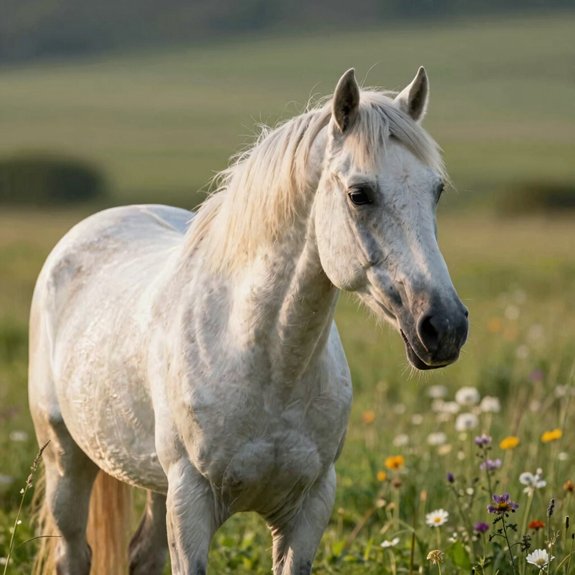
This topic is useful for horse enthusiasts who want to learn what makes rare breeds stand out, from unusual coats to striking body types.
It also speaks to conservation supporters, content creators, students, and researchers, who may need solid facts for protection work, photos, stories, or class projects.
A quick look at these breeds can help each group find the right details without getting lost in the haystack.
Horse enthusiasts
A horse lover’s eye often goes straight to the unusual, whether that means the Akhal-Teke’s metallic coat, the Lipizzan’s classic turn from dark foal to near-white adult, or the tiny group of true white horses born with pink skin.
That crowd usually wants guidance, not jargon:
- Akhal-Tekes attract equestrian tourism and bright eyes.
- Lipizzans suit classical fans and museum exhibitions.
- True whites, though rare, help collectors compare pink skin, gray coats, and cream dilutes at shows.
Belonging starts with knowing what is really before the eye. The group often feels less alone when the labels become clear, and honest.
Conservation supporters
Conservation supporters often want to help rare horses stay healthy and grow in number, especially breeds with tiny global counts like the Akhal Teke, where every foal matters.
They often back registry work, DNA checks, and careful pairings, so rare colors can continue without harmful surprises.
That kind of genetic stewardship helps small groups avoid inbreeding and keeps records clear enough to tell true whites from gray or cream lookalikes.
Support can also cover habitat fit, sun protection, and pink skincare for pale horses, because a coat is lovely, but healthy skin is the real prize for everyone involved.
Content creators
For content creators hoping to film “unreal” horses, rare breeds like the Akhal-Teke and the Camarillo give footage a real sense of wonder, since their numbers are tiny and their looks are hard to ignore. Good platform strategy pairs close-ups with quick facts, so audience interaction grows without confusion.
- Show the Akhal-Teke’s metallic sheen and blue eyes.
- Note Lipizzans usually dark at birth, then gray out over time.
- Explain true white versus cream or gray, and mention sunlight care for pink-skinned horses.
That mix keeps the feed welcoming, accurate, and easy for viewers who want to belong together online.
Students and researchers
Among students and researchers, this topic is most useful for anyone tracking coat color, genetics, or horse health.
True white horses, with pink skin and white hair at birth, are rare, and many “white” horses are actually gray or cream, so skin color and birth photos matter.
Studies on breeds like the Akhal-Teke or Camarillo work best with genetic testing, careful sampling protocols, and ethics research, plus health notes about sun sensitivity for pink-skinned horses. That approach helps a study feel like reliable barn team, where each record fits, and nobody confuses a cream coat for true white again.
Real Impact of Preservation
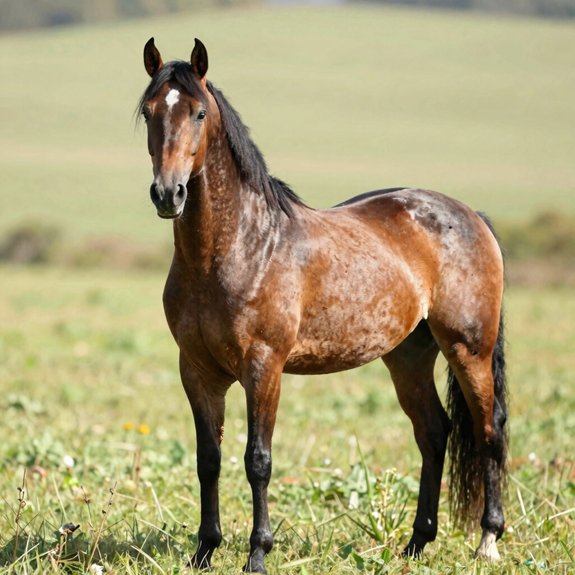
For rare horse breeds, preservation has a real payoff, because careful breeding helps protect genetic diversity and lowers the chance of risky pairings.
It also keeps cultural heritage in view, with shows and studbooks treating these horses as living history, not just pretty faces.
When breeding stays sustainable, the breed’s stamina, shape, and unique look can carry forward to the next generation.
Genetic diversity
Protecting a rare horse breed does more than save a name, it keeps a living mix of genes that may not exist anywhere else.
- Genetic monitoring keeps inbreeding visible before trouble grows.
- Allele retention preserves rare colors and healthier choices.
- Targeted outcrosses protect diversity without losing the breed.
Effective population size matters too, because a herd can look large and still be narrow inside.
When breeders share data and use careful tests, the breed stays healthier, and people who value it can feel part of something lasting. That keeps rare genes ready for the next generation without guesswork.
Cultural heritage
In places like southern France and Austria, rare horse breeds are part of daily culture, not just museum pieces. They carry oral traditions, intangible rituals, and shared pride through Camargue marshes, Lipizzan arenas, and family stories passed down with care.
When these breeds remain present, local tours, schools, and riding institutions keep a living link to history, not a dusty one. A town feels more like itself when its horses still matter. Preservation, then, is not nostalgia alone, but a practical way to protect identity, memory, and the quiet places where people recognize their own story again, every day.
Sustainable breeding
Keeping a rare breed alive means more than keeping it visible in a parade ring or on a trail, it means building a breeding plan that can last.
- Risky color alleles are tested before breeding.
- Open studbooks and careful outcrossing keep health strong.
- Sustainable incentives and community outreach help breeders stay involved.
This balance protects useful traits, keeps small populations steady, and gives owners a practical reason to remain part of the group, which feels like a club worth joining when careful planning turns rare horses into a shared success for people who want a place in the future.
Historical continuity
Through studbooks and careful recordkeeping, rare horse programs do more than save numbers, they keep bloodlines, training methods, and breed identity linked across generations.
That lineage preservation helps small populations like the Akhal-Teke stay healthy, while historic lines such as the Lipizzan keep classical work alive. Studbooks, genetic tests, and careful mate choices protect rare colors without letting health problems spread.
Reintroducing horses into managed herds, and supporting marsh work or dressage events, gives communities a shared link to the past. In that way, cultural continuity feels less like a museum piece and more like a living stable today.
Frequently Asked Questions
Can Horses Hear Music?
Yes—horses can hear music, with an astonishing hearing range. They notice rhythm and melody, and some show musical preference, often calming to familiar tunes. Their responses vary, but many seem part of the listening crowd.