


Baby German Shepherds are small, fragile, and fast-changing puppies. At birth, they may weigh only 1 to 1.5 pounds, with eyes and ears closed and mostly dark coats. They sleep 16 to 20 hours a day, nurse often, and need warmth, weight checks, and careful feeding. By 3 to 8 weeks, they begin walking, teething, playing, and learning social rules. Their early months reveal many more important stages.
Disclosure: This post may contain Amazon affiliate links, at no extra cost to you. Content on Pawtangle is created with research support from AI tools and carefully reviewed, edited, and fact-checked by the lead author, Dr.Fahri Pat , to ensure accuracy and reliability. Learn more
Key Takeaways
- Newborn German Shepherd puppies are tiny, mostly black, and their eyes and ears are closed at birth.
- They sleep 16–20 hours daily, nurse every 2–3 hours, and need warmth and careful weight checks.
- Around 3–4 weeks, they start opening eyes, wobbling, nibbling softened food, and becoming more active.
- Between 4–8 weeks, their personalities emerge, teeth come in, and littermate play teaches bite inhibition.
- From 8 weeks onward, begin crate training, short obedience sessions, and gradual socialization after vaccinations.
What Baby German Shepherds Look Like

Newborn German Shepherd puppies typically weigh about 1 to 1.5 pounds and are born mostly black, with their eyes and ears closed. Their bodies are compact, with soft coats and limited visible patterning at first. By two weeks, faint red and tan patches may appear on the face and paws, creating early fluffy markings. At three to four weeks, fur thickens, muzzles lengthen, and the eyes open, often blue-gray before darkening. The saddle pattern starts to show, and facial expression changes become more apparent as features develop. This appearance is characteristic and recognizable to those familiar with the breed.
German Shepherd Puppy Growth Stages

German Shepherd puppies change quickly during the first year, with each stage marked by predictable shifts in weight, behavior, and physical development.
| Age | Typical signs | Approx. weight |
|---|---|---|
| 3–4 weeks | Eyes open; curiosity rises | 2–3 lb |
| 4–8 weeks | Social play, barking, teeth | 8–10 lb |
| 10–16 weeks | Teething, training demands increase | variable |
| 4–12 months | Adolescence, stronger testing | 65–75% adult size |
Growth monitoring helps families track progress while accounting for genetic variation. Owners can expect coordinated movement, stronger jaws, and steady muscle gain. Consistent observation supports a shared, confident progression through each stage.
Baby German Shepherds From Birth to 2 Weeks

Newborn German Shepherd puppies weigh about 1 to 1.5 pounds, have short, plump bodies, and are born almost entirely black with faint red or tan markings appearing by two weeks. Their eyes and ears remain closed at birth, so they rely on smell to locate the mother while nursing every 2 to 3 hours for warmth, nutrition, and immunity. During this period, they sleep most of the day, move only by crawling or small uncoordinated motions, and begin to show early physical changes such as opening eyes, emerging teeth, and thickening fur.
Newborn Traits
During the first two weeks of life, German Shepherd puppies typically weigh about 1 to 1.5 pounds and appear short, plump, and underdeveloped, sleeping 16 to 20 hours per day while nursing every 2 to 3 hours. Eyes and ears remain closed, so scent guides movement. | Trait | Newborn state | By 2 weeks | | Weight | 1-1.5 lb | Slight gain | | Coat | Mostly black | Tan marks emerge | | Movement | Crawling, reflexes | Brief activity | | Sensory status | Blind, deaf | Eyes opening | Neonatal reflexes support suckling, and maternal bonding is reinforced through close contact, soft vocalizations, and strong suckling behavior.
Early Puppy Needs
From birth to two weeks, baby German Shepherds depend almost entirely on the dam and careful environmental support to survive and develop. Newborns typically weigh 1 to 1.5 pounds, remain short and plump, and appear nearly black, with faint red or tan markings emerging on the face and paws by week two. Their eyes and ears are closed, so smell guides movement. They sleep 16 to 20 hours daily and nurse every 2 to 3 hours. Adequate ambient temp, hydration, and litter stimulation are crucial, because thermoregulation is limited. Gentle handling supports bonding, while weight checks help identify concerns early.
What 3- to 4-Week German Shepherd Puppies Do

At 3 to 4 weeks of age, German Shepherd puppies begin opening their eyes and ears, marking early sensory development, and they start crawling and taking unsteady steps. They also participate in more coordinated play with littermates while mouthing and nibbling as their teeth emerge. At the same time, they begin weaning from exclusive nursing to soft food in small meals.
Early Sensory Development
As German Shepherd puppies reach 3 to 4 weeks of age, sensory development accelerates: their eyes begin to open, often revealing deep blue or gray irises that later change to brown, and their ears may show brief movement while remaining floppy. These sensory milestones support recognition of littermates, handlers, and the nest. | Feature | Typical finding |
| — | — |
|---|---|
| Vision | Partial opening, blurred focus |
| Hearing | Inconsistent response, ear twitching |
| Touch | Increased tactile stimulation tolerance |
At this stage, thicker soft fur develops, markings sharpen, and puppies respond more readily to human contact, new textures, and quiet sounds.
Wobbly Play and Nibbling
During the 3- to 4-week stage, German Shepherd puppies become more active and begin making short, unsteady excursions around the nest, often wobbling as coordination improves. This balance development is visible in tentative standing, brief walks, and frequent toppling. Eyes and ears function more, yet vision remains immature, so movement is guided chiefly by smell and touch. Littermates interact in pawing, gentle nipping, and wrestling, which support social ranking and bite inhibition. Emerging teeth drive sensory mouthing of siblings and objects, producing exploratory nibbling. Such behavior is normal, familiar, and reassuring within the litter.
First Weaning Steps
By 3 to 4 weeks of age, German Shepherd puppies usually begin the weaning process, nibbling on softened or raw puppy food while continuing to nurse and taking about four to five small meals daily. Breeders often use introducer tools such as shallow dishes to support a gradual shift from milk to solid food. Eyes are open, coordination is improving, and the puppies show wobbling steps, play-pawing, and distinct temperaments. Baby teeth start erupting, increasing mouthing of littermates and toys. Potty trips may begin outdoors. At four weeks, weight is commonly 2 to 3 pounds, with long sleep periods still necessary.
German Shepherd Puppies at 4 to 8 Weeks

Between 4 and 8 weeks, German Shepherd puppies undergo rapid physical and behavioral development: from 4–6 weeks they begin showing distinct personalities, increased play and pawing with littermates, and a gradual shift from nursing to soft or solid food, typically offered in 4–5 small meals daily; by 6–8 weeks they are usually active, coordinated, and confident, with fully erupted baby teeth and strong chewing and mouthing behavior. These temperament milestones and feeding shifts support early bonding and readiness for family life.
- Gentle handling builds trust.
- Varied sounds and textures aid socialization.
- Vet checks and vaccinations should begin.
- Leash, crate, and potty routines can start.
What German Shepherd Puppies Eat and Sleep

German Shepherd puppies follow a tightly regulated pattern of feeding and rest that changes quickly in the first months of life. From birth to 2–3 weeks, they nurse every 2–3 hours and sleep 16–20 hours daily. At 3–4 weeks, soft foods are introduced while nursing continues. By 4–8 weeks, feeding schedules typically move to 3–4 small meals; at about 8 weeks, three meals is common. Sleep cycles remain long, then shift to 14–18 hours by 10–12 weeks and about 4 months. Consistent mealtimes and night routines support training and a secure sense of belonging.
How German Shepherd Puppies Play and Bite

As feeding and sleep routines become more settled, German Shepherd puppies also enter a phase of intense play and mouthing. During teething, especially at 3–6 months, sharp baby teeth drive puppy mouthing on hands, clothing, furniture, and slippers. At 8 weeks, full baby teeth and high energy produce vigorous wrestling, tug, and playful nipping, often during supervised play.
- Offer Benebones or frozen chewables.
- Use bite-inhibition games.
- Provide daily exercise and mental stimulation.
- Remove valuables; use crate management.
With consistent redirection, the puppy learns soft mouth control and remains better incorporated into family life.
German Shepherd Puppy Training Basics
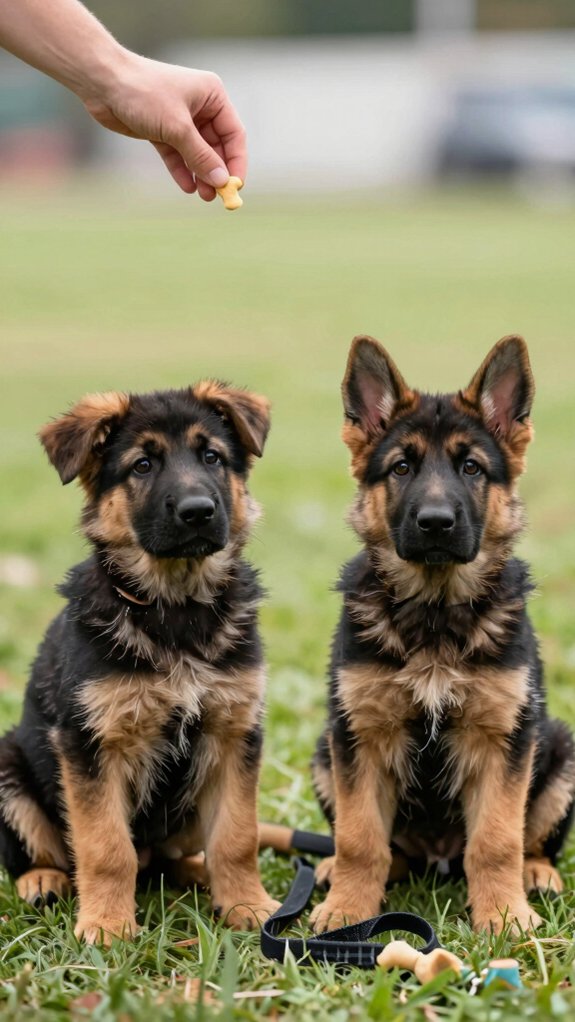
German Shepherd puppies may begin basic obedience at about 8 weeks, with brief sessions focused on sit, come, and leash introduction using high-value rewards. Potty and crate routines should start immediately with a consistent schedule and supervised outings to reinforce one designated elimination area, while calm behavior is reinforced through positive reinforcement. Mouthing and biting during teething are best managed with chew toys, redirection, and bite-inhibition practice rather than punishment.
Start With Sit And Come
Start with “sit” and “come” as early as 8 weeks, using brief 3–5 minute sessions, a consistent one-word cue and hand signal, and high-value treats to reinforce correct responses immediately. Short sessions preserve focus and reduce frustration in young German Shepherds.
- Reward each correct response at once.
- Replace treats gradually with praise.
- Practice recall in a safe, enclosed area.
- Increase distance and distractions slowly after vaccinations.
Within 3–4 days, “sit,” “wait,” and “come” may be chained together. This approach supports reliable obedience, especially when daily routines include leash introduction and calm crate breaks for focused learning.
Build Potty And Crate Habits
At 8 weeks, crate training should begin with a properly sized crate that allows the puppy to stand, turn, and lie down comfortably without enough space to separate sleeping from toileting, and the crate should be paired with meals and brief supervised naps so it becomes a positive resting place. Potty breaks should occur every 1–2 hours, and after waking, eating, playing, and before bedtime. A consistent cue and one outdoor spot support learning. Crate enrichment and limited freedom reduce accidents. During night routines, most puppies sleep 6–8 hours, though one potty break may still be needed.
Reward Calm, Redirect Biting
Calm behavior should be reinforced immediately with small tasty treats or brief praise, ideally within 1 second, so the German Shepherd puppy learns that quiet, settled behavior is more rewarding than mouthing. Calm cues can be paired with short, frequent sit and leave it sessions to build self-control and a sense of belonging in the household.
- Offer durable chew stations during teething
- Use frozen washcloths for mouth relief
- Withdraw attention after hard biting
- Remove shoes and remote controls from reach
Why German Shepherd Puppies Need Socialization
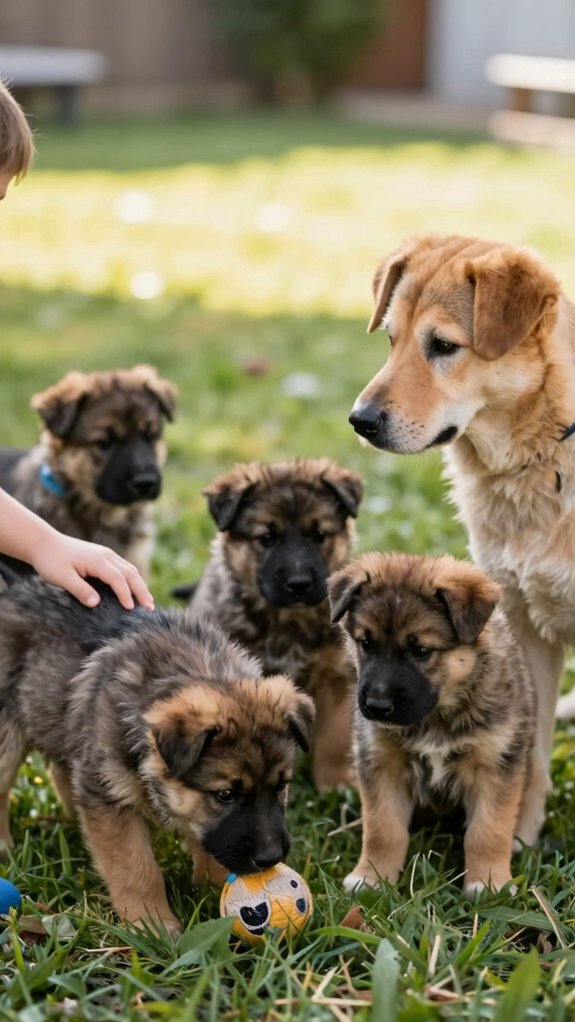
German Shepherd puppies pass through a critical socialization window from roughly 4 to 12 weeks of age, peaking between 4 and 8 weeks, when exposure to people, animals, sounds, surfaces, and routine handling most strongly shapes adult confidence and reduces fearfulness. At 8 weeks, gentle handling, stranger desensitization, and noise exposure support calm recognition of safe individuals and environments. Supervised contact with vaccinated dogs and friendly people helps limit suspicion, barking, and reactive guarding. Continued positive outings, crate training, and basic obedience through 16 weeks reinforce reliable responses under distraction. Avoiding dog parks until fully vaccinated preserves safety while belonging to everyday life grows.
What to Expect as German Shepherd Puppies Mature
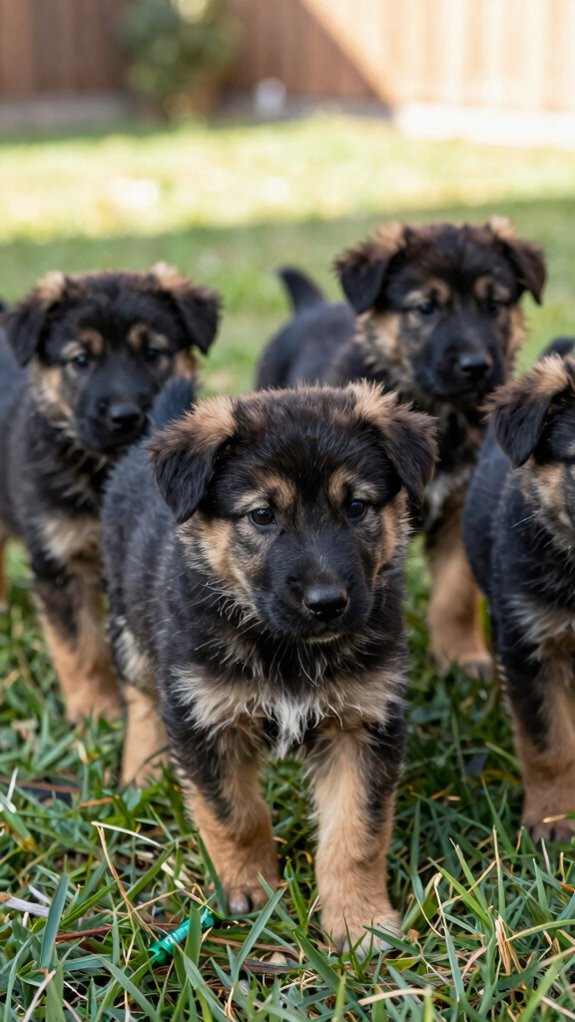
As German Shepherd puppies grow, their development becomes a predictable series of physical and behavioral changes. In early weeks, they are active, coordinated, and mouthy, then teething intensifies by 10 to 16 weeks. – temperament changes include greater curiosity and boundary testing. – energy management requires structure, exercise limits, and sleep. – nutrition adjustments often mean three meals daily during rapid growth. – growth monitoring should track size, joint load, vaccines, and obesity risk. By 9 to 12 months, many reach 65 to 75 percent of adult size, with high drive, emerging independence, and a need for consistent obedience and reassurance.
Frequently Asked Questions
How Difficult Are German Shepherd Puppies?
German Shepherd puppies are quite demanding. They can learn sit in about two days, yet their training challenges are substantial; their socialization needs are constant, and they require exercise, structure, and supervision to prevent problems.
What I Wish I Knew Before Getting a German Shepherd?
They need relentless training, ample space needs, and early socialization. Without structured exercise and alone-time practice, training challenges intensify, with chewing, clinginess, and reactivity. Veterinary costs, grooming, and maturity timelines also warrant preparation.