


A dachshund, or “badger dog,” is a small scent hound bred to dig and flush quarry underground. Care requires a complete, life-stage diet, portion control, and strict weight management to protect the spine. Puppies need short, controlled exercise, early socialization, and positive-reinforcement training. Adults benefit from daily walks, nose work, and low-impact play. Grooming varies by coat type, and routine ear, dental, and nail care helps prevent common health problems and IVDD. More details follow.
Disclosure: This post may contain Amazon affiliate links, at no extra cost to you. Content on Pawtangle is created with research support from AI tools and carefully reviewed, edited, and fact-checked by the lead author, Dr.Fahri Pat , to ensure accuracy and reliability. Learn more
Key Takeaways
- Dachshunds are small, long-backed dogs bred for hunting underground prey, with standard and miniature sizes and smooth, longhaired, or wirehaired coats.
- Feed a high-quality AAFCO-complete diet matched to life stage, with puppies eating 3–4 meals daily and adults usually fed twice daily.
- Keep dachshunds lean, because obesity increases spinal strain and IVDD risk; limit treats, avoid table scraps, and monitor weight regularly.
- Exercise with short, controlled, low-impact sessions like leash walks, nose work, and puzzle toys, while avoiding jumping, twisting, and steep stairs.
- Train early with positive reinforcement, socialize from 3–14 weeks, and support the chest and hindquarters when lifting.
What Is a Dachshund?
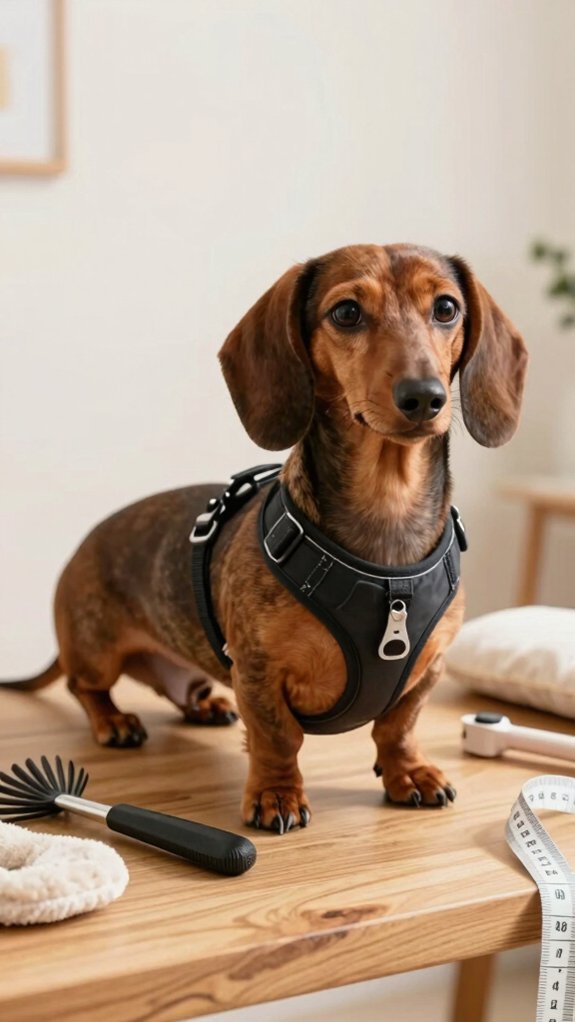
The dachshund, German for “badger dog,” is a small hound breed developed in Germany to scent, flush, and dig quarry from underground dens. Its origin history reflects centuries of selection for subterranean work. Distinctive breed variations include Standard and Miniature sizes, plus smooth, longhaired, and wirehaired coats. The body is long, the legs short, due to chondrodysplasia, a form of dwarfism. This structure supports the breed’s working role but also increases spinal risk, including intervertebral disc disease. Dachshunds commonly live 12–16 years and are recognized for intelligence, persistence, playfulness, vocal tendencies, and a strong prey instinct.
Caring for a Dachshund Puppy

A Dachshund puppy should be fed age-appropriate, high-quality AAFCO-compliant puppy food three to four times daily, with portions adjusted to expected miniature or standard adult size and monitored closely as growth continues into 18 to 24 months. Exercise should remain low-impact and brief, with short walks and controlled play that build muscle while avoiding jumping, twisting, and other stress on the spine. Early training and socialization should begin immediately using consistent positive reinforcement to reduce barking, manage prey and digging drives, and establish safe behavior with children and other animals.
Feeding And Growth
Feeding a Dachshund puppy requires a measured, breed-specific approach: a high-quality, AAFCO-compliant puppy formula for small breeds should be offered in three to four meals daily until about 6 months of age, then reduced to twice-daily feedings in adulthood. Careful portion monitoring should follow the food label and veterinary advice, because these puppies can remain lean yet fill out until 18 to 24 months. Gradual changes over 7 to 10 days help prevent gastrointestinal upset. Choose puppy-formulated kibble or wet food, avoid table scraps, and track growth with weigh-ins to support a healthy, familiar routine.
Puppy Exercise Limits
During growth, a Dachshund puppy should avoid high-impact activity, including jumping, steep stairs, and vigorous twisting games, because the long back and spine are vulnerable to injury. Controlled short walks, 5–10 minutes several times daily for very young puppies, support fitness without strain. Low-impact enrichment such as nose work, puzzle toys, hide-and-seek with treats, and supervised indoor play helps members of the breed community build strength safely. Breeding considerations favor careful spinal protection, and puppy socialization should occur in secure settings. Portion control and low-calorie treats reduce obesity and IVDD risk. Ramps and blocked furniture access prevent unsafe leaps.
Early Training Habits
From 3 to 14 weeks of age, a Dachshund puppy should be socialized with varied people, environments, and gentle handling to reduce fearfulness, barking, and reactivity later in life. Early socialization and gentle handling should continue daily, alongside crate training and a consistent potty schedule with 3 to 4 feedings.
| Focus | Method |
|---|---|
| Obedience | Short, positive-reinforcement sessions |
| House training | Crate use and timed elimination |
| Safety | Support chest and hindquarters |
| Activity | Short walks and mental games |
Keep sessions under 10 minutes, use high-value treats, and discourage jumping to protect the long spine and build a stable, well-adjusted companion.
Safe Exercise for Dachshunds
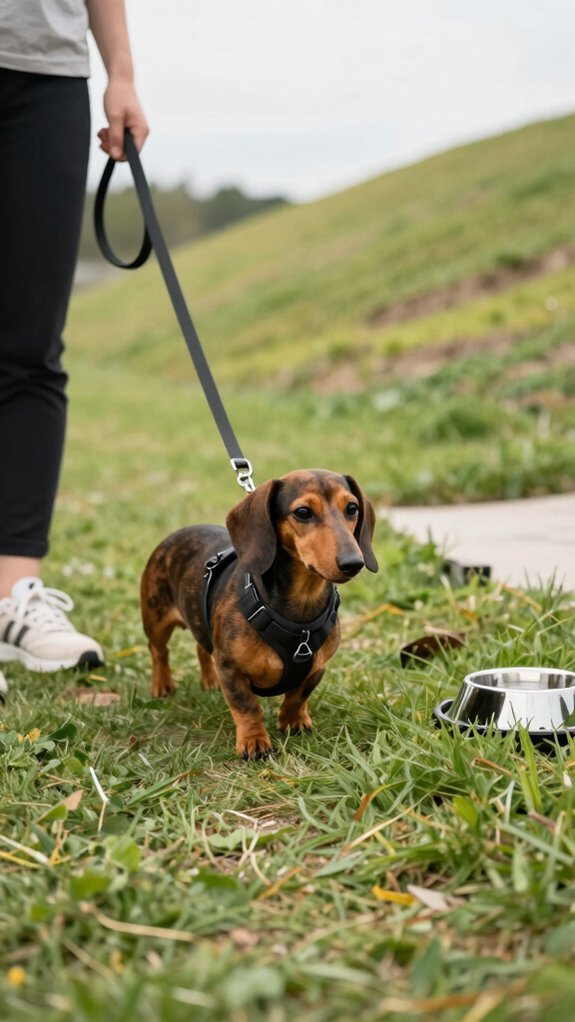
Safe exercise for dachshunds should consist of several short walks and play sessions each day, rather than a single long period of activity, to support muscle tone without overloading the back. Jumping, twisting, and high-impact landings should be avoided, and ramps or pet stairs can reduce spinal strain during routine movement. Body weight should be monitored closely, since excess weight increases the risk of intervertebral disc disease and adds stress to the spine.
Daily Walks and Play
Daily exercise for dachshunds should consist of multiple short, controlled sessions rather than one long outing, such as two moderate walks plus 10–20 minutes of play or scent work, to support fitness and mental stimulation without placing excessive strain on the spine. Consistent routines help owners feel confident and included in responsible care.
- Use a body harness and keep walks on-leash.
- Choose level routes over rough terrain.
- Prefer nose work, hide-and-seek, or gentle fetch.
- Add socialization outings and indoor enrichment.
- Monitor weight and stop if pain signs appear.
Avoiding Back-Straining Moves
To protect the dachshund’s long spine, exercise should avoid jumping, twisting, steep stair climbing, and sudden high-impact bursts that can increase strain and contribute to intervertebral disc disease risk. Spine friendly routines rely on multiple short walks, controlled play, and low-impact conditioning such as supervised swimming or underwater treadmill work. Ramps or pet stairs reduce risky leaps onto furniture or into cars. Caregivers should use correct lifting techniques: support both chest and hindquarters with two hands to keep the back in proper alignment. Consistent, careful handling helps the dachshund community preserve mobility, comfort, and long-term spinal health.
Stairs, Ramps, and Weight
Dachshunds are long-backed and predisposed to intervertebral disc disease, so stairs and repeated jumping should be minimized to reduce spinal strain. A household that supports safe movement can prevent injury and reinforce proper habits.
- Use pet ramps or sturdy steps
- Choose durable ramp materials with traction
- Place steps level with beds, sofas, and vehicles
- Maintain lean body weight within breed standards
- Provide walks and supervised play, avoiding twisting or high jumps
Owners should watch for pain, hunched posture, dragging hind paws, or elimination changes, and seek veterinary evaluation without delay.
How to Prevent Dachshund Weight Gain

Preventing weight gain in a Dachshund begins with controlled feeding and routine monitoring. Measured meals, portion control, and low calorie treats support a stable, healthy weight. | Strategy | Frequency | Benefit |
| — | —: | — |
|---|---|---|
| Scheduled feeding | Twice daily | Reduces overeating |
| Puzzle feeders | Daily | Limits boredom eating |
| Walks and scent work | Multiple times | Builds muscle |
| Monthly body checks | Monthly | Detects gain early |
| Vet weigh-ins | Yearly | Guides adjustments |
A tucked waist and palpable ribs indicate good condition. Gentle, consistent habits help the dog remain active, supported, and included in the household routine.
Common Dachshund Health Problems

Among the most important health concerns in this breed is intervertebral disc disease (IVDD), a spinal condition that can cause back pain, reluctance to jump, hind limb weakness, scuffing of the toenails, or sudden paralysis and may require urgent veterinary care. Dachshund families should note other common disorders:
- Obesity increases IVDD and joint strain.
- Patellar luxation and dysplasia may cause limping.
- Dental disease often begins early.
- Epilepsy and eye disease warrant screening.
- Genetic testing and senior care support long-term monitoring.
Annual exams, weight control, limited stairs, and prompt evaluation of gait changes help this close-knit community protect health.
What to Feed a Dachshund
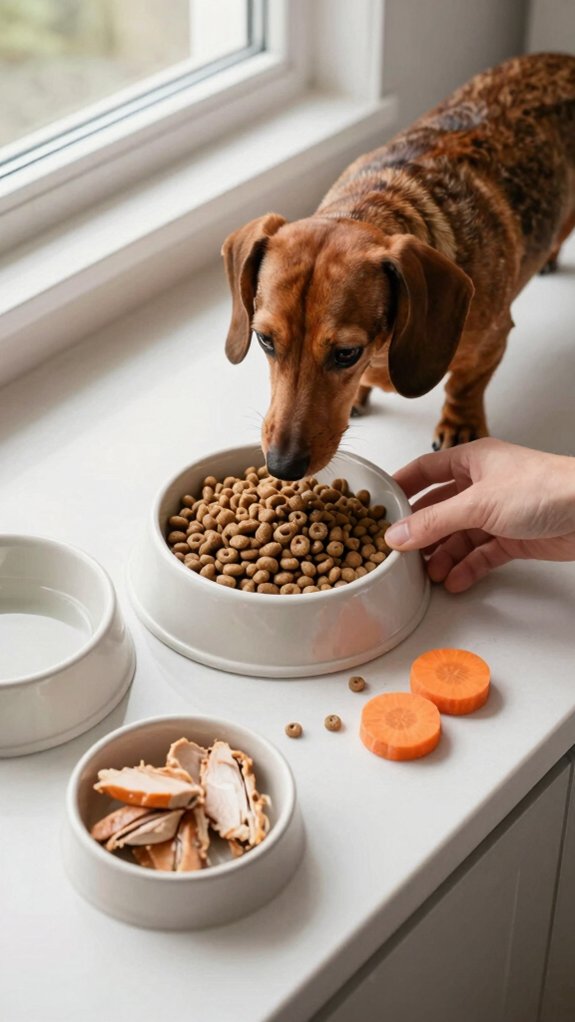
A Dachshund should be fed a high-quality, AAFCO-compliant diet matched to its life stage, with portions set according to the manufacturer’s guidelines and adjusted for activity and body condition. Puppies typically require 3–4 small meals daily, while adults do well on two measured feedings per day. Because the breed is prone to obesity, calorie intake, treats, and body score should be monitored closely to protect spinal health.
Age-Appropriate Food Choices
Feeding a Dachshund should center on a high-quality, AAFCO-complete diet matched to life stage, with puppies receiving nutrient-dense food in 3–4 meals per day and adults fed twice daily to support steady growth and reduce the risk of overeating. Age-appropriate choices also favor breed specific kibble and practical meal timing strategies that fit the dog’s needs.
- Puppy formulas: controlled calcium and phosphorus
- Moderate fat for steady growth
- Adult diets: weight-conscious support
- Senior diets: veterinarian-guided adjustments
- Dental-friendly kibble for oral health
Owners should consult a veterinarian about pancreatitis, diabetes, and lean body condition.
Portion Sizes and Feeding Schedule
Portion control should be based on a high-quality, AAFCO-compliant puppy, adult, or senior formula matched to the dachshund’s life stage, coat type, and activity level, using the feeding guide on the bag as a starting point and adjusting for body condition. | Stage | Schedule
| Puppy | 3–4 meals daily |
|---|---|
| Adult | 2 meals daily |
| Miniature | Smaller, measured portions |
| Standard | Calorie-based portions |
| Treats | Counted in daily allotment |
Puppies need portion timing that divides calories until six months. Adults thrive on two meals. Calorie tracking, monthly reweighing, and strict treat limits help reduce obesity, IVDD, and joint strain. Veterinary review annually fine-tunes intake.
Dachshund Grooming by Coat Type

Dachshund grooming needs vary markedly by coat type: smooth-coated dogs require only minimal upkeep, with weekly brushing using a grooming glove or towel and bathing every few months to manage moderate year-round shedding, while longhaired dogs need brushing several times per week, especially on the belly, feathering, and behind the ears, to prevent matting as the coat fully matures by 18–24 months. This coat maintenance supports a neat, healthy appearance.
- Smooth: lowest-maintenance
- Longhaired: frequent brushing
- Wirehaired: stripping plus trims
- Nails: monthly trimming
- Ears and teeth: regular care
How to Train a Dachshund
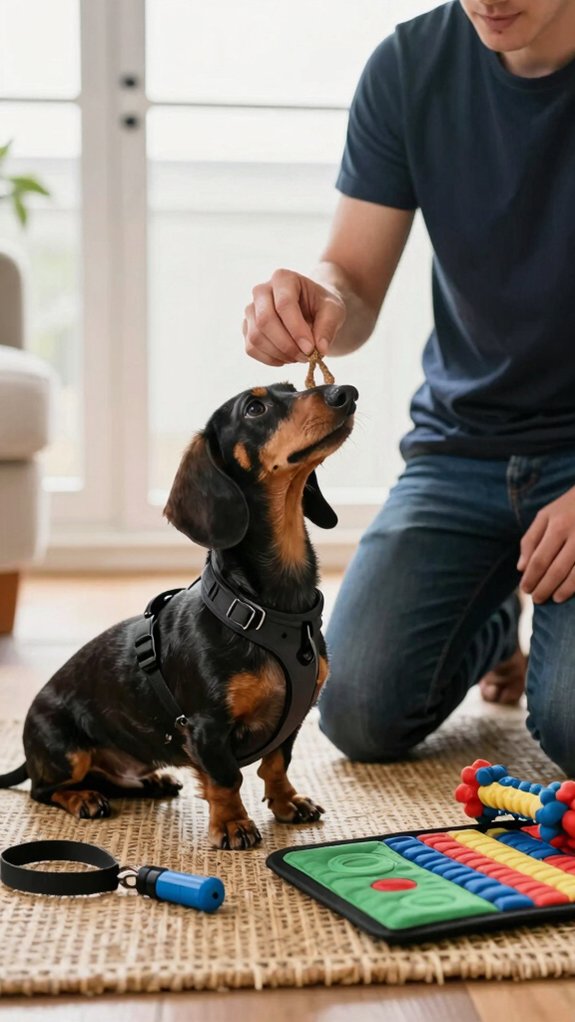
With grooming handled, effective training becomes the next priority for a well-adjusted dachshund. Short, consistent sessions of 5–10 minutes, repeated daily, suit its stubborn, food-driven temperament. | Skill | Method | Outcome |
| — | — | — |
|---|---|---|
| Sit/Stay/Recall | Positive reinforcement | Reliable basics |
| Back safety | Ramps, up/down cues | Reduced strain |
| Barking control | Quiet cue, silence rewards | Fewer vocalizations |
Early socialization, from 3–16 weeks, helps prevent fear and strong-willed habits. Structured outlets such as scent work and puzzle toys can channel prey and digging instincts. Gradual desensitization supports alone-time tolerance. Advanced tricks should follow only after core manners are stable, preserving confidence and group harmony.
Fun Dachshund Games and Activities
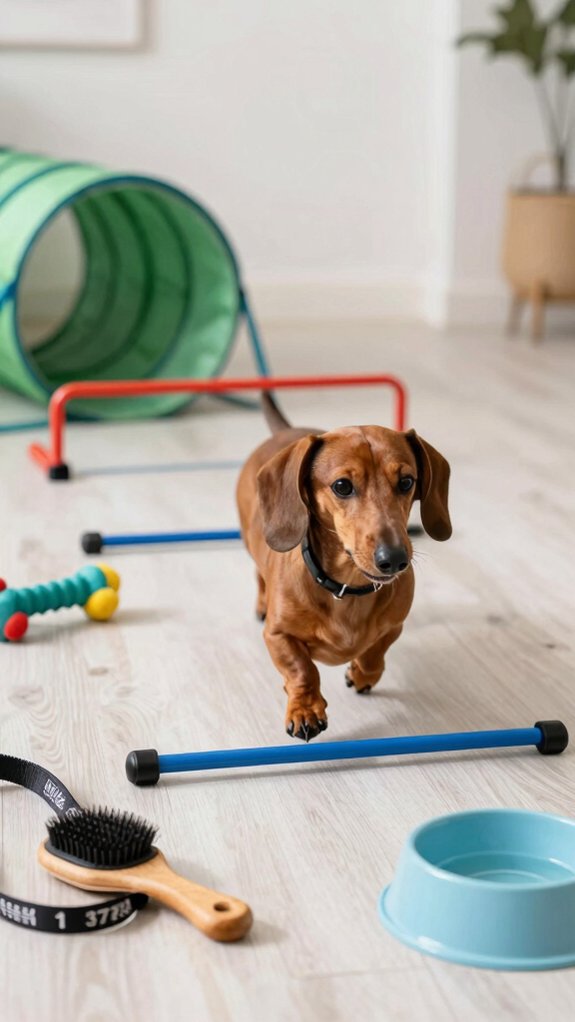
For a dachshund, daily play should be purposeful and low-impact, combining scent-tracking games such as hide-and-seek with treats for 10–20 minutes, supervised tunnel or low obstacle work, and two short sessions of puzzle or food-dispensing toys to provide mental stimulation and help limit weight gain.
- scent games
- obstacle courses
- leash recall drills
- soft tug or fetch
- puzzle toys
These activities support prey drive, core strength, and problem solving while preserving spinal health. Short, controlled sessions help the dog feel included, involved, and confidently exercised.
Dachshund Home Safety Tips
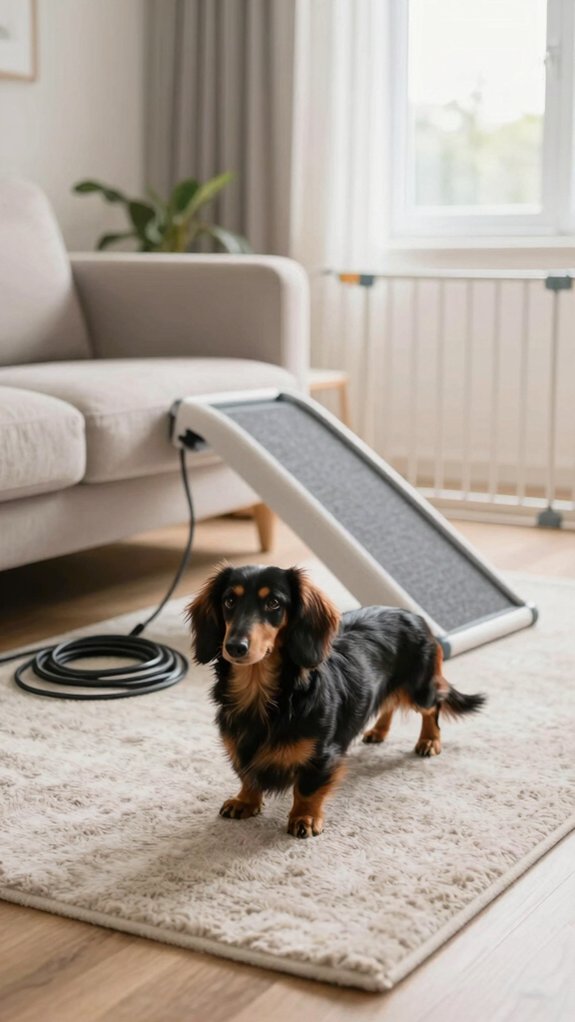
Protecting a dachshund’s long spine starts at home, where ramps or stairs should be installed for couches and beds and access to high furniture should be blocked to reduce jumping-related IVDD risk. Small objects, toxic foods, and unsecured trash bins should be removed to limit ingestion hazards. Secure fencing and supervision during yard time help prevent escapes and wildlife encounters. Weight control through measured meals, limited treats, and short walks supports back and joint health. Routine ear, dental, and nail care reduces pain. Crate training and emergency preparedness strengthen safety and help families feel organized, confident, and included.
Frequently Asked Questions
Is a Wiener Dog Easy to Take Care Of?
No, a wiener dog is not especially easy to take care of. It requires short walks, mental stimulation, careful weight control, dental care, and protection from stairs or jumping to reduce back injury risk.
What to Avoid With Dachshunds?
Dachshunds should avoid jumping, rough play, obesity, and ignored back pain. About 25% develop IVDD, so back strain prevention and stair use restrictions matter. Routine exams, weight control, and low-impact exercise support healthy belonging.
What Kind of Care Do Dachshunds Need?
Dachshunds need moderate exercise, dietary management, veterinary checkups, and careful grooming. They also benefit from ramps, dental care, and weight control. Preventive monitoring helps protect backs, mobility, and overall health.