

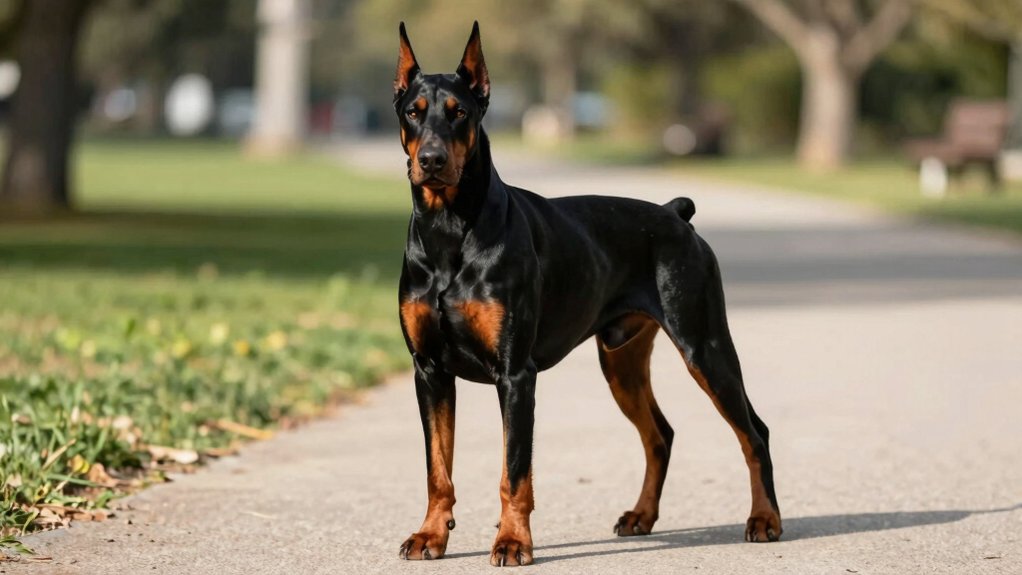
The Doberman Pinscher is a large German working breed developed in the 1880s for protection, endurance, speed, and intelligence. It has a square, muscular build, a short smooth coat, and a broad chest. Common colors include black and rust, blue and rust, fawn and rust, and red and rust. The breed is highly trainable and protective, but it needs early socialization, firm positive training, and substantial exercise. More details clarify its care, health, and temperament.
Disclosure: This post may contain Amazon affiliate links, at no extra cost to you. Content on Pawtangle is created with research support from AI tools and carefully reviewed, edited, and fact-checked by the lead author, Dr.Fahri Pat , to ensure accuracy and reliability. Learn more
Key Takeaways
- The Doberman is a large German working dog breed developed in the 1880s for protection, stamina, speed, and intelligence.
- It is also called the Doberman Pinscher, Doberman, or Dobe.
- Dobermans have a square, muscular build, short coat, broad chest, and firm back.
- They are highly intelligent, trainable, and protective, so early socialization and consistent training are important.
- Common health concerns include dilated cardiomyopathy, bloat, hip dysplasia, and von Willebrand disease.
What Is a Doberman Pinscher?
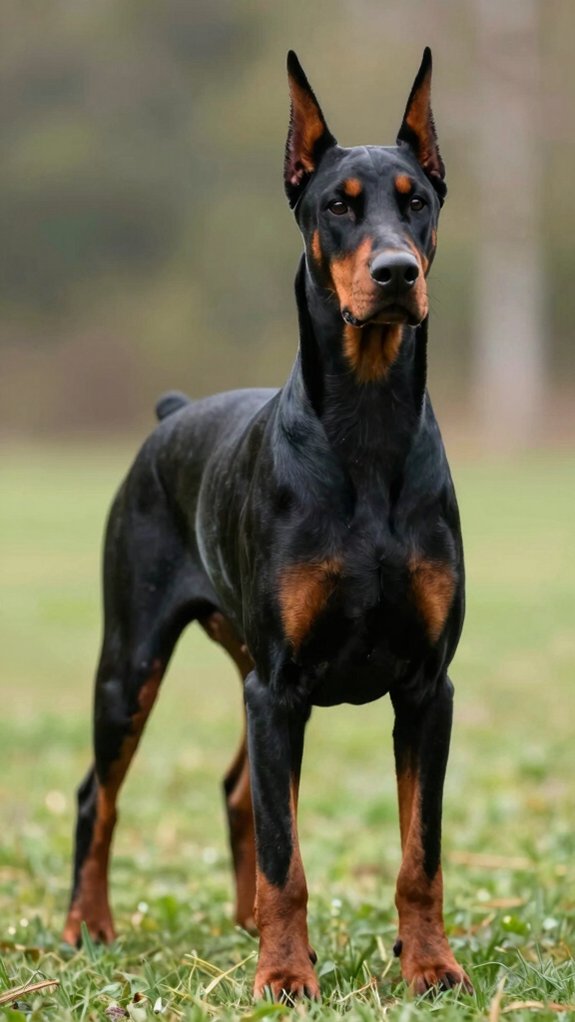
The Doberman Pinscher, also called the Doberman or Dobe, is a large German working breed developed in the 1880s by Karl Friedrich Louis Dobermann for protection and stamina. Its origin story centers on a dog selected for speed, endurance, and intelligence. Breed standards describe a square, muscular, short-coated dog bred for guard work and reliable companionship when well socialized. The breed is highly trainable, attentive, and energetic, and it responds best to early socialization and consistent exercise. Responsible ownership supports health, confidence, and a strong sense of belonging within an experienced household.
Doberman History, Size, and Appearance
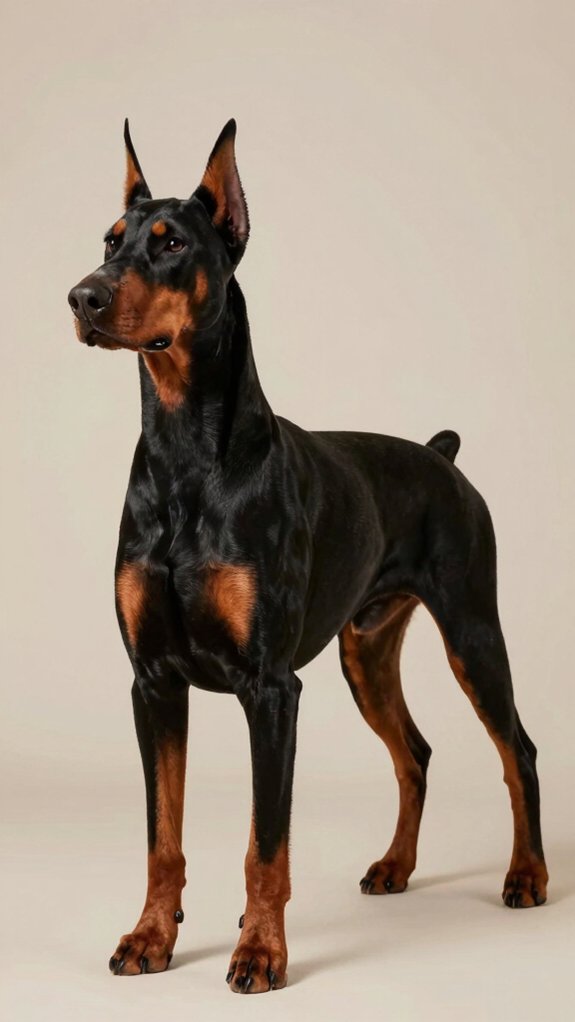
Developed in Germany in the 1880s by Karl Friedrich Louis Dobermann, the Doberman Pinscher was bred as a strong, clever protection dog and later refined by breeders such as Otto Goeller, with formal breed clubs established soon afterward. Its German origin is reflected in a square, athletic outline.
| Trait | Detail |
|---|---|
| Male size | 26–28 in, 75–100 lb |
| Female size | 24–26 in, 60–90 lb |
| Coat colors | Black & Rust, Blue & Rust, Fawn/Isabella & Rust, Red & Rust |
The short, smooth coat, broad chest, and firm back define a sleek silhouette. Tail docking and ear cropping remain debated.
Doberman Temperament and Training Needs
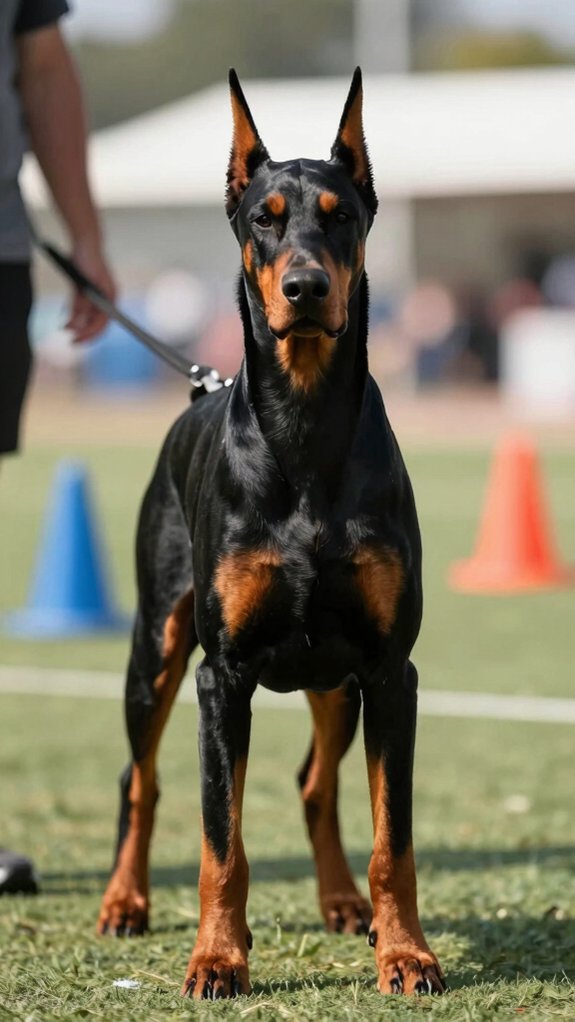
Dobermans are highly clever, very trainable dogs that typically learn quickly, but they respond best to consistent, firm positive-reinforcement methods that prevent the formation of unwanted habits. Their protective nature makes early socialization and puppy classes crucial, so vigilance develops into calm reliability around strangers.
- Watchdog training should be controlled and reward based.
- Daily exercise and structured activities such as obedience, agility, or scent work support prevention boredom.
- Careful introductions to dogs and small animals reduce reactive responses.
Raised indoors with family, they bond closely and thrive when included, supervised, and mentally involved.
Common Doberman Health Problems
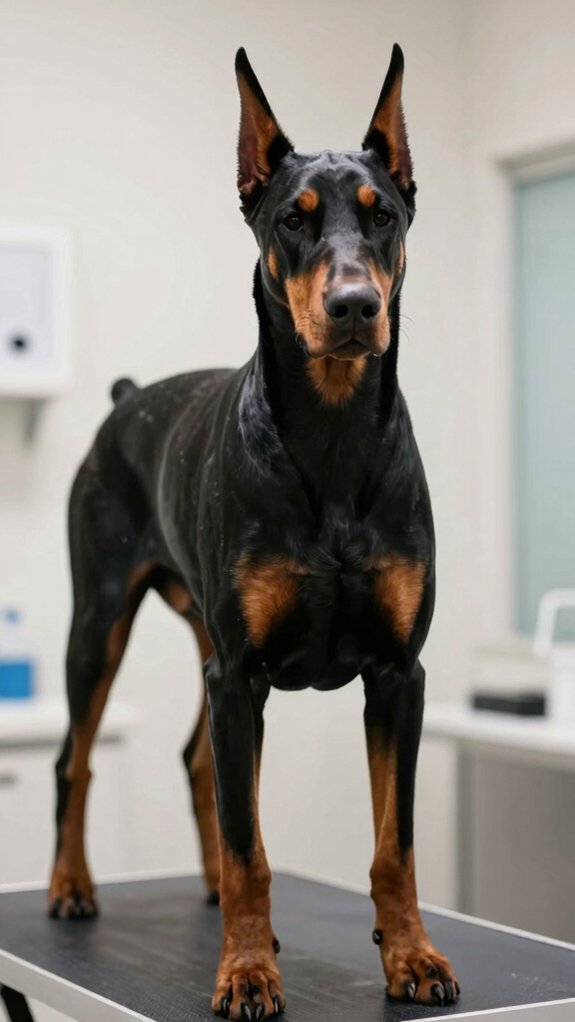
Among Doberman health concerns, dilated cardiomyopathy (DCM) is the most serious and breed-associated, with a notable prevalence and a substantial share of cardiac-related and sudden deaths. Genetic screening and cardiac monitoring are thus central to responsible care. Deep-chested dogs also face gastric dilatation-volvulus, an emergency linked to rapid onset bloat. Von Willebrand disease may prolong bleeding, while hip dysplasia and hypothyroidism are also observed. Coat-linked disorders include color dilution alopecia and white-pigmentation photosensitivity. Shared knowledge, timely testing, and veterinary follow-up help Doberman owners protect health, reduce risk, and support this distinctive breed.
Doberman Care, Exercise, and Grooming Needs
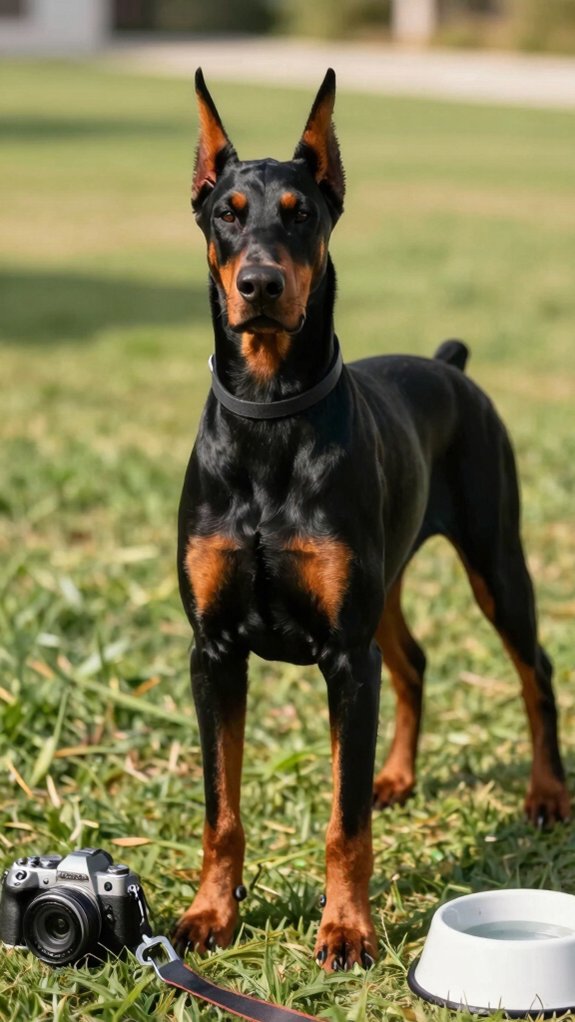
Built for work and endurance, the Doberman requires at least 1–2 hours of vigorous daily exercise, such as long walks, running, or free play, along with mental stimulation through obedience training, scent work, or similar tasks to prevent boredom and destructive behavior.
- High energy enrichment should include agility, tracking, and engaging toys under firm pack leadership.
- Secure fencing supports outdoor safety, sprinting, and off-leash endurance; cooling gear may help in heat.
- Grooming is simple: brush weekly, bathe monthly, trim nails, clean ears, brush teeth, and use puzzle feeders. Feed twice daily; avoid exercise near meals to reduce bloat risk.
Frequently Asked Questions
What Kind of Dog Is a Dobermann?
A Dobermann is a large German working dog bred for protection and endurance. Its temperament traits are clever, loyal, and alert, while its training needs are substantial, requiring early socialization, consistency, exercise, and firm guidance.
What Is the Purpose of Dobermans?
Dobermans serve chiefly as guard dogs, but they can also become devoted family companions. Bred for protection, obedience, and endurance, they suit working roles, while proper training and socialization support calm, loyal household integration.
Are Dobermans a Natural Breed?
No; a Doberman is not a natural breed. Its genetic lineage reflects selective breeding for behavioral traits, temperament stability, and guarding ability. How else would such precision emerge except by deliberate human design?